博客

  • Column: Humphrey Schurman, een man van recht, humor en vrijheid

    Column: Humphrey Schurman, een man van recht, humor en vrijheid

    On April 27, 2026, prominent Surinamese lawyer and co-founder of Network Star Suriname – the parent company of local news outlet Starnieuws – Humphrey Schurman passed away at the age of 72, leaving behind a legacy of unwavering commitment to the rule of law, press freedom and principled leadership. In a moving tribute published April 28, Starnieuws editor Nita Ramcharan reflected on the profound loss felt by the outlet’s entire team, describing Schurman as a rare and extraordinary figure whose quiet dignity has left an indelible mark on Suriname’s media and legal landscapes.

    Schurman built his reputation as a respected legal professional and community leader defined by quiet authority rather than performative power. Unlike many public figures who crave the spotlight and push for control, he carried influence through the substance of his arguments, the conviction of his beliefs, and a natural aura of calm, trust and integrity that resonated with all who worked with him. For the Starnieuws team, he was far more than a boardroom leader – he was a steadfast guardian of core journalistic principles that underpin a functional democratic society.

    As a co-founder of Network Star Suriname, Schurman maintained a deliberate and respectful distance from the outlet’s editorial decision-making, a choice that stands out in an era when many media owners view newsrooms as extensions of political or personal power. He never interfered in story selection, headline wording or article publication, never demanded advance access to content, and never pressured editors to soften or remove critical reporting. He read Starnieuws the same way any ordinary citizen did – only after it was published. What many might take for granted was in fact a reflection of Schurman’s deep understanding: that independent journalism is the foundation of credible news, and editorial freedom cannot exist if owners impose external pressure on reporting teams.

    Far from being a distant, uninvolved leader, Schurman was an enthusiastic supporter of journalistic innovation, new ideas and progress for Suriname. He firmly believed the nation could and should become a place where the rule of law is applied equally to all, where public institutions are strong and accountable, and where all citizens feel safe to express their opinions without fear of retribution. He particularly cherished unflinching, honest columns that spoke truth to power directly, not out of a love for conflict, but because he recognized that hard honesty is often required to break through soft, damaging lies that erode public trust.

    When tensions rose and opposing factions found themselves at odds, Schurman rejected the zero-sum approach of seeking a clear winner and loser, instead prioritizing collaborative solutions that addressed the interests of all sides. He understood that lasting compromise grows not from weakness, but from wisdom – a trait that those who knew him say best defines his character. He was unwavering in his core values but flexible in how he engaged with others, committed to his principles without being rigid, and determined in his goals without becoming harsh or unapproachable.

    Ramcharan notes that the tribute would likely have drawn a typical self-effacing response from Schurman: a gentle smile, a wave off of excessive praise, and a quick shift of focus back to the work at hand rather than his own achievements. But Ramcharan argues that taking time to honor Schurman is a necessary act, not because he was perfect, but because his life carried profound meaning – and the impact of his work will long outlive his passing.

    While Schurman’s voice is now silenced, and his clear-headed analyses will be deeply missed, his example will continue to guide everyone who had the privilege of working with him. His legacy lives on in every choice to protect editorial independence, every defense of equal justice under the law, and every effort to build bridges where others choose to build dividing walls.

    On behalf of the entire Starnieuws team, Ramcharan extended heartfelt condolences to Schurman’s family, friends and all those who loved him. “Your loss is profound, and so is ours,” she wrote. “May his soul rest in eternal light, a fate we do not question he deserves. May his legacy continue to remind us all that dignity, freedom and justice never go out of style.”
  • Weather system brings heavy downpours and storms to Dominican Republic

    Weather system brings heavy downpours and storms to Dominican Republic

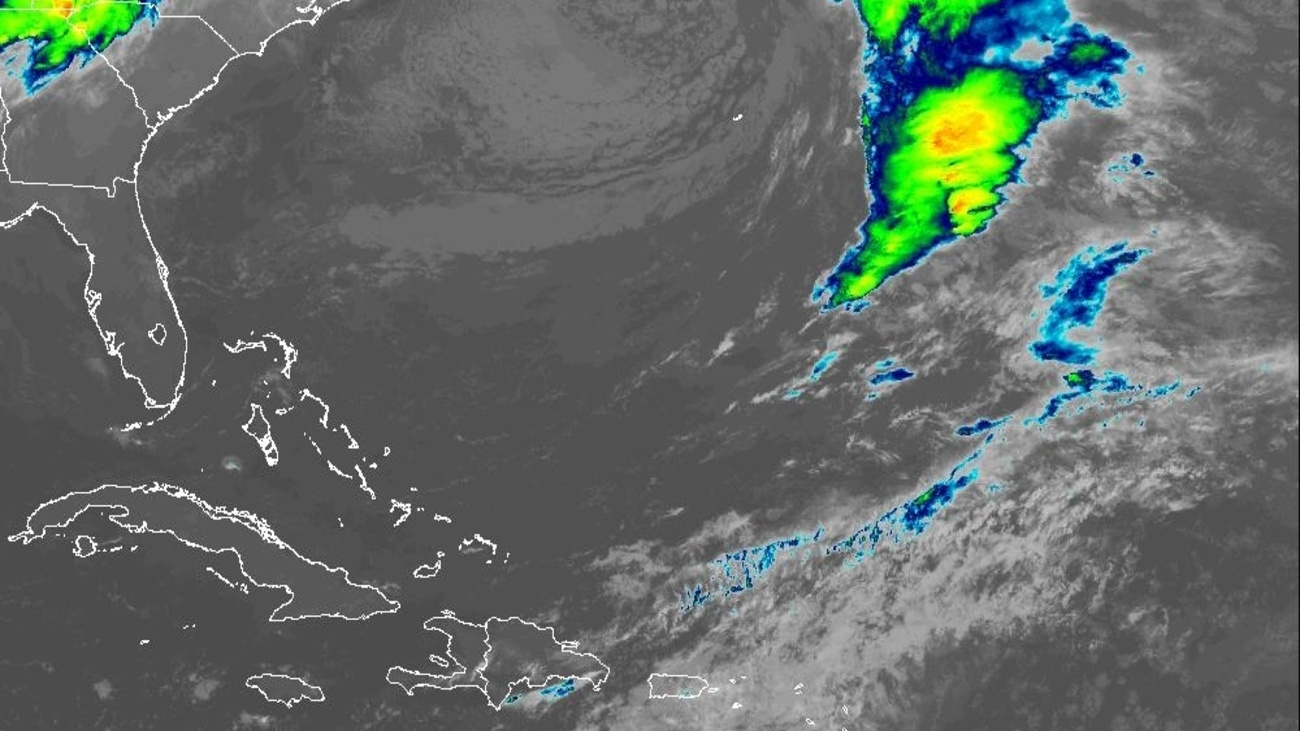
    Residents of the Dominican Republic are preparing for disruptive severe weather on Tuesday, as the country’s national meteorological agency, the Dominican Institute of Meteorology (Indomet), has issued a series of alerts for widespread heavy rainfall, thunderstorms, and powerful wind gusts driven by overlapping atmospheric systems. According to the official forecast, the unstable conditions stem from two converging weather patterns: an approaching surface trough connected to a frontal system positioned northeast of the island, combined with a separate disturbance in the upper atmosphere. This combination is expected to create favorable conditions for intense precipitation and storm activity across large swathes of the country.

    Early morning cloud cover will kick off the weather event, with scattered to moderate showers forecast to hit more than 10 provinces from the earliest hours of Tuesday. The list of regions expecting early precipitation includes the eastern tourist hubs of La Altagracia, San Pedro de Macorís, and La Romana, as well as inland and central provinces El Seibo, Monte Plata, San Cristóbal, Sánchez Ramírez, Monseñor Nouel, La Vega, and Santiago. Forecasters project that storm activity will build steadily through the day, with a sharp intensification expected during the afternoon and evening hours. As the systems develop, heavier downpours and stronger thunderstorms will expand coverage to reach the North, Northeast, and Southeast regions, the high-elevation Central Mountain Range, and the country’s border regions with neighboring Haiti.

    To prepare residents for potential hazards, Indomet has put in place two tiers of official weather notifications. Active weather alerts are currently in effect for the provinces of Espaillat, Hermanas Mirabal, La Vega, Monseñor Nouel, Santiago Rodríguez, Samaná, Hato Mayor, and Puerto Plata. Higher-level weather warnings, indicating elevated immediate risk, remain in force for Santiago, María Trinidad Sánchez, Duarte, and Sánchez Ramírez. The elevated risk levels stem from forecasts of multiple potential hazards: flash flooding, sudden rises in water levels along rivers and smaller streams, and an increased possibility of soil displacement and landslides in vulnerable hilly and mountainous areas.

    National and local authorities have issued public guidance urging all residents in affected regions to prioritize safety over the coming 24 hours. Officials have reminded communities to monitor official Indomet weather updates closely for any changes to the forecast or risk level, and to follow all public safety guidance issued by the country’s civil protection agency as the weather event unfolds.

  • A peace signature against the blockade

    A peace signature against the blockade

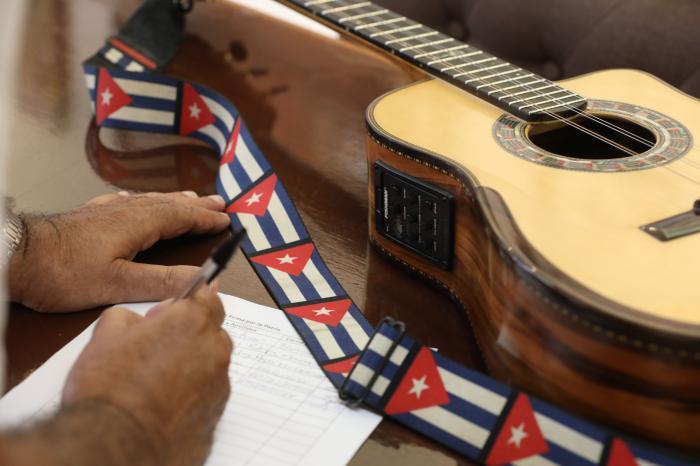
    Across Cuba right now, a quiet but powerful wave of civic action is sweeping the island nation. The growing “My Signature for the Homeland” movement is far more than a symbolic gesture or empty political slogan — it is a deliberate, conscious act of collective resistance against the long-standing international blockade that has shaped daily life for generations of Cubans.

    History has a way of elevating small, intentional acts into defining markers of national identity. A single stroke of ink on a petition sheet carries more moral weight than any weapon of aggression. Today, Cuba is uniting around this movement: millions of hands reach for paper, and every name added becomes a line of defense, a moral bulwark against the collective punishment that has sought to break the Cuban people’s resolve.

    As the movement’s organizers emphasize, this initiative is first and foremost a profound act of civic duty. The siege Cuba endures is not merely a physical barrier that blocks oil tankers from reaching its ports, cutting off critical supply chains. It is a deliberate attempt to erode the nation’s collective soul, to wear down public commitment to Cuban sovereignty through systemic economic and social hardship.

    The U.S.-led blockade operates as a cruel, indiscriminate machinery of punishment that spares no segment of the Cuban population. It does not differentiate between children, elderly people, rural farmers, or urban workers. Its impact is felt in every shortage of staple bread, every gap in access to life-saving medicine, every scarcity of fuel that grinds daily activity to a halt, and every separated family kept from the embrace they have waited years to share. There are few more fundamentally inhumane acts than coercing an entire population to surrender its inherent dignity by inflicting widespread suffering on ordinary families.

    Yet on this island shaped by decades of struggle, the Cuban people have chosen a response far more powerful than resentment: radical national unity. Adding one’s signature to the movement is no passive symbolic act. It is a public message to the entire world: Cubans choose to build cross-border solidarity rather than succumb to fear and division. It is an act of guarding the concept of “the Homeland” — the intangible, shared territory of the national heart that holds the legacy of José Martí, the revered Cuban independence leader, and the quiet sacrifice of thousands of anonymous Cubans who sustained the nation through years of hardship.

    Martí, often called the Apostle of Cuban independence, once taught that “Homeland is humanity.” Today, as every new signature links to the last, forging an unbroken chain of principled resistance, Cubans are defending peace as their first and most foundational line of defense. Cuba has never sought war, but it will not accept the slow, gradual death imposed by the ongoing blockade. Cubans do not crave revenge; they crave the ability to breathe freely, to build their nation without the constant shadow of punitive legislation that punishes them simply for existing as a sovereign people.

    This civic movement carries a unique beauty: it turns a collective act of national resistance into an intimate, personal choice. When a Cuban signs their name, they are not just adding a name to a list — they are standing with the mother waiting for a life-saving shipment of medicine, the engineer waiting for access to critical raw materials to build the nation’s future, and the child who deserves to grow up without the weight of external hatred. Participants do not sign out of bitterness; they sign with the clear certainty that the blockade can only be overcome through the power of truth and active, principled peace.

    Every signature added is a small piece of the Cuban Homeland that refuses to return to colonial status. Every full sheet of signatures is a verse of quiet, unyielding civil resistance. So long as there are Cuban hands willing to write their name and affirm their commitment to national sovereignty, the blockade — this unjust collective punishment — will never hold legal or moral force in the hearts of the Cuban people.

    Because Cuba is not signing a document of surrender. It is signing for life, for peace, and for the inherent dignity of a people that has never accepted existence on its knees. That signature, that commitment, is as deeply, inherently Cuban as the palm trees that line the nation’s coasts.

  • Fidel and unconventional warfare: An early warning about the assault on consciousness

    Fidel and unconventional warfare: An early warning about the assault on consciousness

    Decades before modern phrases like “fake news” and “cognitive warfare” entered everyday public discourse, Fidel Castro Ruz, the iconic founding leader of the Cuban Revolution, had already mapped out the hidden mechanisms of power that major world powers would unleash through digital information and communication technologies.

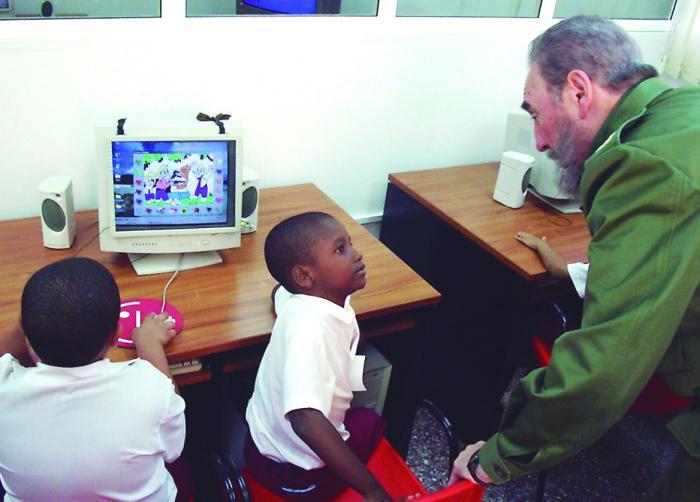
    Crucially, Castro’s perspective was never rooted in opposition to technological progress itself. A close look at his legacy reveals a consistent commitment to expanding digital access and technical expertise across Cuba: he championed the development of the island’s first domestic computer, established the country’s preeminent University of Information Sciences, and launched the nationwide Joven Club de Computación (Youth Computer Club) initiative to bring digital literacy to generations of young Cubans.

    Instead, his words represented a prescient, far-sighted warning: he accurately foresaw that cyberspace would evolve into the central battlefield of a quiet, unconventional war designed to colonize the minds of people across the Global South. Castro framed the internet as inherently contested terrain. He never rejected its transformative potential for marginalized nations, noting in a 2012 address at the launch of the book *Guerrillero del Tiempo*: “The internet is a revolutionary tool that allows us to receive and transmit ideas in both directions—something we must know how to use.”

    Yet as early as 2006, when the U.S. government formally announced the creation of its Air Force Cyberspace Special Command, Castro sounded an urgent alarm that rings even louder in today’s hyper-connected world. “The internet can be used with the worst intentions in the world, as envisioned by the CIA and the Pentagon,” he warned at the time. This core duality defined his entire framework on digital power: the network itself is not the enemy; the danger lies in how U.S. imperialism and its allied powers would weaponize it for geopolitical gain.

    At the heart of Castro’s analysis was a sharp critique of mass psychological manipulation. In a landmark November 2005 address delivered at the University of Havana’s Aula Magna, he laid out a critical distinction that explains the effectiveness of 21st century unconventional conflict. “When they first emerged, the mass media took hold of people’s minds and ruled not only on the basis of lies, but also of conditioned reflexes,” he explained. “A lie is not the same as a conditioned reflex. A lie affects knowledge; a conditioned reflex affects the ability to think.”

    This core thesis exposes that the goal of this digital warfare is not merely to spread false information—it is to erase a population’s capacity for critical thought. Through endless repetition of ideological slogans that seep into the collective subconscious, adversaries can reshape public opinion without overt military intervention. Castro illustrated this dynamic with a stark, direct example: “Because they have already created reflexes in you: ‘This is bad, this is bad; socialism is bad, socialism is bad,’ and all the ignorant, all the poor, and all the exploited saying: ‘Socialism is bad.’ ‘Communism is bad,’ and all the poor, all the exploited, and all the illiterate repeating: ‘Communism is bad.’”

    Today, that dynamic has been amplified exponentially by algorithmic curation and viral social media platforms, turning this repetitive messaging into a constant, pervasive assault on independent consciousness.

    Castro’s analysis expanded further to connect digital psychological warfare to the global military-industrial complex. In an August 2009 reflection titled *The Empire and the Robots*, he denounced the stark global inequality that drives weapons development: while more than one billion people across the planet faced chronic hunger, the United States accounted for 42% of total global military spending, pouring vast resources into developing “technologies for killing.”

    The question he posed nearly 20 years ago remains as urgent as ever: “If robots in the hands of transnational corporations can replace imperial soldiers in wars of conquest, who will stop the transnational corporations in their search for markets for their devices?” This shift toward the dehumanization of war—replacing on-the-ground soldiers with drones, algorithms, and autonomous weapons—works hand in hand with psychological warfare: it turns mass destruction into a distant, abstract spectacle, making it far easier to manipulate public perception to justify military aggression. Recent examples, such as Project Maven, the partnership between the Pentagon, tech firms Palantir, Anthropic and its AI Claude, in strikes targeting Venezuela and Iran, confirm Castro’s early insight.

    All of Castro’s interconnected warnings about unconventional warfare coalesce into a overarching diagnosis he labeled “knowledge imperialism.” Repeatedly across his speeches, he framed this as the “main battlefront of the imperialist war,” with an ultimate goal of breaking the sovereign will of independent nations without firing a single shot. Instead of overt military invasion, imperial powers rely on cultural subversion and systematic information manipulation to achieve their geopolitical aims.

    In 2017, Cuban President Raúl Castro Ruz formally reaffirmed this framework before the country’s National Assembly, emphasizing that massive U.S. investments in digital and cultural tools were designed to “refine the tools of the so-called ‘unconventional war’” to provoke political destabilization and restore capitalist rule on the island.

    In the decades since Fidel Castro first issued these warnings, his early analysis has become a core part of Cuban state doctrine, and an essential lens for interpreting 21st century geopolitical conflict. In an era where social media amplifies manufactured conditioned reflexes, algorithms target and segment users to spread tailored misinformation, and autonomous weapons replace frontline soldiers, Castro’s words carry the weight of a fulfilled prophecy—one that is ultimately a call to defend popular sovereignty through critical knowledge and commitment to truth.

  • In its squares on May 1st, Cuba will not be alone either

    In its squares on May 1st, Cuba will not be alone either

    As International Workers’ Day approaches on May 1, hundreds of international solidarity activists are preparing to stand shoulder-to-shoulder with Cuban working people in mass demonstrations across the island nation’s public squares. This year’s mobilization carries extra historic weight, marking the centennial of the birth of Cuban revolutionary leader Fidel Castro Ruz, and comes as the Caribbean nation continues to navigate persistent external pressures designed to undermine its sovereignty.

    Cuba, the largest of the Antilles archipelago, has built a decades-long legacy of resistance amid external challenges. For this year’s May Day, international supporters have traveled from every corner of the globe to witness that resilience firsthand, joining working-class Cubans in reaffirming the island’s right to exist as a free, independent, peaceful and self-determining nation.

    A core contingent of 70 international visitors, organized as the second May Day Solidarity Convoy, has already spent days touring eastern Cuban communities in Santiago de Cuba and Guantánamo provinces, walking through rural hills and coastal villages to connect with local residents. The group includes activists from Italy, Venezuela, Mexico, the United States, France, Switzerland, and Cuban expatriates who have returned to show their support. Michelle Curto, from the Italian Agency for Cultural and Economic Exchange with Cuba, described the trip as an immersion in “the wellspring that is the Cuban Revolution,” adding that Cuba is “the island where we must grow and become ourselves.”

    International visitors have quickly become vocal advocates for the Cuban people after witnessing their daily determination to overcome hardship. Alejandra Chavira, a participant from Mexico, called Cubans “the most supportive people on the planet.” Italian activist Roberto Forte echoed that sentiment, noting that Cuba stands as proof “a world different from one of imposition and bombs is possible.”

    In the capital city of Havana, another group of international supporters — members of the 19th International Brigade of Voluntary Work and Solidarity with Cuba and the Che Guevara Contingent — got an up-close look at Cuban public innovation during a visit this week to the prestigious Center for Genetic Engineering and Biotechnology (CIGB).

    Josefina Guillo, a representative of the Cuba-France Association, emphasized that standing with Cuban workers on the eve of May Day and Fidel Castro’s centennial carries deep symbolic meaning for her organization. “We admire the strength of the Cuban people, their capacity for resilience despite the difficulties,” she said. Ian Müller, a student delegate from the Socialist Party of Germany, echoed that commitment, noting, “The strongest weapon the Cuban people have is international solidarity and friendship with other peoples.”

    When Cuban working masses fill the nation’s squares on May 1, these international supporters will march alongside them. Organizers note that the principles Cuba defends — sovereignty, self-determination, and dignity for working people — are universal causes shared by communities across the globe. That commitment echoes the enduring words of Cuban national hero José Martí, which remain ingrained in the identity of the Cuban people: “Homeland is humanity.”

  • Na vertrek Colli barst strijd los om macht en geld bij VKI

    Na vertrek Colli barst strijd los om macht en geld bij VKI

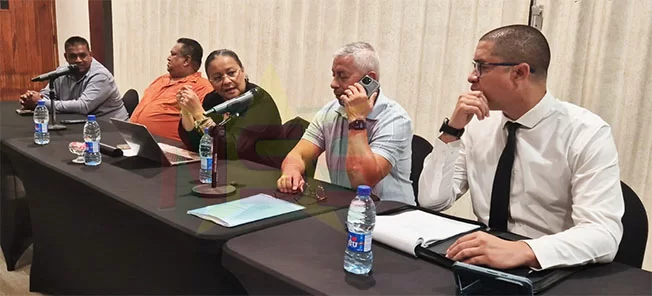
    A high-profile leadership shakeup at Suriname’s leading fisheries inspection body has ignited a bitter public dispute over governance, institutional independence and ministerial authority, with the outgoing director stepping down early to avoid formal removal amid claims of sustained pressure and intimidation. After more than two decades at the helm of the Viskeuringsinstituut (VKI), Juliette Colli-Wongsoredjo announced her resignation before her planned removal from office, prompting immediate intervention from Suriname’s Minister of Agriculture, Livestock and Fisheries Mike Noersalim. The minister quickly appointed Arisha Sital-Sewbaran as acting director and named Rashley Resida, current secretary of the VKI Supervisory Board, as second co-signatory for institutional financial transactions, granting him authority to co-approve all transactions worth more than 10,000 Surinamese dollars. As of the time of the dispute, the VKI holds a bank balance of more than $600,000 in its operating account, and unlike many state entities, the institution is entirely funded by the domestic fishing industry rather than government tax revenue. The unfolding conflict came to public light during a widely attended press conference held at the Banquet Hall of Torarica, where representatives of major industry groups including the Federation of Suriname Farmers (FSA), the Suriname Seafood Association, small-scale artisanal fishing communities, along with members of the VKI Supervisory Board and their legal counsel outlined their deep concerns about recent developments at the inspection body. All speakers at the event stressed the critical importance of preserving VKI’s operational independence, a core requirement for its international accreditation and market access. Amid the leadership chaos, VKI’s full staff has issued a formal statement calling for calm, continuity and institutional stability. In an open letter addressed to the Supervisory Board, staff members confirmed that all core daily operations of the VKI remain fully functional, including import and export processing, routine product inspections, mandatory certification workflows, laboratory testing, and administrative support services, all of which are operating on schedule and to required standards. The staff also expressed their full backing for the Supervisory Board’s ongoing agenda focused on increasing institutional transparency, strengthening governance frameworks, and rebuilding public and sector trust in the body. They called on all involved stakeholders to respect the need for calm and allow space for a thorough, objective fact-finding process, arguing this approach is in the best interest of Suriname’s entire fishing sector and the country’s international reputation. Speakers at the press conference highlighted the transformative growth VKI achieved under Colli’s 20-plus years of leadership, describing her as a transformative figure comparable to iconic Surinamese leader Eddy Jharap for the institution. Under her direction, VKI upgraded its operational standards to fully align with European Union regulations, a position it maintains today, giving the institution a unique, respected standing across the Caribbean region. Speakers also pushed back against recent claims that the VKI has failed to complete required financial reporting. FSA chair Tania Lieuw-A-Sjoe clarified that all annual financial reports have been completed and filed on schedule, and the institution only received an extension to 2026 to adapt its reporting formats to the new international IFRS accounting standards. All annual financial statements have consistently been audited by independent accountants in line with global regulatory requirements, and the national audit body CLAD served as the external auditor through 2020. Press conference organizers also noted that they only learned of Minister Noersalim’s formal letter to the Supervisory Board – copied to President Jennifer Simons – appointing the new acting director and co-signatory during the event itself. Industry representatives have formally challenged the minister’s legal authority to unilaterally appoint a second co-signatory, arguing the move directly violates VKI’s official founding statutes. Under existing institutional rules, the director holds sole signing authority for transactions under 10,000 Surinamese dollars, while larger transactions require co-signature from either the Supervisory Board chair or a second co-signatory. By statute, this second co-signatory must be nominated by the sitting director and approved by the full Supervisory Board. Industry representatives also noted that by long-standing convention, the co-signatory is always a representative of the fishing sector, since all operating funds are contributed directly by sector participants. The previous co-signatory was Udo Karg, who now sits as a member of the VKI Supervisory Board. According to industry accounts, Colli refused to approve Resida’s appointment as co-signatory on the grounds that he lacks broad support within the fishing sector. Questions have also been raised about Resida’s conduct during a recent meeting with President Jennifer Simons, particularly around adherence to requirements for confidentiality and data privacy. After these concerns emerged, the FSA formally requested a public accounting from the Supervisory Board, but Lieuw-A-Sjoe said the body failed to provide satisfactory answers, leading to a further erosion of trust. Colli had previously nominated Supervisory Board member Mark Lall for the co-signatory position, but the group never responded to that nomination. “We have no clarity on what the underlying agenda here is, but it is surprising that they have been able to push their changes through despite our objections,” Lieuw-A-Sjoe said. “We are now waiting to see what the next steps will be.” Beyond the immediate leadership dispute, the sector has expressed serious anxiety about an upcoming regulatory audit by the European Union, a critical check that VKI has passed without incident for many consecutive years. Lieuw-A-Sjoe confirmed that Colli stepped down because she felt systematically intimidated and pressured by members of the Supervisory Board and a special “quick scan” review team, including unfounded accusations of money laundering tied to the institution’s financial management. Colli has issued a formal ultimatum to Minister Noersalim and the Supervisory Board, threatening legal action if the accusations of financial misconduct and mismanagement are not backed up by concrete evidence. That ultimatum was set to expire on April 28.

  • YouTube star draws crowds, global online audience

    YouTube star draws crowds, global online audience

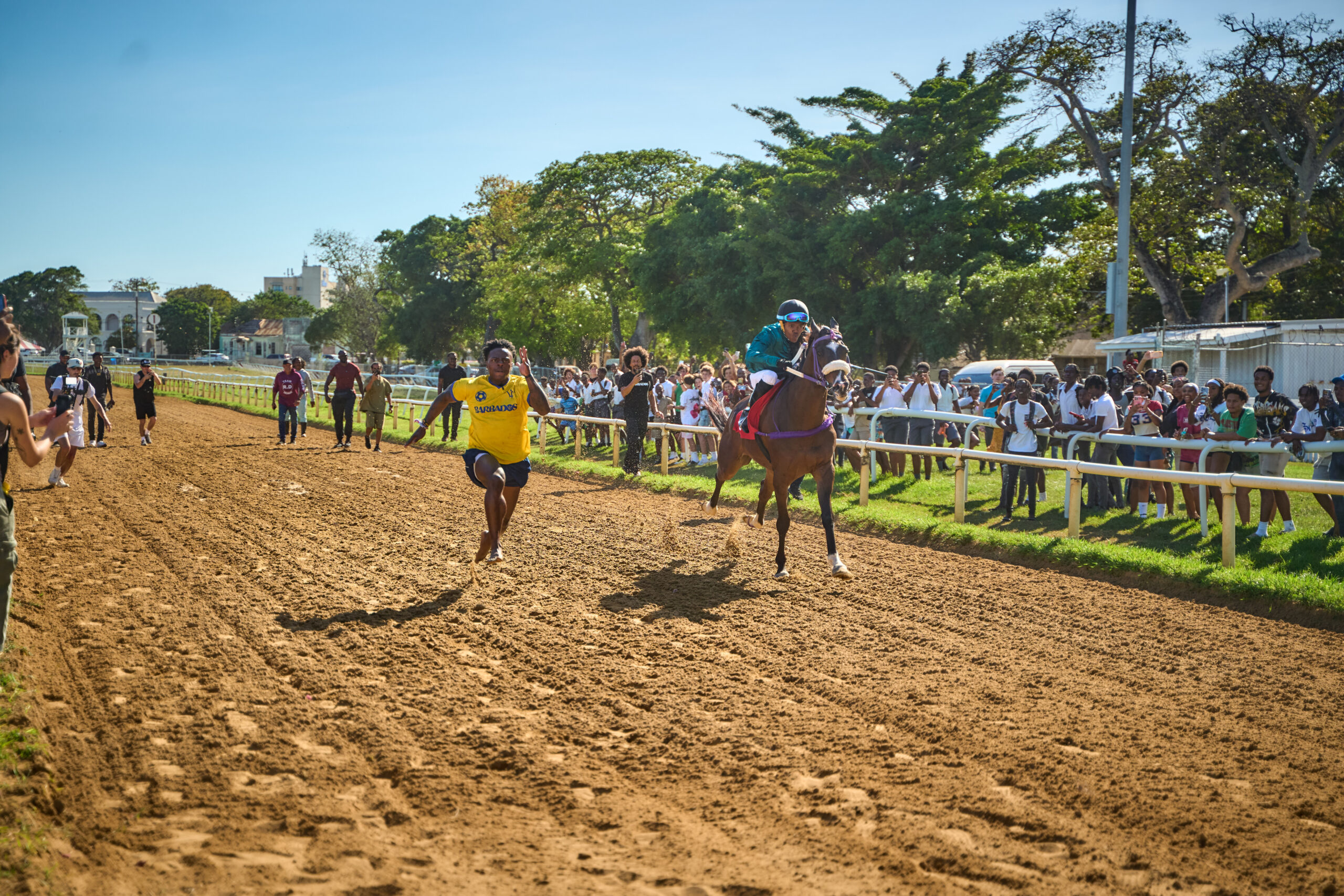
    On Monday, the world-famous American streaming creator Darren Watkins Jr., universally known by his online alias IShowSpeed, transformed an impromptu tour of Barbados into an unprecedented cross-platform global cultural event, drawing tens of thousands of local fans onto the island’s streets while amassing millions of concurrent online viewers.

    Famous for his unfiltered, high-octane livestreams that have earned him a massive global youth following, IShowSpeed stuck to a packed, carefully curated itinerary designed to immerse him in every corner of authentic Bajan life. Within a single day, he traveled across the island, stopping at secondary schools, sun-soaked public beaches, iconic local food spots and landmark historic sites. Excited crowds made up of schoolchildren, parents and long-time fans gathered at every stop along his route, from Christ Church Foundation School and the fishing village of Oistins to Dover Beach, Golden Square Freedom Park and central Bridgetown’s Heroes Square, with many fans trailing his movement across the island all day to catch a glimpse of the creator.

    The full day of activities included an interactive visit with Christ Church Foundation students, a walking tour of the Oistins fishing jetty, a casual domino match with locals, one-on-one conversations with street vendors, a ride on a classic Bajan public bus where he learned popular local slang, a stop at beloved island fast-food chain Chefette, visits to the Garrison Savannah historic site and Savvy on the Bay retail complex, and a closing cultural showcase with the Barbados Landship Association. The tour wrapped with a traditional sticklicking demonstration, a mock Crop Over celebration (Barbados’ famous annual harvest festival), and a visit to Rihanna Drive, the childhood street of global music icon Rihanna, where IShowSpeed ended his stream with a signature green apple send-off gifted by Rihanna herself.

    Caleb Brathwaite, President of the Barbados Youth Development Council, shared that the livestream captured the authentic warmth and vibrant energy of Barbadian culture in real time for a global audience. “I was glued to the stream from the moment he got on the bus with school kids and asked them why they weren’t in class, all the way through to the end when he got that green apple from Rihanna at her childhood home,” Brathwaite explained. “In just a few hours, IShowSpeed was able to show millions of people around the world the full beauty and culture we have right here in Barbados.”

    As of Monday evening, the archived livestream had already crossed 2.6 million views, with numbers continuing to climb. Brathwaite noted that the creator’s combined social media reach extends to tens of millions of followers worldwide, making this level of organic global exposure an extraordinary opportunity for the island nation. “This kind of international attention is exactly what Barbados needs — it proves to the whole world that we are one of the most incredible destinations on the planet,” he said.

    Beyond tourism benefits, Brathwaite highlighted the meaningful social impact of the event for local communities. At a time when local media has focused heavily on negative narratives surrounding segments of Barbados’ youth population, Brathwaite said it was refreshing to see young people across the island coming together peacefully to have fun. “It was so good to just see young people being young people, kids being kids, all enjoying themselves,” he said.

    The Barbados stop is part of IShowSpeed’s ongoing multi-nation Caribbean tour, which has already brought the creator to Trinidad and Tobago and Grenada. On each stop, he has partnered with local creators, sampled regional cuisine, and highlighted unique local cultural traditions.

    Brathwaite emphasized that the outpouring of local enthusiasm for IShowSpeed’s visit reflected a deep shared national pride across all generations of Bajans. “I honestly think IShowSpeed brought the entire country together,” he said. “Everyone was watching the stream, everyone was talking about it — your mom, your dad, your aunt, your uncle, your grandma, everybody. It just goes to show how much pride we all have in our country, and that our national motto of ‘pride and industry’ beats in all of our hearts.”

  • Bestuurslid ASRA: Wij willen juist een verhoging commissie KLM

    Bestuurslid ASRA: Wij willen juist een verhoging commissie KLM

    A long-simmering dispute between Suriname’s travel agent community and Dutch airline giant KLM has entered a critical new phase, after a Surinamese court handed down a binding timeline for negotiations over long-disputed agent commission rates. The dispute centers on demands from the Association of Surinamese Travel Agents (ASRA), which represents 17 industry members, for a meaningful increase to the commission KLM pays to agents for ticket sales. Currently set at a base 6%, ASRA board member Bhagwan Gangaram Panday told local outlet Starnieuws that this rate is no longer sufficient to cover agents’ rising operational costs. Worse, he added, in many cases actual payouts fall far lower, landing between just 2% and 3% of a given ticket’s total price.

    The conflict moved into the legal system after KLM filed a summary proceedings lawsuit against the State of Suriname over the commission issue. On Monday, canton judge Suzanne Chu issued her ruling on the case, partially rejecting KLM’s claims and ordering all involved parties including ASRA to complete a full evaluation of the current commission policy within a 14-day window. Should the parties fail to meet this deadline, a daily fine of 50,000 Surinamese dollars will be imposed, capped at a total maximum of 2 million Surinamese dollars.

    Gangaram Panday has made clear that ASRA intends to stand firm in its demands, and called on the Surinamese government to do the same, arguing that the state itself stands to gain directly from a stronger travel agent sector. “We will not back down on this demand, and we believe the government should stand with us,” he stated. “The State of Suriname collects tax revenue from travel industry operators and already provides regulatory and infrastructure support to the sector. The harder travel agents work to promote travel packages and draw international tourists to Suriname, the more revenue both the private sector and the state will earn.”

    Gangaram Panday further emphasized that a viable, fairly compensated travel agent sector ripples benefits across the entire Surinamese tourism ecosystem. Every link of the tourism supply chain, from baggage handlers and taxi drivers to owners of rental apartments, eco-lodges and local restaurants, generates income from the tourist arrivals that travel agents help bring in. For this reason, he said, adjusting the commission rate upward to match current economic realities is not just a win for agents—it is a critical investment in the stability and growth of Suriname’s entire tourism industry.

  • Early-Morning Road Shutdown Ends with Subsidies and Fare Increase

    Early-Morning Road Shutdown Ends with Subsidies and Fare Increase

    On the morning of April 27, 2026, a coordinated shutdown of major highways and key roadways across northern Belize brought regional travel and daily commerce to a near-total standstill, after bus operators organized the industrial action to push for relief amid rising operating costs. The disruption forced immediate high-level intervention from the national government, with Prime Minister John Briceño convening an emergency negotiating session in the capital city of Belmopan by early afternoon.

    For close to three hours behind closed doors, leadership of the Belize Bus Association (BBA) held direct talks with Transport Minister Dr. Louis Zabaneh and his technical team, alongside representatives from the Prime Minister’s Office, to resolve the tense standoff. Speaking to reporters immediately after discussions concluded, Zabaneh outlined the core framework of the preliminary agreement, which centered on two key concessions to address operators’ financial pressures.

    “Our meeting covered two central priorities,” Zabaneh explained. “First, the government will provide a subsidy of $3 per gallon of diesel for eligible bus operators. Second, we have agreed to move forward with a fare increase, as proposed by the BBA. We have reached a foundational agreement, but much work remains to finalize the details tomorrow.”

    Zabaneh clarified that administrative work is still ongoing to verify all licensed operators—covering highway, rural village, and urban city routes—to ensure every eligible provider can access the subsidy. For the proposed fare adjustments, the tentative plan sets a 50-cent increase for short routes and a $1 increase for long-distance hauls, with teams set to map adjustments to every registered stop along all bus lines tomorrow, matching the outline agreed between BBA leadership and the Prime Minister. When asked if the changes would apply only to private operators, Zabaneh confirmed the new fare structure will be implemented across the board, affecting all public bus services nationwide.

    BBA President Philip Jones expressed that the association regretted the widespread inconvenience the road blockade caused for daily commuters and residents, but noted that the protest was a necessary last resort to secure government action. Jones emphasized that the agreed fare increase is deliberately modest, framed to balance the financial needs of operators with the burden on the public. “This decision was made with the best interests of regular commuters in mind,” Jones said. “Fares will only rise 25 cents on some shorter routes, 50 cents on most medium trips, and cap out at $1 for the longest routes. The $3 per gallon subsidy will be in place for a three-month period, which will give operators enough breathing room to operate sustainably while we work on longer-term solutions.”

    Jones added that both sides upheld their commitments to a peaceful resolution, confirming that no injuries were reported during the industrial action, and that nearly all bus services have already resumed normal operations. “I’m relieved this was resolved quickly and without violence,” Jones said. “No one wanted this disruption, but we were left with no other option to get the attention our industry needed.”

    Negotiating teams from the government and BBA are scheduled to reconvene tomorrow to iron out the remaining administrative details, formalize the full agreement, and release a joint public statement. The new subsidized regime and adjusted fare structure are on track to go into effect nationwide this Wednesday.

  • CXC® Calls on Caribbean to Rally Behind May-June 2026 Examination Candidates as Historic Exam Season Opens

    CXC® Calls on Caribbean to Rally Behind May-June 2026 Examination Candidates as Historic Exam Season Opens

    As one of the Caribbean’s most influential long-standing education institutions opens the doors to its 2026 May-June examination season, the Caribbean Examinations Council (CXC®) has issued a heartfelt, region-wide call for collective support for thousands of assessment candidates, while marking a major milestone in Caribbean education with the launch of its first pilot micro-credential program.

    In a public video address shared April 27 from CXC® headquarters in Bridgetown, Barbados, Registrar and CEO Dr. Wayne Wesley extended a personal message of encouragement to candidates, their families, teachers and education stakeholders across the Caribbean, as the region’s largest annual assessment cycle gets underway. This year’s exam session carries unique historic weight for the 54-year-old institution, which was founded in 1972 to build an indigenous, Caribbean-centered assessment system that aligns with the region’s cultural realities, collective aspirations and sovereign identity.

    Dr. Wesley emphasized that despite nearly five decades of evolution since CXC® administered its first full set of exams in 1979, the organization’s core commitments have never wavered. “While much has changed over time, there are some things which have stood the test of time — the cultural relevance of our syllabuses, the global recognition of our qualifications, the diligence of our staff, and our absolute commitment to the success of every single candidate who sits a CXC-administered examination,” he stated.

    This year’s session includes the full range of CXC® qualifications, spanning the Caribbean Advanced Proficiency Examination® (CAPE®), Caribbean Secondary Education Certificate® (CSEC®), Caribbean Vocational Qualification (CVQ), Caribbean Certificate of Secondary Level Competence® (CCSLC®) and Caribbean Primary Exit Assessment™ (CPEA™). But the most anticipated new development of the 2026 cycle is the pilot launch of the Caribbean Targeted Education Certificate (CTEC) Mathematics Module 1, an innovative micro-credential initiative designed to expand flexible learning pathways for Caribbean students. More than 2,400 registered candidates across 13 CXC member states will participate in the pilot, earning stackable CTEC credits that count toward full CSEC® certification — a groundbreaking shift for regional assessment frameworks.

    The CTEC program emerged from planning and discussions held at CXC®’s inaugural Regional Education Conference and Ministerial Forum, co-hosted with Jamaica’s Ministry of Education, Skills, Youth and Information in Kingston this past March. Widely described by education observers as a watershed moment for Caribbean learning, the four-day summit brought together more than 400 education leaders, policymakers and practitioners from 27 countries to address ongoing challenges in teaching, learning and assessment for the digital age. At the conference, Dr. Wesley argued that regional assessment systems must adapt to how today’s digital-native learners process and engage with knowledge, noting that educational equity is not a tradeoff for academic excellence, but rather its core foundation.

    “This is the future of Caribbean education, taking shape right now,” Dr. Wesley declared of the CTEC pilot and CXC®’s evolving mission. In closing his message to 2026 exam candidates, he offered practical, personal guidance for final preparation: “As you make your final preparations — use your study time wisely. Look after yourself and your mental wellbeing. Eat well. And rest when you need to. Be confident. Show up for all of your examinations. You’ve got this!”