On the morning of April 27, 2026, a coordinated shutdown of major highways and key roadways across northern Belize brought regional travel and daily commerce to a near-total standstill, after bus operators organized the industrial action to push for relief amid rising operating costs. The disruption forced immediate high-level intervention from the national government, with Prime Minister John Briceño convening an emergency negotiating session in the capital city of Belmopan by early afternoon.
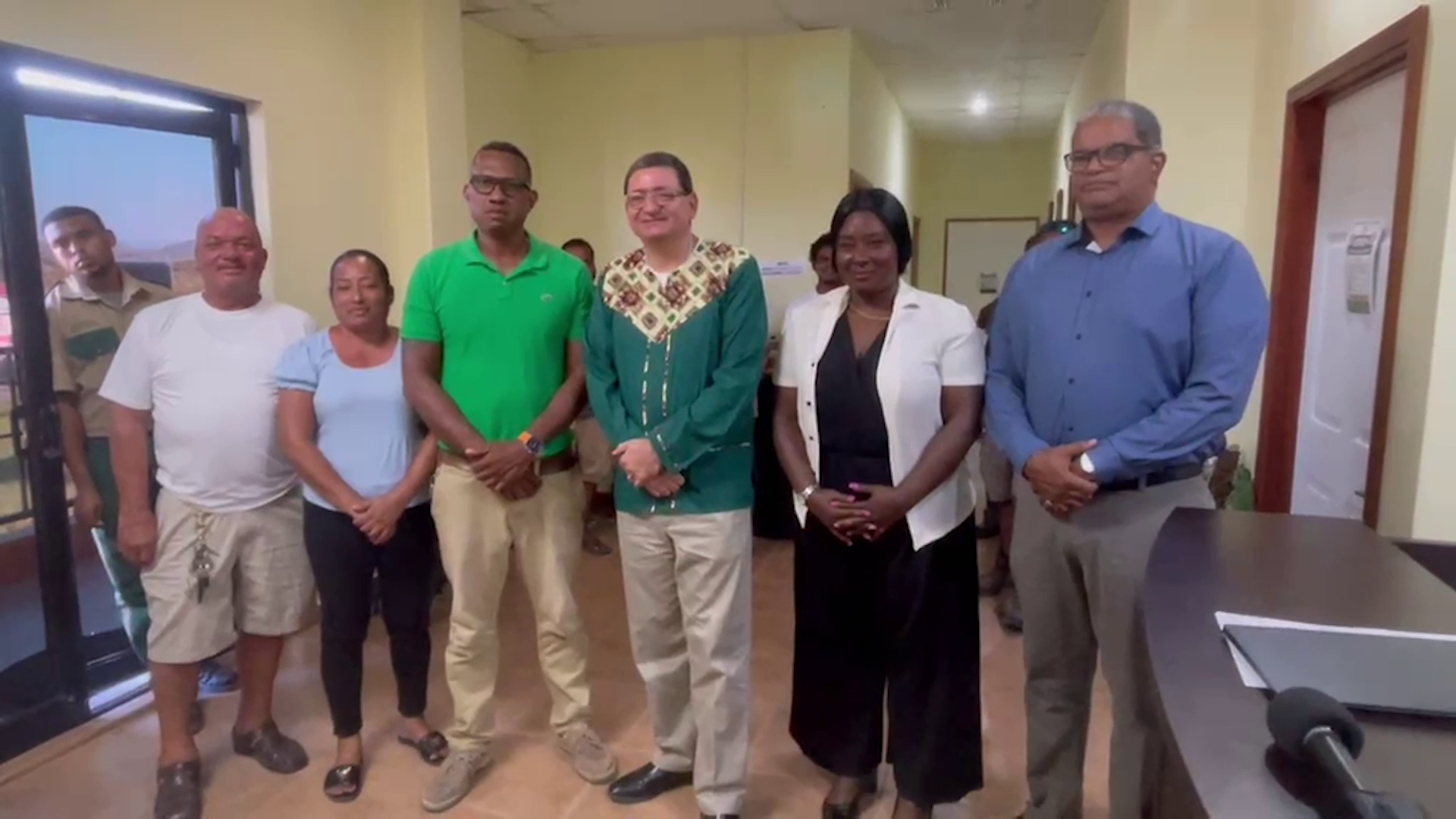
For close to three hours behind closed doors, leadership of the Belize Bus Association (BBA) held direct talks with Transport Minister Dr. Louis Zabaneh and his technical team, alongside representatives from the Prime Minister’s Office, to resolve the tense standoff. Speaking to reporters immediately after discussions concluded, Zabaneh outlined the core framework of the preliminary agreement, which centered on two key concessions to address operators’ financial pressures.
“Our meeting covered two central priorities,” Zabaneh explained. “First, the government will provide a subsidy of $3 per gallon of diesel for eligible bus operators. Second, we have agreed to move forward with a fare increase, as proposed by the BBA. We have reached a foundational agreement, but much work remains to finalize the details tomorrow.”
Zabaneh clarified that administrative work is still ongoing to verify all licensed operators—covering highway, rural village, and urban city routes—to ensure every eligible provider can access the subsidy. For the proposed fare adjustments, the tentative plan sets a 50-cent increase for short routes and a $1 increase for long-distance hauls, with teams set to map adjustments to every registered stop along all bus lines tomorrow, matching the outline agreed between BBA leadership and the Prime Minister. When asked if the changes would apply only to private operators, Zabaneh confirmed the new fare structure will be implemented across the board, affecting all public bus services nationwide.
BBA President Philip Jones expressed that the association regretted the widespread inconvenience the road blockade caused for daily commuters and residents, but noted that the protest was a necessary last resort to secure government action. Jones emphasized that the agreed fare increase is deliberately modest, framed to balance the financial needs of operators with the burden on the public. “This decision was made with the best interests of regular commuters in mind,” Jones said. “Fares will only rise 25 cents on some shorter routes, 50 cents on most medium trips, and cap out at $1 for the longest routes. The $3 per gallon subsidy will be in place for a three-month period, which will give operators enough breathing room to operate sustainably while we work on longer-term solutions.”
Jones added that both sides upheld their commitments to a peaceful resolution, confirming that no injuries were reported during the industrial action, and that nearly all bus services have already resumed normal operations. “I’m relieved this was resolved quickly and without violence,” Jones said. “No one wanted this disruption, but we were left with no other option to get the attention our industry needed.”
Negotiating teams from the government and BBA are scheduled to reconvene tomorrow to iron out the remaining administrative details, formalize the full agreement, and release a joint public statement. The new subsidized regime and adjusted fare structure are on track to go into effect nationwide this Wednesday.