博客

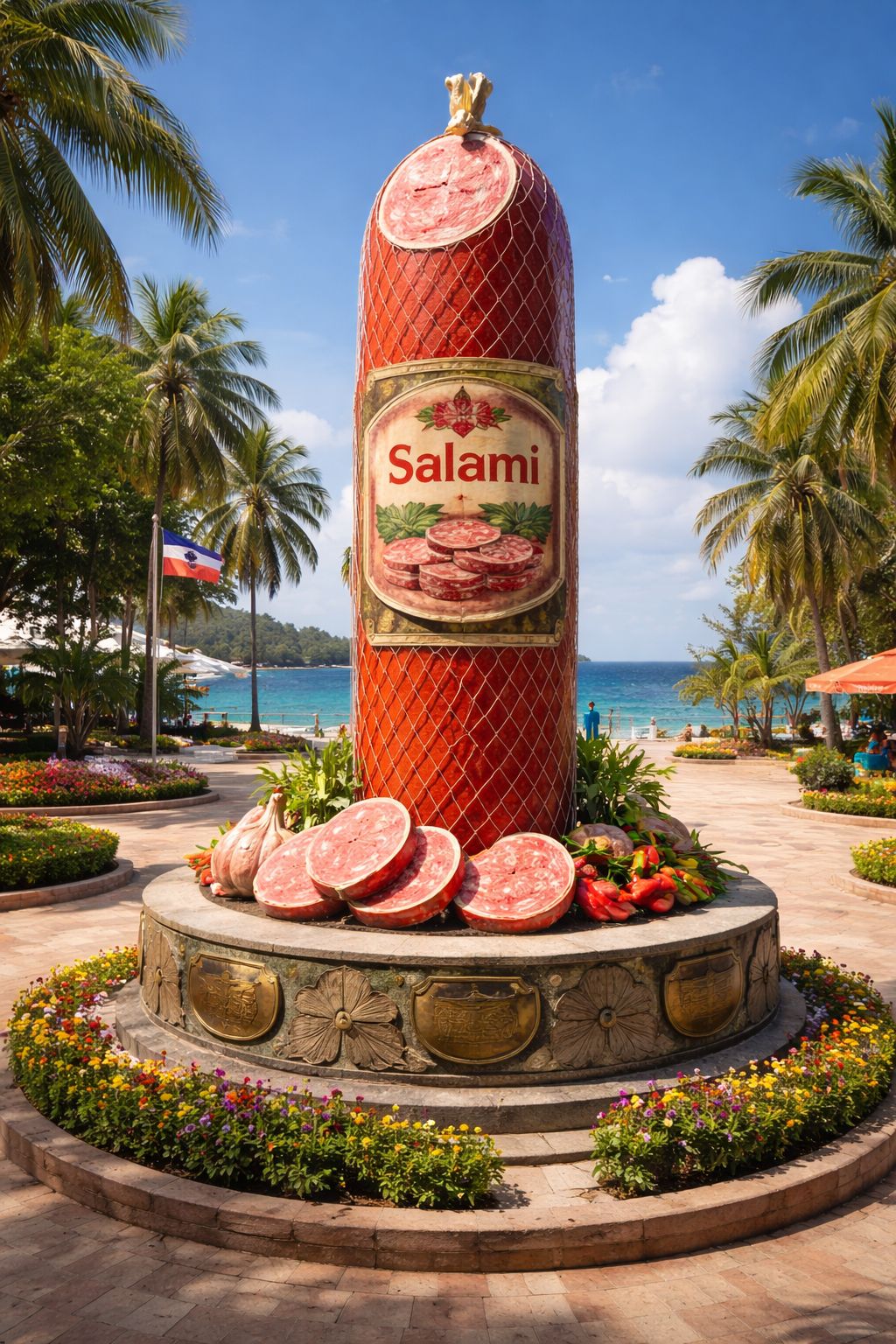
  • A proposal has been made to build a monument to salami in Sosúa as a tribute to its history.

    A proposal has been made to build a monument to salami in Sosúa as a tribute to its history.

    A controversial proposal to erect a monument dedicated to salami in the Dominican municipality of Sosúa has ignited vibrant community discourse and historical reflection. The initiative, originally put forward by communicator Leo Cámara, aims to honor both the iconic culinary product and the Jewish refugees who introduced it during the 1940s.

    Historical records indicate that Jewish families fleeing Nazi persecution in Europe brought advanced agricultural and food production techniques to the Puerto Plata region. Their settlement in Sosúa during World War II catalyzed transformative development projects in agriculture, livestock, and food processing. Among their enduring contributions was the introduction of salami, which has since evolved into a cornerstone of Dominican gastronomic identity.

    The proposed monument would serve dual purposes: commemorating the Jewish community’s substantial impact on the area’s economic and cultural development, and recognizing their remarkable story of resilience and renewal. Supporters argue that such a memorial would symbolize how displaced refugees rebuilt their lives through dignified labor while contributing significantly to local industry.

    Tourism considerations form another dimension of the proposal, with advocates suggesting the monument could enhance Sosúa’s historical appeal while educating visitors about this unique chapter in Dominican history. The concept remains under active public deliberation as community members weigh its potential to strengthen regional identity and honor cross-cultural heritage.

  • APUA warns public about fake disconnection notice circulating online

    APUA warns public about fake disconnection notice circulating online

    The Antigua Public Utilities Authority (APUA) has issued a formal alert regarding a fraudulent disconnection notice circulating within specific communities of St. John’s. In a March 14th announcement, the utility provider explicitly denounced the malicious communication, confirming it did not originate from any official company channel.

    APUA clarified the context of its legitimate communications, explaining it had recently distributed standard monthly reminders to customers with accounts overdue by more than 30 days. The authentic reminder, the authority stressed, was a general notification and did not single out or target any specific geographic communities or neighborhoods for disconnection.

    The circulating fraudulent notice specifically identified areas that, according to APUA, are entirely absent from any official disconnection listing. The company expressed strong condemnation for the creation and dissemination of such false information, highlighting its potential to generate unnecessary panic and concern among its customer base.

    APUA issued a direct appeal to those responsible for producing and distributing the misleading message, urging an immediate cessation of these activities. Reaffirming its commitment to transparent and honest communication with the public, the utility provider concluded its statement by thanking its customers for their ongoing vigilance and cooperation.

  • United we stand; Divided we fall

    United we stand; Divided we fall

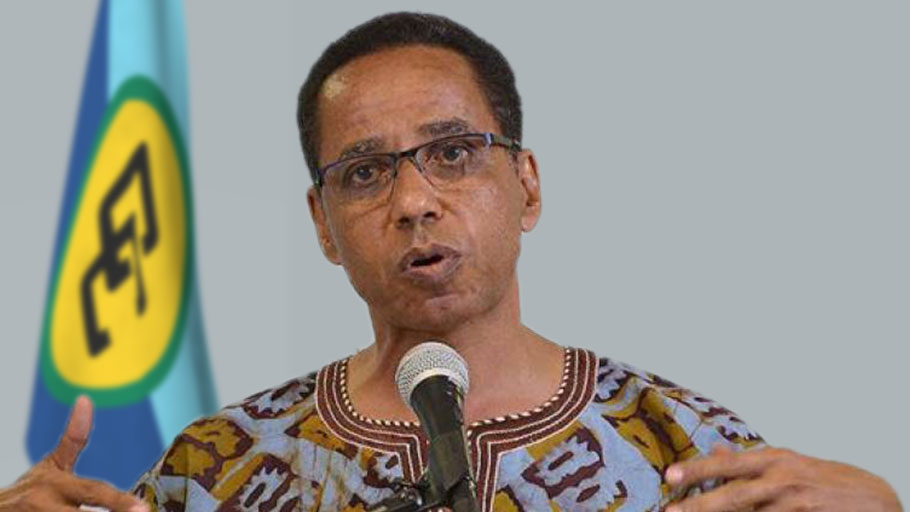
    A significant debate is unfolding within the Caribbean Community (CARICOM) regarding the fundamental principle of foreign policy coordination among member states. David Comissiong, a prominent Caribbean citizen, has issued a powerful rebuttal to emerging arguments that suggest divergent foreign policies are a strategic strength for the bloc. Grounding his analysis in the Revised Treaty of Chaguaramas, Comissiong asserts that collective action is not merely beneficial but a treaty-mandated obligation for confronting external pressures.

    The treatise meticulously cites the treaty’s foundational articles. Article 6 explicitly lists objectives including achieving ‘a greater measure of economic leverage’ with third-party states and ‘enhanced coordination of Member States’ foreign and foreign economic policies.’ Furthermore, Article 16 mandates the Council for Foreign and Community Relations (COFCOR) to ‘establish measures to coordinate the foreign policies of the Member States’ and ‘seek to ensure… the adoption of Community positions on major hemispheric and international issues.’

    This legal framework, Comissiong argues, is rooted in a historic precedent. He recalls the bold, unified action of CARICOM’s four founding members—Jamaica, Trinidad & Tobago, Guyana, and Barbados—who in October 1972 collectively resolved to establish diplomatic relations with Cuba. This coordinated move successfully defied the U.S. and OAS policy of isolating the island nation, creating a progressive precedent followed by many others. Their strength, the author emphasizes, was derived from acting as a ‘seamless, unified quartet.’

    The analysis then pivots to a contemporary crisis: the demand from the U.S. Trump administration in March 2025 for CARICOM nations to terminate their medical cooperation programs with Cuba. Comissiong highlights the initial, principled resistance voiced by several leaders. Grenada’s Prime Minister Dickon Mitchell rejected capitulation, while Prime Ministers Gonsalves, Rowley, and Mottley separately vowed to defend their sovereign right to engage Cuban health professionals, even at the risk of losing U.S. travel visas.

    Prime Minister Mia Mottley of Barbados, whose country does not currently employ Cuban medical staff, delivered a particularly instructive statement from the House of Assembly. She repudiated U.S. accusations of human trafficking, crediting Cuban medical professionals with saving ‘lives and limbs and sight for many a Caribbean person’ during the pandemic. Crucially, she declared her willingness to stand in unity with affected CARICOM peers, framing the issue as one of principle that required a collective, resolute response—a stance Comissiong interprets as a direct call for a unified CARICOM approach in keeping with the treaty.

    However, the author laments that this wise counsel did not prevail. Instead, the current landscape is marked by individual member states attempting solitary negotiations with the powerful U.S. administration. The predictable outcome, Comissiong notes, has been the termination or substantial rolling back of several vital medical cooperation programs—a result he deems ‘very regrettable’ given the clear guidance from the treaty and history.

    In conclusion, Comissiong invokes the timeless adage, ‘United we stand, divided we fall,’ tracing its wisdom from Aesop’s fables to biblical scripture. He urges his CARICOM brethren to reclaim this principle, clarifying that ‘unity is not necessarily unanimity.’ Drawing a parallel to the newly inaugurated CARICOM Full Free Movement Regime, he argues that effective collective action is possible even without every single member state on board. The author’s final plea is for a determined pursuit of the greatest possible unity to navigate the thorny geopolitical issues of the day, ensuring that ‘1 from 10 no longer leaves 0.’

  • Final Statement from Cricket West Indies on the Return of the West Indies Men’s Cricket Team.

    Final Statement from Cricket West Indies on the Return of the West Indies Men’s Cricket Team.

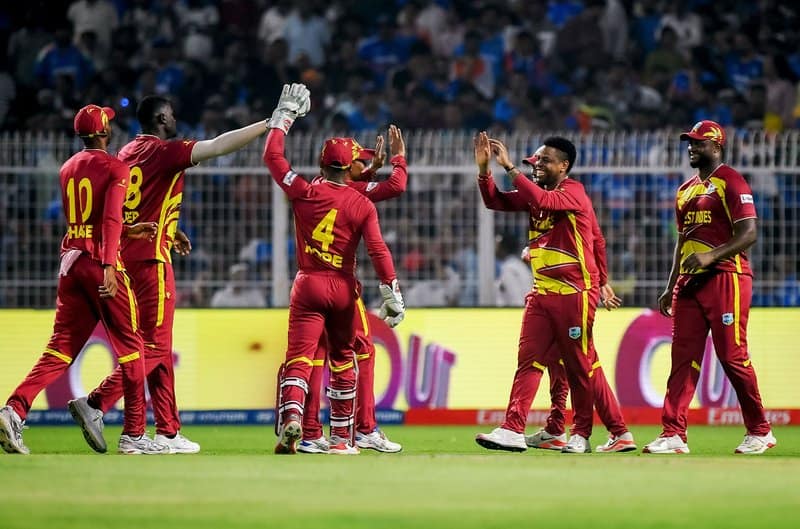
    Cricket West Indies (CWI) has released its conclusive official communication addressing the return of the West Indies Men’s cricket team after their recent international tour. The statement provides a comprehensive overview of the tour’s outcomes, player performances, and the administrative framework supporting the team’s transition back to regional operations.

    The communication outlines strategic assessments of the team’s competitive performance, highlighting both individual athletic achievements and collective challenges faced during the tournament. It further details the structured debriefing process involving coaching staff, selectors, and players to evaluate technical, tactical, and psychological aspects of the campaign.

    CWI’s announcement emphasizes the organization’s commitment to player development and welfare, noting specific support mechanisms implemented for athletes returning from international duty. The statement also acknowledges fan support and stakeholder contributions while outlining the preparatory roadmap for upcoming fixtures in the international cricket calendar.

    This final communiqué serves as an official capstone to the tour, providing transparency regarding administrative processes and reinforcing CWI’s dedication to the continued progress of West Indies cricket on the global stage.

  • SLSA come out on top in school cricket thriller

    SLSA come out on top in school cricket thriller

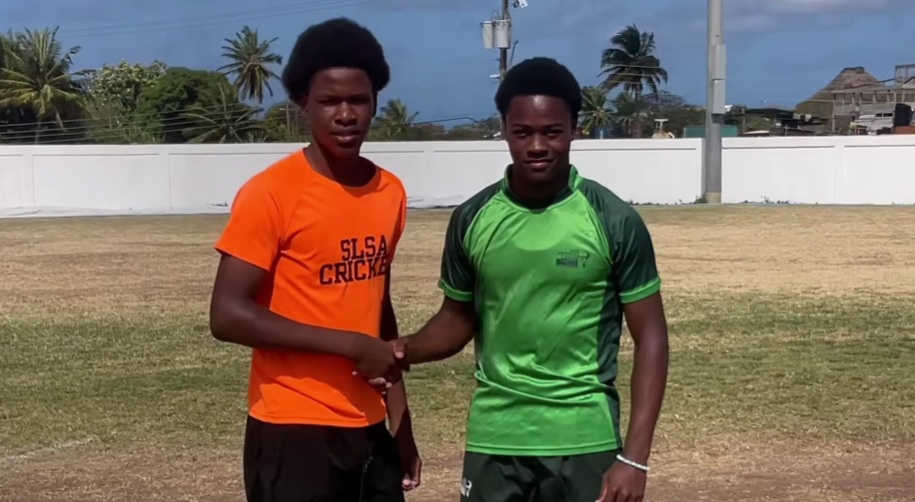
    The Ministry of Education, Youth Development, Sports and Digital Transformation’s Under-19 Boys’ Cricket Tournament commenced with thrilling matches across Saint Lucia on Thursday, featuring a dramatic super-over victory by Saint Lucia Sports Academy (SLSA) against defending champions Sir Arthur Lewis Community College (SALCC).

    In a highly anticipated rematch at Francis Baba Lastic Grounds in Gros Islet, SLSA secured redemption for their 97-run defeat in last April’s final. The match, reduced to 29 overs per side, saw SALCC post 124-7 with Johnathan Daniel’s impressive 58 (including six fours and four sixes) and Tyler Venner’s 35. SLSA’s bowling attack was led by Liam Joseph’s remarkable 4-7 in four overs, supported by Clint Dickson’s 2-37.

    SLSA matched the total exactly at 124-6, forcing a super-over decider. Dickson (36) and Zannaki Louis (30) were instrumental in the chase. The tie-breaker saw SLSA dominate with 15-0 while restricting SALCC to just 7-1, claiming a spectacular victory.

    Meanwhile, at Balata Playing Field, Leon Hess Comprehensive Secondary School recorded a comfortable four-wicket win against Corinth Secondary. Corinth was dismissed for 115 in 18.3 overs, with Zidane Wilson top-scoring at 42. Nathan Mongroo’s 3-4 led Hess’s bowling attack. Hess comfortably reached 116-6, fueled by Kaleb Charles’ 31 and Shadei St Omer’s 26.

    In another dominant performance, St Mary’s College crushed Sir Ira Simmons Secondary School by 117 runs. SMC posted 190-5 in 20 overs, featuring Delaun Clifford’s standout 69 and John Michael Auguste’s 32. Their bowling attack then restricted SISSS to 73-9, with Kyan Serieux taking 3-12 and Clifford adding 2-8 to his batting heroics.

    The tournament’s second scheduled game at FBLG was decided by default as Babonneau Secondary forfeited due to unforeseen circumstances, granting Patricia D. James Secondary School an automatic victory.

  • India zoekt veilige doorgang voor vastliggende schepen bij Straat van Hormuz

    India zoekt veilige doorgang voor vastliggende schepen bij Straat van Hormuz

    India has launched urgent diplomatic initiatives to secure safe passage for 22 commercial vessels currently immobilized west of the strategically critical Hormuz Strait, according to a Saturday statement from the Ministry of External Affairs. The development follows Iran’s exceptional authorization permitting limited Indian ships to traverse this vital maritime corridor, which facilitates approximately 20% of global oil and liquefied natural gas shipments.

    External Affairs Ministry spokesperson Randhir Jaiswal confirmed India’s ongoing engagement with multiple Middle Eastern stakeholders including Gulf states, Iran, the United States, and Israel, emphasizing that energy security considerations remain paramount. Iranian Ambassador to India Mohammad Fathali separately verified that Tehran had granted safe passage privileges to select Indian vessels.

    The maritime impasse stems from suspended shipping operations through the Hormuz Strait following recent American and Israeli military actions against Iran. This disruption has triggered India’s most severe gas crisis in decades, forcing authorities to prioritize household supply over industrial consumption.

    Shipping Ministry Special Secretary Rajesh Kumar Sinha detailed the composition of affected vessels: four crude oil tankers, six LPG carriers, and one LNG ship. In a positive development, two Indian Oil Corporation-chartered vessels—Shivalik and Nanda Devi—successfully navigated the strait and are scheduled to dock at Mundra and Kandla ports on March 16-17, carrying over 92,000 tons of liquefied petroleum gas.

    Concurrently, India is leveraging its BRICS presidency to forge consensus among member nations—Brazil, Russia, China, South Africa, and newcomer Iran—regarding the Middle East conflict.

    The human dimension of this crisis involves approximately 23,000 Indian seafarers working throughout the Gulf region. Among them is 26-year-old Ambuj, stranded for two weeks at Bandar Abbas port after six months away from family. His vessel remains anchored following warnings from Iran’s Islamic Revolutionary Guard Corps about navigation risks in the strait, a situation replicated across hundreds of commercial ships.

    Seafarer M. Kanta reported observing drones and fighter jets nearby while experiencing temporary Starlink internet disruptions that amplified onboard anxieties, though connectivity resumed March 6. An anonymous crew member described witnessing a drone strike on another vessel, noting that sleep has become difficult due to persistent fear and uncertainty.

    The Indian government maintains active coordination with Iranian and international authorities to ensure seafarer safety amid escalating regional tensions.

  • Dominica State College captures Schools’ Under 20 football title

    Dominica State College captures Schools’ Under 20 football title

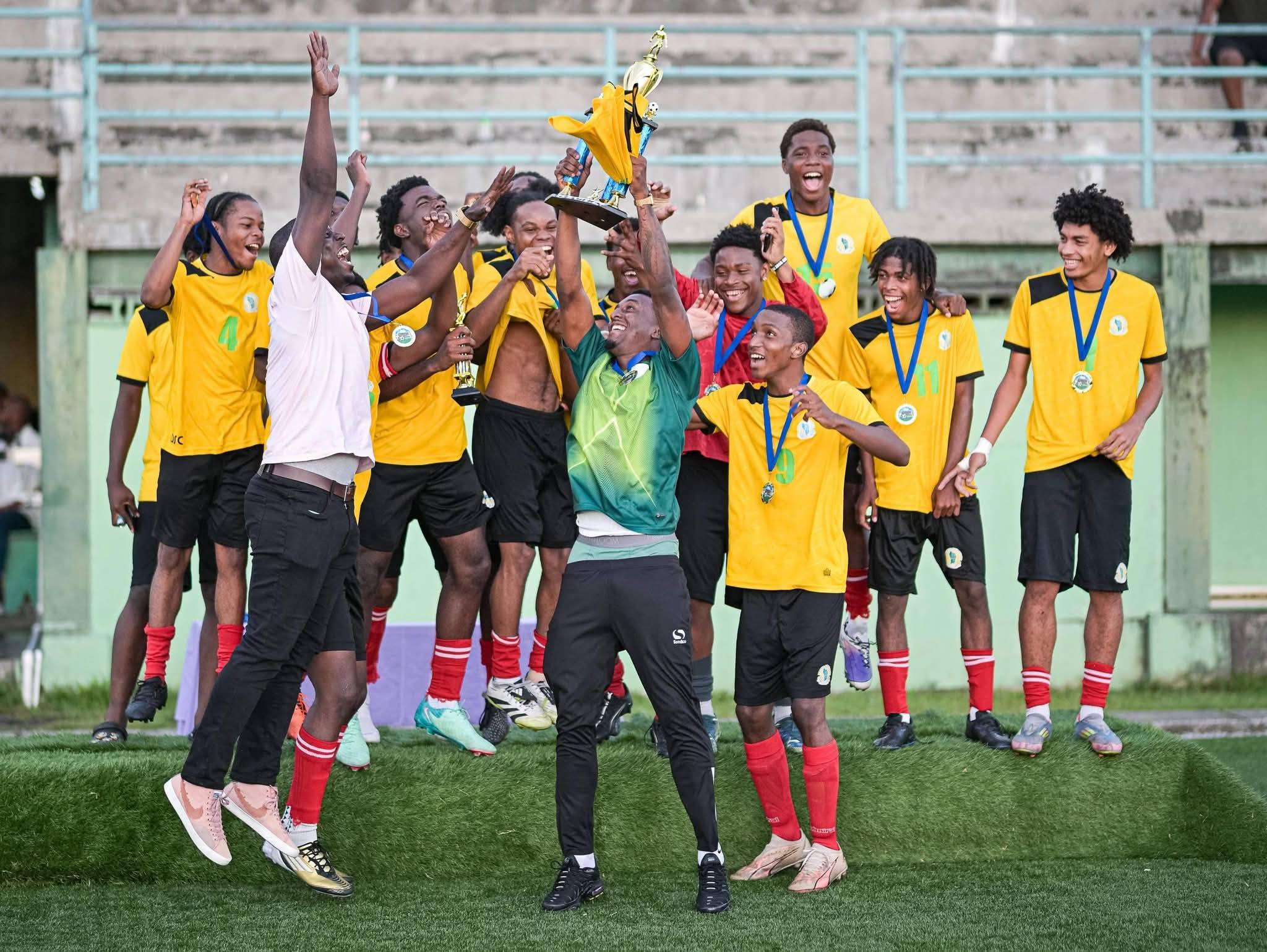
    In a commanding display of athletic prowess, Dominica State College secured their championship defense in the Sports Division Secondary Schools Football Championship with a decisive 3-0 victory over Castle Bruce Secondary School. The final match, held on March 13, 2026, at the DFA Technical Training Center in Stockfarm, culminated in a dominant performance despite an initially promising start from their opponents.

    Castle Bruce Secondary opened with impressive offensive pressure, executing precise passing sequences and generating multiple scoring opportunities in the early minutes. However, their inability to convert these chances into goals proved costly as Dominica State College gradually established control over the match tempo.

    The scoring breakthrough came through Turrie Christmas, who delivered a spectacular first-half free kick from just outside the 18-yard box that left Castle Bruce’s goalkeeper helpless. This opening goal visibly impacted Castle Bruce’s defensive confidence. Nathaniel Roberts extended the lead before halftime with an exceptional right-footed strike that found the top corner of the net.

    Despite being reduced to 10 players in the second half following Roberts’ second yellow card offense, Dominica State College maintained their defensive discipline. Christmas sealed the victory with his second goal—a composed finish from within the six-yard box following defensive confusion from a corner kick. Castle Bruce’s attack failed to mount sufficient pressure in the final period, allowing Dominica State College to preserve their clean sheet and claim the championship trophy.

    The victory marks Dominica State College’s successful title defense in the U20 Sports Division Secondary Schools Football competition, demonstrating both offensive excellence and resilient defensive capabilities under pressure.

  • Japan to equip OKEU hospital with new beds, defibrillators and ECG machines

    Japan to equip OKEU hospital with new beds, defibrillators and ECG machines

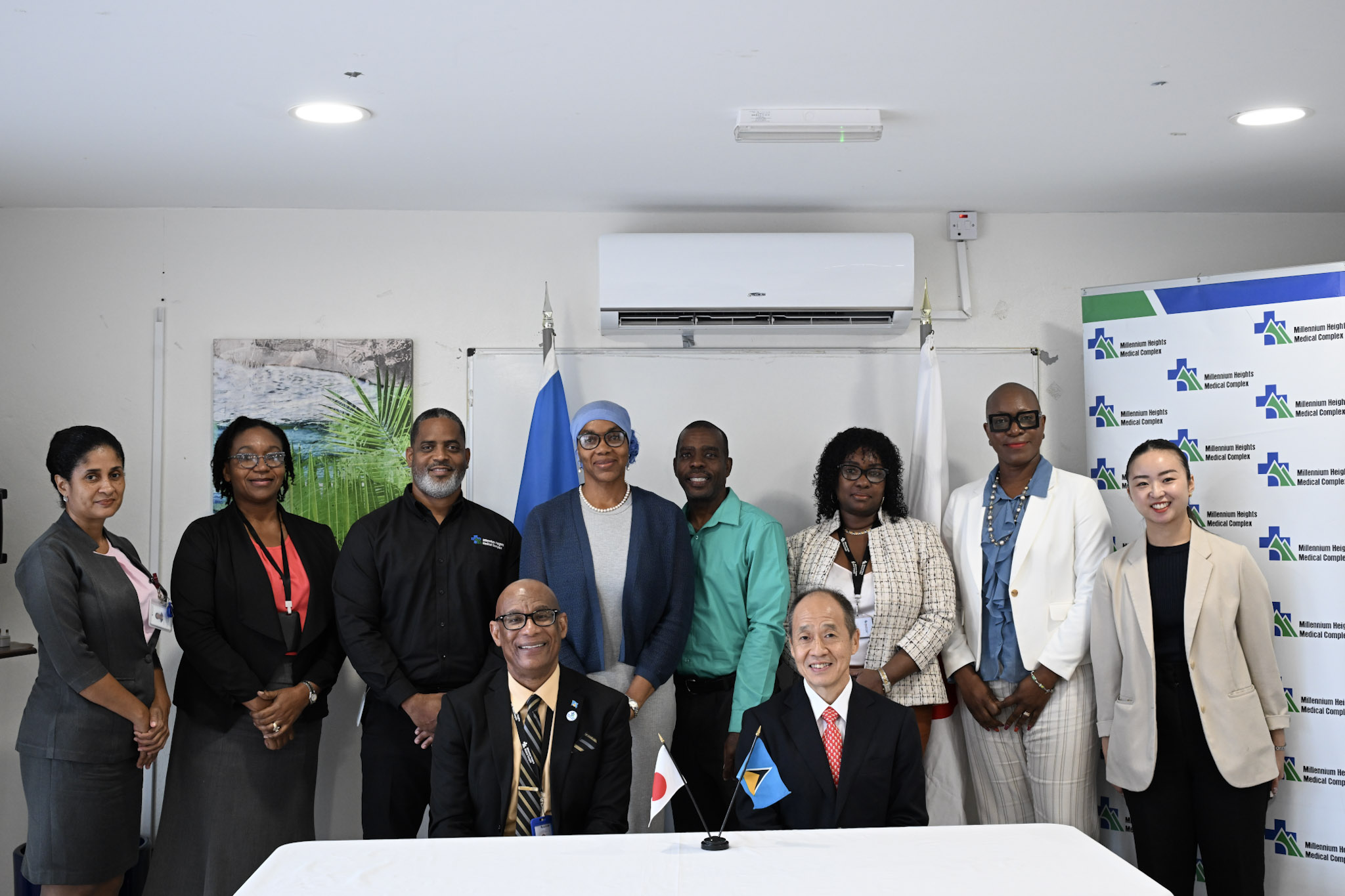
    In a significant development for Caribbean healthcare infrastructure, the Owen King EU Hospital in Saint Lucia is poised to enhance its medical capabilities through a substantial donation from Japan’s Grant Assistance for Grassroots Human Security Projects (GGP/Kusanone) program. The initiative will provide 12 advanced medical beds, two automated external defibrillator units, and two electrocardiogram machines to address critical service gaps.

    Hospital administrators confirm the equipment will be strategically deployed across high-demand departments including general wards, the Intensive Care Unit, and the Accident and Emergency Department. Procurement processes are scheduled for completion within the next thirty days, marking a rapid implementation timeline for the urgently needed resources.

    The partnership was formally established during a memorandum of understanding signing ceremony featuring Japanese Ambassador Akima Umezawa and Millennium Heights Medical Complex CEO Damian Greaves. Ambassador Umezawa emphasized Japan’s ongoing dedication to supporting healthcare accessibility initiatives in Saint Lucia, particularly noting the strategic importance of emergency preparedness for island nations vulnerable to natural disasters.

    Mr. Greaves acknowledged the donation as more than mere equipment transfer, characterizing it as a symbol of bilateral commitment to human security and community health system strengthening. ‘This collaboration directly impacts the point where healthcare most intimately connects with people’s lives,’ Greaves stated during the ceremonial proceedings.

    An official commissioning ceremony to commemorate the operationalization of this international health partnership is planned for a future date, marking the continued cooperation between Japan and Saint Lucia in the healthcare domain.

  • Antigua and Barbuda pushes for gender-sensitive climate action at UN Forum

    Antigua and Barbuda pushes for gender-sensitive climate action at UN Forum

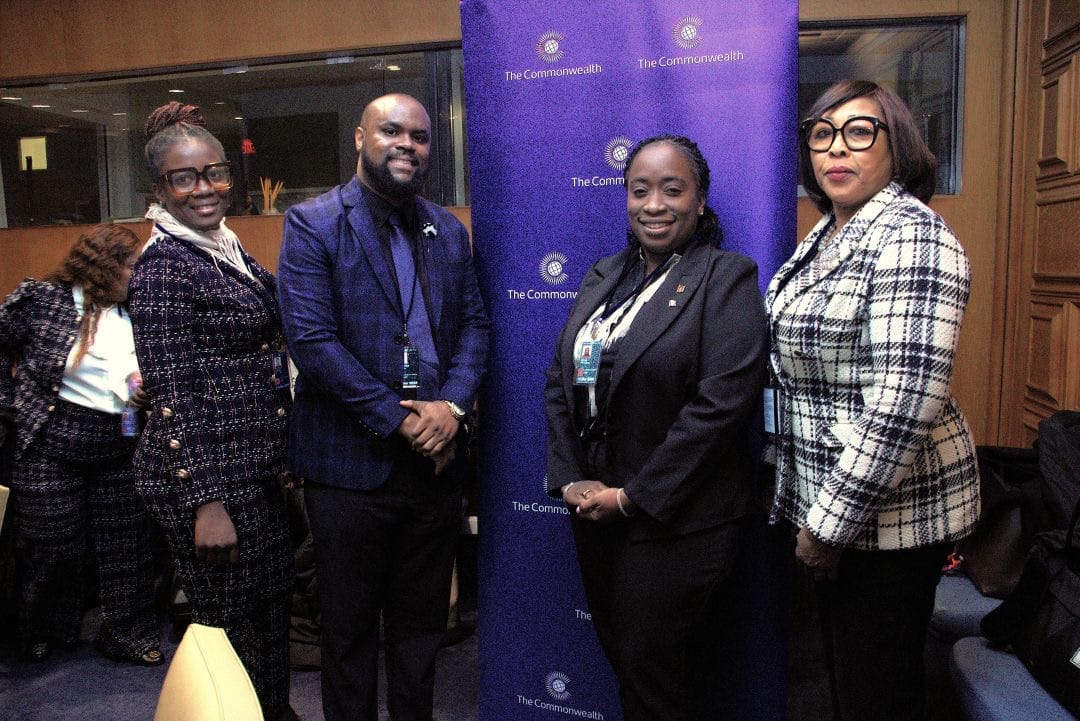
    NEW YORK (March 14, 2026) – In a significant address before a United Nations assembly, Antigua and Barbuda’s Director of Gender Affairs Jamie Saunders presented a powerful argument for integrating gender equality objectives into climate financing mechanisms. Speaking at a side event during the 70th Session of the Commission on the Status of Women (CSW80), Saunders emphasized that climate change impacts are not gender-neutral and require targeted financial solutions.

    The high-level panel discussion, titled ‘Advancing Climate Justice through Gender-Responsive Climate Finance,’ provided a platform for Saunders to outline Antigua and Barbuda’s pioneering policies addressing the disproportionate effects of climate change on women. He specifically highlighted the vulnerabilities faced by rural women, single-parent households, and women working in informal economic sectors who encounter significant obstacles in accessing resources, financing, and decision-making processes.

    Saunders detailed several innovative initiatives demonstrating Antigua and Barbuda’s leadership in climate justice. The country has formally integrated gender responsiveness into its climate governance framework and updated Nationally Determined Contributions (NDCs) as official policy. These commitments prioritize increasing women-led businesses implementing renewable energy and climate adaptation solutions, supporting women’s economic recovery following extreme weather events, and promoting gender-responsive transitions in traditionally male-dominated sectors like energy and construction.

    A cornerstone initiative highlighted was the Sustainable Island Resource Framework Fund (SIRF Fund), established under the Environmental Protection and Management Act (2019) and administered by the Department of Environment. Through its blended finance window, the fund specifically expands access to climate-related investments for women-led enterprises, ensuring women participate not merely as beneficiaries but as active drivers of climate solutions.

    Meanwhile, Minister of State Shenella Govia described Antigua and Barbuda’s participation in CSW80 as profoundly moving and rewarding. She emphasized the importance of international collaboration in sharing progress and developing collective solutions to accelerate gender equality advancements worldwide. The delegation, which included Minister of Social and Urban Transformation Rawdon Turner and other senior officials, actively contributed to discussions that will inform and strengthen national policies and initiatives moving forward.

  • PHOTOS: A night of style and sparkle as Lucien Harrison celebrates 33 years

    PHOTOS: A night of style and sparkle as Lucien Harrison celebrates 33 years

    Jamaica’s fashion scene witnessed a spectacular convergence of style and celebration last week as renowned designer Lucien Harrison marked his birthday with an exclusive soirée. The event, attended by intimate friends and fashion industry elites, transformed into an immersive experience blending haute couture with luxurious hospitality.

    Harrison made a characteristically dramatic entrance that immediately established the evening’s sophisticated ambiance. Guests were treated to an evening of refined culinary offerings and premium champagne, culminating in a bespoke fashion presentation specially orchestrated for the occasion. The designer’s signature aesthetic permeated every aspect of the celebration, from the curated guest list to the meticulously planned proceedings.

    Observer Online’s acclaimed photographer Llewellyn Wynter captured exclusive visuals from the glamorous gathering, providing a rare glimpse into the intersection of Jamaican fashion excellence and personal milestone celebrations. The event underscored Harrison’s significant standing within fashion circles while demonstrating his flair for creating memorable experiences that transcend conventional birthday observances.