博客

  • Bisonó and Lavrov hold high-level talks on Haiti and Dominican-Russian relations

    Bisonó and Lavrov hold high-level talks on Haiti and Dominican-Russian relations

    Against the backdrop of the 81st United Nations General Assembly’s annual High-Level Week in New York, a high-stakes bilateral meeting brought together Dominican Republic Foreign Minister Víctor “Ito” Bisonó and Russian Foreign Minister Sergey Lavrov to address a range of pressing issues spanning regional security, bilateral ties, and matters of mutual national concern.

    The destabilizing crisis in neighboring Haiti emerged as a central topic of discussion during the talks. Bisonó underscored that the international community cannot afford to shift its focus away from the escalating violence and instability plaguing the Caribbean nation, emphasizing that sustained global attention and coordinated support are critical to advancing efforts to rebuild public security and establish lasting governance in Haiti. The two ministers deliberated on ongoing international security initiatives aimed at curbing the power of armed gangs that have controlled large swathes of Haitian territory for years. They jointly agreed that the UN Security Council bears the core responsibility of securing adequate financial resources and deploying qualified personnel required for the multinational security mission to effectively counter gang violence and lay the groundwork for Haiti’s recovery.

    Beyond the regional crisis in Haiti, Bisonó brought forward a pressing concern for the Dominican Republic: recent reports of targeted job recruitment campaigns that lure Dominican citizens to travel to Russia, with alleged links to activities connected to the ongoing Russia-Ukraine conflict. In response to the diplomatic outreach, Lavrov directed Russia’s Latin America and Caribbean relations department to launch a follow-up investigation into the reports, committing to ensure that Dominican Republic’s concerns are communicated to relevant Russian authorities. Both sides reached a consensus to keep open lines of communication to resolve the issue moving forward.

    The meeting also served as an opportunity to take stock of the overall state of Dominican-Russian diplomatic and economic relations. The two leaders explored actionable pathways to revitalize bilateral economic and commercial exchanges, which have faced significant disruption amid shifting global geopolitical tensions and a volatile international economic environment. Discussions also touched on expanding cooperation in the tourism sector, a key driver of economic growth for the Dominican Republic, identifying untapped opportunities to deepen people-to-people and commercial ties between the two nations.

  • Abinader and Governor Hochul discuss stronger cooperation between the Dominican Republic and New York

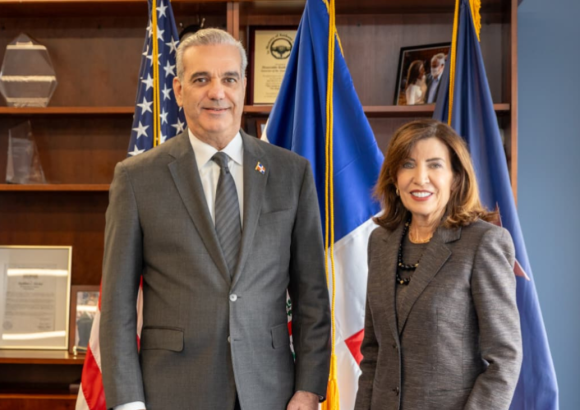
    Abinader and Governor Hochul discuss stronger cooperation between the Dominican Republic and New York

    A high-stakes diplomatic meeting between Dominican Republic President Luis Abinader and New York Governor Kathy Hochul has marked a new milestone in bilateral partnership, with both leaders moving to solidify and expand collaboration on multiple priority areas that build on discussions launched during Hochul’s 2023 visit to the Caribbean nation.

    In opening remarks, President Abinader extended sincere gratitude to Governor Hochul for her consistent backing of the large Dominican diaspora in New York State, a community that numbers more than one million people including first-generation immigrants and individuals of Dominican descent. He framed New York as one of the Dominican Republic’s most critical non-national partners, pointing to the deep cultural, economic and social ties that bind the two jurisdictions together.

    One of the central pillars of the renewed cooperation agreement is emergency and disaster response. Currently, around 40 senior Dominican officials specializing in emergency management and public safety are based in New York taking part in a week-long training and collaboration summit designed to boost regional capacity for disaster preparedness, rapid response and post-event recovery. Governor Hochul confirmed that New York is opening its wealth of institutional experience and purpose-built emergency response infrastructure to the Dominican delegation, a knowledge-sharing initiative that is expected to strengthen disaster resilience for both sides. Climate-related extreme events have grown more frequent across the Caribbean in recent years, making cross-border disaster cooperation an increasingly urgent priority.

    Beyond public safety, the two leaders announced the expansion of collaborative efforts to address pressing environmental challenges. Governor Hochul highlighted new technical support that will be provided by New York’s Department of Environmental Conservation to restoration and cleanup efforts for the Yaque River, a critical water source for the Dominican Republic that has grappled with widespread industrial and residential pollution for decades.

    The talks also covered a range of other issues of shared concern, including shifting economic conditions, volatile global energy costs and fluctuating fuel prices that have impacted both jurisdictions. A key social policy conversation centered on the Dominican community in New York, where many residents have raised growing anxiety over recent shifts in federal immigration policy and an uptick in enforcement actions. Governor Hochul emphasized the outsized cultural and economic contributions Dominican residents make to New York, and reiterated her administration’s commitment to ensuring all community members feel safe, supported and valued in the state.

    For his part, President Abinader drew on personal context to underscore the depth of the connection between the two regions, sharing that his own family has a history of immigration to the United States. He thanked the governor and her administration for their ongoing partnership and support for Dominican nationals and descendants living in New York.

    By the close of the meeting, both leaders issued joint statements affirming their shared commitment to continuing to deepen institutional ties, explore new collaborative opportunities and expand existing partnerships in the coming years, laying the groundwork for more productive engagement moving forward.

  • Convention center could attract larger international events to the Dominican Republic

    Convention center could attract larger international events to the Dominican Republic

    The Dominican Republic holds untapped potential to expand its footprint in the global business tourism landscape, but unlocking that growth depends on advancing a long-awaited dedicated convention center, according to a top international industry leader. Martin Boyle, executive director of the International Association of Professional Congress Organizers (IAPCO), laid out this strategic recommendation during the SDQ MICE 2026 forum, where industry stakeholders gathered to assess the country’s standing in the global meetings, incentives, conferences and exhibitions (MICE) sector.

    Boyle told attendees that large international event organizers consistently rank flexible, purpose-built infrastructure among their top priorities when selecting host destinations. Major global industry associations require expansive, adaptable venues that can be reconfigured to suit everything from large plenary sessions to segmented breakout workshops, a need that existing scattered venues in the Dominican Republic are unable to fully meet. A custom-designed convention center, he emphasized, would remove the key barrier to attracting larger, higher-profile international congresses that currently bypass the country for destinations with purpose-built infrastructure.

    Outlining key specifications for the proposed facility, Boyle noted that IAPCO recommends building a center sized to accommodate between 3,000 and 4,000 attendees, a capacity that aligns with the majority of mid-to-large scale international conferences seeking Caribbean and Latin American host destinations. He added that strategic site selection is non-negotiable: the center must be located within easy reach of the country’s largest hotel clusters and major transportation arteries to accommodate traveling attendees. Furthermore, Boyle stressed that long-term planning is critical, urging Dominican officials to design the facility to meet evolving industry needs for at least the next 15 years, to avoid costly premature renovations or expansions.

    New data presented at the forum from the International Congress and Convention Association (ICCA) illustrates both the Dominican Republic’s recent progress and remaining room for growth in the MICE sector. In 2025, the country hosted 31 international association events, marking a significant 41% increase from the 22 events it hosted in 2024. Despite this upward trajectory, the Dominican Republic still lags behind other major regional tourism destinations. For comparison, Costa Rica hosted 44 international events in 2025, Panama hosted 45, Colombia hosted 158, and regional leader Mexico hosted 191 events, highlighting the gap the new convention center could help close.

    While the need for the facility is widely acknowledged by industry and government alike, the project has yet to move past preliminary planning stages. The Dominican government has already taken initial steps to advance the proposal, acquiring a portion of the land occupied by the existing Hotel Santo Domingo in the capital for the convention center project back in 2025. Back in June of that year, Tourism Minister David Collado announced that demolition of the existing structure on the site would get underway roughly three months after the announcement. As of the time of the SDQ MICE 2026 forum, full construction work on the long-awaited facility has not yet commenced. Once completed, industry leaders widely expect the new convention center to become a cornerstone of the country’s strategy to draw larger international events and solidify its status as a top business tourism destination in the Latin American and Caribbean region.

  • PM: Africa and Caribbean must ‘choose each other’

    PM: Africa and Caribbean must ‘choose each other’

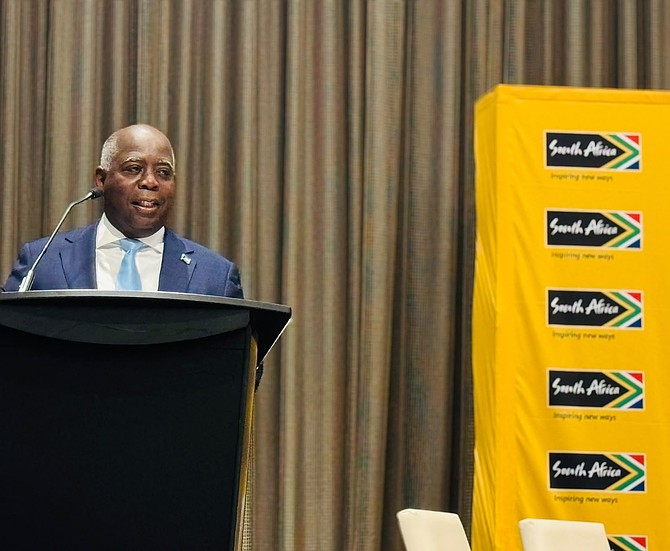
    During an address at the Diaspora and Friends of South Africa Roundtable held in New York, Bahamas Prime Minister Philip “Brave” Davis has issued a urgent call for African and Caribbean nations to take ownership of and expand the critical infrastructure that underpins the movement of people, capital, and digital data across the two regions.

    Davis outlined a targeted investment agenda focused on closing gaps in key connectivity sectors, pushing for new developments including cross-border data centers, regional digital payment platforms, expanded air travel routes, and integrated trade corridors. These projects would not only boost intra-African connectivity but also create direct, sustainable links between African economies and Caribbean nations. In a memorable framing of the difference between reliance and self-determination, Davis argued: “Remittance is love. Investment is power. Love keeps a family alive. Power keeps a nation free.”

    The Prime Minister also positioned The Bahamas as a strategic hub connecting Africa, the Caribbean, and the broader Americas, highlighting untapped investment opportunities across high-priority sectors: food security, renewable energy development, financial technology (fintech), manufacturing, and integrated logistics networks. “Let The Bahamas be your gateway to the Caribbean and the Americas,” he urged attendees.

    Davis acknowledged that despite deep, centuries-long historical and cultural bonds between the people of Africa and the Caribbean, practical economic and connectivity ties between the two regions remain underdeveloped. He noted that for most of The Bahamas’ history as an independent state, the country has oriented its trade, tourism, finance, and investment relationships almost exclusively toward North America and Europe. “There were good reasons. But in looking north for so long, we forgot to look east, towards the land our ancestors came from,” he said. Davis also admitted that his own administration faces ongoing work to eliminate barriers to connection, pointing to the significant logistical challenges of direct travel between The Bahamas and South Africa as one prominent example.

    Rather than framing existing infrastructure gaps as insurmountable obstacles, Davis reframed them as high-potential economic opportunities for investors. He pointed out that Sub-Saharan Africa is currently the most expensive region globally for remittance transfers, and that most financial transactions between Caribbean and African businesses are currently routed through third-party financial institutions based outside both regions. He also highlighted a stark global imbalance in digital infrastructure: while Africa is home to roughly 18 percent of the world’s total population, the continent holds less than 1 percent of global data center capacity.

    Davis emphasized that control over digital infrastructure is inseparable from national sovereignty. “Digital sovereignty means deciding where our data lives, who may use it and on what terms,” he said. “It means sharing in the value it creates. It means entering the digital age as owners, not only as users.”

    Turning to The Bahamas’ own investment profile, Davis shared that the country currently imports approximately 90 percent of its food supply, creating major openings for investment in local agricultural production and food security infrastructure. The Bahamas has also set a target of generating 30 percent of its total electricity from renewable energy sources by 2030, another sector Davis marked as ripe for outside and regional investment. He added that the country’s fintech and digital sectors are rapidly expanding, and highlighted the strategic advantages of Grand Bahama’s deep-water port and free trade zone for cross-regional logistics and manufacturing.

    Davis pointed to the growing partnership between The Bahamas’ government and the African Export-Import Bank (Afreximbank) as a blueprint for deepening future cooperation. He revealed that in February 2025, The Bahamas signed a $200 million framework agreement with Afreximbank to develop climate-resilient infrastructure across the country. He also noted that Afreximbank has raised its total financing ceiling for Caribbean Community (CARICOM) member states from $3 billion to $5 billion, a sign of growing commitment to regional partnership. “African capital is building Caribbean resilience, and earning a return doing it,” Davis said. “Solidarity is not a speech. Solidarity is a balance sheet.”

    To ground his call in shared history, Davis invoked the 1985 Commonwealth Heads of Government Meeting held in Nassau, where global leaders adopted the landmark Nassau Accord that pushed for collective international action to end apartheid in South Africa. He also recalled the historic visit of Nelson Mandela to The Bahamas shortly after his release from prison. Davis argued that the defining challenge for the current generation of leaders in both regions is to secure economic independence and digital sovereignty, building on the anti-apartheid struggle’s fight for political freedom.

    “In 1985, The Bahamas chose South Africa’s freedom,” Davis concluded. “In 2026, let Africa and the Caribbean choose each other.”

  • Dominican Republic calls for stronger measures to protect coastal communities

    Dominican Republic calls for stronger measures to protect coastal communities

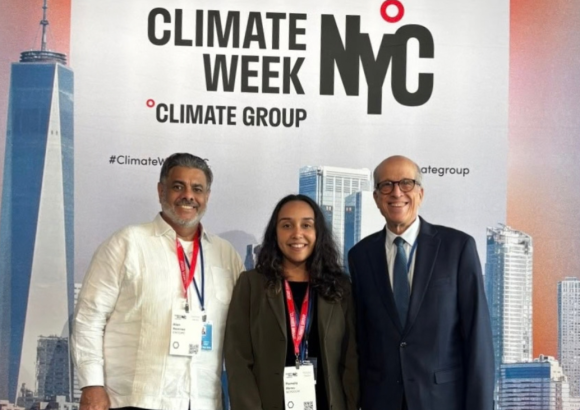
    Against the backdrop of the 81st United Nations General Assembly in New York, a pressing call for collective action on climate change has emerged from the Caribbean region. At the 4th Climate Mobility Summit, a parallel event focusing on climate-driven population movement, Max Puig, executive vice president of the Dominican Republic’s National Council for Climate Change and Carbon Market (CNCCMC), delivered a clear appeal for strengthened cross-border collaboration to counter accelerating sea level rise and the climate displacement it triggers.

    Puig opened his remarks by stressing that no single Caribbean nation can shoulder the burden of this growing crisis alone. As a small island developing state with over 1,500 kilometers of exposed coastline, the Dominican Republic offers a stark example of the region’s vulnerability. Most of the country’s population, critical infrastructure, and core economic sectors are concentrated along its shorelines, leaving these assets extremely exposed to the gradual advance of rising seas. If current warming trends continue, Puig explained, higher sea levels will exacerbate a cascade of interconnected threats: intensified coastal erosion, saltwater intrusion into freshwater supplies, more frequent and severe flooding, and amplified storm surges that overwhelm coastal defenses. These changes do not only threaten human settlements—they also degrade the natural barriers that protect communities, including mangroves, coral reefs, and sand beaches, all of which underpin the Caribbean’s two largest economic pillars: fishing and tourism.

    The human cost of this degradation is already visible, Puig emphasized. More than 9,000 Dominican fishermen and their families rely directly on healthy coral reefs for their livelihoods. As reefs decline, this endangers not just jobs and household incomes, but also local food security and the ability of generations-old coastal communities to remain on their traditional lands. For the Dominican Republic, displacement driven by climate hazards is not a distant threat: national data records show more than 79,000 people were displaced by climate and weather disasters between 2017 and 2022, most from sudden extreme weather events. Unlike these acute events, Puig noted, sea level rise acts as a slow-onset crisis that gradually erodes the habitability and economic viability of coastal areas, creating a hidden, steady flow of displacement that is often overlooked in global climate planning.

    The scale of potential displacement across the entire Greater Caribbean region is staggering. Projections from the Climate Mobility Model for the Greater Caribbean estimate that by 2050, roughly 8.2 million people could be permanently displaced by the economic impacts of climate change, with nearly 6 million of those people relocating within their own national borders. Puig was careful to clarify that these figures are not definitive predictions—instead, they serve as an urgent warning to help governments proactively plan for future pressures on communities, housing, critical infrastructure, and public services that will come with widespread displacement.

    To address this growing crisis, Puig outlined three non-negotiable priorities for regional and global action. First, he called for greatly expanded, accessible financing for climate adaptation projects, noting that small island developing states lack the capital to fund large-scale coastal protection and planning on their own. Second, he urged regional cooperation frameworks that center the protection of the rights and dignity of displaced communities, rather than treating displacement as a purely administrative problem. Third, he pushed for a just green economic transition that generates new, sustainable employment opportunities for young people in the region, creating alternatives to climate-vulnerable coastal livelihoods.

    Currently, the CNCCMC is partnering with the Global Center for Climate Mobility to develop public policies and international cooperation mechanisms designed to shield vulnerable communities and their unique cultural heritage from climate-related harm. This work aligns with the UN Declaration on Sea Level Rise, a global agreement that aims to improve risk mapping and data collection, strengthen adaptation capacity, expand climate financing, and protect at-risk communities. The declaration also prioritizes the preservation and documentation of cultural heritage threatened by sea level rise, including traditional territories, historic cemeteries, sacred indigenous sites, archaeological landmarks, and culturally significant coastal landscapes that define the identity of Caribbean communities.

  • Dominican Army intensifies border operations against smuggling and irregular migration

    Dominican Army intensifies border operations against smuggling and irregular migration

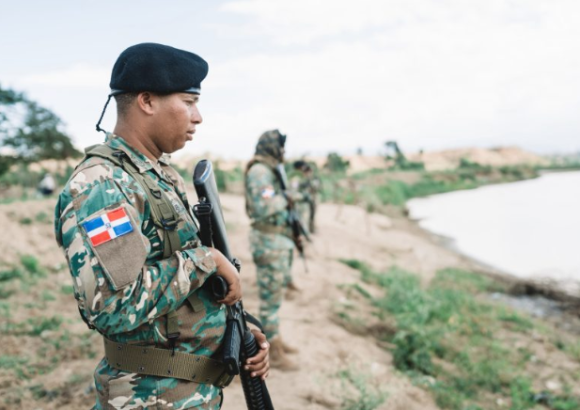
    In a week-long series of nationwide security and border enforcement operations held between September 14 and 20, 2026, the Dominican Republic Army (Ejército de República Dominicana, ERD) has carried out major crackdowns on cross-border illicit activity, detaining more than 3,600 irregular Haitian migrants and confiscating tens of thousands of prohibited smuggled goods, official military records confirm.

    Per the service’s freshly released weekly operational briefing, the seizures and detentions formed part of the ERD’s sustained ongoing missions: stepped-up border surveillance, enhanced nationwide territorial security protocols, and strict immigration control enforcement that targets unauthorized entry and contraband trafficking networks.

    Among the more than 31,000 seized contraband units were 29,400 packs of contraband cigarettes, 1,434 bottles of unregulated rum, and 115 bottles of untaxed whiskey. The vast majority of the cigarette seizures were executed by frontline troops assigned to the ERD’s 4th and 5th Infantry Brigades, which are responsible for patrolling high-traffic smuggling corridors along the country’s border.

    Beyond contraband and immigration enforcement, military authorities also took 14 individuals into custody who have since been transferred to the national judicial system to face formal charges. Twelve of these detainees face felony charges linked to human smuggling networks that facilitate the entry of undocumented migrants, while the remaining two were arrested on suspicion of illegal firearms possession.

    As part of the ERD’s targeted crackdown on illicit activity along the Dominican-Haitian border, operation teams also impounded 52 vehicles used by smuggling networks: 43 motorcycles, four passenger sedans, five sport utility vehicles, and one minivan. Troops with the ERD’s 3rd Infantry Brigade also recovered two unregistered homemade firearms during searches within the brigade’s area of responsibility.

    The weekly operational update also placed the most recent results in context of the ERD’s broader month-long enforcement push. Between August 17 and September 13, 2026, the service’s nationwide operations netted more than 536,000 contraband items, 84 portions of marijuana, and 131 vehicles, while detaining nearly 9,900 migrants with irregular immigration status.

    In a closing statement, ERD leadership reaffirmed that the military will continue ramping up its operational presence in border regions as part of long-term national commitments to dismantle transnational illicit networks, safeguard public and territorial security, and defend the Dominican Republic’s sovereign borders.

  • New leadership at Bahamas Humane Society: Lissa McComb Pinder takes over, promises enhanced animal care and community engagement

    New leadership at Bahamas Humane Society: Lissa McComb Pinder takes over, promises enhanced animal care and community engagement

    After 19 years of steady leadership from outgoing president Kim Aranha, the Bahamas Humane Society (BHS) has entered a new era, with veteran animal welfare advocate Lissa McComb Pinder stepping into the top leadership role. The leadership transition, completed on September 23, also saw long-serving vice president Charlotte Albury depart her executive post, opening the door for a fully refreshed executive team to advance the organization’s mission of reducing animal suffering across the Bahamas.

    McComb Pinder is no stranger to regional animal protection work. A key founding leader of the Bahamas Alliance for Animal Rights and Kindness (BAARK), she has spent years championing better outcomes for vulnerable animals in the country. For her, animal care is far more than a volunteer passion—it is a core life commitment. “Caring for animals isn’t a hobby for me, it’s a way of life, and I am choosing to take on this role because I believe we can do even more to end the suffering in this country,” she shared in her first public remarks as BHS president.

    The new president has laid out a clear, action-focused agenda for her tenure. Her top priorities span systemic and community-focused improvements: upgrading outdated shelter facilities to better meet animal needs, expanding the scope of available veterinary services, launching evening clinics to better serve community members who cannot attend during standard daytime hours, restoring in-house spay and neuter services that were previously paused, and boosting community outreach to increase pet adoption rates and public engagement. McComb Pinder emphasized that BHS carries an outsize public responsibility, caring for hundreds of vulnerable animals daily across New Providence while also driving animal welfare initiatives beyond the shelter’s walls. Delivering the improvements animals and residents deserve, she noted, will require collective effort across the organization and the broader community.

    To strengthen internal operations, McComb Pinder has already moved to formalize new leadership roles and support frontline staff, who regularly confront emotionally draining, heartbreaking situations working with at-risk animals. She plans to prioritize staff support, open lines of communication, and implement clearer organizational structure to streamline daily work. Recent leadership appointments align with this goal: Dr. Dan Katz has taken on the dual role of managing director and medical director, unifying the organization’s veterinary and animal welfare operations under a single coordinated leadership structure, while Alicia Curry has been named animal care supervisor. McComb Pinder noted that she has collaborated closely with both Katz and Curry on animal welfare initiatives for the past three years, creating a cohesive core leadership team from day one.

    McComb Pinder’s new executive team includes a range of experienced leaders from across the Bahamas’ animal welfare space. Annabeth Maura will serve as first vice president, while Dr. Valentino Grant of Caves Village Animal Hospital takes on the role of second vice president. Amanda Meyers will act as the organization’s treasurer, and Joanne Symonette will fill the secretary post.

    Aranha, who led the organization for nearly two decades, framed the transition as a natural “changing of the guard.” “Frankly, nobody should be president of anything for 19 years,” she said with a smile. Aranha explained that the outgoing leadership took time to find a candidate who was both willing and able to take on the heavy responsibility of leading BHS, and expressed full confidence in her successor. “We are extremely fortunate to have found that person in Lissa,” she said. Albury, who served alongside Aranha as vice president for more than 15 years, formed a renowned “power team” that steered BHS through decades of growth. Aranha praised the incoming executive’s collective qualifications, noting “They bring a wealth of experience, energy and commitment to animal welfare.” Though they have stepped back from executive roles, both Aranha and Albury will remain connected to BHS as members of a new advisory board, allowing the new leadership to draw on their decades of institutional knowledge and on-the-ground experience as they advance the organization’s mission.

  • Family mourns 10-year-old after sudden beach collapse

    Family mourns 10-year-old after sudden beach collapse

    A quiet 10-year-old child with complex preexisting health challenges has died unexpectedly in his father’s arms at Montague Beach, a spot the boy loved deeply, leaving his grieving family grappling with an unimaginable loss just days after he was discharged from a hospital visit for a sudden acute health episode.

    Sidney Bain Jr., who lived with a congenital serious heart condition and autism, passed away on the beach’s shoreline on Wednesday, according to his paternal grandmother, Marguerite Taylor. The child had undergone his first open-heart surgery at just five years old, and his medical team had already flagged that he would require a second high-risk procedure to manage his chronic condition in the future. His ongoing health struggles often forced him to miss classes at Hampton Academy, where he was enrolled as a student.

    The chain of events that led to Sidney’s death began just four days earlier, when he suffered a sudden, frightening health crisis. On that Saturday, Sidney developed severe abdominal pain, a persistent harsh cough, violent vomiting, full-body shaking, and cyanosis—a condition that turned his hands blue, signaling oxygen deprivation. His father rushed him to the hospital, where clinicians administered emergency oxygen and prescription medication before discharging the boy to return home.

    In the two days between his hospital discharge and his death, Sidney made a special trip to visit his grandmother, a moment that Taylor now reflects on with bittersweet clarity. Taylor said she immediately noticed her grandson’s face was still swollen from his recent episode, and she quietly questioned why the hospital had cleared him for discharge despite the lingering symptoms. During the visit, Sidney stayed for an hour and a half, enjoyed his favorite ice cream with his grandmother, and before he left, Taylor felt an unaccountable sense of foreboding that pushed her to hold him tightly, kiss his forehead, and tell him explicitly: “Grammy loves you.”

    On Wednesday, Sidney’s father took his only child to Montague Beach, a routine outing the pair enjoyed regularly, and one of Sidney’s favorite places to spend time. Taylor emphasized in an interview that Sidney never entered the water that day, and drowning was not a factor in his death. The boy began complaining of familiar stomach pain while standing on the shoreline, prompting his 37-year-old father to lift him and carry him toward their car. It was then that the father realized his son was rapidly losing oxygen.

    The father immediately laid Sidney down and began cardiopulmonary resuscitation (CPR) to try to restart his breathing, and nearby bystanders rushed over to assist with the life-saving efforts. But Taylor said that the intervention came too late to save her grandson. “I think by then it was too late. I think he had gone from the stomach start, and his daddy noticed that he was losing oxygen. I think that was it for him right there,” Taylor shared.

    Reflecting on the timing of Sidney’s death at the beach, Taylor found a small measure of peace in knowing her grandson passed in the place he adored most. “God take him to the place where he loved to be so much, because he loved the beach. He always wanted to go to the beach,” she said.

    The loss has hit Sidney’s father particularly hard, as the boy was his only child and the center of his world. Taylor described Sidney as a quiet, reserved, wonderful child who brought a wholeness to his father’s life that cannot be replaced.

  • BACSWN pledges airline consultation as carriers raise concerns over charges

    BACSWN pledges airline consultation as carriers raise concerns over charges

    A public dispute over proposed new aviation meteorological fees in Bahamian airspace has erupted this week, with the Bahamas Aviation, Climate and Severe Weather Network (BACSWN) moving to correct widespread misinformation about the cost of the planned service and reaffirm its commitment to fair, rule-aligned pricing negotiations with global carriers.

    At the center of the conflict is a $775 fee figure that has circulated widely across industry circles in recent weeks. BACSWN has repeatedly pushed back against this number, emphasizing in its latest official statement that the outdated figure no longer reflects the agency’s current planning. Officials confirmed that final fee levels are still under development, noting that shifting market conditions, project rescoping and updated cost modeling have rendered all earlier preliminary estimates obsolete. The organization added that the final fee will be “considerably lower” than the circulated $775 figure, with full details set to be released at a later date once finalization is complete.

    The controversy follows a formal statement from Airlines for America (A4A), the leading industry trade group representing major U.S. carriers including Delta Air Lines, American Airlines, United Airlines and JetBlue. While A4A did not explicitly name the $775 figure, industry observers broadly agree that the unconfirmed cost estimate was the core driver of the group’s pushback.

    In its statement, A4A already questioned the legitimacy of existing overflight charges levied by the Bahamas Air Navigation Services Authority (BANSA), arguing that the air navigation services those fees fund are already provided by the U.S. Federal Aviation Administration. The group went further to strongly oppose BACSWN’s proposed new charge, calling it an unjustified fee for a service that has not yet been delivered to carriers. A4A framed the proposed charge as “astronomical” and laid out core principles for aviation pricing: fees should only apply to services actually received by carriers, be non-discriminatory, fully transparent, and capped at covering only the real cost of delivering the service.

    In its response, BACSWN pushed back against A4A’s criticisms while aligning itself with the group’s core pricing principles. The Bahamian agency confirmed that its proposed charging framework is being developed in full compliance with Article 15 of the Convention on International Civil Aviation and associated policies set by the International Civil Aviation Organization (ICAO). BACSWN reiterated its commitment to ICAO’s four foundational charging rules: non-discrimination, cost alignment, full transparency, and mandatory consultation with airspace users before any new fees take effect.

    BACSWN emphasized that before the new aviation meteorological service charge is implemented, it will hold full consultations with all airspace users, including commercial airlines. During these consultations, the agency will share full details of the proposed services, their underlying costs, and the projected benefits for carriers, including measurable operational efficiency gains. The proposed service itself is designed to deliver timely, accurate weather data across more than 174,000 square miles of Bahamian airspace, giving aircraft operators the information needed to make safer, more informed flight decisions. The ultimate goal, BACSWN noted, is to boost overall aviation safety and efficiency in the region, while ensuring all pricing aligns with ICAO policy and local regulations set by the Civil Aviation Authority – Bahamas (CAA-B).

    “The organization welcomes constructive dialogue with airlines and other airspace users,” BACSWN said in its statement, adding that its core objective is to expand and improve the quality of weather information available to pilots and operators through a pricing model that is fair, transparent, and open to public scrutiny.

    The dispute comes as Bahamian officials are pushing for greater global support for climate and severe weather resilience for small island developing states at the United Nations General Assembly in New York this week. Speaking to the assembly, Sebas Bastian, Bahamas Minister of Innovation and National Development, called for expanded global access to advanced forecasting tools, satellite imagery, risk mapping and early warning systems for small states. Many low-lying small island nations like the Bahamas are disproportionately vulnerable to the impacts of climate change and intensifying severe weather events, but lack the resources to develop and maintain critical forecasting infrastructure independently.

    Bastian also called for strengthened regional cooperation frameworks that would allow Caribbean nations to pool technical expertise and shared resources, while preserving national control over critical policy decisions and maintaining full domestic accountability for climate and resilience initiatives.

  • Animal Control closes investigation into disturbing dog incident amid resource challenges

    Animal Control closes investigation into disturbing dog incident amid resource challenges

    A viral video that captured apparent animal abuse in the Bahamas has hit a dead end in its investigation, with local Animal Control officials announcing the case is being closed after teams failed to pin down the location of the incident or identify the people involved. Dr. Jason Sands, director of Bahamas’ Department of Agriculture, confirmed that after initial investigative leads turned up no new information, the overstretched agency had no choice but to reallocate its limited capacity elsewhere amid a rising tide of public animal welfare complaints.

    Sands emphasized in a statement that the case would immediately be re-opened if any member of the public provides new information that helps identify either the individual in the video or the location where the confrontation took place. “If there was an identification or a way to identify that location or that person, that matter will be investigated,” Sands said. “It was sent to Animal Control, but the initial investigation went nowhere, so they had to move on from that case.”

    The troubling footage, which circulated widely on social media earlier this year, captured a heated confrontation between the unnamed woman and volunteers from the Bahamas Alliance for Animal Rights and Kindness (BAARK), a local animal welfare advocacy group. According to BAARK’s account of the incident, the confrontation unfolded on August 7, when the organization returned three stray dogs to the community after completing a free spay and neuter outreach program.

    The chain of events began two days prior, on August 5, when BAARK volunteers responded to a resident’s request on St Charles Vincent Street to collect two unsterilized dogs from his property. While working in the area, the team spotted a third stray dog with no identification collar wandering loose under a parked car on the public roadway. Since no owner came forward to claim the uncollared animal, volunteers brought it along to their partner clinic to be spayed or neutered alongside the two other dogs collected from the area.

    Once all three procedures were completed, BAARK teams returned the dogs to the neighborhood on August 7. That’s when the confrontation with the woman seen in the video began. Footage of the clash shows the woman shouting defiantly at volunteers, who were recording the interaction and questioning her about the dog’s care, with one volunteer asking whether she intended to take responsibility for the animal. The video then captures the woman walking onto a nearby porch, grabbing the dog, and throwing it forcefully to the ground.

    Animal welfare leaders across the Bahamas have roundly condemned the incident, with outgoing Bahamas Humane Society president Kim Aranha saying she felt physically ill after watching the footage, and calling for immediate criminal prosecution of the woman involved. BAARK also issued a public statement calling the act “horrific and deeply disturbing,” echoing calls for accountability.

    But Sands said the case is far from unique in stretching Animal Control’s limited capacity thin. The agency currently receives far more animal welfare complaints each month than its underfunded, understaffed teams can properly investigate, he explained, forcing leadership to prioritize leads that are most likely to result in actionable charges. He added that Animal Control officers work closely with local police when requested to assist on animal-related cases, and do everything in their power to address every report with the resources they have available. “We have so many of these calls coming in at the moment at Animal Control, and they are doing their best with very limited resources to investigate all of them and to work along with the police when the police call them in for calls that they receive,” Sands said.