博客

  • CCJ President proposes international climate injuries compensation fund

    CCJ President proposes international climate injuries compensation fund

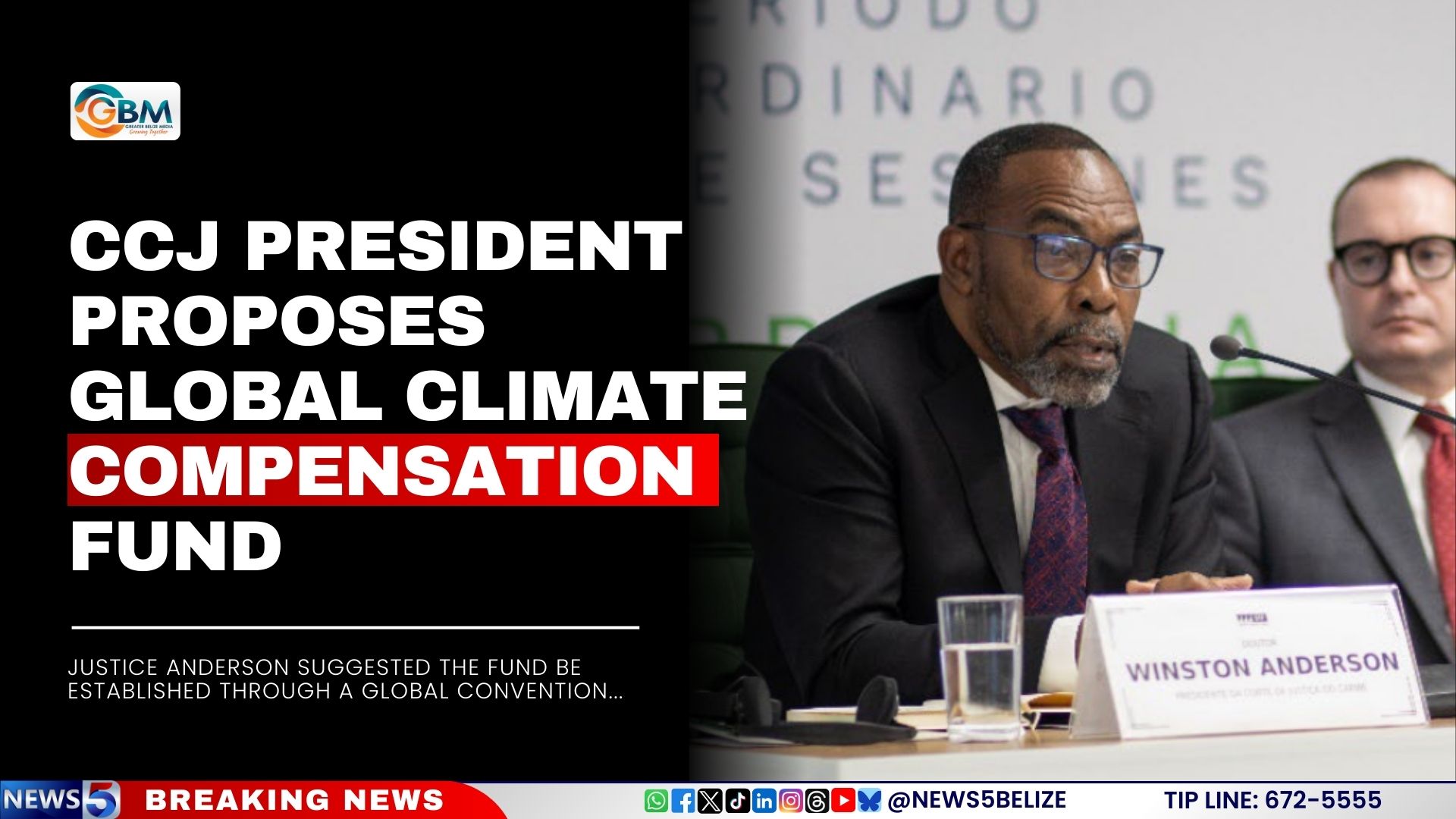
    In a significant development in climate justice advocacy, Caribbean Court of Justice (CCJ) President Winston Anderson has formally proposed the creation of an International Climate Injuries Compensation (ICIC) Fund during the Inter-American Seminar on Climate Emergency and Human Rights in Brasilia, Brazil. The landmark proposal, presented on March 16, 2026, calls for mandatory corporate contributions to address climate-related damages in vulnerable nations.

    President Anderson articulated his vision before the gathering hosted by the Inter-American Court of Human Rights and Brazil’s Supreme Court, emphasizing that existing regulatory frameworks fall short of addressing urgent climate realities. While acknowledging the importance of the Inter-American Court’s Advisory Opinion No.32 of 2025, which establishes government obligations to regulate climate-harming corporations, Anderson stressed the necessity of practical implementation mechanisms.

    The proposed ICIC Fund would operate under the ‘Polluter Pays’ principle, requiring multinational corporations exceeding specific greenhouse emission thresholds to contribute financially through their operating states. Drawing inspiration from the International Maritime Organisation’s successful oil pollution compensation model, the fund would possess legal personality enabling affected nations to seek compensation for damages caused by extreme weather events.

    Anderson expressed particular concern about the inadequate capitalization of the existing Fund for Responding to Loss and Damage (FRLD) established under the Paris Agreement. He highlighted the stark disparity between actual damages and available compensation, noting Jamaica’s situation where USD 6-7 billion in hurricane damages contrasts with maximum potential FRLD compensation of merely USD 20 million.

    The initiative, first introduced during Anderson’s keynote address at the CANARI Partners Forum in Barbados this January, represents a growing consensus among vulnerable nations that corporate accountability must translate into tangible financial responsibility for climate impacts.


  • RDU calls on farmers and Grenadians to increase food production

    RDU calls on farmers and Grenadians to increase food production

    The Grenadian government has issued an urgent call to action for agricultural producers nationwide to dramatically scale up domestic food production in response to growing global instability and rising import costs. Dr. Stephen Fletcher, Head of the Rural Development Unit (RDU) within the Ministry of Economic Development, Planning, Blue Economy and Cooperatives, emphasized that achieving food self-sufficiency has become a critical matter of national sovereignty and resilience.

    The comprehensive mobilization strategy targets farmers, fishermen, and livestock producers across Grenada, Carriacou, and Petite Martinique. The initiative focuses on several key pillars: expanding cultivation of staple crops fundamental to the national diet, diversifying agricultural products to reduce import dependency, implementing climate-resilient farming techniques, and developing robust marketing channels including supermarkets, hotels, and restaurants to ensure affordable distribution.

    Dr. Fletcher underscored the existential urgency of the situation, stating that failure to act decisively would leave the nation vulnerable to external shocks and fluctuating global markets. He framed food security as not merely an economic issue but one of national dignity and self-determination.

    The government has committed substantial support through technical assistance, training programs, grant funding, and partnership development aimed at enhancing productivity and strengthening agricultural livelihoods. Simultaneously, the RDU is encouraging households to participate through complementary measures including backyard gardening, bulk purchasing and preservation techniques, energy-efficient cooking methods, and preferential purchasing of local produce.

    The campaign’s overarching message—’Plant Today, Feed Tomorrow’—encapsulates the collective effort required to insulate Grenada from global food price volatility and supply chain disruptions while ensuring all citizens have consistent access to affordable, nutritious food.

  • Govt to expose hidden company owners with new beneficial ownership register

    Govt to expose hidden company owners with new beneficial ownership register

    In a decisive move to enhance financial transparency, the Barbadian government has approved a comprehensive policy to establish a national beneficial ownership registry. Finance Minister Ryan Straughn announced this landmark initiative during his budget presentation, positioning Barbados at the forefront of global efforts against illicit financial activities.

    The registry will specifically target identifying the ultimate human beneficiaries behind corporate entities—those who exercise final control over company assets and profits, regardless of who appears on official documentation as legal owners. This distinction is crucial for piercing through complex corporate veils and shell company arrangements that obscure true ownership.

    Minister Straughn emphasized the critical importance of this transparency mechanism for combating money laundering, tax evasion, and terrorist financing. “Understanding who ultimately controls companies is fundamental to strengthening our regulatory framework and corporate governance standards,” he stated.

    The implementation will occur through a carefully structured three-phase approach. Initial efforts will focus on legislative reforms, including drafting appropriate sanctions, penalties, and provisions for information sharing with international authorities. Subsequently, the government will develop secure digital infrastructure to safeguard sensitive data against cyber threats and unauthorized access.

    A specialized business compliance unit will be established to assist micro, small, and medium-sized enterprises—numbering over 10,000—that lack corporate service providers. The government has set a target of May 2027 for full operationalization of the framework, which will enhance both domestic oversight and international cooperation capabilities.

  • Baby bonus: New grant for twins, triplets, more

    Baby bonus: New grant for twins, triplets, more

    The Barbadian government has unveiled two significant social welfare programs aimed at supporting child-rearing costs and long-term financial security for families. Finance Minister Ryan Straughn announced these initiatives during his budget presentation, marking a substantial investment in the nation’s youth.

    Effective April 1st, families with multiple births will receive monthly cash grants without means testing. The program provides $300 monthly for twins under age five and $600 monthly for triplets or higher-order multiples within the same age bracket. This direct financial assistance is designed to alleviate the substantial costs associated with raising multiple children simultaneously.

    Concurrently, the government is establishing the groundbreaking Barbados Republic Child Wealth Fund, fulfilling an election campaign promise. The fund will provide every child born in Barbados on or after November 30, 2021, with a $5,000 birthright investment. Minister Straughn revealed that $52.1 million has been allocated initially, with anticipated annual costs of $10-12 million based on current birth rates.

    The investment fund will be legally protected and managed by an independent government entity. Resources will be invested in diversified portfolios including real assets, bonds, equities, and other funds with individual beneficiary accounting. Eligibility extends to Barbadian citizens by birth, descendants of Barbadian public officials working abroad, and descendants of ordinarily resident Barbadians.

    Withdrawal conditions require maintaining connections to Barbados, including minimum ten-year residency before age 18 or special status for children of government workers born abroad. Proceeds are specifically designated for education or housing investments within Barbados.

    The enabling legislation is scheduled for introduction later this year, coinciding with significant national anniversaries including the fifth republic anniversary and sixtieth independence anniversary. This comprehensive approach represents one of the Caribbean’s most progressive child welfare initiatives, addressing both immediate financial pressures and long-term economic security.

  • Georgetown Public Hospital asks Court to order removal of street vendors

    Georgetown Public Hospital asks Court to order removal of street vendors

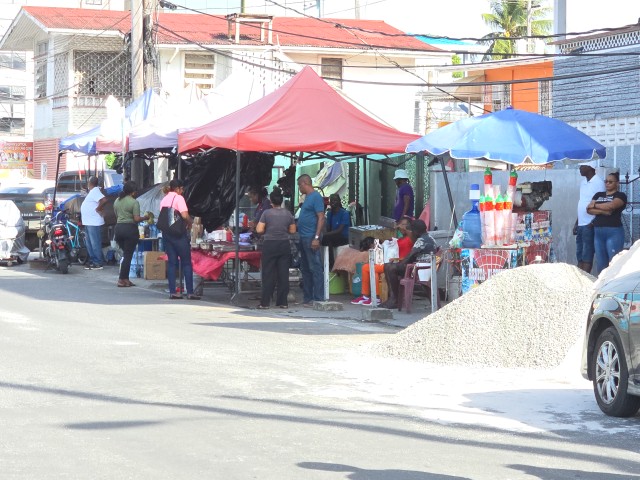
    Georgetown Public Hospital Corporation (GPHC), Guyana’s premier healthcare institution, has escalated its ongoing battle against unauthorized street vending by filing a formal legal petition with the High Court on Tuesday, March 17, 2026. The hospital seeks judicial intervention to compel Georgetown’s Town Clerk to immediately clear vendors obstructing critical access routes to the medical facility.

    Through legal representation by Attorney Sase Gunraj, GPHC demands the municipal authority enforce its statutory obligations under Guyana’s Municipal and District Councils Act. The application specifically targets food, beverage, and miscellaneous vendors operating mobile trucks, carts, and temporary stalls along New Market, Middle, East, Lamaha, and Thomas Streets—all crucial perimeter roads surrounding the hospital complex.

    CEO Robbie Rambarran’s supporting affidavit outlines severe operational impacts caused by the vendor congestion. Emergency vehicles, medical staff, and patients face significant access challenges due to obstructed ingress and egress points. Additionally, the hospital administration cites serious sanitation concerns, with vendors allegedly leaving substantial waste and debris across the hospital vicinity.

    The court documents reveal a protracted history of failed resolutions, dating back to April 2024. Despite multiple formal communications—including letters sent on April 30, 2024, May 7, 2024, and January 5, 2026—the Mayor and City Council have not implemented permanent solutions. While municipal officials acknowledged the problem in a May 2024 response and expressed intentions for amicable resolution, no substantive action followed.

    Rambarran emphasized that GPHC lacks necessary vendor particulars to initiate individual legal proceedings, making municipal intervention the only viable pathway to restore order. The hospital contends that successful court action would not only benefit medical operations but also uphold public order around one of Guyana’s most critical healthcare infrastructures.

  • Police Appeal for Information After Fatal Newfield Stabbing of Daniel Lewis

    Police Appeal for Information After Fatal Newfield Stabbing of Daniel Lewis

    Authorities in Antigua and Barbuda have launched a public appeal for information regarding a deadly altercation in New Field that resulted in the death of 38-year-old Daniel Lewis from Glanvilles. The Royal Police Force confirmed the fatal incident occurred in the early morning of Monday, March 16, within the Lion’s Estate vicinity.

    Preliminary investigative findings indicate that Lewis allegedly entered a private residence in the New Field area, leading to a physical confrontation. During the ensuing altercation, he sustained a severe injury to his lower torso. Emergency medical teams responded promptly to the scene but were unable to save Lewis, who was pronounced dead at approximately 8:38 a.m.

    The Royal Police Force has expressed sympathies to Lewis’s family and loved ones while emphasizing their commitment to determining the full circumstances surrounding the incident. Investigators are particularly interested in speaking with anyone who might have witnessed events preceding or following the altercation.

    Individuals with potentially relevant information are encouraged to contact the Criminal Investigations Department directly at 462-3913. Alternatively, anonymous tips can be submitted through the Crimestoppers hotline at 800-TIPS (8477). Police officials have assured that all information will be treated with strict confidentiality as they continue their active investigation into this matter.

  • Belize Transfers CIRSA Presidency to Guatemala

    Belize Transfers CIRSA Presidency to Guatemala

    In a significant diplomatic transition for Central American agricultural cooperation, Belize has formally transferred its presidency of the International Regional Committee on Agricultural Health (CIRSA) to Guatemala. The handover ceremony occurred during the 73rd CIRSA convening in Guatemala City on March 17, 2026, marking the conclusion of Belize’s year-long leadership tenure focused on regional food security and agricultural health initiatives.

    The transfer of authority was executed between Belize’s Minister of Agriculture, Rodwell Ferguson, and his Guatemalan counterpart, Minister María Fernanda Rivera Dávila. This ceremonial transition included the presentation of a comprehensive report detailing Belize’s accomplishments throughout its presidential term, along with the exchange of symbolic recognition for the country’s stewardship.

    CIRSA functions as the principal coordinating body for agricultural ministers throughout Central America, providing strategic oversight to OIRSA—the regional organization dedicated to protecting plant and animal health across member nations. Belize originally assumed the committee’s presidency in April 2025 during proceedings hosted in San Pedro, Ambergris Caye.

    The current ministerial assembly is addressing pressing regional challenges, with particular emphasis on containing the New World Screwworm infestation, which continues to jeopardize livestock production throughout Central America. This pestilence represents one of the most substantial biosecurity threats currently facing the region’s agricultural sector.

    The presidential rotation occurs amidst ongoing collaborative efforts to strengthen integrated agricultural health systems and enhance regional response capabilities to emerging threats to food security and animal welfare.

  • CCJ President Proposes Global Climate Compensation Fund

    CCJ President Proposes Global Climate Compensation Fund

    In a significant development in global climate justice discourse, Caribbean Court of Justice President Justice Winston Anderson has put forward a groundbreaking proposal for an International Climate Injuries Compensation (ICIC) Fund. The initiative, designed to provide financial assistance to nations ravaged by climate-related disasters, was unveiled during the Inter-American Seminar on Climate Emergency and Human Rights in Brasília, Brazil.

    The seminar, jointly hosted by the Inter-American Court of Human Rights and Brazil’s Supreme Court, served as the platform for Justice Anderson’s compelling argument that existing legal frameworks, while important, remain insufficient in addressing the scale of climate devastation. He specifically highlighted the vulnerability of small island states, referencing the catastrophic impact of Hurricane Melissa in October 2025 as a prime example of the disproportionate suffering borne by Caribbean nations.

    Justice Anderson’s proposal establishes a novel mechanism whereby multinational corporations exceeding predetermined greenhouse gas emission thresholds would be mandated to contribute financially through their operating states. The fund would possess legal standing, enabling affected jurisdictions to pursue litigation following major climate events.

    Drawing inspiration from the International Oil Pollution Compensation Funds, the ICIC model operates firmly within the ‘polluter pays’ principle framework. Justice Anderson initially presented this concept at a climate justice forum in Barbados in January 2026, expressing particular concern about the implementation delays and funding inadequacies of the existing Paris Agreement loss and damage fund. He cited Jamaica’s situation as evidence, noting the country could access merely US$20 million despite facing an estimated US$6-7 billion in climate-related damages.

  • ECTEL Vacancy: Legal Officer – Regulatory Affairs

    ECTEL Vacancy: Legal Officer – Regulatory Affairs

    The Eastern Caribbean Telecommunications Authority (ECTEL) has announced a significant career opportunity for legal professionals specializing in regulatory affairs. The organization is currently accepting applications for the position of Legal Officer – Regulatory Affairs, to be based at its regional headquarters in St. Lucia.

    This senior role operates under the direct supervision of the General Counsel/Secretary to the ECTEL Board of Directors. The successful candidate will assume critical responsibilities including serving as the primary liaison with National Telecommunications Regulatory Commissions (NTRCs) regarding technical advice and assistance requests. The position requires providing comprehensive legal interpretation and opinions on electronic communications and telecommunications regulatory matters, preparing legal opinions on administrative and contract issues, and advising ECTEL Contracting States on sector-specific legal considerations.

    Additional duties encompass evaluating license applications, addressing customer complaints, reviewing access and interconnection agreements, and assessing regulatory compliance with the Telecommunications Act/Electronic Communications Act. The officer will also coordinate regulatory activities supporting the ECTEL framework, ensure compliance with ECTEL’s recommendations and NTRC decisions, advise on licensing procedures and tender processes, and facilitate the appointment of mediators and arbitrators. The role further involves drafting model electronic communications legislation and reviewing international agreements and treaties.

    Qualified applicants must possess a first degree in law from an English Commonwealth university, a Legal Education Certificate or equivalent qualification, and admission to a Commonwealth Bar, preferably within ECTEL or CARICOM member states. A minimum of five years’ experience in a similar capacity is mandatory, while postgraduate qualifications or three years’ experience in legal drafting and/or electronic communications regulation would be considered advantageous. Prior experience in regulatory agencies or public law is also desirable.

    The position demands demonstrated competencies in corporate governance, regulatory policy development, sound legal judgment, advanced research capabilities, and strong communication and presentation skills. The role requires a service-oriented professional with excellent planning abilities who can work both independently and collaboratively.

    The appointment offers permanent status following successful completion of a probation period. The compensation package, classified as Grade 4, is income tax-free and includes comprehensive housing and vehicle allowances. Based at ECTEL’s St. Lucia headquarters, the successful candidate recruited from outside the duty station will receive relocation support including baggage allowances and vehicle transfer costs.

    Interested candidates must apply through ECTEL’s official portal at https://ectel.bamboohr.com/careers/15 by April 13, 2026, at 4:30 PM. Applications require submission of a detailed curriculum vitae, three professional references with contact information, and certified copies of relevant academic and professional certificates.

  • Flyovers in the works to ease traffic congestion, says Straughn

    Flyovers in the works to ease traffic congestion, says Straughn

    In a substantial policy reversal, the Barbadian government has officially reinstated flyover construction as a central component of its national infrastructure agenda. The announcement, delivered by Finance Minister Ryan Straughn during Monday’s budget presentation, signals a return to a transportation strategy initially conceived nearly two decades ago.

    The administration revealed it has recommenced negotiations with the original contractor engaged prior to the 2008 general election to design and construct overpasses along the critically congested ABC Highway. Minister Straughn confirmed that Cabinet authorized this re-engagement last Thursday, noting that the company had already completed comprehensive design work for the proposed overpass network.

    This decision represents a revival of infrastructure planning first initiated under former Prime Minister Owen Arthur’s administration in 2006, which was subsequently abandoned following the 2008 governmental transition. Straughn sharply criticized this earlier termination, revealing that Barbados paid over $20 million in cancellation damages while failing to implement any alternative traffic management solutions.

    “Some might view this as good politics, but Bajans have paid a heavy price for it,” Straughn asserted. “Today, no alternative solution was put in place. The traffic is choking us everywhere we turn.”

    The comprehensive transportation strategy extends beyond flyover construction to include widening pivotal sections of the ABC Highway, particularly Highway 2A. Minister Straughn contextualized these measures within a historical pattern of inconsistent infrastructure planning, tracing current challenges to decisions made during the highway’s original development in the 1980s.

    Originally conceptualized under Prime Minister Tom Adams as a four-lane corridor connecting the airport to seaport while bypassing Bridgetown, governmental changes resulted in only two lanes being completed by 1989. “Poor decision making and lack of foresight continues to cost our citizens dearly,” Straughn remarked, suggesting Barbados would presently enjoy superior infrastructure had original specifications been maintained.

    Complementing these physical infrastructure projects, the government will launch a nationwide consultation on traffic congestion beginning next week. A series of town hall meetings will commence March 23 at Deighton Griffith Secondary School, with subsequent sessions scheduled for March 25 (Princess Margaret Secondary), March 30 (The St Michael School), and April 1 (Alexandra School). All sessions will convene at 6:30 p.m. with public participation encouraged.

    Minister Straughn positioned these efforts within his party’s legacy of infrastructure planning, while cautioning that delays have substantially increased project costs compared to previous decades. “Don’t forget the significant increase in associated cost of executing those works in today’s money compared to previous periods,” he emphasized.

    The minister concluded with a forward-looking statement: “I really hope we will solve the problem this time, so someone else in 20 years’ time would not be here to make the same point.”