HAVANA, CUBA – Fresh economic sanctions imposed on Cuba by former United States President Donald Trump have sparked fierce condemnation from Cuban officials, who label the new measures an act of collective punishment against the island’s civilian population. The sanctions took effect Friday, coinciding with Cuba’s annual May 1 celebrations that drew tens of thousands of demonstrators marching to the US Embassy in Havana under the rallying cry of “Defend the Homeland.”
Geopolitical tensions between Washington and Havana have stretched across more than six decades. Ever since Fidel Castro led a communist revolution that seized power in 1959, the US has maintained a near-continuous trade embargo against the island nation, which sits just 90 miles off the coast of Florida. Prior to rolling out the new sanctions, Trump had publicly mused about the possibility of taking full control of Cuba.
Under the executive order signed Friday, the Trump administration expanded sanctions coverage to target any individual linked to major sectors of Cuba’s state-controlled economy. The new measures apply to actors operating in energy, national defense and materiel production, metal and mining, financial services, and public security, as well as any other economic segment deemed relevant by the US. The order also targets Cuban government officials accused of involvement in serious human rights violations and systemic corruption.
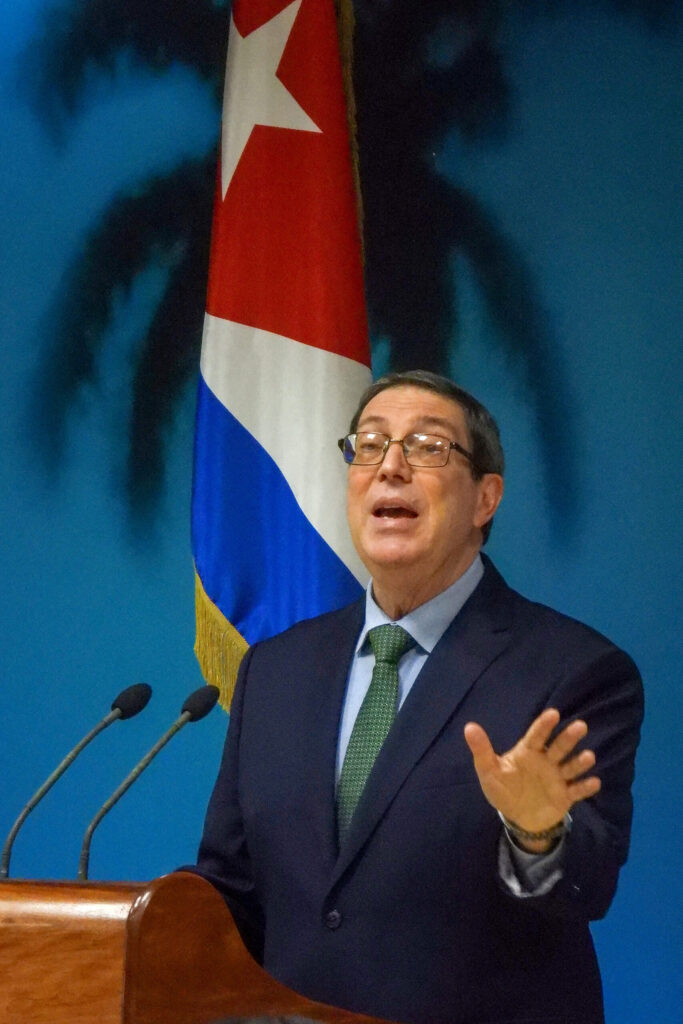
Cuba’s top diplomat Foreign Minister Bruno Rodriguez immediately pushed back against the new measures. In a public post on X, written in English, Rodriguez stated: “We firmly reject the recent unilateral coercive measures adopted by the #UnitedStates government. These actions demonstrate an intention to impose, once again, collective punishment on the Cuban people.” In a follow-up Spanish-language statement, he further characterized the sanctions as both illegal and abusive.
For Cuba, the new sanctions come as the country already grapples with a deep and prolonged economic crisis that has been compounded by recent US pressure. A US fuel blockade implemented in January has drastically cut the country’s access to energy imports, with only a single Russian oil tanker successfully reaching Cuban ports since the blockade went into effect. Chronic supply shortages and routine rolling blackouts have become daily realities for most Cuban citizens, and tourism — long the country’s highest-revenue industry — has collapsed to historic lows.
Notably, the new sanctions were announced just weeks after a significant diplomatic shift: senior US officials traveled to Havana for bilateral dialogue in April, raising tentative hopes of reduced tensions between the two nations.
Friday’s mass rally outside the US Embassy was led by Cuba’s sitting President Miguel Diaz-Canel and former revolutionary leader Raul Castro, drawing massive crowds of Cuban citizens who turned out to demonstrate against US policy. The day before the rally, Diaz-Canel had already called on all Cubans to mobilize against what he described as “the genocidal blockade and the crude imperial threats to our country.”
Throughout the rally, Cuban officials announced that more than six million signatures had been collected across the country over the past six weeks as part of a “for the homeland and for peace” campaign opposing US policy. Cuban opposition figures have, however, raised public questions about the transparency and methodology of the signature collection process.
State-run Cuban television broadcast parallel mass gatherings in cities across the island, showing thousands of additional protesters turning out to voice opposition to the new sanctions.