博客

  • Opposition calls for overhaul of CIP following UK visa decision

    Opposition calls for overhaul of CIP following UK visa decision

    Saint Lucia’s international standing faces severe scrutiny following Britain’s decision to revoke visa-free travel privileges for its citizens, effective March 5. The move has triggered intense political backlash and calls for systemic reform within the Caribbean nation.

    Opposition Senator Dominic Fedee delivered a scathing indictment of the current administration, characterizing the UK’s decision as emblematic of a profound “national shame” that damages the country’s global reputation. He emphasized that this action transcends mere bureaucratic adjustment, representing instead a critical statement about Saint Lucia’s diminished standing within the Commonwealth community.

    According to Fedee, the UK Home Office justified its decision based on two primary concerns: a significant increase in asylum claims from Saint Lucian nationals and ongoing issues with the country’s Citizenship by Investment Programme (CIP). Official data reveals that 360 Saint Lucians sought asylum in the UK during 2025, with 128 of these claims (36%) made directly at UK ports of entry.

    The CIP program has drawn particular scrutiny, with Fedee highlighting alarming statistics showing 5,642 applications processed in a single year—representing a staggering 423% increase. The opposition senator raised serious concerns about transparency deficiencies, noting the program has operated without updated public reports for two consecutive years, with UK data currently only available through March 2024.

    Fedee demanded immediate disclosure of missing documentation and comprehensive financial accounting, questioning how much funding has been collected, drawn down, and actually spent on development projects. He revealed that his United Workers Party advocates for a complete overhaul of the CIP system, warning that the UK’s action may signal a broader international trend, with the European Union becoming “the third important jurisdiction that has signalled trouble.”

    The senator cautioned that these investment programs pose “an existential threat” if current management practices continue, citing persistent issues with transparency, delayed reporting, and incomplete financial updates. He stressed that only absolute truth and accountability would resolve the escalating crisis, urging the government to confront the situation with honesty rather than downplaying its significance.

  • The UWI FIC and TAMCC strengthen regional educational ties

    The UWI FIC and TAMCC strengthen regional educational ties

    In a significant move to enhance higher education accessibility, the University of the West Indies Five Islands Campus (UWI FIC) and T.A. Marryshow Community College (TAMCC) have initiated formal discussions to establish streamlined academic pathways for students in Grenada, Carriacou, and Petite Martinique. The high-level meetings held on March 11-12 brought together educational leaders to formulate strategic collaboration frameworks.

    The UWI FIC delegation, led by Campus Principal Professor Justin Robinson, included key administrative and academic personnel: Assistant Registrar of Admissions and Graduate Studies Jenifer Hughes, BSc Criminology and Criminal Justice programme coordinator Dr. Kamecia Blake, School of Health and Behavioural Sciences coordinator Samantha Marshall, and Marketing Manager Shavar Maloney. The TAMCC representation was headed by Principal Andrew Abraham, accompanied by Dr. Philomena Cato and Access/Professional Studies Coordinator Moricia Japal-Ledlow.

    Central to the discussions was the development of structured articulation agreements that would enable TAMCC students to seamlessly transition into UWI FIC degree programmes. The proposed 2+2 pathway model would allow students to complete associate degrees at TAMCC before advancing to bachelor’s programmes at UWI FIC, with appropriate credit exemptions. Both institutions committed to negotiating a formal Memorandum of Understanding to institutionalize the partnership.

    Professor Robinson emphasized the regional significance of the collaboration: ‘This partnership demonstrates our commitment to creating educational pathways for OECS students. By building institutional bridges, we’re removing barriers to advanced degrees while strengthening human capital development across the sub-region.’

    Principal Abraham highlighted the local impact: ‘This initiative will equip TAMCC students with qualifications and skills necessary to drive Grenada’s development and compete effectively in the global environment. We’re ensuring our youth can access programmes that position them as contributors to national progress.’

    The collaboration aligns with UWI FIC’s strategic mission to expand quality tertiary education access throughout the Eastern Caribbean while supporting the development objectives of OECS member states.

  • Pakistan meest vervuilde land ter wereld in 2025, rapport IQAir

    Pakistan meest vervuilde land ter wereld in 2025, rapport IQAir

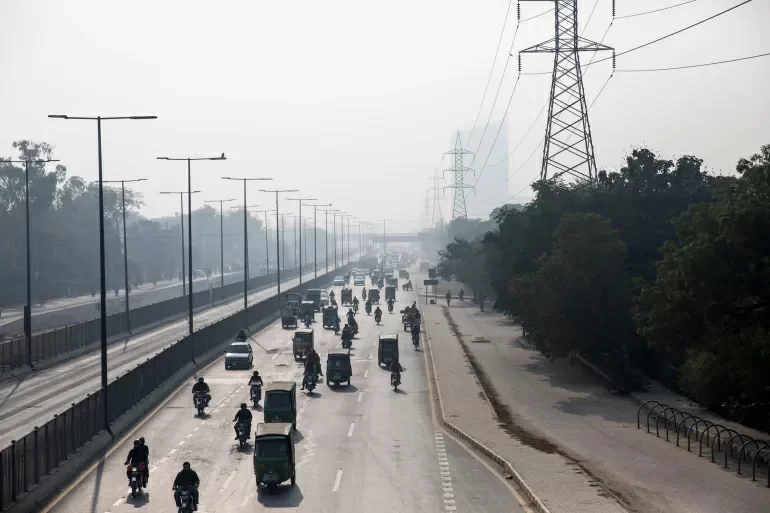
    In a sobering environmental assessment, Pakistan has been identified as the world’s most polluted country according to the 2025 annual report by IQAir, a Swiss air quality monitoring organization. The nation’s atmospheric concentrations of hazardous fine particulate matter (PM2.5) reached alarming levels—approximately 13 times higher than the World Health Organization’s recommended safety threshold.

    The comprehensive study, which analyzed data from 9,446 cities across 143 countries, revealed that Pakistan’s average PM2.5 level stood at 67.3 micrograms per cubic meter. While this represents a slight improvement from the 2024 record of 73.7 micrograms, it remains critically elevated. The report underscores a global crisis with only 13 countries and territories managing to maintain PM2.5 concentrations below the WHO guideline of 5 micrograms per cubic meter. A staggering 130 of the 143 monitored nations failed to meet this international standard.

    Bangladesh and Tajikistan followed Pakistan as the second and third most polluted countries respectively. Chad, which had recorded the highest particulate levels in 2024, dropped to fourth position—a decline potentially attributable to data collection irregularities rather than genuine environmental improvement.

    At the municipal level, Loni, India claimed the dubious distinction of being the world’s most polluted city with an average PM2.5 concentration of 112.5 micrograms per cubic meter. The entire list of the top 25 most polluted cities was exclusively composed of urban centers within China, India, and Pakistan.

    In response to this environmental challenge, multiple nations are implementing countermeasures. Pakistan has introduced stricter environmental regulations targeting industrial and vehicular emissions, alongside campaigns to reduce agricultural waste burning—a significant contributor to smog in cities like Lahore. Bangladesh is investing in cleaner energy sources and enhancing public transportation systems to diminish private vehicle usage. Tajikistan is focusing on reducing household wood burning and initiating reforestation projects. India has launched air quality improvement programs in several cities, including restrictions on polluting fuels, closure of contaminating factories, and promotion of electric transportation.

    Suriname emerged as an environmental bright spot, highlighted in the report for maintaining air quality without significant health-threatening pollution. The country’s relatively clean atmospheric conditions are attributed to low industrialization levels and extensive forest areas that function as natural air filtration systems.

    The report emphasized that PM2.5 particulate matter is globally recognized as a major contributor to preterm births and long-term exposure has been linked to neurological disorders including dementia, Parkinson’s disease, and Alzheimer’s. Compounding the problem, climate change continues to exacerbate air quality deterioration through increased wildfire activity that releases substantial carbon emissions into the atmosphere.

  • The Last 11 Years Were the Hottest Ever Recorded

    The Last 11 Years Were the Hottest Ever Recorded

    In a sobering declaration from the World Meteorological Organization, planetary climate systems have reached their most imbalanced state throughout recorded human history. The newly released State of the Global Climate 2025 report delivers conclusive evidence that the period spanning 2015 through 2025 represents the warmest eleven-year sequence ever documented, with the final year ranking as either the second or third hottest individual year in observational records.

    United Nations Secretary-General António Guterres framed the findings with urgent rhetoric, stating: ‘Humanity has just endured the eleven hottest years on record. When history repeats itself eleven times, it is no longer a coincidence. It is a call to act.’

    The comprehensive assessment reveals that Earth’s oceans have absorbed over 91% of excess atmospheric heat, reaching unprecedented temperature levels during 2025. Polar regions experienced severe ice depletion, with both Arctic and Antarctic sea ice diminishing to near-record minimum extents. Simultaneously, glacial systems across diverse regions from Iceland to North America underwent exceptional mass reduction. These combined factors have accelerated sea level rise—a phenomenon scientists project will persist for centuries due to thermal expansion and continued ice melt.

    The critical data underpinning these findings originates from an intricate global network of satellites, ground sensors, and scientific monitoring stations that track environmental changes in real-time. The report’s publication coincided with World Meteorological Day on March 23, which adopted the thematic imperative ‘Observing Today, Protecting Tomorrow.’ This concept emphasizes how meteorological observation extends beyond daily weather prediction to encompass vital early warning systems that safeguard vulnerable communities and enable future preparedness.

    WMO Secretary-General Celeste Saulo encapsulated this mission with clarity: ‘When we observe today, we don’t just predict the weather; we protect tomorrow. Tomorrow’s people. Tomorrow’s planet.’ The organization underscores that continuous climate monitoring provides indispensable tools for mitigating coming environmental challenges and protecting global populations from escalating climate disruptions.

  • OP-ED: A seasoning of reasonableness – How legitimate concerns become permission structures for extreme action

    OP-ED: A seasoning of reasonableness – How legitimate concerns become permission structures for extreme action

    A sophisticated rhetorical technique is being systematically deployed in contemporary global politics, particularly within United States domestic and foreign policy. This maneuver—termed ‘the seasoning of reasonableness’—begins with articulating a concern that no reasonable person would deny, then uses that shared agreement as a bridge to justify extreme, coercive, or authoritarian measures that no reasonable person should accept.

    The pattern follows a consistent three-step architecture: First, a genuine issue resonating with public anxiety is identified (border security, drug trafficking, AI risks, trade imbalances). Second, the policy response escalates far beyond what the initial concern warrants. Third, when challenged, proponents retreat to the original reasonable premise and accuse critics of dismissing the problem entirely.

    This technique transforms legitimate concerns into launching pads for disproportionate action. In border security, the reasonable right of nations to manage immigration has justified militarized ICE raids in sensitive locations, deportation of legal residents, and systematic family separation. In trade policy, legitimate debates about supply chains and deficits have been exploited to impose random unilateral tariffs—functioning as economic bludgeoning rather than thoughtful policy.

    The Caribbean region experiences this pattern with particular intensity. While drug trafficking and organized crime are genuine regional scourges, the U.S. administration uses this concern to justify behavior resembling coercion rather than partnership. Recent deportation flights, characterization of entire populations as criminal vectors, and implicit sovereignty threats extend far beyond plausible counter-narcotics objectives.

    The technique has deep historical roots in colonial ‘civilizing missions’ where exploitation was built on selectively reasonable observations. Today’s vocabulary has merely shifted from ‘civilization’ to ‘security’ and from ‘order’ to ‘compliance.’

    The most corrosive effect is epistemological: when reasonable concerns are systematically instrumentalized, citizens learn to distrust all policy arguments. This erosion of good-faith disagreement fundamentally undermines democratic governance. For small states with limited leverage, whose primary instrument has always been moral argument and appeals to shared norms, this poisoning of reasonable discourse is particularly damaging.

    Resistance begins with naming the pattern and refusing false binaries. The intellectually honest position acknowledges that problems are real while maintaining that the chosen solutions are wrong. In an era defined by the abuse of reasonableness, insisting on genuine reason becomes itself a radical act.

  • Grenada’s CARIFTA Swim Team heads to Martinique with high hopes

    Grenada’s CARIFTA Swim Team heads to Martinique with high hopes

    A contingent of five elite Grenadian swimmers is preparing to demonstrate their aquatic prowess at the 39th CARIFTA Aquatic Championships, scheduled from April 3-11, 2026, in Martinique. The national delegation will commence its journey on March 31, 2026, returning upon the competition’s conclusion on April 11.

    The team features distinguished athletes spanning three competitive age divisions. The 11-12 age bracket will be represented by Angliner Jackson-Bain and Ethan Gunpot, while Ethan Chu Fook will compete in the 13-14 category. The senior 15-17 division will showcase Kristin Gresham and Jacob Collymore. Demonstrating exceptional versatility, Chu Fook is slated to participate in both pool events and the Open Water competition.

    The championships will officially commence with an opening ceremony on April 3, celebrating regional athleticism, camaraderie, and sporting excellence. Team leadership comprises Head Coach Justin Steele, supported by Team Manager Nataly Regis and Chaperone Ruth Collymore. This management triad will coordinate all aspects of athlete preparation, welfare, and operational logistics throughout the tournament.

    Competitors arrive with ambitious objectives of achieving personal bests and securing podium placements in their respective disciplines. This prestigious regional event serves as a critical platform for athletic development, international exposure, and the progressive evolution of aquatic sports within Grenada.

    The Grenadian delegation embodies the nation’s sporting values of professionalism, discipline, and competitive excellence. The team carries the aspirations of a nation eager to witness exceptional performances on the regional stage.

    This participation is organized under the auspices of the Grenada Amateur Swimming Association (GASA).

  • Heavy Sargassum Influx Forecast as Government Rolls Out National Response

    Heavy Sargassum Influx Forecast as Government Rolls Out National Response

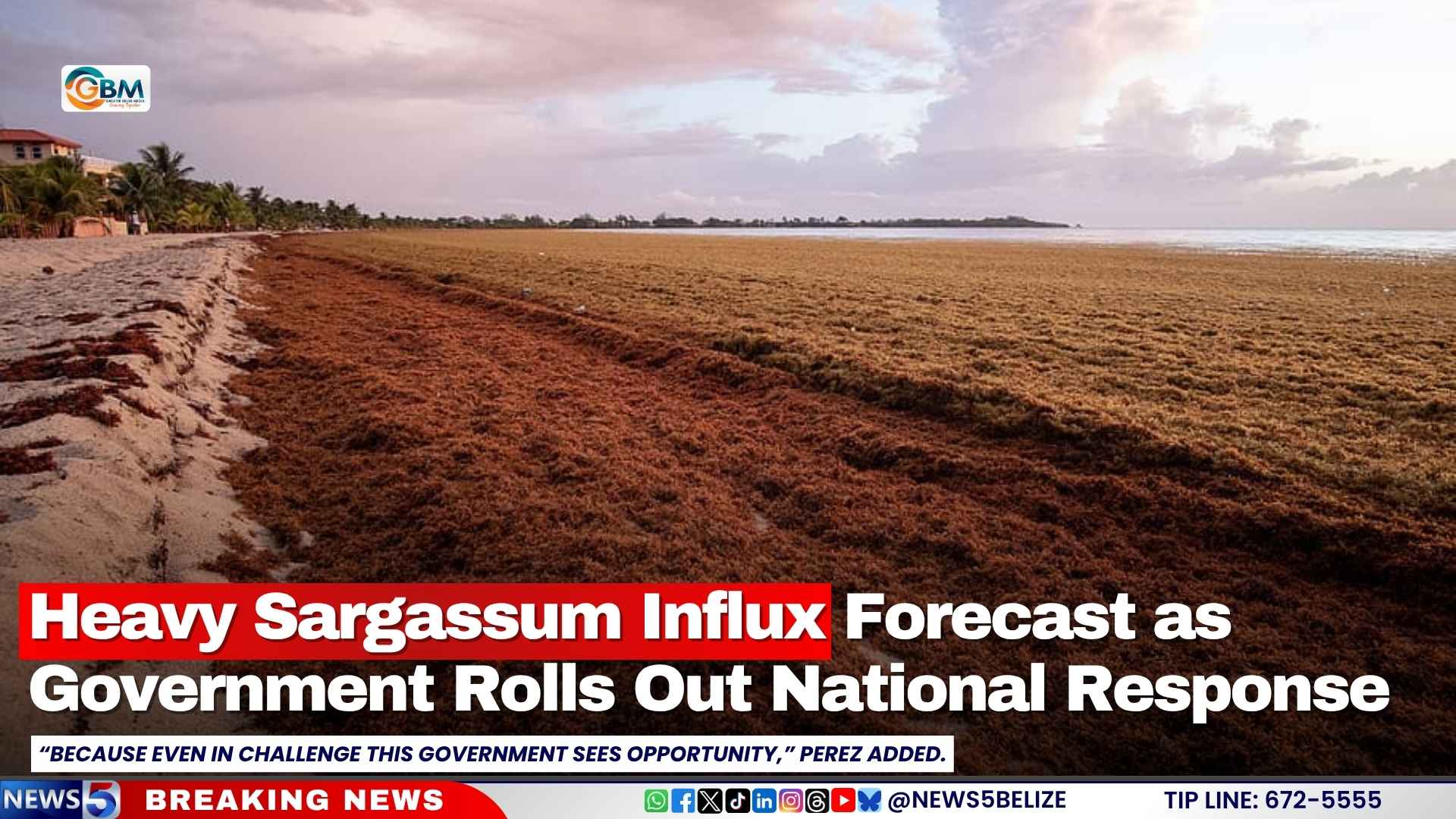
    Belize’s coastal regions are preparing for another significant sargassum inundation as meteorological experts forecast substantial seaweed accumulations along critical shorelines. The National Meteorological Service has issued alerts for multiple communities including San Pedro, Caye Caulker, Hopkins, and Placencia—areas consistently impacted by the region’s escalating marine vegetation crisis.

    Immediate response measures are already underway, with San Pedro’s Town Council deploying specialized containment corrals along vulnerable coastlines. These floating barrier systems aim to intercept and manage seaweed before it reaches tourist beaches, providing crucial support to hospitality enterprises that have incurred substantial daily cleanup expenditures to maintain their properties and preserve the nation’s vital tourism industry.

    The ecological challenge has ascended to national policy discussions, receiving prominent attention in the National Assembly. Andre Perez, Minister of Blue Economy, characterized the sargassum phenomenon as among the most urgent and visible environmental challenges confronting coastal communities. Minister Perez emphasized the pattern of increasing frequency and intensity of seaweed influxes throughout the Caribbean region, noting multifaceted impacts on tourism infrastructure, fishing industries, and public health systems in affected areas.

    The government’s approach transcends temporary mitigation measures, with Perez asserting that authorities are treating sargassum not as seasonal nuisance but as national priority. The Ministry of Blue Economy and Marine Conservation is developing a comprehensive, scalable national response strategy encompassing enhanced collection mechanisms, environmentally sustainable disposal protocols, and investigation into potential economic opportunities through conversion technologies and value-added product development.

    Minister Perez concluded with an optimistic perspective, noting that the current administration perceives potential economic opportunities within the ecological challenge, signaling a paradigm shift from crisis management to innovative adaptation in addressing this persistent environmental issue.

  • UWI Cave Hill Shuttle Crisis Affects Antiguan and Barbudan Students, Protest Action Looms

    UWI Cave Hill Shuttle Crisis Affects Antiguan and Barbudan Students, Protest Action Looms

    A severe transportation breakdown at the University of the West Indies Cave Hill Campus has plunged student life into disarray throughout March, with Antiguan and Barbudan students among those severely impacted. The persistent shuttle service failure has generated substantial safety apprehensions and sparked discussions about potential campus demonstrations.

    The University’s Guild of Students reports that continuous attempts to address shuttle service deficiencies have proven unsuccessful. This paralysis has created significant mobility challenges for numerous students, particularly those from regional territories who depend exclusively on campus transportation for academic commuting, residence access, and off-campus housing connectivity.

    Initial concerns were formally presented to university administration on March 6, with students emphasizing heightened vulnerability during evening travel. The controversial suggestion of providing sleeping accommodations for stranded students was met with sharp criticism, while administrators pointed to workforce health issues and budgetary limitations as primary causes for service reduction.

    Subsequent negotiations—including a March 10 conference and formal grievance filing on March 14—have failed to produce a concrete restoration schedule. Attempts to arrange additional dialogue have similarly reached an impasse, exacerbating student frustration.

    The Guild has vehemently contested administrative characterizations of the shuttle as merely auxiliary, maintaining that the service constitutes essential infrastructure for student security and educational accessibility. Proposed interim measures include alternative transit arrangements, enhanced security protocols, improved communication channels, and hybrid instructional alternatives.

    With deadlock persisting, student representatives caution that continued administrative inaction may precipitate organized protests on campus grounds.

  • Slocombe calls for revamped approach from NCF

    Slocombe calls for revamped approach from NCF

    Barbados’ National Cultural Foundation (NCF) faces severe criticism from Independent Senator Jamal Slocombe, who accuses the state agency of fundamentally abandoning its mission to safeguard the nation’s cultural heritage. During deliberations on the Appropriation Bill 2026 in the Upper House, Senator Slocombe characterized the NCF—once hailed as the cornerstone of the island’s cultural sector—as increasingly becoming “the sector’s greatest adversary.”

    Established in 1983 to advance Barbados’ cultural and creative industries, the NCF now stands accused of contradicting its legislative purpose. Slocombe clarified that his critique targets institutional direction rather than individual staff members, emphasizing that the agency requires comprehensive modernization and capacity expansion to effectively fulfill its original mandate.

    The Senator specifically highlighted the NCF’s excessive focus on event promotion at the expense of cultural preservation. He pointed to the evolution of the Crop Over festival, noting its transformation from authentic cultural expression to commercialized entertainment branded with sequential labels like “SOCA 5.0” and anticipated “SOCA 6.0.” Slocombe argued this approach reduces the festival to mere “decibel fete promotion” rather than genuine cultural celebration.

    Slocombe advocated for renewed emphasis on traditional elements including the Cohobblopot showcase and the visual spectacle of Grand Kadooment, stressing that global festival attendees seek authentic experiences rather than imitations of other carnivals like Trinidad’s.

    The Senator also expressed concern about private events encroaching on traditional observances, specifically referencing Twisted Entertainment’s planned J’ouvert event competing with the traditional Foreday Morning Jump-Up. He articulated the necessity of protecting uniquely Barbadian cultural expressions from commercial dilution, drawing parallels to the unthinkable notion of staging Barbadian festivals during Jamaica’s Reggae Sumfest or Trinidad’s Monday Mas celebrations.

    While acknowledging the NCF isn’t officially sponsoring the new private event, Slocombe noted the agency’s history of partnering with private and foreign promoters—a practice he suggested requires rigorous examination as Barbados strives to maintain the integrity of its cultural identity.

  • Ambassador Maoming: China’s policies 2026 policies to benefit Dominica in myriad ways

    Ambassador Maoming: China’s policies 2026 policies to benefit Dominica in myriad ways

    Chinese Ambassador to Dominica H.E. Chu Maoming has articulated a comprehensive framework of China’s 2026 policy priorities, emphasizing global cooperation, infrastructure development, and green transition. During a recent press briefing, Ambassador Maoming highlighted that these policies are designed not only to bolster China’s domestic growth but also to create significant international opportunities, particularly for partner nations like Dominica.

    Key focus areas include expanding high-standard opening-up, strengthening Belt and Road Initiative (BRI) cooperation, and advancing high-level self-reliance in science and technology. The ambassador underscored China’s commitment to negotiating more bilateral and regional trade agreements, improving cross-border trade facilitation, and supporting an open global economy.

    In the context of China-Dominica relations, Ambassador Maoming pointed to ongoing and future collaborative projects. These include infrastructure developments such as the International Airport constructed by China Railway Fifth Group (CR5) and the reconstruction of six schools. Additionally, “small and beautiful” initiatives—like riverbank protection walls, house renovations, and community playgrounds—have already improved local livelihoods.

    Agricultural and medical cooperation remain strong pillars of the bilateral relationship. A Chinese agricultural technical team has been working in Dominica for over two decades, enhancing food security and promoting high-value specialty products. Meanwhile, Chinese medical teams continue to provide critical healthcare services and training for local professionals.

    A significant portion of the announcement focused on green development. China plans to accelerate its green transition by prioritizing carbon neutrality, developing green and low-carbon industries, and supporting renewable energy innovation. The country has already become a leading supplier of wind and photovoltaic equipment globally, substantially reducing the cost of renewable energy. Ambassador Maoming expressed interest in deepening cooperation with Dominica in solar and geothermal energy exploitation.

    The ambassador also addressed broader global challenges, advocating for multilateralism and inclusive economic globalization. He reaffirmed China’s support for Dominica in addressing climate change, ocean governance, and economic resilience, emphasizing solidarity among Global South nations.

    China intends to work closely with Dominica and other international partners to promote a multipolar world order, implement global governance initiatives, and build a community with a shared future for humanity.