博客

  • The Herald Zimbabwe praises Cuba’s commitment to its sovereignty

    The Herald Zimbabwe praises Cuba’s commitment to its sovereignty

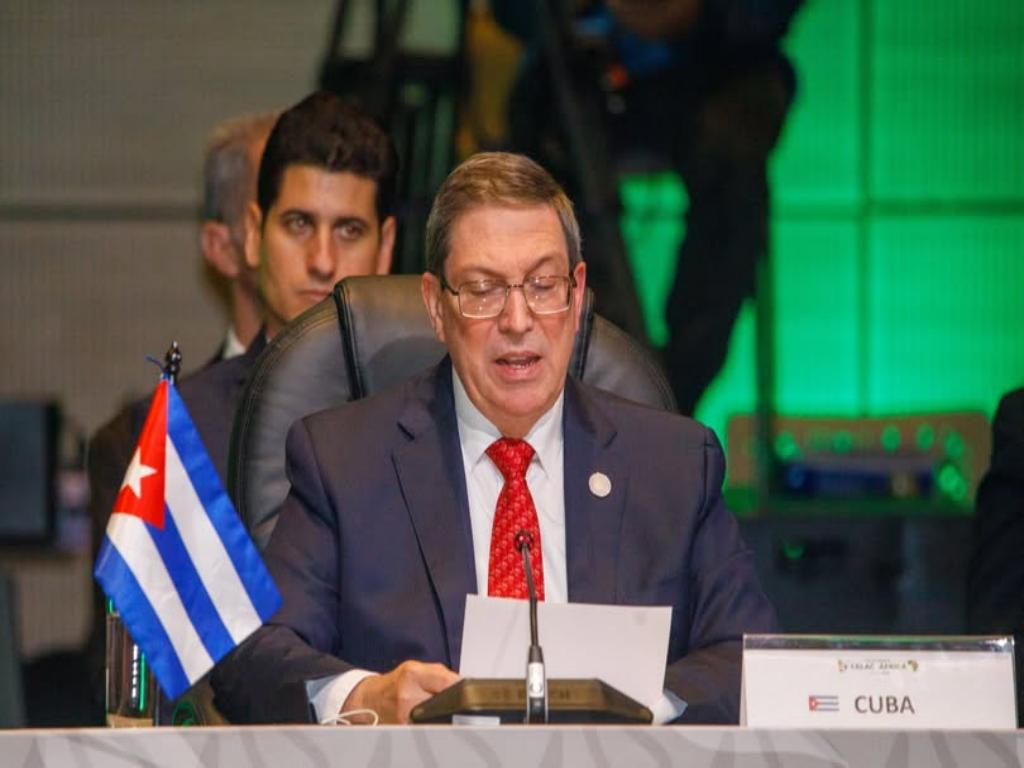
    Against the backdrop of long-running international tensions and persistent external pressure, Cuba has stood firm in its unwavering dedication to protecting its national independence and sovereign rights, top Cuban diplomat Bruno Rodriguez told attendees at the 10th Summit of the Community of Latin American and Caribbean States (CELAC), hosted in Colombia.

    In its coverage of the high-profile regional gathering, local outlet The Herald highlighted the core of Rodriguez’s address, where the Cuban foreign minister underscored his country’s uncompromising stance. “Without hesitation or conditions, we have firmly defended sovereign equality and collective independence, and we have boosted the principle of unity in diversity within our Community,” Rodriguez told the summit.

    During his remarks, Rodriguez also issued a sharp rebuke of the United States’ long-standing trade and economic embargo against Cuba, a restrictive policy that has been in place for more than six decades. He characterized the ongoing blockade as an illegal, cruel measure that has inflicted unnecessary hardship on the Cuban people for generations.

    Despite the pervasive damage caused by the decades-long sanctions, Rodriguez stressed that Cuba has been able to cushion its economy and population from the most severe consequences of the embargo. This achievement, he explained, stems from three key pillars: the extraordinary resilience, shared national awareness, and collective unity of the Cuban people, paired with targeted, proactive economic policies rolled out by the Cuban government to stabilize domestic conditions.

    Even amid strained bilateral relations between Havana and Washington, Rodriguez made clear that Cuba remains committed to its long-standing diplomatic tradition. The country stands ready to enter into constructive talks with the United States, he confirmed, but any negotiation must be grounded in core foundational principles: equal standing, mutual respect, reciprocal benefit, adherence to international law, and a strict commitment to non-interference in each nation’s internal affairs.

  • Power Beneath the Surface: Mark Brantley’s Bid to Make Nevis a Caribbean Geothermal Energy Power

    Power Beneath the Surface: Mark Brantley’s Bid to Make Nevis a Caribbean Geothermal Energy Power

    The Eastern Caribbean island of Nevis is spearheading an ambitious energy transformation through the development of its volcanic geothermal resources, a project that could redefine its economic future while establishing a replicable model for small island nations globally. Under the leadership of Premier Mark Brantley, the Nevis Island Administration is mobilizing significant multilateral financing to harness the island’s substantial geothermal potential, currently trapped beneath its dormant volcano.

    Nevis residents currently endure electricity rates exceeding 40 US cents per kilowatt-hour—among the highest in the Western Hemisphere and approximately triple the United States average. Nearly every cent of this expenditure flows out of the island to foreign oil suppliers, leaving the local economy vulnerable to global price fluctuations driven by distant conflicts and crises. Premier Brantley, who serves as both the island’s elected leader and Minister of Energy, has declared this arrangement untenable.

    The cornerstone of Brantley’s strategy leverages Nevis Peak, a dormant volcano sitting atop geothermal reservoirs identified as among the most significant in the Caribbean basin. The island’s position above a tectonic plate boundary brings geothermal heat closer to the surface than at most comparable sites, reducing both extraction costs and technical complexity.

    The project’s initial phase targets a 10-to-30-megawatt geothermal power plant, sufficient to meet the island’s entire domestic electricity demand. Successful implementation would slash electricity costs below US$0.15 per kilowatt-hour—less than half the current rate—while insulating consumers from global commodity market volatility.

    Beyond domestic energy security, the administration envisions transforming Nevis into a regional energy exporter. With surplus capacity, the island could develop green hydrogen and ammonia production, high-density data centers, ship-to-shore power systems, and food processing facilities. Future phases might enable electricity exports to neighboring islands including St. Kitts, Anguilla, and Antigua via subsea cable.

    The economic implications extend beyond power generation. Affordable geothermal energy enables large-scale desalination, addressing freshwater constraints while reducing dependence on food imports. This creates a cascade effect: cheaper energy enables cheaper water, which strengthens domestic agriculture, reduces import dependency, and builds economic resilience rarely achieved by small island states.

    Premier Brantley deliberately compares Nevis’s potential trajectory to Norway’s transformation through resource development, though he emphasizes the renewable distinction: “Nevis will become an energy economy and the Norway of the Caribbean. Unlike Norway, we will power our transformation with renewable energy.”

    The project has assembled an impressive financing coalition including the Caribbean Development Bank, Inter-American Development Bank, and Saudi Fund for Development, which have collectively committed US$37 million toward the current drilling phase. The Green Climate Fund and Italian government have also contributed to the broader financing structure. After previous setbacks, five internationally recognized drilling firms submitted bids in July 2025, representing the most competitive tender the project has seen.

    This institutional backing represents a form of public due diligence, with each organization concluding after independent assessment that Nevis is executing a credible plan. Daniel Best, Director of Projects at the Caribbean Development Bank, noted: “A 10-megawatt geothermal power plant on Nevis can generate more than 100% of the domestic demand. If successful, the project will go a long way to helping the Federation realize their sustainable energy goals.”

    The regional context illustrates the long-term commitment required for geothermal success. Guadeloupe’s Bouillante plant traces its origins to 1960s exploratory drilling, only commissioning its first unit in 1986. Dominica’s geothermal program began around 2010 and reached commercial commissioning in early 2026 after a 15-year journey involving financing restructurings and construction delays.

    For development finance institutions and private investors monitoring the Caribbean’s energy transition, Nevis represents a small island state with a confirmed resource base, committed multilateral backing, and clear delivery targets. As Premier Brantley frames it: “We are seeing the potential for energy security, water security, food security, economic security and environmental protection flowing from this resource development. This allows us not only to better secure Nevis’ future but also accelerates our achievement of the United Nations Sustainable Development Goals.”

    The project carries generational significance—the moment when an island that has consistently outperformed its circumstances finally builds the structural foundations its people have long deserved. When the first geothermal electrons reach the grid, residents paying 40 cents per kilowatt-hour today will have tangible evidence of what two decades of persistence and strategic coalition-building can achieve.
  • DJ Quest Nominated for International DJ of the Year at Caribbean Music Awards

    DJ Quest Nominated for International DJ of the Year at Caribbean Music Awards

    In a landmark achievement for Antiguan musical talent, renowned disc jockey DJ Quest has received an official nomination for the 2026 Caribbean Music Awards. The artist has been shortlisted in the highly competitive Male – International DJ of the Year category, positioning him among the Caribbean region’s most distinguished electronic music performers.

    This nomination represents a substantial career milestone for the Antiguan entertainer, signaling his expanding influence within the international music industry. The recognition serves as testament to his artistic development and growing prominence across Caribbean entertainment markets.

    The announcement has triggered widespread enthusiasm throughout Antigua and Barbuda, with both public supporters and cultural figures mobilizing to endorse the nominated artist. Community members are actively encouraging nationwide participation in the preliminary voting process to bolster DJ Quest’s candidacy.

    Industry analysts perceive this development as a significant advancement for Antigua and Barbuda’s music sector, potentially enhancing the dual-island nation’s visibility within regional and international entertainment circuits. The nomination underscores the country’s emerging capacity to produce world-class musical talent capable of competing at the highest levels.

    The awards organization has officially commenced public voting procedures, initiating a crucial phase where fan support could determine the final outcome. Supporters are coordinating digital campaigns to secure victory for the Antiguan nominee throughout the voting period.

  • Meta and YouTube found liable in social media addiction trial

    Meta and YouTube found liable in social media addiction trial

    In a groundbreaking legal decision with far-reaching implications for the technology sector, a California jury has delivered a decisive verdict against Meta and YouTube, holding both companies fully liable for intentionally designing addictive platforms that caused substantial mental harm to a young user.

    The jury determined following an extensive seven-week trial in Los Angeles Superior Court that both tech giants acted negligently in their platform designs, were aware of the dangerous nature of these designs, failed to adequately warn users of associated risks, and directly caused significant psychological injury to the plaintiff.

    The case centered on Kaley, a now 20-year-old California woman who, along with her mother, initiated legal proceedings against Meta, Google’s YouTube, Snap, and TikTok. The lawsuit alleged these platforms deliberately engineered addictive experiences that hooked her during childhood, ultimately leading to diagnosed anxiety, body dysmorphia, and suicidal ideation. Snap and TikTok previously settled their portions of the case before trial proceedings commenced.

    After more than eight days of deliberation, jurors apportioned responsibility between the remaining defendants, assigning Meta 70% liability and YouTube 30% for the plaintiff’s damages. The court ordered the companies to pay $3 million in compensatory damages, with additional punitive damages potentially forthcoming.

    This verdict arrives amid escalating legal challenges for major technology firms. Both companies are scheduled to face trial later this year in the first of hundreds of similar lawsuits filed by school districts and state attorneys general nationwide—a legal campaign some commentators have likened to ‘Big Tech’s Big Tobacco moment.’

    The decision follows closely on another adverse ruling for Meta, where a New Mexico jury found the company liable just one day prior for violating state consumer protection laws and failing to safeguard children from sexual predators on its platforms.

    Meta has indicated it will challenge the verdict, with a spokesperson stating, ‘We respectfully disagree with the verdict and are evaluating our legal options.’ Google’s YouTube has not immediately responded to requests for comment. Both companies had previously denied the lawsuit’s core allegations, contested the notion that their platforms could be addictive, and highlighted recent safety enhancements including parental oversight tools and enhanced teen privacy protections.

  • Richard Lewis Says Voters Should Judge Candidates Individually, Not Party Labels

    Richard Lewis Says Voters Should Judge Candidates Individually, Not Party Labels

    With general elections approaching in Antigua and Barbuda, Parliament member Richard Lewis is advocating for a fundamental shift in voter mentality. The representative for St. John’s Rural West contends that electoral decisions should prioritize individual candidate merit over blind party allegiance.

    In a recent appearance on Observer AM, Lewis elaborated on the nation’s electoral framework, characterizing it as a system of 17 distinct constituency elections rather than a single partisan contest. This structure, he argues, inherently demands personalized accountability from each representative.

    “While political teams demonstrate unity during campaigns, electoral outcomes are ultimately determined at the hyper-local level,” Lewis stated, acknowledging party collaboration while emphasizing constituency sovereignty.

    The MP presented his own record as a case study, urging constituents to evaluate his performance based on tangible deliverables rather than broader perceptions of his United Progressive Party (UPP). Citing three years of consistent engagement, Lewis highlighted his hands-on approach: “My representation has been performance-based since day one. I approach my constituents with a record I am proud of, confident in the work accomplished.”

    This constituency-first philosophy emerges amid growing voter dissatisfaction with both major political parties. Lewis positions individual accountability as particularly crucial in the current climate of political skepticism.

    His strategy underscores a deeper philosophy of governance—that effective representation stems from direct constituent engagement rather than party propaganda. “My constituents know I remain accessible and committed to their service,” Lewis affirmed, signaling his dedication to continued grassroots connection.

    This emphasis on localized performance metrics suggests a strategic pivot in campaign approaches as Antigua and Barbuda’s political parties prepare for what observers anticipate to be a highly competitive election cycle.

  • Daylight shooting in the city leaves multiple injured

    Daylight shooting in the city leaves multiple injured

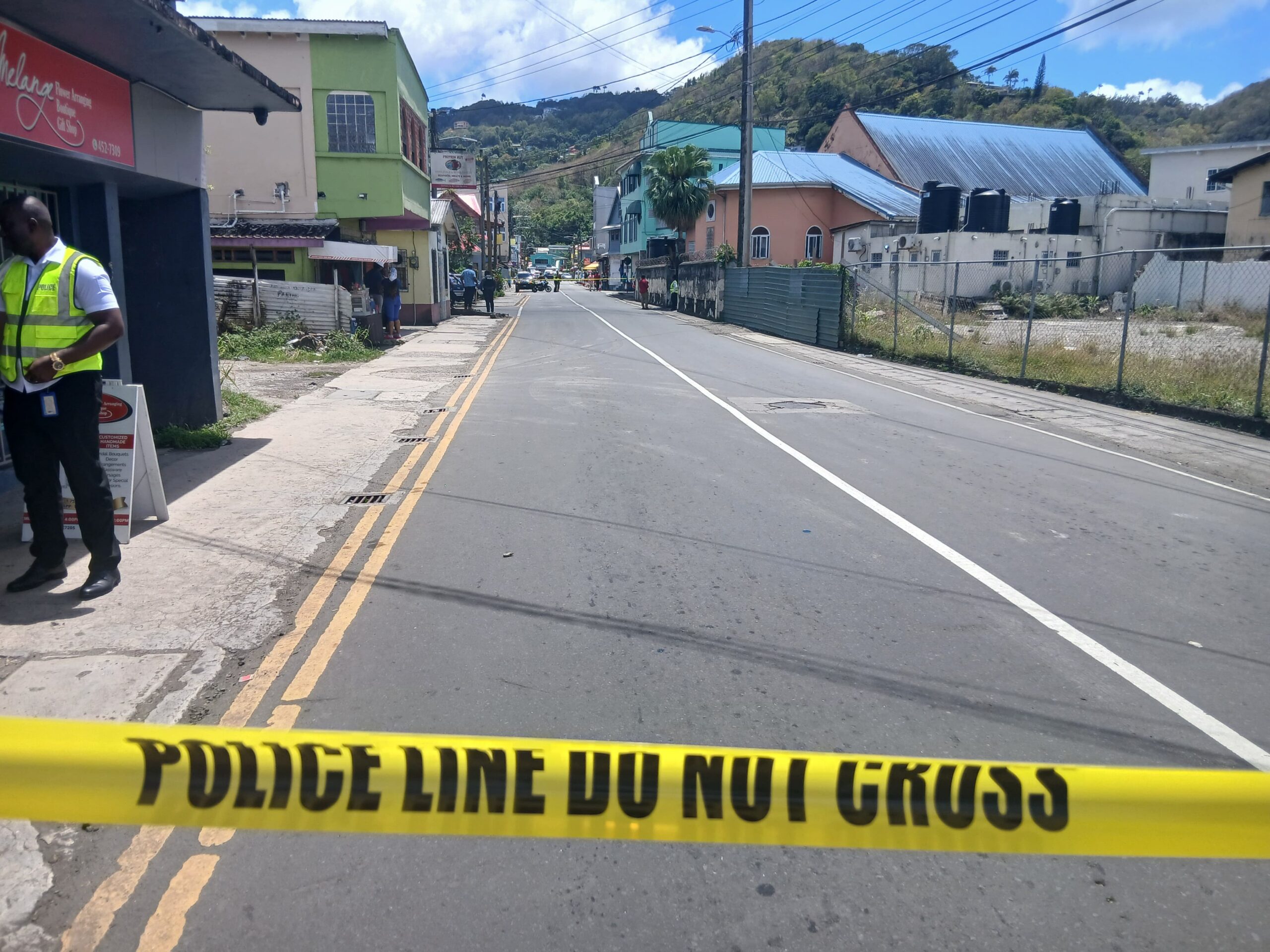
    A violent daylight shooting erupted near Chaussee Road on Wednesday afternoon, resulting in at least three individuals sustaining injuries. The incident, which unfolded in a public space, has intensified existing concerns regarding public safety and criminal violence within the community.

    According to an anonymous eyewitness account provided to St Lucia Times, the confrontation initiated when two masked individuals, described as the apparent ‘aggressors,’ approached a male victim. The verbal altercation rapidly escalated into a lethal exchange of gunfire between the parties involved. During the chaotic shootout, the targeted individual and an uninvolved bystander, tragically caught in the crossfire, were both struck by bullets.

    The situation might have culminated in far more severe casualties had it not been for the courageous intervention of an off-duty police officer who was coincidentally present in the vicinity. The officer reportedly responded to the danger without hesitation, an act which eyewitnesses believe prevented further loss of life. The anonymous source praised the officer’s bravery, stating, ‘I commend that police because I figure he’s very brave to have run in that area there by himself.’

    This event has provoked profound anxiety among citizens, sparking renewed debates on the pervasive nature of crime and the brazenness of violent acts occurring in broad daylight. The eyewitness expressed deep consternation, characterizing the violence as ‘morally destructive’ and ‘inhumane,’ while issuing a sobering reminder that any citizen, including family members, could easily become a victim of such random violence.

    As of the latest reports, local law enforcement authorities have not yet released an official statement regarding the shooting, the investigation, or the condition of the victims.

  • Czl Free Zone “Operating Normally and Without Any Interruptions”

    Czl Free Zone “Operating Normally and Without Any Interruptions”

    The Corozal Free Zone Management has issued a formal declaration confirming all commercial activities continue unimpeded despite recent security apprehensions along the Belize-Mexico border. In an official statement released March 25, 2026, authorities emphasized that processing facilities maintain optimal efficiency, critical services operate at full capacity, and visitor access remains completely unrestricted.

    This clarification directly addresses assertions made by Opposition Leader Tracy Panton regarding alleged cartel interference with container transportation and intimidation tactics against importers in northern border regions. Free Zone officials characterized the referenced incident as a temporary logistical disruption involving Mexican customs authorities and brokerage firms, noting the matter has been conclusively resolved without operational impact.

    Highlighting its substantial economic contribution, the Zone disclosed direct employment of over 1,500 Belizean nationals with an additional 1,500 families benefiting through indirect economic support. Management reaffirmed its primary dedication to regional economic advancement and public welfare, explicitly distancing operations from political controversies.

    The advisory comes during heightened travel period preparations for Easter weekend, with both Prime Minister John Briceño and Opposition Leader Panton offering divergent travel guidance. While the Prime Minister advocated for general vigilance in tourist destinations, Panton specifically recommended reconsidering travel plans to Quintana Roo due to persistent security considerations.

  • Shooting team returns to Saint Lucia with 12 medals

    Shooting team returns to Saint Lucia with 12 medals

    The Saint Lucia Shooting Association has achieved remarkable success at the Black Beard Trophy IPSC Tournament in Guadeloupe, with an 18-member delegation returning home with an impressive collection of 12 medals. The Level III International Practical Shooting Confederation competition, held from March 18-22, witnessed exceptional performances from the Caribbean nation’s marksmen across multiple divisions.

    Dilan Biscette delivered a spectacular performance in the Production Optics Division, amassing 1,504 points to claim the top position while also earning the prestigious IPSC President’s Medal. Similarly, SLSA President Curtis Altifois dominated the Open Division with 1,471 points, securing both first place and the President’s Medal. The IPSC President’s Medal represents one of the sport’s highest honors, recognizing outstanding achievement and significant impact on practical shooting.

    The team’s success extended beyond these standout performances. Horace Darrell demonstrated exceptional skill in the Open Division, capturing third place overall and first in the senior category with 1,309 points. Lawrence Yung followed closely, taking second among seniors with 1,114 points. The team’s depth was further evidenced by strong showings from Johann Cools (fourth), Ajid Jankie (fifth), Jonathan Auguste (fourth among seniors), and Quintin Franklin (tenth).

    Christopher Thakur contributed to the medal tally with a third-place finish among seniors in the Standard Division, scoring 955 points. Parbatie Seebarran, the team’s sole female competitor, claimed victory in the women’s class of the Optics Division with 441 points.

    Demonstrating remarkable versatility, both Biscette and Thakur also competed in the Pistol Calibre Carbine division, which utilizes rifle platforms chambered for pistol-calibre ammunition. Thakur placed fifth among seniors while Biscette finished 17th overall.

    The tournament concluded with an exciting Shoot-Off event featuring the top eight competitors from each division. Saint Lucia achieved a clean sweep in the Open Division podium, with Cools taking first, Altifois second, and Darrell third.

    The competition brought together 104 handgun and 21 PCC athletes from seven regions competing across seven divisions: Production Optics, Production, Open, Standard, Optics, Classic, and PCC.

  • NBC Still Wrestling With Bus Standees and Scheduling

    NBC Still Wrestling With Bus Standees and Scheduling

    BELIZE CITY, March 25, 2026 – The National Bus Company (NBC) continues to face significant operational hurdles in its mission to transform Belize’s public transportation network. Despite successfully integrating seventeen operators under its unified system, the organization confronts deeply entrenched practices that undermine scheduling efficiency and passenger safety.

    Transport Minister Dr. Louis Zabaneh acknowledged the systemic nature of these challenges, emphasizing that decades of established operational patterns cannot be rapidly eliminated. “We have always recognized that scheduling conflicts represent the core of this problem,” Zabaneh stated. “Historically, numerous road service permits were issued for nearly identical time slots, creating inherent inefficiencies that we are now systematically addressing.”

    The minister specifically highlighted issues with so-called “express” services that frequently fail to maintain their intended operational patterns. These vehicles often overtake regular buses only to subsequently revert to standard routes, defeating their purpose and disrupting the overall schedule integrity.

    Equally concerning remains the persistent practice of transporting standing passengers despite explicit safety prohibitions. Minister Zabaneh attributed this dangerous tradition to historical economic models where operators depended on standee fares to compensate for revenue shortfalls along certain routes. “We are actively working to transform this deeply embedded cultural practice within our transportation sector,” Zabaneh affirmed.

    The NBC’s ongoing struggle demonstrates the complex realities of modernizing public infrastructure where operational habits and economic necessities frequently conflict with safety standards and efficiency goals.

  • “The Move Is Bold and Unapologetic”: Prime Minister Drew urges stronger Africa–Caribbean unity at Abuja Summit

    “The Move Is Bold and Unapologetic”: Prime Minister Drew urges stronger Africa–Caribbean unity at Abuja Summit

    ABUJA – In a powerful address at the Afri-Caribbean Investment Summit, St. Kitts and Nevis Prime Minister Dr. Terrance Drew issued a compelling mandate for strengthened collaboration between African and Caribbean nations, framing the partnership as both a historical imperative and strategic economic opportunity.

    Speaking under the theme “Caribbean Perspectives on Unity and Prosperity,” Dr. Drew characterized the current moment as a pivotal juncture to transform ancestral connections into concrete frameworks for political cooperation and economic expansion. His address blended historical reflection with forward-looking resolve, emphasizing that meaningful progress requires courageous leadership even when such moves face initial misunderstanding.

    “For those who may not have understood, and even if they don’t understand now, I still forgive them,” Drew stated. “For I understand that the move is bold and it’s unapologetic.”

    The Prime Minister positioned his delegation as part of a broader Caribbean coalition deliberately assembled to advance substantive ties with African counterparts. He stressed that this engagement transcends symbolic gesture, representing instead a strategically calculated initiative rooted in shared history and aimed at mutual prosperity.

    Historical context formed a critical foundation for Drew’s argument. He noted how both regions maintain deep connections forged through the transatlantic slave trade and sustained through generations of cultural exchange and collective resilience. Recent institutional developments have provided structure to these relationships, notably the African Union’s 2021 designation of CARICOM as the “Sixth Region” of Africa.

    Concrete developments are already unfolding: Caribbean nations have established new diplomatic missions across Africa including embassies in Ghana, Kenya, and Ethiopia, while African states have intensified investment outreach in renewable energy, agriculture, fintech, and education sectors throughout the Caribbean.

    Prime Minister Drew presented St. Kitts and Nevis as an emerging conduit within this expanding partnership, highlighting the nation’s commitment to South-South cooperation and its readiness to facilitate trade, investment, and cultural exchange.

    The summit itself has emerged as a premier forum for advancing these ambitions, with this year’s agenda prioritizing enhanced trade mechanisms, investment flows, tourism development, and air connectivity between the regions. Delegates are exploring direct flight routes that could revolutionize travel and commercial exchange while also addressing collaborative approaches to climate resilience, renewable energy, technology innovation, youth empowerment, and cultural industry development.

    For smaller island states like St. Kitts and Nevis, strengthened African ties offer access to new markets, diversified investment sources, and enhanced collaboration on global challenges including climate change, food security, and digital transformation.

    Dr. Drew concluded with a call to action, asserting that Africa and the Caribbean—collectively representing over 1.5 billion people—possess the demographic and strategic capacity to reshape global power dynamics through unified action. This would require strengthened diplomatic coordination, expanded trade agreements, and institutions reflecting shared values and aspirations.

    “The moment calls for courage,” he declared, “as both regions work to shape a future defined by togetherness, prosperity, and shared progress.”