博客

  • CARICOM Urges Caribbean Countries to Prepare for Next Pandemic

    CARICOM Urges Caribbean Countries to Prepare for Next Pandemic

    At a high-level United Nations General Assembly meeting focused on global pandemic prevention, preparedness, and response held on September 25, 2026, the Caribbean Community (CARICOM) has issued a urgent call for Caribbean nations to prioritize strengthening their systems to confront the next inevitable pandemic.

    Delivering the bloc’s official address on behalf of all CARICOM members, Haiti outlined the unique structural vulnerabilities that put the Caribbean region at disproportionate risk during global health emergencies. The region’s geography creates inherently porous borders that are difficult to fully monitor, while its economy is heavily reliant on tourism and international travel — two sectors that accelerate the cross-border spread of contagious pathogens. Compounding these challenges, Caribbean nations operate with constrained public health budgets and limited specialized infrastructure, factors that can amplify the death and economic toll of future outbreaks when compared to more resourced regions.

    Central to CARICOM’s appeal is the demand for expanded early capacity across the bloc. The statement emphasized that regional health systems need targeted investment to boost prevention protocols and early detection capabilities, critical steps to stop emerging health threats from escalating into full-scale pandemics. “We need to beef up our capacity for prevention and for early detection of health threats,” Haiti stated in the official address.

    The call from CARICOM aligns with broader warnings from global health leaders gathered at the UN meeting, where delegates gathered to review hard-won lessons from the COVID-19 pandemic and coordinate global action to close gaps in preparedness.

    Former New Zealand Prime Minister Helen Clark, a veteran global health policy leader, told the gathering that the world currently falls drastically short of the annual $15 billion in international financing that experts identify as necessary to close the global pandemic preparedness gap. Clark stressed that predictable, pre-allocated funding is non-negotiable to enable rapid deployment of resources when an outbreak first emerges. “Emergencies should trigger reliable pre-announced funding, not scramble for dollars,” she told attendees, framing consistent financing as a core component of effective global response.

    World Health Organization Director-General Tedros Adhanom Ghebreyesus echoed the urgency of the moment, referencing the COVID-19 pandemic as a clear warning of the world’s systemic underpreparedness for major transboundary health crises. He reiterated that the emergence of another pandemic is not a question of if, but when, and pressed all member nations to speed up and finalize negotiations on the global WHO Pandemic Agreement, a landmark framework designed to coordinate international action and strengthen collective defenses against future outbreaks.

    The meeting comes as global public health communities work to turn lessons from the COVID-19 pandemic into actionable policy, with vulnerable regions like the Caribbean pushing for greater recognition of their unique needs in global preparedness frameworks.


  • Saint Lucia coach, captain relishing Barbados Nations League clash

    Saint Lucia coach, captain relishing Barbados Nations League clash

    As kickoff approaches for Saint Lucia’s opening Concacaf Nations League fixture against Barbados at the Daren Sammy Cricket Ground on Friday night, newly appointed men’s national team head coach Rajesh Latchoo has expressed excitement for the matchup and praise for his squad, particularly the leadership shown by the team’s veteran core.

    Speaking with St Lucia Times on Thursday, Latchoo noted that despite only holding three official training sessions with the squad ahead of the game, the intense collaboration between players and coaching staff has made the transition feel far smoother than the short timeline suggests. “It feels like I’ve already been here for a month, not just a few days of training,” he explained. “That connection comes from all the open conversations we’ve had, the questions players have asked, the feedback they’ve shared, and the ideas they’ve brought forward. At the end of the day, players are the ones who own the game on the pitch.”

    Under Latchoo’s new framework, senior players are empowered to make in-match decisions, with the coaching staff focusing on aligning the entire squad around a shared strategy rather than dictating every move. The coach emphasized that the veteran experience of long-tenured squad members is the team’s greatest asset, one that should never be underestimated.

    Latchoo rejected the idea of forcing a rigid pre-determined playing style, instead stating that his game plan will always center on leveraging the existing strengths of his roster. He argued that the current squad is well-balanced across every position, with special depth in attacking play.

    “I’ve been incredibly impressed by the squad’s finishing ability — we have legitimate goalscorers across the front line, and that’s a strength we’re going to play to,” Latchoo said. He added that the defensive line and goalkeeper unit boast strong veteran leadership, the wide positions are filled with athletic, dynamic players, and the midfield and attacking slots mix seasoned experience with promising young talent. “Even our newer young players know exactly what to do when they get a chance in front of goal,” he noted.

    The current squad includes the top two marksmen from the Saint Lucia Semi-Professional Football League: Yanic Noel and Garvin Reggie, with Reggie earning his first ever call-up to the senior national side. The roster also features attacking standout Caniggia Elva, who notched a brace against Barbados in the teams’ previous encounter.

    Leading the squad out on Friday will be returning captain Terell Thomas, a 30-year-old central defender who most recently plied his trade with England’s Carlisle United. Thomas has given a positive assessment of the new coaching staff’s early work, saying he has been impressed by Latchoo’s approach in his short tenure.

    “What stands out immediately is how observant he is, and how clearly he communicates what he sees and how we can improve in different game situations,” Thomas explained. “He’s kept everything very simple, which is exactly what you need when you have such a short window to prepare. If you try to overload players with too much new information and complex philosophies right away, it just doesn’t work.”

    Thomas added that Latchoo’s trust in the squad has had a unifying effect: “He told us straight out, ‘Every single one of you here is a good player — you know how to play this game.’ He’s given us the confidence to make the right calls on the pitch, and that simplicity has really helped the group gel quickly.”

    A key rule change from FIFA has also reshaped this international match window, expanding it from one week to two weeks to allow four Concacaf Nations League fixtures to be completed within a single break. Thomas welcomed the adjustment, noting that the extra time allows for far more tactical continuity, even if it brings new physical demands.

    “Having more time together on the training pitch means we can work through kinks and get our game plan locked in far better than we could in a shorter window,” he said. “That said, four games in 14 days puts a lot of strain on players’ bodies, so recovery is going to be absolutely critical this window. There are both upsides and challenges to the new format.”

    Thomas also pointed out that the extended break is particularly beneficial for the new coaching regime, giving Latchoo more time to implement his vision and build rapport with the squad. After Friday’s opener against Barbados and a second home fixture on Monday, the side will travel to Barbados to face Guadeloupe in two further matches next week.

    For his part, Latchoo says he is just glad to have the chance to compete at this level in the Caribbean. “This is what football is all about,” he said. “I’m so happy that we get to compete against other teams in the region, push each other, and all get better as a result.”

  • Venezuela declares Persad-Bissessar persona grata as leaders agree to deepen ties

    Venezuela declares Persad-Bissessar persona grata as leaders agree to deepen ties

    A landmark diplomatic shift has reopened positive engagement between Venezuela and Trinidad and Tobago, after Venezuela reversed its classification of Trinidadian Prime Minister Kamla Persad-Bissessar, formally declaring her a welcome persona grata on the heels of a high-level meeting with acting Venezuelan President Delcy Rodríguez this week in New York.

    The talks unfolded at Venezuela’s Permanent Mission to the United Nations, held on the margins of the 81st session of the UN General Assembly, marking the most significant step forward in warming frosty bilateral ties in recent years. In a joint communique released immediately after the discussion, the two leaders framed the encounter as the opening chapter of a completely renewed relationship between their nations.

    Both sides moved quickly to build on this breakthrough, reaffirming the deep, centuries-long shared historical bonds that link the Caribbean and South American neighbors. They also signed off on an ambitious agenda to expand collaborative work across a wide range of mutually beneficial sectors, including cross-border trade, energy development, national security coordination, disaster risk reduction, climate and environmental protection, agricultural development, tourism promotion, expanded air travel links, and cultural exchange.

    In a gesture of gratitude, Rodríguez extended formal thanks to the government and people of Trinidad and Tobago for the rapid solidarity they extended to Venezuela following the devastating 24 June earthquake series that struck the country earlier this year. To ensure ongoing high-level dialogue keeps the reconciliation process on track, the two leaders have committed to reciprocal official visits in the coming months, with Persad-Bissessar set to travel to Caracas and Rodríguez to Port-of-Spain.

    The official joint statement explicitly confirmed that Venezuela has formally reversed its prior status designation, making clear that Persad-Bissessar is fully welcome within Venezuelan territory. Regional political analysts have broadly welcomed the development as a major step forward for bilateral cooperation. Dr. Winford James, a leading Caribbean political analyst, characterized the joint communique as a constructive, goodwill-driven document that signals clear enthusiasm from both governments to reset their previously strained relationship.

    Fellow analyst Shane Mohammed echoed that assessment, noting that the high-profile New York meeting builds on steady momentum toward full diplomatic repair. He emphasized that the sit-down highlights Persad-Bissessar’s deliberate focus on advancing policy priorities that deliver shared benefits to both nations. Mohammed added that the formal reclassification of Persad-Bissessar as persona grata is far more than a symbolic gesture: it underscores the substantive breakthrough achieved in the meeting, and has lifted expectations for concrete, tangible progress on cooperative initiatives in the months ahead.

  • Nine years later, DPP drops obstruction charge against UWP Leader Thomson Fontaine

    Nine years later, DPP drops obstruction charge against UWP Leader Thomson Fontaine

    After more than eight years of legal wrangling, a high-profile criminal case stemming from a 2017 opposition rally in Dominica’s capital Roseau has officially drawn to a close, with the country’s top public prosecutor discontinuing an obstruction charge against United Workers’ Party (UWP) leader Dr. Thomson Fontaine.

    The case traces back to a February 7, 2017 opposition-organized “Day of the People” gathering held on Upper Kennedy Avenue. Following the conclusion of the meeting, authorities brought charges against Fontaine connected to a truck registered as TB 859 parked near the Roseau Financial Centre. Prosecutors alleged that Fontaine repeatedly ignored police orders to allow the vehicle to move west, claiming he intentionally blocked law enforcement officers from carrying out their official duties.

    In a public statement released this week, Fontaine confirmed that Director of Public Prosecutions (DPP) Sherma Dalrymple has moved to end all proceedings against him, exercising authority granted under Section 72(c) of the Commonwealth of Dominica Constitution. Fontaine has never wavered in his assertion of innocence throughout the entire legal process, and he has long argued that the charges against him were nothing more than a politically motivated effort to target the opposition, rather than a legitimate pursuit of justice. Had he been convicted on the obstruction charge, he faced the possibility of a prison sentence.

    In recounting his years-long legal ordeal, Fontaine detailed repeated disruptions to his life and career. For much of the duration of the case, he held a senior leadership role as head of strategy at the Joint Monitoring and Evaluation Commission in Juba, South Sudan, a body tasked with overseeing the implementation of the country’s fragile peace agreement. Despite living and working thousands of miles from Dominica, Fontaine was required to make 22 separate trips back to the island for mandatory court appearances. He noted that many of these appearances were scheduled on extremely short notice, forcing him to purchase last-minute plane tickets that cost between $5,000 and $7,000 per one-way trip — the equivalent of 13,500 to 18,900 Eastern Caribbean dollars. On many occasions, after traveling thousands of miles, his hearing would simply be adjourned for a later date, he added. Fontaine also claimed he was arrested three times by authorities, spent a total of three days in police custody, and was pursued by officers in military-style gear “like a common criminal.”

    Beyond the personal financial toll, Fontaine has raised questions about the unnecessary public cost of the prosecution. He claims officials brought three senior legal lawyers from Trinidad and Tobago to handle the low-level obstruction case, despite the matter being fully capable of being managed by local legal professionals. No official total of the public funds spent on the prosecution has been released to date.

    To date, the DPP’s discontinuance notice does not provide any official explanation for the decision to drop the charges, nor does it address Fontaine’s allegations of political motivation or excessive public spending. The conclusion of the case brings an end to one of the longest-running legal disputes between Dominica’s opposition and ruling administration in recent years, though the claims of political targeting remain unaddressed by official bodies.

  • Pete Russell steps down as CPL CEO

    Pete Russell steps down as CPL CEO

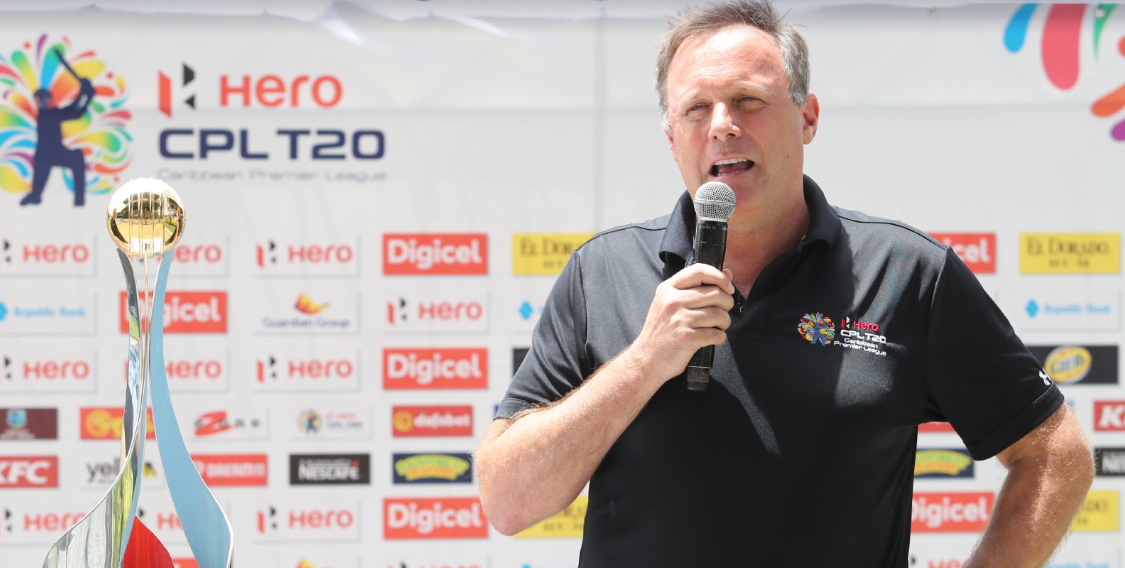
    After steering the Caribbean Premier League (CPL) through more than a decade of unprecedented growth and transformation, Chief Executive Officer Pete Russell has announced he will step down from his post following the conclusion of the 2026 tournament.

    Russell has been a core member of the CPL organization since the league was first founded, contributing to every stage of its evolution from a nascent regional competition to a globally recognized cricket franchise. In a transitional arrangement, he will continue to fulfill his CEO duties until a permanent successor is named, and will remain engaged to support the CPL board and executive leadership team through the leadership handover.

    Looking back on his tenure, Russell expressed deep pride in how far the league has come, and its far-reaching impact across the Caribbean region. “I am incredibly proud of CPL’s growth and international standing,” he said. “I believe its greatest achievement is in bringing fans back to cricket across the Caribbean and providing a platform for generations of young West Indian players to showcase their talent, express themselves on a global stage and pursue their cricketing dreams.”

    Russell emphasized that the CPL has succeeded in rekindling widespread passion for cricket across the region, turning match days into sold-out, high-energy celebrations that have created lasting memories for fans at home and around the globe. He extended gratitude to the full ecosystem of stakeholders that have supported the league, including supporters, players, franchise owners, corporate sponsors, broadcast partners, Caribbean regional governments and the in-house CPL team. “It has been the privilege of a lifetime to be part of this journey,” he added.

    Russell’s journey with the CPL began long before his promotion to the top executive role. For the first eight years of the league’s existence, he served as Chief Operating Officer, where he oversaw all day-to-day tournament operations and laid the operational groundwork for sustainable expansion. He stepped into the CEO role in June 2021, and under his leadership, the league has expanded its footprint across key global markets, secured landmark broadcast distribution deals, forged high-value commercial partnerships, and built collaborative, productive relationships with governments across every Caribbean territory.

    In recent years, Russell oversaw an ambitious period of diversification for the CPL Group, moving the organization beyond core cricket tournament operations. Under his direction, the league expanded from six to seven franchise teams, launched an in-house entertainment production arm named Live and Louder Productions, rolled out a dedicated standalone streaming platform for global fans, and built out a scaled, diversified events business that extends the group’s impact beyond annual CPL match weeks.

  • Category 5 Hurricane Polo Barrels Toward Mexico’s Baja Peninsula

    Category 5 Hurricane Polo Barrels Toward Mexico’s Baja Peninsula

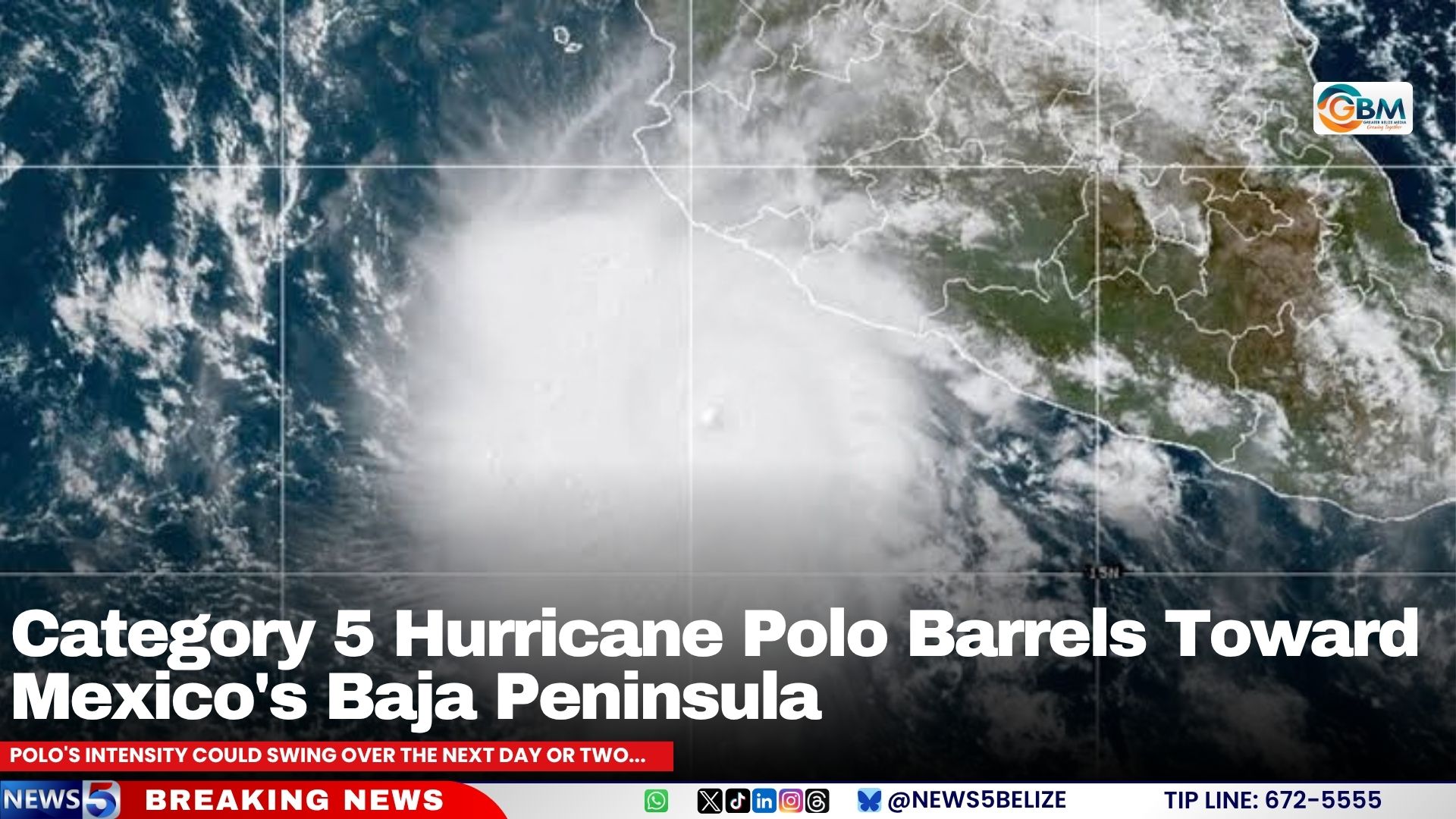
    A powerful Category 5 hurricane is posing imminent danger to northwestern Mexico and potentially the southwestern United States, as forecasters confirm Hurricane Polo has regained its maximum strength off Mexico’s Pacific coastline and is on a direct path toward Baja California Sur.

    As of the latest update from the U.S. National Hurricane Center (NHC) on September 25, 2026, the massive storm is positioned approximately 280 miles southwest of Cabo Corrientes, Mexico. Right now, Polo is carrying maximum sustained winds of 160 miles per hour, a threshold that puts it firmly in the highest tier of hurricane intensity on the Saffir-Simpson scale. At present, the system is moving west at roughly 12 miles per hour, pulling it temporarily away from Mexico’s mainland southwestern coast—but this trajectory is not expected to hold long, according to forecasters.

    Meteorologists have mapped out a clear shifting track for the storm over the coming days. They project that Polo will curve northwest by Saturday, shift to a northerly direction by Sunday, and finally make a turn toward the northeast on Monday. This path will bring the storm directly into contact with Baja California Sur, before it pushes further inland onto mainland Mexico.

    Hazardous impacts from the storm have already begun to reach coastal areas. Dangerous swells generated by Polo are currently battering southwestern Mexico’s shoreline, and these rough conditions are expected to spread northward along west-central Mexico’s coast and toward Baja California Sur through the end of the weekend. The NHC has issued urgent warnings that these building swells bring life-threatening risks including powerful rip currents, destructive high surf, and widespread coastal flooding that can put lives and property in danger.

    While some weakening is forecast in the near term, the threat will not dissipate entirely when the storm loses intensity. Meteorologists project that Polo will begin to gradually lose strength starting Saturday, after potential small fluctuations in intensity over the next 48 hours. Even as the storm system weakens, however, its vast plume of tropical moisture is expected to trigger extreme weather hundreds of miles from Polo’s core track. The NHC notes that remnant moisture from the hurricane may indirectly generate heavy downpours and dangerous flash flooding that extends all the way into the southwestern United States, putting communities across that region on high alert.

  • Former New Zealand international helps HPC spinners

    Former New Zealand international helps HPC spinners

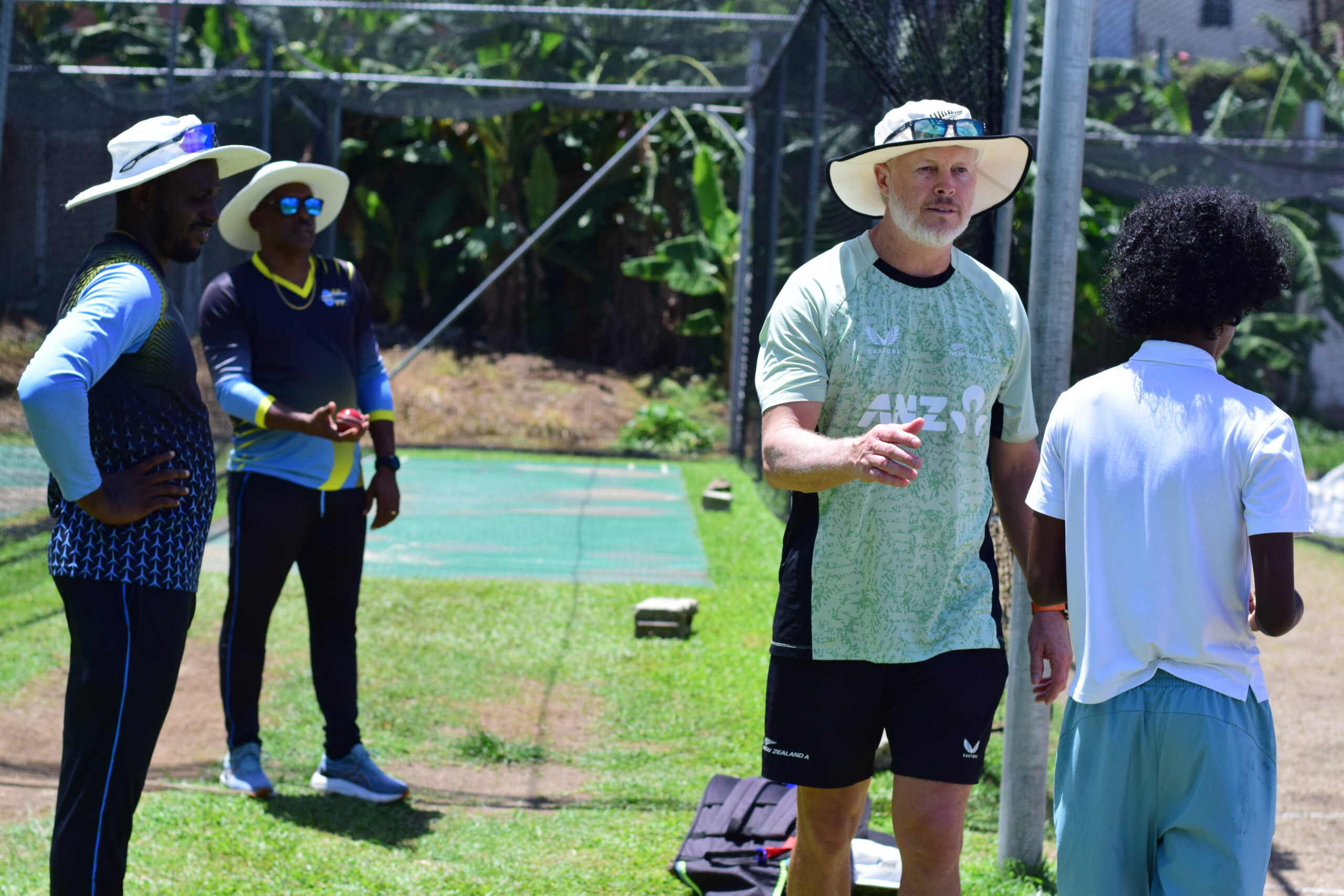
    On a bright Friday in Saint Lucia, a week-long specialized spin bowling camp led by former New Zealand international cricketer Paul “Wiz” Wiseman drew to a close, bringing valuable elite-level expertise to emerging spin talents from two key local programs: the Saint Lucia Cricket High Performance Centre (SLCHPC) and the Saint Lucia National Cricket Association’s youth development pipeline.

    Wiseman brings a wealth of top-tier experience to this developmental initiative, having built a distinguished 17-year professional playing career. Across 73 international appearances for New Zealand’s Black Caps, including 25 Test matches, he claimed 73 international wickets with his sharp right-arm off-break deliveries. His consistent success at the domestic first-class level further cements his credentials, with 466 wickets taken from 186 first-class outings.

    This camp marks the latest targeted investment by SLCHPC and Saint Lucia’s national cricket federation to elevate the skill sets of the island’s next generation of cricketers, with the long-term goal of preparing young athletes to compete at regional-level tournaments. The high performance centre already has a strong foundation for bowling development, employing former Windward Islands specialist spinner Larry Edward in the full-time role of assistant bowling coach.

    During his time working with the young bowlers, Wiseman highlighted unique advantages Saint Lucia possesses for nurturing spin talent, pointing to the nature of local playing surfaces that naturally favor spin bowling. “If you look at modern Test cricket, we are seeing increasingly extreme pitch variations, and that includes a growing number of spin-friendly wickets,” Wiseman explained. “That means developing new spin talent here is critical to taking advantage of these local conditions, which makes this work a huge priority. Beyond Test cricket, spin bowling has been a consistently successful weapon in the Caribbean Premier League’s T20 competitions for years, so it is already a hugely important component of competitive cricket across the West Indies.”

    This is not Wiseman’s first foray into developmental coaching: he has previously helped cultivate emerging spin bowlers for both New Zealand’s men’s Black Caps and women’s White Ferns national programs. In Saint Lucia, he said he was immediately struck by the depth of raw and refined talent across the group of camp participants. He emphasized that he jumped at the chance to share decades of on-field insight and pass along actionable tips to help these young bowlers sharpen their craft.

    “We got the chance to evaluate talent from both inside the High Performance Centre and the broader local cricket community, and the depth of skill here is really impressive,” Wiseman noted. “There is incredible raw talent alongside more developed, refined players, and I thoroughly enjoyed working with every single one of them. My hope is that the insights we shared this week will add real long-term value to their development as players.”

    Working in lockstep with assistant coach Edward and SLCHPC head coach John Eugene, Wiseman structured the week around personalized one-on-one coaching sessions, most of which took place in the practice nets at Saint Lucia’s iconic Mindoo Phillip Park. He also worked closely with the local coaching staff to align training with the centre’s long-term development frameworks. To cap off the week, the most senior bowlers who participated in the camp got the chance to test their new skills in a practical exhibition, squaring off against batters from the professional Windward Islands Volcanoes side on Friday.

  • Umpa wins inaugural Dennery Segment Artiste of the Year

    Umpa wins inaugural Dennery Segment Artiste of the Year

    A new milestone has been reached for Saint Lucian music and the growing Dennery Segment genre, as homegrown talent Brendon “Umpa” Charlery has taken home the inaugural Dennery Segment Artiste of the Year award at the 2025 Caribbean Music Awards.

    Umpa beat out five other high-profile regional nominees to claim the historic prize — fellow contenders included Blackboy, DJ ASAP, Mighty, Nerdy, and the duo Dezral & Jardel. Beyond his winning category, the artist also earned double additional nominations for the evening, scoring nods in the hotly contested Dennery Segment Song of the Year and Fuzion Artiste of the Year categories.

    The awards ceremony was hosted last Saturday in Port of Spain, Trinidad, but the winners of the dedicated Dennery Segment categories were not revealed until several days after the main event. In a surprising twist, Umpa had already returned to his home country of Saint Lucia when the announcement went public, and he received the life-changing news in an unexpectedly casual setting.

    “I was actually at a river lime enjoying a one-pot, when Elmo the producer called me to give me the news,” Umpa shared in an exclusive interview with the St. Lucia Times this week. The artist said he was overcome with joy at the announcement, emphasizing that the award carries meaning far beyond his personal career.

    “ It really means a lot seeing that this is the highest award for Caribbean music and it shows how far Dennery Segment has come and the world is taking notice,” he explained. “This win was not just for myself, it is for the entire genre and for all of Saint Lucia.”

    The win comes on the heels of another major career milestone for Umpa earlier this year, when Billboard named him one of the top 10 Caribbean artistes to watch in 2025. A prolific and widely traveled performer within the Dennery Segment scene, Umpa has built a loyal global fanbase thanks to a string of breakout hits including fan favorites *Pain Killer*, *One Drop*, and *Plat*. The self-titled “Lucian Shakespeare” credits consistent hard work and relentless dedication to craft as the driving forces behind his rapid rise.

    “If you put in the hard work and keep trying to be better at what you do, you will reap the rewards,” he said. His historic win marks a turning point for Dennery Segment, bringing the unique Caribbean genre to increased global attention and opening new doors for emerging talent from Saint Lucia moving forward.

  • CDPF announces traffic changes for Independence Walk Through Parade

    CDPF announces traffic changes for Independence Walk Through Parade

    As the Commonwealth of Dominica prepares to mark its national independence with the 2026 Opening of the Independence Walk Through Parade, local law enforcement has rolled out a set of temporary traffic regulations to accommodate the major public event. Scheduled to run from 4:00 PM to 8:00 PM on Saturday, September 26, 2026, the parade will be hosted at the island’s iconic Botanic Gardens, bringing together crowds of residents and visitors to celebrate the national occasion.

    The Commonwealth of Dominica Police Force (CDPF), the agency coordinating traffic management for the event, has outlined key restrictions that will go into effect for the duration of the parade. Most notably, through traffic will be fully banned on Valley Road, covering the stretch between its intersection with Elmshall Road and its connection to Bath Road. Additionally, general through travel will not be permitted within the Botanic Gardens grounds themselves, though the CDPF has confirmed that local access will be preserved for staff members working at offices located inside the Gardens.

    To help motorists navigate the restricted zones without major disruption, police have issued clear alternative route guidance. Drivers who regularly commute to and from the neighborhoods of Bath Estate, Elmshall, and the Valley are being directed to reroute via the Link Road that connects the Bath Estate Bridge to the New East Bridge.

    Along with travel restrictions, the CDPF has also implemented a full no-parking rule across multiple high-traffic areas near the event venue. The restricted parking zones include: both sides of Valley Road from the Bath Road intersection to the Bath Estate Bridge; the main Botanic Gardens Road stretching from the East Gate to the South Western Gate on Bath Road; the Link Road between the New Link Bridge and the Bath Estate Bridge; and Bath Road between the Independence Street intersection and the Morne Bruce Junction/Public Cemetery.

    To ensure clear navigation for road users, the CDPF notes that visible temporary traffic signage will be installed in all affected zones. Police are asking all motorists to pay close attention to these posted signs and follow any directions from officers assigned to manage traffic flow during the event.

    In a public statement, the CDPF extended its gratitude to the Dominican public for their understanding and cooperation ahead of the national celebration. The agency also apologized in advance for any travel delays or inconveniences that the temporary traffic arrangements may cause. To help road users prepare, officials are urging all drivers to plan their trips around the restrictions in advance and share this official notice with other community members who use the affected roads.

  • DNA-leden eisen onmiddellijke stillegging goudactiviteiten Pelin Bergi en onafhankelijk onderzoek

    DNA-leden eisen onmiddellijke stillegging goudactiviteiten Pelin Bergi en onafhankelijk onderzoek

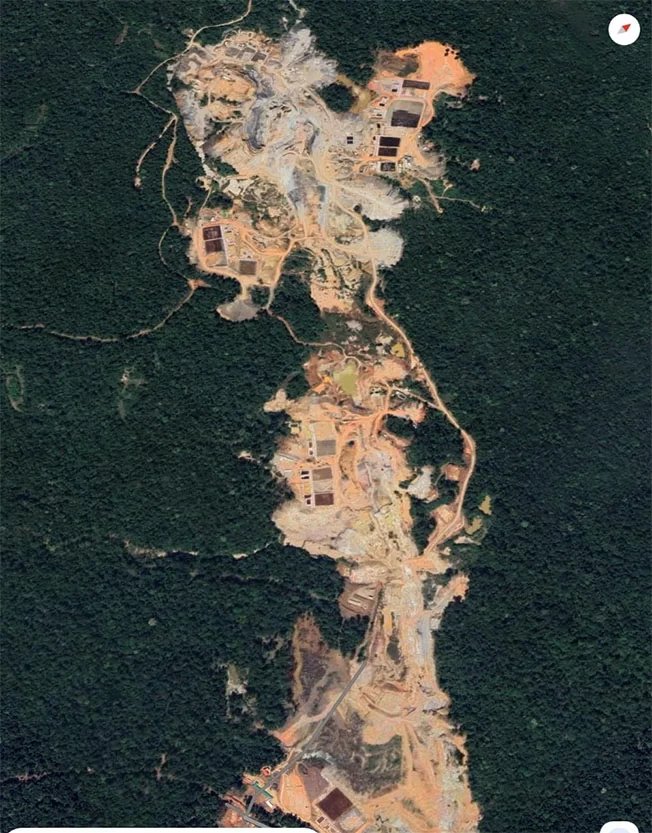
    Two members of Suriname’s National Assembly (DNA), Rabin Parmessar of the DNA and Michael Marengo of the NDP, have formally submitted a request to President Jennifer Simons calling for an immediate temporary suspension of all exploration, extraction and processing activities at the Pelin Bergi mining site near Kwakoegron. The request, submitted on September 25 via the Speaker of the National Assembly, follows an on-site inspection conducted by the lawmakers on September 19 alongside journalists and environmental activist Erlan Sleur from the non-profit organization Pro Bios.

    During their visit to the site, the parliamentary delegation observed clear signs of large-scale unregulated gold extraction operations, including significant portions of the mountain slope that had been excavated, with massive volumes of excavated material regularly transported to off-site processing locations. Based on their on-ground observations, the lawmakers note evidence pointing to the use of the controversial heap-leaching gold extraction method, which relies on cyanide to separate gold from ore. While the pair have not presented independent lab results confirming cyanide contamination in soil or surface water, they have raised urgent concerns about the unregulated handling, storage and disposal of toxic mining waste and potentially contaminated runoff water.

    Critically, the lawmakers warn that any unmanaged leakage of toxic substances could spread through local waterways that connect directly to two of Suriname’s most important river systems: the Saramacca River and the Suriname River. These water sources support drinking water supplies, livelihoods and ecosystem health for surrounding communities, so the pair argue that precautionary action is necessary before irreversible damage occurs. They are calling for on-site inspections by official agencies, secure collection of environmental samples, and independent testing of both soil and water quality to confirm the presence and extent of contamination.

    A core focus of the lawmakers’ request is clarifying the legal status of operations at Pelin Bergi. They are demanding the government disclose all details of which individuals or companies are conducting mining activities, what permits, concessions or legal agreements authorize the work, which government body granted those rights, and when the authorization was issued. Additional questions include how much gold and other minerals have been extracted and transported from the site in recent years, how production has been recorded, regulated and taxed, and what environmental regulations apply to the site.

    The letter also notes visible use of explosives at the site, prompting questions about whether legal permits for explosive use are in place and who supplied the materials. Of particular note, Pelin Bergi falls within the Area of Interest designated for an unincorporated joint venture between Rosebel Gold Mines (RGM), majority-owned by China’s Zijin Mining, and Suriname’s state-owned oil company Staatsolie. During the on-site visit, the delegation observed vehicles that local sources linked to Zijin/RGM, though the letter draws no definitive conclusions about company involvement and instead calls for a full independent investigation into any potential connection.

    The lawmakers also highlight potential financial risks to the Surinamese state. Under the terms of the joint venture, RGM holds a 70% stake and Staatsolie holds a 30% stake, meaning unregistered extraction would result in lost royalty and tax revenues for the state. The letter raises the possibility that mining has been ongoing for an extended period without complete production reporting, tax settlement or required royalty payments to the state – a claim presented as an unproven allegation requiring formal investigation, not a confirmed fact.

    To address all these overlapping concerns, Parmessar and Marengo are calling for a full independent multidisciplinary investigation that brings together environmental agencies, law enforcement, mining and hazardous materials experts, tax and financial regulators, and the Public Prosecutor’s Office. Their broadest demand is the immediate temporary halt to all mining activities at Pelin Bergi, which would remain in place until investigators confirm the legal identity of operators, the legitimacy of their operating authority, and full compliance with environmental and safety regulations.

    Framing the suspension as a necessary precautionary measure, the lawmakers argue that it is unreasonable to allow high-risk operations to continue for months while an investigation is ongoing. If competent authorities confirm immediate environmental or public health risks, or confirm that operations are proceeding without required legal authorization, the pair say appropriate enforcement action must follow. They have called on the government to deliver concrete, verifiable investigation results in the near term, and if violations are confirmed, demand that responsible parties are held legally accountable, and all damage to public health, the environment and state revenues is fully quantified.