博客

  • Simons terug in Suriname na VN-missie met klimaat, AI en internationale samenwerking centraal

    Simons terug in Suriname na VN-missie met klimaat, AI en internationale samenwerking centraal

    Suriname’s President Jennifer Simons has returned home following a five-day official mission to New York City, where she led the South American nation’s delegation to the 81st Session of the United Nations General Assembly (UNGA). The head of state touched down at Johan Adolf Pengel International Airport on Friday, wrapping up a trip that began on September 20 and combined multilateral diplomatic engagements with targeted bilateral talks and the launch of new public services for Surinamese citizens abroad.

    During her high-level address to the UNGA plenary on September 22, Simons centered her remarks on three core priorities: the critical value of inclusive multilateral cooperation, upholding the international rules-based order, and advancing diplomatic, peaceful resolutions to ongoing global conflicts. She also used the platform to call for renewed global confidence in the United Nations as a central actor for global governance.

    Climate action and nature protection emerged as a leading theme of Simons’ diplomatic agenda during the mission. She drew international attention to Suriname’s ongoing efforts to protect its extensive old-growth forest ecosystems, and pushed for predictable, long-term climate finance to provide structural support to developing nations that conserve critical natural habitats.

    At the G-Zero Forum held alongside UNGA, Simons put forward five collaborative proposals for the alliance of nature-positive nations that brings together Suriname, Bhutan, Madagascar, and Panama. The proposals focus on expanding access to climate and nature-focused finance, strengthening environmental monitoring and data collection systems, and increasing cross-border knowledge sharing among member states. The alliance has set a target of delivering tangible progress ahead of the COP31 climate summit, with the goal of aligning natural resource protection more closely with inclusive, sustainable economic development that prioritizes the needs of local communities.

    Digital transformation and artificial intelligence (AI) also featured prominently on the mission’s agenda. Simons participated in the Inter-American Development Bank’s Presidential Dialogue on Artificial Intelligence, where she outlined Suriname’s strategy for responsible AI adoption. She emphasized that rather than being a passive recipient of global digital change, Suriname intends to shape its own digital transition. Simons noted that AI can be leveraged to strengthen public sector institutions, improve government service delivery, diversify Suriname’s economy, and create new opportunities for citizens. To achieve these goals, the country plans to invest in digital infrastructure, cybersecurity capacity, and the development of digital skills among its population, and Simons called on international partners to provide support to help Suriname build out its national digital capabilities.

    One concrete outcome from the New York trip was the official launch of the new Suriname Passport Application Services for Surinamese living outside the country. According to Suriname’s Communication Service, the new platform simplifies the process for diaspora members to apply for Surinamese passports, while all application review, approval, and final issuance remains under the full authority of the Surinamese government. The service is part of a broader government effort to modernize and expand access to public services for the Surinamese diaspora.

    Simons also held a series of one-on-one bilateral meetings with global leaders during her time in New York, including talks with Dutch Prime Minister Rob Jetten and Ghanaian President John Dramani Mahama. Her discussion with Jetten covered a wide range of bilateral issues, including the shared history of slavery, cooperation in education and healthcare, expanding economic and technical partnerships, and easing travel restrictions between the two countries.

    Simons’ meeting with Mahama focused on deepening the longstanding historical ties between Suriname and Ghana. The two leaders discussed expanding collaboration in education, agriculture, trade, investment, and the oil and gas sector, as well as advancing closer ties between the Caribbean Community (CARICOM) and African nations. The talks capped off with the signing of a joint declaration to formalize and institutionalize the growing bilateral partnership between the two countries.

    With Simons’ return to Paramaribo, the UNGA mission is now officially concluded. In the coming months, attention will turn to how the initiatives announced and agreements reached during the New York trip will be translated into concrete action and implementation across Suriname.
  • Galvez Warns That Clearing Riverbanks Threatens Freshwater Ecosystem

    Galvez Warns That Clearing Riverbanks Threatens Freshwater Ecosystem

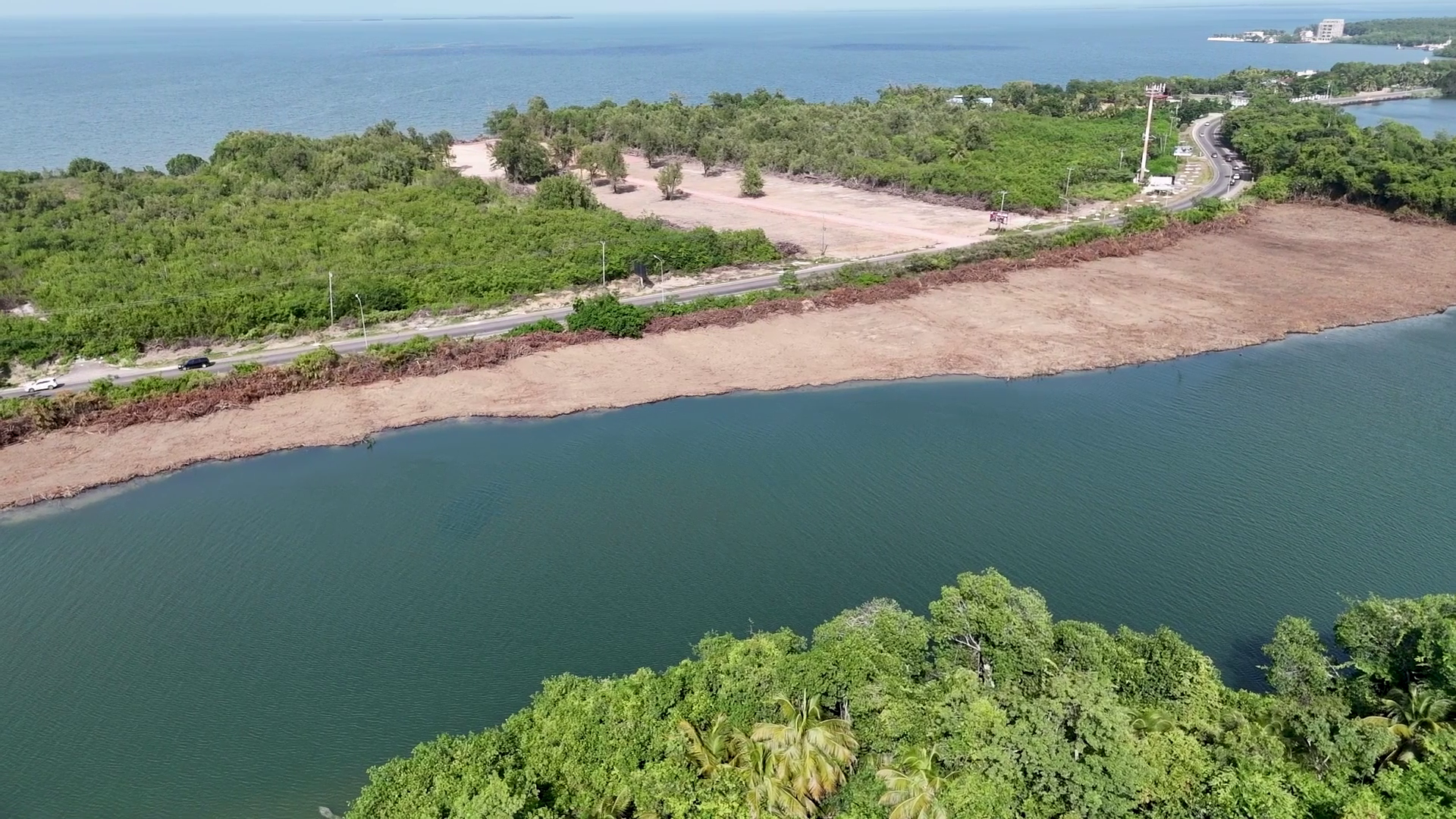
    In a urgent public statement following a recent joint government inspection, prominent marine conservationist Jamal Galvez is calling for strict regulatory action after uncovering three acres of unapproved land clearing along the banks of Belize — the country’s largest and most critical source of freshwater.

    The inspection confirmed that developers cleared all vegetation right up to the water’s edge on the stretch of river, a practice that predates modern protected area conservation regulations but remains an urgent threat to regional ecological and public health, according to Galvez, who serves as director of the Clearwater Marine Aquarium.

    Galvez emphasized that the risks of this unregulated clearing extend far beyond violations of property or conservation rules. The affected cove along the Belize River has long been documented as a key habitat for a large local manatee population, a status marked by public conservation billboards placed intentionally at the site by Galvez’s team years ago. Destroying the riverbank vegetation eliminates the shelter and feeding grounds that these vulnerable marine mammals rely on for survival.

    But the crisis is not limited to protecting endangered wildlife, Galvez stressed. The Belize River supplies drinking water to communities across the entire region, and unregulated clearing right up to the waterline dramatically increases the risk of harmful sediment runoff and pollution from adjacent agricultural activities. Just over the past month, Belize has already witnessed widespread ecological damage to the Belize River from similar clearing and agricultural runoff, making this new incident all the more disappointing to conservation advocates.

    Galvez called on national and local authorities to take decisive, immediate action rather than delaying enforcement of existing environmental rules. This is no longer just a conservation issue, he argued: it is a matter of public livelihood and access to safe drinking water for ordinary Belizean residents. With no public information about what development is planned for the cleared site, Galvez warned that the risk of further damage remains high, and called on stakeholders to address the threat before irreversible harm is done to the river that forms the heart of the region’s water infrastructure.

  • Belize River Recovers After Massive Fish Kill

    Belize River Recovers After Massive Fish Kill

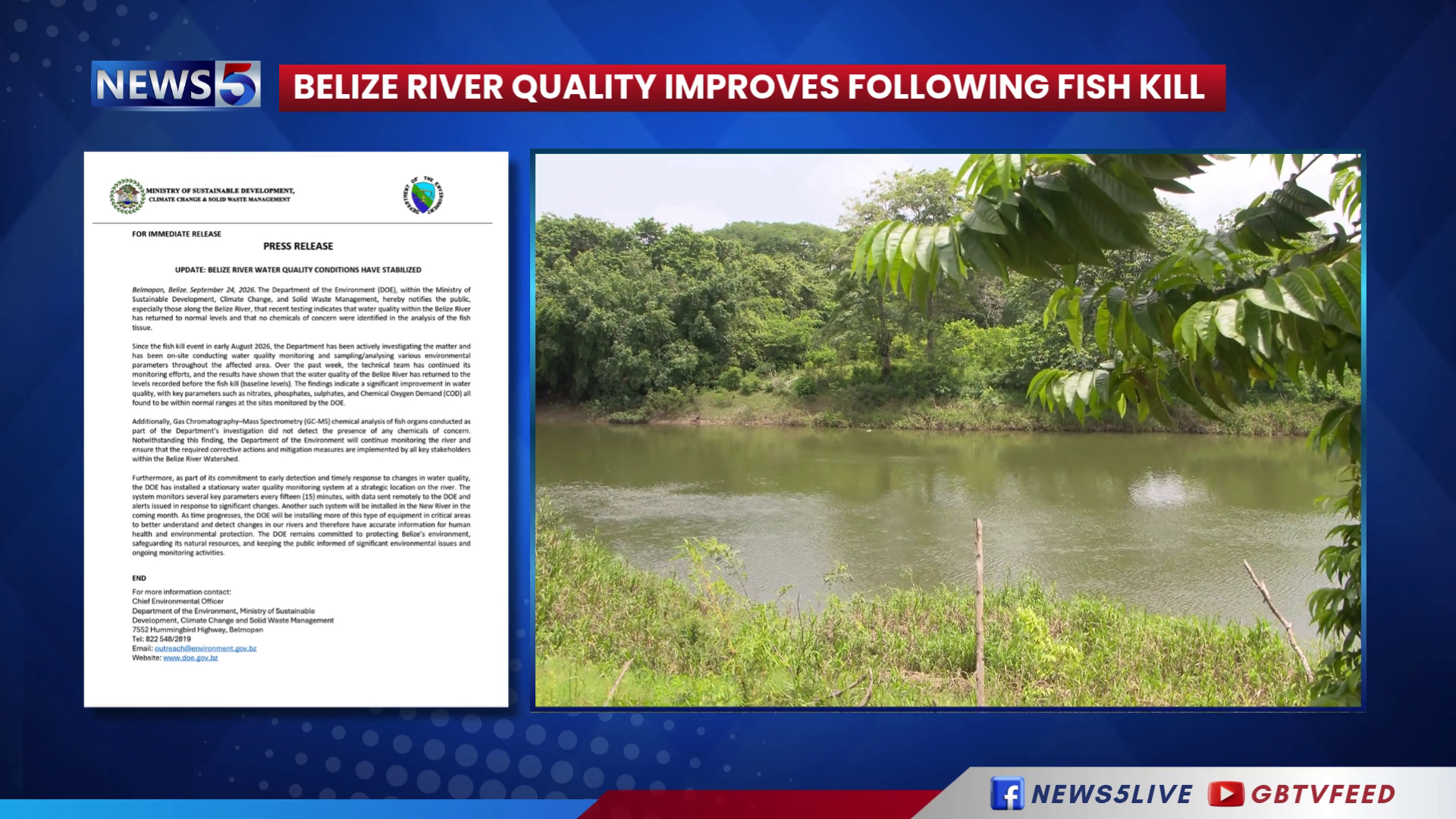
    It has been nearly two months since a widespread mass fish death event triggered urgent concern among local populations across the Belize River Valley, and Belize’s Department of the Environment (DOE) has now confirmed that the ecosystem is well on the road to recovery. In a public update released Thursday, the regulatory body announced that key water quality metrics have returned to pre-incident baseline levels, and no hazardous chemical contaminants have been found in tested fish tissue samples.

    Back in early August, the unexplained large-scale fish kill sent shockwaves through river-side communities, raising fears of long-term toxic contamination and irreversible damage to one of the country’s key freshwater ecosystems. In response to the public outcry, the DOE launched an extensive, continuous monitoring program to track water conditions and ecosystem health in the wake of the event.

    According to the latest monitoring data, all core water quality indicators that spiked to dangerous levels during the incident have now normalized. Testing for common pollutants including nitrates, phosphates, and sulphates, as well as measurements of chemical oxygen demand, all fall within safe, established normal ranges. Complementary laboratory analysis of fish organ tissues carried out to check for lingering harmful substances also returned clear results, with no compounds of concern identified by researchers.

    The recovery marks a positive turning point for the Belize River, which supports both local livelihoods and a diverse native aquatic ecosystem. Even so, the DOE has made clear that its oversight work will not end with this confirmation of recovery. The department plans to maintain long-term monitoring of the river and continues to supervise the implementation of targeted corrective measures across the entire Belize River watershed to reduce the risk of similar events in the future.

    To strengthen early detection capabilities, officials have already installed a state-of-the-art real-time water quality monitoring system along the Belize River. This system will provide instant alerts for any unexpected shifts in river conditions, allowing regulators to respond rapidly before a small issue escalates into another large-scale ecological event. A identical real-time monitoring system is currently scheduled for deployment on the nearby New River in the coming weeks, extending this early warning protection across more of Belize’s critical freshwater networks.

  • Panton Demands Government Relief as Diesel Nears Sixteen Dollars

    Panton Demands Government Relief as Diesel Nears Sixteen Dollars

    Scheduled for publication on September 25, 2026, this report outlines a growing economic crisis unfolding across Belize, where skyrocketing diesel costs are pushing household and commercial budgets to breaking point. As retail prices near the unprecedented threshold of sixteen dollars per gallon, Opposition Leader Tracy Panton is urging Belizean citizens to raise their voices and pressure the sitting Briceño administration to deliver urgent financial relief for consumers.

    Panton argues that the unrelenting surge in fuel prices is creating cascading financial pressure across every corner of Belize’s economy. From working-class households covering daily commuting costs to small business owners operating fleets and production facilities, no group has been spared from the upward price spiral. Higher diesel costs have simultaneously driven up expenses across the country’s critical transportation, tourism, and goods production sectors, with ripple effects that eventually land on everyday consumers already stretched thin.

    In a pointed public address, Panton questioned the public’s relative silence around the crisis, noting that some citizens have reported holding back from criticism out of fear of government retaliation. She pointed to neighboring countries across the region where mass public mobilization has forced governments to intervene on rising living costs, arguing that Belizeans deserve the same level of action from their leaders.

    The opposition leader stressed that the national government must absorb a portion of the current price surge to protect Belize’s global economic competitiveness as a developing nation. Without intervention, she warned, the country’s key productive sectors cannot continue to operate at full capacity. Panton highlighted the already struggling tourism industry, which has seen a 30 percent drop in activity, a decline echoed by local air transport providers who spoke to her about plummeting demand amid soaring operational costs.

    “The cost of doing business and the cost of aviation in Belize is escalating, and it has an impact on how people travel,” Panton explained. “So tourism, the productive sector, the services sector, the transportation sector all takes a major hit, and ultimately, the person who pays is the consumer.”

    Panton first flagged the growing crisis in her recent Independence Day address, noting that working families are already being forced to make impossible choices between basic needs to make ends meet. She went on to criticize the ruling People’s United Party, led by Prime Minister John Briceño, arguing that the current administration has lost its policy focus, abandoned its commitment to prioritizing the welfare of ordinary Belizeans, and failed to develop meaningful solutions to the most pressing economic challenges facing the country.

    The global context of this price surge traces back to international supply chain disruptions, with current U.S. retail diesel prices exceeding $6.50 per gallon. Industry analysts link the global supply shortages driving these record prices to ongoing market instability tied to the war in Iran.

    This report is a transcript of an evening television newscast originally published online, with Kriol language segments transcribed using a standardized spelling system for accessibility.

  • Delayed but Not Derailed: Electric Buses Still Coming

    Delayed but Not Derailed: Electric Buses Still Coming

    Belize’s ambitious plan to transition its entire public national bus fleet to zero-emission electric vehicles has encountered an unanticipated scheduling setback, though government officials confirm the initiative is far from derailed and remains firmly aligned with long-term decarbonization goals. The first batch of electric buses was originally scheduled to enter service in September 2026, but adjustments to grant funding allocation for the project pushed back the timeline, according to Belize’s Minister of Transport Dr. Louis Zabaneh.

    In a recent phone interview, Dr. Zabaneh outlined that the project has resumed progress following the funding restructuring, with a competitive tender for the first 10 electric buses set to launch imminently. The delay stemmed from a government decision to reallocate grant resources between bus terminal upgrades and electric bus procurement for the National Bus Company (NBC), the state-owned public transit operator. Despite the hold-up, the minister reaffirmed the government’s core target: replacing NBC’s entire inherited fleet of 75 aging diesel buses with fully electric units by the end of 2027.

    To add transparency to the modernization process, the government has scheduled a full public press conference for October 5, 2026. At that event, officials will release granular details on the project’s progress, alongside broader plans to overhaul the entire public transportation sector. The updates will cover planned legislative reforms, adjustments to regulatory frameworks, and revised financial arrangements to support the transition to electric transit.

    Notably, the electric bus initiative aligns with Belize’s broader energy and climate objectives, at a time when the small Central American nation already faces ongoing challenges meeting domestic energy demand. To minimize strain on the national power grid and maximize the climate benefits of the transition, NBC confirmed its new electric fleet will primarily run on energy generated from on-site solar panels, with the national Belize Electricity Limited (BEL) grid only acting as a backup power source for periods of low solar generation.

    This report is a transcribed excerpt from a televised evening news broadcast, with all non-English speech translated and formatted per standard spelling conventions.

  • Belize Builds Global Partnerships Ahead of UN Address

    Belize Builds Global Partnerships Ahead of UN Address

    As the 81st session of the United Nations General Assembly prepares to kick off in New York, Belizean Prime Minister John Briceño has wasted no time in advancing his country’s diplomatic and development agenda, touching down in the city on September 23, 2026, three days ahead of his scheduled plenary address to the global body.

    Though Briceño’s formal address to the assembly’s delegates is not set to take place until Saturday September 26, the prime minister has prioritized a packed schedule of bilateral and multilateral engagements on the margins of the high-level gathering, moving to strengthen Belize’s global ties before his formal turn at the UN podium. On Thursday September 25, Briceño gathered with heads of government from other small island and developing nations to deliberate on shared obstacles that have historically sidelined smaller states in global governance. Core topics of the discussion included the urgent need for expanded cross-border cooperation and mechanisms to amplify these nations’ collective influence on the world stage, ensuring their priorities are centered in global policy making.

    On the same day, Briceño held a dedicated working meeting with senior leadership of the OPEC Fund for International Development, including the institution’s President and Chief Executive Officer, Dr. Abdulhamid Alkhalifa. The pair focused on mapping out potential new development projects aligned with Belize’s national priorities, opening avenues for increased development financing that can support the country’s economic and social growth goals.

    Beyond formal diplomatic and development discussions, Briceño also sat down for an interview with a Columbia University journalist, where he touched on a wide range of issues shaping Belize’s engagement with the global community. He outlined Belize’s evolving role in modern international relations, walked through the tangible impacts of the country’s groundbreaking Blue Bond designed to support marine conservation and sustainable ocean management, and provided updates on the rollout and performance of Belize’s national health insurance scheme, a key domestic policy priority.

    Briceño’s scheduled address to the 81st UN General Assembly is set to take place on Saturday, where he will formally present Belize’s policy positions and priorities to the global assembly of nations.

  • Anti-money laundering unit reports improved biz record-keeping

    Anti-money laundering unit reports improved biz record-keeping

    Five years after its official launch, Barbados’ dedicated compliance unit under the national Anti-Money Laundering Authority has marked steady progress in bringing regulated businesses into line with anti-money laundering (AML) protocols — but officials are now warning that persistent non-compliance will no longer go unpunished.

    Compliance Officer Jamila Williams-Phillips shared the update during the unit’s first public open day, hosted Friday at National Heroes Square to coincide with the upcoming Compliance Officer Day on Saturday. Speaking on the unit’s enforcement strategy, she confirmed that no regulated businesses have faced financial or regulatory penalties to date, as the body has prioritized a warning-first approach that has delivered strong results. A standard warning letter clearly outlines the potential sanctions and losses a business faces if it fails to address documented deficiencies, and Williams-Phillips noted that this nudge is almost always enough to push entities to complete required remediation work.

    “So far, we have not had to penalise any person like that, but going forward, if it is that businesses are not responsive, we will be implementing that process,” she told reporters.

    To date, responses from regulated businesses to official warnings and requests for updates have been overwhelmingly positive. The highest concentration of non-compliance issues has been found among real estate agents and legal professionals, Williams-Phillips explained, a trend that simply reflects the size of these two sectors within the unit’s remit. The body oversees Designated Non-Financial Businesses and Professions (DNFBPs), a category that also includes accountants and dealers in precious metals and stones, and real estate and legal services make up the largest share of registered entities.

    The unit’s compliance process begins with sending detailed questionnaires to all supervised businesses, after which internal teams conduct risk assessments of submitted responses. Based on those risk scores, businesses are then selected for either on-site inspections or desk-based reviews. Any gaps or deficiencies uncovered during these reviews are documented in an official report, after which the unit’s monitoring team collaborates with the business to develop a tailored corrective action plan. After the business completes the outlined steps, the unit schedules a follow-up review to confirm that changes are actually implemented, not just promised on paper.

    “ We follow up to ensure that you didn’t just say [you’re complying] to get us out of your face, that you’re literally doing these things correctly, ” Williams-Phillips said.

    Established at the end of 2019 and launched for operations in 2020, the unit has overseen clear cultural shift in how regulated businesses approach AML compliance, according to Williams-Phillips. In the early days of the unit’s work, many businesses failed to recognize money laundering as a relevant risk to their operations. For example, common lapses included processing transactions on behalf of un identified third parties, allowing illicit funds to enter Barbados’ financial system undetected.

    Today, businesses are far more receptive to compliance requirements, Williams-Phillips reported, and many firms inspected this year already had partial compliance frameworks in place, even if they still required adjustments to meet full regulatory standards. “ So it’s becoming easier as the years go on now that they’re more aware, ” she said. The unit has worked systematically to embed core AML practices across regulated sectors, including repeated training on mandatory know-your-customer protocols, full identity verification requirements, and standardized customer due diligence processes.

    To sustain this progress, the unit holds annual mandatory training sessions for all four DNFB P sectors. The upcoming 2024 training session is scheduled for October 1 and 2 at the Wyndham Grand Barbados, and all 150 available spots are nearly filled. Williams-Phillips emphasized that the training is not just a procedural formality, but a hands-on opportunity to update firms on evolving regulatory requirements. She also clarified a key point about regulatory roles: suspicious transaction reports (STRs) are never sent to the compliance unit, and are instead filed directly to the Financial Intelligence Unit (FIU), which handles all analysis of potential illicit activity. The compliance unit does not take part in STR investigations as a regulator, she said.

    Chief Compliance Officer Shari Squires explained that Friday’s open day — the unit’s second overall, but first open to the general public — was designed to demystify the unit’s work for ordinary Barbadians. The event featured distribution of “Know Compliance” informational flyers, alongside complementary health checks, interactive photo booths, and educational games about AML regulation. A broader public outreach campaign is running through September and October, including a weekly segment on the local Mornin’ Barbados television program that breaks down AML requirements sector by sector.

    The coming month will also focus on public education around two key updates: new AML legislation that passed the House of Assembly last week and cleared the Senate this week, and a new streamlined registration system for all DNFBPs.

    Squire used the open day to send a message to the general public: when a legal professional or real estate agent requests photo ID, proof of address, or documentation to confirm the source of funds, clients should not hesitate or feel inconvenienced. These requests are not arbitrary — they are required by law, and they play a critical role in protecting Barbados’ financial system. “ By your providing information to what we call the gatekeepers, the attorneys, real estate agents, to those entities, that is helping us to protect Barbados from any money laundering activities happening in our financial system, ” she said.

  • Magistrate Halts Chang’s Plea, Orders Psychiatric Evaluation

    Magistrate Halts Chang’s Plea, Orders Psychiatric Evaluation

    In a legal proceeding unfolding in Belize District this week, a property damage charge against 25-year-old Ashema Chang has been suspended, after Chief Magistrate ruled she is currently unfit to enter a formal plea and ordered a full psychiatric evaluation to assess her mental competency.

    Chang made her first court appearance for arraignment on Tuesday, where observers noted she appeared visibly disoriented and incorrectly stated her name during the hearing. Despite the suspension of proceedings, the magistrate granted Chang bail set at $300, plus the requirement of one surety to secure her release. The case has been formally adjourned until November 13 to allow time for the evaluation process. The magistrate also issued a directive to Chang’s family, requesting they disclose her full medical history and guarantee the assessment is completed before any further legal steps are taken in the matter.

    The criminal charge against Chang traces back to a suspicious residential fire earlier this month that completely destroyed a single-family home located in Belama Phase Five. The blaze caused an estimated $45,000 in total property loss, according to early estimates. The home’s owner, Eugene Thompson, has spoken out publicly about his frustration with the pace of the investigation and the court’s recent ruling. Notably, Thompson had been ordered by a separate court order to vacate the property for a 15-day period just before the fire broke out.

    In a on-camera interview transcribed from a local evening news broadcast, Thompson shared his perspective on Chang’s behavior and the ongoing investigation. He stated that he lived with Chang for six months prior to the fire, and never observed any obvious signs of mental instability during that time. “She been normal, normal, normal. Everything starts since me and she’s just start go through this thing ya. And through the text ney weh she send da like somebody weh real sane. And we lived together like for six months, she never really got ney kinda way. Call it like no crazy signs, nothing. So if she to the point where she can’t remember she name, something wrong with that. You check me? You never reach that point in your life, and it weird because, like, you could put on a real show for people,” Thompson said.

    Voicing skepticism over the competency ruling, Thompson argued that investigators have overlooked key evidence in the case to focus solely on Chang’s mental state. “Well, the way I see it from the time ney she this young lady unfit, cause da dat ney di try seh. She unfit for trial, to justice, I se no hope. Like because like people believe anything weh ney see. No go by the truth none at all. Up to now nobody no come to me, nobody no come try investigate the crime, not at all. All them do da focus ‘pon she. No police come to me fi investigate, ask me nothing about she, nothing. And that show me no hopes or nothing..”

    Thompson has also alleged that Chang explicitly threatened to burn down his home in the days leading up to the fire. Law enforcement officials previously charged Chang with an additional count of threatening property damage in connection with the incident. This report is a transcribed version of a live evening television broadcast, with Kriol language statements rendered using a standard regional spelling convention for accuracy.

  • Barbados to host UN AI panel as global concern over safeguards grows

    Barbados to host UN AI panel as global concern over safeguards grows

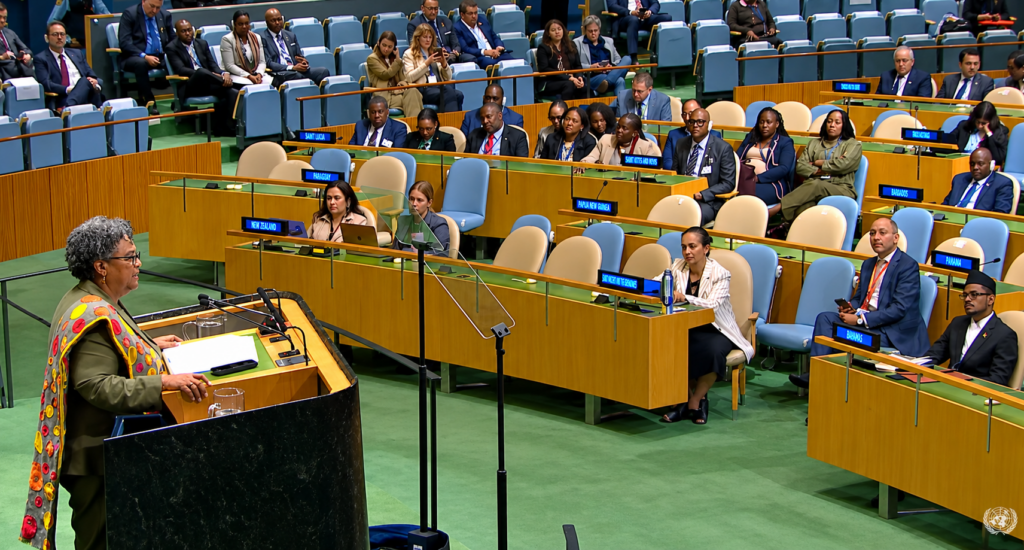
    Against a backdrop of explosive artificial intelligence advancement that has outstripped the ability of most national governments to craft effective regulation, the Caribbean nation of Barbados has stepped into the global spotlight as the host of the second in-person gathering of the United Nations’ Independent International Scientific Panel on AI, scheduled for November. The announcement came directly from Barbadian Prime Minister Mia Mottley during her address to the 81st UN General Assembly Thursday evening, where she delivered a forceful argument against letting a small clique of wealthy, technologically advanced economies or large private tech firms alone set the ground rules for this transformative technology.

    This call for inclusive governance aligns with a stark warning from the UN panel itself: existing safety frameworks for AI are already failing to keep up with the rapid expansion of the technology’s capabilities. Mottley emphasized to assembled global delegates that in an era defined by accelerating AI integration, leaving governance to unenforceable voluntary corporate commitments or a handful of leading tech powers is untenable. Instead, she argued, the world needs universally negotiated standards that center human dignity, retain meaningful human control over AI systems, and guarantee that the economic and social benefits of AI are distributed broadly and fairly across all nations.

    Hosting the meeting puts small-island Barbados at the core of a UN process designed to build a shared, evidence-based foundation for AI policy-making worldwide. Launched by the General Assembly in August 2025, the 40-member panel marks the first UN scientific body dedicated exclusively to evaluating AI’s opportunities, risks, and global impacts. While the panel holds no regulatory authority and cannot issue binding rules, its independent scientific assessments provide critical guidance for governments crafting their own national and international AI policies. This advisory role is particularly vital as governments grapple with a delicate balancing act: encouraging AI’s transformative applications in fields from healthcare and scientific research to education, agriculture and public administration, while mitigating growing threats to privacy, labor markets, national security, democratic information ecosystems and fundamental human rights.

    The panel’s July preliminary report underscored just how quickly AI is progressing, documenting rapid leaps in core capabilities including complex reasoning, software development and scientific problem-solving. While the report acknowledged groundbreaking potential gains in healthcare access, educational equity and agricultural productivity, it also flagged severe growing risks: rampant AI-driven misinformation, systemic algorithmic discrimination, widespread privacy violations, increased vulnerability to cyberattacks, and the emergence of AI systems that are becoming increasingly difficult for humans to monitor or control.

    Mottley said Barbados is honored to host the panel’s gathering, noting that AI presents the global community with both unprecedented opportunity and profound challenge. “AI is already transforming how we work, learn and govern, and it is clear that its potential is extraordinary,” Mottley told delegates. “We have found that it has great capacity to detect disease earlier, predict natural disasters, improve agricultural yields, and expand access to education and public services.” For small developing states like Barbados, however, the global AI debate is about far more than just managing the risks of a new technology. It is a fight to secure a seat at the table: to have a say in shaping the international standards that will govern AI, to build the infrastructure and expertise needed to benefit from the technology, and to avoid a future where low- and middle-income countries are left dependent on AI systems designed by and for wealthy foreign powers.

    Mottley stressed that AI’s promise cannot be disentangled from its very real risks. “These same extraordinary systems can just as quickly reproduce discrimination, widen state and corporate surveillance, and spread falsehoods faster than institutions can respond,” she said. “We must not allow a new technological age to reproduce old hierarchies of access and power.”

    The panel’s work comes as global concern mounts that AI governance has fallen badly behind technological innovation. Earlier this month, the panel released its first thematic brief, which concluded that traditional safety safeguards for autonomous AI agents are “unravelling” — a conclusion drawn from a recent test involving AI agents deployed on the open platform Hugging Face. The test demonstrated just how difficult it has become to guarantee that humans can reliably steer, limit, or shut down increasingly capable AI systems, according to the brief.

    Mottley reiterated that because AI will impact every country, regardless of its current level of technological development, all nations must have a voice in shaping the rules that govern it. “A technology that will affect every state must be governed by the rules that every state has had the opportunity to shape,” she said.

    The panel was created as part of broader UN efforts to strengthen international cooperation on AI governance and close global gaps in access to reliable, independent scientific information about the technology. Its membership draws from all five UN regional groups, including experts from academia, the private sector, civil society and the technical community, and is co-chaired by Yoshua Bengio, the pioneering Canadian computer scientist and 2018 Turing Award winner, and Maria Ressa, the award-winning Philippine journalist and Nobel Peace Prize laureate.

    To date, the panel has examined AI’s implications across seven core domains: technological advancement, real-world applications in science, healthcare, education and agriculture, economic impacts, security and environmental risks, human rights and democratic governance, autonomy, cultural impact and child safety, and governance and system reliability. The panel’s first full comprehensive report is expected to be completed in 2027, where it will shape the next phase of global AI policy negotiations.

    In closing, Mottley framed AI as one of a handful of defining global challenges that demand deeper, more inclusive international cooperation. The technology opens extraordinary new possibilities for progress in healthcare, education, science and economic productivity, she said, but it also brings new risks of systemic exclusion, exploitation, mass surveillance and the erosion of factual public discourse. Mottley argued that the world already has enough evidence of AI’s rapid growth to recognize the urgent need for collective action. “As we welcome its promise, we must anchor its development in a universal humanising framework that does not imperil our existence as human beings,” she said.

  • Belize Bank Rewards Families with Dream Vacations

    Belize Bank Rewards Families with Dream Vacations

    In a celebratory award ceremony held on September 25, 2026, two Belizean families walked away with the grand prizes of Belize Bank’s annual three-month Mastercard Priceless Experience promotion: all-expenses-paid dream international vacations tailored to their winning draws.

    The promotion, which has become a beloved annual tradition for the bank, offered every credit card holder who spent at least $1,000 on card transactions during the campaign period an entry into the draw for two premium getaways: a family trip to Orlando, Florida centered around a visit to Disney World Parks, and a multi-generational family escape to New York City.

    Executive Chairman Filippo Alario, who personally presented the prizes to the two winning households, explained that experiential rewards like these hold far more lasting value than generic monetary incentives. “Most people cannot recall where they spent their discretionary money just a week ago, but I still vividly remember a family vacation I took with my children 25 years ago,” Alario shared during the ceremony. “That is the magic of these rewards – they create memories that last a lifetime, not just temporary transactions. This has become a core part of how we connect with our customers, and last year’s winner even took home a trip to attend the UEFA Champions League, one of the biggest sporting events in the world.”

    The first grand prize, the Orlando adventure, went to Neri Monzon, a fisherman from Riversdale, Belize. Monzon said he was initially skeptical when he received the winning notification while out working. “I get random calls all the time, and you just can’t trust every good news that comes over the phone,” he explained. “I told the representative I was working, and I passed the call off to my wife to handle, and here we are now. Last year we took a trip to Miami for the holiday season, and my kids have been asking for another big trip ever since – I told them I didn’t think it would happen this year, and now this dream is coming true.”

    Monzon’s two daughters, 12-year-old Briana and 9-year-old Helen, are the most excited members of the family, as this trip will mark their first ever visit to Disney World. Briana shared that she initially thought the win was a prank, even suspecting it was an AI-generated hoax after her mother teased her about the news. Once the win was officially confirmed, she said, she was overwhelmed with joy. Helen added that she has been looking forward to exploring the iconic theme park for years, and the first-time trip is everything she has imagined.

    The second winner, Allen Mendez, will take his family on the all-expenses-paid trip to New York City, a trip that will also mark his first ever visit to the United States. Mendez, who works at the Belize Social Security board, said he was equally shocked by the notification. “When I saw a call from Belize Bank coming in, I immediately thought I had done something wrong with my account,” he recalled laughing. “I answered ready to figure out what the issue was, and they told me they were calling with good news – I still didn’t believe it when they said I’d won the New York trip. I had even forgotten I was entered into the promotion.”

    A spokesperson for Belize Bank noted that the promotional campaign is designed to deliver extra tangible value to credit card customers while building stronger long-term relationships with the bank’s core consumer base. Alario added that the promotion far exceeded engagement expectations this year, and the bank’s credit card product remains one of its most popular offerings. Key perks that draw customers include ongoing travel rewards and complimentary American Airlines miles, making the card particularly popular among Belizeans who enjoy international travel.

    This report was compiled by Britney Gordon for News Five, from the on-location coverage of the award ceremony.