博客

  • Suriname en Ghana verdiepen samenwerking: visumvrij reizen, goudsector en handel op agenda

    Suriname en Ghana verdiepen samenwerking: visumvrij reizen, goudsector en handel op agenda

    On the sidelines of the 81st United Nations General Assembly in New York, the presidents of Suriname and Ghana have announced a major push to deepen their long-standing historical and cultural ties into a comprehensive bilateral partnership spanning trade, diplomacy, natural resource development and people-to-people exchange.

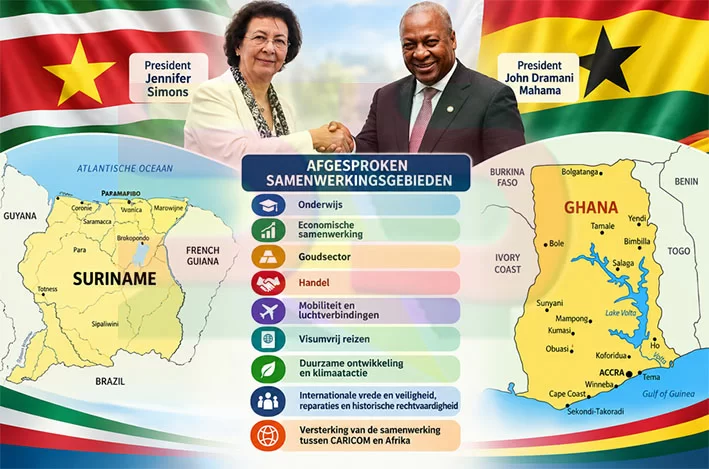
    Suriname’s President Jennifer Geerlings-Simons and Ghana’s President John Dramani Mahama held bilateral talks September 26 on the margins of the annual global summit, laying out a shared agenda that includes exploring visa-free travel, expanding air connectivity, boosting educational exchanges, growing bilateral trade, and advancing joint collaboration in the gold mining sector. Following their discussions, foreign ministry leaders from both nations formalized the new framework of cooperation during a signing ceremony witnessed by the two heads of state, signing a Joint Declaration and updating a bilateral roadmap for cooperation spanning 2026 to 2029.

    According to Suriname’s Communication Service (CDS), the talks centered on translating the deep historical and cultural connections between the two nations into tangible cooperation that delivers shared economic and social benefits for both populations. Specific priority areas were identified, including educational partnership, broad-based economic collaboration, and sustainable development of the gold sector. Both leaders committed to expanding existing cooperative frameworks into targeted initiatives aligned with global sustainable development goals.

    Melvin Bouva, Suriname’s Minister of Foreign Affairs, International Trade and Cooperation, and his Ghanaian counterpart Samuel Okudzeto Ablakwa carried out the official signing of the Joint Declaration and updated roadmap. The revised 2026-2029 Bilateral Roadmap will serve as a practical operational framework to set clear priorities, track the implementation of agreed commitments, and ensure agreed initiatives are delivered on the ground. Beyond bilateral projects, the two nations also agreed to hold more regular high-level political dialogue between their capitals Paramaribo and Accra, and to strengthen coordinated positions within multilateral bodies including the United Nations, African Union (AU) and the Caribbean Community (CARICOM).

    Key areas for enhanced multilateral coordination include sustainable development, climate action, international peace and security, reparations, and historical justice. Both countries have pledged to prioritize amplifying the collective interests of developing nations, small island states, and vulnerable global economies in international forums.

    During the discussions, leaders addressed cross-border people mobility, with President Mahama expressing particular interest in establishing a visa-free travel regime for holders of ordinary passports between the two countries. Such an arrangement would lower barriers to travel, and support growth in business, tourism, and cultural exchanges between Ghana and Suriname. As of the announcement, no final agreement has been reached on the policy. For its part, Suriname highlighted the importance of improving air connectivity, noting that a bilateral aviation agreement has already been signed, and further implementation will strengthen transport links between South America and West Africa.

    On the economic front, collaboration in the gold sector was a key topic of discussion. Ghana is home to one of Africa’s largest gold mining industries, and both governments see significant opportunities to expand joint development and knowledge sharing in this area, though concrete details of the partnership have not yet been released. Additional economic priorities include expanding overall bilateral trade, advancing educational partnerships, and boosting people-to-people mobility to support inclusive sustainable growth.

    The partnership extends beyond bilateral cooperation, with both nations leveraging their regional positions to strengthen ties between the Caribbean and African continents. Ghana is set to assume the rotating presidency of the African Union in 2027, while Suriname will take over the presidency of CARICOM next year. The two countries plan to use their leadership roles to elevate shared priorities including trade, education, mobility, sustainable development, and South-South cooperation on the joint agenda for African and Caribbean regional blocs.

    In line with this regional cooperation goal, President Geerlings-Simons announced that as incoming CARICOM president, she will propose inviting President Mahama as a Special Guest to the 2027 CARICOM Heads of Government Meeting, which will be held in Suriname from February 16 to 19, 2027.

    The talks also dedicated significant attention to the shared historical ties between the two nations. President Mahama thanked Suriname for its support of United Nations General Assembly Resolution A/RES/80/250, which addresses the trans-Atlantic slave trade and racially based chattel slavery. For Ghana, advancing global recognition, justice, and reparations for the harms of slavery is a core international priority, and the Joint Declaration identifies reparations and historical justice as areas where the two nations will strengthen coordinated international advocacy. The joint statement recognizes Ghana as holding special significance in Suriname’s national cultural heritage, rooted in shared historical connections.

    To mark the deepening of ties, President Mahama extended an invitation to President Geerlings-Simons to attend Ghana’s 70th independence anniversary celebrations in 2027. With the signing of the Joint Declaration and updated roadmap, Paramaribo and Accra have moved to anchor their centuries-old cultural and historical relationship in a concrete, modern cooperation framework. Over the coming three years, the 2026-2029 Bilateral Roadmap will guide the rollout of new projects across economic development, education, gold sector collaboration, mobility, and deeper integration between the Caribbean and African regions.
  • BOMB THREATS SHUT SCHOOLS

    BOMB THREATS SHUT SCHOOLS

    False bomb threats targeting schools immediately after long weekends have emerged as a persistent, troubling issue in Trinidad and Tobago, according to the president of the island nation’s largest teachers’ union.

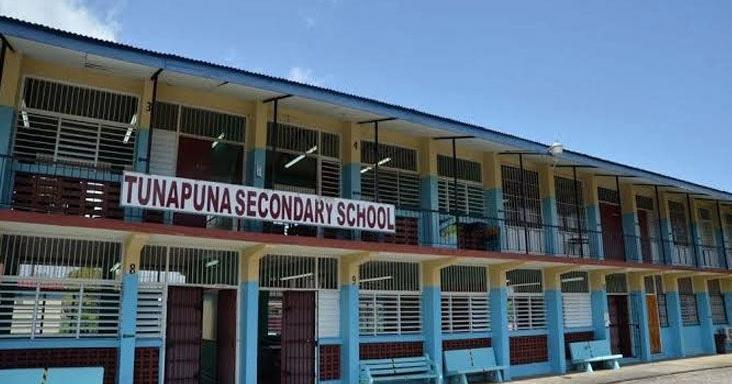
    The latest wave of disruptions unfolded this week, when four secondary schools—Arima North Secondary, El Dorado East Secondary, El Dorado West Secondary, and Tunapuna Secondary—received anonymous bomb threats in a single day, forcing the immediate evacuation of all students and staff on campus.

    In a statement shared with local media outlet *Trinidad Express* via WhatsApp, Crystal Ashe, president of the Trinidad and Tobago Unified Teachers’ Association (TTUTA), emphasized that stronger action is urgently needed to track down and hold accountable the individuals behind these malicious pranks. Ashe noted that bomb threats against schools consistently spike in the days following extended public holidays, a pattern that suggests the threats are often carried out by bad actors seeking an unplanned extra day off from classes.

    “TTUTA, as a key stakeholder in the national education system, always takes any threat against school communities extremely seriously,” Ashe said. He added that while the Ministry of Education already has a formal bomb threat response policy in place for institutions to follow, the recurring nature of these incidents demands more proactive intervention to root out those responsible. “When teachers follow the established protocols, we are confident in the framework, but stopping the threats at their source is the only way to end these disruptions for good.”

    Following the receipt of the threats on the day in question, the Trinidad and Tobago Police Service (TTPS) was immediately dispatched to the four affected campuses. The service’s Explosive Detection and Disposal Unit and Special Branch teams carried out full security sweeps of every building, classroom, and common area on school grounds, searching for any trace of explosive devices or suspicious items. After completing their thorough inspections, law enforcement officials confirmed that no dangerous materials were located, and the schools were officially cleared to resume normal operations.

    In an official media release issued the same day, the Ministry of Education confirmed that it had been notified of the threats immediately and had coordinated closely with law enforcement to respond. The statement noted that all established school safety and emergency protocols were followed throughout the incident, including structured coordination between school administrators and protective services, timely implementation of precautionary measures, and orderly accounting for all students and staff during the evacuation. “The safety and security of every student, teacher, and member of the school community remains our highest priority,” the ministry emphasized.

    The National Parent Teachers Association (NPTA) also issued a statement reacting to the incident, with NPTA president Walter Stewart sharing his perspective with *Trinidad Express* via telephone. Stewart voiced relief that the threats ultimately turned out to be false, but echoed the deep concern shared by TTUTA over the recurring pattern of these incidents. He reaffirmed that schools must remain safe, secure spaces for teaching and learning, and that all educators and students deserve to enter campus every day confident in their personal safety.

    Stewart pointed out that even when bomb threats are proven to be hoaxes, they inflict lasting harm on school communities. Beyond the immediate disruption to instructional time and delays to curriculum delivery, these false threats divert critical law enforcement and emergency response resources away from genuine public safety needs, he noted. They also spread unnecessary fear and anxiety among students, staff, parents, and the wider community, long after the all-clear is given. “These pranks are not harmless—they carry real costs for everyone involved, and it is past time that we crack down on those responsible,” Stewart added.

  • TSTT workers march: Pay 10% hike

    TSTT workers march: Pay 10% hike

    A bitter wage standoff between state-owned Telecommunications Services of Trinidad and Tobago (TSTT) and the Communication Workers’ Union (CWU) has escalated in recent days, with union leaders openly questioning the company’s good faith in reaching a resolution and warning that frontline workers may be caught in the crossfire of the impasse.

    Following a lunchtime demonstration held by TSTT employees to demand answers over the rejected wage deal, CWU Secretary General Joanne Ogeer reiterated the union’s call for Prime Minister Kamla Persad-Bissessar to step in and break the deadlock that has frozen negotiations. The protest also centered on a demand for TSTT Chairman Kern Dass to publicly explain why a tentative 10% wage increase agreement, reached after months of back-and-forth between negotiating teams, was ultimately struck down by the company’s board of directors.

    Ogeer clarified that the demonstration was not organized in direct response to pre-action protocol letters issued by TSTT leadership and Public Utilities Minister Barry Padarath. Instead, the core grievance centers on the unexplained rejection of a deal that was finalized by executive representatives from both sides. The 10% proposal, which would phase in the pay raise over a two to three-year period, was the only one of five initial offers the union found acceptable, after four other packages were rejected out of hand, Ogeer explained. Once both negotiating teams signed off on the terms, the plan was forwarded to TSTT’s board for final approval — only for the union to be notified weeks later that the deal had been turned down.

    The CWU leader’s questioning of the board’s decision carries extra weight given TSTT’s recent blockbuster financial results: the company reported a $214 million after-tax profit for the financial year ending March 31, 2026, a performance TSTT itself called the strongest it has posted in 17 years, dating back to 2009. Ogeer pushed back on the company’s long-standing claims of cash flow constraints that were previously used to justify wage freezes and low offers.

    “When the company repeatedly claimed before that it had cash flow problems, that it was not turning a profit, so it could not afford to pay workers more — but now you have announced a $214 million profit… what justification can you possibly give for saying no now?” Ogeer said in a press briefing after the protest. She also called for transparency around the sources of the windfall profit, asking whether the gains came from the government’s national laptop programme, a surplus in the company’s pension fund, or other operational gains. “It makes no sense for a company that has not received government subventions in recent years, and is now posting its highest profit ever, to claim it cannot or will not pay workers what they have agreed to,” she added.

    To back up the union’s claim that the 10% deal was properly negotiated and agreed, Ogeer said the union has already provided TSTT with two specific dates of the executive negotiating sessions and called on the company to review internal security footage to confirm that the meetings took place, who attended, and how long the negotiations lasted. “We are not making this claim out of thin air. The 10% agreement did not happen in a vacuum,” she said.

    Most strikingly, Ogeer admitted that the union has little confidence that TSTT will return to the negotiating table with a genuine commitment to reaching a fair deal. “What I can say clearly is that we are not optimistic that the company will come back to the table in good faith, and I want to stress that. We have no hope that the company will honor the agreement it made with the union,” she said. “As a matter of fact, we believe that TSTT workers will be weaponized even more as this dispute drags on.”

    Ogeer also raised questions about the independence of an ongoing internal investigation into TSTT’s former chief executive, noting that while the union does not oppose a proper probe into potential misconduct, it is demanding clarity over who is overseeing the process. “Who is guarding the guards at TSTT?” she asked. “Stakeholders are watching, investors are watching, citizens are watching, employees are watching… right now, TSTT does not look good.”

    In response to the pre-action protocol letters received from TSTT and the public utilities minister, Ogeer confirmed that the union has assembled a team of experienced legal representatives to handle the impending litigation, though she declined to share further details on the legal strategy. She made clear the union is confident in its position. “I am comfortable, and I am very confident with the representation that we have retained on the matter at hand,” she said.

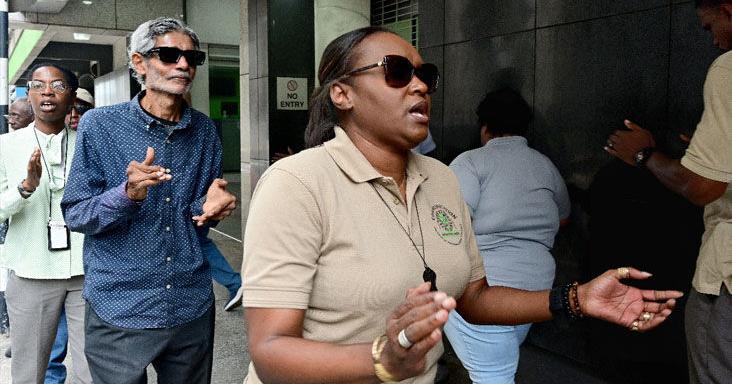
    The protest drew support from other national labor groups, with Trinidad and Tobago Unified Teachers’ Association (TTUTA) President Crystal Ashe and prominent activist Dr. Wayne Kublalsingh in attendance. Ogeer noted that the demonstration marked a key moment for the labor movement, as it was the first major protest the union has been able to hold since the national state of emergency was lifted, giving workers the chance to publicly advocate for their rights once again.

  • Help for homes damaged in storm

    Help for homes damaged in storm

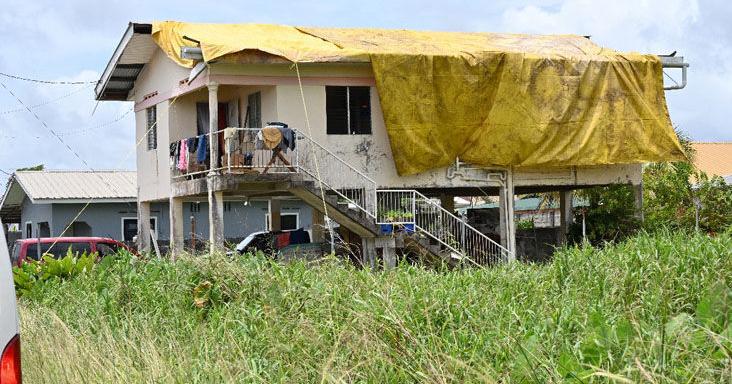
    A powerful overnight storm that struck late Thursday has left more than 100 residential roofs damaged across the Toco/Sangre Grande constituency, prompting rapid response from local disaster management authorities and government housing officials to begin damage assessments and speed up relief for affected families.

    On Saturday, a joint media tour of the hard-hit Azalea Circular neighborhood in Sangre Grande was led by Phillip Alexander, Minister in Trinidad and Tobago’s Ministry of Housing, alongside members of the Toco/Sangre Grande Regional Corporation’s Disaster Management Unit. Also participating in the tour was Kenwyn Phillip, chairman of the regional corporation and local area councillor, who walked the impacted streets with officials to survey destruction and speak directly to residents displaced or harmed by the storm.

    The collaborative assessment team, made up of Disaster Management Unit staff and a contingent from the Housing Development Corporation (HDC) under Alexander’s leadership, launched its work to streamline the grant application process for homeowners seeking funding for roof repairs and home restoration.

    Alexander explained that the inter-agency coordination is designed to ensure no affected resident falls through the gaps. “As we collect information from each homeowner about their specific needs, all teams will align their efforts based on their respective responsibilities, working in lockstep to deliver tangible relief to every household impacted by this disaster,” he stated.

    When questioned about support for homeowners with mortgaged properties, Alexander confirmed that HDC would deploy technical teams to guide residents through the assistance process, and noted that the Ministry of Housing maintains dedicated relief grants separate from resources offered by the regional corporation and local member of parliament.

    Phillip added that multiple agencies offer targeted grant programs to address different needs: the Self-Help program typically provides support for building materials, while the Social Services agency assists with replacing damaged personal appliances and household goods. He clarified that the regional corporation itself does not directly issue relief grants.

    Alexander also outlined the regional corporation’s role in delivering immediate temporary relief to displaced families, noting that local MP Wayne Sturge has already opened his office as temporary shelter for households forced to evacuate their damaged homes, providing immediate comfort to those who have nowhere else to stay.

    Two affected residents shared their harrowing firsthand accounts of the storm’s sudden violence. Joel Spence, whose home suffered partial roof loss, described how the damage unfolded in minutes. “We had planned to go to Paramin on Thursday, but I came back home as rain started pouring and wind began lashing our bedroom,” he recalled. “We watched coconut trees bending in the wind, and by the time we rushed inside to save our bedding from the incoming rain, daylight was suddenly pouring through – the roof was just gone.”

    Spence explained that his entire home was flooded, leaving all three of his household’s mattresses soaked. “Last night I slept on the floor, my wife on a blow-up mattress, my stepson on the couch, and only my son’s room escaped damage so he was able to sleep in his own bed,” he said.

    Mary Parris, another impacted resident, described watching her entire roof tear loose from her home. “When the rain started, we could see the edge of our roof lifting up and down in the wind – it did that three times before it just ripped clean off and landed in a neighbor’s yard down the street,” she said.

    Parris said her grandchildren, who had been upstairs during the storm, ran screaming downstairs in terror. One of her young grandsons was knocked over by the gust of wind as bricks from an upper beam began falling around them. “I grabbed him just as the beam came down – if that beam had hit us, we wouldn’t be here today,” she said. Her grandson was struck by a falling brick on his back, suffering minor scratches to his hand and foot, but was treated and released from the hospital and is now recovering.

    “It was a terrifying experience that left me completely traumatized,” Parris added.

  • Prison officer kills intruder

    Prison officer kills intruder

    A violent home invasion in the quiet Freeport community ended with an armed intruder dead at the hands of a serving prison officer Thursday evening, leaving local law enforcement searching for three fleeing accomplices as of Friday. The targeted family, which has nine members living in a two-apartment home on McLeod Trace, escaped the brazen attack without any injuries, an outcome the household’s elderly matriarch attributes to divine protection.

    Details of the attack paint a terrifying sequence of events that unfolded just before 7 p.m. A 71-year-old family member, who requested anonymity to protect her household, told reporters she was relaxing in the front apartment watching television when she first heard loud banging on the front door. Believing the noise was her daughter’s husband returning from his regular jog and joking around, she got up to investigate — only for the intruders to force their way inside before she could reach the entryway.

    One of the four masked attackers immediately drew a firearm, ordered the grandmother to lie on the floor, and stood guard over her while the other three spread through the home to search the residential property. When the 71-year-old woman’s 16-year-old granddaughter walked in from washing dishes at the back of the house, one of the intruders grabbed her by her jersey, pressed a gun to her head, and forced her to comply with their demands. The gun-wielding suspect then moved deeper into the property toward the back apartment, where the prison officer, a member of the homeowner’s family, was resting in his bedroom.

    Alerted to the break-in by noise from the commotion, the prison officer quickly armed himself with his issued service weapon, a black Smith & Wesson M&P chambered in 9mm. When he stepped out of his bedroom to assess the threat, he encountered the intruder pointing a firearm directly at him. Acting in self-defense, the officer fired three rounds at the suspect, striking him and causing him to fall to the ground immediately.

    Upon hearing the gunshots, the three remaining accomplices fled the property on foot, and had not been apprehended by law enforcement as of Friday evening. The downed intruder was pronounced dead at the scene by responding emergency personnel, and had not been publicly identified as of Friday night.

    When local media outlet the Express visited the Freeport home Friday, family members shared new details that have deepened questions about the motive for the attack. The grandmother told reporters that while the intruder who guarded her demanded her cell phone, the group never demanded cash or other valuables, and fled the scene without stealing any property from the home. She added that investigating officers later told her the weapon the dead intruder carried appeared to be fake. The grandmother also noted that this was the first time the family had been targeted by criminals, and expressed confidence the attack would not be repeated, given the intruders’ failed attempt.

    Local law enforcement has not yet released updated information on the manhunt for the three remaining suspects, or any new details on a possible motive for the invasion. Investigators have asked anyone with information about the incident or the identity of the dead suspect to contact local police authorities to aid in the ongoing investigation. Despite the traumatic experience, the family said they are grateful no one in the household was hurt, and the 71-year-old grandmother emphasized she continues to feel protected amid the aftermath of the attack.

  • AnuBlue Marks Record Year for Coral Restoration in Antigua & Barbuda

    AnuBlue Marks Record Year for Coral Restoration in Antigua & Barbuda

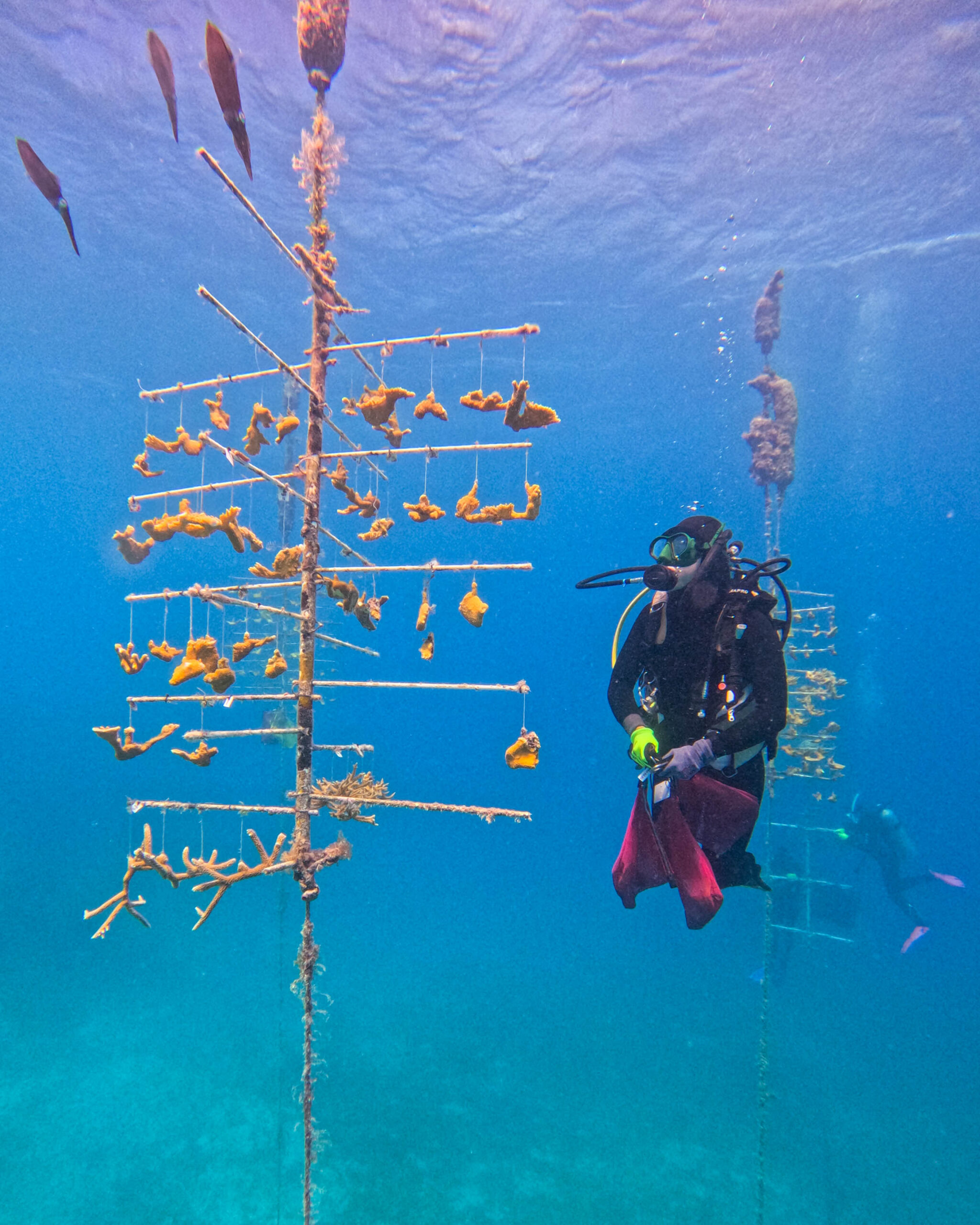
    In a landmark achievement for marine conservation in the Caribbean, non-profit marine conservation organization AnuBlue has delivered its most successful year of coral restoration since launching operations in 2021, outpacing all previous annual work to restore degraded reef ecosystems around the islands of Antigua & Barbuda. Over the past year, the team planted more than 5,800 corals grown in the organization’s onshore and offshore nurseries across restored reef sites, covering roughly 2.3 acres of degraded marine habitat — an area roughly equal in size to two full-size American football fields. Even more notable than the scale of the work is its success: post-planting monitoring has recorded an 84% survival rate for transplanted corals, a figure that confirms both the expanding reach of AnuBlue’s work and the long-term effectiveness of its science-backed restoration approach. As climate change, ocean acidification, and disease have driven sharp declines in wild coral populations across the globe, active, science-driven coral restoration has emerged as a critical strategy to protect remaining healthy reefs and reverse damage in areas that have already degraded. For small island nations like Antigua & Barbuda, healthy reefs are far more than just a natural attraction: they act as natural sea barriers that protect coastal communities from storm surge and erosion, support critical commercial and artisanal fishing industries, and underpin the billion-dollar tourism economy that drives the nation’s livelihoods. By scaling up its restoration work, AnuBlue is laying the groundwork for a more resilient future for Antigua and Barbuda’s coastal and marine ecosystems. Today, AnuBlue runs the largest active coral restoration program in Antigua & Barbuda, with four dedicated coral nurseries and five established restoration sites distributed across two of the nation’s most ecologically important marine areas: Cades Reef and the North East Marine Management Area (NEMMA). Both regions are critical habitats for a wide range of Caribbean marine species and support the livelihoods of local coastal communities, making them high-priority targets for restoration work. From these core hubs, AnuBlue expands restoration efforts to multiple reef systems across Antigua, allowing the organization to work at a meaningful scale that delivers real ecological impact, rather than limited, small-scale projects. What makes this scale of work possible is a cross-sector team of diverse stakeholders united by a shared commitment to restoring Antigua’s coastal ecosystems. The program brings together professional marine scientists, local artisanal fishermen, experienced commercial and recreational divers, and community volunteers, combining local ecological knowledge with cutting-edge scientific practice to drive successful restoration. Unlike many restoration projects that focus solely on the number of corals planted, AnuBlue’s approach prioritizes long-term reef resilience and biodiversity from the very beginning of the process. The organization’s selection strategy focuses on collecting coral fragments from parent colonies that have already demonstrated natural tolerance to the key stressors facing modern reefs: rising ocean temperatures and widespread coral disease. To boost genetic diversity and overall population resilience, the team plants genetically distinct individual corals from the same species in close proximity, creating more robust populations that are better able to adapt to future change. The program also cultivates and transplants 15 different reef-building coral species, five of which are classified as critically endangered by global conservation authorities. Each of these species plays a unique, irreplaceable role in supporting healthy reef structure and function, from providing habitat for small fish to building the reef’s foundational structure. By combining selective breeding for climate resilience with a deliberate focus on boosting species diversity, AnuBlue is working to build reef ecosystems that are healthier, more resilient, and better able to survive the challenges of a changing climate. Looking ahead, the organization plans to continue expanding its restoration work, paired with long-term monitoring and ongoing research to refine its approach and share lessons learned with other restoration programs across the Caribbean and beyond. The ultimate goal is to rebuild robust reef ecosystems that can continue to support marine biodiversity, protect coastal communities, and remain a core part of Antigua and Barbuda’s natural heritage for future generations. Founded as the Elkhorn Marine Conservancy and rebranded as AnuBlue, the organization is an innovative non-profit focused on boosting the resilience of Antigua and Barbuda’s marine ecosystems through targeted restoration, cutting-edge research, and community-led stewardship.

  • ASPIRE Calls for Abortion Law Reform Ahead of International Safe Abortion Day

    ASPIRE Calls for Abortion Law Reform Ahead of International Safe Abortion Day

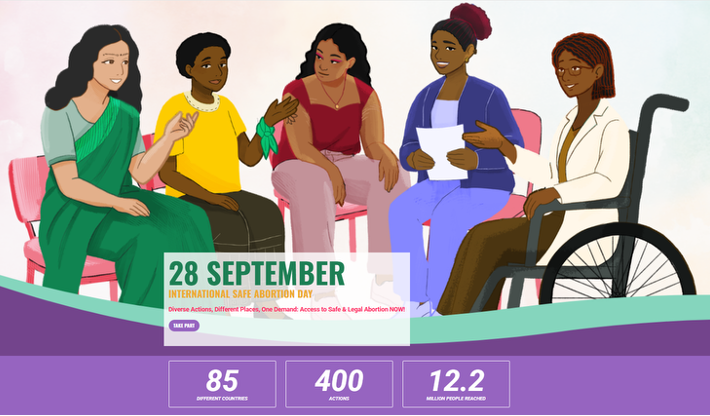
    Marked every September 28, International Safe Abortion Day centers on one clear, urgent call: expand immediate access to safe, legal abortion care. Contrary to common misconceptions, the day is not an effort to promote abortion — it is a campaign to protect the health and lives of women and girls by ending unsafe, clandestine procedures, a goal that cannot be achieved without decriminalizing abortion across the region. For over 150 years, severely restrictive criminal abortion laws have dominated policy across the Caribbean, yet the region still holds the unenviable title of the highest abortion rate in the world. This statistic alone undermines the argument that criminalization reduces abortion, making clear that there is no need for any party to “promote” abortion — it is already widespread, just largely unsafe.

    Many regional religious leaders have long spoken publicly about the sanctity of life, but their advocacy for restrictive laws has not aligned with positive health outcomes, according to advocates. Currently, only two English-speaking Caribbean nations have enshrined legal abortion access in law: Barbados and Guyana. Data from both countries shows dramatic improvements in public health following legalization. In Barbados, just one decade after legalization (1983–1992), hospital admissions for abortion complications plummeted by 71%. In Guyana, over 30 years of legal access (1995–2025), that figure dropped by 97%, with almost no life-threatening complications reported.

    These regional trends hold up against global analysis as well. Advocates from ASPIRE compiled data from 154 countries, cross-referencing abortion rates with the legal status of the procedure. Rates were grouped into three tiers: high (above 30 per 1,000 people), medium (15 to 30), and low (below 15). Of the 58 countries classified as having high abortion rates, 62% (36 nations) enforce criminalized abortion laws. By contrast, 96% of the 46 countries with low abortion rates have legal abortion on the books. The study found these results are statistically significant, disproving the idea that criminalization reduces abortion prevalence.

    Common arguments against legalization — that it encourages immoral behavior, erodes societal moral values, weakens family planning efforts, and increases the number of abortions — are entirely unsupported by evidence, the analysis found. In Barbados, the number of abortions performed at Queen Elizabeth Hospital fell by 53% over 10 years following legalization, and the drop was even steeper among teenage patients, at 59%. In Guyana, by 2025, the overall abortion rate had fallen by 20%, and the unintended pregnancy rate dropped by 28%.

    The decline in unintended pregnancies is clear proof that family planning access and outcomes improve after abortion is legalized. Almost all women receiving abortion care at Georgetown Public Hospital requested long-acting reversible contraception (LARC) such as intrauterine devices (IUDs) or implants. This shift to highly effective, long-term contraception has drastically reduced the risk of future unplanned pregnancies.

    Despite overwhelming global, regional, and historical evidence that 150 years of criminal abortion laws have been a catastrophic failure, policymakers across the Caribbean have been slow to reform. Most political leaders remain beholden to religious dogma, which prioritizes ideological opposition to abortion over empirical evidence of harm. As a result, regional governments continue to ignore clear public health data, burying their heads in the sand and ignoring the damage that restrictive laws inflict on the lives of unborn pregnancies, girls, and women alike.

    Out of fear of sending the wrong moral message, governments retain criminal laws that do nothing to stop abortion, but instead create an unregulated, underground market for clandestine procedures that guarantee injury and death, disproportionately impacting low-income women and girls. This policy is carried out in the name of protecting the “sanctity of life,” but advocates call it what it is: hypocrisy and cruelty.

  • Love Link Caribbean Inter-Regional Reality Show Debuts September 30

    Love Link Caribbean Inter-Regional Reality Show Debuts September 30

    The Caribbean media landscape is welcoming a landmark new production: the first-ever cross-regional reality dating series crafted entirely by and for local communities. Love Link TV, an Antigua-based entertainment creator, has partnered with the Antigua and Barbuda Tourism Authority (ABTA) to drop the official trailer for *Love Link Caribbean*, a fresh project that centers authentic Caribbean stories, cultures, and connections. The 10-episode series is set to premiere exclusively on the Love Link TV YouTube channel on Wednesday, September 30, at 8:00 p.m. AST (7:00 p.m. Jamaica local time), with new episodes dropping weekly on the same platform.

    Across the season, 10 single participants from seven Caribbean territories—Anguilla, The Bahamas, Dominica, Jamaica, Trinidad and Tobago, the U.S. Virgin Islands, and host nation Antigua and Barbuda—will gather in Antigua to navigate the search for romantic connection. Each contender brings distinct regional accents, personal expectations, and unique cultural perspectives on romance to the show. Antigua and Barbuda’s iconic landmarks and local culture are woven into every episode’s narrative arc: from the sunlit shores of Ffryes Beach to the secluded landscapes of Laviscount Island, and the historic grounds of Dow’s Hill. Cast members will explore the destination’s world-famous coastlines, sample local culinary traditions, interact with community members, and immerse themselves in the island’s vibrant rhythmic culture throughout their journey.

    What sets *Love Link Caribbean* apart from other dating formats is its uncompromising commitment to regional ownership and authenticity. Producers confirm that nearly 99% of the production team hails from across the Caribbean. On-screen, viewers from Nassau to Port of Spain, and the global Caribbean diaspora, will instantly recognize local dialects, unique regional humor, beloved local foods, and shared cultural references that rarely get the spotlight in mainstream reality programming. For a region that has long seen its stories told by outside creators, the series will foster a new weekly shared conversation around authentic Caribbean love stories.

    “Love Link was born right here in Antigua and Barbuda,” shared Jamila Watkins, Founder and Executive Producer of Love Link TV. “Watching it grow into a project that connects people across the entire Caribbean is a dream come to life. This show is about far more than just helping people find love—it gives Caribbean audiences the chance to see our own personalities, our own experiences, and our own cultures reflected on screen in a way that is unmistakably ours.”

    For ABTA, which is taking on an executive producer role for the series, the partnership represents an innovative approach to destination marketing that puts the islands in front of regional audiences in an organic, engaging way, rather than through traditional advertising formats.

    For viewers looking to follow along with the series, multiple access points are planned. The official trailer is already available on the Love Link TV YouTube channel, and the full series will premiere as scheduled on the same channel. To extend the community conversation, a weekly after-show will stream live every Friday at 8:00 p.m. AST on TikTok via the official account @LoveLinkTV.official, hosted by Alphonsina Olmos and Yorie Taylor, with fans encouraged to join the discussion using the hashtag #lovelinkcaribbean. In the coming weeks, the series will also expand to linear regional television networks across the Caribbean, with details of broadcast partners set to be announced at a later date.

    As an Antigua-born entertainment platform built around the Love Link dating concept, *Love Link Caribbean* marks a natural expansion of the original format across the wider region. It puts Caribbean voices, culture, and connection at the heart of a reality series made exclusively for Caribbean audiences.

  • Van ‘cheaters’ naar ‘great friendship’: hoe Trump anders over Xi en China is gaan praten

    Van ‘cheaters’ naar ‘great friendship’: hoe Trump anders over Xi en China is gaan praten

    More than a decade has passed since Donald Trump first laid out his harsh views on China, and a stark contrast separates those early comments from the language he used during Chinese President Xi Jinping’s recent state visit to Washington. Where Trump once framed China as a power that robbed, deceived, and economically exploited the United States, this week he spoke of a “truly great friendship” between the two leaders and emphasized shared mutual respect.

    This notable shift in tone does not mean the long-standing strategic and economic rivalry between the world’s two largest economies has come to an end. On the contrary, deep disagreements and competition persist across trade, artificial intelligence, advanced technology, the Taiwan issue, and global security. Yet the change in rhetoric reveals a clear evolution in how the Trump administration now approaches its relationship with Beijing.

    To understand the scale of this shift, it is necessary to look back at Trump’s long history of commentary on China. Long before he won his first presidential term, Trump warned against China’s growing economic influence. In 2012, he took to Twitter to accuse China of cheating at the Olympic Games, linking that accusation to what he claimed was a broader pattern of deception, cheating and theft in Chinese business practices. During his first presidential campaign in 2015, he doubled down on these attacks, framing China as an enemy that had destroyed American jobs and gutted U.S. manufacturing industries. At a 2016 campaign rally, he went so far as to claim China had “raped” the United States through what he called unprecedented economic theft. Even after taking office, Trump maintained his aggressive stance, stating in 2020 that no other country had taken advantage of the United States as much as China.

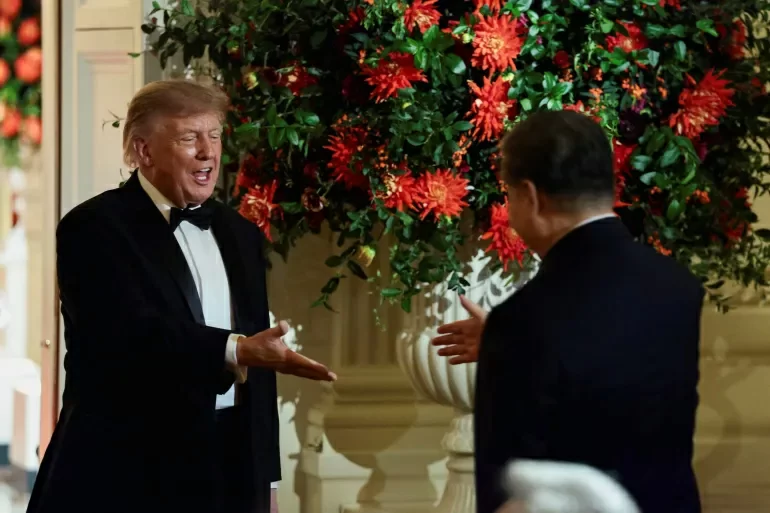
    These harsh remarks aligned with the political agenda Trump pursued in his first term: shrinking the U.S. trade deficit with China and taking a harder line on Beijing’s trade practices. But during Xi’s 2026 state visit to the White House, his tone was unrecognizable. He called Xi a “great gentleman”, highlighted the two nations’ “very good trading relationship”, and repeatedly emphasized the “truly great friendship” the two leaders had built. At the state dinner honoring Xi, Trump noted that despite their differing political systems, cooperation between the two sides had never been closer, and their relationship had been rooted in mutual respect and shared interest for both peoples since his 2016 election.

    What drove this dramatic turnaround in rhetoric? There is no single simple explanation, but one key factor is the lesson Trump has learned through experience: shaping the U.S.-China relationship exclusively through pressure and tariffs is far more difficult than early rhetoric suggested. During his second term, the administration sharply raised tariffs on hundreds of billions of dollars worth of Chinese goods. Beijing responded in kind with its own tariffs on U.S. imports, and additionally restricted exports of critical rare earth elements – minerals that are essential to manufacturing everything from consumer electronics and electric vehicles to semiconductors and advanced military systems.

    The trade war escalated rapidly before the two sides agreed to a temporary trade truce, which was extended during Xi’s recent visit. This extension has bought both governments time to work toward a broader comprehensive agreement, even as core disputes over tariffs, technology access and market entry remain unresolved.

    A major reason for this shift to negotiation alongside pressure is the fact that China holds key economic and strategic cards that cannot be quickly or easily replaced by the United States. Beyond its dominant position in rare earth processing – a leverage Beijing demonstrated during the trade conflict through export restrictions – the sheer scale of China’s industrial manufacturing base makes full economic decoupling impractical for both nations. This explains why Trump continues to campaign for U.S. economic independence while also prioritizing a functional working relationship with Beijing.

    A second core factor shaping the new tone is the personal diplomacy between Trump and Xi. Trump has long placed clear value on building personal connections with foreign leaders, and he repeatedly highlighted his longstanding personal relationship with Xi dating back to his first presidential campaign during the state visit. In an unusual break from standard protocol for sitting U.S. presidents, Trump personally traveled to Joint Base Andrews to greet Xi and his wife Peng Liyuan, and continued to emphasize their personal bond during all official events and the state dinner.

    Xi has reciprocated this outreach, repeatedly emphasizing mutual respect between the two leaders and framing cooperation as a shared priority. He noted that the U.S. ambition to “Make America Great Again” and China’s goal of national rejuvenation can coexist, avoiding framing the two nations’ core national projects as inherently opposing, even as both leaders acknowledge their competing interests.

    Despite the warm public rhetoric, it would be a mistake to interpret this shift as the end of U.S.-China strategic rivalry. Both nations continue to compete for global leadership in artificial intelligence, with Washington restricting advanced technology exports to China while Beijing accelerates the development of its own domestic technology industry. The Taiwan issue remains a fundamental point of disagreement: China claims the island as an inalienable part of its territory, while the U.S. does not recognize Taiwanese independence but continues to provide defensive military support to Taipei. Global issues such as Iran also remain points of divergence: Washington has pushed Beijing to use its influence in Tehran to advance U.S. goals, while China prioritizes its own economic and strategic interests in the Middle East.

    No major breakthroughs were reached on any of these core issues during the state visit. The summit primarily produced two outcomes: a commitment to continued dialogue and the extension of the existing trade truce.

    The most significant change, then, is not a fundamental shift in how Trump views China, but rather how he now manages the bilateral relationship. During his first campaign, he centered his messaging on blaming China for all of America’s economic struggles. In his second term, his approach has become far more pragmatic: negotiate where possible, apply pressure where necessary, and work to prevent competition from spiraling into open conflict. Xi has adopted a matching framing of stability, noting that the two nations can be competitors, but competition must be kept within clear boundaries to avoid escalating into military confrontation.

    This has opened a new phase in U.S.-China relations: it is not traditional friendship, but managed rivalry with clear agreements on the limits of competition. The harsh rhetoric of the past has not disappeared entirely. Trump continues to accuse China of unfair trade practices, keeps tariffs and technology restrictions in place as leverage, and his administration continues working to reduce U.S. dependence on Chinese raw materials and technology. But in direct engagements with Xi, he has chosen a far softer tone. This is not a contradiction: great power diplomacy often combines hard-nosed negotiating behind closed doors with public gestures of personal outreach and goodwill.

    This dynamic was on full display during the state visit: while American and Chinese negotiators haggled behind closed doors over tariffs, rare earths, AI and Taiwan, Trump gave Xi a personal tour of the White House and spoke of friendship during the state dinner.

    One state visit cannot erase decades of growing rivalry between Washington and Beijing, nor can it build a new global order overnight. The warm words exchanged by Trump and Xi have not resolved the core structural competition between the two nations, but they have made clear that neither side is interested in further escalation in the near term. The extended trade truce buys more time for negotiations, while new dialogue mechanisms on AI and security keep lines of communication open.

    For Trump, this marks a notable rhetorical shift: from framing China as an economic adversary that exploited America to recognizing it as a competitor with whom personal ties and working trade agreements are possible. For Xi, the trip delivered the ceremonial welcome he sought in Washington, even as Beijing remains under no illusion that the U.S. has abandoned its strategic competition with China.

    The stark contrast between Trump’s rhetoric of a decade ago and his comments this week is ultimately a reflection of changing circumstances on the ground. Trump has not shifted from seeing China as an adversary to viewing it as an ally; he has shifted from raw confrontational rhetoric to a far more personal brand of pragmatic rivalry. Whether this new approach will deliver long-term results will not be determined by warm words spoken at a state dinner, but by the concrete agreements Washington and Beijing reach in the months ahead.

  • Youth Arise Antigua Celebrates 7 Years of Youth Development and Community Service

    Youth Arise Antigua Celebrates 7 Years of Youth Development and Community Service

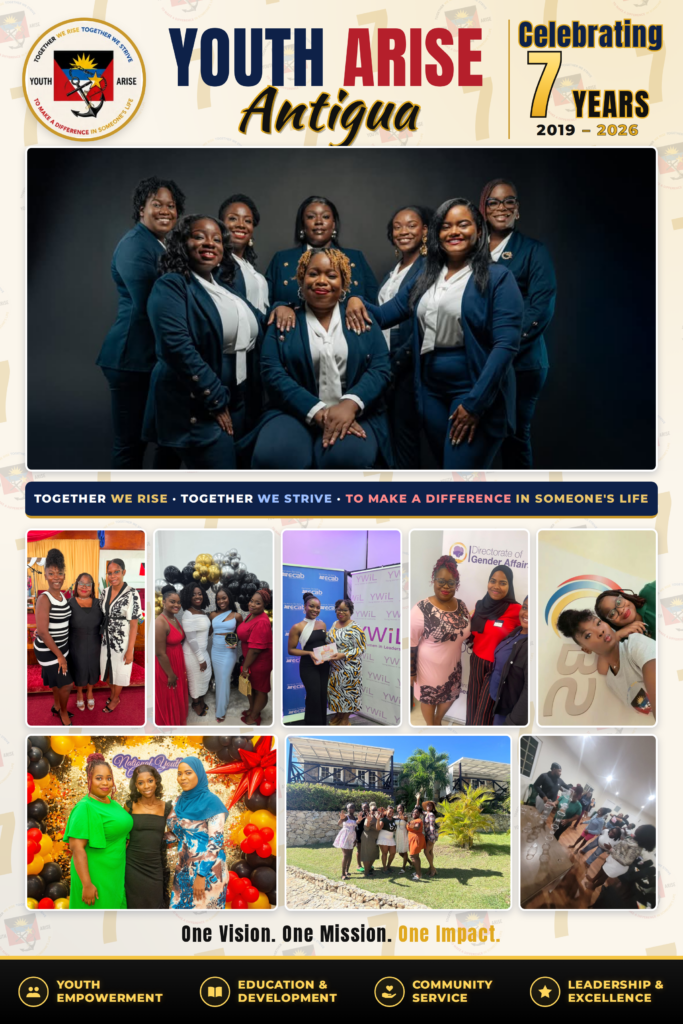
    Seven years after its humble launch as a small community idea, Antigua and Barbuda’s grassroots youth organization Youth Arise Antigua (YAA) is celebrating its seventh anniversary of transformative work in youth development, volunteerism, and local public service. Founded in 2019, the group has evolved far beyond its initial concept to build a thriving, engaged network of young people dedicated to lifting up communities across the twin-island nation.

    Over the past seven years, YAA’s members and volunteers have rolled out dozens of impact-driven initiatives that address pressing local needs. Teams have supported under-resourced primary and secondary schools across the country, distributed thousands of critical school supplies and personal hygiene items to vulnerable students, led large-scale community clean-up campaigns to improve public spaces, planted hundreds of native trees to support local ecosystems, prepared and served warm meals to food-insecure residents, and partnered with existing local groups to amplify a wide range of community-led projects.

    In a heartfelt anniversary address marking the milestone, YAA Founder and President Makiba Ward reflected on the organization’s extraordinary growth and core mission. “Seven years ago, Youth Arise Antigua began with a simple but powerful belief: young people can make a meaningful difference in the lives of others and in their communities,” Ward said. “Today, as we celebrate seven years, I am filled with gratitude and pride. What started as one idea has grown into a community of young people committed to service, giving their time, talents and energy to create tangible change.”

    Ward emphasized that even small, consistent acts of service leave lasting, positive marks on local communities, pointing to YAA’s seven years of on-the-ground work as proof of that principle. “Each experience has reminded us that even the smallest act of service can have a lasting impact,” she noted. The YAA president added that the organization’s success is not the work of a single leader, but of the entire network of members, volunteers, and community supporters who have sustained its mission over the years. “As Founder and President, I am especially proud of every member, volunteer and supporter who has contributed to our journey. Youth Arise Antigua is not about one person. It is about all of us working together to serve and create positive change.”

    Looking ahead to the organization’s eighth year of operations in 2027, Ward called on the YAA community to continue turning their vision of service into tangible action. “As we enter our eighth year in 2027, let us continue to show up, lend a helping hand and turn ideas into action,” she said. “To everyone who has supported Youth Arise Antigua over the past seven years, thank you for believing in our vision and for being part of the journey.”

    YAA remains guided by its founding motto: “To make a difference in someone’s life.” In closing her address, Ward toasted the organization’s seven years of impact, and expressed optimism for the years to come. “Here’s to seven years of service, seven years of impact, and many more years of making a difference. Happy 7th Anniversary, Youth Arise Antigua!”

    As a community-focused youth organization, YAA centers its work around four core pillars: youth empowerment, accessible education and development, volunteer community service, and cultivating leadership and excellence among young Antiguans and Barbudans. Its full guiding mission is summed up in the phrase: “Together We Rise, Together We Strive, To Make a Difference in Someone’s Life.”