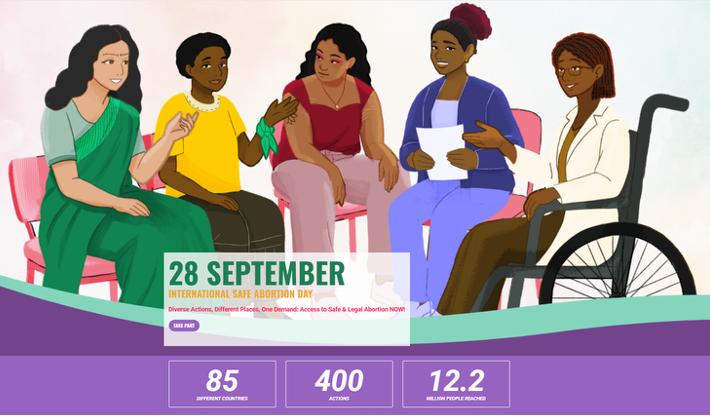
Marked every September 28, International Safe Abortion Day centers on one clear, urgent call: expand immediate access to safe, legal abortion care. Contrary to common misconceptions, the day is not an effort to promote abortion — it is a campaign to protect the health and lives of women and girls by ending unsafe, clandestine procedures, a goal that cannot be achieved without decriminalizing abortion across the region. For over 150 years, severely restrictive criminal abortion laws have dominated policy across the Caribbean, yet the region still holds the unenviable title of the highest abortion rate in the world. This statistic alone undermines the argument that criminalization reduces abortion, making clear that there is no need for any party to “promote” abortion — it is already widespread, just largely unsafe.
Many regional religious leaders have long spoken publicly about the sanctity of life, but their advocacy for restrictive laws has not aligned with positive health outcomes, according to advocates. Currently, only two English-speaking Caribbean nations have enshrined legal abortion access in law: Barbados and Guyana. Data from both countries shows dramatic improvements in public health following legalization. In Barbados, just one decade after legalization (1983–1992), hospital admissions for abortion complications plummeted by 71%. In Guyana, over 30 years of legal access (1995–2025), that figure dropped by 97%, with almost no life-threatening complications reported.
These regional trends hold up against global analysis as well. Advocates from ASPIRE compiled data from 154 countries, cross-referencing abortion rates with the legal status of the procedure. Rates were grouped into three tiers: high (above 30 per 1,000 people), medium (15 to 30), and low (below 15). Of the 58 countries classified as having high abortion rates, 62% (36 nations) enforce criminalized abortion laws. By contrast, 96% of the 46 countries with low abortion rates have legal abortion on the books. The study found these results are statistically significant, disproving the idea that criminalization reduces abortion prevalence.
Common arguments against legalization — that it encourages immoral behavior, erodes societal moral values, weakens family planning efforts, and increases the number of abortions — are entirely unsupported by evidence, the analysis found. In Barbados, the number of abortions performed at Queen Elizabeth Hospital fell by 53% over 10 years following legalization, and the drop was even steeper among teenage patients, at 59%. In Guyana, by 2025, the overall abortion rate had fallen by 20%, and the unintended pregnancy rate dropped by 28%.
The decline in unintended pregnancies is clear proof that family planning access and outcomes improve after abortion is legalized. Almost all women receiving abortion care at Georgetown Public Hospital requested long-acting reversible contraception (LARC) such as intrauterine devices (IUDs) or implants. This shift to highly effective, long-term contraception has drastically reduced the risk of future unplanned pregnancies.
Despite overwhelming global, regional, and historical evidence that 150 years of criminal abortion laws have been a catastrophic failure, policymakers across the Caribbean have been slow to reform. Most political leaders remain beholden to religious dogma, which prioritizes ideological opposition to abortion over empirical evidence of harm. As a result, regional governments continue to ignore clear public health data, burying their heads in the sand and ignoring the damage that restrictive laws inflict on the lives of unborn pregnancies, girls, and women alike.
Out of fear of sending the wrong moral message, governments retain criminal laws that do nothing to stop abortion, but instead create an unregulated, underground market for clandestine procedures that guarantee injury and death, disproportionately impacting low-income women and girls. This policy is carried out in the name of protecting the “sanctity of life,” but advocates call it what it is: hypocrisy and cruelty.