博客

  • The Wrong Reform: Why Term Limits and Fixed Election Dates Cannot Work in Antigua and Barbuda

    The Wrong Reform: Why Term Limits and Fixed Election Dates Cannot Work in Antigua and Barbuda

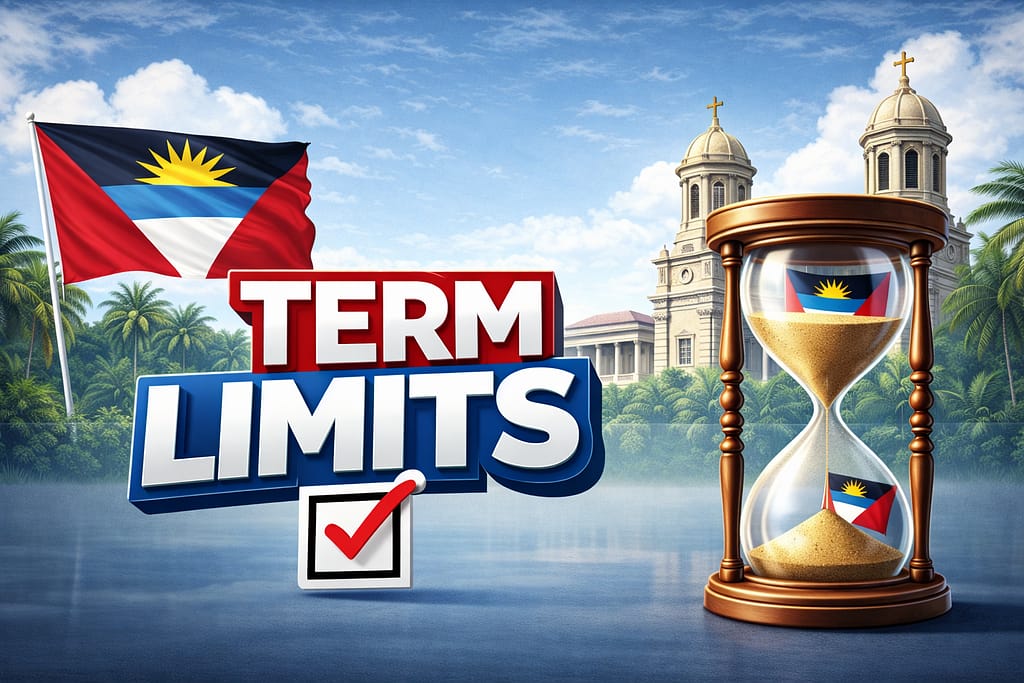
    Across Caribbean political circles over recent years, two popular constitutional reform proposals have risen to prominence: legally fixed election dates and binding term limits for heads of government. Both are marketed as critical upgrades to democratic accountability, and both draw unacknowledged influence from the governing structures of presidential systems. As legal scholar Gavin V. Emmanuel argues in a landmark four-part series on Antigua and Barbuda’s constitutional framework, however, neither reform fits the Westminster model enshrined in the country’s 1981 independence constitution—they are not just impractical, but structurally incompatible with the nation’s core governing architecture.

    Emmanuel’s series analyzes each proposal individually, grounding its arguments in the specific text of Antigua and Barbuda’s founding document and drawing comparative lessons from other Commonwealth Westminster jurisdictions to contextualize its claims. The first installment lays the constitutional groundwork for the entire series, explaining the central doctrine of responsible government that underpins the Westminster system, and demonstrating how key sections of the constitution are explicitly structured around parliamentary confidence rather than rigid electoral timelines.

    The second part of the series tests this core argument against its most prominent counterexample: the United Kingdom’s 2011 Fixed-term Parliaments Act, the most high-profile attempt to impose a fixed electoral schedule on a Westminster parliament. Drawing lessons from the UK’s ultimately unsuccessful experiment with the policy, alongside analysis of boundary reform provisions laid out in Sections 62 through 65 of Antigua and Barbuda’s constitution, this section explains why date-fixed elections fail both in constitutional theory and on-the-ground practice.

    Part three shifts focus to the second popular reform proposal: term limits for prime ministers. Emmanuel contends that term limits import presidential-style logic into a parliamentary governing framework, directly contradicting key provisions of Section 69 of the constitution. Far from curbing excessive executive power, he argues, term limits would actually accelerate the presidentialization of the prime minister’s office—a outcome that critics of Caribbean governance have repeatedly identified as a core problem to solve.

    The final installment of the series concludes the argument by breaking down the actual impact term limits would have on democratic accountability. Emmanuel explains that term limits would weaken the electoral incentives that keep leaders responsive to voter demands, disrupt critical institutional memory in small island states like Antigua and Barbuda, and completely fail to address the root structural causes of patron-client political systems that undermine good governance. The series closes by outlining targeted, constitutionally permissible reforms that align with the existing framework and deliver the genuine democratic renewal that reformers seek.

    In the opening of the first series installment, Emmanuel addresses the appeal of reformism couched in the language of accountability, noting that many well-intentioned proposals carry a fundamental misunderstanding of how parliamentary democracy actually functions. While fixed election dates have gathered broad momentum across the Caribbean and sound intuitively appealing on paper, their structural incompatibility with the Westminster model is uniquely clear when examined through the lens of Antigua and Barbuda’s constitution.

    To understand the conflict, one must start with the core design of the Westminster system, not just surface-level political debate. The Westminster model is far more than a vote-counting procedure: it is a cohesive governing theory built around a single foundational principle: the executive branch derives its governing authority continuously and conditionally from the confidence of the elected legislature. The moment that confidence is withdrawn, executive authority collapses. Under this model, government is not a fixed, predetermined tenure—it is a living mandate that can be renewed, revoked, and is always contingent on parliamentary support. This is not a accidental feature of the system; it is the entire point of the design, and what constitutional scholars refer to as the doctrine of “responsible government.”

    Antigua and Barbuda’s 1981 independence constitution reflects this doctrine with intentional precision. Section 60(1) of the document grants the Governor-General the authority, acting on the advice of the prime minister, to prorogue or dissolve Parliament at any time. The word “any” is not just ceremonial wording—it is the constitutional codification of executive-legislative accountability, creating a mechanism that allows a government to call a new election if it loses its parliamentary majority, if a national crisis requires a fresh public mandate, or if an unresolvable legislative impasse gridlocks governance. While Section 60(2) sets a five-year maximum term for Parliament, after which it must automatically dissolve, this cap is not a rigid electoral schedule—it is simply an outer limit on an otherwise flexible governing instrument.

    This distinction is not a trivial legal technicality; it shapes how the entire system functions. A legally fixed election date fundamentally rewrites this arrangement, turning the five-year maximum cap into a mandatory floor. It requires that even if a government loses all parliamentary confidence, even if the country urgently needs a new policy direction, an election must wait for the pre-set date. This is not accountability—it is institutional paralysis framed as procedural reform.

    The Antigua and Barbuda constitution explicitly anticipates this risk. Section 60(4), often referred to as the Governor-General’s reserve power, grants the office discretionary authority to unilaterally dissolve Parliament if the House of Representatives passes a vote of no confidence and the prime minister fails to either resign or call an election within seven days. This is a non-partisan safety valve, a guarantee that no government can cling to power after losing the legislature’s support. A fixed election date would render this core constitutional provision legally incoherent: if the election date is set by statute, the Governor-General’s constitutionally mandated discretionary dissolution power becomes a source of legal conflict rather than a conflict resolution tool. Since Section 2 of the constitution explicitly names it the supreme law of Antigua and Barbuda, any statute conflicting with its provisions would be ruled void. This means a fixed election date law passed without a full constitutional amendment would not just be bad policy—it would be constitutionally invalid and unenforceable.
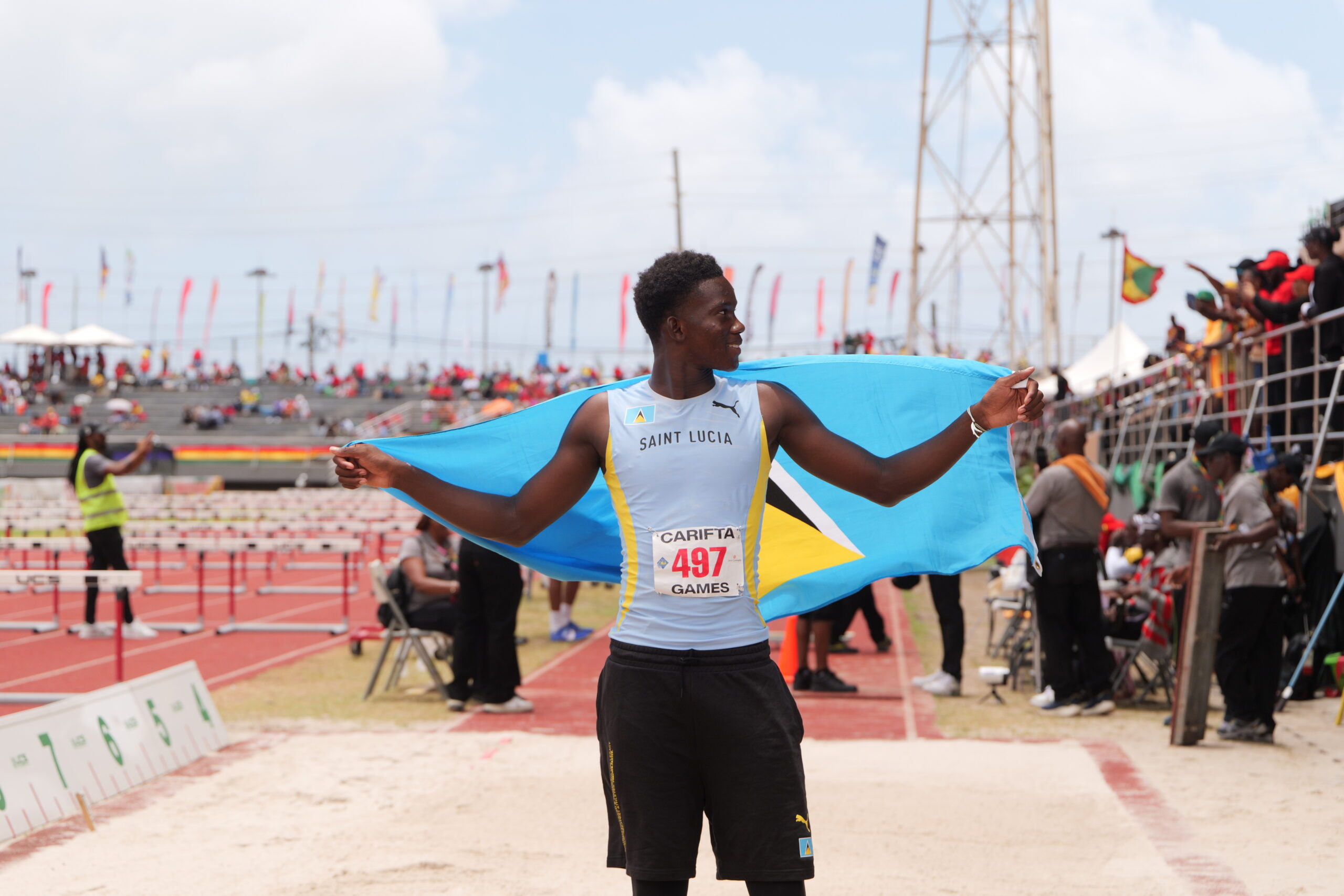

  • Saint Lucia finish 10th at CARIFTA Games

    Saint Lucia finish 10th at CARIFTA Games

    The Caribbean’s premier junior athletics showcase, the CARIFTA Games, wrapped up its 2025 edition on the evening of April 6 at Grenada’s Kirani James Stadium, with Saint Lucia matching its 2024 medal haul to finish 10th on the overall regional medals table. For the second straight year, the island nation left the competition with four podium finishes, all earned by its standout field event competitors.

    Saint Lucia’s medal count got off to a blazing start on the competition’s opening days, when 16-year-old Destinee Cenac claimed gold in the Under-17 girls’ high jump. Clearing a new personal best height of 1.72 meters, the St Joseph’s Convent student and Morne Stars Athletics Club member improved on her bronze medal finish from the 2024 Games, kicking off a dominant run for Saint Lucia’s field athletes. Cenac’s win marked the 16th high jump medal the island has earned in CARIFTA Games history, making it the nation’s most successful individual discipline – a legacy built by previous CARIFTA record holders and Olympic athletes Levern Spencer and Jeannelle Scheper.

    Naya Jules added a silver medal to Saint Lucia’s tally in the Under-20 girls’ pole vault, recording a clearance of 2.95 meters. This marked Jules’ fourth consecutive CARIFTA medal in the event, and her second straight silver after taking home gold in the Open girls’ division in both 2023 and 2024. Beyond pole vault, Jules also delivered a strong personal best performance of 41.59 meters in the Under-20 girls’ javelin throw, finishing just outside the podium in fifth place.

    Opening night of the Games saw Denzel Phillips claim his third career CARIFTA medal, taking bronze in the Under-20 boys’ discus throw with a best throw of 53.24 meters. The Saint Lucia athlete finished behind Jamaican pair Kamari Kennedy and Joseph Salmon on the podium, and narrowly missed a second medal after spending most of the competition in top-three position for the shot put, ultimately dropping to fifth in the final standings.

    The final medal of the competition for Saint Lucia came on Easter Monday, the event’s closing day, from Under-17 long jumper Randall Monroe. Making his CARIFTA Games debut just hours after finishing a narrow fourth in the Under-17 boys’ high jump, Monroe fought through challenging stiff headwind conditions to record a jump of 6.60 meters, good enough for bronze. The young athlete will remain eligible to compete in the Under-17 division when the next CARIFTA Games are held.

    The 12-member Saint Lucian delegation included a number of young athletes who are expected to build on their 2025 experience in future editions of the meet. Fifteen-year-old thrower Eavan Edgar placed 11th in the Under-17 shot put and fouled out of the discus competition, but will be eligible to return next year. Similarly, long jumpers Barbara-Marie Maximin and Syesha Rogers placed ninth in the Under-17 and Under-20 divisions respectively, with Maximin moving up to the Under-20 bracket in 2026.

    For the nation’s Under-20 male athletes, the 2025 Games marked their final appearance in the junior regional competition, as all will age out of the division ahead of 2026. Middle-distance runner Evann John delivered an impressive improved performance from his 2024 showing, qualifying for the 800m final and clocking 1:53.44 to finish fifth. Sprinter Joaqwan Alexander ran a faster time than he did in 2024 in the 400m event, but once again just missed out on a spot in the final round. Benique Mann placed 13th in the 1500m, Ryan Simeon finished 24th in the 100m, and triple jumper Darvin Forde placed 11th in his first and final CARIFTA Games appearance.

  • OPINION: From Schoolyard Games to Couches: Why Play Belongs at the Heart of Public Health

    OPINION: From Schoolyard Games to Couches: Why Play Belongs at the Heart of Public Health

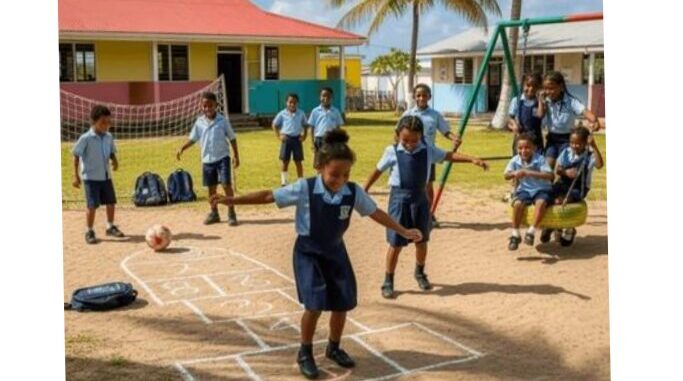
    For generations of Caribbean children, the sounds of outdoor play filled open green spaces and paved sidewalks across every island. Shouted calls of “RUN!”, “HOME!” and “OUT!” spurred spontaneous sprints across fields, dodges during competitive games, and mad dashes for safety long before the phrase “physical activity” entered common public discourse. Movement was not a scheduled chore or a gym membership requirement—it was woven into the very fabric of childhood, experienced through the simple, joyful act of play.

    Every island across the region nurtured its own unique traditional games that kept bodies moving constantly. In Barbados, children transformed ordinary sidewalks into makeshift road tennis courts, wielding rough wooden paddles to rally back and forth across boundaries marked in chalk. Across Trinidad and Tobago, hopping games like Scotch, Moral and Peesay built coordination and rhythm, while marble matches kept children crouched for hours, steadying their hands to aim and compete. Jamaica’s beloved Dandy Shandy and Stuck and Pull had kids running, laughing, and twisting to break free from grips, filling the air with squeals of delight. Rounders, chase, circle games like “Bluebird In and Out the Window” and “Bull in the Pen” turned empty lots into hubs of constant, unstructured movement, with every community adding its own rules, calls, and shared memories.

    Today, however, this rich tradition of spontaneous outdoor play has faded from Caribbean schoolyards and neighborhoods. The rise of screen time, packed modern schedules, and shrinking public play spaces have replaced the shouts of childhood with silence. This shift is far more than a loss of nostalgia: modern public health conversations around physical activity increasingly center on formal gym memberships, structured workout programs, and performance metrics, erasing the deep cultural foundation of free movement that once kept generations healthy.

    For decades, unstructured play served as an informal, wildly effective pillar of Caribbean public health. It built physical strength, fine motor coordination, emotional resilience, and tight social bonds across communities without any formal policy or programming. But the decline of childhood movement has left a measurable public health crisis in its wake.

    Non-communicable diseases (NCDs) such as hypertension, type 2 diabetes, and heart disease now account for more than 70% of all deaths across the Caribbean, giving the region one of the world’s highest rates of premature NCD-related death among people aged 30 to 70. While poor diet, tobacco use, and excessive alcohol consumption are key contributors, physical inactivity is a major driving force behind the crisis. Today, 30 to 40% of Caribbean adults fail to meet the World Health Organization’s recommended weekly physical activity targets—a trend that traces back to the disappearance of unstructured play in childhood. The “stillness” that settled into schoolyards decades ago now follows people into adulthood, placing enormous strain on regional healthcare systems that bear the cost of long-term chronic disease treatment, medication, and ongoing care.

    Current public health prevention efforts often focus almost exclusively on changing adult behavior, rather than restoring the community and school environments that made natural daily movement the norm for generations. Local advocates argue that reviving traditional childhood play is not a trip down memory lane—it is a core public health intervention that recognizes good health is built early in life, through collective community action.

    Already, regional policy frameworks reflect this growing understanding. CARICOM member states have formally affirmed the public right to health, and the Caribbean Public Health Agency’s (CARPHA) Six-Point Policy Package targets NCDs and childhood obesity across the region through targeted policy action. Regional campaigns under the umbrella of Caribbean Moves promote active lifestyles, supporting national initiatives including Jamaica Moves, Dominica’s Fit for Life Campaign, St. Lucia’s National Physical Activity Day, and Barbados’ Creative Play Initiative. Countries like Jamaica have also introduced policy measures targeting NCD risk factors, such as a proposed tax on sugar-sweetened beverages, signaling growing recognition of the need to address the root causes of chronic illness.

    Advocates emphasize that the next step is not to draft new, unfulfilled commitments—it is to fully implement the promises policymakers have already made. Crucially, this means centering safe, accessible unstructured play as a core public health priority, rather than sidelining it as an afterthought.

    As the world marks World Day of Physical Activity and World Health Day, the message from Caribbean public health advocates is clear: movement is not a privileged lifestyle choice, it is a human birthright and a core part of Caribbean cultural heritage worth protecting. To truly prevent chronic illness and build healthier communities, policymakers, schools, and community leaders must make space for the same joyful, traditional childhood play that defined generations—just like the good old days.

  • Trump dreigt met vernietiging: ‘Een hele beschaving zal vannacht verdwijnen’

    Trump dreigt met vernietiging: ‘Een hele beschaving zal vannacht verdwijnen’

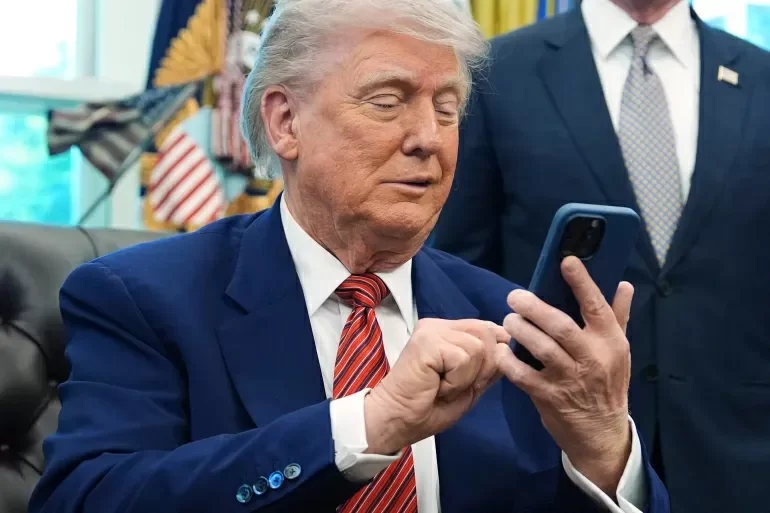
    As the April 2026 deadline for the reopening of the Strait of Hormuz draws near, U.S. President Donald Trump has issued increasingly aggressive threats against Iran, raising fears of a dramatic regional escalation that could reshape global energy security. In a incendiary post shared to his social media platform Truth Social, Trump warned that an entire civilization could be erased permanently if Iran did not comply with his order to reopen the key strategic waterway. The U.S. leader went further, framing the moment as a potential turning point that would bring about full regime change in Iran, claiming that 47 years of what he described as extortion, corruption, and death would finally be brought to an end. He suggested that less radical, more pragmatic leaders could seize control of the country if Tehran refused to back down.

    Iran’s Islamic Revolutionary Guard Corps (IRGC) responded immediately via state-run media, issuing a blunt counter-warning that the country would not hesitate to launch retaliatory strikes far beyond the Middle East if the U.S. targets Iranian civilian infrastructure. The IRGC made clear that any American attacks on key Iranian energy infrastructure or critical transport links including bridges would cut off oil and gas supplies to the United States and its regional allies for years, if not decades. “American leaders underestimate how many critical targets are already within our reach,” the IRGC statement read. “If U.S. military forces cross our established red lines, our response will extend far beyond the borders of this region.”

    Parallel to these escalating verbal exchanges, Iranian media has confirmed a recent attack on Kharg Island, the country’s primary hub for crude oil exports. While previous attacks on the island have targeted military positions, a strike on core oil export infrastructure would mark a dangerous new phase of escalation in the ongoing conflict, according to regional analysts.

    Meanwhile, U.S. Vice President JD Vance offered a contrasting narrative, stating that American military objectives in the ongoing conflict with Iran have largely been achieved. Vance added that the U.S. still holds out hope that Iran will respond to American peace proposals before the deadline set by President Trump.

    Hassan Ahmadian, a political science lecturer at the University of Tehran, told Al Jazeera that Trump’s increasingly harsh rhetoric signals growing frustration and desperation on the part of the American administration. “His tone gets more aggressive day after day. It looks like he is facing significant domestic and strategic problems,” Ahmadian explained. While Trump intends to force Iran to alter its policy through these extreme threats, Ahmadian argues the U.S. leader cannot ultimately follow through on all his warnings. That said, Trump does retain the ability to ramp up pressure and intensify ongoing attacks, to which Iran has already pledged a forceful and proportional response.

    Ahmadian concluded that the conflict has already devolved into a complex, tangled conflict that has produced little progress for the United States since it began, and is likely to drag on for the foreseeable future.

  • Cooman wins in Antigua, eyes Commonwealth Games

    Cooman wins in Antigua, eyes Commonwealth Games

    A sold-out crowd packed Lucky Eddi’s venue in English Harbour, Antigua & Barbuda, on Saturday, April 4, to witness a thrilling display of boxing skill that ended with Saint Lucia’s Danaii Cooman claiming a standout win over local competitor Jeremiah Toussaint at Fight Night 2.

    Hailing from Vieux Fort and competing in the 60kg Lightweight Elite division under the guidance of Saint Lucia’s senior national head coach Conrad Fredericks, Cooman turned in a performance that highlighted far more than just individual talent. Across every round, the young boxer showcased sharp technical precision, unwavering disciplinary focus, and remarkable resilience when faced with pressure from his Antiguan opponent. His consistent dominance in the ring has also drawn new attention to the growing strength of boxing development across southern Saint Lucia, marking the region as an emerging hub for elite athletic talent in the sport.

    Beyond the immediate glory of a win in front of a packed international crowd, this victory holds major strategic significance for Cooman’s long-term career goals. It serves as a critical milestone in his multi-year preparation cycle for the 2026 Commonwealth Games, where he intends to earn a spot representing his home nation of Saint Lucia. The 2026 Games are scheduled to run from late July through early August in Glasgow, Scotland, giving Cooman just over two years to refine his craft and secure his place on the national squad.

    Cooman will not pause his training momentum after this latest win. Just under two weeks from his Antigua & Barbuda victory, he is set to join a five-member Saint Lucian squad traveling to Martinique for the second annual Caribbean Golden Glove competition, which will run from April 17 to 19. The upcoming regional tournament will offer another high-stakes opportunity for Cooman to test his skills against top Caribbean talent and continue building momentum toward his 2026 Commonwealth Games goal.

  • OP-ED: From schoolyard games to couches – Why play belongs at the heart of public health

    OP-ED: From schoolyard games to couches – Why play belongs at the heart of public health

    As the international community marked World Day of Physical Activity on April 6 and World Health Day on April 7 2026, two Caribbean public health advocates are calling for a return to the region’s deep-rooted cultural tradition of spontaneous, community-centered play as a foundational solution to growing public health crises.

    For generations across Caribbean island nations, unstructured physical movement was woven into the very fabric of childhood. Simple, shouted calls—“RUN!”, “HOME!”, “OUT!”—sent generations of children sprinting across sunbaked fields, dodging opponents and chasing victory across open community spaces. Long before “physical activity” became a formal public health term, movement was just part of how children lived: through local games adapted to every island’s unique culture and landscape.

    In Barbados, children repurposed city sidewalks into makeshift courts for road tennis, gripping rough wooden paddles to rally back and forth across chalked boundary lines. In Trinidad and Tobago, traditional games like Scotch, Moral and Peesay had children hopping, balancing, and jumping in steady rhythm, while marble matches kept competitors crouched for hours, honing focus and fine motor control. Jamaica’s beloved Dandy Shandy and Stuck and Pull had children running, twisting, and laughing together, filling neighborhood open spaces with squeals of delight. From rounders to chase, every island had its own set of rules, its own shared calls, and its own memories of movement tied to community connection. This spontaneous play was never structured or formal—but it acted as an informal, remarkably effective public health system, building physical strength, coordination, emotional resilience, and tight social bonds across generations.

    Today, however, that legacy of natural daily movement has faded. The rise of screen time, packed structured schedules, and the loss of open community play spaces have pushed traditional childhood games out of schoolyards and neighborhoods. What was once an automatic part of growing up has been replaced by a modern narrative that frames physical activity as something that only happens in gyms, structured fitness programs, or competitive performance contexts—erasing the Caribbean’s own cultural foundation of free movement in the process.

    This shift is not just a loss of cultural nostalgia; it has created a measurable public health crisis across the region. Non-communicable diseases (NCDs) including hypertension, type 2 diabetes, and heart disease now account for more than 70% of all deaths across the Caribbean, and the region holds one of the world’s highest rates of premature death from NCDs among people aged 30 to 70. Public health researchers point to physical inactivity, alongside unhealthy diets, tobacco use, and excessive alcohol consumption, as a key driver of this crisis. Currently, 30 to 40% of all Caribbean adults fail to meet the World Health Organization’s recommended minimum weekly physical activity levels, a trend that traces back to the decline of active play in childhood. The “stillness” that has replaced neighborhood games in childhood follows people into adulthood, creating lifelong health risks that strain regional healthcare systems, which must bear the cost of long-term treatment, medications, and ongoing care for preventable chronic conditions.

    As the authors, youth public health advocate Kayla Wright and sports medicine and physiotherapy specialist Offniel Lamont, both advocates with the Healthy Caribbean Youth and Healthy Caribbean Coalition, note, the traditional Caribbean saying “prevention betta dan cure” holds true here—but most current prevention efforts focus only on changing adult behavior, rather than restoring the community and school environments that made daily movement natural for children. Reclaiming this tradition of active play is not just about nostalgia; it is about recognizing that good health is built early in life, through shared, joyful community activity.

    Regional policymakers have already laid the groundwork for action. CARICOM member states have enshrined the right to health in national policy frameworks, and the Caribbean Public Health Agency (CARPHA) has developed the Six-Point Policy Package, a targeted strategy to combat NCDs and childhood obesity across the region by transforming food and activity environments. Regional initiatives like Caribbean Moves have launched national public campaigns to promote active lifestyles, spurring local programs including Jamaica Moves, Dominica’s Fit for Life Campaign, St. Lucia’s National Physical Activity Day, and Barbados’ Creative Play Initiative. Recent policy moves, such as Jamaica’s proposed sugar-sweetened beverage tax, also signal growing recognition that systemic action to address the root causes of NCDs is critical. The path forward, the authors argue, does not require new policy promises—it requires full implementation of the commitments regional leaders have already made, starting with recognizing safe, accessible, unstructured play as a core public health priority that cannot be overlooked.

    On this year’s back-to-back global health observances, the message from the region’s advocates is clear: daily movement is not a privileged lifestyle choice for the wealthy—it is a birthright, and a core part of Caribbean cultural heritage that must be protected. If the region is serious about preventing chronic illness and improving long-term public health, policymakers, schools, and communities must make space once again for the joyful, traditional play that defined generations of Caribbean childhood.

  • IMPORTANT CLOSURE NOTICE: Rhudd & Associates

    IMPORTANT CLOSURE NOTICE: Rhudd & Associates

    A significant announcement has been made this week regarding the permanent closure of Rhudd & Associates, a long-standing entity that has operated in its respective industry for an extended period. The formal closure notice, issued directly by firm leadership, confirms that the organization will wind down all business activities and cease client services completely in the coming weeks.

    While specific details surrounding the exact catalysts for the closure have not been fully disclosed to the public, industry observers note that the decision comes amid a shifting economic landscape that has impacted many similar firms across the sector. Stakeholders, including current clients, employees and partners, have already begun receiving individual notifications to assist with the transition process, including the transfer of ongoing projects and closure of outstanding accounts.

    For long-time clients who have relied on Rhudd & Associates for specialized services, the closure marks the end of a trusted professional partnership. The firm’s leadership has stated that they are committed to making the wind-down process as orderly and transparent as possible, to minimize disruptions for all parties involved. As the firm completes its final operational procedures, industry groups are already noting the gap that will be left by Rhudd & Associates’ exit from the market.

  • Free Weekend HPV Testing Offered at Villa Polyclinic in April and May

    Free Weekend HPV Testing Offered at Villa Polyclinic in April and May

    A new public health initiative is bringing free, weekend-accessible human papillomavirus (HPV) testing to Villa Polyclinic across select weekends in April and May, designed to boost early detection of pre-cancerous changes and cut cervical cancer mortality rates in the eligible population.\n\nOrganizers have confirmed the testing will operate between 9 a.m. and 1 p.m. on three scheduled weekends: April 18 and 19, followed by May 9 and 10, and a final weekend of testing on May 16 and 17. The weekend scheduling was chosen specifically to accommodate women who work standard weekday schedules and face barriers to accessing routine screening during business hours.\n\nPublic health officials are actively urging all women who meet the eligibility criteria to take advantage of this no-cost service, stressing that regular HPV screening is one of the most critical tools available for preventing invasive cervical cancer. Unlike many routine cancer screenings, this initiative offers free access to a test that can detect high-risk HPV strains responsible for nearly all cases of cervical cancer long before any symptoms develop.\n\nThe program is open to a broad group of eligible women, ranging from 30 to 65 years of age. First-time test-takers who have never undergone an HPV screening are specifically prioritized for the service, and women who retain their uterus after other gynecological procedures also qualify. Organizers have clarified a common point of confusion: women who have previously completed a Pap smear as part of routine gynecological care are still eligible to receive this free HPV test.\n\At its core, the campaign reinforces a life-saving public health message: consistent, regular screening and early detection of abnormal cellular changes directly reduces cervical cancer death rates. For additional questions about eligibility or location details, interested women can contact organizers at (268) 781-8256.

  • Barbados fourth at the CARIFTA Games

    Barbados fourth at the CARIFTA Games

    The CARIFTA Games, the Caribbean’s premier regional junior track and field competition, wrapped its 2024 edition with a historic final-day surge from Team Barbados that secured the nation its strongest result in eight years. Holding the highest medal total and placing fourth overall in the standings, Barbados amassed 17 total medals – six gold, three silver, and eight bronze – matching its 2016 medal haul when the Games were last hosted in St George’s, Grenada. The event’s crowning moment for the island nation came in the Under-20 Boys’ 4x400m relay, where the Barbadian quartet broke a 11-year-old meet record to claim the final gold medal of the competition.

    After a slow start to the final competition day, the gold streak kicked off with Jayden Walcott’s unexpected shot put victory. Competing in his first ever Under-20 Boys’ Shot Put event amid intermittent rain showers, the tall Combermere School athlete threw 18.41 meters to take top place. Even his second-best effort would have outperformed Jamaica’s reigning discus champion Joseph Salmon, who took silver in the event.

    Middle-distance runner Ashlyn Simmons continued Barbados’ winning momentum, claiming her second gold medal of the Games. The 17-year-old Alexandra School student had already secured the Under-20 1500m title earlier in the Easter weekend, having won the Under-17 1500m division three years prior. She crossed the finish line of the Under-20 800m in 2:09.07 to add a second gold to her personal haul, with teammate Danya Skeete following close behind to take silver in 2:10.50.

    The McIntyre family earned its second medal of the Games when 17-year-old Luke McIntyre of Harrison College took bronze in the Under-20 Boys’ 5000m. Spurred on by cheers from traveling Barbadian fans along the final straight, McIntyre clocked a personal best of 15:42.51, just days after his sister won silver in the Girls’ Open 3000m event.

    Barbadian relay teams delivered consistent podium results across age divisions on the final day. In the Under-17 Boys’ 4x400m, anchor runner Jalino Hamlett pulled off a dramatic late pass of Trinidad & Tobago’s Michal Paul on the final stretch, guiding teammates Khalil Bryan, Taje Coward, and Jakio Devonish to a bronze medal finish in 3:19.90. The Under-20 Women’s 4x400m relay team matched that result, with 400m silver medallist Kadia Rock splitting a blistering 51.20-second final leg after a strong setup from Kanedra Morgan, Ashlyn Simmons, and Danya Skeete to edge out Trinidad & Tobago and secure bronze in 3:40.68. Aaron Massiah added one more bronze before the final event, clearing 15.26m in the Under-20 Boys’ triple jump.

    Indisputably, the standout performance of the Games for Barbados was the victory in the Under-20 Boys’ 4x400m relay. The four-person team of Nadal Seale, Aidan Moore, Jahkye Brewster, and Shamari Greenige-Lewis clocked a winning time of 3:05.49, breaking the previous Games record that had stood untouched since 2013. This gold capped off a historic medal haul for Barbados, matching the six golds the nation won at the 2016 CARIFTA Games hosted in Grenada, and pushing the total medal count to 17 – also the highest since that 2016 competition.

    Team Barbados has earned double-digit medals at seven of the last eight editions of the CARIFTA Games, but officials and fans alike have called this 2024 performance the strongest in recent memory. Looking ahead, Barbados has formally expressed interest in hosting the 2028 CARIFTA Games at a newly renovated national stadium. No official decision has been announced regarding the host of the 2027 Games, but the Barbadian team has made clear its goal to carry the momentum from this 2024 performance into future competitions.

  • Election Campaign Will Not Disrupt CHOGM Preparations, Officials Say

    Election Campaign Will Not Disrupt CHOGM Preparations, Officials Say

    As the Caribbean nation of Antigua and Barbuda enters a busy period of general election campaigning this April, organizers of the upcoming Commonwealth Heads of Government Meeting (CHOGM) have reaffirmed that all preparations for the November summit will proceed without disruption.

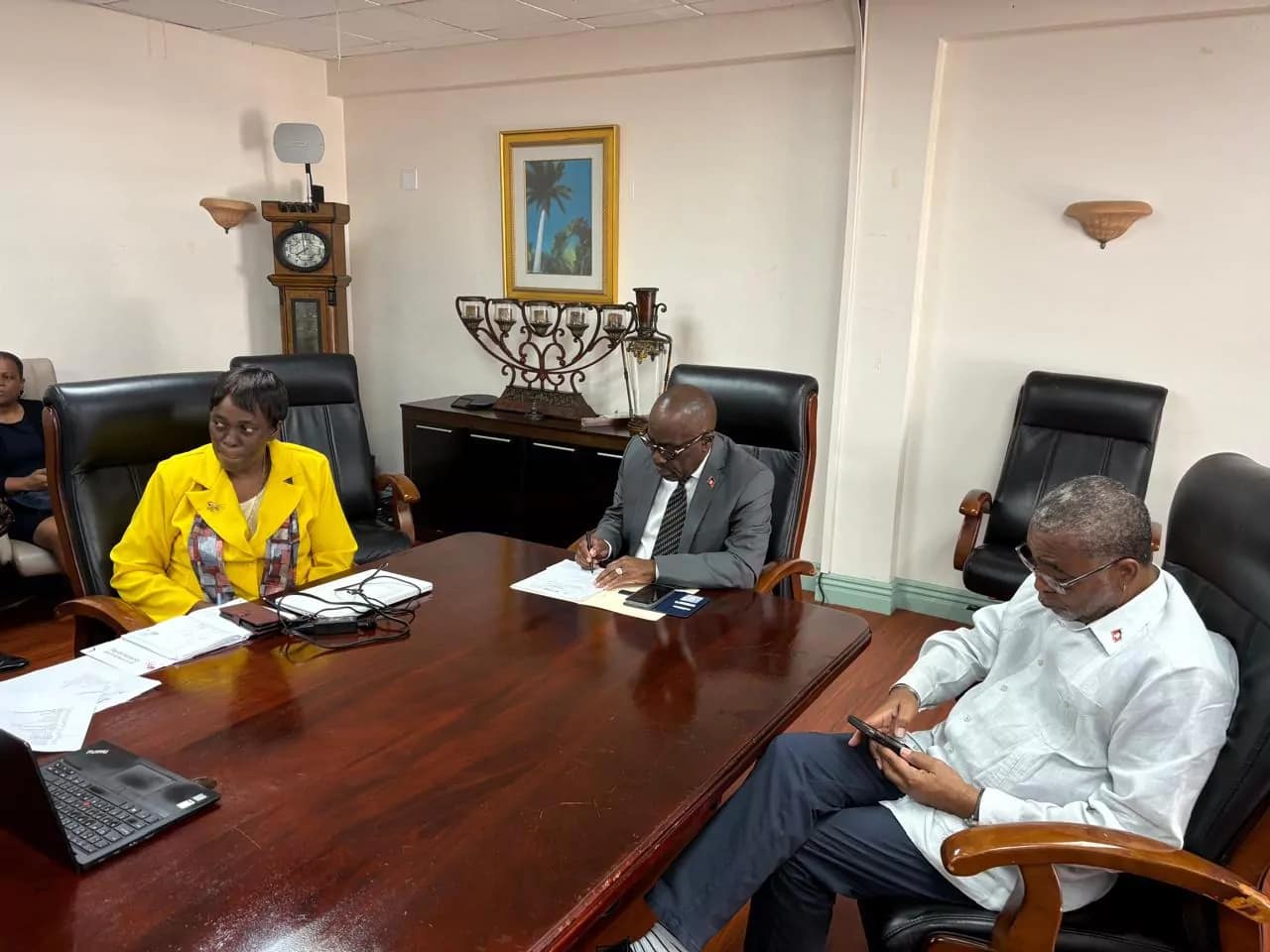
    The high-profile international gathering, scheduled to run from November 1 to 4, has already advanced to a critical planning phase that demands consistent, focused attention — even as political activity accelerates across the entire country, summit overseers say. During a recent convening of the national CHOGM Task Force, Foreign Affairs Minister E.P. Chet Greene, who leads the planning effort, outlined a clear arrangement to balance competing demands: he will split his schedule between official election campaign duties and ongoing oversight of the summit’s preparation process. He also emphasized that the full cross-functional team responsible for the event must maintain consistent progress to hit key milestones.

    To ensure no gaps in leadership emerge when Greene is occupied with campaign commitments, veteran diplomat Ambassador Anthony Liverpool has been appointed as Special Advisor to guarantee continuity in planning. Liverpool brings substantial relevant experience to the role, having previously played a central part in organizing the 2024 Small Island Developing States Conference, which makes him well-suited to lead Task Force meetings in Greene’s absence.

    Day-to-day operational coordination will remain anchored with the permanent CHOGM Secretariat, led by Coordinator Celia Roberts-Morgan. A network of specialized committees is already working in parallel to advance core components of the summit, including logistics arrangements and the design of the official program.

    When it convenes in November, CHOGM will be the largest international event ever hosted by Antigua and Barbuda, drawing heads of state, senior government officials, and delegates from all 56 member states of the Commonwealth. Beyond the core formal leadership meetings, the summit will feature a full slate of parallel engagement events, including dedicated forums for youth, women’s leadership, business cooperation, and civil society dialogue, alongside a range of other bilateral and multilateral international engagements.

    Organizers project that more than 5,000 participants will travel to Antigua and Barbuda for the four-day gathering. Given the massive scale of the event and the complex work required to deliver a successful summit, officials stress that there is no margin for scheduling delays — even as the national government and political leadership navigate the full demands of a national election season.