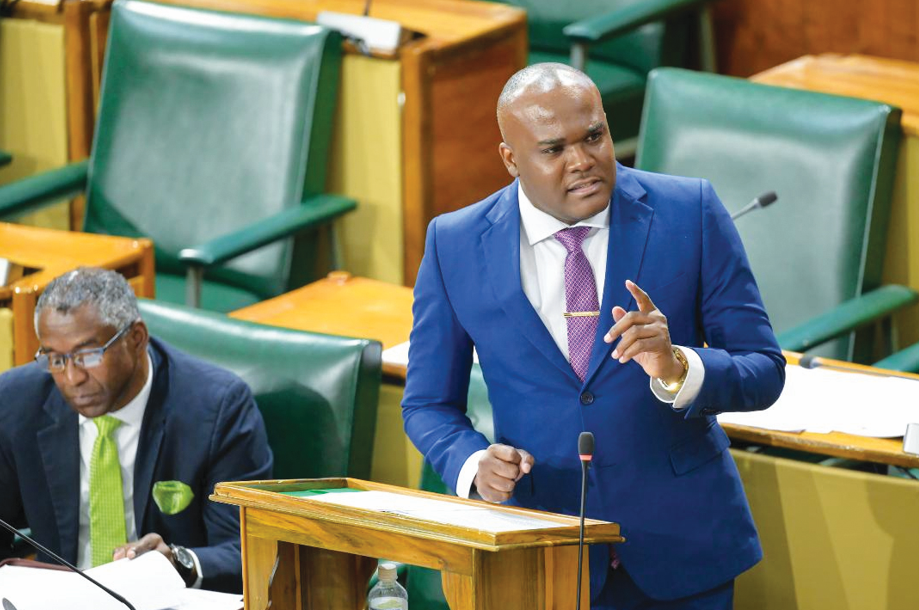
KINGSTON, Jamaica — Months after Hurricane Melissa tore through western Jamaica, the island’s government has entered the active implementation phase of a critical housing initiative that will put donated disaster relief funds toward permanent shelter for hundreds of displaced families, a senior government official has confirmed. State Minister Abka Fitz-Henley, speaking to reporters this week following an official event at Jamaica House, confirmed the rollout of prefabricated modular housing units is now well underway, fulfilling a pledge Prime Minister Andrew Holness made to disaster survivors last December. Category Hurricane Melissa made landfall in October 2025, leaving widespread wreckage across Jamaica’s western parishes, destroying or rendering uninhabitable hundreds of private homes and leaving many families homeless. For months following the storm, international and local donors contributed millions in relief funding through the official Support Jamaica donation portal, with the prime minister committing early in the recovery process that these contributed funds would be dedicated exclusively to addressing the urgent housing needs left in the storm’s wake. Minister Fitz-Henley, who serves in the Office of the Prime Minister, acknowledged that pre-implementation steps, including the competitive selection of appropriate modular housing designs, completion of public procurement protocols, and international shipping of the prefabricated structures, extended the project’s timeline longer than many survivors hoped. But he stressed that the process is now moving forward at an accelerated pace, with groundwork already beginning across affected communities. To speed up construction, the government is issuing direct grants to recipients to cover the cost of building permanent foundations for their new modular homes, Fitz-Henley explained. All foundation designs must receive formal approval from local municipal corporations before construction can be finalized, to ensure compliance with local building and safety standards. “When we made the promise after Hurricane Melissa that every dollar of donated funds would be used to meaningfully improve the lives of families impacted by the storm, that commitment stands unshaken — and we are delivering on it now,” Fitz-Henley told reporters. “There is no more meaningful use of these donations than putting a safe roof over the heads of families who were left homeless by the storm’s devastating destruction.” The Jamaica-based Office of Disaster Preparedness and Emergency Management (ODPEM), which is leading the recovery effort, has allocated JMD 600 million of the total donated relief funds specifically for foundation construction, to speed up the process of getting displaced families into permanent new housing. Responding to questions from the parliamentary opposition in recent weeks, Fitz-Henley confirmed that 924 completed modular housing units have already arrived in Jamaica and are being held in government storage. An additional 700 units are currently en route to the island, with a third shipment of 700 more units scheduled to follow in the coming months. Just two days ahead of Fitz-Henley’s announcement, Robert Montague, the minister responsible for Land Titling and Settlements, conducted an on-site inspection of the ODPEM storage facility in Twickenham Park, St Catherine, where the first wave of units is currently stored. Following his tour, Montague emphasized that the government is prioritizing long-term safety over speed, noting that all new housing developments will only be sited in areas verified to be geologically stable, climate-resilient, and environmentally secure to protect new residents from future natural hazard risks. Local disaster recovery advocates have welcomed the start of implementation, though many continue to push for faster deployment to get families out of temporary emergency shelters and into permanent housing as quickly as possible.
Implementation phase of using donated funds to provide houses to Jamaicans underway, says Fitz-Henley