KINGSTON, Jamaica — In the wake of Hurricane Melissa, which left hundreds of Jamaican families homeless, the Jamaican government is moving forward with an ambitious temporary housing relief initiative, with 924 prefabricated containerised housing units already delivered to the island. According to Robert Montague, Minister without Portfolio in the Ministry of Economic Growth and Infrastructure Development, all delivered units are currently stored at multiple secure sites across the country — including Spanish Town in St Catherine, Luana in St Elizabeth, and Montpelier in St James — with the Jamaica Defence Force (JDF) overseeing their management and security.
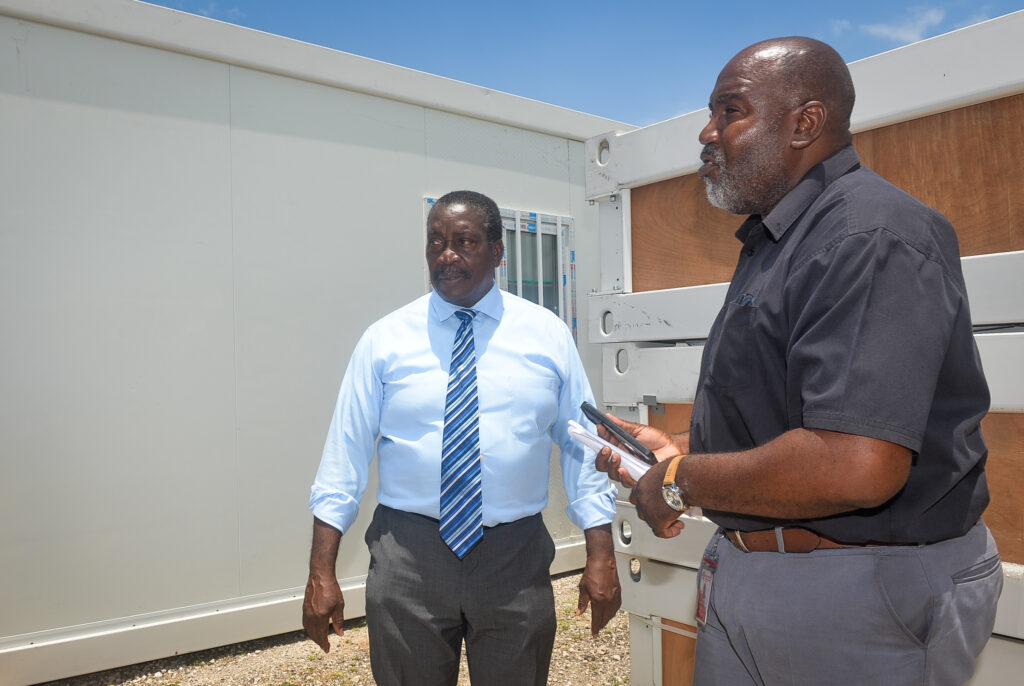
Montague shared the latest update during a formal inspection of model container homes at the Office of Disaster Preparedness and Emergency Management (ODPEM) storage facility in Twickenham Park, St Catherine, on Tuesday, May 19. He confirmed that another 500 units are scheduled to arrive within the next three weeks, as part of a broader total order of 2,500 temporary housing units earmarked for disaster response.
The core goal of this relief programme, Montague explained, is to deliver a measurable improvement in living conditions and provide much-needed stability for Jamaican households that lost their homes to the hurricane’s destructive impact. The government is leveraging multiple sources to expand the housing stock available for survivors: in addition to the containerised units purchased by the Ministry of Economic Growth and Infrastructure Development, a donation of additional units has been received from the Government of China, and the International Red Cross has committed to delivering 300 wooden temporary housing units in the coming weeks.
Initial damage assessments following Hurricane Melissa estimated that as many as 12,000 families had suffered severe housing damage or complete destruction. However, after a rigorous cross-review conducted by the Ministry of Labour and Social Security and local municipal authorities, that figure has been revised significantly downward. Montague told reporters that the updated count puts the number of households left in severe housing need at approximately 2,500, all of which lost their homes or were originally located in high-risk, unsafe zones unsuitable for rebuilding.
The sharp reduction in the official need count reflects two key developments, Montague noted. First, hundreds of displaced families have already managed to rebuild their homes on their own, using funds from insurance claims, financial support from extended family members, community mutual aid, and funding from existing government roofing improvement programmes. Second, municipal teams uncovered a large number of duplicate damage reports, which the minister emphasized were almost never cases of intentional fraud, but rather the result of multiple adult members of the same household submitting separate reports to request support.
All relocation efforts are being carried out under strict guidance from Prime Minister Andrew Holness, who has mandated that no displaced residents can be relocated to areas that are environmentally vulnerable or at high risk of future natural disasters. To make the temporary container units as liveable as possible, the government is outfitting all state-purchased units with standalone water tanks and solar power generators, eliminating reliance on potentially damaged local utility grids in post-hurricane communities.
Beneficiaries of the programme will receive government grants to build concrete foundations for their container units, with volunteer support from local community members to keep construction costs low. Before units are installed, municipal inspection teams will visit each site to verify that the foundation meets safety standards and issue official certification.
To streamline logistics for the project, the National Housing Trust (NHT) has agreed to provide two heavy-duty tractor heads fitted with specialized lift arms, which will be used to unload and install the collapsible container units. The units were specifically designed with a collapsible structure to cut down on shipping costs when being transported to Jamaica from overseas manufacturers.
Looking beyond the immediate Hurricane Melissa response, Montague said the Jamaican government plans to retain a portion of the unused temporary units for deployment in future natural disaster events. Any excess units that are not needed for current disaster survivors will be reallocated to other public housing initiatives, including the government’s New Social Housing Programme (NSHP), or used to accommodate vulnerable social cases currently occupying hospital beds that are needed for acute medical patients.
In closing, Montague extended formal gratitude to all partners that have supported the relief effort, including the Government and people of China for their donation of housing units, the Red Cross for their commitment of wooden housing, the JDF for their logistical and security support, and ordinary Jamaicans who have stepped up to help displaced neighbours and family members in the aftermath of the storm.