博客

  • Oil prices plunge and shares jump on US-Iran ceasefire plan

    Oil prices plunge and shares jump on US-Iran ceasefire plan

    A conditional two-week ceasefire agreement between the United States and Iran, which includes the reopening of the strategically critical Strait of Hormuz, has sent shockwaves through global energy and financial markets, triggering a steep drop in international crude prices and widespread gains across stock exchanges worldwide.

    Following the announcement of the deal, global benchmark Brent crude plummeted roughly 13% to settle at $94.80 per barrel, while West Texas Intermediate, the U.S. benchmark, fell more than 15% to hit $95.75 a barrel. Even with this significant decline, oil prices remain well above the levels seen before the outbreak of hostilities on February 28, when crude traded at approximately $70 per barrel.

    The sharp run-up in energy costs over recent weeks stemmed from widespread disruption to Middle Eastern oil and gas supplies after Iran threatened to target transiting vessels in the strait, a retaliatory measure following joint U.S.-Israeli airstrikes on Iranian infrastructure. The Strait of Hormuz remains one of the world’s most vital chokepoints for global energy trade, with roughly a fifth of all globally traded oil passing through the waterway daily.

    Global equity markets responded immediately to the ceasefire news. After solid gains across Asian exchanges, European markets opened sharply higher: London’s FTSE 100 climbed 2.53% in early trading, France’s CAC 40 gained 4%, and Germany’s DAX rose nearly 5%. In Asia, Japan’s Nikkei 225 finished 5% higher, South Korea’s KOSPI jumped almost 6%, Hong Kong’s Hang Seng Index added 2.8%, and Australia’s ASX 200 gained 2.7%. U.S. stock futures also pointed to a strong opening rally for Wall Street following the news.

    The ceasefire deal came after Iran set an ultimatum deadline of 20:00 EDT Tuesday, warning that “a whole civilisation will die tonight” if no agreement was reached. Analysts note the truce marks a partial political victory for former U.S. President Donald Trump, but it comes at significant long-term economic cost for global energy markets.

    Xavier Smith, research director at market intelligence firm AlphaSense, noted that even with his tough public rhetoric, Trump always faced strong incentives to avoid conflict escalation that would send energy prices skyrocketing. “An uncontrolled price spike would have amounted to a self-inflicted economic wound that few politicians would risk, especially with the constant pressure of approval ratings hanging over his leadership,” Smith explained.

    Saul Kavonic, an energy analyst at financial services firm MST Marquee, projected that the dozens of oil tankers stranded near the strait in recent weeks will now be able to transit the waterway during the 14-day ceasefire, delivering much-needed near-term relief to tight global energy markets.

    Even amid the conflict, a small number of vessels have managed to pass through the strait, albeit at far lower volumes than normal. Several Asian nations, including India, Malaysia, and the Philippines, negotiated individual safe passage agreements for their flagged vessels in recent weeks, and China has confirmed multiple of its commercial ships have crossed the waterway since hostilities began. On Friday, French media outlet BFM TV confirmed a Malta-flagged container ship owned by French shipping giant CMA CGM successfully traversed the route, and Japanese shipping firm MOL also confirmed a Japanese-owned natural gas carrier exited the strait safely.

    Despite the immediate market optimism from the ceasefire, Kavonic warned that full resumption of Middle Eastern energy production is unlikely until global markets gain confidence in a lasting, permanent peace deal. He added that damage to regional energy infrastructure could take months, if not years, to fully repair, keeping long-term supply constrained even during the temporary truce.

    Rystad Energy, an independent energy research firm, estimates the total damage to regional oil and gas infrastructure from retaliatory Iranian attacks could exceed $25 billion and take multiple years to fully restore. A mid-March strike on Qatar’s Ras Laffan industrial hub, which produces roughly 20% of the world’s total liquefied natural gas (LNG) exports, cut the facility’s export capacity by 17%, with full repairs expected to take up to five years.

    Asian economies have borne the brunt of the conflict’s economic fallout, as most major Asian nations rely heavily on Gulf energy imports. Governments and private sector firms across the region have rolled out emergency measures over recent weeks to combat skyrocketing fuel prices and widespread supply shortages. On March 24, the Philippines — which imports 98% of its total oil supply from the Middle East — became the first nation to declare a national energy emergency after domestic petrol prices more than doubled. Multiple regional airlines have already raised ticket prices and cut scheduled flight routes to offset spiking jet fuel costs.

    Ichiro Kutani, an analyst at Japan’s Institute of Energy Economics, pointed out that developing Asian economies have faced disproportionate harm from the conflict, as many lack domestic refining capacity or sufficient strategic petroleum reserves to buffer against price shocks. “The ceasefire is unequivocally positive news for Asian nations,” Kutani explained. “If the truce holds, oil prices will gradually return to more normal levels, even if that process takes longer than many markets currently expect.”


  • WATCH: Award-Winning Billy ‘King Warrior’ Switches from UPP to Back Lamin Newton for All Saints East & St. Luke

    WATCH: Award-Winning Billy ‘King Warrior’ Switches from UPP to Back Lamin Newton for All Saints East & St. Luke

    In a surprising political shakeup that has sent ripples through Antigua and Barbuda’s electoral landscape, high-profile politician Billy, widely known by his nickname ‘King Warrior’ and a decorated figure within local political circles, has announced he is cutting ties with the United Progressive Party (UPP) to throw his full support behind independent candidate Lamin Newton in the upcoming race for the All Saints East & St. Luke constituency.

    The defection marks one of the most high-profile party switches in the lead-up to the constituency’s election, drawing immediate attention from political observers and voters across the region. Billy’s decision to abandon his former party came as he cited growing ideological misalignment with UPP’s current policy priorities and a belief that Newton’s vision for the constituency better addresses the unmet needs of local residents.

    Footage of Billy’s official endorsement event, where he formally introduced Newton to a crowd of assembled supporters, has been released to the public, giving voters a first look at the newly formed political alliance. During the event, Billy emphasized his track record of community advocacy in All Saints East & St. Luke, framing his endorsement as a move rooted in what he calls ‘the best interest of the people who have trusted me for decades.’

    For his part, Newton welcomed Billy’s backing, noting that the award-winning politician’s on-the-ground experience and deep connections to local communities will be a major boost to his campaign. Political analysts say the switch could reshape voter intentions in the competitive constituency, where UPP has long held a significant foothold. The shift leaves UPP grappling with unexpected instability in its candidate roster for the district, as it works to consolidate support ahead of polling day. For Newton, the addition of Billy’s political capital transforms what was once seen as a long-shot independent bid into a more competitive contest, forcing both major parties to reassess their campaign strategies for the area.

  • Johnson Targets Roads, Sports Facilities and Youth Development, Pledges ‘Educational Revolution’ in St. Philip South

    Johnson Targets Roads, Sports Facilities and Youth Development, Pledges ‘Educational Revolution’ in St. Philip South

    As general election political activity accelerates across the region, constituency candidate Kiz Johnson has laid out a clear, community-focused policy blueprint centered on closing critical infrastructure gaps, empowering young people, and transforming local education. Johnson has ranked upgrades to core public assets as her most immediate priorities, highlighting crumbling road networks and underfunded community recreational spaces as pressing unmet needs for residents.

    Among the most neglected community resources, Johnson points to underdeveloped basketball courts and neighborhood sporting facilities, assets she says are critical to supporting young residents. “Young people are relying on us,” she emphasized in comments outlining her policy platform, arguing that investment in public spaces goes hand-in-hand with investment in the next generation.

    Beyond physical infrastructure upgrades, Johnson stressed that holistic youth development requires intentional work to empower young people and embed them in community decision-making. She frames cultural and mindset shift as the foundation of any meaningful long-term progress, arguing that flashy, surface-level programs fail to deliver lasting change without buy-in and purpose-driven alignment from the community. “Everything starts from mindset,” Johnson explained. “We could run in and have all sorts of fancy programs… but if the mind is not where it is supposed to be, then how can we achieve that?”

    To turn this vision into action, Johnson has designed an approach centered on direct, consistent connection with young constituents, including structured community discussions and one-on-one mentorship. These programs are designed to help young people clarify their personal goals and find direction within their local communities. “We’re going to be talking… we’re going to flesh out life,” she said, noting that deep, trust-based connection at the grassroots level is non-negotiable for driving sustainable progress.

    Looking beyond immediate near-term priorities, Johnson has laid out an ambitious long-term vision anchored in expanding educational access and quality across the constituency, which she calls the single most critical pillar of the region’s future prosperity. She has positioned educational expansion as her signature policy goal, with a decades-long vision of systemic change. “My first priority… is to boost the educational capacity of the people in my constituency,” Johnson said. “Ten, fifteen, twenty years from now people should be able to look back and say… Kiz Johnson caused an educational revolution in St. Philip South.”

    Johnson emphasized that all her policy plans are rooted in consistent, year-round community engagement, pushing back against the common pattern of candidates only becoming visible to constituents during election cycles. Effective local leadership, she argued, requires constant accessibility and openness to resident input. To that end, her team is rolling out new channels to ensure constituents can easily connect with her and her team, regardless of whether an election is upcoming. “We are creating options… to be found, to be reached, and to be contacted,” she explained.

    She also addressed the aftermath of a hard-fought competitive primary race, noting that unifying all faction of the local party and supporter base is a key prerequisite to advancing her development agenda. With a shared larger goal of improving constituent lives, Johnson said internal division would only derail progress, making cross-group cohesion essential.

    Johnson’s policy rollout comes amid a broader surge in pre-election political activity, as candidates across all constituencies outline their own platforms focused on infrastructure investment, youth empowerment, and long-term social development ahead of the upcoming vote.

  • Dr. Kwasi Tonge urges constituency debate in St. Mary’s North and nationwide

    Dr. Kwasi Tonge urges constituency debate in St. Mary’s North and nationwide

    With general elections on the horizon in Antigua and Barbuda, a leading social science scholar from The University of the West Indies Five Islands Campus is pushing for a more informed, participatory democratic process by calling for organized candidates’ debates in every electoral constituency. Dr. Kwasi K. Tonge, who makes his home in the St. Mary’s North constituency, has thrown particular support behind a planned head-to-head forum between the two major parties’ contenders for that seat: Jonathan Joseph of the United Progressive Party and Dr. Philmore Benjamin of the Antigua and Barbuda Labour Party.

    In public remarks shared ahead of the vote, Dr. Tonge emphasized that structured, on-the-record debates offer voters an unmatched opportunity to directly evaluate each candidate’s policy priorities, leadership style, and long-term development vision for their local constituency. Unlike scattered campaign events or targeted social media messaging, he argued, these open forums create a level playing field that lets constituents connect directly with the people asking for their support.

    “Public debates are a non-negotiable pillar of a healthy, functioning democracy,” Dr. Tonge explained. “They give constituents space to engage in substantive dialogue, put pressing questions to candidates, and gauge firsthand the competence, personal character, and readiness of anyone seeking public office.”

    The researcher acknowledged that informal political back-and-forth and casual partisan banter are a natural, widespread part of every election cycle, but stressed that voters must move beyond surface-level rhetoric to cast ballots that align with their own values and community needs. “This is a make-or-break moment for our constituency and our nation,” he noted. “Voters deserve access to all the information they need to make thoughtful, responsible choices that shape their future and the future of the communities we call home.”

    Drawing on global democratic benchmarks, Dr. Tonge pointed to long-established debate traditions in established democracies such as the United Kingdom, where structured candidate forums are a standard, widely expected element of every electoral cycle. In these systems, he explained, debates create a transparent, accountable space where voters can hear unfiltered positions directly from candidates, rather than relying on second-hand messaging from party campaigns.

    As a native Antiguan and Barbudan with deep roots in the country, Dr. Tonge extended his well wishes to all candidates and both major political parties, sharing a core hope that the entire electoral process will center and reflect the explicit will of the Antiguan and Barbudan public. Closing his remarks, he reaffirmed his commitment to open democracy, saying “Ultimately, let democracy prevail.”

  • ID Cards Replacement hits 25K

    ID Cards Replacement hits 25K

    As preparations for the upcoming general election continue across Antigua and Barbuda, the national Electoral Commission has released new data showing that processed applications for voter identification card replacement have crossed the 25,000 threshold, though the rate of completion varies dramatically across the country’s 15 constituencies.

    Since the initiative launched, a cumulative total of 25,372 applications have been finalized by commission officials, with momentum picking up considerably over the first quarter of this year. Monthly data reveals a stark upward trend in submissions: just 355 applications were processed in January, followed by a modest increase to 508 in February. March saw a dramatic five-fold jump, with 4,168 forms submitted and processed in that 30-day window. For April, as of the latest reporting period, 2,021 applications have already been completed, nearly half of which came during the week of April 5 to 11, when 944 submissions were recorded. Most of that week’s activity was concentrated on April 7, with no applications processed on the public holidays of Easter Sunday and Easter Monday.

    When broken down by geographic constituency, the data highlights a sharp divide in progress between rural, outer-island and urban St. John’s areas. The parish of St. Peter leads the nation with 83% of its required voter ID replacements complete, followed by the sister island of Barbuda at 74% and St. Philip North at 73%. St. Philip South has hit 61% completion, and All Saints West stands at 55%, all clearing the 50% mark.

    By contrast, most constituencies falling within the St. John’s metropolitan area continue to lag well behind the national average. St. John’s Rural West has only completed 46% of projected replacements, St. John’s Rural South sits at 47%, and St. John’s City East reaches just 48%. St. Mary’s North holds the lowest completion rate across the country, at only 44%. Despite its low completion rate, St. Peter has processed the highest raw number of applications at 2,370, followed closely by St. George at 2,359 and St. John’s Rural West at 2,063.

    The ongoing voter ID replacement effort is a core pre-election initiative by the Electoral Commission, intended to update outdated voter rolls and identification ahead of the upcoming national poll. Thousands of eligible voters across the country have not yet submitted their applications for new cards, and commission officials have issued repeated public warnings that slow participation could disrupt voting access on election day. Officials specifically note that a last-minute rush of applications close to the registration deadline could create processing backlogs that leave thousands of voters unable to cast a ballot, urging residents to complete their replacement applications as soon as possible to avoid disenfranchisement.

  • Division of Culture to host National Steelpan Arrangers Workshop

    Division of Culture to host National Steelpan Arrangers Workshop

    Grenada’s cultural landscape is set to receive a major boost with the upcoming National Steelpan Arrangers Workshop, scheduled for April 11–12, 2026 at the GBSS Auditorium. Organized by the Division of Culture under the Ministry of Tourism, Creative Economy and Culture, the two-day training forms the cornerstone of the government’s flagship COMS-PAN (Community Steelpan Programme), a long-term strategic plan designed to reinforce the country’s iconic steelpan sector.

    The core goal of COMS-PAN is to build and empower community steelpan groups across every parish of Grenada, expand equitable access to professional steelpan training, and give local communities a powerful platform for cultural expression through music. This workshop is also intentionally timed to align with advance preparations for Spicemas 2026, particularly Grenada’s celebrated National Panorama Competition, one of the country’s most anticipated annual cultural events.

    Leading the workshop will be Duvone Stewart, a highly decorated and innovative steelpan arranger hailing from neighboring Trinidad and Tobago. A respected figure across the Caribbean, Stewart has built a reputation for his decades-long work advancing steelpan education and youth development throughout the region, alongside his acclaimed collaborations with top Trinidadian steel orchestras including the renowned Phase II Pan Groove.

    Over the course of the two-day program, Stewart will deliver structured, hands-on training covering core skills including steelpan arrangement, original composition, and full orchestration. The initiative’s primary mission is to cultivate a continuous, sustainable pipeline of skilled arrangers across Grenada, Carriacou, and Petite Martinique. It will also serve to elevate the existing skills of both active working arrangers and emerging new talent, ultimately strengthening musical leadership across all community and national steelbands.

    Cordel Byam, Steelpan Officer at the Ministry of Tourism, Creative Economy and Culture, framed the workshop as a foundational investment in the future of Grenada’s steelpan tradition. “By developing our arrangers, we are strengthening the very foundation of our bands and ensuring that each community ensemble has the musical leadership needed to grow and excel,” Byam explained.

    Beyond immediate skill-building, the initiative is projected to raise the overall quality and competitive standard of performances at the National Panorama Competition. It also aims to encourage greater participation from new, emerging bands and early-career arrangers, and lays the groundwork for the long-term expansion of Panorama competition categories to include more small and large ensemble groups.

    Chief Cultural Officer Kelvin Jacob highlighted the broader societal impact of the targeted investment in the steelpan sector. “The sustainability of Grenada’s steelpan sector depends on deliberate investment in human capital,” Jacob noted. “Through initiatives like this, we are not only preparing for Panorama 2026 but also building a long-term framework where every community can find its rhythm and contribute meaningfully to national cultural development.”

    The workshop will run from 9 a.m. to 3 p.m. each day, and the Division of Culture has issued an open invitation to steelpan practitioners, music educators, and aspiring arrangers across the country to take part in the transformative training event. As Grenada continues to invest in its rich cultural heritage, the workshop marks a key step toward the country’s goal of establishing itself as a leading hub for cultural excellence across the Caribbean.

  • Beazer Says Barbudans ‘Tired of Division’ as He Outlines Development Agenda

    Beazer Says Barbudans ‘Tired of Division’ as He Outlines Development Agenda

    As general election campaigning gains momentum across Antigua and Barbuda, opposition candidate Beazer has laid out his people-centered development vision for Barbuda, arguing that local residents have grown weary of political division and stalled progress that has held the island back. In an in-depth campaign interview, Beazer emphasized that the Barbuda community is eager for tangible, forward momentum after years of stagnation and delayed public projects. “Persons are tired of division, they’re tired of stagnation, they’re tired of delay. They want to see progress. They want to see development,” he stated.

    At the core of Beazer’s policy platform sits expanded access to education, which he frames as a non-negotiable foundation for both individual upward mobility and sustained national growth. He described education as an irreplaceable catalyst for better life outcomes, noting that foundational learning is critical for everything from small business management to personal financial literacy. “Education is your passport towards a better future,” Beazer explained. “Without education, you’re nothing. You don’t know how to run your business. You don’t know how to manage your finances.”

    Beazer urged all Barbuda residents to prioritize lifelong learning, regardless of what form their education takes. He encouraged people to push past self-imposed limits on their potential, pushing for a culture of continuous skill development across the island. “Anybody that is thinking about pursuing education… go for it. Don’t limit yourself, don’t limit your capacity, continue to learn,” he said.

    Beyond encouraging individual pursuit of learning, Beazer outlined concrete plans to expand on-island educational infrastructure if elected. His team has already held early discussions about bringing more permanent physical campuses of training providers and higher education institutions to Barbuda, a move designed to ensure local residents can fully participate in Antigua and Barbuda’s national education ecosystem. “For the future, what we would like to see is for more physical entities to be in Barbuda, so that Barbudans can be included as much as possible into our overall educational system,” he added.

    Beazer’s policy outline comes as all major political parties ramp up their campaigning ahead of the upcoming general election, with each group putting forward competing plans to drive economic and social development across both islands of the Antigua and Barbuda nation.

  • ABLP Leader Frames Election as Choice Between ‘Progress and Regression’

    ABLP Leader Frames Election as Choice Between ‘Progress and Regression’

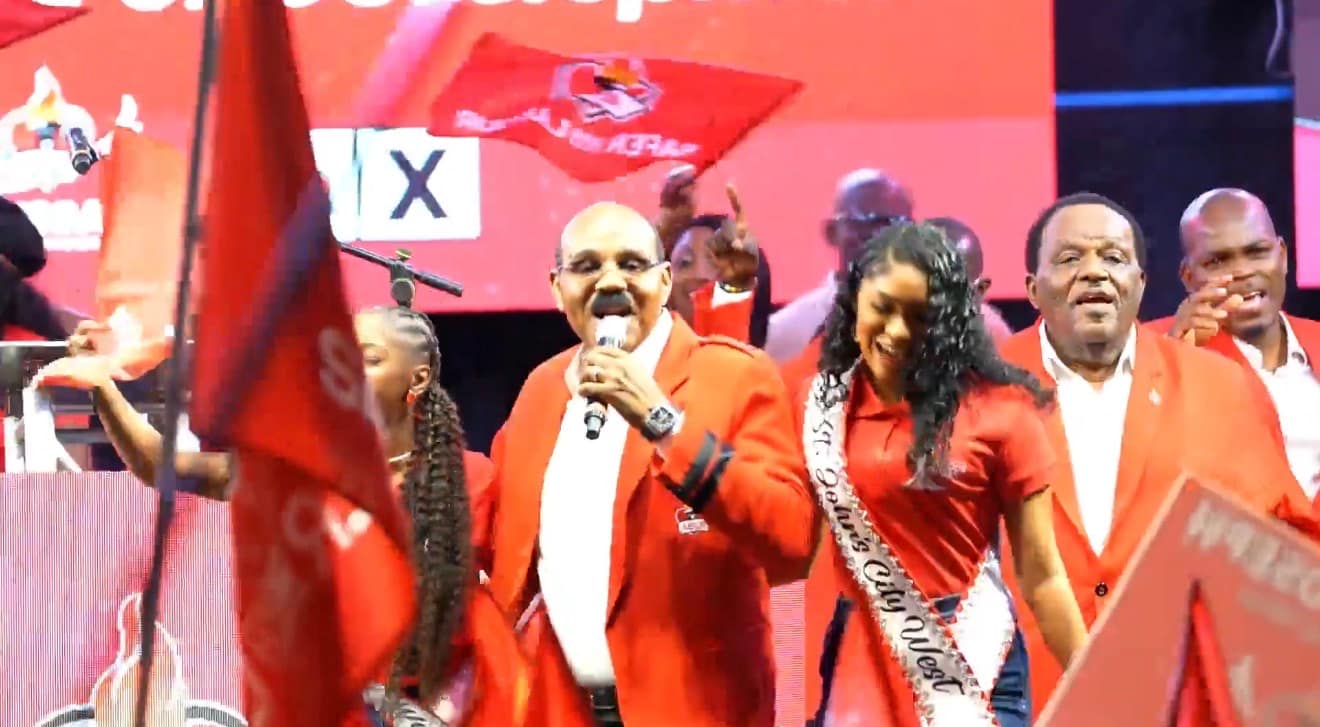
    As the Caribbean nation of Antigua and Barbuda counts down to its April 30 general election, incumbent Prime Minister Gaston Browne has positioned the upcoming vote as a make-or-break crossroads for the country’s economic and social trajectory. Speaking to a throng of energized supporters at the official campaign kickoff for the Antigua and Barbuda Labour Party (ABLP) held at People’s Place, Browne laid out a stark contrast for voters: stick with the current government’s path of forward momentum, or roll back years of gains and revisit the economic turmoil of the past.

    Browne characterized the election as nothing less than a defining moment for the small island nation, arguing that steady, proven leadership is an indispensable asset at a time of widespread global economic and geopolitical uncertainty. In a sharp rebuke of the opposition’s record and governing credibility, Browne drew a clear line between the performance of his administration and the period before the ABLP returned to power in 2014. He recalled that the preceding years were marked by deep economic contraction and widespread workplace cuts, with approximately 10,000 jobs lost across the country during that period. Browne warned that a victory for the opposition would amount to a return to what he called a “failed experiment” in governance that inflicted lasting harm on Antigua and Barbuda’s working people.

    For the prime minister, the choice facing voters on election day extends far beyond routine partisan politics. “This election is not about retrogression. It is about progress… continued progress,” Browne told the gathered crowd, emphasizing that the outcome will reshape the nation’s development trajectory for decades to come.

    Beyond criticizing the opposition’s past record, Browne also questioned whether the challengers are prepared to take on the responsibilities of national office. He pointed to well-documented internal rifts within the opposition bloc as evidence of their inability to lead cohesively, reiterating that stable, effective governance is non-negotiable amid ongoing global volatility. “This is not a time for experimentation… this is a time for stability, this is a time for competent leadership,” he added.

    Browne closed his remarks by urging party faithful to stay active in the campaign cycle, make sure their voter registration is in order, and turn out in force on election day, stressing that broad voter participation is the foundation of a healthy democracy. He reiterated his core message one final time: the April 30 vote offers voters a clear selection between preserving the current era of sustained economic growth and national development, or risking unforced disruption to the gains Antigua and Barbuda has fought to secure over the past decade.

    Alongside the election date of April 30, official nomination of candidates is scheduled to take place on April 13, marking the formal start of candidates’ official campaign periods.

  • Cultural Ambassador Masicka to Host Youth Talk on Success and Discipline in Antigua

    Cultural Ambassador Masicka to Host Youth Talk on Success and Discipline in Antigua

    Renowned Jamaican Dancehall performer Masicka is set to connect with young people across Antigua and Barbuda this Wednesday for an interactive motivational gathering focused on three core pillars: personal development, self-discipline, and resilience in the face of hardship.

    Held under the theme “Manifesting Greatness: From the Streets to the Stage,” the event is slated to kick off at 5 p.m. local time at the Villa Polyclinic. This engagement forms one of the key public commitments for Masicka in his role as Cultural Ambassador, bringing his personal story directly to the next generation of Caribbean creators and leaders.

    Event organizers have outlined that the session will center on Masicka’s own winding journey to international acclaim in the music industry. Unlike a typical performance, the gathering will give young attendees exclusive, firsthand insight into the unspoken challenges, career setbacks, and high-stakes decisions that have defined his rise to stardom. Through open, honest storytelling, the discussion is designed to push participants to pause and reflect on their own personal and professional paths, highlighting the consistent hard work and dedication required to turn long-term goals into reality.

    Beyond the artiste’s sharing, the event is structured as a two-way conversation. Attendees will have ample space to ask questions, share their own experiences, and engage directly with Masicka on a range of topics relevant to young people today—from building long-term perseverance and maintaining focus amid distraction to navigating the unexpected obstacles that often arise when chasing big dreams.

  • UPP Ratifies 2026 Candidates

    UPP Ratifies 2026 Candidates

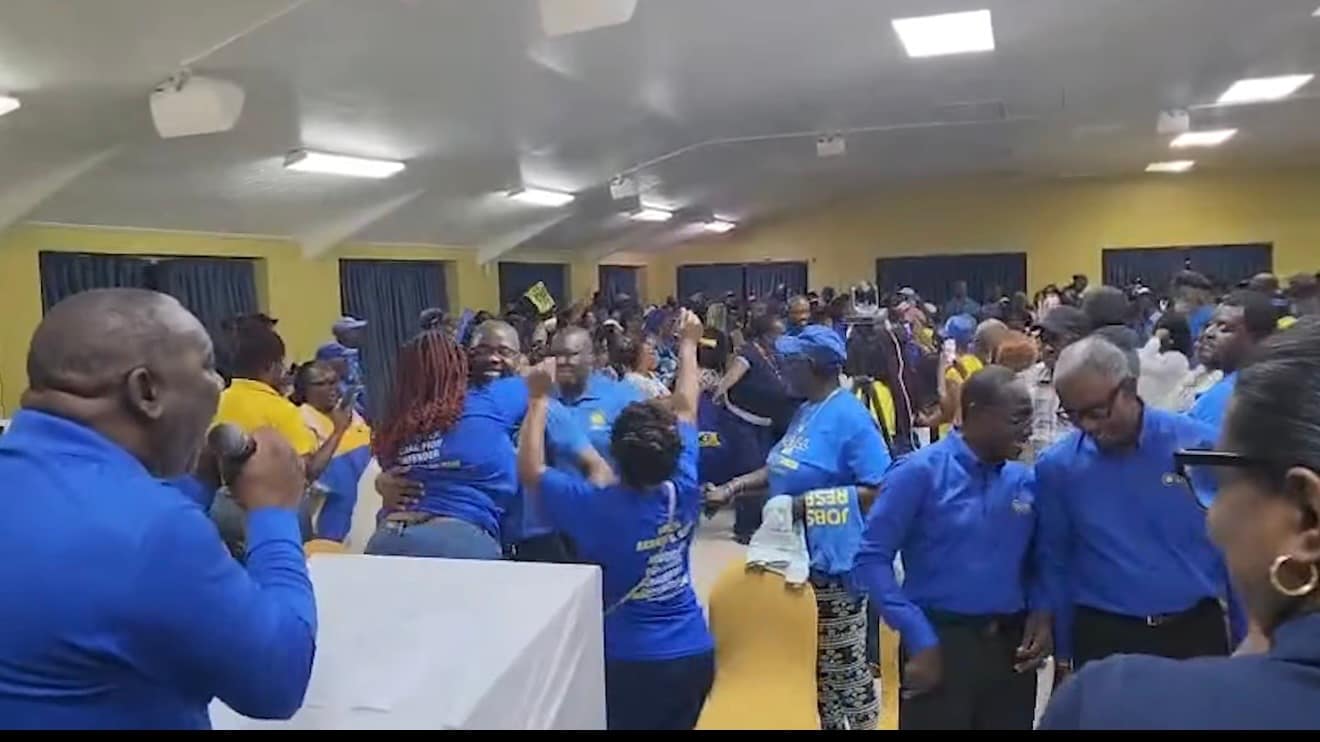
    The United Progressive Party (UPP), one of the major political organizations in the country, has completed its internal nomination and approval process for candidates running in the 2026 general election, locking in a full roster of contenders for parliamentary seats across all contested districts.

    The ratification vote, held during the party’s annual national convention over the weekend, saw 89% of registered delegates back the finalized candidate list compiled by the party’s nomination committee. The selection process spanned three months, featuring public town halls, regional primary votes and background screenings to pick contenders that align with the party’s core policy platforms of economic reform, infrastructure expansion and accessible healthcare.

    Party chairperson Sarah Morrison welcomed the outcome of the ratification in a post-convention press address, emphasizing that the selected candidates bring a diverse mix of experienced incumbent lawmakers and first-time political contenders from a wide range of professional and community backgrounds. “This slate reflects what our party stands for: representation that comes from the communities it will serve,” Morrison noted, adding that the approval paves the way for the UPP to launch its official 2026 campaign trail early next year.

    Political analysts point out that the early finalization of candidates gives the UPP a key strategic advantage heading into the election cycle, allowing the party more time to build voter outreach and refine policy messaging ahead of the 2026 polling date. The move also comes as the main opposition party continues to resolve internal disputes over candidate selection, which has delayed their own nomination process by more than a month.