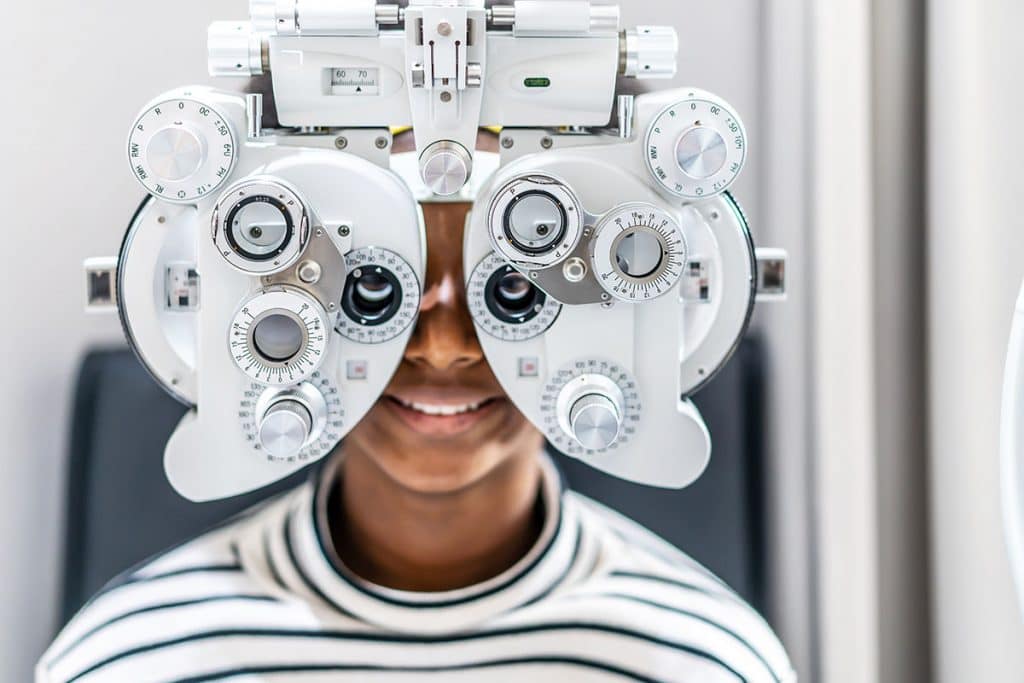
In a major push to eliminate preventable and correctable vision impairment across the twin-island nation, a delivery of donated free eyeglasses is on track to reach Antigua and Barbuda in the coming days. This shipment forms a core component of the Prime Minister’s Vision Initiative, an ongoing public health program rolled out by the national government to expand accessible eye care for all residents.
Maurice Merchant, the country’s Director General of Communications, shared the latest update during a post-Cabinet media briefing held Thursday. He confirmed that the national initiative is implemented in close collaboration with two global non-profits focused on vision health: Restoring Vision and Vision Spring. This cross-sector partnership is part of a broader expansion of eye care services led by Antigua and Barbuda’s Ministry of Health, which has brought on board both regional and international stakeholders to scale impact.
The announcement of the incoming shipment followed a formal progress presentation to Cabinet by Health Minister Michael Joseph. During the presentation, Joseph also highlighted parallel work underway by a visiting specialist team from the Trinidad Eye Hospital, which is currently providing advanced ophthalmological services across Antigua and Barbuda. According to Merchant, this visiting surgical mission is projected to complete more than 400 life-changing eye procedures this year for local patients living with a range of vision-impairing conditions.
A key long-term goal of the Prime Minister’s Vision Initiative is to build a network of community-focused “blind-free zone” centers across Antigua and Barbuda. These local hubs will bring vision screening and corrective care directly to community members, eliminating barriers to access for rural and underserved populations. Beyond community-based care, the program has also extended its reach into the national education system, with plans to conduct comprehensive vision screenings for 10,000 students total: 6,000 primary school pupils and 4,000 secondary school students.
Merchant emphasized that the government prioritizes early vision screening and intervention as a critical public health and education investment. Timely diagnosis and corrective care do not only improve long-term vision outcomes for young people – they also directly support stronger educational performance, ensuring that students with treatable vision issues can fully participate in learning and reach their academic potential.