博客

  • Trust is the trade union’s currency

    Trust is the trade union’s currency

    For decades, trade unions have been anchored on a foundational pillar that rarely receives mainstream attention but defines their entire ability to deliver for workers: trust. This intangible bond starts with a core expectation from rank-and-file members: that their elected leadership will prioritize their needs, communicate honestly, and deliver tangible outcomes that improve working conditions. Beyond the member-leader dynamic, this web of trust extends outward to connect unions, their membership bases, and company management, creating the productive working relationship that underpins all successful labor organizing work. When trust is intact, collective bargaining proceeds with open dialogue, workplace conflicts are resolved efficiently, and both the workforce and the employer benefit from long-term operational stability. A stable labor environment, in turn, supports consistent production, higher employee retention, and reduced operational disruption for businesses of all sizes.

    This critical bond of trust does not form by accident; it depends on consistent adherence to a set of core guiding principles, starting with unwavering good faith. Every action taken by union leadership must align with the best interests of members and the broader organization, with no room even for the perception of self-serving decision-making. It must be clear to all stakeholders that personal gain never drives policy or operational choices within the union.

    Collaboration, rather than adversarial confrontation, is widely recognized as the most fundamental pillar of sustained trust. When leaders prioritize conflict over partnership, they erode confidence far faster than almost any other misstep. Undermining cross-stakeholder relationships breeds confusion about inconsistent actions, erodes public and member confidence, and ultimately creates a damaging irony: the very interests and wellbeing of union members that leaders are meant to protect get pushed to the bottom of the priority list.

    Alongside intentional collaboration, authenticity and full transparency are non-negotiable to prevent trust from breaking down. For productive relationships between unions and employer management, union leaders must be included in problem-solving and decision-making processes from the earliest stages, not called on only to rubber-stamp choices that have already been finalized without their input. Building and retaining trust between all parties requires consistent, transparent communication, even when sharing difficult news, uniform application of workplace policies across all employee groups, and a shared commitment to collective goals that benefit both workers and the business.

    This approach is particularly critical for external relationships between unions and employers, including government agencies that set labor policy. Framing union representatives as collaborative partners rather than inherent adversaries has been repeatedly shown to be the most effective strategy to prevent costly, disruptive labor disputes from emerging in the first place.

    Existing industrial relations research has identified six core actionable practices that boost trust across all labor organizations: consistency in actions, proven competence in delivering results, open ongoing communication, empathetic recognition of worker concerns, full transparency around decision-making, and clear accountability for missteps. When union and management leaders master these six behaviors, they create the conditions for cross-team relationships that run smoothly, foster open communication, and overcome shared challenges through collective problem-solving.

    These core principles also align closely with the widely adopted five Cs of trust, a popular leadership and relationship framework that outlines the core traits of a trustworthy stakeholder. The five Cs break down as: competence, meaning the ability to deliver on promised outcomes; consistency, meaning predictable, reliable actions that stakeholders can count on; care, meaning demonstrating genuine empathy for the needs of all parties; candour, meaning a commitment to honest, straightforward communication at all times; and character, meaning unwavering personal and institutional integrity. This analysis comes from Dennis De Peiza, a veteran labor and employment relations consultant at Regional Management Services Inc.

  • Athletic Association Salutes Cejhae Greene and Soniya Jones

    Athletic Association Salutes Cejhae Greene and Soniya Jones

    Two of Antigua and Barbuda’s most prominent international track and field athletes, Cejhae Greene and Soniya Jones, have received formal recognition and heartfelt tributes from their national governing body, the Antigua and Barbuda Athletic Association (ABAA), for their ongoing work flying the country’s flag on the global sports stage. In two separate public statements released by the association, both athletes were celebrated for the core personal traits that have defined their athletic careers: unwavering dedication, relentless perseverance, and deep commitment to their respective disciplines. For veteran sprinter Cejhae Greene, the ABAA’s praise highlighted a career-long track record of competing with immense national pride and exceptional athletic excellence. “Over the course of your career, your commitment to the sport, your ability to bounce back from every obstacle you have faced, and your consistent drive to compete against the best athletes in the world have cemented your status as one of the most important figures in the history of Antigua and Barbuda athletics,” the association shared in its statement. The ABAA emphasized that Greene’s athletic journey serves as a powerful case study for emerging young athletes across the twin-island nation, illustrating the transformative impact of discipline, persistence, and wholehearted dedication to one’s goals. “As you continue forward in your athletic path, we encourage you to keep chasing your ambitions with the same fire and determination that have made your career what it is today,” the statement added. The association also extended recognition to Soniya Jones, marking another successful season of international competition where she represented Antigua and Barbuda. Jones was commended for her steady determination, consistent performance at the global level, and incredible physical and mental strength, with the ABAA noting that her regular participation in top international competitions has been a key driver of her ongoing growth as an athlete. “Season after season, you have continued to sharpen your skills, deliver stronger results, and represent our nation with pride and outstanding distinction,” the association said of Jones. Looking ahead to her future competitions, the ABAA added that “there are still new heights to reach, and more unforgettable achievements to create in the years ahead.” Closing out the tributes, the governing body extended its well wishes to both athletes: it expressed hope that Greene will go on to achieve even more excellence and hit meaningful new career milestones in upcoming competitive seasons, while it encouraged Jones to keep building on her progress, deliver breakthrough performances, and secure greater athletic success in her future competitions.

  • WEATHER UPDATE (6:00 AM, 15 August): Vigorous tropical wave continues to affect Dominica; Flash Flood Watch remains in effect

    WEATHER UPDATE (6:00 AM, 15 August): Vigorous tropical wave continues to affect Dominica; Flash Flood Watch remains in effect

    Dominica is facing ongoing severe weather impacts from an active tropical wave that will continue to affect the island nation through the overnight hours, with multiple weather warnings and safety advisories currently in place for local residents and mariners.

    Forecasters warn the system will bring hazardous conditions including strong gusty winds, churning rough seas, and scattered pockets of moderate to heavy rainfall paired with thunderstorms, with the most intense activity expected during Thursday morning. To account for elevated flood and landslide risks, a Flash Flood Watch will remain active across the country until midday Thursday.

    Emergency management officials have issued urgent guidance for residents to prioritize preparedness. Those living in low-lying or steep terrain areas that are historically vulnerable to flash flooding, landslides, and falling rock debris are instructed to stay constantly alert for changing conditions and enact all necessary precautionary measures. Additionally, residents have been told to secure any lightweight, loose outdoor items that could be lifted and turned into dangerous projectiles by the system’s strong gusts.

    Marine conditions are expected to remain particularly dangerous through the coming days. Forecasts call for rough to extremely rough seas across Dominica’s coastlines, with wave heights expected to peak Thursday morning at roughly 10 feet along the island’s west coast and surge as high as 13 feet along the more exposed east coast. A Small Craft Warning remains enforced for all small vessels due to high winds and treacherous sea conditions, and will stay in effect until 6:00 a.m. local time Sunday. Mariners have been strongly advised to stay anchored in safe port until conditions improve.

    Beyond marine workers, the general public has received clear guidance to avoid risky coastal activity. Officials warn people to stay far from beaches and zones where large breaking waves are crashing ashore, and anyone who lives near or travels along coastal roadways should maintain constant vigilance for unexpected rising water or debris.

    In a separate update from the U.S. National Hurricane Center, forecasters are actively tracking a second tropical wave located in the central tropical Atlantic. The system currently carries a medium probability of developing into a named cyclone over the next seven days as it moves westward across the basin. Residents of the Lesser Antilles archipelago, including Dominica, and regional mariners are instructed to continue monitoring official weather updates from the Dominica Meteorological Service for any changes to the system’s track and intensity.

  • Indonesië: Krachtige 7.7 aardbeving bij Flores, minstens 38 doden

    Indonesië: Krachtige 7.7 aardbeving bij Flores, minstens 38 doden

    A powerful 7.7-magnitude earthquake has claimed at least 38 lives on Indonesia’s Flores island, leaving widespread destruction and triggering urgent rescue efforts across the affected region. The seismic event struck at 5:58 a.m. local time on Saturday, with its epicenter located roughly 68 kilometers northwest of the coastal city of Ende, in East Nusa Tenggara province.

    Three strong aftershocks, measuring magnitudes 5.9, 5.6, and 6.1 respectively, hit the area within hours of the main quake, compounding the initial damage. The earthquake left a trail of destruction across multiple districts, damaging hundreds of residential homes, commercial warehouses, and public government buildings. Landslides triggered by the shaking have blocked key arterial roads, cutting off access to remote hard-hit communities and significantly hampering rescue and relief teams as they work to reach trapped survivors.

    As of the latest update from local disaster management authorities, the 38 confirmed fatalities are spread across four cities on Flores. Two people remain trapped under collapsed building rubble in the nearby Manggarai region, with rescue crews working around the clock to extract them alive. “Our absolute priority right now is locating any survivors trapped beneath debris,” explained Fathur Rahman, head of the local rescue unit based in Maumere. Many impacted zones remain inaccessible due to landslide debris and damaged critical infrastructure, slowing the progress of search operations.

    In Nagekeo, the district closest to the earthquake’s epicenter, roughly 2,000 residents have been evacuated to higher, safer ground to avoid further risks. Mobile communication signals have been disrupted across large swathes of the impacted area, creating major delays in information gathering and damage assessment. Local officials have issued repeated warnings urging residents not to return to damaged or structurally compromised buildings, due to the persistent threat of additional aftershocks that may hit in coming days.

    Shortly after the main earthquake, Indonesia’s Meteorology, Climatology and Geophysics Agency (BMKG) issued an urgent tsunami warning for all coastal areas adjacent to the quake zone. The warning was later lifted after monitoring confirmed no dangerous sea level anomalies had developed, but the agency still advised residents to avoid low-lying beach areas and river banks and stay on higher ground as a precaution. BMKG has announced it will continue continuous monitoring of sea levels in the region out of an abundance of caution.

    Preliminary estimates indicate more than 500,000 people on Flores experienced violent shaking from the quake, while millions more across adjacent regions reported moderate to strong tremors. With many structures damaged or destroyed, the full extent of human harm and economic damage is still being counted as survey teams work to reach cut-off areas.

    Indonesia sits along the Pacific Ring of Fire, a geologically active zone marked by frequent tectonic movement that makes the nation highly vulnerable to major earthquakes and tsunamis. In 1992, a similarly powerful earthquake off the coast of Flores triggered a devastating tsunami that killed an estimated 2,500 people.

    Despite the ongoing challenges of blocked routes, disrupted communications, and lingering aftershock risks, rescue operations are continuing at full pace. Local disaster management officials say they are prepared for additional aftershocks that may persist over the next several days, and have pre-positioned emergency supplies to support displaced residents.

  • Felisha ready to fight come Monday

    Felisha ready to fight come Monday

    A major labor dispute has erupted at Trinidad and Tobago’s Water and Sewerage Authority (WASA), after dozens of employees gathered in protest outside the authority’s St Joseph headquarters on Friday, reacting to a months-long negotiation impasse that ended abruptly when senior management walked out of scheduled talks.

    The demonstration, organized by the Public Services Association (PSA), the union representing WASA workers, follows a breakdown in discussions covering two expired collective bargaining periods: 2014–2016 and 2017–2019. PSA President Felisha Thomas told reporters that the standoff escalated when WASA’s Human Resources Director and her entire negotiating team abandoned talks around midnight Thursday, and failed to show up for any follow-up discussions on Friday.

    When local newspaper the Express visited the protest site just after 1 p.m. Friday, Thomas was delivering an impassioned address to the crowd of workers, who had maintained a presence at the headquarters for more than 24 hours at that point. She warned that the union would ramp up its protest action if management refused to return to the table and address worker demands in good faith.

    “As it stands now, we have waited a long time for a meaningful response from leadership, and there has been nothing,” Thomas told the assembled workers. “It’s Friday, so we are leaving the compound this afternoon to rest over the weekend. But make no mistake: first thing Monday morning, we will be back right here, and we will stand by our word.” She called on workers to come prepared on Monday, asking attendees to wear comfortable sneakers and their official green PSA union jerseys to show solidarity.

    Thomas pushed back on what she framed as management’s tactic of outwaiting protesting workers, asking the crowd: “They are trying to wait for you to get tired of this fight. Will you get tired? Are you willing to fight to the end?” The workers responded in unanimous agreement, shouting their support for continued action.

    In an interview with the Express after the address, Thomas noted that the HR team’s walkout was unprecedented in her tenure as union president. “This is the first time I have ever seen management walk away from the negotiating table and refuse to return, and even worse, there has been no comment or proposed path forward from senior WASA leadership or government officials,” she said.

    Discussions for the new collective agreements first kicked off at 11:30 a.m. Thursday, Thomas explained. She added that the union had only just learned that contract proposals the union put forward all the way back in January 2024 had never been shared with WASA’s board of directors or forwarded to the Ministry of Public Utilities to get the formal approvals needed to reach a final deal. The union has repeatedly demanded that the HR Director immediately escalate the proposals to the board and ministry to move talks forward, Thomas said.

    As of Friday, Minister of Public Utilities Barry Padarath had acknowledged the dispute, confirming to the Express via WhatsApp that he had formally requested a full briefing from WASA leadership on both the status of negotiations and the full set of concerns raised by the PSA and its members.

    Thomas emphasized that the union and its membership are prepared for a prolonged standoff to secure a fair deal for workers, noting that more union members are expected to join the protest on Monday to amplify their demands. “When we return on Monday, we will be stronger than we are today, with more workers — all workers — standing together, to make it clear that WASA employees must be treated as a priority,” she said.

  • HDC ‘going after millions’

    HDC ‘going after millions’

    During a recent on-site inspection of the troubled Ridgeview Heights housing development in Bon Air North, Trinidad and Tobago’s Minister of Housing Phillip Alexander has revealed staggering financial mismanagement that has left taxpayers on the hook for hundreds of millions of dollars in losses, prompting the state-owned Housing Development Corporation (HDC) to pursue legal avenues to recover misspent funds.

    According to Alexander, the previous administration, led by former Housing Minister Camille Robinson-Regis, oversaw catastrophic cost overruns and substandard construction that have left the project in ruins. The core issue centers on massive mismatches between construction costs and the actual market value of the completed residential units. Alexander explained that even the highest-quality finished units at the development can only fetch a maximum market price of $600,000 apiece — yet the prior administration locked the HDC into a contract that set initial construction costs at $1.2 million per unit. This marked a 100% markup over the units’ actual salable value, and subsequent cost overruns pushed the average price per completed townhouse to nearly $1.5 million, almost three times the properties’ market worth.

    Across the entire 204-unit development — which comprises 52 townhouses and 152 apartments — the scale of losses is staggering. For every unit sold at the $600,000 market rate, taxpayers are forced to cover an additional $800,000 to $900,000 in overrun costs, Alexander said. When combined with losses from 50 partially completed units, the total public funds lost on the project top $165 million, he confirmed. The former administration reached a termination agreement with the project contractor that saw the HDC pay for 75% of the unfinished units, despite the fact that the properties were only 50% complete, leaving all of that pre-payment as a total write-off for public coffers.

    Beyond the financial disaster, Alexander also exposed shocking construction defects that leave many units unsafe for occupancy. Many of the completed structures were built directly on the land surface without proper foundational anchoring, meaning they are structurally unstable and at risk of catastrophic failure, even in moderate weather. “They could blow away. We have no idea how many of them are like that,” Alexander told reporters. Most of the development also lacks basic critical infrastructure, including plumbing, electrical systems, sewer lines, and drainage networks, rendering the vast majority of the site unusable. As a result of these extreme defects, all the existing partially and fully completed structures at the development will have to be demolished, adding another unplanned cost that will once again be paid by taxpayers.

    Alexander placed full blame for the stalled, failed project on the previous administration, noting that the current government has spent the past year working to salvage what it can from the mess it inherited. This scandal joins a growing list of prior problematic public housing projects that have faced official scrutiny, with Alexander comparing the Ridgeview Heights disaster to two earlier high-profile problematic developments: Trestrail and Las Alturas. He noted that the huge losses uncovered at this project are a key reason the current government has delayed handing over inherited housing units to qualifying applicants, as all prior projects are now being re-inspected to confirm they meet safety and construction standards before occupancy is approved.

    As of this report, the HDC board has formally launched a review of the mismanagement and has retained legal counsel to explore all possible avenues to recover the lost public funds. Local media outlet The Express attempted to reach former minister Robinson-Regis for comment on the allegations, but did not receive a response by press time.

  • KAMLA HAILS DELCY

    KAMLA HAILS DELCY

    A landmark round of hydrocarbon exploration licensing in Venezuela has opened a new chapter of cross-border energy cooperation between the South American nation and neighboring Trinidad and Tobago, with major economic and energy security benefits projected for both countries and the broader Caribbean region.

    Trinidad and Tobago Prime Minister Kamla Persad-Bissessar has formally congratulated Venezuela’s acting President Delcy Rodríguez on the recent signing of agreements for the Loran Phase 2 development and the Plataforma Deltana area, an milestone that revives activity in a giant cross-border gas deposit left dormant for nearly a quarter century. The Loran gas field, located adjacent to Trinidad and Tobago’s Manatee field, has seen no development activity for 23 years; Phase 1 of the project was previously awarded to energy major Shell, while the new Phase 2 licenses went to a consortium including bp, ADNOC’s global investment arm XRG, and UCC Holding.

    In public remarks shared alongside Rodríguez’s original social media announcement of the deals, Persad-Bissessar emphasized that the agreements mark a transformative step forward for cross-border energy collaboration and regional economic growth, with Trinidad and Tobago positioned to capture substantial benefits from Venezuela’s energy progress. Under the terms of the planned development, an estimated seven trillion cubic feet (TCF) of natural gas from Venezuela’s Loran development will be transported to Trinidad and Tobago for processing at the country’s existing liquefied natural gas (LNG) and petrochemical facilities.

    In an official press release issued after the signing, Trinidad and Tobago’s Ministry of Foreign and Caricom Affairs outlined that the landmark licensing will directly strengthen the country’s long-term energy security, while opening up high-value new opportunities for its established energy sector. Combined with gas reserves from the Dragon field, Manatee field, Loran Phase 1 and the recently agreed Manakin-Cocuina exploration project, the new licenses unlock the potential for more than 12 TCF of natural gas to be commercialized via Trinidad and Tobago’s existing energy infrastructure.

    Beyond international energy majors, the agreements also open new room for collaboration with Trinidad and Tobago’s own state-run National Gas Company (NGC), which recently finalized a joint exploration and development deal with bpTT for the Manakin-Cocuina field. Persad-Bissessar extended congratulations not only to Venezuelan officials, but also to bpTT, which has secured joint ownership and operatorship of the new strategic assets. She also formally welcomed XRG, the international energy investment unit of Abu Dhabi’s ADNOC, to the region as the firm expands its Western Hemisphere gas portfolio, noting XRG will hold a joint stake in the licenses alongside UCC Oil and Gas.

    The full cross-border Loran-Manatee complex holds an estimated 10 TCF of proven natural gas reserves, with Shell currently leading development of the Manatee portion on Trinidad and Tobago’s side. First gas production from Manatee is targeted for the second quarter of 2027. Trinidad and Tobago’s government has also held early exploratory talks with XRG to support the firm’s entry into both the local market and the broader Latin American region, laying the groundwork for future investment.

    Officials noted that Trinidad and Tobago’s unique existing infrastructure—including established pipeline networks, the Atlantic LNG export facility, and a mature downstream petrochemical sector—makes it a natural hub for commercializing the new cross-border reserves. Beyond direct economic benefits for the two nations, the development is expected to strengthen energy security across the Caribbean and the wider global market, while creating a welcoming investment environment for international energy players. The government says it looks forward to coordinated work with Venezuela, the consortium partners and all stakeholders to ensure the timely, efficient, and mutually beneficial exploration and development of the resources, framing the deal as a critical step to revitalize Trinidad and Tobago’s energy sector and secure long-term shared prosperity for both nations.

  • Caribbean operation nets US$54.5m in seizures

    Caribbean operation nets US$54.5m in seizures

    A four-week coordinated maritime security operation led by CARICOM Implementation Agency for Crime and Security (IMPACS) has delivered a major blow to transnational smuggling networks operating across the Caribbean, resulting in the seizure of an estimated $54.5 million in illegal contraband and criminal assets. Codenamed Operation Eclipse, the sweeping enforcement initiative unfolded throughout the month of May, bringing together an unprecedented coalition of 14 CARICOM member states, seven associate members, and key international partners including the governments of Canada, Colombia, France, the United Kingdom, the United States, and global law enforcement body Interpol.

    The entire operation was coordinated through a central integrated fusion cell based at IMPACS’ Joint Regional Communications Centre in Port of Spain, with critical financial and operational backing from the U.S. Bureau of International Narcotics and Law Enforcement Affairs (INL). During the active interdiction phase of the mission, law enforcement teams opened 82 active investigations based on developed intelligence, tracked 59 high-priority vessels of interest, vetted 17 time-sensitive intelligence leads, and successfully carried out 24 targeted seizure operations.

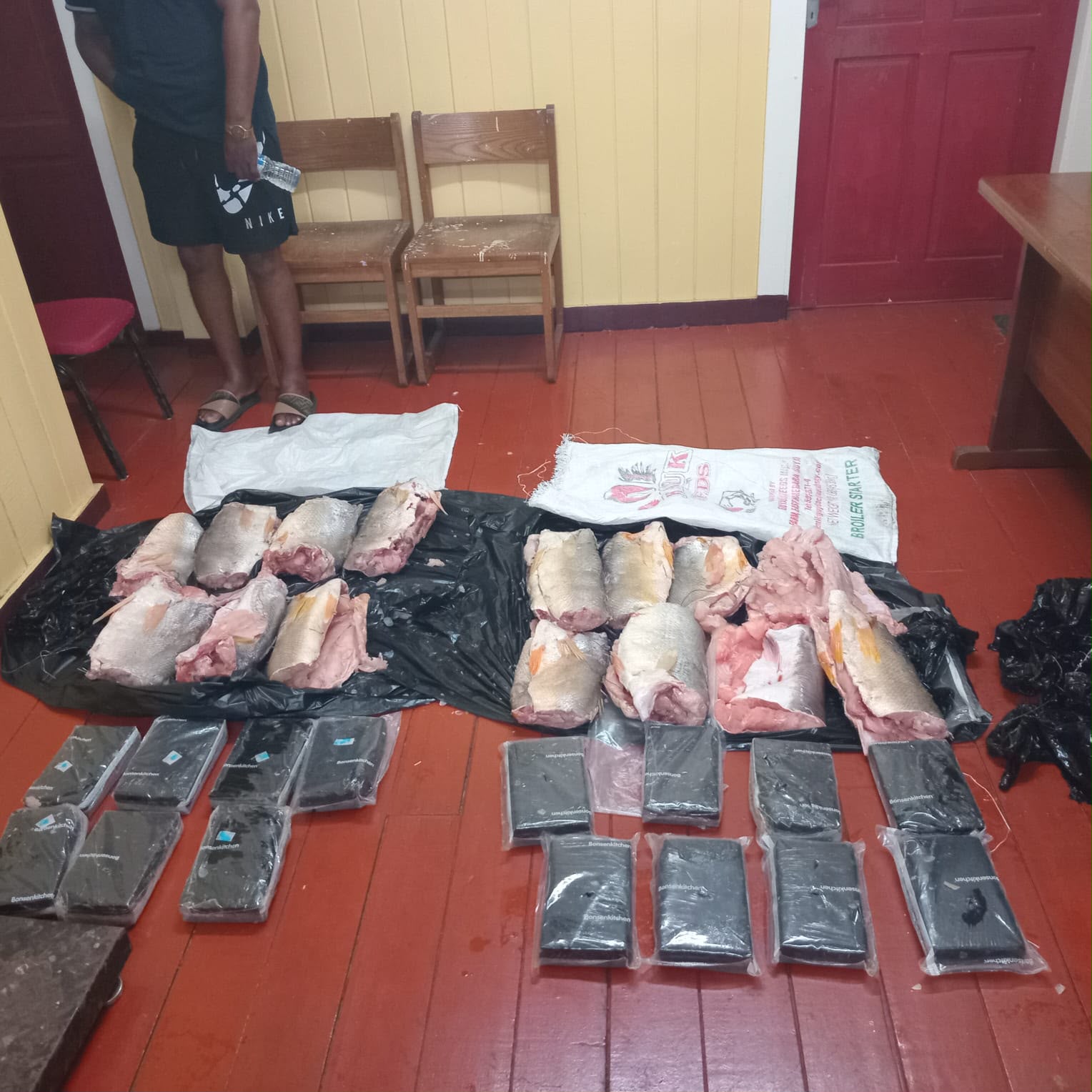
    By total value, the largest share of contraband seized consisted of illegal narcotics. Authorities recovered 5,222.59 kilograms of cocaine, which carries an estimated street value of more than $44 million, alongside 1,848 kilograms of marijuana valued at over $6.84 million. All narcotics were seized from a range of smuggling vessels, including high-speed go-fast boats, private yachts, and inter-island cargo ships that criminal networks have long used to move illicit goods across porous regional maritime borders.

    Beyond illegal drugs, enforcement teams confiscated more than 6,100 cases of untaxed, contraband alcohol, 191 cartons of unregulated cigarettes, and 22 cylinders of banned ozone-depleting refrigerant gas. These additional seizures have a combined estimated value of more than $1.58 million. Authorities also took two unregistered firearms, 65 rounds of ammunition, 13 smuggling vessels and three land vehicles that were linked to transnational criminal groups. As part of the operation, teams also intercepted 59 irregular migrants who were being moved through multi-stop transit routes that span Caribbean air and sea corridors.

    When broken down by case type, contraband smuggling made up 32.9% of all active maritime cases investigated during Operation Eclipse, followed by cocaine trafficking at 23.2%. Most enforcement activity was concentrated in high-risk smuggling zones: the Eastern Caribbean, territorial waters off Guyana, and key transatlantic trafficking routes connecting South America to Caribbean and North American markets.

    Intelligence gathered over the course of the operation uncovered a newly emerging smuggling tactic used by transnational networks: clandestine fixed-wing aircraft dropping narcotics packages near national maritime borders, which are later retrieved by small boat crews operating at sea. Partner-provided surveillance technology allowed teams to track and disrupt this activity before the contraband could be moved to end markets. Biometric and document checks of 99 individuals intercepted on suspicious vessels also confirmed the existence of a deeply interconnected global smuggling network, with detained individuals tracing their origins to Canada, China, Cuba and Syria, per official releases.

    Beyond immediate seizures, Operation Eclipse also served as a critical test and refinement of existing regional maritime security governance frameworks, including the Treaty of San José and bilateral Shiprider agreements that allow cross-border law enforcement boarding and intervention on the high seas. For IMPACS, the successful operation confirmed the agency’s core role as the Caribbean’s central hub for maritime domain awareness, laying a foundational framework for future joint regional security operations.

    In the post-operation phase, participating nations are now analyzing the full body of intelligence gathered to update long-term border management policies and design sustained targeting campaigns to dismantle the remaining transnational smuggling infrastructure embedded in the region. Lt Col Michael Jones, executive director of CARICOM IMPACS, emphasized that deep regional collaboration is the most effective tool to counter powerful transnational criminal organizations.

    “Operation Eclipse proves that when our countries and partners pool their intelligence and operational capabilities, we can effectively dismantle the financial engines driving transnational crime,” Jones stated in the official release. A senior U.S. State Department official echoed that sentiment, noting the operation underscores the critical importance of real-time information sharing and coordinated cross-border enforcement. “INL recognises that our shared security challenges mean that Caribbean security is American security,” the official said, adding that collaborative regional operations like Eclipse demonstrate just how effective coordinated intelligence sharing can be to support interdiction and enforcement actions targeting transnational criminal groups.

  • CCJ head breaks silence

    CCJ head breaks silence

    Six days after the Sunday Gazette first exposed internal rifts between sitting judges and the top leadership of the Caribbean Court of Justice (CCJ), President Justice Winston Anderson has broken his public silence to address a cascade of internal accusations, including claims of panel rigging, unauthorized attempts to shape case outcomes, and authoritarian leadership. In a detailed official statement, Anderson flatly rejected all the most serious allegations, while acknowledging that his approach to enforcing a new judicial dress code policy may have been overly forceful.

    The controversy stems from internal email exchanges between Anderson and the court’s six other sitting judges exchanged between June and July this year. Multiple judges pushed back against a dress code mandate Anderson implemented unilaterally, ultimately leveling broader accusations that he governed the regional appellate body in an authoritarian, dictatorial fashion. The complaints expanded beyond dress code rules to include claims that Anderson manipulated judicial panel assignments to predetermine case outcomes and improperly pressured other justices to rule in line with his preferred positions.

    Before addressing the specific claims against him, Anderson opened his statement by condemning the unauthorized leak of confidential internal court correspondence to the press. He called the disclosure a severe breach of core judicial principles, noting that the leaking of private deliberations erodes the trust that underpins judicial independence, undermines collegiality between sitting judges, and weakens public confidence in the third branch of government, causing lasting harm to the public the court is sworn to serve.

    Turning first to accusations that he failed to consult colleagues on institutional decisions and has ruled in an autocratic manner, Anderson pushed back firmly. He emphasized that meaningful consultation is a core pillar of his approach to institutional and judicial leadership, and rejected labels of dictatorial or authoritarian leadership outright. Anderson noted he never turns down requests from fellow judges to discuss matters affecting the court, has consistently encouraged open engagement with all members of the bench, regularly visits the offices of colleague judges and court staff, and remains available at any time to address emerging concerns.

    The controversy was first ignited by disputes over the court’s judicial dress code, a matter Anderson sought to clarify thoroughly. He confirmed that his decision to remove Justice Chile Eboe-Osuji from the D’Almada case panel was tied exclusively to the dress code disagreement, and not to any divergence in legal opinions between the two judges. Anderson stressed that he explicitly documented this rationale at the time of the change, reaffirming that every justice on the court retains full freedom to express their independent legal views during conferences, deliberations, and case discussions. Anderson acknowledged that critics have argued he handled the dress code issue with undue harshness, noting he accepts that assessment. He explained that he viewed the policy as an institutional matter tied to the court’s public image, consistent operational tone, and professional standards, not as a personal rebuke of any individual justice.

    On the most serious accusation of panel fixing to secure predetermined case outcomes, Anderson issued a scathing rejection. He called the leap from a disagreement over judicial attire to claims of panel rigging irresponsible, intellectually dishonest, improper for a judicial context, and outright malicious. Anderson flatly rejected any claims that the court’s panels have ever been structured or altered to deliver preordained results, noting the allegations are completely unsupported by evidence, contradict the court’s longstanding operating procedures, and violate the core principles that have guided the court since its founding. To fully resolve public concerns over the issue going forward, Anderson announced a new policy: every CCJ justice will be required to sit on every panel, barring situations where a justice recuses themselves for a legitimate, disqualifying reason.

    Addressing claims that he has attempted to improperly influence the outcome of pending cases before the court, Anderson called the claims entirely baseless and untrue. He noted that no qualified justice sitting on the CCJ bench would ever allow themselves to be unduly swayed by another justice, including the court’s president. As evidence, he pointed to the recent ruling in *Mohamed v Minister of Home Affairs*, where all seven sitting justices reached a unanimous decision on the appeal’s disposition. Anderson argued this unanimous outcome undermines any claims that judicial opinions were suppressed or that justices were ordered to reach a specific conclusion.

    Anderson also addressed separate controversy stemming from his October 14, 2025 visit to Guyana, where he met separately with Guyanese President Irfaan Ali and the country’s opposition leader. Opposition figures in Guyana have claimed Anderson intervened to push for the appointment of preferred candidates to the country’s top judicial posts of Chancellor and Chief Justice, which have been filled on a prolonged acting basis. Anderson clarified that his engagement was focused exclusively on the constitutional principle that Guyana’s judiciary should be led by substantively appointed office holders who benefit from the full constitutional protections enshrined by the country’s constitution. He stated he holds no personal preference or stake in who is appointed to the roles, and that his only goal during the visit was to encourage the two political leaders to reach an agreement on permanent appointments. Looking back on the visit, Anderson acknowledged that an alternative approach would have been preferable, noting he could have limited his engagement to public commentary on the constitutional importance of permanent judicial appointments, as his predecessors did. He emphasized that all his actions were motivated solely by a commitment to protecting judicial independence and the constitutional integrity of the Guyanese judiciary, with no political preference, personal interest, or desire to overstep into Guyana’s domestic affairs beyond his responsibility as head of the country’s final appellate court to protect constitutional judicial protections.

  • Brazilië onderzoekt mogelijke tegenmaatregelen na nieuwe Amerikaanse importtarieven

    Brazilië onderzoekt mogelijke tegenmaatregelen na nieuwe Amerikaanse importtarieven

    As trade tensions escalate between two of the world’s largest national economies, Brazil is actively evaluating a full spectrum of retaliatory responses after the United States imposed new 25% import tariffs on a range of key Brazilian export goods. While the South American nation has not yet finalized its countermeasures, top government officials have repeatedly emphasized their unwavering commitment to defending Brazil’s trade interests and economic stability in the face of what Brazil calls unfair American trade action.

    The new U.S. tariffs, which cover major Brazilian export products including sugar, apparel, paper and steel, took effect in July. Washington justified the levies by claiming Brazil engages in unfair trade practices. On top of the 25% duty, the U.S. added an extra 12.5% tariff tied to unsubstantiated claims that Brazil fails to adequately enforce bans on forced labor.

    Brazilian authorities have firmly rejected these allegations, labeling the combined tariffs “unjust and arbitrary.” The government has stated it will continue to defend its position through all appropriate multilateral and international trade forums. Currently, Brazilian diplomatic teams are holding formal consultations with U.S. trade officials to address the dispute, while mapping out potential countermoves if negotiations fail to reach a resolution.

    The range of potential retaliatory actions being considered runs from targeted import tariffs on American goods and the elimination of existing trade exemptions for U.S. imports to broader caps on incoming American goods and services. According to anonymous government sources, Brazil is also weighing more extreme steps that go beyond traditional tariff measures, including a temporary suspension of American pharmaceutical and agricultural patents operating within the country. Brazilian President Luiz Inacio Lula da Silva has already pledged to invoke Brazil’s “Reciprocity Law” to shield the nation’s economy from the impact of U.S. duties.

    Trade data from the U.S. Census Bureau shows that the U.S. currently holds a substantial trade surplus with Brazil. Through the first months of 2026, U.S. exports of goods and services to Brazil reached $26.5 billion, while American imports from Brazil totaled just $17 billion over the same period.

    The latest round of U.S. tariffs marks a strategic shift in American trade policy toward Brazil. It follows a 2025 tariff initiative implemented during the previous Donald Trump administration, which introduced a 10% baseline tariff on imports from nearly all nations, branded by the administration as “Liberation Day” tariffs. Earlier this year, U.S. courts struck down that broad tariff measure. The new 25% targeted tariffs on Brazilian goods are widely viewed as a replacement policy designed to withstand future legal challenges in the U.S. court system.

    Trade analysts warn that escalating trade friction between the U.S. and Brazil — the ninth-largest economy in the world and a leading global exporter of agricultural and manufactured goods — risks disrupting established global trade routes and creating new volatility for international commodity and financial markets.