博客

  • FLASH : Reopening of airspace between Haiti and the Dominican Republic

    FLASH : Reopening of airspace between Haiti and the Dominican Republic

    In a landmark high-level working session held on April 17, senior diplomatic delegations from Haiti and the Dominican Republic reached a key agreement to reopen shared airspace between the two Caribbean nations, marking a major step forward in bilateral cooperation after years of restricted cross-border air travel. The talks, which built on a nine-point bilateral framework laid out in a 2021 joint declaration signed by Haiti’s late former President Jovenel Moïse and Dominican Republic President Luis Abinader, brought together top foreign affairs officials from both sides to advance dialogue on core shared priorities for the neighboring states.

    The Haitian delegation, led by that country’s Minister of Foreign Affairs Raina Forbin, included several senior diplomatic representatives: Haiti’s ambassador to the Dominican Republic Emmanuel Fritz Longchamp, Chief of Staff Winnie Hugot Gabriel, Director of Political Affairs Jean-Claude Lappé, and Director of Dominican Affairs Yves Rody Jean. The meeting underscores the current Haitian government, led by Prime Minister Alix Didier Fils-Aimé, has made strengthening constructive bilateral dialogue a top priority, with a stated commitment to approaching all shared issues through a lens of mutual respect for national sovereignty and collaborative problem-solving.

    Heading the Dominican Republic’s contingent was that nation’s Minister of Foreign Affairs Roberto Álvarez, joined by Vice Minister of Multilateral Foreign Policy Rubén Silié, Vice Minister of Bilateral Foreign Policy Francisco Caraballo, Dominican ambassador to Haiti Faruk Miguel, Director of Strategic Studies and Analysis Emil Chireno, Legal Director Boni Guerrero, and Counselor Jatzel Román. Over the course of the working session, both sides held open, constructive exchanges on three core topics at the top of the bilateral agenda: cross-border security cooperation, migration management, and bilateral trade. The talks centered on refining joint mechanisms to strengthen border control and surveillance while advancing practical, mutually beneficial solutions to the two nations’ most pressing shared challenges.

    The most significant outcome of the meeting is the formal agreement to reopen airspace between Haiti and the Dominican Republic, which will restore scheduled commercial air links between Cap-Haitien International Airport and all participating Dominican airports starting May 1, 2026. Officials from both sides noted the policy shift is designed to ease cross-border movement of people, stimulate stagnant economic ties between the neighbors, and deepen people-to-people connections that have been limited by years of airspace restrictions.

    Beyond the airspace agreement, delegations from both nations publicly thanked the international community for its ongoing support for efforts to stabilize Haiti’s security landscape, specifically highlighting the role of the United Nations and the French Gang Suppression Force (GSF) in actions aimed at restoring public security and institutional stability to Haiti, which has grappled with widespread gang violence and political upheaval in recent years.

    To wrap up the session, both sides reaffirmed their shared commitment to keeping open communication channels active, and framed continuous bilateral dialogue as the primary path to resolving future areas of disagreement or shared concern. The talks will be followed up with future high-level technical working groups to advance the understandings reached during this session, all within a framework of mutual respect, good neighborliness, and adherence to international law.


  • Surinaamse vrouwen verliezen van Belize na sterke eerste helft

    Surinaamse vrouwen verliezen van Belize na sterke eerste helft

    In a CONCACAF women’s tournament qualifying clash held on April 17, Belize picked up a well-earned 2-0 win over Suriname’s women’s national football team, capitalizing on their opponents’ lack of finishing quality to claim three points in the regional qualification campaign.

    The first 45 minutes of the encounter proved to be a tightly contested, evenly matched affair. Suriname put in a solid defensive performance and managed to keep the balance of play neutral, preventing Belize from carving out many high-danger clear-cut chances. When the halftime whistle blew, both sides went into the break locked at 0-0, with all to play for in the second half.

    The deadlock was finally broken in the 69th minute, when Belize was awarded a penalty that they converted to take a 1-0 lead. Just a short span of time after opening the scoring, Belize doubled their advantage, putting the result of the match beyond doubt in the process.

    While Suriname ultimately left the pitch with a disappointing defeat, the team did show glimpses of promising quality throughout the 90 minutes. There were multiple phases of play where Suriname matched Belize competitively, and the side did create several goal-scoring opportunities of their own. However, they failed to convert any of these chances into goals, a shortcoming that ultimately cost them in the final result. Belize, by contrast, proved far more clinical in front of goal, turning their few clear opportunities into a comfortable victory.

    This fixture forms part of Suriname’s ongoing qualifying journey, a campaign where the side is focused on developing its competitive quality and testing its strength against other top regional opponents. Following the defeat, Suriname’s technical staff has confirmed they will conduct a full review and analysis of the match, with particular focus placed on improving the team’s finishing efficiency and their performance in high-stakes decisive moments of future games.

  • United Progressive Party extend condolence statement on the passing of Ian Pinard

    United Progressive Party extend condolence statement on the passing of Ian Pinard

    The small Caribbean nation of Dominica is in mourning this week following the sudden, unexpected death of Ian Pinard, a former government minister who had most recently taken up the post of Chief Executive Officer at the Dominica Air and Seaport Authority (DASPA). Leading the tributes to Pinard is the country’s United Progressive Party (UPP), headed by opposition leader Joshua Francis, which has released an official statement extending profound sympathies to the late public servant’s family, friends and close loved ones.

    Over decades of public life, Pinard occupied a range of senior roles across the Dominican public sector, consistently demonstrating unwavering dedication and high standards of service to the nation’s citizens. Even after holding senior cabinet office, he remained committed to advancing Dominica’s growth, answering the call once again to lead DASPA in his latest role – a decision that underscored his lifelong devotion to national progress.

    UPP officials emphasized that Pinard’s loss is felt far beyond his immediate family circle, rippling through every corner of the Dominican community. The passing of the long-serving public figure also offers a moment of national reflection: it serves as a reminder that public service to a country rises above partisan political divides, and that all contributions to national well-being deserve equal recognition and respect.

    On behalf of the entire party, Francis reiterated the UPP’s deepest condolences to Pinard’s family as they navigate their grief, noting that the widespread outpouring of support from across Dominica and the enduring impact of Pinard’s decades of work should bring some measure of comfort in this difficult time. The statement closed with a prayer for peaceful rest for Pinard’s soul.

  • Artificial Intelligence one-minute analysis of X-Rays, other medical images now available

    Artificial Intelligence one-minute analysis of X-Rays, other medical images now available

    In a landmark development for Guyana’s public and private healthcare sectors, President Irfaan Ali announced two major upgrades to the country’s medical infrastructure during the official opening ceremony of the Optique Eye Hospital on 17 April 2026.

    First, the South American nation has rolled out an artificial intelligence-powered diagnostic tool capable of analyzing X-rays, CT scans and MRIs in just one minute, cutting down the long wait times that previously delayed care for thousands of patients. President Ali explained that the new AI system represents a critical investment in healthcare infrastructure that will transform clinical outcomes across the country. “Before, patients and providers would wait hours for scan results to be interpreted by specialists. Now, we can get a full, detailed analysis in just 60 seconds. That translates to faster clinical responses, better treatment outcomes and more impactful care for all patients,” the president stated.

    Health Minister Dr Frank Anthony confirmed to local outlet Demerara Waves Online News that the AI medical imaging platform is already operational at two public facilities: Enmore Hospital on East Coast Demerara and De Kinderen Hospital on West Coast Demerara. The government has formal plans to extend the technology to Georgetown Public Hospital Corporation and all other public coastal hospitals in the coming months. “Any facility with X-ray or CT scanning capabilities will receive this system, and we will integrate it for MRI analysis as we expand MRI access across the public health sector,” Dr Anthony added.

    The announcement coincided with the launch of Optique Eye Hospital, the first privately owned specialized eye care facility in Guyana, located on New Market Street in Georgetown. Built at a total cost of GY$1 billion, the project saw its capital expenditure significantly reduced through investment incentives offered by the Guyana Office for Investment (GO-Invest), part of the government’s push to attract private healthcare investment. Dhani A. Narine, CEO of Optique, credited public-private collaboration and financing support from Republic Bank for making the facility a reality, noting that “through alignment with the government’s development goals, we were able to deliver this complex project at a far more accessible cost.”

    The new hospital is dedicated to Dr. Shailendra Sugrim, one of Guyana’s most respected ophthalmologists whose decades of work have advanced eye care access across the country. Beyond serving local patients, the facility has launched a regional referral program aimed at building partnerships with Caribbean nations and the global Guyanese diaspora, to attract patients from across the Americas.

    Optique Eye Hospital offers a full suite of advanced ophthalmic surgical procedures, including cataract surgery, glaucoma treatment, orbit and oculoplastic surgery, corneal and pterygium surgery, and vitreoretinal surgery. All services are delivered in a modern, purpose-built facility with cutting-edge equipment and advanced operating theaters. The institution has committed to ongoing staff training, regular technology upgrades, rigorous quality monitoring, and community outreach initiatives including free eye screening campaigns to boost early detection of eye disease. Narine emphasized that the facility eliminates the need for Guyanese patients to travel abroad for life-saving sight care: “This project proves that with a supportive investment climate, strong partnerships and shared commitment, we can deliver highly complex subspecialty care locally at international standards. Our goal is to ensure no patient has to leave the country for safe, effective sight-saving treatment.”

    President Ali framed the dual launches as a foundational step toward positioning Guyana as a leading destination for medical tourism in the Caribbean. “Guyana is already known for its natural beauty, vast energy potential and rapid economic growth. Now, we want to build a reputation for world-class, affordable healthcare. We want patients from across the Caribbean, the diaspora, North America and beyond to choose Guyana for high-quality modern medical care,” the president said. The facility’s leadership added that the hospital marks a major step forward in expanding equitable access to advanced eye care, improving quality of life for patients across the country living with a wide range of eye health conditions.

  • Fingerprint Clock‑Ins Coming to Public Service, Union Raises Concerns

    Fingerprint Clock‑Ins Coming to Public Service, Union Raises Concerns

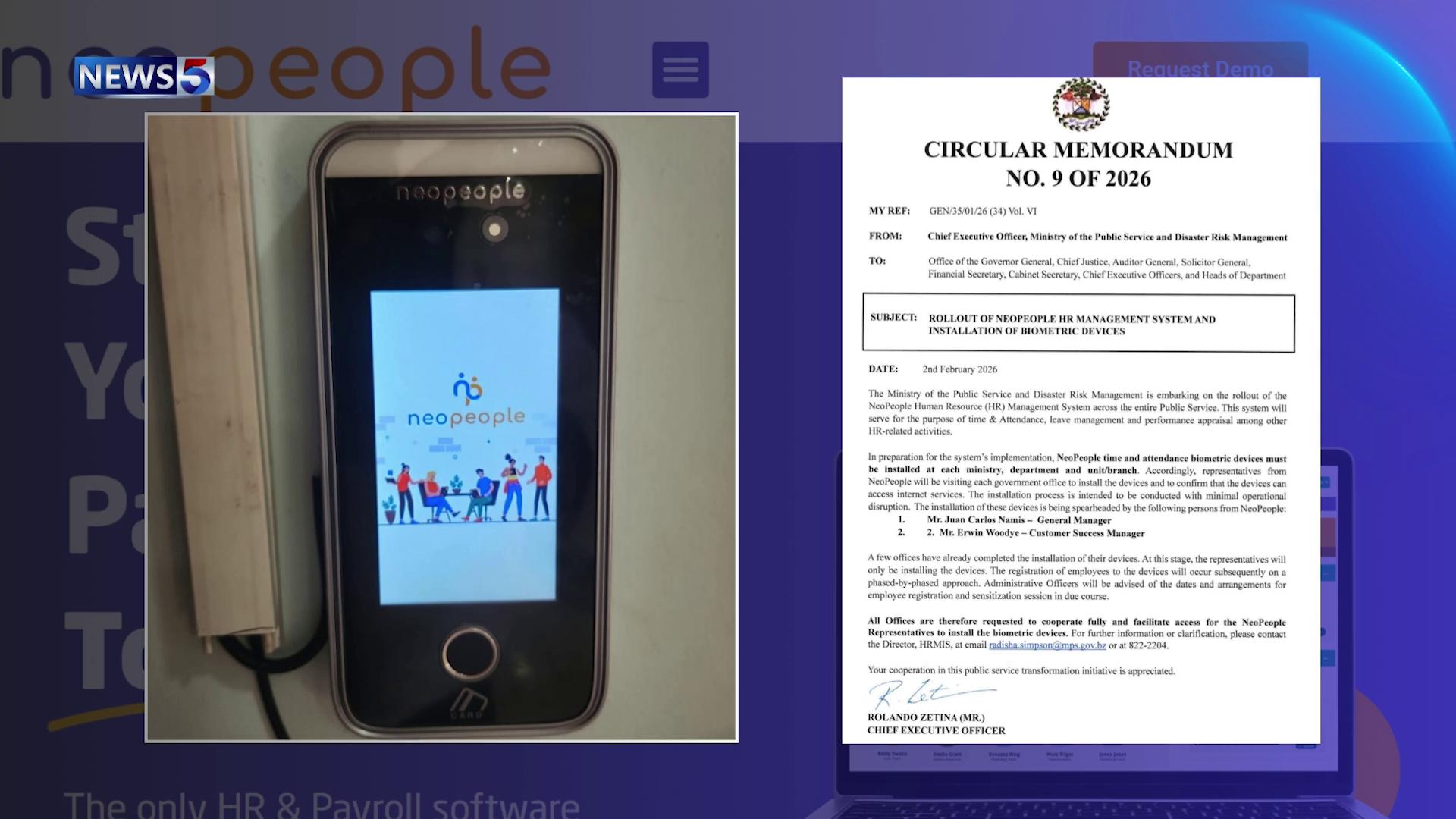
    In a growing conflict over public sector workplace reform, the Government of Belize is facing mounting pushback from public service employees over its planned national rollout of NeoPeople, a new human resources management platform that integrates biometric fingerprint clock-in technology for all government ministries and departments. Scheduled to launch in 2026, the initiative has been framed by state officials as a long-overdue modernization effort that will boost efficiency and transparency across the country’s public service. But the nation’s primary public employee union has emerged as a fierce opponent, raising alarms over procedural violations, data privacy risks, unchecked public spending, and potential violations of core worker rights.

    Dean Flowers, president of the Belize Public Service Union (PSU), laid out the organization’s core objections in an interview, emphasizing that the government failed to follow mandatory consultation requirements laid out in national labor law. Under existing regulations, any policy change that alters the terms and conditions of public service employment requires formal negotiation and discussion with recognized employee representatives. Flowers stressed that the rollout extends far beyond a simple shift in how workers clock in and out for shifts: the system will centralize the entirety of public employees’ personal records, known as p-files, on a third-party managed platform. These comprehensive files contain every detail of a public servant’s employment history, from initial appointment letters and salary information to performance appraisals, disciplinary records, medical leave history, loan documentation, and personal assistance requests. Essentially, Flowers explained, an employee’s entire professional life is stored in this single file.

    The union’s concerns extend beyond the lack of prior consultation to major violations of Belize’s Data Protection Act, Flowers argued. The national legislation grants specific data rights to individuals whose personal information is collected and stored, including the requirement to obtain explicit consent before sharing sensitive personal data with third parties. To make matters worse, Flowers warned that the system’s core management functions are guided by undisclosed algorithms. With no public information available about who developed these tools or what parameters they use to evaluate workers, the technology could easily be weaponized against employees who disagree with government policies, he claimed.

    Finances and procurement transparency are another major flashpoint in the conflict. The union has been unable to access any public tender documents for the NeoPeople contract, leaving critical questions unanswered about whether the contract was awarded through a fair competitive bidding process or an uncompetitive limited tender process. Unconfirmed public rumors put the annual maintenance cost for the system at nearly $3 million Belize dollars, a figure that translates to roughly $14 per year for each of the country’s 17,000 public servants. The union has also pressed for answers about the duration of the contract, full contract terms, and who retains legal ownership of the sensitive employee data. These questions have grown more urgent, Flowers noted, because there is no guarantee the government will renew the contract with the third-party provider when it expires, raising the risk of employee data being held hostage by the vendor if negotiations break down.

    After failing to get voluntary disclosure from state officials, the union submitted a formal information request under Belize’s Freedom of Information Act, asking for full details on procurement, contract terms, data access protocols, and privacy safeguards. To date, the request has gone unanswered. Flowers says the Financial Secretary has missed the legal deadline to respond to the request, putting the office in direct violation of the Freedom of Information Act. The union first turned to the Office of the Ombudsman to resolve the dispute, but that avenue is effectively blocked under the current administration: the government recently refused to renew the Ombudsman’s contract after he fulfilled his oversight duties independently, leaving the watchdog position effectively sidelined. With all other non-judicial recourses exhausted, the union has received approval to move forward with a judicial review of the Financial Secretary’s failure to disclose information, and the case is now in the hands of the union’s legal team.

    Flowers confirmed that legal action remains on the table if the government continues to refuse to address the union’s concerns, and the public will be kept updated as the case moves through the court system. News outlets will continue to track developments in this story to see whether the judicial process results in the information disclosure the union has requested.

  • Flowers Warns of Due Process Failures in Border Officers’ Case

    Flowers Warns of Due Process Failures in Border Officers’ Case

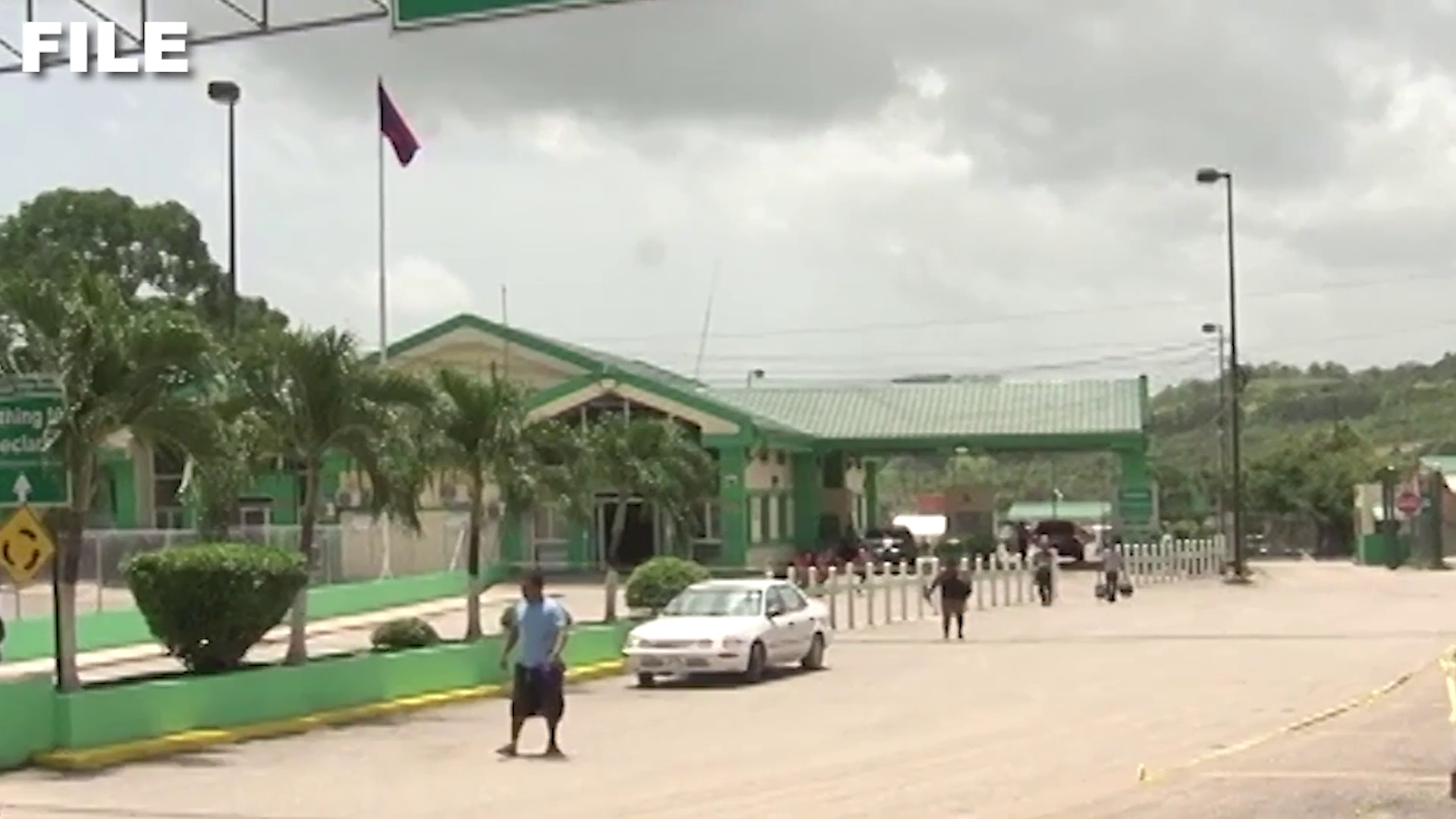
    A growing controversy is unfolding around eight immigration officers assigned to Belize’s Western Border, after the group was placed on administrative leave for taking sick leave within a shared time window, with union leadership now demanding accountability over what it calls blatant violations of basic administrative and legal protocols.

    The dispute, which emerged in April 2026, has escalated rapidly: at least one of the officers has retained legal representation to challenge the leave decision, setting the stage for what could become a high-stakes legal confrontation between the workers, their union, and government immigration officials.

    Public Service Union President Dean Flowers publicly amplified the union’s concerns this week, laying out detailed allegations of procedural misconduct in how government authorities have handled the case. Flowers explained that on the very same day the eight officers received their formal administrative leave notifications, they were simultaneously served with accusatory letters claiming the workers intentionally coordinated their absences as an act of sabotage against border operations.

    Far from being kept internal to the immigration department, Flowers said these accusatory letters were widely circulated among administrative staff across multiple government ministries, including the public service department, before copies ultimately made their way to media outlets. He emphasized that contrary to claims from Home Affairs Minister Kareem Musa that no individual officers were named in the documents, every officer was explicitly identified in the accusatory letters.

    “In my view, these letters are designed to damage the professional reputations of these public servants,” Flowers said in remarks during an evening news broadcast. “Legal experts have already confirmed that the letters contain false mischaracterizations that label the officers as intentionally undermining government operations, an accusation that carries significant professional and personal consequences.” Flowers added that the simultaneous delivery of the leave notice and the accusation recommending termination is a clear violation of established administrative protocol, especially given that the immigration department employs a full-time in-house legal counsel and is overseen by a minister who is himself a trained attorney.

    The case has cast a spotlight on labor relations between public sector unions and the Belizean government, with the union gearing up to defend the officers’ right to due process as the conflict moves toward potential litigation.

  • Seven hospitals were affected by the recent rains

    Seven hospitals were affected by the recent rains

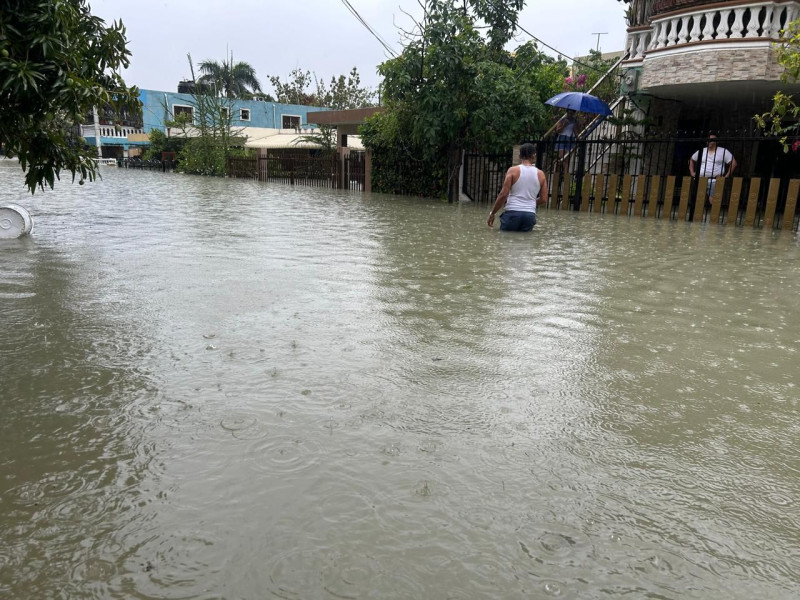
    Heavy rainfall and subsequent flooding triggered by a strong low-pressure trough have swept across the Dominican Republic in recent days, leaving a trail of damage to the country’s public healthcare infrastructure. In a press briefing held in Santo Domingo, Julio Landrón, executive director of the nation’s National Health Service (SNS), confirmed that seven hospitals have sustained significant impact from the extreme weather event.

    Landrón explained that while every hospital in the affected zone saw some degree of water intrusion from the intense precipitation, seven facilities experienced critical structural leaks that disrupted normal operations. The worst-hit site, the hospital in Montellano, required emergency evacuation of an interior wing after rushing water flooded through its internal corridors. Contrary to initial assumptions that the densely populated capital region would bear the brunt of the damage, Landrón clarified that the most vulnerable healthcare facilities are not located in Greater Santo Domingo. Instead, it is low-lying, high-risk regions like Montellano and Puerto Plata that have faced the most severe flood-related damage to local hospitals.

    Despite the scale of the damage, the SNS has moved swiftly to restore services for patients. Landrón reported that emergency crews completed remediation work at the most affected Montellano facility in less than 24 hours, bringing the site back online to deliver essential care. To expand care capacity for affected communities, the SNS partnered with the country’s Emergency Operations Center (COE) to set up a fully functional mobile hospital near the damaged site. Landrón emphasized that the agency is well-prepared for any additional extreme weather: the SNS currently holds more than five fully stocked mobile hospital units that can be deployed immediately if new flooding occurs, to guarantee uninterrupted care for local residents.

    Looking ahead to mitigate future flood-related damage to public healthcare facilities, Landrón noted that the SNS has already rolled out a national waterproofing upgrade program across the entire public hospital and primary care center network. The initiative was specifically designed to address the flood-prone terrain where many of the country’s rural and low-lying healthcare facilities are located, reducing the risk of water intrusion and structural damage during future heavy rain events.

  • Flowers Fires Back at PM Over Sickout Comments

    Flowers Fires Back at PM Over Sickout Comments

    A fierce public dispute has erupted between Belize’s top public service union leader and the nation’s prime minister over recent comments tied to a planned worker sickout, dragging long-simmering tensions between the government and public sector employees into the spotlight.

    The clash began after Prime Minister John Briceño was questioned by reporters about the industrial action, when he publicly questioned why the Public Service Union (PSU) has refused to pursue closer collaborative working relations with his administration. Briceño also implied that PSU President Dean Flowers holds partisan alignment with the opposition United Democratic Party, a claim Flowers has rejected outright in a blistering response.

    In a fiery, unfiltered address, Flowers dismissed the prime minister’s accusations as a deliberate distraction tactic designed to politicize the union’s legitimate advocacy for the working rights and fair treatment of public sector employees across Belize. The union president went on to call out Briceño’s leadership style, saying the prime minister needs to mature beyond partisan political games and fulfill his obligations to the office he holds.

    Flowers laid out the union’s long-standing approach to addressing labor concerns: every time public officers face an infringement of their workplace rights, or when the government rolls out new policies that impact public sector workers without prior consultation with the PSU, the union first formally reaches out to the Briceño administration in writing to flag concerns. But Flowers claims that not a single one of these formal communications has ever received a response from the prime minister himself.

    “How dare he say I need to work with his administration?” Flowers asked, pushing back on Briceño’s narrative. “To confuse the Belizean people and to not address the issues as they are presented to him, factually, his quickest tool is to pretend he is in the circus called the House of Representatives and make it political.”

    Flowers also pushed back on the partisan accusation, openly confirming that he voted for the incumbent People’s United Party (PUP) area representative in his district during the 2020 general election, saying he has no shame in that choice and proving his alignment is not with the opposition. He closed his rebuke with sharp criticism of Briceño’s conduct, saying the prime minister is acting like an immature young man from Orange Walk rather than leading the country.

    Looking ahead, Flowers reaffirmed that the PSU will not back down from holding the Briceño administration accountable for any documented injustices against public sector workers. He added that the union will be closely monitoring the progress and outcome of ongoing administrative actions against a group of immigration officers, a case that has already stoked tensions between the government and the public service community.

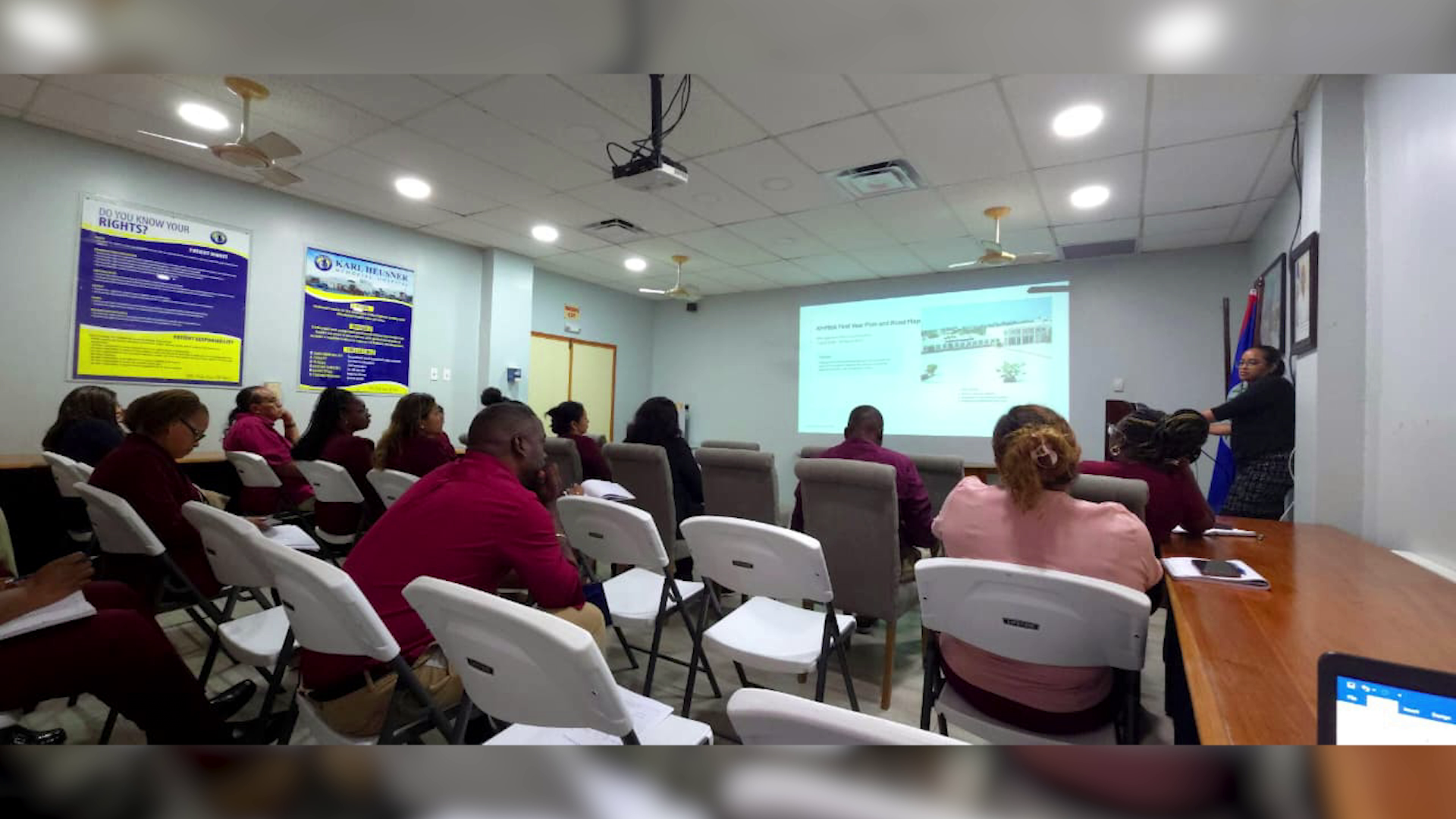
  • New CEO Wants to Make Belizeans Proud of KHMH

    New CEO Wants to Make Belizeans Proud of KHMH

    Belize’s only tertiary care facility, the Karl Heusner Memorial Hospital (KHMH), is entering a new era of transformation under its recently appointed Chief Executive Officer Sharine Reyes, who formally stepped into the role on April 1. Tasked with leading one of the nation’s most high-profile and heavily scrutinized public institutions, Reyes says she already feels both the weight of public expectations and the widespread outpouring of support from across Belize that has followed her appointment.

    In her first public interview since taking office, the new CEO did not shy away from acknowledging the deep-seated challenges she inherited, from persistent low staff morale to long-fractured internal relationships between management and frontline workers. For Reyes, the foundation for lasting change begins with rebuilding the hospital’s work environment: breaking down communication barriers, ensuring every staff member’s concerns are heard, and putting the systems and structural support in place that teams need to succeed.

    A core part of her agenda is also reshaping the dominant negative narrative that has overshadowed KHMH in recent years, by highlighting the institution’s existing strengths that often go unrecognized. From the country’s most advanced computed tomography (CT) scanner to a fully operational oncology program that has helped hundreds of patients achieve remission, and a team of more than 700 dedicated clinical and administrative staff committed to delivering life-saving care, Reyes says KHMH already delivers transformative outcomes for Belizeans every single day.

    “I feel incredibly blessed and grateful for the confidence placed in me, both by KHMH staff and the entire Belizean nation,” Reyes said. “We’ve seen the public comments, words of encouragement, and even prayers that have poured in since my appointment, and that means a great deal. To boost staff morale, you first have to fix the conditions people work in. Our teams are already committed to their work, but they need functional systems, adequate resources and clear structures to perform at their best.”

    Her leadership priorities include addressing long-running operational bottlenecks, strengthening cross-team communication, and embedding accountability at every level of the organization. “When staff know their issues are being taken seriously and addressed, that is the first and most important step to lifting morale,” she noted. “Over the coming months, we plan to shine a light on all the good work happening at KHMH every day. We have world-class clinicians, talented surgeons, compassionate nurses, and 700+ people who show up every day with one mission: to take care of every Belizean who walks through our doors. That’s the story we want the public to know.”

    Reyes acknowledged that rebuilding public trust and institutional culture will not happen quickly, but she expressed confidence that with intentional systems reform, sustained public and institutional support, and a renewed laser focus on patient-centered care, KHMH can once again become a source of national pride for all Belizeans.

    The early signs of a reset are already emerging, after years of strained relations between hospital management and staff. The new CEO has already held her first formal meeting with newly elected KHMH Authority Union President Roy Briceno, with both sides describing the conversation as productive and collaborative. Briceno, who was elected to the union leadership post in October 2025, said he had waited months for the appointment of a permanent CEO, and the first meeting exceeded his expectations.

    “Our meeting yesterday was very amicable,” Briceno shared in his first interview as union president. “We laid out all the long-standing issues our members face, and she agreed that we will continue meeting regularly to work through solutions together. Raising staff morale is a top priority for both the union and management, and that’s something we’re committed to tackling together. One key ask our members have long pushed for is clearer pathways for upward mobility within the institution, and that is already on the table as a shared priority.”

    Briceno added that staff already responded positively to Reyes’ appointment, in large part because of her well-documented open-door policy and approachable leadership style. “She’s someone we already know, someone who is open to dialogue and committed to resolving staff concerns, so that already gives us a lot of confidence,” he said.

    When asked to describe the current state of staff morale, Briceno noted that years of disconnected communication between past management and the union created a tense working environment that filtered down to frontline teams. “There was simply no functional relationship between the union and previous leadership, and that trickled down to affect every member of staff,” he explained. “My goal as the new union president, along with our new executive board, is to build a much closer, more collaborative relationship with management. We need space to understand each other, work together, and address the needs of our members – and when that happens, that improvement will trickle down to the patients we serve, and make KHMH a stronger institution overall.”

    The outlet reports that it will publish a follow-up feature on Monday exploring the full scope of challenges facing the new KHMH leadership, including unconventional issues such as managing staff caught up in ongoing U.S.-Cuba geopolitical tensions and the union’s long-standing demand for a 20 percent wage increase for hospital employees.

  • Commonwealth Sport to meet in Barbados

    Commonwealth Sport to meet in Barbados

    Next week, the Caribbean island of Barbados will play host to one of the most important annual gatherings of global sporting governance, as the Commonwealth Sport Executive Board convenes for its latest in-person meeting. The gathering forms a key part of the organization’s long-running “on the road” initiative, designed to break away from a fixed headquarters model and bring decision-makers directly into the communities and member nations they serve.

    The on-the-road strategy was crafted to foster closer, more meaningful connections between the central governing body and its 72 member associations and regional partners across the globe. Unlike closed-door, centrally held meetings, this approach prioritizes on-the-ground engagement that lets board members grasp the unique challenges, priorities, and strengths of local sporting ecosystems. This session in Barbados will pair formal strategic governance work with a full schedule of stakeholder engagement activities, including structured roundtable discussions with senior Barbadian government representatives, and a full day dedicated to celebrating the island’s unique cultural and sporting heritage. The day of cultural activity will close with a high-profile showcase of road tennis, Barbados’ homegrown, community-centered indigenous sport that has become a beloved pastime across the island.

    Once the Barbados meeting concludes, Commonwealth Sport President Dr. Donald Rukare will lead a small official delegation on a follow-up visit to Antigua and Barbuda. During that trip, the delegation will hold talks with senior government leaders and representatives from the Antigua and Barbuda Commonwealth Games Association to advance coordination and planning for Commonwealth Sport’s participation in the 2026 Commonwealth Heads of Government Meeting (CHOGM), scheduled to take place in November next year.

    In a statement previewing the visit, Dr. Rukare framed the on-the-road board model as core to the organization’s identity as a truly global, member-centric sporting body. “Taking our board meetings on the road is an essential part of who we are as a truly global sports organisation. It allows us to connect directly with our members, understand local contexts and challenges, and build the relationships that are vital to delivering meaningful impact through sport,” he said.

    Dr. Rukare added that holding the meeting in Barbados carries extra strategic and cultural weight, strengthening the organization’s long-standing partnership with Caribbean member nations while elevating the unique sporting traditions that bind the Commonwealth movement together. “By meeting in Barbados, we are not only advancing our strategic work, but also strengthening our partnership with the Caribbean region. Celebrating cultural and indigenous sports, such as road tennis, is a vital part of the Commonwealth Sport Movement, recognising the unique sporting traditions that bring communities together and define our shared identity,” he explained.

    Sandra Osborne, who serves as both President of Commonwealth Sport Barbados and Vice-President of the global Commonwealth Sport organization, called the selection of Barbados as host a significant honor for the island nation. “It is a great honour for Barbados to host the Commonwealth Sport Executive Board and to welcome colleagues from across the Commonwealth to our island,” Osborne said. “This visit is an opportunity to showcase not only our strong sporting culture, but also the richness of our heritage, which reflects the creativity, resilience and community spirit that defines our nation. We’re looking forward to welcoming everyone, sharing a bit of what makes Barbados special, and giving them a real sense of how important sport is to everyday life here.”