博客

  • St. Philip’s North Residents Invited to Land and Housing Consultation

    St. Philip’s North Residents Invited to Land and Housing Consultation

    Local authorities in the St. Philip’s North region have issued a public invitation calling on all residents across the area to take part in an upcoming consultation centered on land planning and housing sector development. The initiative is designed to gather on-the-ground feedback from community members about existing land use challenges, unmet housing needs, and long-term development visions for the area. Organizers have noted that input from ordinary residents will play a core role in shaping final policy and planning frameworks that align with the community’s actual priorities. Further details about registration, consultation timelines and participation channels are expected to be released in the coming days to ensure broad public access.

  • COMMENTARY: The Caribbean Airline Realignment: A Financial Analysis

    COMMENTARY: The Caribbean Airline Realignment: A Financial Analysis

    The Caribbean region’s airline industry has entered a period of profound transformation, as carriers across the area navigate shifting market dynamics, post-pandemic recovery pressures, and evolving tourist demand to reshape their operational and financial footprints. For decades, the Caribbean airline sector has been a cornerstone of the region’s tourism-reliant economy, connecting island nations, supporting local hospitality industries, and facilitating the movement of millions of visitors each year. But the 2020 global travel collapse delivered an unprecedented shock to carriers, leaving many with depleted cash reserves, massive debt loads, and urgent need for structural change.

    In the wake of the crisis, a wave of realignment has swept through the industry, encompassing mergers between smaller regional carriers, strategic partnership agreements with larger international airlines, route network overhauls, and targeted cost-cutting restructuring initiatives. Financial analysis of these moves reveals key trends: carriers are prioritizing high-demand tourist routes between major gateway airports and popular vacation islands, while scaling back underperforming inter-island services that have long struggled with low load factors. At the same time, many carriers are renegotiating aircraft leasing agreements and pursuing government-backed financial support to shore up their balance sheets.

    Industry analysts note that the realignment is not without risks. Increased consolidation could reduce competition on some routes, leading to higher airfares that may deter price-sensitive travelers, a key demographic for the Caribbean tourism sector. On the other hand, proponents argue that streamlined operations and stronger financial footing will enable remaining carriers to invest in better service quality and more sustainable operations, including the gradual transition to more fuel-efficient aircraft that align with the region’s climate goals. Looking forward, the success of these realignment efforts will depend on how carriers balance financial stability with the need to keep air travel accessible, supporting the broader economic recovery of the Caribbean region.

  • Antigua and Barbuda weightlifters attend 1-week training & workshop in Barbados (29 May – 4 June 2026)

    Antigua and Barbuda weightlifters attend 1-week training & workshop in Barbados (29 May – 4 June 2026)

    A group of aspiring weightlifting athletes and their coach from Antigua and Barbuda have set off for neighboring Barbados, kicking off a week-long specialized training initiative designed to fine-tune their skills ahead of a major regional multi-sport event.

    The delegation, which departed on May 28, 2026, consists of three rising competitive athletes – Jaunii Nathaniel, Daniel Antonio, and Kevesha Nedwell – led by their head coach Durand Meade. The immersive workshop, running from May 29 to June 4, 2026, is hosted by the Barbados Weightlifting Association, and brought together a team of high-profile international experts to lead the training program.

    Heading up the workshop is Andrew Callender, a leading technical official from the host nation’s weightlifting governing body, with supplementary technical guidance provided by a seasoned professional coach affiliated with USA Weightlifting. The training curriculum is purpose-built to address key areas of elite weightlifting development: it covers granular technical form refinement, targeted competition strategy and mental preparation, evidence-based strength and conditioning programming, and personalized sport science support, all aligned to help athletes reach their peak performance when it matters most.

    Full financial backing for the entire training and workshop initiative comes from the Continental Weightlifting Federation, while the Antigua and Barbuda National Olympic Committee stepped in to cover critical logistical arrangements for the traveling delegation, removing administrative and operational barriers for the team.

    The three athletes attending the workshop have already secured guaranteed invitational spots to compete at the 2026 Central American and Pan American Games, which will be held in the Dominican Republic later this year. This intensive workshop is a core component of their tailored pre-competition preparation plan, built to boost their competitiveness and help them deliver strong results at the regional multi-sport gathering.

    Cliff Williams, spokesperson for the Antigua and Barbuda Weightlifting Federation, expressed the organization’s appreciation for the collaborative opportunity in a statement. “We are incredibly grateful to the Continental Weightlifting Federation and our hosts in Barbados for providing access to this high-caliber development opportunity,” Williams said. “This workshop will not only elevate the performance of our current athletes and coaching staff but also help us grow weightlifting as an emerging sport in our country as we gear up for the upcoming games.”

  • Hopeful Hearts Foundation Seeks Donations for June 13 Food and Clothing Drive

    Hopeful Hearts Foundation Seeks Donations for June 13 Food and Clothing Drive

    Across Antigua and Barbuda, thousands of low-income and crisis-impacted families continue to struggle to access basic daily necessities, and local non-profit Hopeful Hearts Foundation is stepping up to bridge this gap with a community-wide donation drive scheduled for June 13, 2026. The organization has issued a public call for donations of essential items, aiming to collect enough goods to provide critical support to hundreds of vulnerable households already enrolled in its assistance programs.

    The foundation is accepting a wide range of high-need items to meet diverse family requirements: lightly worn or new children’s clothing for kids aged 5 to 15, apparel for adult men and women, footwear of all sizes, non-perishable staple groceries, personal hygiene and toiletry products, as well as blankets and bath towels. Unlike some donation drives that only accept new goods, Hopeful Hearts welcomes both new and gently used items that remain in good, clean condition, making it easy for community members to clear out gently worn belongings while giving back to neighbors in need.

    Kristine Louisa, the founder and chief executive officer of Hopeful Hearts Foundation, emphasized that collective community action is at the core of the drive’s mission. “At Hopeful Hearts Foundation, we hold firm to the belief that even the smallest acts of kindness can ripple out to create lasting, transformative change for people facing hardship,” Louisa explained. “This food and clothing drive is more than just a donation event—it is a chance for our entire community to come together, stand in solidarity with families going through tough times, and offer tangible support that makes a real difference. No contribution is too small; every item donated will directly improve the life of someone in our local area.”

    This upcoming initiative is just one part of Hopeful Hearts Foundation’s long-standing commitment to lifting up vulnerable populations across the twin-island nation. For years, the organization has centered its work on lifting community well-being through compassionate action, direct service, and intentional public outreach, with a core mission that extends beyond emergency aid to include youth empowerment and sustainable community development. Beyond this drive, the organization delivers ongoing support through educational programming, policy advocacy, and regular humanitarian service projects that address systemic gaps in access to basic needs.

    Local residents, private businesses, and community organizations that wish to participate in the drive or learn more about donation drop-off locations and timelines are encouraged to reach out to the foundation directly at (268) 770-4700. Organizers note that broad participation from across Antigua and Barbuda will be key to making the 2026 Food and Clothing Drive a success, and ensuring every family that needs support can receive the items they require this year.

  • COMMENTARY: Youth Vaping Is Growing Faster Than Caribbean Policy

    COMMENTARY: Youth Vaping Is Growing Faster Than Caribbean Policy

    Across the Caribbean basin, a growing public health crisis is unfolding at a pace that regulatory frameworks have failed to match: youth vaping rates are climbing far faster than regional governments can update and enforce effective policies to curb the trend. This commentary examines the widening gap between the spread of e-cigarette use among young people in the region and the slow, fragmented policy responses that have left communities vulnerable.

    Vaping product manufacturers have targeted Caribbean youth with aggressive marketing tactics, capitalizing on loose regulatory oversight that has allowed flavored nicotine products, disposable vapes, and low-cost devices to flood local markets. From small convenience stores in coastal tourist towns to school campuses in inland communities, these products are easily accessible to teenagers, many of whom are mislead by industry claims that vapes are a safer alternative to traditional cigarettes, unaware of the long-term lung damage, nicotine addiction, and cognitive impairment linked to adolescent e-cigarette use.

    Regional public health data collected over the past three years tells a stark story: youth vaping prevalence has increased by an average of 45 percent across 12 Caribbean nations, with some island states reporting doubling of rates among 13 to 17-year-olds. Yet policy updates have moved at a glacial pace. Many countries still rely on outdated tobacco control laws written long before modern e-cigarette products entered the market, and few have implemented comprehensive measures such as flavor bans, indoor vaping restrictions, high excise taxes, or strict age-verification requirements for sales.

    Fragmented governance across the small island nations that make up the Caribbean also creates barriers to coordinated action. Many countries lack the resources to fund robust public awareness campaigns, train law enforcement to crack down on illegal sales to minors, or monitor the evolving vape market to address new product types as they emerge. Tourism-reliant economies have been hesitant to enact strict regulations that industry lobbying groups claim would hurt business, despite clear evidence that the long-term public health costs of unaddressed youth vaping will far outweigh any short-term economic gains.

    Public health advocates across the region are calling for urgent, coordinated policy reform to close the gap between the rising epidemic and regulatory action. They emphasize that investing in evidence-based vaping control measures now will prevent a generational public health crisis, reducing rates of lifelong nicotine addiction and chronic respiratory disease among Caribbean young people. Without faster, more decisive action, experts warn, youth vaping will continue to spread, leaving an enduring burden on regional health systems and the well-being of the next generation.

  • LISTEN: PM Defends Son’s Purchase and Resale of Long Bay Beachfront Parcel

    LISTEN: PM Defends Son’s Purchase and Resale of Long Bay Beachfront Parcel

    Amid growing public controversy over the proposed Long Bay Zen Resort in Antigua and Barbuda, Prime Minister Gaston Browne has stepped forward to lay out the full, decades-long ownership and development background of the Long Bay site, pushing back against widespread criticism that misrepresents the project’s footprint and legal standing.

    Speaking during his weekly *Browne and Browne* radio broadcast on Saturday, the prime minister emphasized that the new resort is not an unauthorized encroachment on untouched public beach land, as critics have claimed. Instead, it marks a long-delayed redevelopment of the original Long Bay Hotel, a hospitality site that has operated in the area for more than half a century.

    To address one of the public’s biggest concerns — restricted access to Long Bay Beach — Browne explicitly refuted rumors that the development would block public entry to the coastline. “For those who are worried that this project will take over Long Bay and cut off ordinary people and other beach users from the shore, that is simply not the case,” he said. “We are only redeveloping the footprint of the old Long Bay Hotel.”

    Browne walked through the project’s modern development timeline to clarify delays that have sparked speculation. He explained that the current development group purchased the former hotel site roughly 11 years ago, with initial plans for a much larger construction project. Those plans were derailed unexpectedly when the developers lost tens of millions of dollars deposited in an offshore bank that collapsed into financial insolvency, bringing work to a halt for years.

    The prime minister also addressed criticism from opposition groups over the 1-acre beachfront parcel tied to the site, pointing to a surprising parallel with the previous United Progressive Party (UPP) administration. Browne recalled that when the UPP was in power, the party explored a plan to acquire that same waterfront acre as part of its own Long Bay hotel development proposal — a move that Browne’s Antigua and Barbuda Labour Party (ABLP) opposed at the time over concerns that it would shrink public beach access.

    “What the UPP planned to do was take that waterfront acre and push ordinary members of the public into a small corner, cutting down their access to the beach,” Browne said. That proposed UPP transaction never ultimately moved forward, and after years of no completed payment, the parcel was re-listed on the open market.

    Browne openly acknowledged that his own son purchased the 1-acre parcel from owner LaFourie in 2014, after negotiating the price down from an asking price of roughly US$1.2 million to a final sale price of US$750,000. Several years later, his son sold the parcel to the Chinese investors who are now leading the Long Bay Zen Resort project for US$1.5 million. The prime minister stressed that this was a straightforward private transaction between two independent private parties, with no improper government influence or intervention involved, rejecting claims of political favoritism.

    According to Browne, the full timeline of the property confirms that the land has been privately owned and actively listed for development for decades. The current Zen Resort project is entirely contained within the boundaries of the former Long Bay Hotel, he said, and does not encroach on any public beach lands.

    Recently, the Long Bay Zen Resort officially broke ground. The project is planned as a low-carbon luxury development, and will include 120 guest rooms when completed.

  • LISTEN: PM Browne Says A Proposal To Accept Up To 120 Deportees Is Not in Antigua’s Best Interest

    LISTEN: PM Browne Says A Proposal To Accept Up To 120 Deportees Is Not in Antigua’s Best Interest

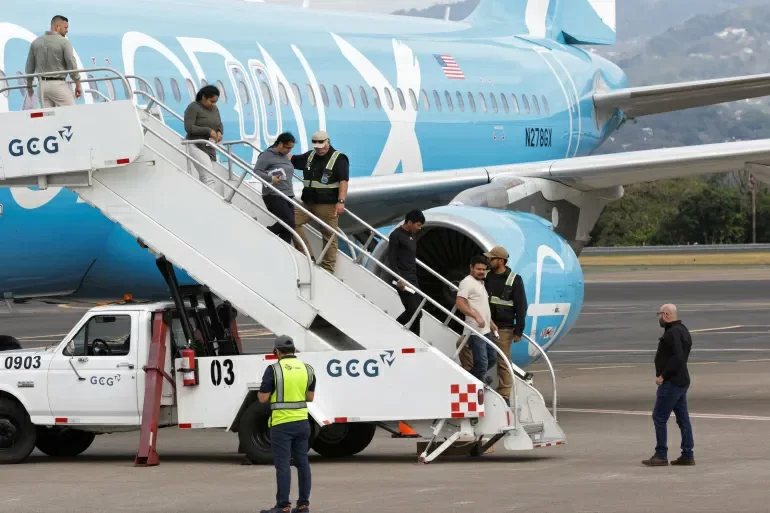
    As bilateral negotiations over a proposed deportation arrangement continue between Antigua and Barbuda and the United States, Prime Minister Gaston Browne has publicly drawn a hard line against a U.S. request that would see the small Caribbean nation accept up to 120 third-country nationals annually, calling the proposal “totally unacceptable” and prioritizing the country’s limited capacity and national security over blind cooperation. Speaking during his weekly *Browne and Browne* radio broadcast on Saturday, Browne clarified that Antigua and Barbuda has only offered to accept a maximum of 10 deportees per year under any finalized deal, a cap that aligns with the nation’s size and inherent vulnerabilities.
    Browne revealed that the initial 120-person proposal came with no binding commitments for U.S. assistance, nor any guarantee that comprehensive background checks would be completed on individuals before transfer. That lack of structure, he emphasized, is a non-starter for his administration. “At one point I was told that they had asked us to accept as many as 120 individuals and there was no guaranteed assistance, no guaranteed due diligence. And I said to them that that is totally unacceptable,” Browne told listeners.
    The prime minister outlined three non-negotiable conditions that Antigua and Barbuda is requiring Washington to meet before any agreement can move forward. First, all individuals must undergo rigorous vetting by U.S. law enforcement and immigration authorities to screen out criminal elements. Browne stressed that even a single high-risk individual can have outsized negative consequences for a small nation like Antigua and Barbuda, saying “one criminal element coming into our country can make a difference.”
    Second, Browne insisted that every deportee transferred to the country must hold valid, official travel documentation. He explained that undocumented migrants detained in the U.S. often destroy their identity papers to avoid deportation, and Antigua and Barbuda cannot absorb stateless individuals with no verifiable background. “What happens sometimes is some of these immigrants, who they detain as soon as they get to the United States, they tear up their travel documents and we can’t have them come here as stateless individuals,” he said.
    While Browne reaffirmed Antigua and Barbuda’s commitment to maintaining a constructive, cooperative relationship with the United States, he made clear that cooperation will never come at the cost of the island nation’s core national interests. “We have said to them that, look, they have their issues, and we want to help. We want to be a cooperative state. But we cannot participate or agree to anything that is to our detriment,” he said.
    The prime minister pushed back against any expectation that he would accept an unfavorable deal, asking rhetorically: “I mean, can anybody justify the prime minister of this country being part of any decision, or agreeing, or being compliant with anything that is not in the best interest of this country?” He noted that Antigua and Barbuda’s small geographic size and population leave it uniquely vulnerable to security risks, requiring extreme caution when entering any arrangements involving the transfer of foreign nationals. “We’re small, powerless and very vulnerable. Based on that vulnerability, we have to make sure that we keep our country safe and secure,” Browne said.
    He added that the administration’s top concern is avoiding the accidental admission of individuals with criminal histories, a outcome that he says would never happen under his leadership. “Where there is any probability for us to even inadvertently and complicitly allow criminals to come into the country, as I said, that’s not in my leadership,” he stated.
    As of Saturday, Browne confirmed that negotiations with U.S. officials remain ongoing, and Antigua and Barbuda has not yet received a formal response from the U.S. State Department after the country submitted its latest counter-proposal outlining its conditions and annual cap. Discussions on the arrangement were launched after the two sides signed a non-binding memorandum of understanding that outlined a framework for Antigua and Barbuda accepting a limited number of third-country nationals. From the start of negotiations, the Antigua and Barbuda government has maintained that while it stands ready to assist its international partners, any final agreement must align with the country’s national security needs and practical capacity to absorb new arrivals.

  • Wereld Anti-Tabakdag: Suriname scherpt strijd tegen nicotineverslaving onder jongeren aan

    Wereld Anti-Tabakdag: Suriname scherpt strijd tegen nicotineverslaving onder jongeren aan

    Every year, World No Tobacco Day (WNTD) serves as a global call to action to curb the devastating public health and economic impacts of tobacco and nicotine use. This year, public health authorities in Suriname are leveraging the observance to accelerate their national campaign against tobacco and nicotine addiction, aligning with the 2024 WNTD global theme: “Unmask the Appeal – Countering Tobacco and Nicotine Addiction”. The campaign this year shines a critical light on deceptive marketing tactics deployed by the global tobacco industry, which specifically target vulnerable young populations to drive adoption of nicotine products.

    According to the World Health Organization (WHO), the tobacco industry has rapidly expanded its product portfolio in recent years, rolling out a wave of new nicotine-based offerings including electronic cigarettes (vapes), nicotine pouches, and products formulated with synthetic nicotine. These products are consistently marketed to consumers as modern, less harmful alternatives to traditional cigarettes, but leading public health experts warn that they carry severe, well-documented risks of addiction, especially for developing adolescent brains.

    Young people remain the primary target for these industry marketing efforts. Tobacco and nicotine product manufacturers leverage enticing flavored formulations, eye-catching trendy packaging, and aggressive targeted advertising across social media platforms to normalize product use and grow customer bases among underage groups.

    Against this backdrop, the government of Suriname is moving forward with comprehensive plans to strengthen its national anti-tobacco regulatory framework. With technical and policy support from the WHO, Suriname’s public health bodies are currently working to update the country’s original 2013 Tobacco Act. Key proposed updates include stricter product regulations, enhanced enforcement to crack down on the illegal trade of tobacco products, mandatory plain neutral packaging requirements, and expanded legal protections to shield young people from tobacco industry influence.

    High-level policy progress has already been made: back in February 2024, Suriname President Jennifer Simons held formal talks with a visiting WHO delegation to discuss further anti-tobacco measures. Public health teams are also developing and rolling out targeted school-based youth education programs in partnership with the Ministry of Education, Science and Culture.

    National data underscores the urgent need for stronger, more comprehensive anti-tobacco action in Suriname. Annually, preventable tobacco-related illnesses claim more than 500 lives across the country, and generate a total economic burden of more than 508 million Surinamese dollars. Data from the 2022 Global Youth Tobacco Survey further highlights the scale of the youth exposure challenge, finding that 13.2 percent of 13 to 15-year-olds in Suriname currently use tobacco products.

    To mark this year’s World No Tobacco Day, public health organizations across Suriname have organized a series of community outreach and awareness activities, including public walks and multi-platform educational campaigns. The core message from Suriname’s health authorities is clear: consumers must not be fooled by the tobacco industry’s deceptive marketing, and collective action is critical to protect young generations from the harms of nicotine addiction.

  • Heritage’s $570m offshore  contract under scrutiny

    Heritage’s $570m offshore contract under scrutiny

    A nearly $571 million offshore energy infrastructure contract, set to be awarded by Trinidad and Tobago’s state-linked Heritage Petroleum Co. Ltd. via a closed limited bidding process, has become the center of growing scrutiny from seasoned energy industry insiders, who question the compliance and fairness of the procurement strategy.

    The contract in question covers the delivery of a specialized offshore production and compression facility, designed to process hydrocarbons from the company’s West/Southwest Soldado fields. Rather than opening bidding to all qualified suppliers globally, Heritage has opted for a limited process that excludes international vendors entirely, granting pre-qualification to just three local companies: TOSL Engineering, Namalco Construction Services Limited, and Anti-Corrosion Technical Services Limited (ACTS).

    Internal company documents obtained by the Sunday Express confirm the total contract value is pegged at $570,611,800, with a tender submission deadline set for the end of May 2026. Per the internal document outlining procurement strategy, Heritage plans to enter a five-year lease agreement for the facility, aligning with the firm’s long-term strategy of outsourcing core operational capacity instead of building in-house capabilities. TOSL Engineering already holds an existing contract with Heritage for a Mobile Offshore Production Unit (MOPU) at the same fields, a deal that has been extended twice and is currently set to expire in March 2026; the company is now seeking an additional one-year extension to March 2027 while a new provider is finalized.

    Industry observers have raised multiple red flags about the process, starting with its deviation from standard open bidding requirements outlined in local public procurement law. Section 5.1 of Trinidad and Tobago’s Public Procurement and Disposal of Public Property Regulations mandates that open bidding must be used by public bodies unless the complexity of the project or specific market conditions make an alternative method more likely to deliver best value for money. Insiders argue no such compelling justification has been made public for this half-billion-dollar contract.

    Critics also point to unusually fast pre-qualification approvals that deviate from standard industry timelines. One insider noted that one pre-qualified applicant had its submission approved just one hour and 28 minutes after it was received, while a second was approved within seven days. Standard evaluations that assess financial stability, technical capability, and health, safety and environment (HSE) compliance typically take four to six weeks to complete, leading to questions about whether the required due diligence was actually conducted.

    Further concerns center around the lack of experience of two of the pre-qualified local firms, ACTS and Namalco, which insiders say have no proven track record of delivering large-scale offshore production and compression facilities. More critically, industry sources say Heritage artificially narrowed the eligible supplier pool by excluding major international vendors that have documented expertise in this specialized sector. Market research compiled by observers identifies multiple global firms, including Canada’s Compass Energy, Singapore’s Grander Energy and Aurora Maritime, and the UK’s Aquaterra Energy, all of which have the capability to deliver the project. These international companies were not invited to participate at all.

    Insiders question whether Heritage properly conducted global market soundings to identify all capable suppliers before restricting the bid list to three local entities. For a contract of this size and strategic importance, observers say the decision to limit bidding runs counter to the legislative mandate that prioritizes open competition to secure the best value for public funds.

    “For a contract worth hundreds of millions of dollars over five years, a legitimate question arises: Why were only three local companies invited when the offshore production and compression market is demonstrably international?” one senior insider noted. “That question becomes even more pressing if there is no evidence that only three suppliers worldwide were capable of performing the work.”

    Many industry experts argue that a far more appropriate and legally compliant approach would have been open bidding paired with a pre-qualification process to shortlist only technically and financially capable vendors. This model would preserve broad competition, ensure transparency, and deliver the best value for money, which is the core requirement of public procurement law in the country. Without a robust, documented justification for restricting competition, insiders warn the current procurement process violates Heritage’s legal obligations to conduct bidding in a transparent, fair, and non-discriminatory manner, leaving the entire award vulnerable to formal legal challenge under the 2015 Public Procurement and Disposal of Public Property Act, as amended. Heritage has so far defended its decision to use limited bidding, but has not released a public justification for excluding international suppliers or for deviating from the open bidding requirement.

  • ‘WE WILL NOT BE GAGGED’

    ‘WE WILL NOT BE GAGGED’

    In the months after a January police-involved shooting left one person dead and another critically injured, a 24-year-old small business owner named Alyssa Phillip has emerged as the most high-profile voice demanding justice for her injured friend Kaia Sealy. As calls for accountability grow, and government moves to restrict demonstrations have sparked accusations of intimidation, a close friend and fellow activist has opened up about who Phillip really is, and what drives the ongoing protest movement.

    The *Sunday Express* reached out to Phillip multiple times to request an in-person interview about her background and motivations, but she declined, prioritizing organizing actions in support of Sealy. Instead, the outlet spoke with Mariah Walcott, another leading figure in the pro-Sealy movement, who has stood alongside Phillip since the first demonstration was organized.

    Walcott, Phillip, and Sealy have been tied together by a friendship spanning more than 13 years. All three 24-year-olds attended Bishop Anstey High School in Port of Spain together, and have stayed close through graduation, career building, and starting their own families.

    According to Walcott, Phillip is the head of a family-owned baking business that delivers pastries across the twin-island nation of Trinidad and Tobago. The company was originally founded and run by Phillip’s father when the three were still in high school, but he handed full control over to Phillip after she graduated. Leveraging her formal education and natural business acumen, Phillip has grown the enterprise significantly, a feat that requires her to wake as early as 4 a.m. each day to prep orders and make deliveries across the country. Even with this demanding full-time role, she still carves out time to lead protests against what the group views as systemic injustice in the country.

    Walcott says neither she nor Phillip see themselves as formal public activists. “We are simply people trying to do the right thing,” she explained, emphasizing that the group refuses to be silenced despite mounting pressure. She argues that the recent introduction of restricted “no-protest zones” near key government institutions, combined with Phillip’s recent arrest, are deliberate intimidation tactics designed to crush public dissent and discourage further demonstration.

    Phillip was arrested on charges related to the protests, granted bail this past Wednesday – but even after her release, the movement has continued, with Walcott stepping in to lead actions when Phillip was detained. When Phillip was taken into custody, Walcott guided a march from the Office of the Director of Public Prosecutions to Port of Spain’s Woodford Square, where she told gathered supporters that attempts to muffle the movement had already failed.

    Walcott recalled how the protests first came together in the days after the shooting. She was at work when she got the news that Sealy had been shot, and Sealy’s common-law husband Joshua Samaroo had been killed by police. She left work immediately to go to the hospital, but was denied access to Sealy, and no hospital or law enforcement officials would answer her questions about what had happened. That night, she called Phillip, and the pair grieved together over the phone.

    A few days later, after security footage of the shooting was released to the public, Phillip reached back out to Walcott to float the idea of organizing a public demonstration. “What do you think about making some signs and getting people together to protest?” Phillip asked, and Walcott said she never hesitated to agree.

    Walcott describes the longstanding dynamic of the three friends: she herself is the most outspoken of the group, Phillip is a natural, energetic “firecracker,” and Sealy has always been the calm, soft-spoken, reserved member of the trio. “That’s why seeing what happened to her has been so heartbreaking,” Walcott said.

    Raised in poverty, Walcott said she has always cared deeply about fighting for better outcomes for marginalized people in her community, and her longstanding bond with Sealy made joining the protest an obvious choice. “There were times growing up when I had nowhere to go. I could always knock on Kaia’s door and I would have somewhere to sleep and something to eat. Her family became a second family to me,” she explained. The pair even experienced pregnancy around the same time, building their young families alongside one another.

    Walcott acknowledged that she has received threats for her role in the movement, but she said the intimidation has not deterred her. While she is more cautious out of concern for her two young children and her public sector job, she remains committed to continuing the campaign, even with new restrictions on public gathering. “If I don’t speak up, what example am I setting for my children and the children to come?” she asked.

    Sealy, who is currently facing eight charges including manslaughter and has active warrants out for her arrest, has been overwhelmed and humbled by the public support she has received, Walcott said. Sealy has never lost her religious faith through the ordeal, and constantly expresses gratitude to everyone who has sacrificed their time and energy to stand with her.

    Walcott also emphasized how deeply she owes her own support to Phillip, who stepped up to help her when she was laid off from her job and struggling financially. When Walcott called Phillip distraught about her unemployment, Phillip offered her a job immediately, inviting her to come work alongside her baking and selling pastries across Port of Spain. “We are like sisters,” Walcott said of her bond with both Phillip and Sealy.

    When asked if she is related to famed Trinidadian Nobel laureate Sir Derek Walcott, Mariah Walcott laughed and said she does not know for sure, but the connection would make sense: she has loved literature, poetry, writing, and music her entire life.