博客

  • NIME Belize Prepares Women Entrepreneurs for Business Growth

    NIME Belize Prepares Women Entrepreneurs for Business Growth

    In a milestone for women-led economic development in Belize, more than 100 women entrepreneurs have wrapped up the three-month accelerator training phase of a targeted business growth program run by local non-profit initiative NIME Belize. The cohort is now set to advance to the next stage of the program, which includes personalized one-on-one mentorship, professional networking opportunities, and pathways to access critical seed capital to scale their operations.

    The recent graduation ceremony celebrated the end of the intensive foundational training, which was crafted to equip participants with practical, actionable skills to strengthen their existing ventures. Core training modules covered key areas including strategic business management, robust financial literacy, targeted marketing planning, and expansion strategy development – gaps that often hold small women-owned businesses back from sustainable growth.

    Katia Montenegro-Hoare, founder and president of NIME Belize, outlined the program’s trajectory following the accelerator phase. Roughly 100 graduates will move into the mentorship and networking segment, which is designed to provide ongoing tailored support beyond the initial classroom-style training. “The next move is mentorship and networking, whereby women will be engaging in one-to-one mentorship,” Montenegro-Hoare explained, adding that a core long-term goal of the initiative is to build a cohesive, supportive community for women entrepreneurs at every stage of their business journey. Within this community, members can connect with industry organizations, access ongoing resources, and build collaborative partnerships with fellow female business owners.

    Dr. Yassmin Andrews, the program’s lead mentorship consultant, detailed how the matching process will work to maximize impact: participants will be paired with experienced industry mentors based on the specific niche of goods or services their businesses offer. The mentorship phase will also tackle two of the most common barriers facing new and growing women-led enterprises: helping participants refine formal, fund-ready business plans and complete official business registration – both critical steps to building legally compliant and investment-ready ventures.
    Andrews noted that access to capital and well-developed business plans are two of the most common gaps that prevent women entrepreneurs from scaling, and these challenges will be the central focus of the upcoming phase.

    For Benita Keme-Palacio, owner of Belizean fitness business Curves Royale, the accelerator phase has already delivered transformative results. She shared that the program helped her map out clear, actionable steps to restructure her growing business, a goal she had struggled to advance on her own. “I’m trying to reform it, and this has definitely helped me know how or what are the steps to do that, as well as having guidance,” she said.

    Beyond practical skills, Keme-Palacio highlighted the community of peers the program fostered as one of its most valuable outcomes. “The sisterhood in this program has been immensely beautiful. I’ve met so many wonderful women,” she explained. Participants maintain an active group chat where they share business challenges and wins, exchange tips, and refer new customers to fellow members’ businesses.

    Keme-Palacio encouraged all women considering applying for future iterations of the program to take the opportunity, noting that even those who do not complete the full program still leave with actionable, valuable knowledge that can benefit their businesses long-term. “Even if you don’t finish the course, you will leave with so much information that you can look back on and use when you’re ready to try again. But you don’t lose anything by applying. You will learn so much,” she said.

    As the cohort transitions into the next phase, NIME Belize’s overarching goal remains focused on helping these women entrepreneurs solidify their businesses, expand their professional networks, and position themselves to secure the capital they need to scale, create local jobs, and drive inclusive economic growth across Belize.

  • Humphrey urges construction reform ahead of building boom

    Humphrey urges construction reform ahead of building boom

    As Barbados gears up for an unprecedented wave of large-scale construction activity, Transport Minister Kirk Humphrey has issued a urgent call for sweeping industry reform, calling on stakeholders to modernise outdated building practices, rein in rampant cost overruns, and deliver more climate-resilient infrastructure that stands the test of time.

    Humphrey laid out the government’s ambitious vision for a refreshed, forward-thinking national construction sector – branded “Construction 2.0” – during the opening address of this year’s Barbados Annual Construction and Design Conference, hosted Tuesday at the Wyndham Grand Sam Lord’s Castle. Speaking to an audience of industry leaders, contractors, and public sector officials, he pushed for widespread adoption of cutting-edge digital technology, strict financial accountability across all projects, and intentional adaptation to the growing threats posed by climate change.

    Drawing on his experience leading the country’s social services portfolio in a previous role, Humphrey drew a striking parallel between the outdated regulatory frameworks that once hampered social welfare progress and the current stagnation he sees in Barbados’ construction industry. He argued that even early 20th-century leaders of the nation would recognise current construction practices as largely unchanged from their time, highlighting how the sector has failed to keep pace with global technological advances that have transformed building over the past century.

    “Despite game-changing leaps in construction technology and methodology that have swept the globe since the Industrial Revolution, most of our domestic building practices have remained stagnant,” Humphrey noted.

    The minister shared key takeaways from a recent study tour to Curitiba, Brazil, a city widely lauded for its trailblazing approach to urban planning. Curitiba began developing its data-driven urban planning system more than six decades ago, and the effort has resulted in a centralised digital management platform called an “urban hypervisor”, which integrates data across all areas of urban development – from civil works and national defense to transportation, construction, and climate resilience planning, all in one unified system.

    Following that model, Humphrey confirmed that Barbados is already developing its own integrated digital infrastructure tracking system through the Office of Infrastructure and Planning (OIP) and the National Infrastructure Asset Register (NIAR). Currently, the OIP oversees more than 300 active public and private projects across key sectors including housing, agriculture, and the blue economy, a portfolio of 59 pages of initiatives valued at hundreds of millions of dollars.

    Humphrey stressed that digital integration is the key to solving long-standing infrastructure problems, particularly in road construction and utility management. He called out the all-too-common issue of newly paved roads developing dangerous potholes within mere months of completion, insisting that all new infrastructure must be engineered to withstand more intense extreme weather, the heavier weight of modern electric buses, and growing traffic volumes.

    “I cannot accept that the roads we build today only last one or two years – some don’t even make it 12 months. That has to change,” Humphrey said. “We have to build for our current climate, and we have to build for the vehicles we use now. Today’s electric buses weigh twice as much as the buses we operated a generation ago.”

    He also addressed widespread public frustration over the practice of utility companies digging up newly resurfaced roads to fix broken water mains, explaining that the heavy compaction rollers used during road paving often crush aging, century-old underground pipes, causing leaks just days after a road project is completed. Through digital mapping and the creation of a full virtual model of Barbados’ subsurface infrastructure, the ministry aims to map the exact location of existing pipes and assess subsurface conditions before breaking ground, eliminating costly rework and disruptive traffic delays.

    Beyond technological upgrades, Humphrey issued a stern warning about the need for tighter project management and financial accountability, promising to put an end to the rampant cost overruns and schedule inflation that have plagued public works projects for decades. “Too many people see government projects as a free-for-all: a job that should cost $100 suddenly balloons to $1,000, and a 10-day job stretches out to 100 days. That culture has to stop,” he said. “We have to be far more vigilant in monitoring our projects, and far more disciplined in how we manage public funds.”

    Humphrey confirmed that Barbados is on the cusp of a “massive construction boom” that will transform the country’s infrastructure over the next two years, but he raised urgent concerns about persistent labor shortages across the sector, even as the government offers free vocational training programs to prepare new workers for open roles.

    “It hurts my heart to hear construction employers saying they can’t find workers to hire here in Barbados,” he said. “I want to urge young Barbadians to take advantage of these opportunities: there has never been a better time, with full free training available and immediate job openings waiting for graduates.”

    He also highlighted the current administration’s broader economic policy, which encourages workers to become equity owners in state-owned infrastructure and service providers such as the Transport Board, fostering a greater sense of personal investment in national development projects.

    In closing, Humphrey appealed to Barbadians for patience as the wave of capital works gets underway over the coming years, urging the nation to set aside outdated habits in pursuit of long-term, sustainable progress. “Over the next two years, Barbados will look like one big construction zone, and I ask all citizens to bear with us,” he said. “But at the end of the day, every single one of us will benefit from the stronger, more resilient infrastructure we build today.”

  • Parker warns political power must not shield child sexual abuse

    Parker warns political power must not shield child sexual abuse

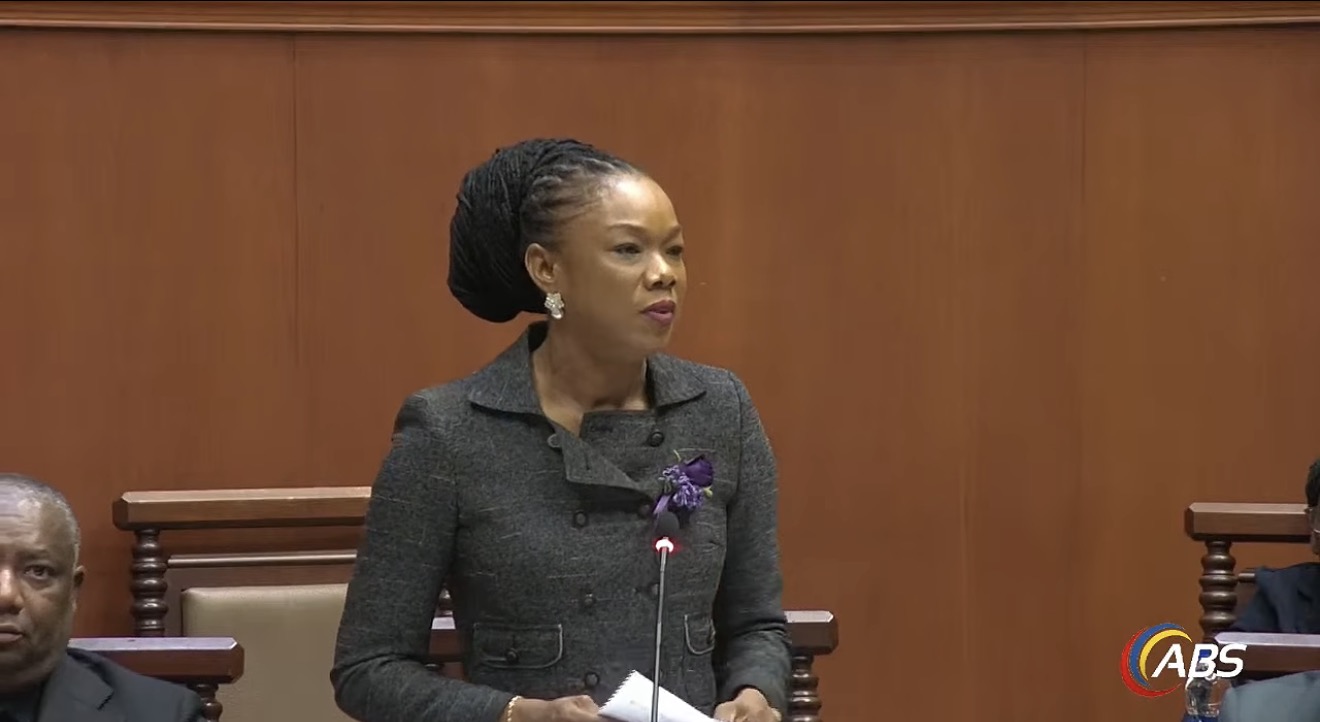
    A fiery Senate debate over the 2026 Sexual Offences Amendment Bill in Antigua and Barbuda has ignited national conversation about systemic silence around child sexual abuse, after opposition Senator Malaka Parker delivered a forceful address calling out influential leaders who she claims have escaped scrutiny over alleged offenses. Parker’s core argument is unflinching: political power, public office and elevated social status must never act as a shield for anyone accused of sexually violating children, and the nation cannot genuinely confront this crisis while turning a blind eye to misconduct by powerful figures.

    Parker pointed to what she described as a long-standing, troubling pattern of politicians implicated in child sexual abuse in Antigua and Barbuda’s national history, but stopped short of naming specific individuals or presenting concrete evidence against any single person. She pushed back against the idea that holding high public office erases a person’s harmful past or grants them the right to control public narrative. “Some people think that time, power and position can erase who they are,” Parker stated, adding that powerful authority figures often operate with a false sense of immunity, exerting control over homes, institutions and political offices without facing public scrutiny.

    Her remarks immediately drew pushback from government-side legislators. Senate Vice President Phillip Shoul accused Parker of repeatedly referencing political predators without offering supporting proof. Senate President Alincia Williams-Grant echoed that objection, noting that Parker’s broad claims lacked substantiation and reminding the chamber that parliamentary statements are held to a stricter standard of evidence. Despite the intervention, Parker refused to back down from her core warning that status and influence should not protect suspected offenders.

    The opposition senator also addressed what she described as ongoing personal attacks against her own private life, rejecting moral criticism from fellow politicians and affirming she would not be silenced by intimidation. “I have a history. I have a past,” she said. “I can stand tall. I cannot be intimidated, never, into silence.”

    Beyond her critique of political complicity, Parker rooted her remarks in long-standing professional and personal engagement with the issue of child sexual abuse. As a former Social Transformation Minister, she recalled firsthand encounters with mothers and child survivors who had been failed by systems and communities. She shared heartbreaking accounts of children who reported abuse only to be disbelieved, and of families that prioritized protecting male breadwinners over vulnerable young victims. Parker emphasized that child sexual abuse is not confined to any socioeconomic group, cutting across all class lines rather than being limited to low-income or unstable households.

    During her time in cabinet, Parker launched the Innocence Project, a year-long national anti-child abuse campaign centered on the slogan “Break the Silence.” The initiative brought together schools, entertainers, psychologists, dancers, religious leaders and other community stakeholders to deliver age-appropriate sexual education that teaches children to recognize inappropriate behavior, understand personal boundaries, and report abuse when it occurs. The campaign reached more than 20 schools across the country, and Parker noted that after many presentations, students and teachers approached campaign staff to share personal experiences or report concerns, proving the urgent need for open dialogue.

    Parker argued that public education and early intervention are far more critical than post-harm punishment, noting that “the best deterrent to a sexual predator is the fear of being apprehended or detected.” She also secured participation in public service announcements from senators and participants in a national queen pageant, but revealed that her attempts to recruit Lower House politicians for the effort failed. While she suggested some politicians may have been uncomfortable publicly aligning with the campaign, she again declined to name names or provide evidence for the claim. She used her long record of child protection advocacy to push back against politicians who have only recently acknowledged the severity of the crisis.

    Despite her sharp criticism of institutional silence, Parker expressed support for multiple key provisions in the 2026 Sexual Offences Amendment Bill. She particularly welcomed the removal of gender-based distinctions between offenders, arguing that female perpetrators of child sexual abuse must face equal legal accountability to male offenders. “They must be equal under the law,” she said. “They’re equally bad.” She also backed provisions addressing delayed abuse reports, noting that many survivors wait years to come forward due to fear, trauma, dependence on their abuser, or family pressure, and they should not be dismissed as unreliable simply for waiting to speak out.

    Parker called on legislators to go further than the current amendment, however, urging the body to explicitly remove all statutes of limitations for child sexual abuse offenses. “Just as it is with murder, 50 years later, the crime can be solved,” she argued. She also pushed for an immediate increase in the age of consent from 16 to 18, noting that this change would align sexual offense law with other national legislation that defines anyone under 18 as a child. “Let us raise the age of consent and stop talking about it,” she said.

    In closing, Parker called for broader updates to national child protection frameworks, noting that harsher prison sentences only address punishment after the fact, and do not build a comprehensive system to prevent abuse and protect vulnerable children. She argued that the Sexual Offences Act should be updated alongside child justice and child care legislation to create a cohesive protective system. Ultimately, her address challenged Parliament to uphold child protection standards consistently, even when allegations involve powerful politicians or people with institutional influence.

  • Two women, two cancer journeys, one message: screen early

    Two women, two cancer journeys, one message: screen early

    For two women in Barbados, proactive breast cancer screening has transformed life-altering diagnoses into positive treatment outcomes, while shining a light on persistent systemic hurdles including high treatment costs and public health care delays that many local patients face. Forty-nine-year-old Katrina Doughty never expected a routine preventive scan would uncover cancer in 2022. For months after her mother’s death in 2021, Doughty attributed her persistent fatigue and mood shifts to grief and the onset of menopause. It was only when she went in for a scheduled well-woman exam that included both a pap smear and a mammogram that the growth was detected. “I cried for a whole week after I got the results,” Doughty recalled of her diagnosis. A local surgeon initially recommended a full mastectomy of the affected breast with no alternative options, but her family based in New York urged her to pursue a second opinion. When she traveled to New York for retesting, doctors reclassified her cancer as stage 1A, an early-stage diagnosis that allowed for a targeted treatment plan of four rounds of chemotherapy followed by 21 rounds of radiation therapy. Today, Doughty remains on daily maintenance medication, with costs ranging from just $7 to $37 per drug thanks to insurance formulary coverage, and a routine mammogram through the Barbados Cancer Society (BCS) costs approximately $100 for local patients. For Patricia Murray, a veteran science teacher, getting a repeat mammogram was not on her priority list until a push from someone she knew changed her mind. Murray had not undergone screening since 2018, when a former student, working a summer position with the BCS, reached out and encouraged her to book an appointment. That single act of persistence led to an early diagnosis that Murray says likely saved her life. Just two days after her scan, Murray got a call: practitioners had spotted an abnormality that required a biopsy. During the biopsy, a second, previously unseen growth was discovered. “I cried when they told me,” Murray said, adding that she was deeply grateful her mother, who lives abroad, had arranged for a close friend to accompany her to all appointments. Initial samples were tested locally in Barbados, with further confirmatory testing sent to facilities in Miami. The results confirmed an early, non-invasive form of breast cancer. Murray credits her 2018 baseline mammogram with helping clinicians catch the tiny growth that no manual exam could detect. “The abnormality was so small that if they didn’t have the 2018 scan to compare it to, any radiologist could have missed it,” she explained. “I never felt anything, the nurse never felt anything, no one would have picked up on it.” Her surgeon recommended private treatment over the public system, noting that the cancer had displayed aggressive characteristics and public wait times could delay critical care. “I am so grateful I had medical insurance,” Murray said. “I had my surgery done by the first week of November.” Because the cancer was caught at such an early stage, Murray did not need chemotherapy or radiation. She is currently on a 10-year preventive medication plan and follows up with her oncologist every six months. Even with insurance, Murray acknowledges that the burden of a cancer diagnosis remains heavy. “One of the hardest parts is still the cost,” she said. “Even if you go through the public system, there’s still a cost — whether it’s out-of-pocket fees, time lost waiting for care, or the emotional energy it drains from you and your family.” Dr. Shirley Hanoman-Jhagroo, medical coordinator for the BCS Breast Screening Programme, confirms that the challenges Murray and Doughty have encountered are common for breast cancer patients across Barbados. She points to extended surgical wait times in the public sector and prohibitive costs for newer, more effective medications as the most persistent systemic issues. Despite these challenges, Hanoman-Jhagroo notes that treatment protocols have advanced locally in recent years: many patients now receive neoadjuvant chemotherapy before surgery to shrink tumors, enabling less invasive procedures, and full radiation therapy services are now available on the island. Even so, she says, public sector delays and limited access to expensive specialty drugs continue to compromise outcomes for low-income patients. Some newer targeted chemotherapy medications cost upwards of $10,000 per month or per treatment, a price tag that puts them out of reach for many uninsured or underinsured patients, who are often forced to pursue less effective alternative treatments. The BCS has worked to address gaps in local care, recently partnering with the Queen Elizabeth Hospital (QEH) to expand public chemotherapy services. Following a request from the BCS screening program, two existing treatment rooms were fully refurbished and outfitted with seven new chemotherapy treatment chairs. Before the expansion, the QEH could treat just six chemotherapy patients at a time; the upgrade boosts capacity to 13 simultaneous treatments, a change that Hanoman-Jhagroo says will meaningfully reduce wait times and expand access for hundreds of patients seeking care each year. “This expansion will make a real difference in how many patients can receive life-saving treatment every single day,” she added. The stories of both Doughty and Murray underscore a core message pushed by breast health advocates globally and in the Caribbean: routine, proactive screening saves lives by catching cancers at early stages when treatment is far more effective and less invasive. At the same time, their experiences highlight the ongoing work needed to address cost and access barriers that continue to create unequal outcomes for cancer patients across the region.

  • Cotino wil betere bescherming belastingplichtigen in nieuwe Invorderingswet

    Cotino wil betere bescherming belastingplichtigen in nieuwe Invorderingswet

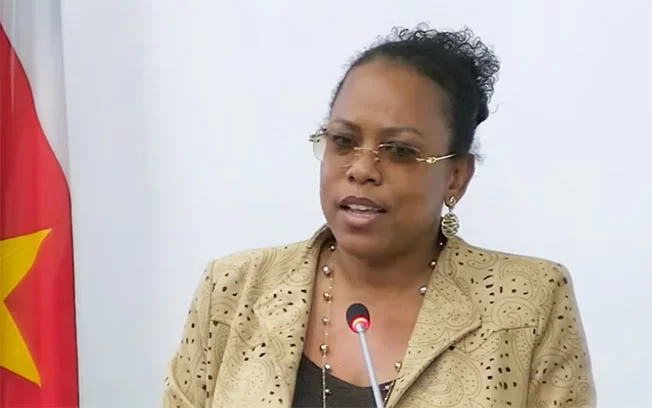
    During parliamentary debate on proposed new tax collection legislation, National Assembly member Rossellie Cotino of the NDP party has outlined key gaps and proposed targeted amendments to create a fairer balance of rights between the tax authority and the taxpayers it serves.

    Cotino, who serves on the committee of rapporteurs reviewing the bill, argues that the current draft focuses disproportionately on expanding the powers of the tax authority to recover outstanding taxes and associated costs, while failing to enshrine clear legal protections for taxpayers owed refunds for overpaid or wrongfully collected taxes. She emphasized that taxpayers need legal certainty that any improperly collected funds will be returned to them within clearly defined statutory timelines, and pressed the government to specify where in the national legal framework refund processes are formally regulated.

    A core criticism from Cotino is that the proposed framework creates an imbalanced, one-sided system: it provides the state robust tools to collect taxes and pass collection costs onto taxpayers, but offers no clarity on how citizens and business owners can claim back funds they are owed, nor does it address whether taxpayers can recover the costs they incur when pursuing legitimate refunds.

    Beyond refund protections, Cotino has raised questions over the bill’s provisions for collection interest. Under the current draft, the applicable interest rate is set solely by state decree, with no parameters outlined in the primary legislation. She has proposed codifying the foundational methodology for calculating this interest in the act itself, suggesting it could be benchmarked to the central bank rate or prevailing market rate for consistency and transparency. She also called on the government to clarify whether interest can be charged on unpaid collection costs, a point currently unaddressed in the draft.

    Cotino also turned attention to the rules governing recoverable collection costs passed onto taxpayers, specifically highlighting Article 60 which regulates costs for publicizing planned asset sales to recover tax debt. She argued that allowing recovery of only actual incurred costs is insufficient; the legislation should explicitly require that all recoverable costs be reasonably necessary, protecting taxpayers from excessive, unnecessary charges. For example, she noted that advertising costs can vary drastically depending on whether notice is published on a government website or in a national print newspaper, with no current guardrails to prevent taxpayers from being billed for inflated, unnecessary advertising expenses.

    To address the problem of outdated collection tariff schedules that require cumbersome legislative overhauls to update, Cotino put forward a concrete proposal for automatic annual indexation. Rather than fixing tariffs in legislation and updating them only through ad hoc state decrees, she recommends embedding an automatic annual adjustment tied to the consumer price index in the law. Adjustments would take effect each January 1, based on data from the General Bureau of Statistics (ABS), with revised tariffs formally published by December 1 of the preceding year to give taxpayers and businesses advance clarity. She noted that parliament previously required multiple time-consuming sessions to update an outdated tariff in the Funeral Act, and a statutory indexation rule would eliminate such cumbersome procedures entirely. She added that the model could also be adopted for tariff schedules in the Customs Act and other tax legislation to improve long-term efficiency.

    Additional proposed changes relate to legal protections for taxpayers filing objections to collection measures. Cotino pointed out that Article 15 of the draft currently restricts the grounds for objection, and is missing an explicit allowance for objections when the amount claimed has been set too low, not just too high. She argued the amendment is necessary to account for a full range of scenarios that may arise in practice.

    Cotino also proposed several technical legislative adjustments: splitting transitional and closing provisions into separate standalone articles, and framing reference to the responsible minister in general terms (i.e., the minister responsible for finance and tax matters) rather than using the current formal name of the Ministry of Finance and Planning. This change would avoid the need for future legislative amendments if the ministry’s name or institutional structure is modified.

    Acknowledging that the government has already shown willingness to incorporate parliamentary proposals into the draft bill during the review process, Cotino expressed hope that her additional recommendations will also be integrated. She emphasized that tax authority reform should not only deliver more efficient tax collection, but also guarantee clear rights, reasonable costs and greater legal certainty for all taxpayers, both individual citizens and business owners.

  • PM Skerrit says DCFH doctors have been paid, clarifies what led to protest

    PM Skerrit says DCFH doctors have been paid, clarifies what led to protest

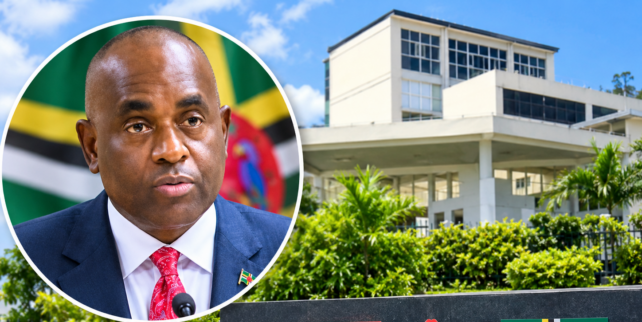
    A weeks-long wage dispute that sparked protest action from medical staff at Dominica’s Dominica-China Friendship Hospital has been resolved, with all owed September salaries now in process of being disbursed to 16 affected physicians, Prime Minister Roosevelt Skerrit has confirmed. The resolution came out of a coordinated meeting held Wednesday, which brought together top national health officials, hospital executive leadership, local union representatives and the affected doctors to untangle the root of the payment delay and implement long-term fixes to prevent a repeat of the issue. To avoid future administrative disruptions, the Dominican government has announced a permanent shift in payroll responsibility for this group of physicians starting next month.

    Skerrit outlined the context of the dispute to clarify widespread misinformation that had suggested all public sector doctors in Dominica were facing payment backlogs. Across the country’s public health network, the government directly employs roughly 70 practicing physicians. The vast majority of these medical professionals receive their salaries and base allowances through the Ministry of Health, a process that has operated without consistent disruption, Skerrit said. The 16 doctors affected by this week’s protests were unique: they were recruited directly by the Dominica-China Friendship Hospital Authority, an independent body that manages the facility, rather than through the national Ministry of Health.

    Administrative misalignment in the hospital authority’s payroll system is the most likely cause of the missed September payments, according to the prime minister. Skerrit added that a separate, smaller issue of unpaid allowances also remains under review, with between two and four doctors impacted by that additional discrepancy in recent months. That clarification issue is also on track to be resolved by the end of the week, he noted.

    As of Skerrit’s post-meeting statement, a cheque covering the full value of the 16 doctors’ owed September salaries had already been transferred to the hospital authority, and the individual deposits to the physicians’ personal bank accounts were already underway. Looking ahead, the government will take over full payroll responsibility for these directly recruited doctors starting in October, moving their payment processing from the hospital authority to the Ministry of Health’s existing, well-established payroll system. The national government has already allocated extra, dedicated funding to the Ministry of Health to cover this new payroll obligation.

    Skerrit emphasized that Wednesday’s talks were held in a respectful, solution-focused atmosphere, with all parties aligned on resolving the outstanding worker concerns. He acknowledged that the Dominican public health system continues to face ongoing structural challenges, but pushed back against any narrative that the government has neglected investment in healthcare. For years, the administration has prioritized expanding access to medical training for local workers and recruiting qualified physicians to expand care access across the island, Skerrit said, and the government remains committed to continuing that investment to strengthen the national health sector.

  • Fisheries Division gives owners until Oct. 28 to remove abandoned boats, vehicles and fishing gear from Point Wharf

    Fisheries Division gives owners until Oct. 28 to remove abandoned boats, vehicles and fishing gear from Point Wharf

    A major cleanup initiative is underway at the Point Wharf Fisheries Complex in Antigua and Barbuda, with fisheries authorities issuing a final ultimatum to owners of abandoned fishing vessels, vehicles, and gear: remove your property by October 28, or face official enforcement action under existing national environmental and planning laws.

    In an official press statement released October 13, Chief Fisheries Officer Ian Horsford announced that the cleanup effort is being carried out in partnership with three key government agencies: the National Solid Waste Management Authority, the Central Board of Health, and the Development Control Authority. This inter-agency cooperation reflects the dual environmental and public health priorities driving the project.

    The directive applies to all abandoned or deteriorating items left at the complex, regardless of how long they have been situated there. Owners are required to cover all costs associated with relocating their property before the deadline passes. This final notice comes after years of sustained efforts by the Fisheries Division to address the growing problem of abandoned property accumulation at the facility. Official records show that the division first notified owners of its intent to clear the site via mailed letters and public postings as early as 2020, and repeated calls for voluntary compliance have preceded this final step.

    Fisheries authorities are emphasizing the legal ramifications of non-compliance, noting that abandoned vessels and vehicles formally qualify as waste under Antigua and Barbuda’s Litter Control and Prevention Act, No. 3 of 2019. This legislation explicitly includes abandoned boats, vehicles, and fish pots in its legal definition of waste. Of particular note is Section 13 of the act, which governs derelict vehicles left in public spaces. The law grants local authorities the power to issue a notice requiring owners to remove a derelict vehicle from public property within 24 hours, a regulation that applies to any item that contributes to environmental damage or defacement of public spaces.

    Additional enforcement authority is drawn from Sections 34 and 47 of the Physical Planning Act, No. 6 of 2003. These provisions allow the chief town and country planner to issue an official enforcement notice or draft an amenity order for approval by relevant authorities, which authorizes the removal and disposal of abandoned fishing-related property. While the notice confirms that government will step in to clear the site if owners do not meet the October 28 deadline, the Fisheries Division has not released specific details on what enforcement will look like. It remains unclear whether items will be removed immediately after the deadline, if owners will face monetary fines, or if additional warnings will be issued before action is taken. The division also declined to share how many abandoned vessels, vehicles, and pieces of gear are currently located at the complex.

    The cleanup project forms part of a broader push to upgrade sanitation, improve environmental conditions, and enhance the overall functionality and appearance of the Point Wharf Fisheries Complex. The participation of solid waste and public health agencies highlights that the accumulation of abandoned gear poses tangible risks to both the local ecosystem and community health.

    The Fisheries Division is urging all affected owners to comply with the directive and remove their property before the deadline to avoid potential enforcement. Owners seeking additional information or clarification are encouraged to contact the division by phone at 462-1372 or 462-6106, or visit their offices in person at the Point Wharf complex.

    In closing the statement, the division emphasized the collective goal of the initiative, saying, “Let us keep our surroundings clean and protect our health and the environment.” Copies of the final notice have been distributed to senior leadership in the ministries of agriculture and health, as well as the National Solid Waste Management Authority, the Development Control Authority, and the Royal Police Force of Antigua and Barbuda to ensure inter-agency coordination for the upcoming cleanup.

  • Hope hundred, Paul fifer help Windies level series

    Hope hundred, Paul fifer help Windies level series

    The five-match T20 International series between the West Indies and India now hangs perfectly in the balance, after the Caribbean side delivered a commanding performance to secure a 24-run victory over the hosts at Hyderabad’s Rajiv Gandhi International Cricket Stadium on Wednesday. The win pulls the two sides level at two wins apiece, keeping the West Indies’ title hopes alive with just one decider match remaining.

    The West Indies’ batting innings got off to a solid start, with 19-year-old debutant replacement Jewel Andrew joining captain Shai Hope at the top of the batting order. The opening pair built a steady 52-run partnership before Andrew was dismissed for 21 runs, opening the door for the West Indies’ middle order to launch a devastating batting attack. Shimron Hetmyer exploded for 33 runs off just 12 deliveries, while Rovman Powell added a quick 24 runs, and in-form batter Sherfane Rutherford remained unbeaten on 49 off 26 balls.

    But it was Hope who earned the highest praise for his historic knock. Taking full advantage of the batting-friendly pitch at the Hyderabad venue, the Barbadian captain produced a masterclass of attacking batting, becoming the first West Indian player in history to notch three centuries in T20I matches. Hope finished his innings unbeaten on 102 runs off just 50 deliveries, powering the West Indies to an imposing total of 247 runs for the loss of three wickets at the end of their 20 overs.

    Chasing a mammoth 248 runs to take an unassailable lead in the series, India got off to a promising start, with wicketkeeper-batter Sanju Samson hitting a rapid 50 runs off 20 deliveries. However, West Indies bowler Keemo Paul turned the tide quickly, removing both Samson and top-ranked T20I batter Ishan Kishan in consecutive overs. Spin bowler Gudakesh Motie then put India in even deeper trouble shortly after entering the attack, claiming the wickets of Indian stand-in captain Abhishek Sharma (29) and Naman Dhir, who fell for a first-ball duck, and came within one wicket of a hat-trick.

    India mounted a late fightback through a 70-run stand between batters Nitish Reddy and Tilak Varma, but their resistance was not enough to overcome the West Indies’ disciplined bowling. After Varma was sent back to the pavilion, Paul delivered a match-defining 19th over, taking three wickets in quick succession to end India’s chances of reaching the target. Paul finished the innings with exceptional match figures of five wickets for just 41 runs, cementing the West Indies’ 24-run victory.

    With the series now level, the decider match will decide which side takes the series title. For the West Indies, a win in the final match would make them just the second side to defeat India in a home T20I series since the 2024 T20 World Cup, a milestone few international teams have managed to achieve in recent years.

  • Fonseca: Belize-Guatemala Relations Still Face Challenges

    Fonseca: Belize-Guatemala Relations Still Face Challenges

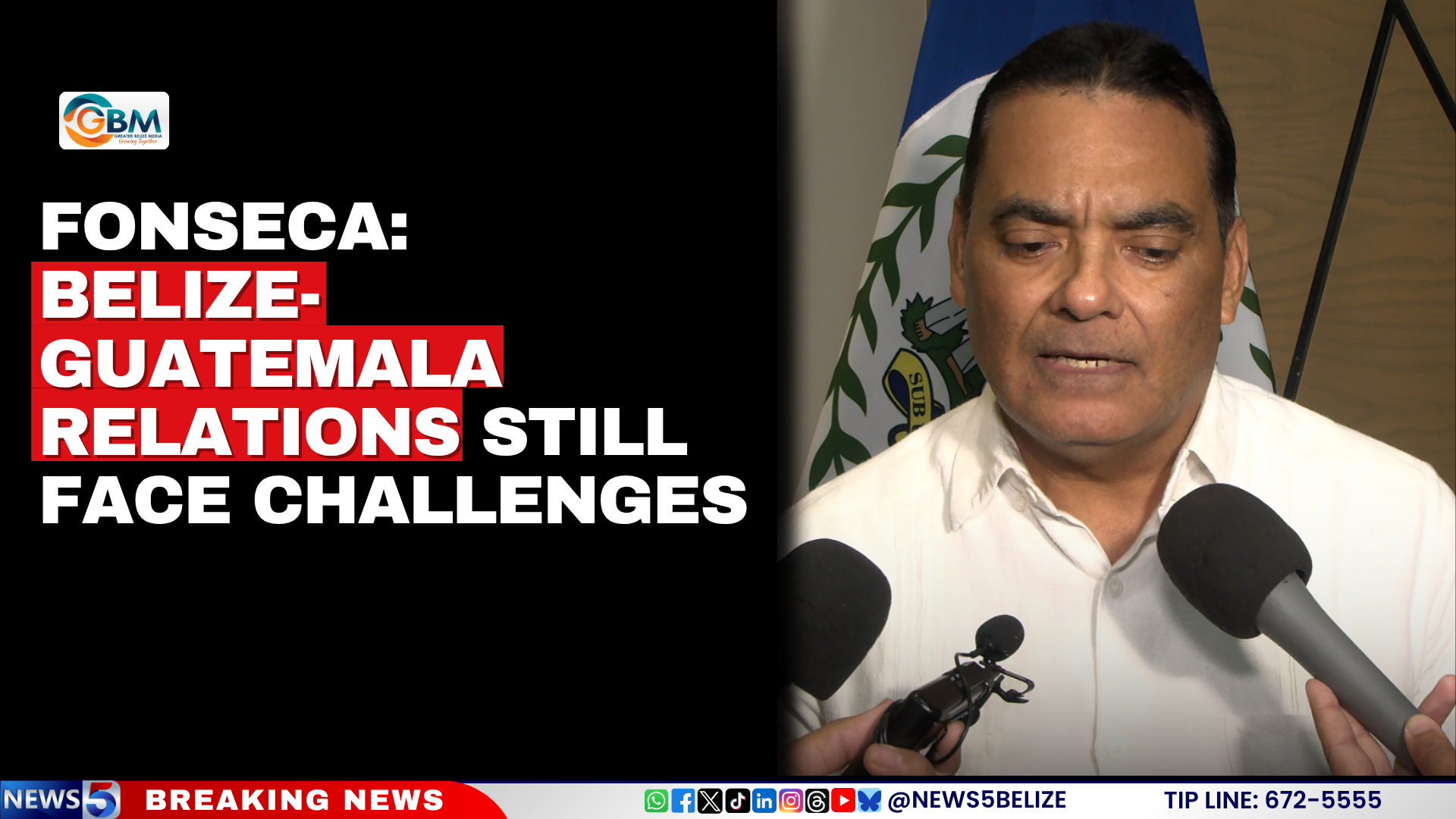
    As Central America’s long-running Belize-Guatemala territorial dispute inches toward a landmark international judicial resolution, diplomatic relations remain intact between the two neighbors, but persistent frictions at the military level continue to pose significant challenges, Belize’s top diplomat has confirmed.

    Foreign Affairs Minister Francis Fonseca outlined Belize’s position in a recent statement, noting that while high-level communication between the two governments remains constructive, underlying military tensions threaten to escalate disputes in the lead-up to the International Court of Justice (ICJ) oral hearings scheduled for February 2027.

    The decades-long territorial dispute between Belize and Guatemala has been a persistent point of contention for both nations, and in a major step toward peaceful resolution, both countries agreed to submit the conflict to the ICJ for a binding ruling. Fonseca emphasized that Belize remains fully committed to this judicial process, which represents the cornerstone of ongoing bilateral dialogue around the dispute.

    “For us, the ICJ process is the critical issue at the heart of our bilateral relationship right now,” Fonseca stated. “The court’s scheduling of oral hearings gives both sides a clear timeline to work toward, and we are preparing thoroughly to present our case.”

    High-level diplomatic communication remains open and productive, Fonseca confirmed. Regular dialogue is maintained between the two nations’ foreign ministries, and direct talks between Belize Prime Minister John Briceño and Guatemalan President Bernardo Arévalo continue to facilitate constructive engagement. It is at the operational military level, however, where the most serious issues persist.

    Fonseca explained that Belize holds ongoing concerns about the actions of Guatemala’s armed forces, which he said have repeatedly failed to adhere to previously agreed confidence-building measures designed to prevent escalations along the disputed border. While unresolved issues on the ground remain a point of contention, Fonseca stressed that Belize’s priority remains securing a final, peaceful and binding resolution through the ICJ process.

    “Our goal is to achieve a definitive resolution that establishes clear, legally recognized borders between our two nations,” he said. “Once that is in place, we can move forward as neighbors, working collaboratively to advance the shared interests and well-being of both our peoples.”

    As of mid-October 2026, the Belizean government has not yet finalized which officials will travel to The Hague to attend the oral hearings. Fonseca also noted that based on standard ICJ procedure, a final ruling is typically delivered between seven and 10 months after the conclusion of oral arguments, though the exact timeline remains entirely at the discretion of the court.

  • Saint Lucian chosen to represent Caribbean on global youth renewable energy council

    Saint Lucian chosen to represent Caribbean on global youth renewable energy council

    A rising voice for climate justice and sustainable energy from the Eastern Caribbean has earned a critical global platform, as 27-year-old Saint Lucian environmental advocate Genesis Alfred will take up the post of Caribbean regional representative on the International Renewable Energy Agency (IRENA) Youth Council for the 2026 to 2028 term.

    Alfred’s appointment comes as small island developing states across the Caribbean, which bear some of the most severe consequences of climate change despite contributing the least to global carbon emissions, continue pushing for greater representation in global energy transition conversations. Her new role on the IRENA Youth Council will not only expand opportunities for youth participation across the renewable energy sector but also create a formal space to center Caribbean community perspectives in international decision-making around the shift away from fossil fuels.

    Currently, Alfred serves as programme manager for the Caribbean Climate Justice Project (CCJP) Youth Innovators for Renewable and Inclusive Energy, better known as Youth IRIE, a regional initiative dedicated to addressing the disproportionate climate impacts faced by young people and vulnerable populations across the Caribbean. Appointed to this leadership position in 2025, Alfred oversees the initiative’s cross-regional programming, which centers four core priorities: advancing climate justice, expanding access to sustainable energy, building local capacity for environmental action, and scaling youth-led solutions to pressing regional climate and energy challenges. Through Youth IRIE, Alfred and her team work to elevate young people’s advocacy, pushing for a faster, more equitable global transition to renewable energy that centers the needs of frontline communities.

    The IRENA Youth Council, a global body that brings together rising youth leaders, young policymakers, clean energy entrepreneurs, and energy sector specialists from every inhabited region, exists specifically to strengthen and institutionalize youth participation in the global energy transition. The council’s core mandate includes developing actionable, on-the-ground strategies to support youth-led innovation, expand universal access to affordable clean energy, and speed up the large-scale deployment of renewable energy technologies around the world.

    Members of the 2026–2028 Youth Council cohort were selected through a rigorous, competitive global application process, with organizers prioritizing both geographic representation and gender balance to ensure the council reflects the full diversity of stakeholders impacted by the global energy transition. Alfred’s selection marks a key win for underrepresented small island nations in the Caribbean, which have long called for more equitable seating at global climate and energy governance tables.

    Professionally, Alfred holds an accredited Bachelor of Science degree in Environmental Science and Ecology from the University of the West Indies Cave Hill Campus, one of the region’s leading academic institutions for environmental research and training. She is currently advancing her academic expertise through a master’s degree programme in Natural Resources and Environmental Management at the university’s Centre for Resource Management and Environmental Studies (CERMES), where she is building advanced research skills focused on sustainable resource governance for small island states.