博客

  • Return of the PM to Haiti, assessment of his official visit (video)

    Return of the PM to Haiti, assessment of his official visit (video)

    Haitian Prime Minister Alix Didier Fils-Aimé returned to Port-au-Prince on Thursday, April 24, 2026, following an official working visit to the United States, and held a press conference immediately upon arrival at the Diplomatic Salon of Toussaint Louverture International Airport to outline key outcomes of his trip.

    Waiting to welcome the prime minister on the tarmac was a high-level cross-institutional delegation, including top members of the Haitian government: Marie Élisabeth Régine Joseph Haddad, Secretary General of the Presidency; Odilien Charles, Secretary General of the Council of Ministers; Lieutenant-General Derby Guerrier, Commander-in-Chief of the Armed Forces of Haiti (FAd’H), accompanied by senior military staff; and Vladimir Paraison, Director General of the National Police of Haiti (PNH), alongside the national police high command.

    In his opening remarks to reporters, Fils-Aimé framed the visit as a productive strategic engagement that aligned with Haiti’s most pressing national priorities: curbing widespread gang violence, shoring up fragile state institutions, and laying the groundwork for long-term, sustainable economic rebound. Over the course of his trip, the prime minister held more than 20 bilateral meetings with representatives of global and regional stakeholders.

    He placed particular emphasis on constructive, forward-looking discussions with senior leadership from three of the world’s leading multilateral financial institutions: the World Bank, the International Monetary Fund (IMF), and the Inter-American Development Bank (IDB). Fils-Aimé noted that these talks centered on accelerating high-impact immediate programs focused on driving domestic private investment and expanding formal job opportunities across the country. “Every new job that we create is a direct, tangible blow to insecurity,” he emphasized, linking economic opportunity directly to the country’s ongoing fight against criminal gangs.

    On the security and governance fronts, Fils-Aimé shared that top global leaders have reaffirmed their unwavering support for Haiti’s efforts to restore full state sovereignty across national territory. These leaders include Organization of American States (OAS) Secretary General Albert Ramdin, U.S. Secretary of State Marco Rubio, United Nations Secretary General António Guterres, and other senior international figures. During his meetings, the prime minister also pushed for the rapid, full deployment of the multinational Gang Suppression Force (GSF) and called for international support to strengthen Haiti’s national electoral infrastructure ahead of upcoming democratic processes.

    Closing his remarks, Fils-Aimé extended sincere gratitude to the international community and U.S. congressional leaders for their continued commitment to Haiti’s stability and development, framing the visit as a critical step forward in rebuilding partnerships to address the country’s most urgent challenges.

  • NTUCB Plans To Flex Muscle For Labour Day

    NTUCB Plans To Flex Muscle For Labour Day

    Across Belize, working people and retirees are grappling with a growing pile of economic pressures that have eroded daily quality of life in recent months. From former employees still waiting on promised severance payouts to commuters and drivers forced to stretch already tight budgets to cover skyrocketing bus fares and fuel costs, financial strain has become a constant burden for ordinary citizens. Now, the National Trade Union Congress of Belize (NTUCB) is preparing to turn this year’s annual Labour Day march into more than a traditional celebration – it will be a collective show of worker power and a public platform to amplify the unaddressed challenges facing the nation’s labor force.

    In a statement ahead of the event, NTUCB President Ella Waight outlined the dual purpose of this year’s demonstration. “At its core, every Labour Day March is first and foremost a tribute to workers,” Waight explained. “We come together to honor the contributions working people have made to this country, and to celebrate the hard-won gains we have secured over the years. But this year, we cannot ignore the multiple crises facing workers across Belize.”

    Waight pointed to a roster of ongoing issues the union movement is currently pushing to resolve. A major priority is the national severance campaign supporting retired workers who have yet to receive the benefits they are owed. Beyond that, the soaring cost of living – driven first and foremost by sharp increases in petroleum and gas prices – has rippled through every corner of household budgets. Higher fuel costs have pushed up public transportation fares, and in turn, driven up the price of groceries and other essential goods, leaving many families struggling to make ends meet.

    The union also remains locked in fights to enforce the existing $5 per hour minimum wage, with countless workers across the country still not receiving the legally required pay rate. For these and other ongoing struggles, Waight said, Labour Day offers a unique opportunity for workers to gather in solidarity. With the day designated as a public holiday, she noted, there is no barrier to participation: “There is no excuse for not being able to join us. We call on all workers to turn out and stand with us.”

    Following the march, attendees will gather at Birds Isle for a mass rally, where leaders from every affiliated union will deliver remarks to their members. Many unions are currently in active contract negotiations with employers, so the rally serves as a critical space for leaders to update members on progress, keep supporters informed, and rally backing for ongoing talks. Crucially, Waight emphasized, the event is not restricted to union members alone. Labour Day is a celebration for all working people, so the NTUCB extended an open invitation to every member of the public to join the demonstration.

    Organizers have also extended a call to local food vendors interested in operating at the post-march rally, asking interested parties to contact the NTUCB office to register for a spot. The march is scheduled to kick off at 8:30 a.m. on Friday, May 1, 2026, concluding at the Birds Isle rally site. This report is adapted from a transcript of a television newscast originally published ahead of the event.

  • BEL Heads to High Court Over Severance Dispute

    BEL Heads to High Court Over Severance Dispute

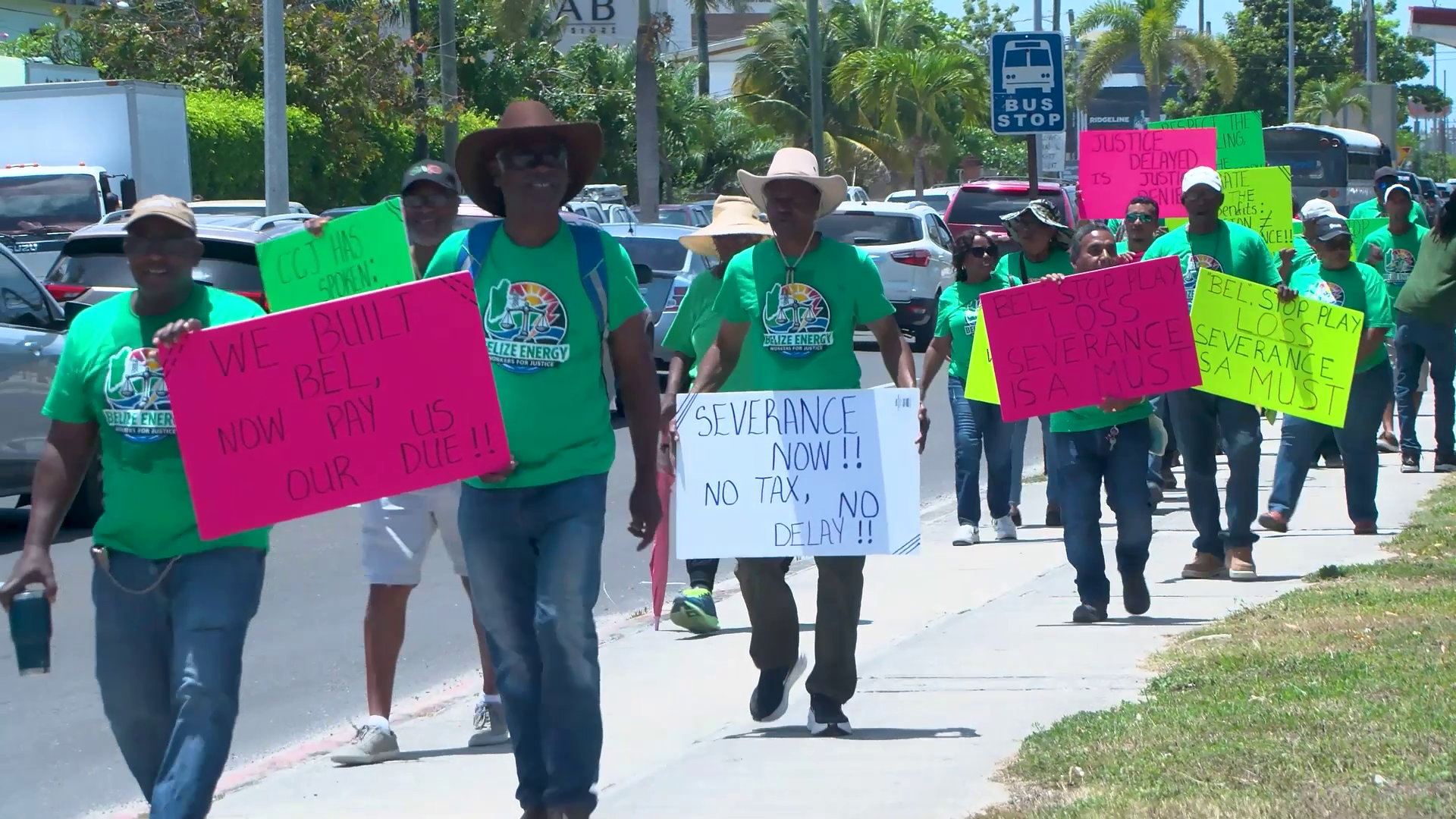
    A years-long ambiguity surrounding severance compensation at one of Belize’s most critical utility providers is set for judicial clarification, as Belize Electricity Limited (BEL) confirmed this week it will bring the dispute before the nation’s High Court. The decision comes in the wake of a landmark recent ruling from the Caribbean Court of Justice (CCJ), a ruling that has reshaped how severance claims are evaluated across the region. In an official statement released Friday, BEL emphasized that its core priority throughout the process remains upholding fair and equitable treatment for every current and former worker with outstanding severance claims. To eliminate confusion over how the CCJ’s regional ruling intersects with domestic labor legislation in Belize, the utility company is seeking formal judicial guidance from the High Court. BEL legal teams will submit a curated selection of representative existing severance cases to the court, providing context that will help justices outline a clear, consistent precedent for how the CCJ decision and local labor laws should be applied to BEL’s unique operational and contractual context. Company leadership stressed that the overarching goal of the legal action is not to avoid paying rightful compensation, but to establish full transparency, solid legal certainty, and a standardized framework that can be used to resolve both pending and future severance claims efficiently. Even as it moves forward with the judicial process, BEL reiterated that employee and former employee well-being remains its top priority, and that the company will maintain open, constructive dialogue with all relevant stakeholders through every step of the proceedings. The move to the High Court comes amid renewed public pressure from former BEL workers: earlier this week, members of the advocacy group Belize Energy Workers for Justice organized a midday picket outside BEL’s corporate headquarters, publicly demanding immediate resolution of their unpaid severance claims. This report is adapted from a transcribed evening television news broadcast published online, with original Kriol language statements transcribed per standard spelling conventions for accessibility.

  • Opposition Slams Government on Crime, Commissioner Fires Back

    Opposition Slams Government on Crime, Commissioner Fires Back

    As a wave of violent criminal incidents including homicides, abductions and missing person cases continues to grab public attention, the governing Briceño administration is facing mounting political pushback from the country’s main opposition bloc. During a press briefing held this week by the United Democratic Party (UDP), opposition senator Patrick Faber launched a sharp critique of the current government’s public safety strategy, arguing that the recent uptick in violent crime proves the administration has failed to retain control over national security.

    Faber emphasized that criminal activity of this frequency and severity would have prompted sweeping, coordinated national intervention from previous governments, calling into question the current administration’s commitment to protecting civilian communities. Following the opposition’s accusations, local journalists directly pressed Commissioner of Police Richard Rosado to address claims that law enforcement is losing ground in the national fight against violent crime.

    In his direct response, Rosado pushed back against the opposition’s criticism, noting that political factions are fully entitled to their public perspectives. He pointed out that the UDP held national power for 13 years prior to the current administration’s term, challenging the opposition to put forward concrete, actionable policy solutions instead of relying solely on criticism of ongoing efforts.

    Rosado underscored that the national police department is exhausting all available resources to curb violent crime, including leveraging all legal frameworks at the force’s disposal, integrating modern digital technology into patrol and investigation work, and deploying both community-led and intelligence-driven policing strategies to keep criminal activity at a manageable level for communities across the country. Despite law enforcement’s insistence that it is operating at full capacity, questions remain among the general public over whether these current efforts are sufficient to reverse the recent rise in violent incidents and restore widespread public confidence in national safety.

    This report is adapted from a transcribed broadcast of a national evening news program, released digitally on April 24, 2026.

  • Gun Advocate Says .223 Ban Never Made Sense

    Gun Advocate Says .223 Ban Never Made Sense

    Nearly two years after Belize implemented a controversial moratorium on .223 caliber rifles, the recent decision by the country’s Firearms and Ammunition Control Board to end the ban has reignited fierce discussion over gun regulation and public safety, as the nation grapples with persistent challenges from community gun violence.

    Critics of the policy reversal have raised urgent alarms that rolling back this restriction at a time of ongoing safety risks sends a dangerous message to the public, and could open the door to greater proliferation of high-powered firearms that end up in criminal hands. But government officials have defended the move, noting that the rifles fill a critical practical need for the country’s agricultural sector, particularly cattle ranchers who depend on the firearms to fend off predatory animals that threaten their livestock.

    Now, Abner Murillo, a prominent Belizean gun retailer and outspoken gun rights advocate who owns Locked ‘n Loaded Guns and Ammo, has waded into the debate, pushing back hard against critics who frame the ban’s end as a threat to public safety. In an interview, Murillo argued that widespread fears over the relegalization of .223 rifles are wildly overblown, and that the original moratorium never had a factual basis to begin with.

    Murillo laid out the multiple legitimate, non-criminal uses for the caliber that make it popular among Belizean gun owners: “For the .223 caliber, you have many uses including farm use, recreational use. Many people use it to protect their farms against coyotes or certain animals. You have recreational shooting, you have hunting. They’re excellent for hunting smaller game meat or medium sized game meat.”

    Beyond practical utility, Murillo emphasized that there is no evidence linking legally owned .223 rifles to violent crime in Belize, undermining the core public safety justification for the original ban. “And if you once again look at the facts, it has never been a matter of public security because there hasn’t been anything to warrant any concerns of public security. There hasn’t been shootings with licensed .223s. I believe there’s one or two incidents of brandishing since those firearms were introduced to the public here in Belize,” he explained.

    Murillo also commended the board’s decision, noting that it was rooted in empirical data and on-the-ground knowledge rather than unfounded public opinion. “I think that the board made a decision based on facts once again and based on actual knowledge and not just personal opinion. So we definitely support the removal of a moratorium that wasn’t necessary in the first place, and there wasn’t anything in the first place to warrant such a moratorium. There is nothing there to say, okay, this is a matter of public security and let’s put a moratorium on it,” he added.

    A key detail that has further fueled skepticism of the original 2024 moratorium: when the restriction was first implemented in February 2024, regulators promised a full audit and comprehensive policy review to assess the ban’s impact and justifications. As of April 2026, that audit remains incomplete, leaving the core rationale for the years-long ban unvalidated by official data.

    This report is a transcript of an evening television broadcast, with all Kriol-language statements transcribed using a standardized spelling system for accuracy.

  • BelCan Bridge Progress Forces Roadside Relocations

    BelCan Bridge Progress Forces Roadside Relocations

    A long-awaited infrastructure project is advancing in Belize, but its ripple effects are creating uncertainty for dozens of small business owners and transport operators whose livelihoods depend on their high-traffic roadside locations. The Ministry of Infrastructure Development and Housing (MIDH) has moved forward with pre-construction preparations for the full replacement of the aging BelCan Bridge, a key crossing that serves daily commuter and commercial traffic across Haulover Creek. To avoid total gridlock in the city during the multi-year construction period, MIDH has planned the installation of a temporary bypass bridge, a solution that requires clearing a large stretch of public highway reserve for construction access and the new bridge route.

    Chief Engineer Evondale Moody explained in an interview with local outlet News Five that the government has already finalized a construction contract with Cisco Construction Limited for the full bridge replacement project. The temporary structure will stretch from the Phillip Goldson Highway, across Haulover Creek, to Evergreen Street adjacent to the Belize Water Services (BWS) compound, utilizing vacant government-owned land behind Save U Supermarket for the northern approach. Work on both the temporary bridge and site preparation for the permanent new bridge is scheduled to kick off simultaneously on May 4, requiring the immediate relocation of all unauthorized businesses and operators parked on the public road reserve between the highway and Central American Boulevard.

    “We need to hand the construction site over cleared to the contractor to keep the project on schedule,” Moody noted. “All taxi operators parked along the Phillip Goldson Highway reserve, as well as the car dealers operating on Central American Boulevard in front of Save U Supermarket, must vacate the area to make room for pre-construction layout work for the permanent bridge.”

    The order to relocate by May 4 has split local operators, with many expressing deep concern over the threat to their income. At least five independent car dealers currently display their inventory on the targeted stretch of land, and multiple operators told reporters they have no alternative location to park their vehicles, putting their ability to attract walk-in customers at severe risk. Roadside food vendors and taxi dispatch operators who rely on the high-visibility location for daily business have also raised alarms that the move could cut off their core customer base.

    Not all affected operators are pushing back against the order, however. Nelson Zayden, a car dealer who has operated at the site since 2017 and ran a business near the Hope Center for more than a decade before that, says he accepts the relocation as a necessary part of public development. “We got informal notice many months ago, and the official two-week deadline to move by May 4 is fine with me,” Zayden explained. “To be honest, we never had formal permission to be here anyway; the city council just let us set up. We’ll move, and we’ll adapt – we can shift more of our sales to online advertising to keep customers coming.”

    One local staple, Tony’s Barbeque, will be able to keep most of its current location, but will still need to make adjustments. The popular food stand has operated near the existing overpass for years, but its overhanging storage shed currently blocks the planned pedestrian pathway that will connect users of the temporary bridge to the overpass stairs. The shed will need to be removed to clear the footpath, Moody confirmed.

    The most consequential detail for many affected operators is that the relocation is expected to be permanent. Moody confirmed that once construction of the new permanent BelCan Bridge is completed in 2028, the area will not be open for the return of informal roadside businesses. MIDH has also confirmed it will provide financial compensation to two long-established small businesses that are required to permanently relocate as part of the project, though details of those compensation packages have not been released to the public. Reporting for News Five, Paul Lopez contributed to this report.

  • Concho motorcyclists Who are the motoconchistas: how they are organized and why they continue to be stigmatized in the Dominican Republic

    Concho motorcyclists Who are the motoconchistas: how they are organized and why they continue to be stigmatized in the Dominican Republic

    The tragic death of Deivy Carlos Abreu Quezada, a Santiago-based garbage collection truck driver on Sunday, April 19, has pulled a long-buried, contentious conversation back into the national spotlight: the pervasive question of motorcyclist and motorcycle taxi (locally known as motoconchista) behavior, and its ties to road violence and systemic traffic chaos across the Dominican Republic.

    For millions of Dominican citizens, motorcycle taxis have evolved from an informal transit option to an absolute daily necessity. Riders rely on the compact two-wheelers to cut through congested urban streets, cutting commute times and reaching destinations that larger public vehicles cannot access easily. But the fatal incident in Santiago has reframed public anger toward the sector, leading to widespread condemnation that has split opinions across transportation groups, unions, and everyday road users.

    Hoy Digital interviewed dozens of stakeholders from motorcyclist unions, public and private driver associations, and regular passengers to unpack competing perspectives on the role of motoconchistas on Dominican roads, and why the broader community has come to vilify the majority of workers in the sector.

    Óscar Almánzar, president of the National Federation of Motorcycle Taxi Drivers (Fenamoto), the country’s largest union for motoconchistas, outlined the strict vetting process his organization uses to regulate registered riders. All members are required to submit formal registrations with government-issued ID, contact information, and residential addresses, before undergoing a background screening. “Then, they have to bring a certificate of good conduct, they have to have a valid license, they have to have active insurance and all their paperwork up to date,” Almánzar explained. When conflicts arise between riders and passengers or other road users, incidents are reported directly to federation headquarters, where a formal investigation is launched to resolve the case through the local stop’s general secretary.

    In response to widespread public outrage sparked by Abreu Quezada’s death, Almánzar announced Fenamoto is re-evaluating its 26-year-old motto “One blow to one, one blow to all” that has long defined the group’s culture of solidarity. The slogan will be put to a vote at a national assembly of union leaders, with a proposed replacement already under discussion: “One person’s cause is everyone’s cause,” rebranded to signal the group’s commitment to unity without the implication of retaliatory violence that the original slogan has come to represent in public discourse. “It’s not a matter of violence, but of solidarity among us,” Almánzar clarified of the original motto.

    Other organized motoconchista leaders echoed the pushback against broad-brush condemnation of the entire sector. Manuel García, a member of the Los Prados Motorcycle Taxi Drivers Union in the National District, emphasized that registered, organized riders are simply everyday workers, not inherently violent actors. “We’re not all the same,” García said while waiting for passengers on Doctor Defilló Street, at the corner of John F. Kennedy. “Now, because of what happened in Santiago, they want to blame all the motorcyclists in the entire country,” he complained.

    This sentiment was echoed by an anonymous member of the Núñez de Cáceres Avenue Motorcycle Taxi Drivers Association (Asomonuca), who noted that long-serving organized riders have developed into transit professionals who prioritize safety and compliance. The source explained that members of his association strictly adhere to speed limits and traffic light regulations to avoid endangering themselves, their passengers, and other road users.

    Despite these assurances from organized labor groups, many private and public vehicle drivers say disorder rooted in reckless motorcycle behavior remains a daily hazard on Dominican roads. Venancio Urbino, a private car driver, described unregulated motorcycle operation as “a cancer” that plagues every trip. “Every time I see and hear them, I stay calm until they pass. If I hit them, I’m in trouble; if they hit me, I’m in trouble,” he said.

    Anthony Ariel, a public bus driver who operates the route from the Santo Domingo Zoo to Duarte Avenue, acknowledged that “not all of them are the same” but still described most motorcyclists as fundamentally reckless. Even passengers shared critical perspectives: Wellington Contreras, a regular motorcycle taxi passenger, argued that poor road behavior stems from a lack of systemic and rider education, placing partial blame on both the government and unions for failing to enforce stricter standards. “Although the government bears some of the blame, I believe it’s an issue of education. Unions also need to better regulate their members,” Contreras said.

    As Hoy’s reporting team canvassed the National District to collect public perspectives, a new crash illustrated the ongoing scope of the problem: a multiple collision involving four motorcyclists at the intersection of Núñez de Cáceres Avenue and Font Bernard in the San Gerónimo sector left multiple people injured, underscoring the immediate risk of unregulated road behavior.

    National statistics paint a grim long-term picture: data from the Dominican Republic’s National Statistics Office shows that between 2019 and 2023, the country recorded an average of 1,711 fatal traffic accidents per year, many of which are tied to motorcycle incidents.

    When asked for comment on the growing national outcry, the National Institute of Transit and Land Transportation (Intrant) clarified its regulatory role, noting that on-the-ground oversight, enforcement, and penalties for traffic violations fall under the jurisdiction of the General Directorate of Transit and Land Transportation Safety (Digesett).

    Intrant officials emphasized that the Dominican Republic already has a robust regulatory framework for motorcycle operation: Law 63-17 on Mobility, Land Transportation, and Transit mandates helmets, valid driver licenses, active insurance, and compliance with all traffic rules, while Intrant has established additional standards for approved helmets and legal motorcycle taxi stops. “Therefore, the main challenge is not the absence of rules, but their effective enforcement,” the agency said.

    As the national regulatory body, Intrant stated it continues to advance road safety initiatives including public education campaigns, driver training programs, and system reforms to reduce fatal incidents. The agency added that long-term improvement will require coordinated cross-institutional action, combining regulation, public education, and consistent enforcement to change risky driver behavior across all sectors.


  • FLASH : An arson destroys the Botanical Garden of Les Cayes

    FLASH : An arson destroys the Botanical Garden of Les Cayes

    On April 25, 2026, just one day after global communities marked World Earth Day to celebrate and protect planetary biodiversity, a deliberate act of arson has left one of Haiti’s most important ecological and scientific sites in ruins: the Les Cayes Botanical Garden, a conservation hub decades in the making.

    Founded in 2003, the botanical garden grew far beyond a public green space over its 23 years of operation. Teams of botanists, conservationists and local researchers spent more than two decades traversing Haiti to collect and cultivate a one-of-a-kind collection of the country’s native and endemic plant species, many of which cannot be found anywhere else on Earth. The site also doubled as a critical wildlife refuge, supporting fragile local ecosystems and serving as a living laboratory for ecological research focused on Haiti’s unique natural heritage. Today, that decades-long work is gone: large swathes of the garden have been reduced to ash, with entire stretches left completely charred and unrecognizable.

    In an official statement released shortly after the fire was discovered, Haiti’s Ministry of the Environment issued a harsh condemnation of the intentional vandalism, announcing an immediate temporary closure of the site to the public. The closure will allow law enforcement and conservation authorities to secure the area and conduct a full, detailed assessment of the full scope of damage. The garden has been placed under formal police protection, with additional operational support provided by Haiti’s National Agency for Protected Areas (ANAP).

    The Ministry expressed profound dismay over the attack, noting that the blaze did not only damage the natural environment—it destroyed a national collective asset of incalculable scientific, cultural and ecological value to the Haitian people. Authorities have called for calm and public responsibility as the investigation proceeds, confirming that all necessary steps have been taken to secure the site and suspend all public and research activities pending the outcome of ongoing legal proceedings into the arson.

    Initial assessments of the damage underscore the unprecedented scale of the loss. Investigations remain open to confirm the full details of the attack and identify those responsible, but early observations confirm the permanent disappearance of multiple rare plant species, the irreversible destruction of intact native ecosystems, and the total loss of more than 20 years of accumulated scientific research data tied to the garden’s work.

    Ecovert Haiti, a leading Haitian environmental conservation organization, has framed the tragedy as more than a singular ecological and scientific loss—it is a urgent wake-up call for the entire nation. The organization has issued a public appeal to Haitian citizens, domestic institutional stakeholders and international conservation partners to unite in defense of Haiti’s irreplaceable natural heritage. Ecovert Haiti emphasized that this devastating destruction must serve as a catalyst to launch a broad national movement committed to biodiversity protection and building a more sustainable future for all Haitians.

  • Belize Plans Ahead to Secure Village Water

    Belize Plans Ahead to Secure Village Water

    As small rural communities across Belize face steadily rising water demand driven by population growth, shifting economic activity, and a changing climate, the country has wrapped up the foundational planning phase for a major initiative to protect long-term access to clean, reliable drinking water for these populations.

    Led by the Belize Social Investment Fund (BSIF), the cross-partner project has completed all community and technical consultations for a first-of-its-kind targeted water demand study focused exclusively on 21 rural villages that have historically faced gaps in water infrastructure planning. The study moves far beyond basic current supply checks: it combines on-the-ground usage data collected in partnership with local stakeholders with long-term projections to ensure new infrastructure will meet community needs for decades to come.

    Unlike many infrastructure projects that size systems only for current population levels, this initiative built collaboration into every step of the process. BSIF worked hand-in-hand with the University of Belize, the Ministry of Rural Transformation, and local Village Water Boards to collect accurate, community-specific data. Village Water Boards, which manage local water systems on the ground, contributed critical local insight that shaped the scope and design of the plan, ensuring it addresses on-the-ground priorities rather than top-down assumptions.

    Rico Nurse, project coordinator at BSIF, explained that the study’s multi-factor projection model accounts for far more than just population growth. “The consultation allowed the University of Belize to determine current water consumption across these 21 villages, then apply projections that factor in population growth, expanding economic activity, and the impacts of climate change to estimate water demand 5, 7, and 10 years from now,” Nurse said. This data directly informs the sizing of water disinfection equipment that will be installed under the project, eliminating the common pitfall of underbuilding infrastructure that becomes obsolete within a few years of completion.

    “This gives us certainty for the public investment we’re making on the ground,” Nurse added. “We can be confident the equipment capacity will match the needs of these communities long into the future.”

    The finalized plan will roll out in phased implementation starting in the coming months, with full completion of infrastructure deployment targeted for mid-2027. The project represents a proactive approach to rural water security, addressing future challenges today to avoid service disruptions and unsafe drinking water shortages as Belize’s rural populations evolve.

  • Heated Land Dispute Draws Three Ministers to San Marcos

    Heated Land Dispute Draws Three Ministers to San Marcos

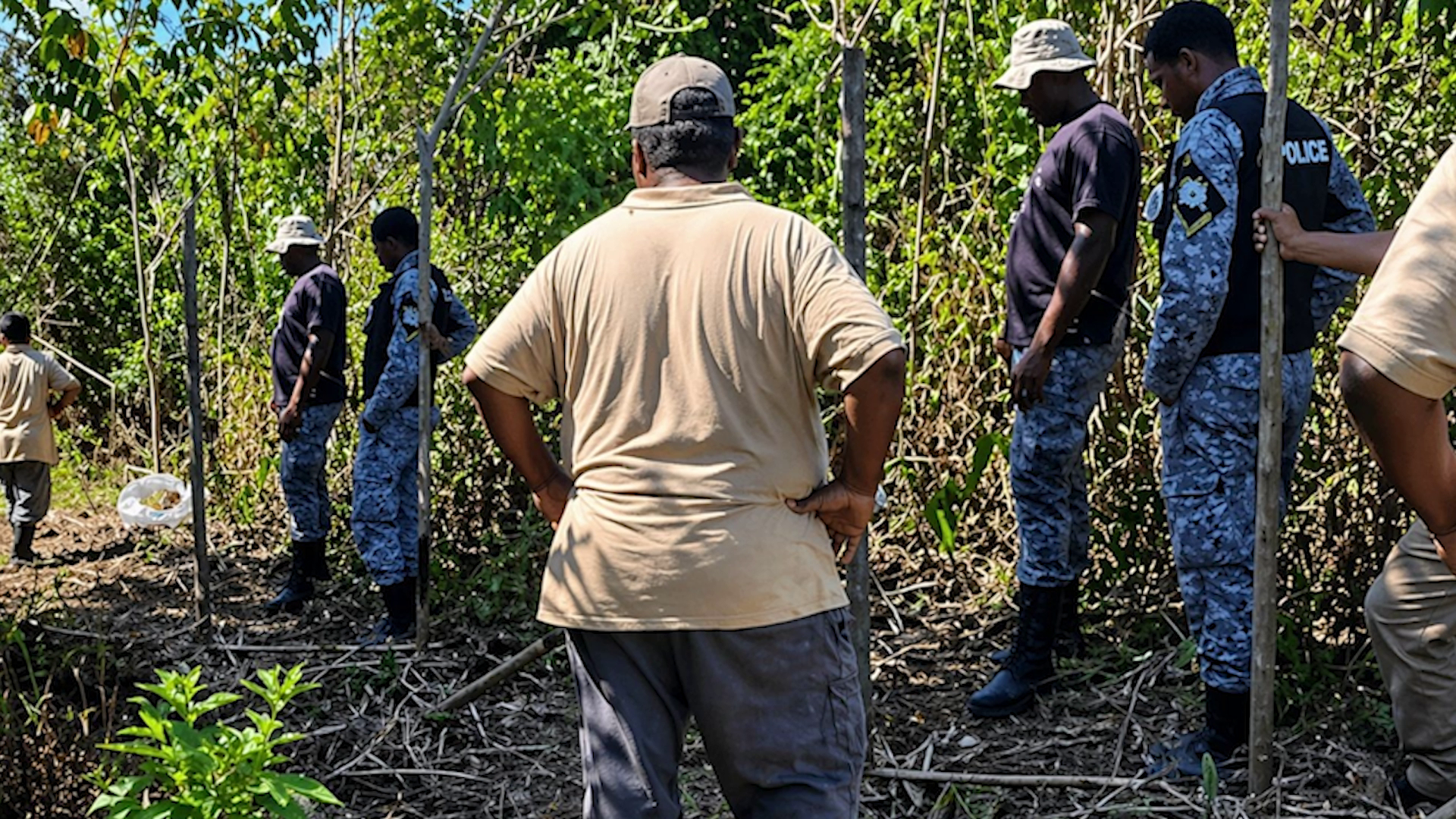
    On April 24, 2026, escalating tensions over a contested land parcel in southern Belize’s San Marcos Village prompted three high-ranking government officials to travel to the Toledo District to mediate between conflicting parties. The confrontation has pitted local Maya residents against a private landowner, with the community claiming the territory is held as communal land to which all villagers should retain legal access. According to local residents, the private landowner has recently expanded activities beyond agreed boundaries, encroaching on the land the community has long relied on for collective use.

    As public concern over the standoff grew, Dr. Louis Zabaneh, Minister of Indigenous People’s Affairs, led the government’s on-site intervention, accompanied by Oscar Requena, Area Representative for the district, and Oscar Mira, Minister of Home Affairs. The delegation’s primary priority was to hear unfiltered concerns directly from San Marcos residents and prevent the simmering disagreement from boiling over into open conflict.

    Following a closed-door talks with community representatives, Dr. Zabaneh outlined the government’s approach in an on-the-record interview. “We held a very candid and respectful discussion of the issues,” he explained. “We did both an in-depth look at the situation on the ground in San Marcos where the residents are claiming that a private land owner is impinging on areas that should be communal land or land that residents should have access to. Then we looked at the broader picture of the process ahead with the review panel and how we can move forward towards a resolution.”

    Zabaneh noted that community members spoke openly and passionately about their longstanding connection to the land and their concerns over the encroachment. Following the meeting with villagers, the ministerial delegation planned to hold a separate negotiating session with the private landowner, with the explicit goal of identifying common ground for compromise. The ultimate objective, Zabaneh stressed, is to de-escalate immediate tensions and work toward a permanent, mutually acceptable long-term resolution to the conflict. “We are trying at least, we don’t know how it will transpire. But we are giving it our best shot,” he added.

    The local landowners’ association, Toledo Private and Lease Landowners Limited, has pushed back against the community’s claims. In a statement ahead of the mediation, the group confirmed that the family holding the legal title to the disputed parcel has not taken any action to provoke tensions, asserting that the landowner is only carrying out restoration work on territory that had been cleared previously.

    This report is adapted from a transcript of an evening television newscast, originally published online.