博客

  • Protoje’s ‘Art of Acceptance’ debuts at #9 on Billboard

    Protoje’s ‘Art of Acceptance’ debuts at #9 on Billboard

    Jamaican reggae musician Protoje has added another milestone to his growing discography, securing his sixth placement on the iconic Billboard Reggae Albums chart with his latest studio release, *Art of Acceptance*. The new project made its first appearance on the weekly ranking at the number 9 position, marking another consistent win for the artist on the influential U.S. music chart.

    Protoje’s history with the Billboard chart stretches back more than a decade, with his first chart entry coming in 2013 with the album *The 8 Year Affair*. That debut project performed impressively, climbing to a peak of number 5 on the ranking. Just two years later, in 2015, he delivered his breakout chart-topping release *Ancient Future*, which claimed the number 1 spot. He duplicated that success three years later, when his 2018 album *A Matter of Time* spent one week holding the highest position on the reggae albums tally.

    In the years following that second number 1 hit, Protoje has continued to earn new chart positions with every subsequent release. His 2020 offering *In Search of Lost Time* reached a peak of number 6, while his 2022 album *Third Time’s The Charm* landed at number 8. Now, with his 2026 release *Art of Acceptance*, he extends his unbroken streak of charting albums, a rare show of consistency in the modern music industry.

    This latest entry is not just a personal win for Protoje—it also makes history for Jamaican reggae this year. *Art of Acceptance* is only the second album from a Jamaican artist to debut on the Billboard Reggae Albums chart in 2026 so far. A few weeks prior, another Jamaican talent, Alkaline, saw his release *NPT* climb to a matching number 9 peak on the same ranking, signaling a steady stream of new Jamaican reggae gaining traction on U.S. charts this year.

  • Minister defends privacy amid controversy over public officer’s political clothing

    Minister defends privacy amid controversy over public officer’s political clothing

    A growing political controversy over a top Bahamian public official’s visible partisan activity has put the country’s public service neutrality rules under the spotlight, with top cabinet officials passing responsibility for addressing the situation between government departments.

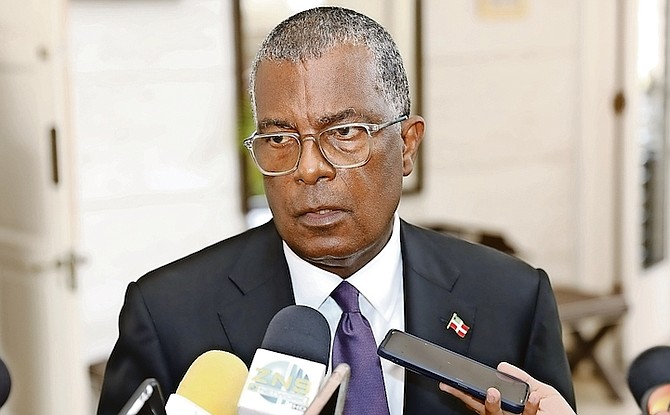
    Bahamas Foreign Affairs Minister Fred Mitchell said Tuesday he would not offer any public comment on the controversy surrounding Melvin Seymour, his ministry’s Permanent Secretary, who was photographed wearing branded gear of the ruling Progressive Liberal Party (PLP) during Nomination Day at a political rally on Cat Island, an event attended by Prime Minister Philip Davis.

    The incident drew sharp criticism last week from Brensil Rolle, the country’s former Public Service Minister. Rolle argued that Seymour’s public display of partisan affiliation directly violates the government’s General Orders, which mandate political neutrality for civil servants. He warned that failure to take disciplinary action would erode public trust in the independence and integrity of the public service, ultimately rendering the regulations governing public officials’ political activity unenforceable.

    Mitchell pushed back against repeated requests for comment during a press briefing, insisting that personal conduct falls to the individual and internal personnel matters should remain confidential. “I really don’t have any comment to make on any of that, except to say that one’s personal conduct is one’s personal conduct,” Mitchell said. “There are people who are responsible for the matters which you’ve raised, but that’s as far as I can go at this point.”

    When asked whether public servants across the country are treated equally regardless of their political alignment, Mitchell declined to answer, noting that it would be inappropriate for him to address the question. He emphasized that privacy should be the default standard for handling internal personnel issues, pushing back against growing demands for public transparency around the case.

    “I understand in this dispensation that privacy means nothing to anyone anymore, but my view is privacy is an important issue, and personnel matters are private and personal, unless that person wants to disclose what those issues are,” Mitchell said. He added that under his leadership of the Foreign Ministry, no public servant affiliated with the opposition Free National Movement (FNM) has faced dismissal or professional retaliation for their political membership.

    Mitchell repeatedly rejected further calls for public comment, reaffirming that internal personnel matters should not be debated in public and that the issue falls under the purview of other government bodies. “Again, I said personnel matters are private. I have no wish to delve into someone’s personal personnel issues in public, and I don’t think it’s appropriate to do so. I think that’s a question which ought to be left to others,” he said.

    Labour and Public Service Minister Pia Glover-Rolle clarified Sunday that the Seymour case falls under the jurisdiction of the Office of the Prime Minister. “The Office of the Prime Minister will, in that regard, handle any communications regarding that matter,” she said, adding that her department has already issued clear, repeated guidance on the General Orders that restrict public servants’ partisan political engagement.

    Latrae Rahming, communications director for the Prime Minister’s Office, confirmed Tuesday that Prime Minister Davis will address questions about Seymour directly to the press, though he could not provide a specific timeline for the briefing.

    At its core, the controversy hinges on whether Seymour’s public partisan display violated the General Orders that require all civil servants to remain politically neutral. Seymour, a retired public servant who was rehired into his current role, earns a total annual compensation package of $221,316, combining his salary, existing pension, and job-related allowances.

  • Customs flags six fraud cases a month as 103 recruits join

    Customs flags six fraud cases a month as 103 recruits join

    Customs agencies in the Caribbean archipelago of the Bahamas are detecting as many as six fraudulent import cases every single month, with the vast majority involving importers deliberately misstating the value or volume of incoming goods to cut down on required duty payments, Comptroller Ralph Munroe confirmed publicly this week. The announcement coincided with a formal induction ceremony for 103 newly hired officers, a key step in the department’s multi-phase push to tighten enforcement of trade and tax regulations across the country’s sprawling network of ports.

    During an interview with local outlet the Tribune, Munroe detailed the most common forms of fraud the agency encounters on a regular basis. “The most widespread issue we see is fraudulent invoicing: an importer knows they paid $1,000 for a shipment, but they declare just $500 or $600 on their official paperwork,” Munroe explained. “When our officers cross-reference the stated prices against supplier records and current online market rates, the discrepancy is immediately obvious.”

    To identify these irregularities, the department has invested heavily in specialized training for frontline personnel, teaching officers how to spot inconsistencies by cross-checking declared invoice values against supplier documentation and prevailing industry price benchmarks. Munroe added that the agency also benefits significantly from informal intelligence sharing within the local business community, where competing companies often tip off authorities to suspicious low declarations from their rivals.

    “Competing businesses have the clearest insight into what market rates actually are, so when one competitor is bringing in goods at a declared value far below what everyone else pays, that’s a red flag that they’re very quick to report to us,” Munroe noted. “That community partnership has become one of our most effective tools for rooting out fraud.”

    Unlike many regulatory violations that require lengthy court proceedings, the vast majority of confirmed customs fraud cases are resolved through administrative channels, a process that the comptroller says cuts down on delays and reduces backlogs for the country’s court system. Under existing Bahamian law, the Comptroller of Customs is granted explicit authority to issue financial penalties or seize undervalued goods directly, eliminating the need to go through the judicial system for most cases.

    “In many instances, the comptroller’s office brings far more specialized expertise to these trade fraud cases than a generalist magistrate, which means we can resolve them faster and more accurately,” Munroe argued. “This administrative framework keeps our system efficient and keeps unnecessary pressure off of the overstretched court system.”

    The addition of 103 new frontline officers comes as the department works to address longstanding staffing challenges across its 28 operating ports spread across the Bahamas’ 100,000 square mile maritime territory. Many of these remote ports require 24/7 monitoring to combat smuggling and fraud, stretching existing personnel thin. Munroe emphasized that while the new recruits will ease workload strain for current officers, gaps in staffing still remain a persistent priority for the department.

    As the largest single contributor to the Bahamas’ national revenue, Customs collects approximately 40 percent of the country’s total government income – equal to around $1.5 billion annually – through duties, taxes, and user fees levied on goods entering the country through its ports of entry. Munroe added that the department has also adapted to shifting global trade patterns, increasing monitoring of small-parcel imports through international courier systems, and has not experienced major operational issues beyond temporary volume surges during peak shipping periods.

    Throughout his remarks, Munroe stressed that institutional integrity remains the core foundation of the department’s work, noting that sustained public trust is a non-negotiable requirement for effective enforcement of customs regulations. “We cannot do our job of protecting legitimate businesses and collecting critical revenue for the government if the public does not trust that we are acting fairly and transparently,” he said. “That focus on integrity will guide every expansion of our operations moving forward.”

  • World going too slow on eliminating hepatitis — WHO

    World going too slow on eliminating hepatitis — WHO

    GENEVA, Switzerland — The World Health Organization (WHO) has issued a stark public warning that the global campaign to eliminate viral hepatitis as a major public health threat is moving far too slowly to meet global targets, even as proven, effective prevention and treatment tools already exist to tackle the disease that claims over a million lives each year.

    In the newly released 2026 Global Hepatitis Report, the UN health agency documented that in 2024 alone, hepatitis B and C — the two deadliest strains of the virus responsible for 95 percent of all hepatitis-related fatalities globally — caused 1.34 million deaths. Each year, the world also records more than 1.8 million new cases of chronic hepatitis infection, the report confirmed.

    “Progress is too slow and uneven,” WHO Director-General Tedros Adhanom Ghebreyesus shared in an official statement accompanying the report release. “Many people remain undiagnosed and untreated due to stigma, weak health systems and inequitable access to care. While we have the tools to eliminate hepatitis as a public health threat, urgent scale-up of prevention, diagnosis and treatment is needed.”

    Viral hepatitis triggers progressive inflammation of the liver, which can lead to life-threatening complications including cirrhosis, liver failure, and primary liver cancer. There are five distinct primary strains of the virus, with B and C ranking among the world’s deadliest infectious diseases. The 2026 report estimates that as of 2024, 287 million people around the globe were living with chronic hepatitis B or C infection.

    Gaps in care access remain alarmingly wide across all regions: Of the 240 million people living with chronic hepatitis B in 2024, fewer than 5 percent were receiving life-saving antiviral treatment. For hepatitis C, only 20 percent of all people living with the infection have accessed curative treatment since 2015, when affordable, effective therapies became widely available. In sub-Saharan Africa, the region that carries the world’s heaviest burden of hepatitis B infection, only 17 percent of newborns received the recommended birth-dose hepatitis B vaccine in 2024 — a step that prevents nearly all lifelong transmission from infected mothers.

    Six low- and middle-income countries account for 10 of the world’s highest hepatitis-related death tolls: China, India, Indonesia, Nigeria, South Africa and Vietnam.

    “Every missed diagnosis and untreated infection due to chronic viral hepatitis represents a preventable death,” stressed Tereza Kasaeva, director of the WHO’s Global Hepatitis Programme. Kasaeva echoed the organization’s call for accelerated investment and action to close care gaps.

    Crucially, the WHO emphasizes that all the tools needed to end hepatitis as a public health threat are already available and proven effective. The hepatitis B vaccine protects more than 95 percent of recipients from both acute and chronic infection. Long-term antiviral therapy for hepatitis B can effectively manage chronic infection and stop progression to severe liver damage and cancer. For hepatitis C, short-course curative treatment lasting just 8 to 12 weeks cures more than 95 percent of all infections.

    The report also highlights that elimination is achievable with targeted investment and political will: the United Kingdom, Egypt, Georgia and Rwanda have already demonstrated that large-scale progress is possible, bringing their own domestic hepatitis rates down to levels below the threshold for classification as a public health threat.

    “Eliminating hepatitis is not a pipedream: it’s possible with sustained political commitment, backed by reliable domestic financing,” Tedros confirmed. While progress has been uneven, the report does note modest, important gains made since 2015, when the UN adopted global elimination targets: annual new hepatitis B infections have fallen by 32 percent, and hepatitis C-related deaths have dropped by 12 percent over the past nine years.

  • Spotify reaches 761 million active users

    Spotify reaches 761 million active users

    Leading global music streaming platform Spotify has announced strong first-quarter financial and user growth results, with key metrics hitting or exceeding the company’s earlier projections, the firm confirmed in a statement out of its Stockholm headquarters Tuesday.

    By the end of the first three months of the year, Spotify’s total monthly active users (MAUs) climbed to 761 million, edging past the company’s own guidance of 759 million. Its base of paid premium subscribers also hit 293 million, landing exactly in line with internal forecasts.

    “We surpassed 760 million MAU, delivered on the subscriber growth we aimed to achieve, and saw healthy engagement from existing users, reactivations and new users alike,” said Alex Norstrom, one of Spotify’s current co-chief executives, in the official release.

    The leadership structure at Spotify has shifted recently: founder Daniel Ek stepped down from the chief executive role at the start of 2026, passing day-to-day leadership to co-CEOs Norstrom and Gustav Soderstrom. Ek remains closely involved with the company, however, staying on as active executive chairman to guide long-term strategy.

    On the financial side, first-quarter total revenue hit 4.5 billion euros, equal to roughly $5.3 billion U.S. dollars. That marks an 8% year-over-year increase from the same period last year. Operating income saw even steeper growth, jumping 40% annually to 715 million euros for the quarter.

    Looking ahead to the near term, Spotify has laid out new near-term targets. The firm projects that by the end of the second quarter in June, it will grow its MAU base to 778 million and expand its paid subscriber count to 299 million.

  • PM warns Pintard to drop ‘crazy antics’ ahead of vote

    PM warns Pintard to drop ‘crazy antics’ ahead of vote

    As the Bahamas approaches its April 30 advanced poll, political tensions between the ruling Progressive Liberal Party (PLP) and the opposition Free National Movement (FNM) have escalated sharply, with Prime Minister Philip Davis publicly calling on Opposition Leader Michael Pintard to abandon disruptive political tactics that threaten the integrity of the upcoming election process.

    Speaking to an energized crowd of PLP supporters at a rally hosted at Thomas A Robinson Stadium, Davis emphasized that the unrest that marred two recent by-elections must not be repeated on election day. He acknowledged that cultural expressions like traditional Junkanoo dancing have their place, but drew a clear line at actions designed to upend democratic voting procedures. “There is no need for constant commotion, physical conflict, and unruly behavior,” Davis told attendees. “We share one Bahamas, and we owe it to our country to conduct ourselves with dignity. At the end of the day, all parties should be prepared to accept the result gracefully.”

    Davis’ remarks come in direct response to the FNM’s recent moves to raise formal concerns over the accuracy of the national voter register and formally request international observers to monitor the election. The prime minister has already criticized Pintard for bypassing established domestic protocols to directly appeal to the United States for observation, labeling that move a breach of standard political procedure.

    To back up his warnings about potential opposition disruption, Davis referenced the 2023 Golden Isles advanced polling, which devolved into chaos after FNM and Coalition of Independents supporters blocked the removal of ballot boxes amid a dispute over transportation protocols for election materials. That incident, he argued, is a preview of what the opposition could bring to the upcoming national vote.

    Beyond warnings over electoral conduct, Davis launched pointed critiques of the FNM’s key campaign pledges, casting the opposition as unprepared to govern and arguing that an FNM election victory would roll back the progress the PLP has made in office and return the country to political instability and partisan conflict.

    The prime minister specifically dismissed the FNM’s promise to construct 5,000 new affordable homes, noting that the party has not delivered on large-scale housing development projects in more than 15 years. He called out an opposition candidate from the Garden Hills constituency who secured Crown land for a planned development of environmentally friendly affordable housing years ago, but has yet to break ground on a single unit.

    Davis also criticized the FNM’s proposal to provide a $200 monthly stipend to single mothers, dismissing the policy as a hollow, surface-level gesture that lacks the comprehensive support single-parent households actually need. He pointed out that the opposition has put forward no parallel plans to expand maternity leave protections, reduce the cost of essentials like diapers and groceries, or improve maternal health services in public hospitals. “It’s just a small monthly check to pretend they’re delivering for people, when they’re ignoring the root challenges these families face,” Davis said.

    The prime minister saved his final sharp rebuke for the FNM’s proposal to launch a national lottery. He argued that the plan would effectively turn the national treasury into a private gambling house, allowing connected private operators to pocket profits while offering little benefit to the general public. Davis questioned what the FNM was not disclosing about the plan, suggesting that unreported insider benefits would flow to the party’s wealthy political backers. “What they don’t tell you is which of their rich friends is actually going to walk away with the biggest jackpot,” he added.

  • Candidate slammed on crown land deeds

    Candidate slammed on crown land deeds

    Weeks before Bahamas’ hotly anticipated general election, a Progressive Liberal Party (PLP) candidate’s explosive claim about holding Crown Land title deeds for distribution has ignited fierce political debate and thrown a spotlight on long-simmering questions about the integrity of public land allocation processes.

    At a well-attended PLP campaign rally held in West End on April 13, Dr. Monique Pratt, the party’s candidate for East Grand Bahama, made the unorthodox announcement to assembled supporters. In remarks captured on video and later circulated publicly, Pratt pushed back against claims from rival political groups that they would deliver Crown Land to constituents, asserting that she already held the long-awaited deeds in her personal possession.

    “I’m proud to say that I have in my possession your long-awaited deeds to your crown land, and I’ve been given the instructions from our prime minister to release them to you,” Pratt told the crowd. A subsequent social media post from the candidate showed her at a party event calling out the names of East Grand Bahama residents who were purportedly marked as recipients of the allocated public land.

    Pratt’s comments immediately triggered widespread scrutiny, as observers and political opponents questioned why official government title deeds would be transferred to a sitting political candidate rather than being processed through standard, formal government administrative channels.

    When reached for comment by reporters on Monday, Pratt declined to address questions directly, referring all inquiries to PLP party leadership, noting that senior officials were aware of the controversy and would issue a formal response. Latrae Rahming, communications director for both the Office of the Prime Minister and the PLP, later confirmed to local outlet The Tribune that Prime Minister Philip Davis—who holds direct ministerial responsibility for Crown Land management—would address the matter personally during an upcoming press interaction.

    The opposition Free National Movement (FNM) has already seized on the controversy to attack the incumbent government, with FNM chairman Dr. Duane Sands launching sharp criticism over the incident, arguing it raises serious red flags about procedural fairness, governmental transparency, and adherence to the rule of law in Bahamian public land administration.

    “Crown Land is not a political reward, it is a sacred national patrimony, held in trust for all Bahamians,” Sands stated in his response. He questioned how official title deeds ended up in the custody of a political candidate rather than government agencies, and raised explicit concerns that land allocations are being weaponized for political patronage ahead of the election.

    “The issuance of title deeds is a formal governmental function, not a political favour to be dispensed from a campaign platform,” Sands added. He also called for direct answers from Prime Minister Davis, demanding clarification on whether Davis personally issued the instruction to deliver the deeds to Pratt for campaign distribution. Sands emphasized that the incident raises “significant legal and ethical questions” and pushed for full accountability and radical transparency in the ongoing administration of Crown Land.

  • PLP hands out over $200k in gift cards

    PLP hands out over $200k in gift cards

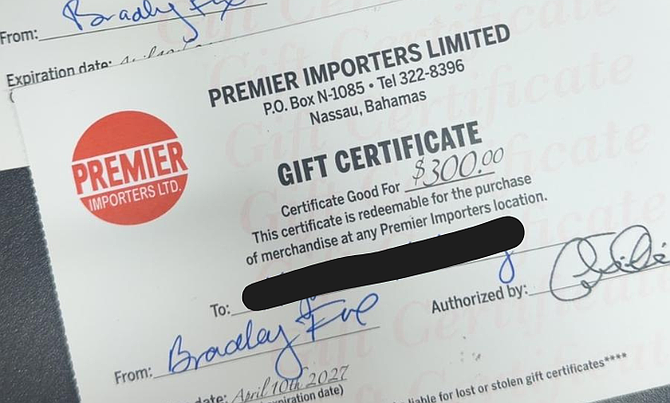
    A pre-election controversy has erupted in The Bahamas over more than $200,000 in Hurricane Dorian relief gift certificates distributed to Abaco residents, after the head of the issuing company directly linked the funding to the national Ministry of Finance. Chris Lleida, chief executive officer of Premier Importers — the local firm that produced and will honor the vouchers — made the claim publicly this week, opening a fierce debate over whether public funds have been misused to influence voters just two weeks ahead of the country’s general election, more than six years after Dorian devastated Abaco.

    According to Lleida, the finance ministry requested his company issue the gift certificates as part of long-delayed post-hurricane relief, with individual vouchers ranging in value from $200 to $500, for a total sum exceeding $200,000. He confirmed that his firm’s role is limited to producing and honoring the certificates, with all distribution responsibility held by the ministry and the third parties it designated. When pressed on the unusual timing of the rollout, coming years after the disaster and just weeks before voters head to the polls, Lleida acknowledged the obvious question: “Why didn’t this happen two years ago?”

    Physical copies of the certificates obtained by The Tribune show they bear the signatures of two Bahamas Progressive Liberal Party (PLP) figures: Bradley Fox Jr., the PLP candidate for Central and South Abaco, and Preston Roberts, the party’s campaign coordinator and a sitting member of the Disaster Reconstruction Authority board. To date, no clear information has emerged about how many certificates have been distributed, what criteria were used to select recipients, or how the distribution process is being managed.

    Lleida’s explosive claim has been forcefully rejected by senior PLP leadership. Valentine Grimes, a PLP trustee, stated that the party would never misuse public funds for this type of initiative, insisting that all materials distributed by party candidates are covered either by the party’s own budget or the candidate personally. “Anything that candidates give out to people, anything, is paid out by the party or the candidate,” Grimes said. When asked whether the distribution so close to an election constituted vote buying, Grimes acknowledged that similar practices occur across all political groups in the country — a longstanding unaddressed open secret in Bahamian politics. He argued that there is nothing improper about assisting vulnerable residents, even near an election, and that any interpretation of motive is up to individual voters.

    Other PLP figures have offered conflicting accounts of the funding source. Roberts, whose signature appears on the certificates, said he believed the funds came from the party’s own private relief donations, fulfilling a years-old promise to Dorian survivors made after the 2019 storm. He explained that distribution is still ongoing, with plans to expand the program to North Abaco, and that vouchers are targeted to residents still recovering from storm damage — including single mothers and elderly residents, who receive higher-value certificates to cover needs like roofing, cabinetry, and bathroom repairs. Fox, the candidate whose signature also appears on the vouchers, declined to answer direct questions about the funding source or vote buying allegations, only offering a biblical quote in response to reporters.

    Lleida pushed back against claims of partisan favoritism, noting that he has worked for years with cross-party lawmakers who use their constituency budgets to assist residents with home repairs and other needs. He added that while the current request was larger than usual, it was not out of the ordinary for his firm, and that he supports assistance reaching all eligible residents regardless of political affiliation. For local building supply businesses like his, he noted, the initiative also provides welcome economic support at a time when the local construction market remains sluggish.

    Requests for comment from the Office of the Prime Minister went unanswered by press time. The controversy has thrown a sharp spotlight on a longstanding gap in Bahamian election law: the country still lacks a comprehensive, enforceable campaign finance framework, with no clear mandatory disclosure rules for political spending or binding regulations governing the use of public resources during election periods. Both major political parties have repeatedly pledged to implement comprehensive campaign finance reform over the years, but no such policy has been enacted to date, leaving the door open for questions about the intersection of government relief and political campaigning ahead of this month’s vote.

  • NO HAND-OFF

    NO HAND-OFF

    Reigning men’s 100m world champion Oblique Seville will not join Jamaica’s national team for this weekend’s World Athletics Relays in Gaborone, Botswana, but his agent has firmly quashed online speculation of a falling-out between the sprinter and the Jamaica Athletics Administrative Association (JAAA) over the exit.

    The athletics community was caught off guard on Sunday when news broke that both Seville and Kishane Thompson — the Olympic and World Championships silver medalist — had pulled out of the event, just weeks after they were named as headline contenders in Jamaica’s men’s 4x100m relay pool. The Caribbean nation is traveling to Botswana chasing automatic qualification spots for the 2025 World Athletics Championships scheduled to be held in Beijing, making the absences of two of its top sprinters a notable setback.

    While Thompson’s exit has been widely linked to an ongoing injury issue, an unconfirmed report emerged Monday claiming Seville withdrew because the JAAA refused to cover the cost of a shorter, earlier flight to Botswana that would fit the sprinter’s schedule. The Jamaica Observer reached out to JAAA President Garth Gayle for an official response to the claim, but did not receive a reply before this article went to press.

    Shortly after the speculative report circulated, the JAAA issued an official public statement Monday refuting the claims, labeling them “factually inaccurate”. According to the association’s account, the conflict centered entirely on Seville’s pre-existing contractual commitments in Miami, Florida, which required him to return from Botswana by a specific date that the available flight schedules could not accommodate.

    The JAAA explained that after checking all available commercial routes, the earliest flight that could get Seville back to Miami would arrive after 12 p.m. next Tuesday, and the association could not guarantee an earlier return that would meet his contractual deadline. Following these negotiations, the association says Seville’s agent Norman Peart formally notified the JAAA last Tuesday of the sprinter’s decision to withdraw, and extended well wishes to the rest of the Jamaican team ahead of the competition. The JAAA added that it remains eager to see Seville represent Jamaica in future international competitions as a core member of the national team.

    Peart has since confirmed that the JAAA’s official account of the withdrawal is fully accurate, adding that Seville is deeply disappointed to miss the chance to compete for his home country this weekend. “We had some challenges; we really worked hard to get this done but it couldn’t happen. The logistics coming out of Botswana just could not work. We’ve been at it for a while but it just couldn’t work,” Peart told the Jamaica Observer in an interview.

    Peart stressed that there is no personal friction or public fallout between Seville and the JAAA leadership, calling the entire situation an unfortunate confluence of competing commitments. “We had our challenges but I must say the JAAA really went out of their way to see [if it could be resolved], but the timing and the whole logistics of getting back from Botswana is very challenging and could not work out because he had to get back to the United States — and it’s [something] he cannot miss,” Peart explained.

    Seville, who claimed his first senior 100m world title at the 2023 World Athletics Championships in Tokyo, has never competed at a World Relays event. However, he was critical to Jamaica’s qualification for the 2023 World Championships last summer, helping the nation secure its slot at the London Diamond League meet after Jamaica failed to finish two qualifying races at the previous World Relays. At the Tokyo World Championships, Seville was part of Jamaica’s sprint relay team that missed out on a medal after dropping the baton during the heat rounds.

    The JAAA has not yet announced whether it will name replacement sprinters for Seville and Thompson ahead of the travel window for the Botswana event. Even with the two absences, Jamaica’s 4x100m relay pool still boasts top 100m talents including Ackeem Blake, Rohan Watson and Kadrian Goldson, who will step into contention to secure the qualifying spot for Beijing next year.

  • Sigh of relief!

    Sigh of relief!

    After weeks of widespread supply disruptions that forced many Jamaican women to either pay steep out-of-pocket costs for prescription birth control or switch to alternative contraceptive methods that caused unwanted side effects, the injectable contraceptive shortage in Jamaica’s public health system has finally eased, according to on-the-ground reporting from the Jamaica Observer.

    During checks conducted Friday at two major public health facilities in Kingston’s Corporate Area — Maxfield Park Health Centre and Slipe Pen Road Comprehensive Health Centre — journalists confirmed that the contraceptive injections are once again available to patients who rely on the public system for free or low-cost reproductive care.

    One anonymous patient at Slipe Pen Road, who had been unable to access the injection during a prior visit, shared her experience with the Observer. She had been offered a choice between purchasing the contraceptive through a private pharmacy prescription or switching to oral birth control when stock ran out. Opting for the pill due to cost, she stopped using it after developing severe adverse side effects, and was relieved to finally receive her preferred injection during Friday’s visit. She added that women who chose to purchase the contraceptive privately reported paying roughly J$4,100 per dose — a major expense for many low-income households.

    The patient also echoed widespread public speculation about the cause of the shortage, linking it to comments from Health Minister Christopher Tufton that framed Jamaica’s declining birth rate as a policy concern. “When people have children they are not getting good care in hospitals or proper food,” she noted, pointing to inadequate postnatal support for new mothers as evidence that policy pushes for higher birth rates are out of step with on-the-ground needs. Her 10-month-old child recently received inadequate food assistance through the country’s new mother support program, she added.

    A second patient at the same facility confirmed she faced identical barriers to access last month. Unable to afford the private purchase option, she also switched to the pill, which caused unwanted side effects including increased appetite that led her to seek out the injectable form as soon as it became available again.

    A senior public health nurse at Slipe Pen Road confirmed the supply disruption lasted throughout the month of March, triggered by unexpected delays in a routine national order. She confirmed that supplies have been replenished, and patients have been able to access their regular injections for the past two weeks.

    At Maxfield Park Health Centre, multiple patients emphasized that financial need is the primary reason the vast majority of women seek contraceptive care through the public system rather than private markets. Teresa McKenzie, a mother who accessed the injection alongside her sister, explained that she relies on the public service because she is currently out of work, and her partner already struggles to cover basic household costs for their existing children. “Taking care of children is more manageable this way, when you can plan when you have another,” she said, noting that unplanned pregnancy would make covering food and school fees far more difficult for her family.

    Dr. Julia Rowe-Porter, director of the Ministry of Health and Wellness’ Family Health Unit (FHU), clarified the root causes of the facility-level shortages in a statement. While the National Health Fund (NHF), which manages national stockpiles of public health supplies, has confirmed there is no national shortage at its central storage facility, recent changes to national order management protocols created gaps that left local clinics without stock for several weeks. Rowe-Porter confirmed that the FHU is currently working alongside the NHF and regional health authorities to resolve the systemic issues that led to the disruptions and prevent future stock-outs.