博客

  • Caribbean Women in Leadership Congratulates Five Women Contesting Antigua and Barbuda General Election

    Caribbean Women in Leadership Congratulates Five Women Contesting Antigua and Barbuda General Election

    As Antigua and Barbuda prepares for its 2026 general election, a regional gender equity advocacy organization Caribbean Women in Leadership (CIWiL) Antigua and Barbuda is celebrating a key milestone for gender representation in the country’s political space: five women have stepped forward to contest parliamentary seats in the upcoming vote, a development the group says marks meaningful progress for inclusive democracy.

    CIWiL Antigua and Barbuda has publicly named each of the trailblazing candidates, who span independent and major party lines, reflecting growing gender diversity across the country’s political spectrum. The five candidates are Gail S. Pero, an independent contender running for the St. George constituency; Malaka Parker, who is representing the United Progressive Party (UPP) in St. John’s Rural North; Kiz Johnson of the Antigua and Barbuda Labour Party (ABLP), contesting the St. Philip South seat; Maria Bird-Browne, also of the ABLP, who is running in St. John’s Rural East; and sitting UPP Senator Pearl Quinn-Williams, who is seeking election in St. John’s City East.

    In a formal statement released recently, the organization emphasized that increased women’s participation in electoral politics delivers far-reaching benefits that strengthen Antigua and Barbuda’s democratic foundation. CIWiL pointed out that women in elected office bring unique, lived perspectives to legislative debates that are often overlooked when political spaces remain male-dominated. These diverse outlooks, the group noted, drive meaningful progress on a range of high-priority issues that directly impact families and communities across the country, including accessible public healthcare, affordable and reliable childcare, and more transparent, accountable governance. By bringing more diverse voices to the table, CIWiL argued, political institutions become more responsive to the needs of all citizens, ultimately reinforcing public trust in democracy.

    Beyond celebrating the candidates, CIWiL also issued a call to action for all eligible voters across Antigua and Barbuda to engage actively in the upcoming electoral process. The organization reminded citizens that every single vote carries weight, and collective participation is what shapes the long-term trajectory of the nation’s future. CIWiL’s announcement comes amid a broader regional push across the Caribbean to break down longstanding barriers that have kept women underrepresented in political leadership, with groups like CIWiL working to normalize female candidacy and encourage more women to pursue public office.
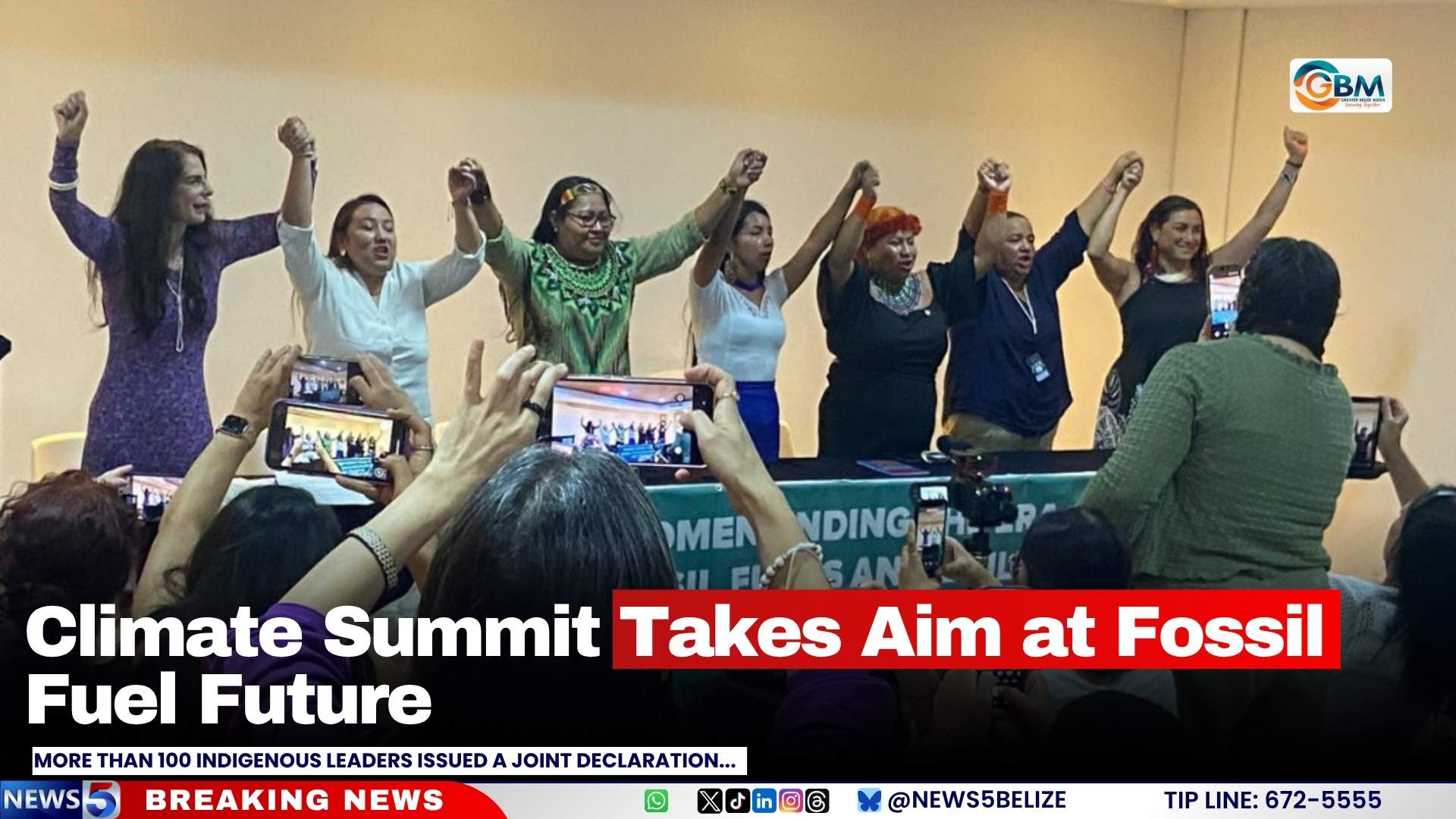
  • Climate Summit Takes Aim at Fossil Fuel Future

    Climate Summit Takes Aim at Fossil Fuel Future

    In a landmark step for global climate action, the world’s first dedicated Fossil Fuel Phase-Out Summit wrapped up its proceedings on April 30, 2026, in Santa Marta, Colombia. Convened outside the formal United Nations climate negotiation framework, the unprecedented gathering brought nearly 60 national delegations together to tackle the complex challenge of phasing out global production and use of coal, oil, and natural gas, framed by organizers as a bold experiment in collaborative climate diplomacy.

    While the summit did not produce any legally binding commitments for participating nations, it delivered a series of meaningful milestones that signal a shifting global conversation around fossil fuel dependency. A core highlight came from over 100 Indigenous leaders from around the world, who released a unified joint declaration positioning Indigenous territorial protection as a non-negotiable foundation for an equitable just transition away from fossil fuels.

    Patricia Suárez, a representative of the Organization of Indigenous Peoples of the Colombian Amazon (OPIAC), shared a measured assessment of the summit’s outcomes, noting that the event successfully elevated the urgency of rapid fossil fuel phase-out but left critical implementation questions unresolved. “The Santa Marta Conference has put the urgency of moving away from fossil fuels on the table, but still leaves unanswered how that will happen,” Suárez stated. “For Indigenous Peoples, the answer is clear: without the protection of our territories, and as long as energy models that plunder them persist, nothing will change.” She emphasized that a permanent ban on extractive activities within Indigenous lands must be a central component of any credible global climate strategy.

    Another key institutional outcome of the summit was the launch of a new global scientific transition panel, comprising more than 250 leading climate and energy experts from around the world. The panel will be co-chaired by prominent climate scientists Johan Rockström and Carlos Nobre, tasked with providing evidence-based guidance for transition planning. Martí Orta-Martínez, a researcher at the University of Barcelona, stressed that current climate science leaves no room for delayed action, arguing that to keep global warming within the internationally agreed 1.5°C threshold, nearly all existing oil and gas extraction contracts must be canceled immediately.

    Observers of the summit also highlighted critical gaps that must be addressed in future talks. Ana Carolina González, a policy analyst with the Natural Resource Governance Institute, noted that the event opened vital conversations about energy transition planning for fossil fuel-producing nations, but it lacked participation from national oil companies (NOCs) — actors that play an outsize role in global energy markets. “These are not peripheral players: they produce more than half of the world’s oil and gas, a share set to reach 62% by 2050, and are the economic backbone of countries like Colombia, Mexico and Nigeria,” González explained. “The next step must bring them in as essential partners in any credible transition roadmap.”

    Despite the gaps, many participants framed the summit as a long-awaited shift from the tone of past climate negotiations. Fatima Eisam Eldeen, also of the University of Barcelona, noted that for the first time in a major global climate gathering, the focus was not solely on sounding alarms about the climate crisis, but on exploring actionable pathways forward. “For the first time, it wasn’t only sounding the alarm on what is going wrong or how little time is left, it was shining a light on what is possible, it spoke the language of hope. Now the real work begins: taking this out of conference rooms and into people’s lives,” she said.

    The summit also drew input from key global energy and policy leaders. International Energy Agency executive director Fatih Birol, whose remarks were featured during the event, warned that global energy markets are undergoing irreversible structural change that is already accelerating the shift away from fossil fuels. Colombian Environment Minister Irene Vélez Torres echoed that urgency, arguing that continued reliance on fossil fuels can never deliver long-term, stable energy security for any nation.

    Private sector engagement was also present, with major clean energy and industrial firms including Chinese electric vehicle manufacturer BYD and Australian green industrial firm Fortescue participating in working sessions. The companies outlined their emerging “real zero” emission strategies, which prioritize eliminating greenhouse gas emissions at the source rather than relying on carbon offsetting schemes.

    In a final announcement, delegates confirmed that the second iteration of the Fossil Fuel Phase-Out Summit will be co-hosted by Tuvalu and Ireland in 2027, extending the new forum for collaborative climate action outside traditional UN processes.

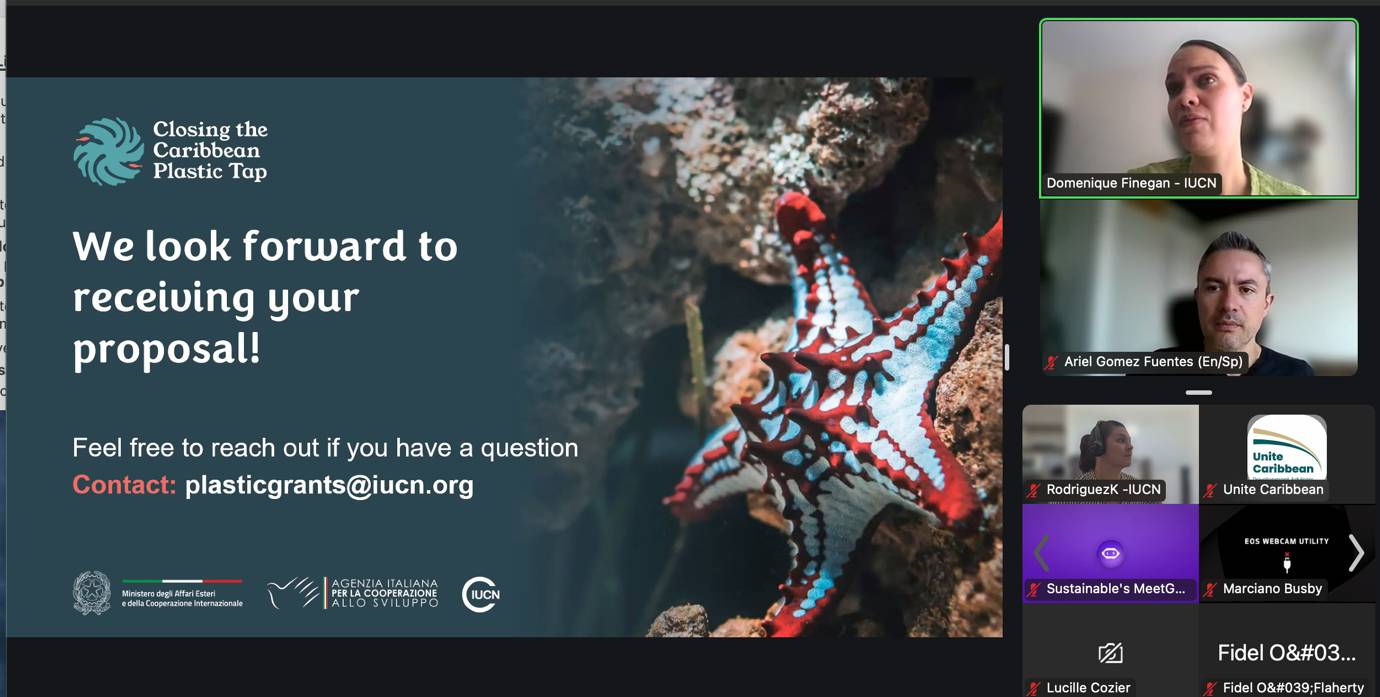
  • Call for proposals: Closing the Caribbean Plastic Tap initiative

    Call for proposals: Closing the Caribbean Plastic Tap initiative

    A landmark new resourcing program to drive local action against the growing crisis of plastic pollution in the Eastern Caribbean has officially launched, developed as a core component of the broader “Closing the Caribbean Plastic Tap” initiative.

    The Sustainable Small Grants Programme (SSGP), administered by the International Union for Conservation of Nature’s Regional Office for Mexico, Central America and the Caribbean (ORMACC), delivers both targeted funding and technical assistance to entities working to cut single-use plastic waste and scale circular economy models across five Eastern Caribbean island nations: Antigua and Barbuda, Grenada, St Lucia, St Kitts and Nevis, and St Vincent and the Grenadines.

    Unlike large-scale international conservation projects that often prioritize top-down interventions, the SSGP is designed to center local leadership. Eligible applicants include micro, small and medium-sized enterprises (MSMEs), community-based organizations (CBOs), non-governmental organizations, cooperatives, community associations, local schools and informal community groups that can prove a track record of meaningful on-the-ground community engagement. Successful grantees will implement practical, replicable interventions aimed at cutting the amount of plastic waste that leaks into Caribbean oceans and terrestrial ecosystems.

    The program draws on 400,000 euros in total funding, secured through partnership with the Italian Agency for Development Cooperation (AICS) and the Italian Ministry of Foreign Affairs and International Cooperation (MAECI). Each of the five participating countries has been allocated a maximum of 80,000 euros, with individual awards ranging from 30,000 euros to 80,000 euros per project.

    Funding will prioritize projects that adopt upstream prevention strategies to cut plastic use at its source, paired with midstream circular economy approaches that extend the lifecycle of plastic materials already in circulation. This focus aligns with a growing regional push to address plastic pollution at its origin, rather than only managing waste after it enters the environment, through expanded reuse, recycling, and adoption of sustainable alternative materials.

    All supported projects are required to set clear, measurable targets for both environmental and socio-economic impact. Beyond cutting plastic leakage, grantees will advance national environmental priorities and contribute to global commitments including the UN Sustainable Development Goals (SDGs) and the Kunming-Montreal Global Biodiversity Framework (GBF).

    Applications for the first round of funding are open now, and interested eligible organizations have until 11:59 p.m. Atlantic Standard Time on May 31, 2026 to submit full proposals. Full program guidelines and additional application details are available through the official IUCN program portal.

    This report is published under partnership with NOW Grenada, which does not take responsibility for individual contributor perspectives or third-party content. Users may report inappropriate content through official NOW Grenada reporting channels.

  • Harpy Eagles eying another CWI title

    Harpy Eagles eying another CWI title

    The defending champions of the West Indies Championship, Guyana Harpy Eagles, are now just one victory away from lifting the trophy for a second consecutive time, after a dominant 93-run win against Windward Islands Volcanoes locked in their spot in the title decider. Played on the fourth and final day of the round-robin fixture at Antigua’s Coolidge Cricket Ground, Wednesday’s result pushed Tevin Imlach’s side to the summit of the league table, earning them an automatic direct berth in the championship final and completing a 3-0 clean sweep across their head-to-head meetings with the Volcanoes this season.

    Windward Islands Volcanoes had an uphill battle from the moment they resumed play on Wednesday, requiring 319 runs to claim victory with nine wickets remaining in their second innings at 17 for one. The contest quickly swung firmly in the Harpy Eagles’ favour early on, as Nial Smith trapped Stephan Pascal leg before wicket for 12, before fast bowler Shamar Joseph removed Kavem Hodge for just eight, leaving the Volcanoes reeling at 36 for three.

    A 74-run fourth-wicket stand between Johann Jeremiah and Alick Athanaze briefly revived the underdogs’ chances of an upset, pushing the score to 110 for three and giving the side hope of a remarkable comeback. However, the game shifted again once veteran spinner Veerasammy Permaul claimed Jeremiah’s wicket for 25, opening the door for left-arm spinner Gudakesh Motie – the Harpy Eagles’ standout performer for the entire 2024 season – to take control of the contest. Motie quickly picked up the wickets of Shadrack Descarte and Noelle Leo, dropping the Volcanoes to 145 for six with just four wickets left in the innings.

    Though Athanaze put up a resilient fight, finishing with a patient 64 from 116 deliveries, the lower order could not withstand the spin attack from Motie and Permaul. The pair combined to take the final four wickets of the innings, wrapping up the 93-run win. Motie finished with match figures of 4 wickets for 82 runs, Permaul claimed 3 for 41, and Joseph ended with 2 for 26 to round out the Harpy Eagles’ bowling performance.

    In the second simultaneous round-robin fixture hosted at Antigua’s Antigua Recreation Ground, Leeward Islands Hurricanes pulled off a remarkable rearguard batting effort to secure a draw against Trinidad and Tobago Red Force. Resuming the final day at 160 for four, the Hurricanes faced a daunting task of batting out the full day to avoid defeat, but centuries from top-order batter Keacy Carty and captain Justin Greaves turned the tide of the match.

    Trapped in a must-save situation, Carty and Greaves built a match-saving 174-run fifth-wicket partnership that dragged the Hurricanes back into the contest and put a Red Force victory out of reach. The pair carried the home side’s score to 271 before left-arm spinner Khary Pierre claimed a return catch to remove Carty, who had battled for four hours and 45 minutes to score 104 from 212 balls, hitting 16 boundaries and two sixes along the way.

    Red Force kept pushing for the win that would have secured them top spot, and soon claimed the wickets of Cameron Pennyfeather for 20 and Greaves – who notched a defiant 122 from 178 balls, with 14 fours and one six – leaving the Hurricanes at 355 for seven. However, any remaining hopes of a win for the visitors were snuffed out by an unbroken late-wicket stand between Rahkeem Cornwall and Jahmar Hamilton. Cornwall scored an unbeaten 66 from 100 balls, while Hamilton finished 50 not out off 111, adding an unbroken 112 runs for the eighth wicket to force the two sides to agree to a draw when the Hurricanes reached 467 for seven.

    Pacer Anderson Phillip finished with impressive figures of 4 for 89 for Red Force, who held on to second place in the final round-robin standings. As a result, Red Force will now face Barbados Pride in a semi-final qualifier, with the winner advancing to the championship final to take on the top-seeded Guyana Harpy Eagles for the West Indies Championship title.

  • Babonneau targeted for boost under Community Business Project

    Babonneau targeted for boost under Community Business Project

    A new chapter of community-led economic development kicked off in Babonneau on April 29, as stakeholders from across public, private, and civil society groups gathered at Fond Latisab Creole Park in Fond Assau to formally launch the Community Business Revitalisation Project (CBRP), an initiative designed to inject targeted resources into local communities while preserving unique cultural heritage.

    Funded by the Taiwan Embassy and implemented by the Taiwan Technical Mission, the CBRP operates in partnership with three key local and national stakeholders: the Babonneau Youth Synergy, the Babonneau Constituency Council, and Saint Lucia’s Ministry of Commerce. Centered on expanding community-based tourism, the initiative places youth participation at the heart of its strategy, recognizing young residents as key drivers of long-term local growth.

    Unlike top-down development schemes, the CBRP follows a community-first framework that lets local residents themselves identify the highest-priority areas for investment. Once priorities are set, the project brings its full range of resources and implementation expertise to turn those community-led ideas into tangible action. Its core objectives are threefold: generate sustainable local economic opportunities, protect and celebrate unique cultural heritage, and lift up small and medium-sized local enterprises.

    Speaking at the official launch, Taiwan Ambassador Nicole Su highlighted the untapped tourism potential of Babonneau’s distinct cultural identity, drawing on her own past experience in the area. “I remember the Creole festival here at Babonneau,” Su said in her address. “The experience was lively, vibrant, and unforgettable, and this is why we think we can bring tourists here in Babonneau, because Creole culture is unique and precious.”

    This project builds on pre-existing development work that the Taiwan Technical Mission has already completed in Babonneau, including the installation and ongoing maintenance of directional community signage, plus branding and amenity upgrades to the Fond Latisab Creole Park itself.

    Aldrick Edward, outgoing president of the Babonneau Youth Synergy, outlined upcoming activities for the CBRP’s next phase, set to begin in the near future. Two key free programs will launch shortly: cultural dance workshops that celebrate local Creole traditions, and business management classes designed to equip emerging local entrepreneurs with the skills they need to grow successful ventures.

    Babonneau marks the third community to join the CBRP rollout, which first launched in 2023 across four target Saint Lucian communities: Fond St Jacques, Laborie, Babonneau, with Dennery South tentatively scheduled as the final location. The initiative has already delivered tangible results in the first two participating communities, serving as a proof of concept for the community-led model.

    In Fond St Jacques, CBRP collaboration with the Ministry of Commerce has delivered a full overhaul of the local interpretation centre, professional training for new tour guides, and hands-on culinary instruction led by renowned Chef Orlando. The project has also supported young entrepreneurs to develop detailed business plans and launch a new agro-tourism park. Additional community-focused outcomes include the launch of the popular Dasheen Festival, a free educational summer camp for local students, and support to establish a community gift shop – all delivered at no direct cost to the Fond St Jacques community.

    In Laborie, the CBRP has backed the construction of a purpose-built sewing room for local crafters, alongside ongoing sewing skills workshops. The facility received a full refurbishment, and project specialists provided support to strengthen product branding for local craft goods. The initiative also supported a comprehensive upgrade and revitalization of Laborie’s existing community gift shop to better serve both local residents and visiting tourists.

    Ambassador Su emphasized that building long-term intergenerational impact by strengthening the capacity of small and medium-sized local businesses is a core, non-negotiable goal of the entire CBRP initiative. By centering community voice and investing in both cultural preservation and economic opportunity, the project aims to create sustainable growth that benefits current residents and future generations alike.

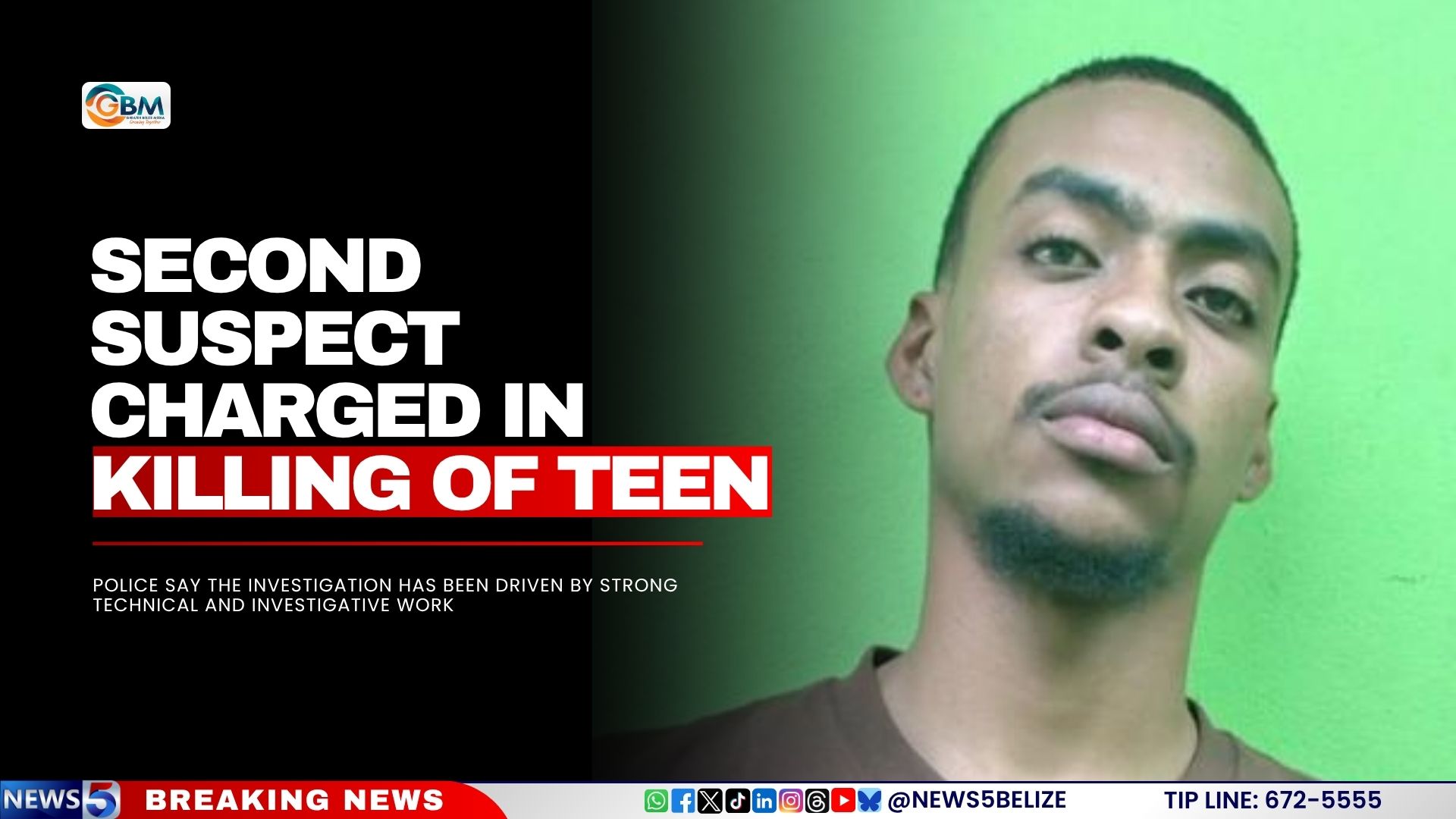
  • Second Suspect Charged in Killing of Teen

    Second Suspect Charged in Killing of Teen

    A high-profile homicide investigation that has gripped Belize City since mid-April has reached a new milestone, with law enforcement announcing charges against a second suspect connected to the shooting death of 19-year-old Jamir Cambranes. Investigators confirmed that the ongoing case is built on a solid foundation of digital and surveillance evidence that has allowed them to steadily advance their probe.

    Cambranes was killed in a gun attack on April 21, an act of violence that sent shockwaves through the local community and prompted an urgent, full-scale response from Belize City police. In the days immediately following the fatal incident, investigators completed a review of closed-circuit television footage and collected forensic evidence from the crime scene, leading to the arrest and murder charge of 33-year-old Kenrick Robinson.

    On Wednesday, authorities announced the latest breakthrough in the investigation: 21-year-old Kameron Heusner, a local fisherman and college student based in Belize City, has been arrested and formally charged with murder. A court-issued arrest warrant was secured as the investigation progressed, allowing law enforcement to take Heusner into custody and file official charges.

    To date, investigating officials have not publicly disclosed a confirmed motive for the killing. However, police spokespeople have emphasized that rigorous technical analysis and methodical investigative work have been the driving force behind the case, enabling investigators to quickly identify both suspects and connect them to the fatal shooting. Investigations remain ongoing as authorities work to finalize their case ahead of trial proceedings.

  • Antigua and Barbuda scientist Alexandra Hughes completes ocean acidification training in Jamaica

    Antigua and Barbuda scientist Alexandra Hughes completes ocean acidification training in Jamaica

    A growing environmental threat to Caribbean marine ecosystems has received a boost in regional preparedness, as a young scientific professional from Antigua and Barbuda has completed specialized training focused on understanding and monitoring ocean acidification. Alexandra Hughes, a graduate assistant attached to Antigua and Barbuda’s Department of Analytical Services, completed the intensive instruction at a training event hosted in Jamaica this cycle.

    The foundational ocean acidification training course was co-organized by two leading institutions in global marine science: the University of the West Indies, and the Ocean Acidification International Coordination Centre operating under the International Atomic Energy Agency (IAEA). The entire program was fully sponsored by the IAEA, which has made expanding developing nation capacity on climate-linked ocean issues a key priority for the Latin America and Caribbean region.

    Throughout the multi-day training, Hughes did not only gain new technical skills — she also took the opportunity to represent her home country’s scientific work as a featured speaker in a panel discussion. During her panel contribution, she outlined the ongoing projects and core missions of Antigua and Barbuda’s Department of Analytical Services, and led a productive conversation about how targeted ocean acidification research can be formally integrated into the island nation’s existing national environmental work framework.

    Unlike many general environmental conferences, this training was designed specifically to build hands-on capacity for early-career scientists across the Caribbean. It gathered early-to-mid-career researchers from 12 different Caribbean island and coastal nations, delivering interactive, practical training on field monitoring protocols, laboratory sample processing, and data analysis techniques that are critical for tracking local changes in ocean chemistry linked to acidification.

    Ocean acidification is a climate change-linked phenomenon that occurs when the world’s oceans absorb excess carbon dioxide from the atmosphere, pushing seawater chemistry toward a lower, more acidic pH level. For the Caribbean, which relies heavily on healthy coral reef ecosystems, commercial and artisanal fisheries, and coastal tourism for national livelihoods, this trend poses an outsized long-term threat. Acidification erodes coral skeleton formation, weakens shellfish populations, and disrupts entire marine food webs that underpin billions in regional economic activity and hundreds of thousands of jobs.

    Regional environmental and science officials from the Caribbean Environment Programme and participating national institutions have emphasized that training local scientific talent through cooperative initiatives like this one is a critical first step to building effective collective and national policy responses. For small island developing states like Antigua and Barbuda, which are among the most vulnerable to climate change impacts but often lack specialized scientific capacity, investment in training like this creates ripple effects that strengthen entire regional response networks. Officials from Antigua and Barbuda’s Department of Analytical Services noted that Hughes’ new expertise will allow the agency to launch its own local monitoring efforts, and contribute national data to regional ocean acidification research initiatives in coming years.

  • High-profile 2021 drug seizure at northern business now a cold case

    High-profile 2021 drug seizure at northern business now a cold case

    For years after a large-scale illicit drug seizure at a commercial location on a northern St. Lucia island in April 2021, the public has maintained relentless demands for transparency around the case. Local residents have repeatedly called for updates on any arrests, pending criminal charges, and the overall progression of the probe, turning the unresolved seizure into a lingering topic of public concern across the island.

    At a recently held police press briefing this week, local media outlet St Lucia Times pushed law enforcement officials to break their silence and share the latest status of the long-dormant investigation. Shervon Matthieu, the current Assistant Superintendent of Police heading the Gangs, Narcotics and Firearms Unit, confirmed during the conference that the high-profile case has formally been reclassified as a cold investigation.

    Dominic Leonty, Superintendent in charge of the Central Police Station, laid out the specific reasons that led to the case’s current status in an interview with reporters. He explained that after five years of investigative work, authorities have failed to obtain the critical information required to advance the case toward prosecution.

    Leonty detailed the legal and procedural barriers that have stalled progress on the case. “With reference to that incident… as it relates to possession, there are a number of things that need to be proven… You would have to find out who was responsible for bringing that container there. With possession, there is a chain of custody, so once it is broken, you have a problem,” he said.

    He also noted the inherent difficulty of securing clear ownership of contraband in drug trafficking cases, quipped, “Now remember, once you have said it is drugs, do you think that somebody would put up their hand and say, ‘Hey, it’s mine?’”

    Crucially, the case predates the tenures of the island’s current top law enforcement leadership. The seizure happened long before Verne Garde took office as Police Commissioner, and well before Matthieu was appointed to lead the specialized narcotics and gangs unit.

    Despite the formal cold case classification, St. Lucia police emphasized that the investigation will not be closed entirely. The probe remains open on an inactive basis, with authorities prepared to reactivate full investigative work immediately should any new credible tip or piece of evidence emerge that can break through the current deadlock.

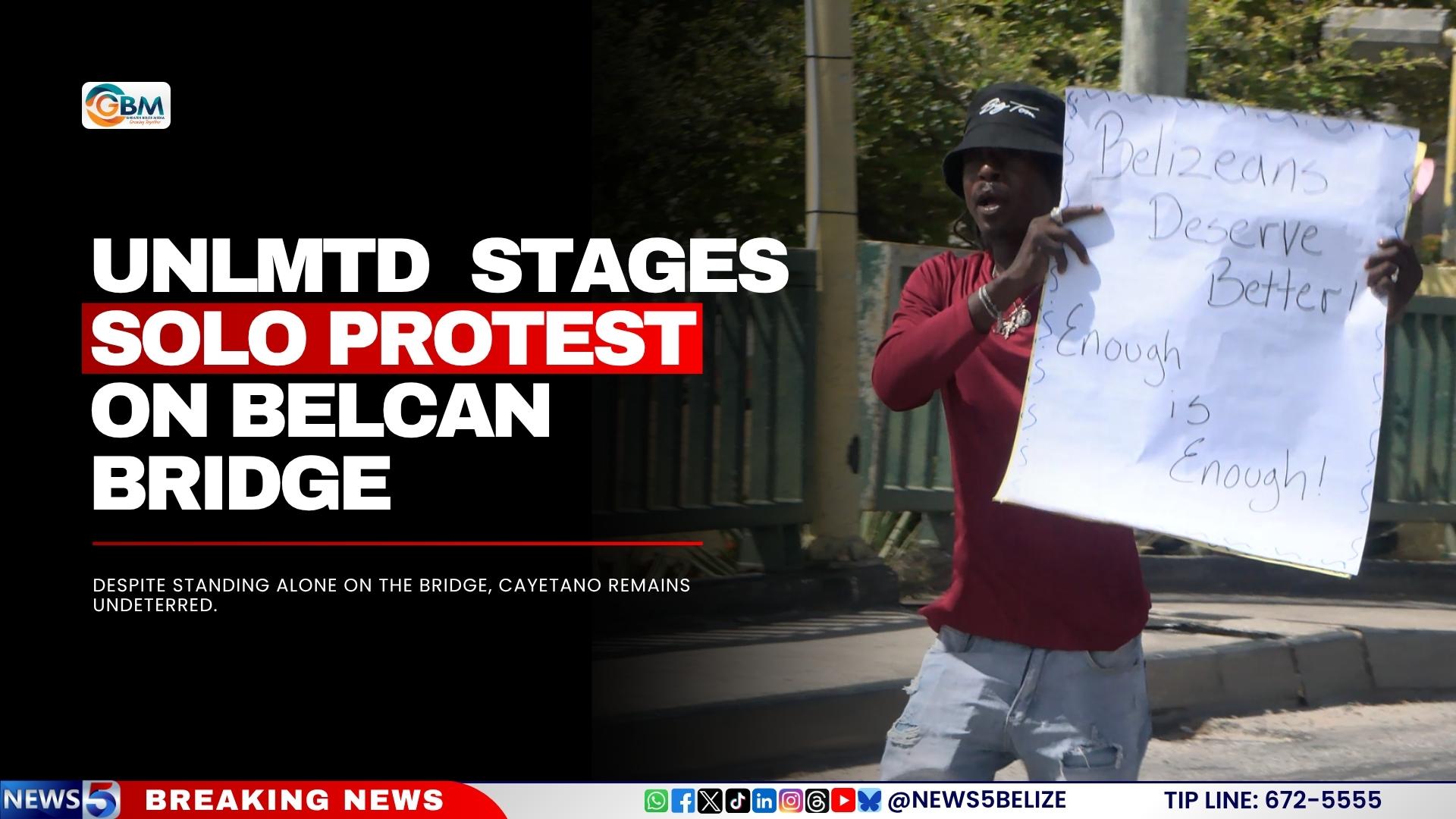
  • Unlmtd Stages Solo Protest on BelCan Bridge

    Unlmtd Stages Solo Protest on BelCan Bridge

    In a bold shift from digital activism to on-the-ground public demonstration, prominent Belizean artist Bernard Cayetano, who performs and organizes under the pseudonym “Unlmtd”, has brought his calls for systemic change to one of the country’s heavily trafficked crossings. On Wednesday, April 30, 2026, Cayetano launched a one-person protest on Belize’s BelCan Bridge, aiming to force nationwide attention to what he frames as ongoing systemic oppression that marginalizes ordinary Belizean citizens.

    Cayetano stood alone on the bridge for hours, holding a hand-painted placard emblazoned with the rallying cry “Enough is Enough.” The demonstration caused only minor delays for motorists passing through the area, but its unusual nature immediately captured attention from both on-site bystanders and online audiences, with many drivers slowing down to acknowledge the artist’s message before continuing their commute.

    Speaking to reporters covering the protest, Cayetano framed Belizean ordinary people as being held hostage by unfair governing systems in their own homeland. He pointed specifically to recent policy changes in the country’s transport sector as a clear example of top-down decision-making that excludes input from everyday citizens who are most impacted by the rules. The artist argued that while a large share of the Belizean public shares his frustration with the country’s current political and social trajectory, widespread fear and complacency have kept most people from taking public action.

    “Everybody sees what is going on, but we would rather wait out the five-year election term than speak up now,” Cayetano explained. He emphasized that all Belizeans deserve a more fair, inclusive governing system, and urged his fellow citizens to raise their voices in protest sooner rather than waiting for electoral cycles to bring incremental change. Even as he carried out his demonstration without additional supporters on the bridge, Cayetano remains unshaken in his commitment to his cause. He noted that every large, meaningful shift in social and political systems begins with a single, brave voice willing to stand up and be heard.

  • Businesses urged to support athletes more

    Businesses urged to support athletes more

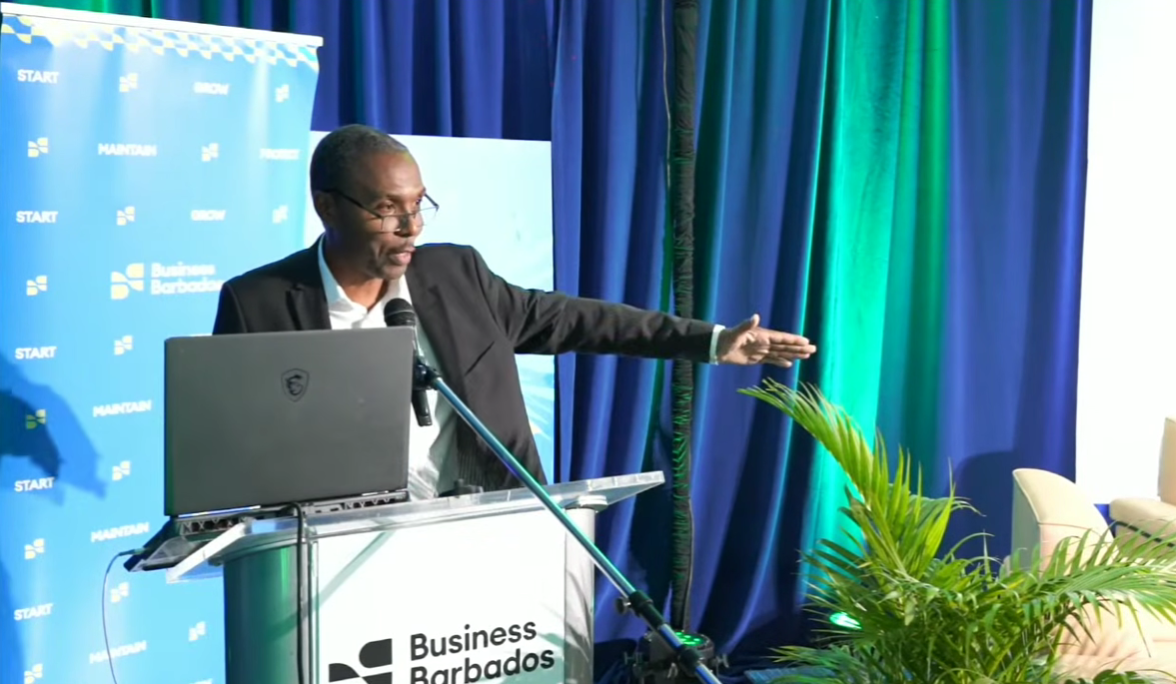
    Barbados’ top sports official is pushing the private sector to take a more active and transformative role in advancing the island’s sports ecosystem, calling out longstanding gaps in corporate support for local athletic talent. Minister of Sport Charles Griffith made the call during a special forum focused on unlocking the commercial potential of Barbadian sports, held at the Wildey Gymnasium to mark World Intellectual Property Day. The event, themed “Who Owns the Game? Unlocking the Business of Sport in Barbados”, brought together key industry stakeholders to discuss strategies for growing sports as a viable economic sector.