博客

  • Explosie bij vuurwerkfabriek in China kost 26 levens

    Explosie bij vuurwerkfabriek in China kost 26 levens

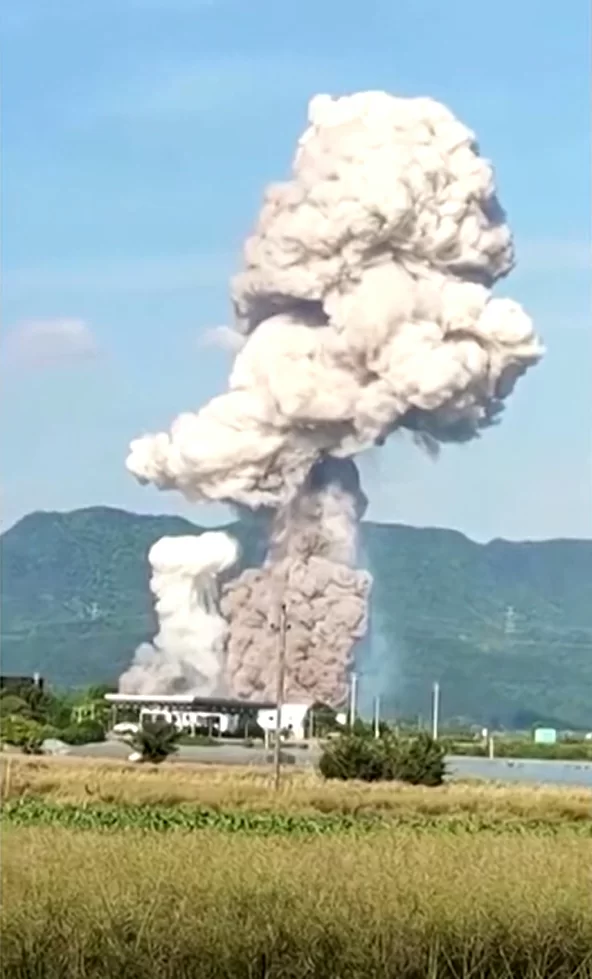
    On a Monday afternoon in early May, a devastating explosion ripped through a fireworks manufacturing facility in Liuyang, a city in China’s central Hunan Province known globally as the country’s fireworks capital, leaving at least 26 people dead and 61 others injured. The blast, which occurred around 16:40 local time at the Huasheng Fireworks Manufacturing and Display Company, generated enough force to level nearby structures and send towering plumes of black smoke billowing kilometers into the sky above the region.

    Emergency response operations mobilized rapidly in the wake of the disaster. More than 1,500 first responders, including firefighters, medical personnel, rescue workers, and police officers were deployed to the site, supported by 18 drones and specialized search-and-rescue robots to locate trapped survivors and bring the emergency under control. Authorities ordered the immediate evacuation of all nearby residential and industrial areas after identifying an ongoing risk of secondary blasts from two unignited storage facilities holding tons of combustible black gunpowder.

    User-shared footage circulating on social media platforms captured thick plumes of smoke rising against the backdrop of the region’s characteristic green mountain slopes, while on-site reporters confirmed that the entire facility and surrounding adjacent plots had been reduced to rubble. The blast’s powerful shockwaves tore mature trees from the ground, leaving a heavy, acrid smell of gunpowder hanging over the disaster zone for hours after the initial explosion.

    This tragedy is not an isolated incident for China’s fireworks industry, which has a long-documented history of workplace safety failures. Just one year prior, a nearly identical explosion at another Hunan Province fireworks factory left nine people dead and dozens more injured. More recently, a fatal blast at a chemical plant in northeastern China also claimed multiple lives, drawing renewed public and regulatory attention to the systemic risks of unsafe hazardous materials storage across Chinese industrial sectors.

    As of Tuesday, local government authorities overseeing Liuyang (which falls under the administrative jurisdiction of Changsha) announced that search and recovery operations for missing victims had been largely completed. The factory’s general manager has been taken into police custody, while official investigations into the root cause of the explosion are ongoing. In an immediate precautionary move, all fireworks and pyrotechnic production facilities across Liuyang have been ordered to suspend all operations immediately to undergo mandatory safety inspections.

    Chen Bozhang, Changsha’s deputy Communist Party secretary and mayor, delivered an official statement on behalf of local authorities expressing profound condolences to the families of the deceased and injured. “We feel extraordinary grief and take full responsibility for this tragedy,” Chen stated.

    At the national level, Chinese President Xi Jinping has issued formal orders for a thorough and expedited investigation into the disaster, and has called for strict accountability for any parties found responsible for safety lapses that led to the explosion. The Chinese central government has assembled a special national investigation team, and Vice Premier Zhang Guoqing traveled directly to Liuyang to oversee on-site rescue, recovery, and subsequent investigation efforts. President Xi further emphasized that all industries handling hazardous materials must strengthen risk management and safety oversight, with the protection of human life and public property designated as the highest priority.

    For Liuyang’s local economy, the fireworks industry is far more than a traditional trade—it is the single largest economic pillar of the region. A 2025 industrial report found that Liuyang’s fireworks sector generated 50 billion yuan (approximately 7.1 billion U.S. dollars) in annual revenue, spread across 431 licensed production facilities. The city supplies more than 60 percent of China’s total domestic fireworks demand, and accounts for roughly 70 percent of all Chinese fireworks exports worldwide. Nationwide, China’s 2025 fireworks exports totaled 1.14 billion U.S. dollars, representing more than two-thirds of the entire global fireworks market.

    President Xi’s call for strengthened industrial safety controls comes shortly after he previously issued instructions for a nationwide upgrade to China’s disaster response and emergency management capacity. The latest order follows a deadly 2025 fire at the Wang Fuk Court residential complex in Hong Kong that claimed 168 lives, after which President Xi also issued formal instructions for improved public safety protocols.


  • CMC journalist dies after prolonged illness

    CMC journalist dies after prolonged illness

    Respected veteran journalist Linda Straker, the long-serving Grenada correspondent for the Caribbean Media Corporation (CMC), has passed away at the age of 55 following a prolonged fight with multiple health complications. She died on Tuesday at Grenada’s General Hospital, where she had been admitted for ongoing treatment for more than a month prior to her death.

    Beyond her core role with CMC, Straker built a decades-long career contributing freelance reporting to a wide range of regional and international news outlets. She also took on key leadership roles within the global and local media community: she served as an executive committee member of the Media Workers Association of Grenada, and represented her home country on the board of Paris-based press freedom organization Reporters Without Borders.

    Colleagues, friends, and fellow journalists across the Caribbean have led tributes celebrating Straker’s uncompromising commitment to truthful journalism and press freedom. CMC editor Peter Richards remembered her as a fearless reporter who never shied away from asking hard-hitting questions that often pushed public figures to account, adding that her greatest source of pride was her three children. Richards shared that just one day before Straker’s death, her youngest daughter Naomi — who recently graduated at the top of her nursing class from a Cuban university — started her first day working as a registered nurse.

    In a joint statement announcing Straker’s passing, close friends Rawle Titus and Nicole Best described Straker as far more than a journalist: they called her a driving force for excellence, a consistent voice for truth, and a dedicated champion for the entire media profession. They highlighted her well-earned reputation for upholding the highest standards of accurate, ethical, and public-facing journalism, noting that she spent her career tirelessly advocating for press freedom, independent media growth, and the critical role of a free fourth estate in democratic society. A decorated journalist, Straker was honored with multiple awards throughout her career, including the regional “Best Research Journalist” honor. Her legacy, friends say, endures through the groundbreaking stories she produced, the early-career journalists she mentored, and the barriers she broke down for Caribbean reporters.

    Kenton X. Chance, the newly appointed St. Vincent and the Grenadines Ambassador to Taiwan, founder of iWitness News, and a former CMC correspondent who worked alongside Straker for years, recalled that Straker was a staunch and unapologetic defender of press freedom across the entire Caribbean region. Chance said that whenever she saw threats to press freedom emerging in St. Vincent and the Grenadines, she would reach out proactively to coordinate action. The pair participated in multiple regional media training programs organized by the Media Institute of the Caribbean, the training arm of the Association of Caribbean MediaWorkers, where Straker freely shared her decades of on-the-ground experience with emerging journalists. Chance noted that the entire region has lost one of its strongest and most consistent advocates for free media. He called on current and future generations of Caribbean journalists to draw inspiration from Straker’s work and carry her legacy forward, extending his condolences to her family and the regional media community.

  • Grenadian journalist dies after prolonged illness

    Grenadian journalist dies after prolonged illness

    The Caribbean journalism community is mourning the loss of one of its most respected voices this week, as veteran Grenadian reporter Linda Straker, the long-serving Grenada correspondent for the Caribbean Media Corporation (CMC), passed away on Tuesday at St. George’s General Hospital. Her death came after a prolonged, public battle with multiple chronic health conditions; she was 55 years old.

    Beyond her core role with CMC, Straker built a decades-long career as a freelance journalist, contributing in-depth reporting and analysis to a wide range of regional and international news outlets. Over a month prior to her passing, she was admitted to the general hospital to treat a series of acute medical complications that would ultimately lead to her death.

    Straker was also deeply committed to advancing the journalism profession across the Caribbean and globally. She served as an elected executive member of the Media Workers Association of Grenada (MWAG), and represented Grenada as the national liaison for Reporters Without Borders, the Paris-based global press freedom advocacy organization.

    In a tribute released following the news of her death, CMC editor Peter Richards remembered Straker as a fearless reporter unafraid to hold power to account. “Linda was known for asking tough questions, even evoking strong reactions from those being interviewed,” Richards said. “She was fearless and above all loved her 3 children, whom she regarded as her pride and joy.” Richards also shared a bittersweet detail about the journalist’s family: her youngest daughter Naomi, who recently graduated at the top of her class as a registered nurse from a Cuban university, began her first day of professional nursing work the very day Straker passed away.

    Two of Straker’s close friends, fellow media professionals Rawle Titus and Nicole Best, released a joint statement honoring her legacy that framed her impact far beyond individual news stories. “Linda was more than a journalist, she was a force of excellence, a voice for truth and a champion for the media profession,” they wrote.

    The pair highlighted that Straker earned her reputation across the region for her unwavering “deep commitment to accurate, ethical and impactful journalism.” Throughout her career, she worked tirelessly to advance press freedom, support the growth of independent media across the Caribbean, and emphasize the critical role that a free, independent press plays in democratic society. Throughout her career, her outstanding work earned multiple industry awards, including the honor of “Best Research Journalist.”

    As tributes continue to pour in from across the global journalism community, colleagues and loved ones note that Straker’s legacy will endure through the groundbreaking stories she reported, the early-career journalists she mentored, and the barriers she broke down for women reporters in the Caribbean. “Linda’s legacy lives on in the stories she told, the journalists she mentored and the doors she opened,” friends said.

  • National anti-smoking campaign launched in Saint Lucia

    National anti-smoking campaign launched in Saint Lucia

    Public health officials in Saint Lucia have rolled out a nationwide anti-smoking initiative led by the Substance Abuse Advisory Council Secretariat (SAACS), a division under the country’s Ministry of Health, designed to curb tobacco use, educate the public on the life-threatening impacts of all smoking products, and shine a spotlight on the underrecognized risks of secondhand smoke exposure.

    The campaign comes as public health authorities grow increasingly alarmed by shifting harmful nicotine use patterns across the country. In recent years, Saint Lucia has recorded sharp upticks in recreational vaping, open public use of traditional tobacco products, and rising cannabis consumption, trends that have pushed public health leaders to prioritize targeted intervention to reverse these dangerous habits.

    Caleb Paul, SAACS’s Acting Deputy Coordinator, underscored the urgent need for this proactive public health push, pointing to a steady rise in smoking-related chronic illnesses such as chronic obstructive pulmonary disease (COPD) across all age groups. Unlike many past initiatives that focus only on traditional cigarettes, the new national campaign addresses the full spectrum of smoking-related products, with a core focus on prevention outreach for younger generations, who are most at risk of developing long-term addictive habits.

    Paul explained that the intervention prioritizes transparency around the full scope of health harms tied to every form of smoking, framing prevention as the most effective tool to protect young Saint Lucians from avoidable health complications later in life. “The main aim is to bring the truth out as it pertains to harms associated with all types of smoking… we really want to take a preventive step… saving our young persons,” Paul stated in remarks on the campaign launch.

    This national effort is a core component of the Ministry of Health’s broader public health strategy to cut rates of chronic non-communicable diseases, which are driven largely by preventable behavioural choices like regular tobacco use. By raising widespread public awareness and encouraging sustained lifestyle change, health officials hope to make measurable progress against the leading causes of preventable death and disability in the country.

    The campaign targets a range of key stakeholder groups, from private businesses and primary/secondary schools to large event organizers and local community groups, recognizing that cross-sector collaboration is necessary to create lasting cultural change around smoking. To amplify its reach, SAACS is training a network of peer educators embedded in youth and community sports groups, equipping these trusted messengers with educational resources to share evidence-based anti-smoking messaging with their peers.

    In addition to youth-focused peer outreach, the organization offers free interactive presentations and training sessions for workplaces across the country, and has encouraged interested organizations to reach out to secure a spot for their teams. “We are using peer helpers… training them… and sharing the dangers associated with all types of smoking,” Paul added.

    To meet audiences where they are, campaign messaging will run across a diverse mix of digital and physical public platforms, including popular social media channels, broadcast public service announcements, and large-format community billboards in high-traffic areas. Organizers are urging members of the public to engage with the content and share it with their own networks to expand the campaign’s reach organically.

    “Persons will see them through social media… billboards… we want persons to share it,” Paul said. In closing, SAACS issued a call for all Saint Lucian citizens to stand behind the initiative, emphasizing that collective, community-wide action is the only way to protect the long-term health of future generations and build a healthier nation for all.

  • Caribbean advances regional framework to strengthen disaster displacement data and response

    Caribbean advances regional framework to strengthen disaster displacement data and response

    Against a backdrop of rising climate-fueled natural disaster activity that has displaced millions across the Caribbean, regional governments and international partners have taken a major step forward to close critical gaps in disaster response coordination. Over the past decade, increasingly frequent and intense extreme weather events—including hurricanes, flash floods, wildfires and volcanic eruptions—have left millions of people displaced across the region, exposing deep flaws in how governments track and respond to displacement. Outdated, fragmented data systems have slowed emergency aid delivery, left vulnerable unregistered populations without support, and undermined long-term recovery planning, creating an urgent push for coordinated reform.

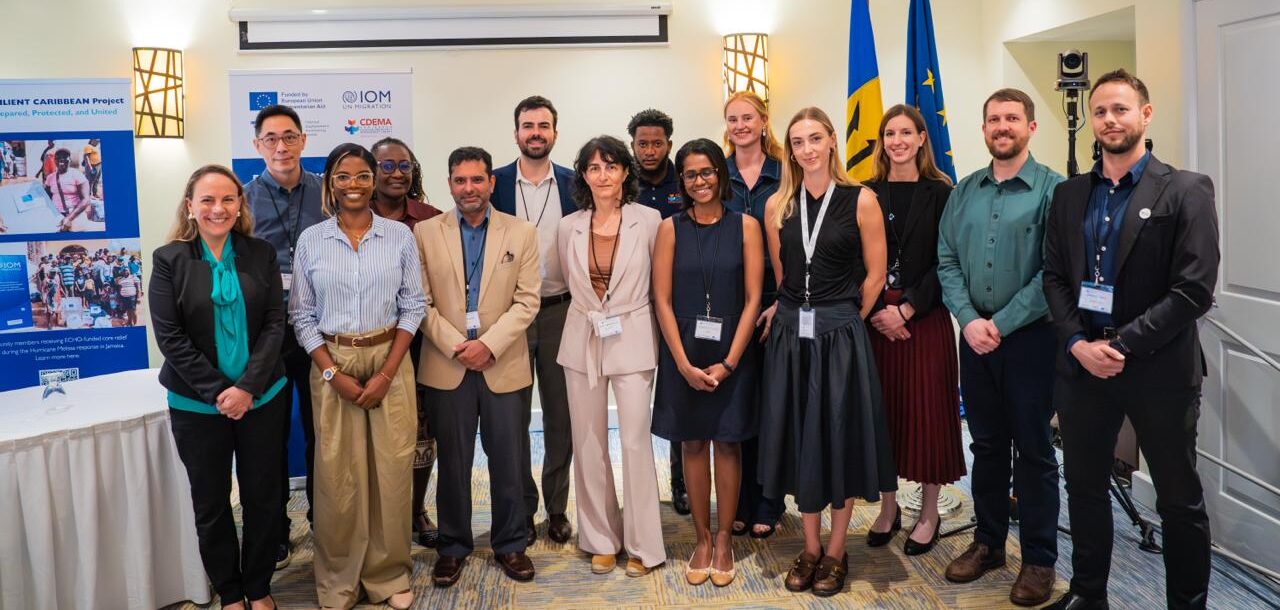
    To address these unmet needs, the International Organization for Migration (IOM) gathered representatives from National Disaster Offices and regional stakeholders for a two-and-a-half-day workshop held in Bridgetown, Barbados from April 23 to 25. The gathering centered on upgrading regional capacity to collect, analyze, and deploy displacement data to improve disaster outcomes for affected communities, backed by funding from EU Humanitarian Aid through the regional Resilient Caribbean initiative.

    A landmark achievement of the workshop was shared agreement to advance development of a harmonized Standard Operating Procedure (SOP) for displacement data management. The new framework is being intentionally aligned with the Caribbean Disaster Emergency Management Agency (CDEMA)’s existing Damage Assessment and Needs Analysis (DANA) system, ensuring interoperability across existing regional infrastructure. Once fully rolled out, the standardized SOP will boost coordination and cut response times across the 13 participating Caribbean nations, while also creating more robust data to inform long-term community recovery planning.

    Barbados’ Minister of Home Affairs and Information Gregory Nicholls opened the workshop by emphasizing the human-centered core of the reform effort. “For Barbados, the guiding principle is simple: Families first,” Nicholls said. “When disaster strikes and systems are stretched to breaking point, reliable data allows first responders to locate vulnerable families faster, match aid to actual on-the-ground needs, and protect the dignity of displaced people. Displacement data must always serve people, not bureaucratic processes.”

    Throughout the workshop, participants got hands-on experience with a suite of specialized tools designed to strengthen end-to-end displacement data management. Attendees tested and reviewed IOM’s Displacement Tracking Matrix (DTM), the IOM Shelter Portal, and KoboToolbox, a platform built for rapid field data collection during emergencies. Trainers also led demonstrations of advanced geospatial analysis and planning tools, including the Copernicus Emergency Management Service and MapAction, to build national capacity for more accurate spatial mapping of displacement.

    Lessons drawn from CDEMA’s After Action Reviews following Hurricanes Beryl and Melissa, paired with first-hand national-level experiences from across the region, helped outline clear shared priorities for the new SOP framework. Top priorities identified include expanding pre-disaster baseline data to establish more accurate displacement benchmarks, standardizing inconsistent definitions of displacement and shelter categories across nations, and streamlining information sharing between local shelters, national emergency operations centers, and regional coordination systems.

    Patrice Quesada, IOM’s Caribbean Coordination Officer and Chief of Mission for Barbados, framed the workshop as a critical investment in proactive preparedness rather than reactive response. “Preparedness is about learning from experience,” Quesada explained. “It is really about anticipating the next storm, not just responding to the last one. To do that well, we need to build trust and shared experience between expert teams across the region, so that when disaster strikes, we can rely on each other to act fast.”

    Regional representatives highlighted the tangible, life-saving benefits of adopting a unified approach to displacement data for small, hazard-prone Caribbean states. Sashagaye Vassell, a Planning Analyst at Jamaica’s Office of Disaster Preparedness and Emergency Management, noted that the standardized system will remove coordination barriers that have slowed aid in past disasters. “We are very prone to various hazards, and we have a lot of vulnerable people across our region,” Vassell said. “With this SOP, Caribbean states can better coordinate among ourselves to support the vulnerable and find targeted solutions to respond efficiently and effectively.”

    The workshop also addressed long-standing, underdiscussed challenges in displacement response, most notably the difficulty of identifying and supporting displaced people who never register for official assistance. Livingston Pemberton, National Disaster Coordinator for Saint Kitts and Nevis’ National Emergency Management Agency, explained that unregistered displaced people are often entirely cut off from life-saving aid. “Sometimes displaced persons are not registered, making it very difficult to reach out to them,” Pemberton said. “If you are not able to capture them within the system, it is very difficult to render the assistance that they need.” He added that the new SOP directly addresses this gap by providing clear definitions and standardized methodologies for capturing all displaced people, allowing governments to share accurate data with national and regional response mechanisms and help affected people return to normalcy far faster.

    Participants also highlighted the critical importance of ethical, culturally sensitive, people-first data collection that centers the needs and experiences of diverse affected communities. Yemi Knight, founder of AnchorBridge Environmental Inc., emphasized that disaster survivors are in crisis when data is collected, requiring intentional cultural competence from data collection teams. “Data collectors must understand the sensitivity of the situation,” Knight said. “A person has just gone through a disaster, and you may meet different types of people from varying backgrounds, so you have to have the cultural sensitivity to interact with them respectfully.”

    Beyond meeting immediate shelter and emergency needs, attendees discussed the far-reaching societal impacts of disaster displacement that standardized data will help address. Simon Alleyne noted that effective displacement response goes far beyond rebuilding physical structures. “There are a lot of regional examples of people being displaced,” Alleyne said. “It is more than just giving a person back a home. It is also ensuring that they can be reintegrated into society, including access to employment and protection of their rights as citizens.”

    Official statistics underscore the urgent need for this coordinated reform: between 2012 and 2021 alone, disasters triggered an estimated 5.14 million new cases of internal displacement across the Caribbean. In just the past five years, approximately 2.6 million people have been affected by extreme weather and geologic hazards, reflecting the growing complexity of disaster response in one of the world’s most climate-vulnerable regions.

    IOM Caribbean officials framed the Barbados workshop as a transformative milestone in building data-driven, people-centered disaster management systems across the region. Upcoming next steps will focus on scaling up national capacity through targeted training for National Disaster Office staff, covering data collection and analysis, vulnerability assessments, full-scale disaster response simulation exercises, and specialized training in Camp Coordination and Camp Management (CCCM).

    Taken together, these coordinated initiatives aim to build a more connected, prepared, and climate-resilient Caribbean that can effectively protect vulnerable communities and respond to future disasters with speed and equity.

  • In loving memory of Linda Straker

    In loving memory of Linda Straker

    The media community across Grenada is mourning the loss of one of its own, following the announcement that veteran journalist Linda Straker has passed away after a valiant fight against a long-term illness. The news of Straker’s death was confirmed via a statement published by local media outlet NOW Grenada, which also included a standard legal disclaimer noting that the platform does not take responsibility for opinions, statements, or third-party content shared by contributors to the site. The outlet added that users who encounter any abusive content on its pages can use a designated reporting tool to flag content for moderation.

    Straker’s decades-long career in local journalism positioned her as a key figure in Grenada’s media landscape, and she was affiliated with the Media Workers Association of Grenada (MWAG), a professional body that represents the interests of media professionals across the island nation. Prominent local media figure Rawle Titus, whose name is linked to coverage of Straker’s passing, is among those acknowledging her contributions to Grenadian journalism.

    Straker’s death marks the end of a career that shaped local reporting and supported the professional development of fellow media workers in the country, leaving a legacy that will be remembered by colleagues and audiences across Grenada.

  • Fond d’Or Jazz sets valley on fire

    Fond d’Or Jazz sets valley on fire

    After a one-year hiatus and a scaled-back 2024 edition, one of Saint Lucia’s most beloved community-focused cultural events, Fond d’Or Jazz, officially made its high-profile return on Sunday, May 3, stepping back into the spotlight as a cornerstone gathering during the annual Saint Lucia Jazz and Arts Festival season.

    Once known for hosting major international acts like the iconic Caribbean band Kassav, Fond d’Or Jazz took a low-key approach in 2024 before pausing entirely last year. For its 2026 comeback, organizing committee members rebuilt the event from the ground up to create an inclusive experience designed to engage attendees across every age group. Positioned as a family-friendly cultural celebration paired with world-class live entertainment, the festival was hosted at the scenic Fond d’Or Nature Heritage Park, located in the coastal Saint Lucian district of Dennery. The venue’s unpolished, natural rustic charm created an intimate, laid-back atmosphere that carried attendees from a late-afternoon kickoff deep into the night.

    To cater to multi-generational groups, the event grounds featured a range of attractions beyond live music, including themed photo marquees for memorable keepsakes, bouncy castles, a dedicated kids’ zone, and dozens of local food and beverage vendors serving a variety of regional and casual fare. Opening celebrations kicked off with welcoming performances from the Dennery North and Dennery South Steel Orchestras, while main sponsor 1st National Bank outfitted a premium VIP experience for ticketholders seeking elevated amenities.

    As the sun began to dip below the Caribbean horizon, the official performance slate got underway with guitarist Carl Gustave, the first act to take the stage. His dynamic set, which wove together elements of jazz, blues, and classic rock, evoked the nostalgic spirit of traditional jazz gatherings, where audiences come to experience both beloved staples and fresh, authentic original music that deviates from mainstream trends.

    Throughout the evening, the full lineup of headliners was complemented by a rotating cast of supporting acts, including a DJ and MC keeping energy high between sets, special guest appearances from contestants of the Mabouya Valley Queen Pageant, and high-energy dance routines from the local Moves 4 Dayes dance troupe.

    Following Gustave’s opening set, fan-favorite Ronald “Boo” Hinkson took the stage alongside his collective of collaborators, engaging the crowd with beloved Tru Tones hits including *Foreign Journalist* and traditional folk numbers like *Estephan*. Vocal performances from TC Brown, Semi Francis, and Christa Bailey rounded out the set, turning it into one of the night’s most memorable offerings. Next, celebrated performer Teddyson John delivered a high-energy, crowd-pleasing set featuring his chart-topping tracks including *Allez* and *New Day*. Local genre stalwart Surbance followed, leaning into the iconic Dennery segment sound to honor the style’s local roots and reinforce his reputation as one of the genre’s leading contemporary artists. Before the night’s headliner took the stage, celebrated Saint Lucian solo artist Deighton Charlemagne delivered a stirring solo set, including his widely popular track *A natty dread is who I am*.

    When the MC called the night’s headliner, Jamaican reggae star Duane Stephenson, to the stage, thrilled fans rushed to the front of the stage to greet him. Stephenson made his entrance shortly after 10 p.m., recalling that his last performance at the very same venue had taken place 15 years prior, alongside fellow reggae artist Taurus Riley. “I hope you don’t take so long to invite me back,” he joked to roaring applause.

    Throughout his set, Stephenson appeared visibly moved by the crowd’s reaction, at one point pausing as the audience’s loud, united singing overpowered his own vocals. His performances of iconic tracks including *Think Twice*, *Ghetto Pain*, *Cottage in Negril*, *Fool for You*, and *Forever Yours* held the crowd captive from start to finish. During his performance of *August Town*, one audience member was invited on stage for a spontaneous “money pull-up” moment, highlighting the deeply personal connection fans felt to Stephenson’s lyrics. The night closed with an encore performance of Gregory Isaac’s classic *Cool Running*, capping off a standout reggae set that left attendees buzzing. Stephenson’s backing band, led by Danyl Daniel and made up almost entirely of local Saint Lucian musicians, delivered tight, expert support that elevated the entire performance.

    Stephenson’s headline set underscored a enduring truth: audiences across Saint Lucia retain a deep, passionate appreciation for roots reggae and high-quality, authentic live music.

    In a post-event statement, Cornelius Edmund, Chairperson of the Fond d’Or Jazz Committee, expressed sincere gratitude for the large turnout and ongoing community enthusiasm for the event and its unique venue. “There are a few things that we would like to do better next year, but overall we were pleased with the turnout and the performances,” he shared, signaling the event’s full return for future festival seasons.

  • Monorath erkent nevenwerk politie, maar waarschuwt voor misbruik tijdens diensttijd

    Monorath erkent nevenwerk politie, maar waarschuwt voor misbruik tijdens diensttijd

    In a press briefing held earlier this week, Suriname’s Minister of Justice and Police Harish Monorath has laid out the stark challenges facing the country’s national police force, including a persistent staffing shortage and widespread exodus of experienced personnel to higher-paying roles abroad, while revealing that authorities quietly tolerate banned side work for officers to help them make ends meet. The comments came during a promotion ceremony Monday at the National Police Training Center, where 205 new recruits were formally elevated to the rank of Extraordinary Police Officer (BAVP).

    Minister Monorath told reporters that for the police force to operate at full effectiveness across the country, its ideal total strength would sit at around 5,000 active officers. As of the latest count, however, the entire corps only numbers just over 2,700 personnel – less than 55% of the workforce needed to fulfill all core public safety mandates. Compounding this gap is a steady brain drain that the department has been unable to reverse: every year, more than 300 trained officers leave the force to take up positions elsewhere, most commonly in neighboring countries or other overseas locations where compensation packages are far more competitive than domestic salaries. Currently, the force can only recruit and train roughly 300 new officers annually to replace departing staff, while around 20 more personnel leave each month in search of better working conditions and higher pay, almost always outside Suriname’s borders. Monorath even noted that a common early warning sign of an officer planning to exit the force is a request for personal leave without objection, as officers prepare to transition to their new roles.

    Addressing longstanding public debates over off-duty work for police and military personnel, Monorath clarified that while formal Dutch Caribbean law explicitly prohibits civil servants from holding secondary employment, the government has maintained a de facto tolerance policy to allow low-paid officers to supplement their incomes. “What people choose to do during their own free time is not something I can comment on or control,” the minister stated. He added that most police officers work rotating shift schedules, and the vast majority hold multiple jobs to cover basic living costs. Many officers take on private security work for gold mining companies, for example, while others travel to the country’s interior to earn extra income. He also refuted recent media reports claiming that Jean ‘Saya’ Mixon, one of his four appointed advisors, received or will receive police security protection, calling the claims completely untrue.

    Public criticism of off-duty security work has grown in recent years, with critics arguing that when police or military personnel work for private third parties – particularly in Suriname’s resource-rich interior, where conflict over gold mining concessions is common – it creates major potential conflicts of interest that undermine public trust in state security institutions. Monorath acknowledged that the line between official duties and personal free time is not always clear cut when it comes to secondary work. However, he stressed that the department will take strict disciplinary action against any civil servant found to be carrying out unauthorized secondary work during their official paid working hours.

  • All systems set for 11-Plus, 2 767 students sit exam Tuesday

    All systems set for 11-Plus, 2 767 students sit exam Tuesday

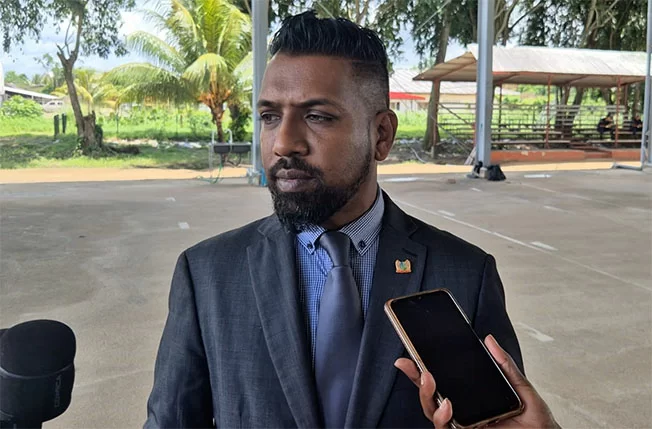
    One day ahead of the annual 11-Plus Common Entrance Examination, Barbados’ Minister of Education Transformation Chad Blackman has confirmed that all pre-examination preparations are fully finalized, with comprehensive monitoring arrangements in place to support the 2,767 registered students sitting this year’s assessment.

    Speaking at a press conference held at the Lloyd Erskine Sandiford Centre, Blackman moved to reassure students, families and educators that every logistical detail had been locked in to deliver a smooth, low-disruption testing experience across all examination centres islandwide. Mobile monitoring teams will be deployed to visit testing sites throughout the day of the exam, and Blackman himself will kick off his on-site schedule at Deighton Griffith Secondary School to oversee the start of testing, before traveling to at least two additional secondary school centres to check on conditions and meet with examination officials as the session wraps up.

    This year’s exam marks another step in the current administration’s timeline toward the eventual abolition of the 11-Plus assessment, a long-stated policy goal, but officials have focused their messaging on supporting the cohort of students already moving through the existing transition framework. In a marked shift away from high-stakes testing rhetoric, both Blackman and Chief Education Officer Dr. Ramona Archer-Bradshaw emphasized that the examination is not a make-or-break judgment of a student’s ability, but simply a milestone marking the transition from primary to secondary education.

    Addressing registered students directly, Blackman reframed the exam as an opportunity to showcase the work students have put in over their primary school careers, rather than a source of overwhelming stress. He encouraged young test-takers to enter their assigned centres without carrying unnecessary pressure, noting that success extends far beyond a single numerical score. “To the students themselves, tomorrow is your day. Tomorrow is your day to shine,” he said, adding that the entire ministry is proud of the work students have already completed to reach this point.

    Blackman also highlighted that preparation for this year’s exam has been a years-long collective effort, crediting primary school teachers across Classes One through Three for laying the foundational academic skills students rely on, and thanking school principals and parents for their consistent, tireless support alongside senior year educators. “The journey to this moment was a collective effort… preparation for Tuesday began long before Class Four,” he told reporters.

    Dr. Ramona Archer-Bradshaw echoed this supportive, low-pressure messaging in her official statement, commending students for the months of hard work and perseverance they have invested in preparing for the exam. She echoed Blackman’s framing that the Common Entrance exam is only one chapter in a student’s broader academic journey, urging test-takers to approach the assessment with focus and confidence, and reminding them that a wide range of new opportunities await them in secondary school regardless of their result.

    Like Blackman, Dr. Archer-Bradshaw also recognized the critical behind-the-scenes work that brought students to this point: she extended formal gratitude to the island’s educators for their unwavering commitment to their students’ growth, noting that their dedication leaves a permanent positive impact on young people’s long-term trajectories. She also emphasized the vital role that parents and guardians play in student success, thanking families for their ongoing support and encouraging them to maintain strong, collaborative partnerships with teachers as students move into the next phase of their education.

    Compared to last year’s cohort, which saw 2,981 registered students, this year’s group is 214 students smaller, a shift that follows long-term demographic trends observed across Barbados’ education system. Still, all logistics have been adjusted to accommodate this year’s cohort, with no outstanding gaps in preparation reported by ministry officials ahead of testing day.

  • API head injured, cousin in custody after attack at her home

    API head injured, cousin in custody after attack at her home

    A senior Caribbean public media official is recovering in a hospital alongside her elderly relative, following a shocking early-morning violent break-in attack at her private residence that has left local law enforcement investigating.

    Nadia Slater, the acting director of the state-owned Agency for Public Information (API), was assaulted alongside her 70-year-old aunt at her Clare Valley home in the early hours of Tuesday, according to confirmed law enforcement sources. First responders confirmed both women suffered visible injuries in the attack, including facial and mouth wounds to Slater, before they were transported to local medical facilities for urgent care.

    Investigative details obtained by local independent outlet iWitness News outline that Slater told responding officers she was woken in the dead of night by unusual noise just outside her bedroom. When she got up to investigate the disturbance, she came face-to-face with the intruder, whom she immediately identified as her cousin, a man also sharing the Slater surname. The suspect immediately began beating Slater before moving to the adjacent bedroom where her aunt was sleeping and assaulting the older woman as well.

    After the attack, the suspect fled the residential property before officers arrived at the scene, which was called in around 3 a.m. Law enforcement investigators found a ladder propped against the rear exterior of Slater’s home, leading them to conclude the suspect used the ladder to climb through an unlocked bathroom window to gain unauthorized entry to the property. The assailant was subsequently taken into police custody not long after the attack, and remains in detention as the investigation progresses.

    The attack comes just one week after Slater found herself at the center of a high-profile public administrative controversy that made local headlines. Last week, the API sent out a media email invitation that mistakenly labeled opposition leader Ralph Gonsalves as the sitting prime minister, a gaffe that quickly sparked public discussion. Slater was placed on administrative leave shortly after the incident, which she and the agency later characterized as an accidental mistake, issuing formal public apologies for the mislabeling.

    As of Tuesday’s update, no further details on the motive for the attack have been released by investigating authorities, who have not yet commented on any potential connection between the early morning assault and the recent public controversy surrounding Slater’s role at the API.