博客

  • Mace fallout intensifies

    Mace fallout intensifies

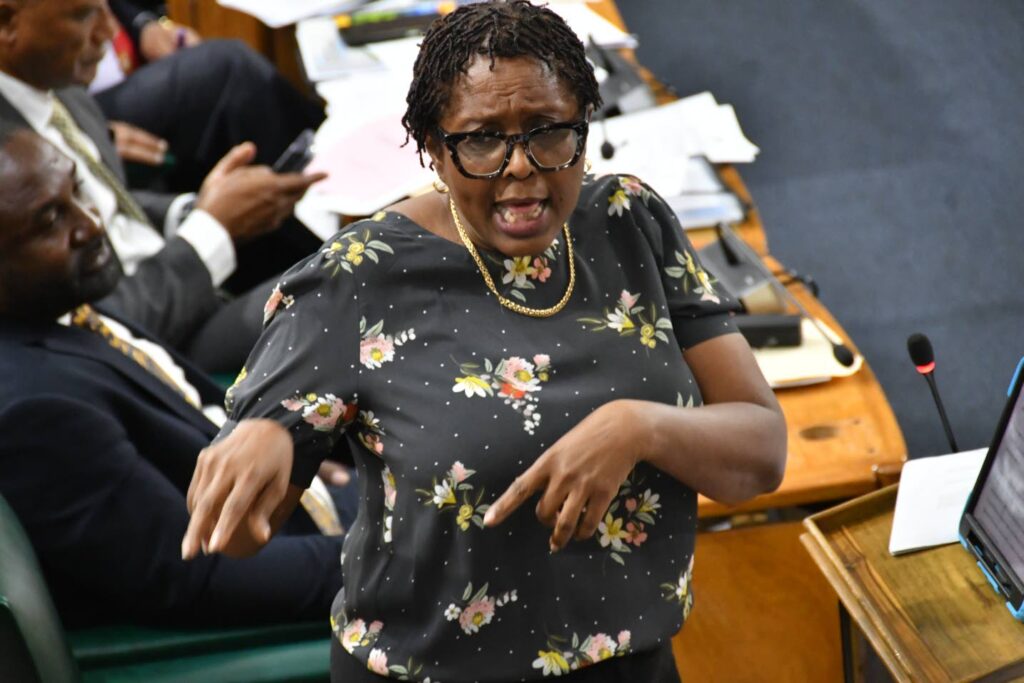
    The political fallout from a chaotic mace confrontation during last week’s parliamentary sitting in Jamaica deepened dramatically on Tuesday, as House Speaker Juliet Holness publicly called out Opposition Member of Parliament Angela Brown Burke, revealing a pattern of defiance against the presiding officer’s authority that stretches back months. The high-profile clash, which unfolded during debate on the critical National Reconstruction and Resilience Authority (NaRRA) Bill, has thrown a spotlight on long-simmering divisions between the government and opposition inside Gordon House, Jamaica’s parliamentary building.

    Opening Tuesday’s scheduled sitting of the House of Representatives, Holness opened with a lengthy, formal statement addressing the explosive scenes from the prior week, centering her remarks on defending the foundational role of parliamentary discipline and the authority of the institution itself. The Speaker confirmed that Brown Burke, who represents the St Andrew South Western constituency, had already disrupted legislative business during a tense sitting held on March 5 this year. Holness recalled that on that earlier occasion, Brown Burke left her seat and loudly declared, “Yuh waan mi fi behave like a virago? Mi a go behave like a virago.”

    “This was not the first occasion on which conduct of this nature has tested the authority of the Chair by the same member,” Holness told assembled lawmakers. “Restraint was exercised in the hope that the matter would not be repeated. But restraint must never be mistaken for permission, patience must never be mistaken for weakness, and silence must never be mistaken for acceptance.”

    The Tuesday remarks came days after Brown Burke was formally named and suspended from Parliament after grabbing the ceremonial mace — a centuries-old symbol of parliamentary authority — during heated committee-stage debate on the NaRRA Bill. The incident triggered chaotic scenes in the chamber that forced officials to temporarily suspend all proceedings.

    But in an interview with the Jamaica Observer conducted hours after Holness’ Tuesday address, Brown Burke forcefully pushed back against the Speaker’s narrative, rejecting the framing of her actions as an unprovoked breach of protocol. She argued that the confrontation was the end result of months of growing frustration, rooted in what she describes as systemic efforts to sideline and silence opposition lawmakers during parliamentary debates.

    “We haven’t made the case to the Jamaican people. We have sat quietly, we have protested inside of the House, we have spoken to the Speaker, we have spoken to others about the attitude in the House, which prevents individuals on the Opposition side from actually participating in the discussions and in the debate,” Brown Burke said.

    The opposition MP alleged that parliamentary standing orders are enforced inconsistently across government and opposition members, with opposition lawmakers routinely blocked from accessing speaking time during key debates. “What someone on the Government side will get away with, we won’t,” she said, accusing the Speaker of overt partisan bias in how she presides over proceedings. She further claimed that the parliamentary microphone system has been “weaponized” against opposition members, who are often muted or blocked from having their remarks included in the official parliamentary record.

    Brown Burke explained that tensions boiled over during last week’s NaRRA debate after she made three separate attempts to intervene in discussion, only to be intentionally ignored by the Speaker. “On three different occasions I wanted to make a statement to intervene in the discussion… The Speaker looked at me and just turned her head and looked to the other side,” she claimed.

    While she openly acknowledged that grabbing the mace violated formal parliamentary rules, she maintained that her action was a deliberate act of protest against what she called consistent, ongoing disrespect toward opposition representatives. “And so I got up. And, as I put it, I interfaced with the mace. And we know what the standing order says. I’m not pretending that it is sanctioned by the standing orders. Not at all. But it was because of that pushing, that ignoring, that disrespectful behaviour of the Speaker, time and time again,” she said.

    Brown Burke also pushed back against Holness’ recounting of the March 5 “virago” incident, saying her original remarks were misrepresented. “I said, ‘Do I have to behave like a virago for me to be heard?’ That was what I said, and I thought that was an appropriate question. Because I don’t believe that I should have to behave like a virago to be heard,” she told the Observer.

    In her address to parliament, Holness emphasized that the dispute goes far beyond the conduct of a single lawmaker, framing it as a fundamental challenge to the institutional order and authority of Jamaica’s parliament. “The mace is not a decoration. It is not a prop. It is not an object to be used in protest. It is the symbol of the authority of this House,” the Speaker declared.

    She also criticized broader opposition behavior after Brown Burke’s suspension, noting that the opposition leader and other opposition lawmakers staged a standing protest with chants in direct defiance of the Chair’s authority. Holness further revealed that she had previously overlooked “derogatory sotto voce references, slurs, and disrespectful posturing” from a small group of opposition lawmakers, choosing to allow legislative business to proceed rather than escalate conflict.

    Despite the sharp escalation of tensions between the two sides, both Holness and Brown Burke have called for a broader reassessment of the tone and rules of engagement inside Jamaica’s parliament. “Order is not the enemy of democracy. Order is what makes democracy possible,” Holness told lawmakers.

    For her part, Brown Burke said she hopes the high-profile controversy will force the institution to confront and address the systemic inequities that have stoked tension between government and opposition members. “Let’s draw a line. Let’s determine how we interface with each other. But let us stop the hypocrisy,” she said.


  • Chris Martin readies new music

    Chris Martin readies new music

    Over 21 years in the competitive global music industry, Jamaican recording artist Christopher Martin has cultivated a quiet, unshakable confidence that comes only from sustained, long-term success. Martin first stepped into the spotlight as a teenage contestant on the 2005 season of Digicel Rising Stars, and his decades-long career stands as a testament to his greatest professional strength: endurance.

    Rather than boasting about his staying power in an industry that often chases fleeting viral trends, Martin approaches his craft with intentional gratitude, grounded perspective, and a steady, unassuming commitment to creating new work. In a recent exclusive interview with the *Jamaica Observer*, the *Big Deal* singer shared his philosophy on navigating a career in music: “With everything in life there’s challenges and rewards, so we have to learn to just take our punches, roll with it, and make the best of every situation.”

    Looking back on a creative journey that now stretches across more than two decades, Martin acknowledged that remaining a relevant, respected artist in a constantly evolving entertainment landscape is no small achievement — even as he continues to embrace humility. For him, this 21-year milestone is not a victory lap for simply surviving the industry’s ups and downs, but an opportunity to celebrate the people who have supported him along the way.

    “It’s been 21 years in the business for me and, to still be relevant, it’s a blessing,” he said. “I give thanks to the fans. Without the people this journey wouldn’t have got to where it’s at, and so I’m grateful.”

    Martin’s gratitude extends far beyond looking back at past success; it fuels his ongoing creative work and shapes the next chapter of his career. His newest single, *Don’t Have to Ask*, has already begun gaining steady traction with listeners around the world, and its accompanying music video continues to build momentum across streaming platforms.

    The seasoned artist teased that the upcoming months will bring even more new content for his fanbase. “Right now we have a single out that’s doing well… and we have a body of work coming out this summer, so just keep an eye out,” he said. “A lot is going to happen; lots of new music. We can’t give away too much just yet, but just know, it’s going to be good.”

  • National ride-hailing policy coming — Vaz

    National ride-hailing policy coming — Vaz

    Nearly a year after a brutal murder of a schoolteacher linked to unregulated ride-hailing services prompted an immediate industry ban, Jamaica’s government has taken a major step toward formalizing long-term rules for the rapidly growing mobility sector. Transport Minister Daryl Vaz confirmed Tuesday that the national Cabinet has formally signed off on plans to develop a country-wide ride-hailing policy, which will serve as the bedrock for a full regulatory regime to govern all app-based ride services operating across the island.

    Speaking during his contribution to the 2026/27 Sectoral Debate in Parliament, Vaz emphasized that bringing structure and oversight to ride-hailing remains one of the administration’s top priorities as it works to modernize Jamaica’s entire transport network. “Our goal is to build a system that delivers safe, regulated, and accessible mobility for every Jamaican,” he told lawmakers.

    To keep the policy development process on track and ensure all affected parties have a seat at the table, Vaz announced that a dedicated steering committee has already been formed to provide cross-sector oversight and facilitate ongoing stakeholder engagement. The next critical milestone in the process will be the drafting of a policy Green Paper, which outlines the government’s initial proposals for public discussion. Vaz confirmed that work on this draft is already progressing at pace, with a target to table the document in Parliament within the next four months.

    In a commitment to full transparency, the minister added that once the draft policy is completed, it will be opened up to wide-ranging public scrutiny. This open consultation period will allow ordinary citizens, existing ride-hailing operators, transport unions, and other key stakeholders to share feedback that will shape the final regulatory framework. Vaz outlined the core priorities the new policy will deliver: beyond just bringing unregulated services into compliance, the framework will protect public safety, foster fair competition between all transport providers, and improve overall mobility access for communities across Jamaica.

    Vaz also issued a clear warning to any unlicensed operators currently working outside existing Jamaican transport laws. “There are already laws and regulations that govern the transport sector in this country, and nobody — no matter how large or powerful they are — will be allowed to undermine that,” he said. “You either operate within the rules we have put in place, or we will take appropriate enforcement action.”

    In a parallel move to address ongoing industry concerns, Vaz noted that he has agreed with Tourism Minister Edmund Bartlett to hold a dedicated meeting with sector stakeholders, following multiple requests for discussions to align ongoing industry needs with the government’s policy rollout.

    The current push for formal regulation traces back to June 2024, when Vaz announced an immediate ban on all unregulated ride-hailing and ride-sharing apps, a decision that came in direct response to a national tragedy. Just one day before the ban was announced, Jamaican police confirmed that human remains found in Salt River, Clarendon, were believed to be those of Danielle Anglin, a missing primary and infant school teacher from St Peter Claver. Anglin had disappeared on May 13 while traveling to work from her home in Hellshire, St Catherine, after booking a trip through a ride-hailing app.

    Then Deputy Commissioner of Police Fitz Bailey told reporters at the time that the primary suspect in Anglin’s kidnapping and murder had already been arrested on sexual assault charges back in 2015. He also highlighted a critical gap in oversight: the lack of formal information sharing between local law enforcement and unregulated ride-hailing companies had created major barriers to the investigation. In July 2024, forensic testing officially confirmed the remains belonged to Anglin, and 45-year-old Lascelles Morgan, a convicted sex offender and taxi operator from Willowdene, St Catherine, was arrested and charged with murder and kidnapping. Morgan died in November 2024, 12 days after attempting suicide while in custody at Portmore Police Station.

    When announcing the 2024 ban during his contribution to that year’s Sectoral Debate, Vaz explained he had been compelled to act after receiving formal correspondence from a senior police official outlining the public safety risks. At the time, he proposed the ban remain in place until formal regulations could be put in place to require mandatory background checks for all ride-hailing drivers, conducted jointly by app operators and Jamaican law enforcement and transport authorities. The new national policy is designed to address exactly these gaps, tackling longstanding safety vulnerabilities while creating a fair, level operating environment for all transport service providers across the country.

  • ‘Highway for abuse’

    ‘Highway for abuse’

    A government-commissioned independent review of Jamaica’s flagship medical facility, the University Hospital of the West Indies (UHWI), has uncovered critical systemic failures rooted in 75-year-old governing legislation that opened the door to widespread misconduct and significant institutional harm. The review panel, led by seasoned Jamaican attorney Howard Mitchell, concluded that the aging 1948 University Hospital Act is riddled with unaddressed loopholes that have effectively created an unregulated space for abuse across multiple areas of the hospital’s operations. Mitchell is now pushing for urgent, comprehensive overhauls to the decades-old law, emphasizing that outdated regulatory frameworks have left gaping holes in institutional accountability that cannot be allowed to remain in place. He argues that modernizing the legislation is a non-negotiable step to realign UHWI’s governance structure with the operational and ethical demands of 21st-century public healthcare. Beyond the systemic governance gaps, the committee’s findings paint a stark picture of tangible harm to both public finances and patient care: the weak regulatory environment allowed the hospital to lose billions of dollars over time, while thousands of Jamaican residents relying on the premier facility have been failed by the system and denied access to appropriate medical treatment. The full, detailed findings of the review committee are scheduled to be published in extended reports on pages 4 and 5 of the relevant publication.

  • UHWI on life support

    UHWI on life support

    Jamaica’s flagship public medical and teaching facility, the University Hospital of the West Indies (UHWI), is in a state of systemic financial and operational crisis that could have cut its revenue losses by more than half if basic governance protocols had been consistently followed, according to a damning independent investigative report.

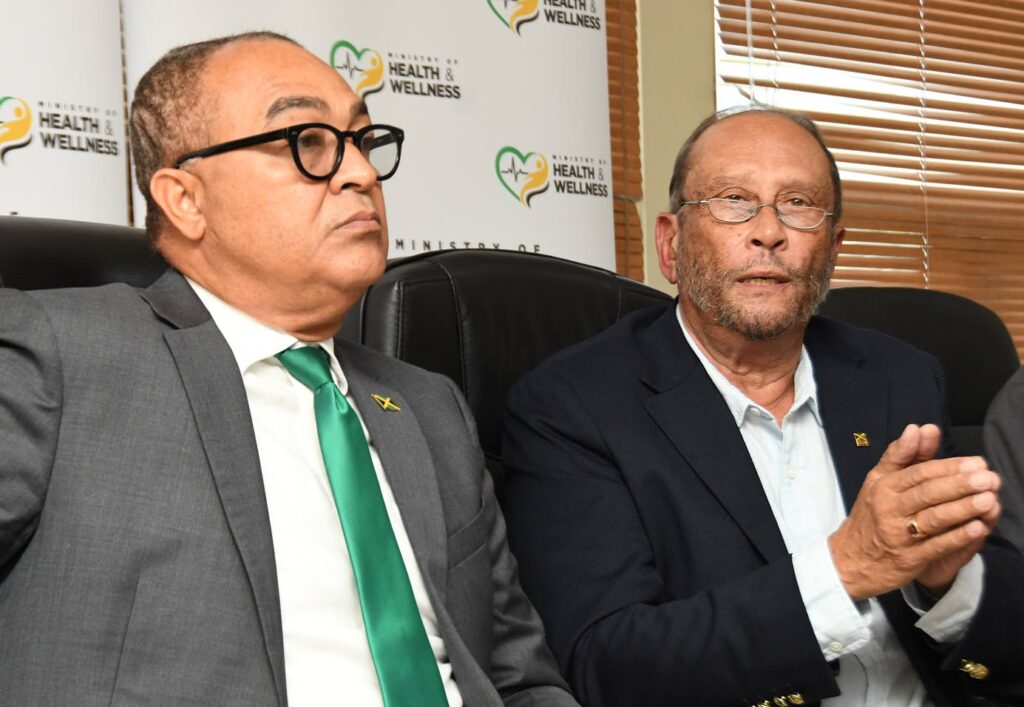
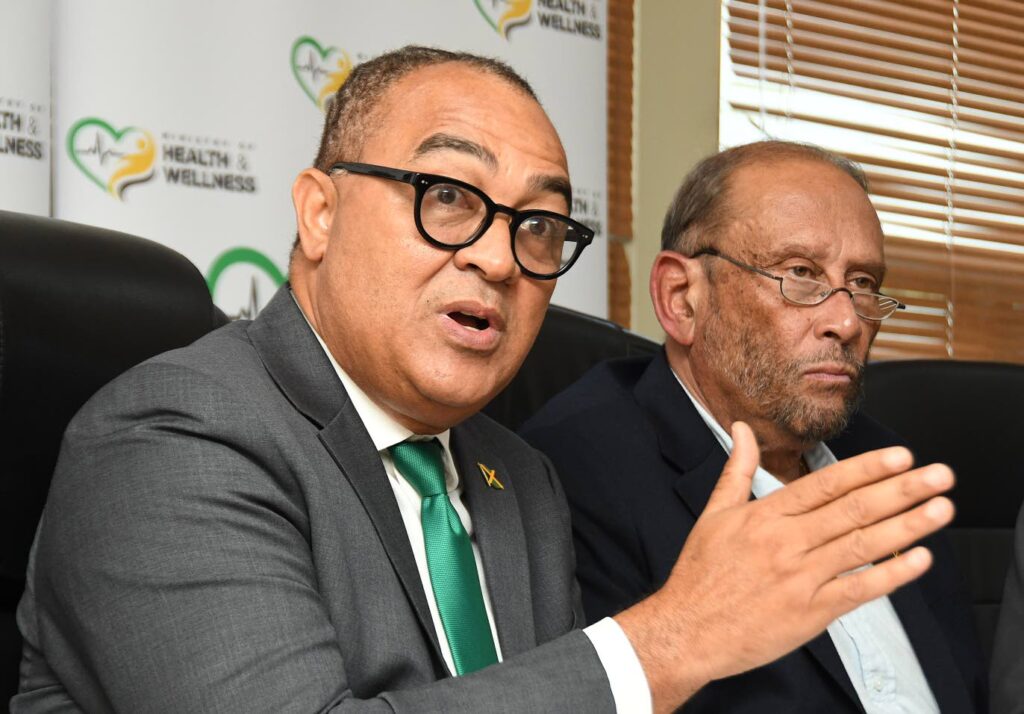
    The probe, headed by veteran Jamaican attorney Howard Mitchell, was convened by Jamaica’s Minister of Health and Wellness Dr. Christopher Tufton after a 2024 auditor general report flagged widespread operational irregularities at the facility. Mitchell’s Institutional Review Committee was tasked with unpacking the root causes of the hospital’s persistent financial struggles and service gaps.

    In a public press conference held Tuesday to unveil the committee’s findings, Mitchell emphasized that most of UHWI’s fiscal strain stems not from insufficient government funding, but from years of unaddressed institutional failure to enforce standard financial and operational procedures. The committee’s investigation uncovered systemic weaknesses across four core areas: lax financial controls, chaotic inventory management, broken procurement processes, and widespread governance lapses. These failures have not only gutted the hospital’s budget, but have directly eroded the quality of care available to Jamaican patients who rely on the island’s leading referral hospital.

    “Based on my decades of experience working with government agencies, if staff and leadership had followed existing procurement rules, financial reporting requirements, and standard inventory management practices, more than 50% of the hospital’s annual revenue loss would have been avoided,” Mitchell said during the briefing. He added that inconsistent and incomplete financial reporting also undermines the hospital’s case for increased government allocations, creating a vicious cycle of underfunding caused by poor accountability: “How can you expect the government to continue allocating more funds when you can’t show how existing resources are being used?”

    The report makes clear that these institutional breakdowns are not just abstract administrative issues – they have direct, life-altering consequences for patients. Weak inventory tracking and oversight, Mitchell explained, often leads to critical shortages of essential medical supplies, even when public funds have already been allocated to purchase those items. Without clear tracking systems for everything from prescription medications to bandages and wound care supplies, the hospital frequently ends up in situations where vital stocks go missing or are diverted, leaving treatment rooms empty when patients need care.

    “If you don’t have formal tracking for your drugs, bandages and other supplies, and it’s a free-for-all with no clear record of who receives what, you’ll eventually walk into the storeroom and find nothing. Worse, you can end up with unauthorized third parties holding more of the hospital’s medical stock than the facility itself,” Mitchell said.

    Procurement failures have also drained millions from the hospital’s care budget, the committee found. When basic procurement rules – such as requiring three competitive bids for major purchases – are ignored, the hospital often pays up to three times the fair market value for essential equipment and services. That unnecessary overspending pulls critical resources away from direct patient care.

    “If you overpay for a piece of equipment by hundreds or thousands of dollars because you skipped competitive bidding, that’s money you can’t use to treat the patients that count on you,” Mitchell added.

    Beyond operational inefficiencies, the report identifies the hospital’s staggering tax liability as an existential threat to its long-term viability. UHWI currently carries approximately JMD $40 billion in accumulated unpaid taxes, penalties, and interest, and accumulates an additional $300 million in new liabilities every month. Mitchell called the current debt trajectory completely unsustainable, noting that even if government authorities waive all accumulated penalties and interest, the hospital still faces billions in unpayable core obligations.

    In stark language that underscores the severity of the crisis, Mitchell compared the hospital’s condition to that of a critical care patient: “As a consequence of years of unaddressed failure, the University Hospital of the West Indies is in critical condition. It is itself in the ICU.”

    For his part, Health Minister Tufton acknowledged the management failures laid out in the report, but added context to the hospital’s fiscal challenges, noting that UHWI’s unique mandate as Jamaica’s leading public referral and teaching hospital forces it to absorb large unrecoverable costs that other facilities do not face. The gap between the hospital’s revenue and expenses is driven in part by its responsibility to treat low-income and uninsured patients who cannot pay for their care, Tufton explained.

    Tufton also admitted that the government itself contributes to the hospital’s growing unpaid receivables, by regularly referring vulnerable patients for life-saving care at UHWI without securing guaranteed payment for treatment. “Every week I send people to the University Hospital, and to be totally frank, I am probably part of the cause of some of the delinquency,” Tufton said. “The people I send there for lifesaving treatment can’t pay if the ministry doesn’t pay for them. But lives are at stake, and I cannot in good conscience turn these patients away when they need specialized care that only the premier institution can provide.”

    The release of the committee’s report is expected to kick off urgent government-led restructuring efforts to stabilize UHWI’s finances and restore consistent, high-quality care for patients across Jamaica.

  • Police battle hub

    Police battle hub

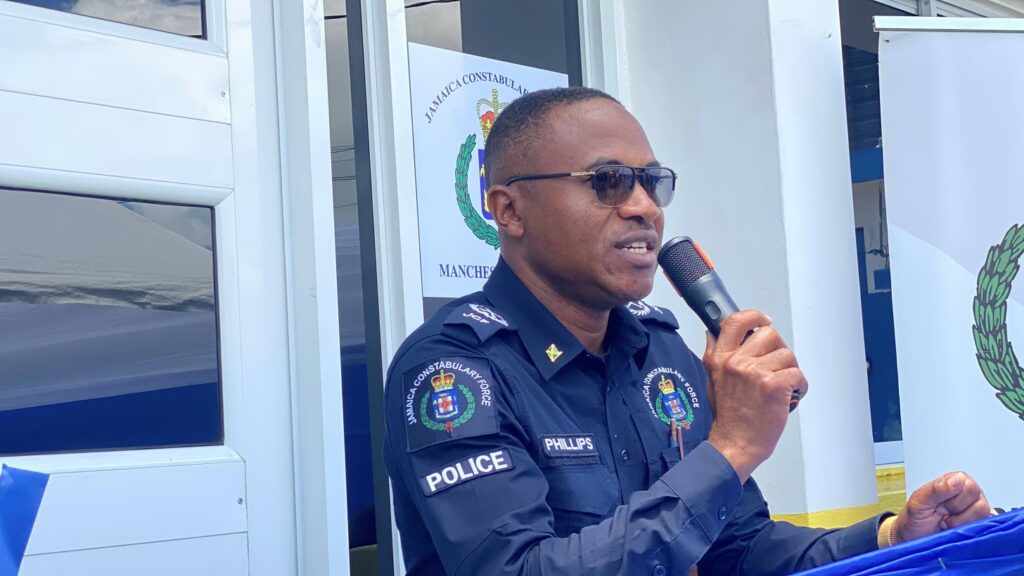
    MANDEVILLE, Manchester — Facing an alarming three-fold jump in murder rates compared to last year, law enforcement in Jamaica’s Manchester Parish officially unveiled a fully renovated police conference room this Tuesday, rebranding it as the central command hub for an aggressive new crackdown on rising criminal activity across the region.

    Speaking at the opening ceremony attended by local business leaders and senior law enforcement officials, Assistant Commissioner Christopher Phillips, head of Police Area Three, delivered a firm warning to offenders: Manchester will not be allowed to become a safe haven for criminal activity. He framed the updated facility at Mandeville Police Station as more than just office space — it is a purpose-built “war room” for a coordinated campaign against individuals and groups that have destabilized the parish with violent crime.

    “Some criminals have started to see Manchester as a safe space to operate, and that ends now,” Phillips emphasized. “We will push back, we will fight hard, and we will reclaim our communities. This space will serve multiple critical roles: it will be a briefing center before major operations, a training ground for new young constables, and a collaborative meeting space where police can partner with local stakeholders — from faith leaders to business associations — to address the root of Manchester’s violence together.”

    The J$7 million renovation project was completed entirely through a groundbreaking public-private partnership, with 13 local organizations stepping forward to fund and carry out the work. Contributing partners included C&D Construction, Power Services Company Ltd, Matthews and Clarke Roofing, Samfo Meats, Hylton and Sons, Superlatives Auto, Vicbern Roofing, the Youth Ministry of the Seventh-day Adventist Church, Denron, Pavecon Ltd, Rymac Rentals, J Crawford and Sons Limited, and Grant’s Welding.

    Beyond structural renovations, which covered full retiling, new partitions, doors, air conditioning systems, updated electrical wiring, replacement windows, fresh painting, plumbing repairs, and new built-in cupboards, the business community also donated critical operational equipment. Donations include 50 matching chairs and tables, a new laptop, a large smart television with a portable stand, a glass podium, a microwave, a water dispenser, and a fully stocked coffee station for officers. Following the renovation work, participating business leaders also organized a large-scale clean-up of the entire police station compound to clear leftover construction debris and refresh the grounds.

    Official police statistics paint a stark picture of the crisis the new command center is designed to address: between January 1 and May 2, 2026, the parish recorded 14 murders, up from just five homicides during the same period in 2025. Investigators have identified interpersonal conflicts and domestic violence as the primary driving factors behind most of the recent killings.

    Phillips praised the Manchester division police leadership for successfully engaging the private sector in the project, noting that upgraded, professional working conditions directly translate to better operational outcomes. “When officers work in a space that is professional, clean, and functional, morale rises, and performance follows,” he explained. “I charge every member of the Manchester division to take ownership of this space, and build a culture of continuous improvement that spreads across every part of the station. Even small improvements, from a fresh coat of paint to working air conditioning, build pride, and that pride leads to bigger partnerships and stronger community engagement.”

    He added that public perception of police is shaped as much by how law enforcement stewards public resources as it is by crime-fighting results. “A clean, modern, functional station sends a clear message to the people of Manchester: we respect you, and we respect ourselves,” Phillips said. “Our officers run toward danger when everyone else runs away — they deserve a headquarters that matches their courage. My hope is that every briefing held in this room leads to safer streets, every strategy session saves a life, and every community meeting held here builds deeper, stronger trust between police and the people we serve.”

    The ceremony concluded with Superintendent Carey Duncan, head of the Manchester police, cutting the ribbon to officially open the new facility, as participating business leaders and senior officers looked on.

  • Leaky law

    Leaky law

    A government-appointed review committee has sounded the alarm over widespread governance vulnerabilities at Jamaica’s University Hospital of the West Indies (UHWI), tracing decades of systemic flaws to the facility’s outdated 76-year-old founding legislation. The UHWI Institutional Review Committee, led by chairman Howard Mitchell, is pushing for comprehensive updates to the 1948 University Hospital Act, arguing that the decades-old law has left gaping accountability loopholes that have opened the door to institutional abuse.

    The call for legislative reform comes as a direct response to a damning auditor general’s report that exposed significant governance failures at the public teaching hospital, prompting the Jamaican government to task the independent committee with investigating identified weaknesses and drafting actionable remedies to strengthen oversight, accountability and long-term operational performance.

    Addressing reporters at a Tuesday press briefing, Mitchell emphasized that the 1948 legislation was crafted for a vastly different healthcare and governance landscape, and has failed to adapt to Jamaica’s modern standards of public sector accountability. He cited one striking example of regulatory gaps in the law: Section 14 of the act grants the hospital’s board of management unrestricted duty-free import privileges, with no clear limitations on what types of goods can be imported or under what conditions. While the provision was intended for hospital-related imports, the unregulated open door has evolved into a pathway for misuse that demands urgent correction, Mitchell explained.

    The committee’s final assessment confirmed that the law, which established UHWI’s governance structure nearly 80 years ago, is completely misaligned with the practical demands of running a 21st-century public teaching hospital. Beyond broad regulatory gaps, investigators identified a litany of specific structural issues: an oversized board of management, overlapping official appointments, ambiguous lines of operational authority, weak internal oversight mechanisms, and persistent confusion over the division of responsibilities between the Jamaican government and The University of the West Indies (UWI), which shares governance of the facility.

    Mitchell noted that this dual governance model has created dangerous ambiguity around accountability and decision-making power. “The legislation may have been acceptable at the time and appropriate at the time, but it has created a confusion between board oversight and operational roles, and that is a cardinal sin in management. The board governs, the management manages, and we have seen situations where that line has been crossed,” he said.

    Another critical finding centered on long-running uncertainty around UHWI’s legal status as a public body, which has enabled years of non-compliance with mandatory government procurement and financial reporting rules. Many hospital officials have operated under the incorrect assumption that UHWI’s partial UWI administration and position outside the traditional public health system exempts it from full adherence to Jamaica’s public sector accountability framework.

    Committee member Professor Alvin Wint, an emeritus professor of international business at UWI, revealed that this confusion persisted as recently as 2023, months before the current review was launched. Prior to the appointment of current UHWI chairman Patrick Hylton, UHWI’s own legal officer retained a private law firm to issue a formal determination on whether the hospital qualified as a public body under Jamaican law. This step struck the review committee as particularly remarkable, Wint explained, because Jamaican law clearly defines a public body as any entity established by statutory legislation under government control — a description that applies unambiguously to UHWI.

    This fundamental misunderstanding fostered a years-long institutional culture where compliance with the Public Bodies Management and Accountability Act was treated as optional rather than mandatory, the committee found.

    To address these systemic flaws, the panel has put forward a series of core recommendations: downsizing the hospital’s oversized board, implementing formal term limits for board appointments, immediately hiring a dedicated corporate secretary to strengthen administrative compliance, tightening procurement oversight, and restructuring UHWI’s operational framework to meet modern teaching hospital standards. Additional proposals include clarifying the authority of UHWI management over UWI clinical staff assigned to the facility, and rebuilding strategic governance systems that have eroded over decades of neglect.

    Health and Wellness Minister Dr Christopher Tufton confirmed that the Jamaican government has already prioritized the legislative reform process, after Cabinet discussed the committee’s findings and formally backed the overhaul. “That’s a Government of Jamaica, Ministry of Health mandate, and we intend to put whatever systems are in place to immediately commence a review of the legislation in keeping with modern times and the mandate of the institution,” Tufton said.

    The minister added that the reform push is a core component of a broader government effort to rebuild public trust in UHWI, which was severely damaged following the release of the auditor general’s report and the subsequent public controversy. “There is a confidence issue that we need to resolve. We need to bridge that gap and we need to show that we are willing to confront the issues, to face them head on, and to do something about them,” Tufton said.

  • Decomposing body found hanging in Augier

    Decomposing body found hanging in Augier

    Authorities in the southern Caribbean island nation of Saint Lucia have launched a formal homicide investigation following the grim discovery of a 34-year-old local woman’s decomposed remains in a wooded area of the Vieux Fort district.

    According to official updates from the Royal Saint Lucia Police Force, plainclothes investigators from the Criminal Investigations Department assigned to the Vieux Fort Police Station were dispatched to the Pomme neighborhood of Augier just after 3 p.m. local time on Monday, May 4, 2026, after receiving an anonymous tip about the unusual sighting. Upon arriving at the scene, law enforcement officers located the woman’s body hanging from a tree in a remote, sparsely populated part of the district.

    The remains were quickly removed and transported to St Jude Hospital for forensic processing, where they were positively identified as Talia Norma Hippolyte, a lifelong resident of Augier. A full postmortem examination has been scheduled for Friday, May 8, 2026, to pinpoint the exact cause and manner of Hippolyte’s death. Investigators have confirmed that the case remains active and ongoing, with no further details released to the public as they work through evidence collection.

    News of the discovery has sent shockwaves through the tight-knit local community. Multiple residents who spoke with local outlet SLT confirmed that Hippolyte had struggled with mental health challenges in the months leading up to her death, a disclosure that has rekindled long-running public conversations across Saint Lucia about gaps in mental health awareness and limited access to affordable, reliable support services for residents in need. Public health advocates have used the incident to emphasize how critical it is for community members to recognize early signs of emotional distress and connect at-risk individuals to care before tragedy occurs.

    In addition to the mental health discourse, the incident has sparked urgent concern over the spread of graphic, disturbing content online: multiple unedited videos purporting to show the crime scene and Hippolyte’s remains have circulated widely across social media platforms in recent days. Community leaders and local residents are calling on social media users to immediately stop sharing the footage, urging respect for the victim’s dignity and the privacy of her grieving family.

    As of this report, authorities have not released any further updates on the case, which remains a developing investigation.

  • STATEMENT: OECS congratulations to Prime Minister Gaston Browne on his fourth re-election

    STATEMENT: OECS congratulations to Prime Minister Gaston Browne on his fourth re-election

    The Organisation of Eastern Caribbean States (OECS) Commission has officially extended its warmest congratulations to Gaston Browne following his decisive victory to secure a fourth consecutive term as Prime Minister of Antigua and Barbuda.

    This political milestone is far more than a domestic political outcome: it stands as a clear reflection of the Antiguan and Barbudan electorate’s enduring confidence in Browne’s leadership, at a time when the global geopolitical and economic landscape grows increasingly unpredictable. Over his previous tenures in office, Browne has centered his policy agenda on three core priorities: shoring up national fiscal stability, guiding the country’s key tourism sector through a sustained post-pandemic recovery, and advancing aggressive, proactive international economic diplomacy. His track record, OECS notes, exemplifies the pragmatic, adaptable governance that small island developing states must prioritize to navigate modern challenges.

    Beyond Antigua and Barbuda’s national borders, Browne’s renewed mandate carries outsized regional significance. The country is on the cusp of assuming the Chairmanship of the OECS Authority, and Browne’s leadership is expected to be a driving force as the bloc pursues three of its top strategic goals: deeper economic and political integration across member states, enhanced regional self-reliance to reduce dependence on external partners, and more coordinated, strategic engagement with global bodies and international partners.

    In its official statement, the OECS Commission reaffirmed its longstanding commitment to building a close collaborative partnership with Browne and his incoming administration. The bloc aims to work alongside the new government to tackle shared cross-border challenges, strengthen coordinated action among all OECS member states, and amplify the region’s unified voice in global discussions that impact small island states.

    Looking ahead, OECS has extended its well-wishes for Browne’s success throughout his new term, and expressed enthusiasm for his leadership as the bloc works to build a more secure, interconnected, and prosperous future for the entire Eastern Caribbean region.

  • Gonsalves says iWN could soon be called ‘Lie Witness News’

    Gonsalves says iWN could soon be called ‘Lie Witness News’

    A brewing political and media controversy in St. Vincent and the Grenadines erupted this week, as opposition leader Ralph Gonsalves launched a sharp public critique of independent news platform iWitness News during his weekly “Morning Comrade” radio segment on the ruling Unity Labour Party’s (ULP) Star Radio on Monday. At the center of the firestorm is a minor clerical mistake at the state-run Agency for Public Information (API) that opposition figures have framed as a targeted bullying campaign against the agency’s acting head, Nadia Slater. The controversy took a shocking turn early Tuesday, when Slater was reportedly assaulted and injured at her home by an alleged relative, with both she and a 70-year-old aunt hospitalized and a suspect taken into police custody.

    The sequence of events began on April 28, when API published an official advisory for a government press conference that incorrectly labeled Gonsalves, former ULP prime minister, as the sitting prime minister — five months after the New Democratic Party (NDP)’s Godwin Friday defeated the ULP in general elections and assumed office. Gonsalves has characterized the mistake as an entirely innocent, unintentional slip, noting similar mislabeling has happened to other senior politicians transitioning out of office. He pointed out that current Deputy Prime Minister St. Clair Leacock and Education Minister Phillips Jackson both accidentally referred to him as prime minister on the floor of parliament after he left office, and that decades ago, voters and politicians continued to call Sir James Mitchell prime minister for a period after he stepped down following 16 and a half years in office. The misstep was compounded when API sent a correction that accidentally swapped a key word, describing the mislabeling as a “genuine error with malicious intent” instead of the intended “without malicious intent.”

    iWitness News, a news outlet founded in 2006 by Kenton X. Chance, was among the media organizations that covered the typo incident, and later reported that Slater was placed on administrative leave in the wake of what the outlet called a “comedy of errors.” Citing an anonymous source close to the situation, iWitness News questioned why the five-month-old NDP administration had retained Slater in the acting API director role, noting she had openly campaigned for the ULP during the 2025 general election. The source also added that the previous ULP administration itself passed over Slater three times for the permanent director role, appointing external candidates instead even though she was a known ULP supporter.

    During his radio address, Gonsalves argued that political opponents and critical media outlets have blown the minor mistake far out of proportion to harass Slater, framing the sustained scrutiny as a targeted bullying campaign. “It’s not something that you should turn into a matter bigger than it is. The politicians are hounding Nadia. I seeing iWitness News wanting to tie her up, tar and feather her,” Gonsalves told listeners, adding that the swapped word in the correction was itself an obvious secondary typo that is being unfairly exploited. “It can’t be an inadvertent error with malice. It’s clear that’s a typographical mistake, but they’re just stringing it up.”

    Beyond the controversy surrounding Slater, Gonsalves also directly questioned the professional ethics of iWitness News founder Kenton X. Chance, who was appointed St. Vincent and the Grenadines Ambassador to Taiwan, with his term officially starting March 1. Gonsalves raised concerns that Chance continues to own and operate the news outlet from overseas while serving as a sitting government diplomat, arguing this dual role creates an unacceptable conflict of interest. Though Gonsalves acknowledged Chance’s appointment as one of the better diplomatic picks the current NDP government has made and said he holds no personal ill will toward Chance, he argued that running a politically aligned news outlet while serving as a serving diplomat is improper. Gonsalves, who has been a frequent critic of iWitness News’s coverage long before Chance’s diplomatic appointment, claimed the outlet has evolved into a de facto partisan mouthpiece for the ruling NDP, and derided it with a opposition-coined pejorative “Lie Witness News.” He accused the outlet of publishing unprofessional, heavily biased content that frames news stories as partisan editorials filtered through skewed perspectives, and said it is leading the charge against Slater.

    Chance, for his part, has a long public record of commenting on API’s operations dating back to 2010, and in recent years has criticized the agency for shifting toward competing with rather than collaborating with private media, while branding its own content as “superior journalism.” Notably, Gonsalves himself expressed frequent frustration with API’s functioning during his own time as prime minister. Chance and Slater also share personal history, having attended primary school together as classmates in Clare Valley — where Slater’s family is from — before later working alongside each other in media.

    Just hours after Gonsalves’s Monday critique, the controversy shifted dramatically with breaking news that Slater had been assaulted at her home around 3 a.m. Tuesday local time. Police confirmed they have taken a suspect, identified as a relative of Slater, into custody. Both Slater and her 70-year-old aunt, who was also involved in the incident, were transported to a local hospital for medical treatment. Details on the severity of their injuries were not immediately available as of Tuesday morning.