博客

  • South African president warns against ‘scapegoating’ migrants

    South African president warns against ‘scapegoating’ migrants

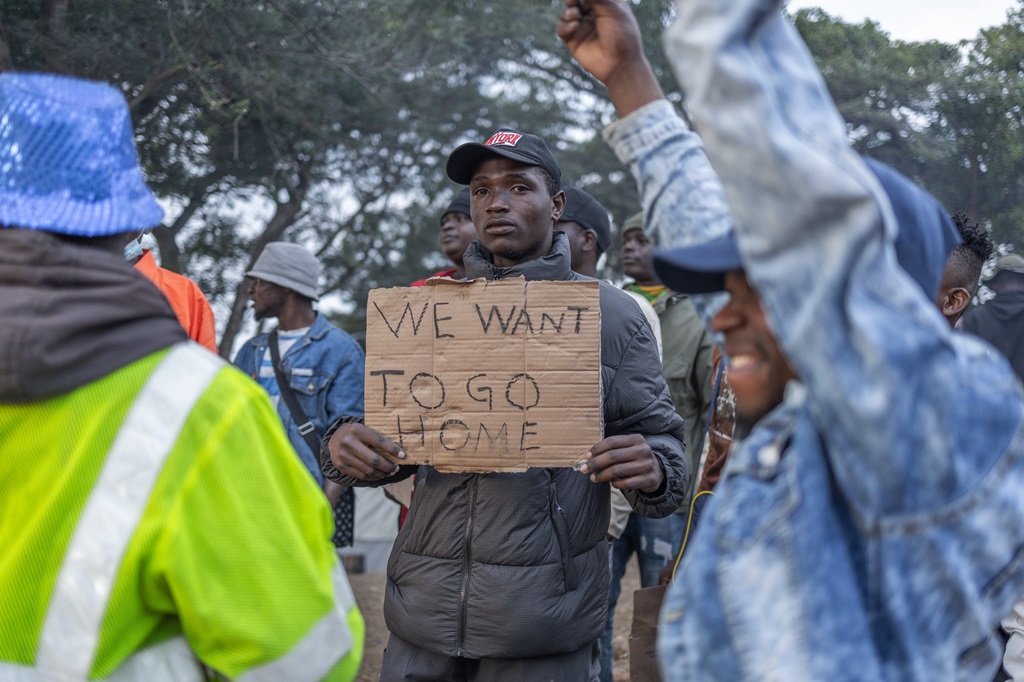
    JOHANNESBURG, South Africa – Against a backdrop of rising anti-immigrant violence and unrest across the nation, South African President Cyril Ramaphosa delivered a clear rebuke to xenophobic scapegoating on Tuesday, calling on citizens to stop holding migrants responsible for the country’s deep-seated socioeconomic challenges. As one of the most robust and largest economies on the African continent, South Africa has for decades drawn migrant workers from across the region, with many entering the country both through legal channels and without official authorization. But over recent weeks, organized crowds of South African demonstrators armed with sticks, whips, and makeshift shields have taken to streets in multiple regions, issuing an ultimatum that all undocumented foreigners must leave the country by June 30.

    Ramaphosa’s remarks came during an official address commemorating Youth Day, a national holiday marking the 1976 Soweto uprising, a pivotal youth-led movement that accelerated the end of apartheid in South Africa. “There are some who blame the problems of the current government, of unemployment and crime and poor service delivery, on foreign nationals,” the president told the gathered crowd. He acknowledged that unauthorized migration poses a measurable policy challenge for the country, one his administration is already pursuing decisive action to resolve, but added: “our problems are… our own problems, and which we have a responsibility to fix ourselves.”

    Highlighting the severity of the nation’s unemployment crisis, Ramaphosa confirmed that youth unemployment currently sits at 42%, far outpacing the overall national workforce unemployment rate of 32%. He outlined ongoing policy initiatives from his administration to generate new formal jobs, and issued a public appeal to the country’s private sector to prioritize offering entry-level opportunities to young South Africans who lack formal work experience. “Addressing these challenges does require practical solutions, not the scapegoating of vulnerable people,” he emphasized.

    Speaking to reporters after the official commemoration ceremony, Ramaphosa issued a stern warning to organizers of the anti-immigrant marches, who have ramped up public pressure to expel undocumented residents. “There does seem to be an intention to destabilise the country, and the clear message is that we are not going to allow that,” he said. The recent wave of violence, which has included looting of foreign-owned businesses and targeted attacks on migrant communities, has sparked widespread security fears. In response, governments of neighboring and regional countries including Nigeria, Malawi, Ghana, Zimbabwe, and Mozambique have organized voluntary repatriation efforts, which hundreds of vulnerable foreign residents have already accepted.

    Data from South Africa’s national statistics agency shows that more than three million foreign-born people currently reside in the country, accounting for approximately 5.1% of the total national population.


  • Ten contestants vie for Mister and Mister Teen Universe International Jamaica

    Ten contestants vie for Mister and Mister Teen Universe International Jamaica

    After weeks of rigorous preparation and community engagement, ten ambitious young Jamaican competitors are gearing up to take the stage this Sunday, June 21, for the highly anticipated Mister and Mister Teen Universe International Jamaica finals, set to be hosted at Kingston’s YMCA Auditorium on Hope Road. This year marks a historic milestone for the Jamaican pageant circuit, as the event will crown the very first titleholder of Mister Universe International Jamaica, building on the strong showing of the island’s 2023 Mister Teen representative.

    Geovani Lewin, national coordinator for both competitions, opened up about the demanding journey that has shaped the contestants over the past month. What started as a gradual, development-focused training program has ramped up to an intensive final week of preparation, with organizers pulling out all the stops to ensure every competitor is at peak performance ahead of Sunday’s finale.

    “From day one, we centered this competition on personal growth and skill-building, not just beauty or stage presence,” Lewin explained. “After weeks of consistent training, this final push has sharpened everything they’ve learned. Our contestants are mentally and spiritually prepared to showcase all they’ve gained to the Jamaican public, and I’m confident each will bring their best effort to the stage on Sunday night.”

    In the lead-up to the coronation, competitors have stepped beyond training rooms to engage with local communities and partner brands, building connections across the island’s creative and business sectors. One of their most high-profile engagements was a pop-up event hosted at the Signature Style Clark’s Originals Store, a key competition partner. Organized in partnership with the upcoming Jamaican International Beauty Expo—set to kick off just one week after the pageant—the event gave attendees an early look at a new Clark’s advertising campaign that featured all ten contestants as featured models.

    Before the main Sunday event, pageant fans will get a second chance to meet the competitors on Wednesday, when they take part in a Trendy Couture Fashion Show kicking off at 6 PM at Jammin on The Oasis, located at 5 Oxford Road in New Kingston. Lewin noted that the show breaks new ground for local pageantry, bringing together male and female pageant systems from across the region for a collaborative showcase of Jamaican fashion. After the runway, attendees can enjoy interactive activities designed to help the public connect with contestants on a more personal level ahead of the grand coronation. “This is a fresh, exciting take on a fashion event, and I encourage everyone to grab a ticket and come experience it for themselves,” Lewin added.

    The upcoming finals carry extra momentum following Jamaica’s strong performance at the global Mister Teen Universe International pageant last year. Bradley Clarke, the island’s 2023 representative, took home second runner-up at the global competition held in Panama, setting a high bar for this year’s new crop of competitors.

    The ten finalists vying for the two national titles represent a diverse cross-section of Jamaican industries and institutions. They include Tajay McDermoth of the University of the Commonwealth Caribbean (UCC), Leshawn Freckleton of Fit Farm Fitness Club, Rahiem Edwards of Totally Male Club Spa and Salon, Najhae Walters of Culinary Atelier Society, Nickoli Fraser of Rasheda Events and Décor, Jevaughn Reid of Nationwide Express, Xavia Smith of McIntosh Productions, Adonique Cole of Famished Restaurant, Rajae’ Graham of Fern Forest Eco Village, and Ackeem Lyn of Birdshack Fried Chicken.

  • Missing plane found, no loss of lives

    Missing plane found, no loss of lives

    In an official update released Monday, the government of St Vincent and the Grenadines has confirmed that a Dominican Republic-registered aircraft that disappeared mid-flight last weekend while traveling to Tobago has been located, with all people on board alive. The announcement came from Deputy Prime Minister and National Security Minister St Clair Leacock during a local radio address, who noted that a coordinated search effort involving international, regional and local agencies successfully tracked down the twin-engine plane. However, he declined to disclose the exact location of the recovered aircraft.

    A prior public notice from the Ministry of Tourism, Civil Aviation and Sustainable Development outlined the basic details of the flight: the plane, identified as a B58T or 58P Pressurized Beechcraft Baron with registration number HI-1145, departed Argyle International Airport in St Vincent at 11:52 a.m. local time this past Friday, carrying only two people on board. The aircraft was scheduled to complete its 65-minute journey and land at Tobago’s A.N.R. Robinson International Airport shortly after departure.

    Leacock told radio listeners that he had maintained constant communication with local police leadership and regional security bodies throughout the search operation, including the Barbados-headquartered Regional Security System (RSS) and the Trinidad-based Caribbean Community (CARICOM) Implementation Agency for Crime and Security (IMPACS). He added that local authorities have already compiled information on all individuals linked to the missing aircraft, but refused to publicly share full details of the ongoing investigation.

    The security minister explained that disclosing sensitive operational details at this stage would put the ongoing work of search and investigative agencies at risk, adding that intelligence and security teams are continuing to closely monitor all developments related to the incident. He emphasized that authorities are prioritizing the investigation of the people operating and traveling on the aircraft over the plane itself, noting that the aircraft cannot operate without human control, and that investigators are working to determine the appropriate next steps in the probe.

    Before contact with the plane was lost, its flight path was tracked by popular public flight monitoring platform Flightradar24. Data from the site showed the aircraft was operating under visual flight rules (VFR), maintaining an altitude of 4,025 feet and a cruising speed of 142 knots. All tracking signals cut off abruptly while the plane was over the Southern Caribbean Sea, with the last recorded position placing it in the vicinity of Grenadian or Venezuelan territorial waters.

  • Bahamian student suspected in Florida stabbing found dead

    Bahamian student suspected in Florida stabbing found dead

    A 21-year-old Bahamian student studying in Florida has been named by law enforcement as the primary suspect in a double stabbing incident close to the University of South Florida, before his body was discovered at a nearby apartment complex hours after the attack.

    According to official statements from the Hillsborough County Sheriff’s Office, the suspect, Hansel Pearson, who hails from Grand Bahama, is accused of stabbing his roommate and a second individual in a pre-dawn assault at the Halo 46 Apartments in Tampa last Wednesday. The violent incident unfolded on June 10.

    Local law enforcement deputies were dispatched to the apartment complex located on North 46th Street at approximately 4:30 a.m., responding to an emergency 911 call placed by one of the victims, who reported that both he and another person had sustained stab wounds. Both injured victims were quickly transported to a local medical facility for treatment, and as of the initial investigation, their conditions were marked as stable.

    Investigative teams have confirmed that Pearson and one of the victims are roommates and both enrolled as students at the University of South Florida. The second victim, however, has no known connection to the higher education institution.

    Roughly half a day after the stabbing attack, Pearson’s body was found at the Union on Fletcher Apartments, a residential location just one mile away from the scene of the stabbing. The discovery prompted law enforcement to open a separate death investigation into the circumstances of Pearson’s passing. To date, authorities have not released any details regarding how Pearson died, nor have they made public any confirmed motive that may have sparked the stabbing attack.

    News of Pearson’s death has been met with grief from his family. A relative shared a public mourning post on Facebook, identifying Pearson as her grandson and writing that his passing has left her with deep and overwhelming emotional pain. She shared that she believes Pearson has been reunited in heaven with his father, who passed away before him, noting that this loss has left her feeling as if she has lost two sons instead of one.

    When contacted by local Bahamian news outlet The Tribune this week, an aunt of Pearson based in Grand Bahama said the family has no interest in speaking to the media about the incident. The Tribune also reached out to Tyeson McKenzie, Bahamas Consul General based in Miami, who confirmed that Bahamian consular officials are still in the process of reviewing the case and gathering details about the incident.

  • Embarrassment to force and country

    Embarrassment to force and country

    A high-profile incident of alleged extortion targeting an American tourist is set to lead to formal charges against two Royal Bahamas Police Force officers on Friday, marking the second major corruption-related case involving law enforcement and visitors to the Caribbean nation in less than a year.

    The case emerged after the visiting tourist filed a formal complaint alleging misconduct by officers at the Nassau Cruise Port, one of the country’s most high-traffic entry points for international visitors. Law enforcement leadership confirmed that a 23-year-old female officer and a 27-year-old male officer were taken into custody following the June 14 complaint, and both are scheduled to make their first appearance at the Magistrate’s Court starting at 10 a.m.

    Royal Bahamas Police Force Commissioner Shanta Knowles called the alleged behavior deeply embarrassing for both the national police service and The Bahamas as a whole, emphasizing that the incident strikes at the core of the country’s reputation as a safe tourist destination. “Again, this is something that is causing embarrassment to our organisation and eventually to the country,” Knowles stated in an interview with The Tribune. “It is acts like this that we even warn our officers about. There is no need for any officer to believe or to act in such a manner where you are in contravention of police policy and also the law.”

    Following the tourist’s report, the force’s Complaints and Corruption Branch launched a full investigation into the allegations. In an official statement, the RBPF reaffirmed its long-standing “zero tolerance” policy for criminal and unethical behavior among personnel, noting that any action that erodes public trust or damages the country’s standing will be addressed decisively, in full alignment with national law.

    The department also noted that the probe into the latest extortion allegations was conducted “thoroughly, fairly, and impartially,” and restated its institutional commitment to upholding core standards of professionalism, integrity, accountability and ethical policing for all serving officers.

    This case comes just months after another high-profile corruption scandal involving police interaction with a tourist. In that earlier incident, a viral TikTok video recorded by a Miami-based visitor circulated widely online, appearing to show an officer attempting to solicit a bribe during a routine traffic stop.

    In that case, Knowles said the department was alerted to the incident by social media, which triggered an immediate internal investigation. Two officers were ultimately pulled from frontline public safety duties and referred to a formal police tribunal for disciplinary review.

    The 2024 video showed officers conducting a roadblock near St Matthew’s Anglican Church off Shirley Street, after the tourist was stopped while operating a rented scooter. In the recorded footage, the officer identified by badge number 4438 appeared to suggest the traffic violation could be “worked out” rather than result in a formal ticket — comments that were broadly interpreted by social media users and investigators as a clear solicitation of a bribe. The officer was also heard advising the tourist to move out of the line of sight of other on-duty officers during the exchange.

  • Bastian pledges new national ID card to reduce red tape

    Bastian pledges new national ID card to reduce red tape

    In his maiden budget address to the House of Assembly, Bahamas’ newly installed Minister of Innovation and National Development Sebas Bastian has outlined an ambitious cross-cutting plan to modernize the country’s public administration, anchored by the introduction of a unified national identity card. The proposal comes as Bahamian citizens currently navigate a fragmented system of multiple identity documents—including passports, voter registration cards, National Insurance (NIB) cards, and driver’s licenses—required to complete transactions across public and private sectors. Each service maintains its own identity verification requirements, creating layers of bureaucratic friction for citizens interacting with government agencies.
    Bastian argued that the current fragmented identification framework creates unnecessary red tape that strains the relationship between the state and the public. A single, trusted, secure national credential, he says, would eliminate redundant checks, cut down on time citizens spend waiting in government lines, and deliver stronger protections against identity fraud. The proposed card would act as a universal verification tool, allowing citizens to access government services, sign official documents, and collect entitled benefits seamlessly across all government touchpoints. “One trusted, secure credential that lets a Bahamian access services, sign documents, and receive what they are owed — simply, and safely. Less time in line. Stronger protection against fraud. A government that recognises you wherever you go,” Bastian told the assembly.
    The minister did not clarify key details of the proposal, including whether the card would be mandatory for all citizens or if it would replace any of the existing identity documents currently in use. What he did emphasize is that the national ID card will sit at the core of a broader push to break down long-standing technology silos that have left disconnected government ministry systems unable to share data securely. Bastian distinguished between superficial digitization—installing new technology in individual departments—and true systemic transformation, noting that disconnected platforms cannot deliver a streamlined experience for citizens even if they are individually upgraded.
    “Interoperability is central to our modernisation strategy,” he said. “Government systems must be designed to communicate securely, share information where appropriate, and support a seamless experience for citizens, businesses, and investors.” Moving forward, all new government systems will be required to adhere to shared interoperability standards, with the national ID framework as the foundation of this connected government model. Bastian also added that the project will prioritize robust privacy and security safeguards, with the Bahamian government retaining full control of the identity system. Where domestic development is not feasible, Bastian pledged that local workers will be trained to operate and maintain the system, ensuring long-term technical capacity remains in Bahamian hands.
    The national ID plan is just one component of a far-reaching reform agenda Bastian announced for his ministry, which also includes major regulatory and educational initiatives centered on artificial intelligence, expanded satellite connectivity, and a revitalized national development strategy. Noting that no emerging technology holds greater potential to reshape key sectors including education, business, and healthcare, Bastian said The Bahamas will not cede its place in the global AI revolution—but will not adopt the technology without robust regulatory safeguards to protect citizens.
    To advance this balanced approach, Bastian announced the creation of a new National Artificial Intelligence Committee, drawing representatives from the public and private sectors as well as the legal community. The committee will be tasked with drafting The Bahamas’ first national AI legislation, rooted in the country’s core values and principles. The proposed regulatory framework will establish a permanent AI Authority tasked with overseeing the responsible development and deployment of AI, setting clear regulatory guardrails, and strengthening ongoing oversight of the sector. Bastian revealed that preliminary work is already underway, with government officials holding discussions with several of the world’s leading AI technology companies to inform the process.
    To ensure all Bahamians can benefit from the AI transition, the minister also proposed a national AI literacy initiative that will deliver both in-person and online training courses in artificial intelligence and software development, accessible to citizens across every island regardless of socioeconomic background. Emphasizing that future readiness starts in education, Bastian pledged full support for the Ministry of Education as it integrates AI training into national classroom curricula.
    Beyond digital ID and AI, Bastian’s agenda includes exploring new opportunities in satellite connectivity and the broader global space industry, building the resilient digital infrastructure required to support a competitive modern Bahamian economy. The minister also committed to revitalizing the country’s National Development Plan, previously treated as a static strategic document that was left largely unimplemented. Going forward, Bastian said, the plan will be treated as a “living instrument” updated regularly to reflect changing national priorities, with progress tracking embedded across all government departments.
    Starting this August, the plan’s secretariat will conduct a nationwide assessment of planning capacity across all ministries and government departments, establishing a centralized system to track implementation progress. Bastern noted that the plan will be updated to include fast-growing emerging sectors that did not exist when the country’s Vision 2040 was originally drafted, including AI, digital services, fintech, and space technology—areas he identified as core to The Bahamas’ future competitive advantage. All updates to the plan will be developed through broad consultation with stakeholders, business leaders, and community members across every island. Finally, Bastian pledged to modernize the Bahamas National Statistical Institute to improve the quality and timeliness of national data collection and analysis, enabling policymakers to make faster, more informed decisions that serve the public good.

  • Tax reform and the future of Dominican venture capital formation

    Tax reform and the future of Dominican venture capital formation

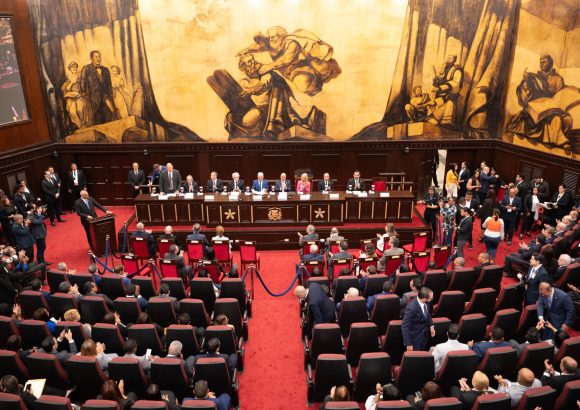
    As policymakers in the Dominican Republic navigate heated debates over a controversial proposed tax reform, one crucial conversation remains largely absent from the national discourse, according to regional innovation leader Jonathan Joel Mentor. The reform’s most talked-about provision centers on re-evaluating long-standing, sector-specific tax incentives that have guided decades of investment decisions, with government officials pushing for all existing tax breaks to prove their worth through measurable economic contributions. Mentor calls this scrutiny healthy and long overdue, noting that every public incentive should be held accountable to the simple standard of delivering more economic opportunity than it costs taxpayers. Yet in his view, while the government is asking the right questions about legacy incentives, it is missing a far more consequential piece of the puzzle: building the policy and structural foundation to finance the country’s next generation of economic growth.

    The current public debate has been almost entirely focused on fiscal sustainability, revenue targets, and the fate of existing industry exemptions. What is missing, Mentor argues, is a serious national discussion about venture capital formation, startup enabling infrastructure, innovation investment, intellectual property protections, and the systemic changes needed to turn the Dominican Republic into a global magnet for high-growth scalable companies. This gap is not a trivial oversight, he emphasizes: governments do not generate lasting wealth on their own; they create the conditions that allow private entrepreneurs and investors to build wealth. The companies that will expand the country’s tax base 20 years from now have not even been founded yet, so policy must prioritize building the ecosystem that will nurture them today. If policymakers are willing to audit the engines of past growth, they should be equally committed to examining the engines that will drive future prosperity, he adds.

    After a decade working with hundreds of entrepreneurs across the Dominican Republic, Latin America, and the Caribbean, Mentor highlights a core challenge that often goes unrecognized in policy circles. It is not a lack of entrepreneurial ambition across the country – he has met countless founders building companies across software, logistics, fintech, education, healthcare, and artificial intelligence who possess the creativity and resilience global investors seek. Instead, the gap lies in a shortage of investable companies: institutional venture funds, family offices, and development finance institutions do not invest based on raw ambition alone. They evaluate governance frameworks, scalability potential, market size, management maturity, and the likelihood of delivering venture-scale returns. The true bottleneck for Dominican innovation is not a shortage of entrepreneurs, it is a shortage of an enabling ecosystem that supports capital formation.

    Mentor notes that this gap also represents a unique, underappreciated opportunity for the Dominican Republic. Comparisons to established innovation hubs like Silicon Valley or Austin are unhelpful for strategic planning, he argues; the country does not need to become a smaller copy of these regions. Instead, it has the chance to claim a position no Caribbean nation currently holds: the region’s first recognized hub for venture capital formation and innovation-driven investment. The absence of a dominant regional venture hub is not a weakness, it is an open invitation.

    The Dominican Republic already holds several underutilized advantages that appeal to global investors and mobile talent, Mentor points out. It offers far greater capital efficiency than major North American startup ecosystems, sits at a strategic crossroads between North America, Latin America, and the Caribbean, and boasts a growing bilingual workforce that aligns with North American business hours. It also combines strong digital connectivity, high quality of life, and easy accessibility that is increasingly attractive in an era where top talent can live and work anywhere. Today, talent chooses where to live before choosing where to build companies, and investment follows that talent. Already, growing initiatives like the Digital Nomad Summit Santo Domingo have drawn a wave of global founders, investors, and skilled professionals to the country – talent is already arriving, even before policy has adapted to welcome it, and history shows capital rarely lags far behind, he notes.

    Mentor stresses that his argument is not a rejection of tax reform, nor a defense of every legacy incentive currently under review. Instead, he calls on policymakers and national stakeholders to broaden the scope of the conversation. Fiscal policy, sustainable public finances, and tax revenues are all critically important, but they are outcomes of a growing economy, not substitutes for growing the economy. The tax reform debate will eventually wrap up, new rules will take effect, and headlines will move on, but the question of how to build the foundation for future growth will remain. In a decade, will the Dominican Republic be known as a country that optimized its tax code to incrementally boost government revenue, or as a country that built the Caribbean’s leading venture capital hub that spawned entirely new industries? One outcome manages existing economic activity; the other generates new, transformative growth. That difference will shape where the next generation of Caribbean wealth is created, and the question of how to pursue that future is far too important to leave out of the national conversation.

  • Documentary series celebrates Vela Zanetti’s legacy in Santo Domingo

    Documentary series celebrates Vela Zanetti’s legacy in Santo Domingo

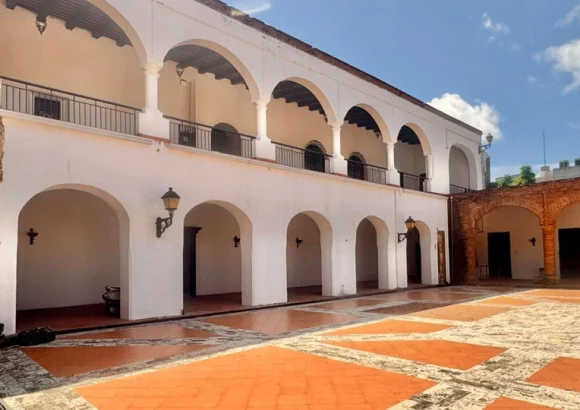
    A one-of-a-kind cultural event celebrating the decades-long artistic influence of legendary Spanish muralist Vela Zanetti on the Dominican Republic is set to open its doors to the public later this month, hosted by the Meritorious and Respectable Lodge Cradle of America No. 2 in Santo Domingo. The centerpiece of the gathering is the premiere of a new documentary series, *Vela Zanetti in the Dominican Republic*, a deeply researched project directed by award-winning Dominican filmmaker and historian Manolo Rodríguez Vidal that unpacks the artist’s life, creative output, and enduring cultural imprint during his decades living and working in the Caribbean nation.

    Vela Zanetti first arrived in the Dominican Republic as a political exile in the years following the Spanish Civil War, and he quickly embedded himself into the country’s emerging visual arts scene. During his early years in Santo Domingo, he created a collection of large-scale murals that remain preserved to this day within the walls of the Masonic temple located in the city’s iconic Colonial City neighborhood. This upcoming event is designed to bring these underappreciated works back into the public spotlight, pairing screenings of the documentary with an exclusive guided walking tour of the original murals.

    The event’s schedule kicks off with a screening of selected episodes from the new documentary series, which traces how Vela Zanetti’s distinct artistic style and philosophical approach reshaped the trajectory of Dominican visual art after his arrival. Following the screening, attendees will get rare up-close access to the historic murals, which are widely regarded by art scholars as a core part of the Dominican Republic’s national artistic heritage.

    In comments shared ahead of the event, director Rodríguez Vidal explained the core mission behind the initiative: beyond simply showcasing Vela Zanetti’s creative work, the project aims to safeguard collective historical memory, amplify the muralist’s lasting contributions to Dominican art, and introduce his legacy of symbolic storytelling, commitment to universal human values, and focus on social justice to younger generations of audiences.

    The event will be held on the evening of June 24, beginning at 7:00 p.m., at the Cloister of Cradle of America Lodge No. 2, located on José Reyes Street in Santo Domingo’s historic Colonial Zone. Organizers confirmed that admission will be completely free and open to all interested members of the public, with entry granted on a first-come, first-served basis until the venue reaches full capacity.

    For art lovers, history researchers, students, and casual attendees alike, this gathering offers a rare chance to engage with a pivotal, often overlooked chapter of Dominican cultural history. Unlike typical gallery exhibitions or screenings, the event combines the narrative depth of a documentary with the immersive experience of viewing original works of art in person, giving audiences a comprehensive understanding of Vela Zanetti’s outsized impact on the country’s cultural identity.

  • Vybz Kartel’s God & Time debuts at #6 on Billboard Reggae Albums chart

    Vybz Kartel’s God & Time debuts at #6 on Billboard Reggae Albums chart

    Veteran Dancehall icon Vybz Kartel has added another career milestone to his decades-long discography, scoring his 12th placement on Billboard’s iconic Reggae Albums chart with his latest studio project, *God & Time*. The 12-track collaborative album made its first appearance on the weekly ranking at the number six position, marking another solid chart performance for the Jamaican music trailblazer.

    Dropped to the public on June 5 through a joint release from TJ Records and Kartel’s own imprint Vybz Kartel Muzik, the new project draws together an impressive cross-genre, cross-continental lineup of guest performers. Among the collaborators featured on the album are Nigerian Afrobeats superstar Wizkid, celebrated Jamaican Dancehall vocalist Spice, breakout Jamaican star Shenseea, prominent Jamaican dancehall deejay Skillibeng, fellow Jamaican dancehall heavyweight Mavado, and Puerto Rican reggaeton and Latin trap artist Farruko, blending regional sounds from the Caribbean, Africa and Latin America into a cohesive Dancehall-rooted project.

    Throughout his decades-long career on the charts, Vybz Kartel has notched a number of high-performing releases on the Billboard Reggae Albums chart. His strongest performance to date remains his 2016 full-length project *King of the Dancehall*, which debuted and peaked at the number two position, holding the record for his highest chart placement eight years on.

    Most recently before *God & Time*, Kartel landed a chart entry in August 2024 with his project *First Week Out*, which climbed to a peak position of number eight on the ranking. The latest entry cements Kartel’s status as one of the most consistent charting Dancehall artists in the modern era, decades after he first broke into mainstream recognition. Reported by Kevin Jackson.

  • Dominican rum producers back government tax measures to strengthen fair competition

    Dominican rum producers back government tax measures to strengthen fair competition

    In Santo Domingo, the Dominican Association of Rum Producers (Adopron) has publicly thrown its weight behind core components of the Dominican government’s recent anti-crisis economic plan, saying the proposed policies will advance four critical goals for the country’s regulated industrial sectors: tax fairness, consistent legal frameworks, greater operational transparency, and a level playing field for all competing businesses.

    One of the key policies the industry group has endorsed is a clarification to the calculation rules for the Ad Valorem Selective Consumption Tax applied to alcoholic beverages. Under the government’s draft proposal, this consumption tax would be calculated based on the full final price consumers pay for a product, encompassing all costs associated with the product’s packaging, branding, and go-to-market distribution that factor into the end retail cost.

    Adopron has pushed back against any claims that the rule change amounts to a new tax on the industry. Instead, the association emphasizes that the reform simply sets a single, clear standard that every actor in the alcoholic beverage space must follow. The group notes that uniform application of tax regulations is critical to stopping unfair market manipulation, safeguarding government tax revenue, and guaranteeing that every competitor operates under the same rules.

    Beyond tax clarification, Adopron has also praised the government’s move to strengthen product traceability systems for three key regulated goods: alcoholic beverages, cigarettes, and fuel. The association explains that robust end-to-end traceability mechanisms are a powerful tool to crack down on illegal cross-border and domestic trade, shield consumers from counterfeit or unsafe products, cut down on widespread tax evasion, and improve regulatory oversight across all regulated economic sectors.

    Adopron has stressed that these new traceability requirements must be applied uniformly to all market participants, with no distinction between locally manufactured products and imported goods. The group has also called for strict regulatory enforcement, widespread public education to help consumers identify legitimate products, and sustained institutional support to ensure the traceability system delivers on its intended goals.

    The industry organization is now urging the Dominican National Congress to move quickly to approve the proposed provisions. Adopron argues that the reforms will resolve longstanding problems of unequal regulatory treatment in the alcoholic beverage market and address long-held concerns about unfair competitive practices that have hurt legitimate formal producers.

    In closing, Adopron reaffirmed its commitment to collaborating with government agencies and national legislators on policies that strengthen transparency, grow the formal economy, attract new private investment, and drive long-term sustainable economic growth across the Dominican Republic. The association concluded that a clear, consistently applied tax framework ultimately delivers mutual benefits for three key stakeholders: the national government, ordinary consumers, and legitimate formal production sectors across the country.