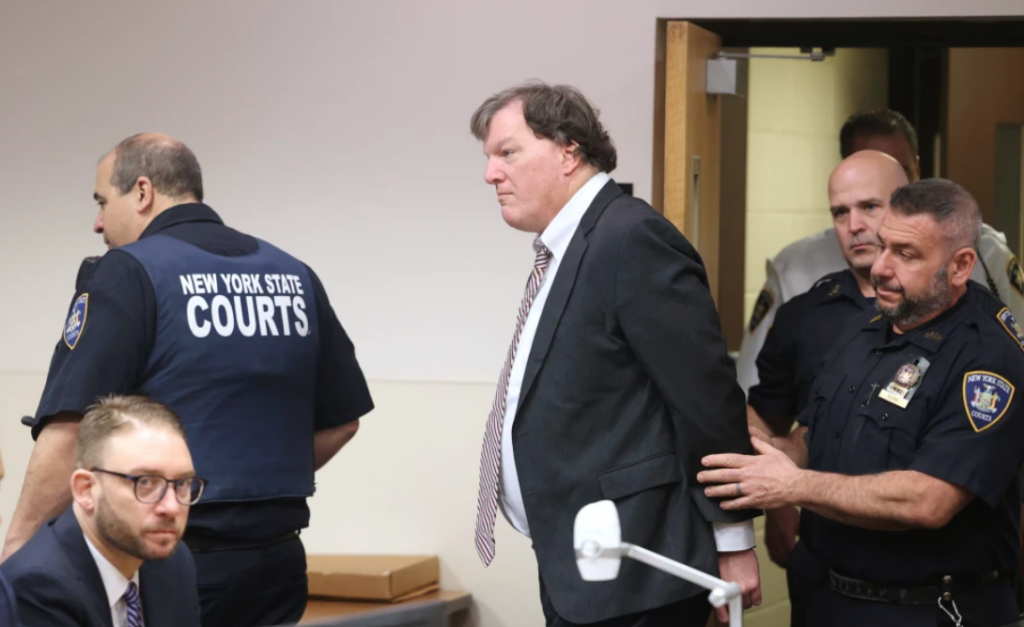
After a years-long investigation that gripped the American public and confounded law enforcement, the man known as the Gilgo Beach serial killer has been formally handed a permanent life sentence behind bars, closing a dark chapter of unsolved violence that haunted a New York coastal community for decades.
Rex Heuermann, a 62-year-old former architect, received three consecutive life terms with no eligibility for parole during a Wednesday sentencing hearing in Long Island, more than a year after his 2023 arrest. The conviction caps a string of brutal killings that stretched from 1993 to 2010, when Heuermann targeted and killed eight women, then dismembered their bodies and scattered their remains across Gilgo Beach and surrounding areas of Long Island, just outside New York City. In a surprising April 2024 court proceeding, Heuermann pleaded guilty to all seven murder charges brought against him, plus an eighth killing that had not yet been formally filed.
The Gilgo Beach murders stood as one of the most high-profile cold cases in U.S. history for more than a decade. Victims’ remains were first discovered between 2010 and 2011 along the protected barrier beach on Long Island’s South Shore, with one victim’s remains located as far as 70 miles away as early as 1993. For years, investigators had no viable leads, and the unsolved mystery drew widespread public attention, becoming the subject of multiple popular true crime documentaries.
Critics have long argued that delays in cracking the case stemmed from implicit bias: most of Heuermann’s victims were sex workers, and many observers claim law enforcement would have prioritized the investigation far earlier if the victims had come from more privileged backgrounds.
The break in the case finally came in 2022, when detectives connected a vehicle spotted with one of the victims to Heuermann, who was listed as the registered owner. From there, investigators built a robust case against the married father of two using cutting-edge forensic evidence: DNA recovered from a discarded pizza crust matched DNA found at the crime scene linked to the victims, and cell phone data directly tied Heuermann to locations connected to the killings. Additional evidence, including records of hundreds of internet searches about the ongoing Gilgo Beach investigation, was recovered from Heuermann’s suburban Massapequa Park family home. Searches recovered included chilling queries such as “Why hasn’t the Long Island serial killer been caught?”
Wednesday’s hearing brought raw, emotional testimony from the family members of Heuermann’s victims, who shared the devastating, lifelong impact of his crimes with the court. In a rare moment of accountability from the defendant, Heuermann also addressed the court, acknowledging full responsibility for all the acts outlined during the proceedings. He was arrested one year prior outside his Manhattan architecture office, ending decades of speculation about the killer’s identity.