博客

  • Digicel Haiti and CANAL+ join forces to revolutionize streaming

    Digicel Haiti and CANAL+ join forces to revolutionize streaming

    In a move set to reshape Haiti’s digital entertainment landscape, leading telecommunications provider Digicel Haiti and global entertainment giant CANAL+ have announced a transformative strategic partnership designed to expand sustainable access to premium streaming content across the country. Announced on May 7, 2026, the collaboration represents a watershed moment for Haiti’s growing streaming industry, with the two firms targeting an enhanced, more reliable, and widely accessible digital viewing experience for Haitian consumers.

    Under the terms of the new agreement, Digicel Haiti subscribers on four existing packages – Access, Évasion, Évasion+, and Tout CANAL – will gain access to custom-tailored data plans built exclusively for streaming CANAL+ content through the provider’s official mobile application. This integration means users can enjoy CANAL+’s full catalog, which includes hit international series, blockbuster films, live professional sports, and exclusive original programming, anytime and anywhere across Haiti’s national coverage area.

    Haiti has seen a steady, sustained rise in consumer demand for on-demand digital content in recent years, as more Haitians turn to streaming for entertainment and information. This partnership directly addresses a key gap in the local market: the need for high-performance, consistent connectivity that matches evolving consumer viewing habits. Digicel Haiti brings to the table its well-established reputation for extensive network coverage and robust signal strength across the country, while CANAL+ contributes its decades of global expertise as a leading provider of premium entertainment content. Together, the partners aim to deliver a seamless, high-quality streaming experience that does not force consumers to choose between accessibility and content quality.

    “This collaboration is a clear demonstration of our ongoing commitment to elevating the digital experience for every Digicel customer in Haiti,” explained Jean-Philippe Brun, General Manager of Digicel Haiti, in a statement following the partnership announcement. “By combining our network infrastructure with CANAL+’s industry-leading content library, we are making premium entertainment far more accessible, while delivering data plans that are specifically optimized for consistent streaming.”

    Beyond the immediate integrated data and content offering, the partnership lays critical groundwork for future collaboration between the two companies. Down the line, consumers can expect new bundled service packages, subscriber-only promotions, and innovative streaming features tailored to the Haitian market. Both firms share a core long-term goal: to democratize access to high-quality digital premium entertainment for as many Haitians as possible, unlocking new opportunities for the country’s growing digital economy.

  • Forensics expert details discovery of Samara Bristol’s body

    Forensics expert details discovery of Samara Bristol’s body

    As the high-profile murder trial of Roger Delisle Sealy unfolds before Supreme Court Justice Laurie-Ann Smith-Bovell and a 12-member jury, a top forensic investigator has laid out chilling, detailed findings from the case that have become central to the prosecution’s argument.

    Sergeant Mervin Grace, a veteran forensic scenes of crime officer, took the witness stand this week to recount his investigation into the November 2021 death of Samara Bristol, whose body was found in remote, bushy terrain in the Mangrove district of St Thomas. On November 21, 2021, when Grace arrived at the scene, he located Bristol’s remains 86 feet from an unpaved cart road, positioned face down in thick vegetation.

    Along the narrow footpath leading to the body, Grace discovered scattered strands of synthetic hair that matched the hair the deceased wore. What he found on the body itself painted a grim picture: a rope tied to Bristol’s right ankle, with a segment of metal fastened to the rope. A gold-toned anklet rested on her left ankle, a matching gold bracelet on her left wrist, two rings on her left ring finger, and a gold necklace around her neck. Two nose rings were recovered from beneath her heavily disfigured face. Most notably, Grace confirmed that Bristol’s skull was fractured and split open, a fatal injury that has been a key focus of the trial.

    Sealy, a resident of Airy Cot, St Thomas, stands accused of murdering Bristol sometime between November 16 and November 21, 2021. Before detailing the body recovery, Grace walked the court through an earlier site visit he conducted on November 17, 2021, to the shared Airy Cot home of Bristol’s mother Samantha and the accused. What he found there was extensive structural damage from a suspicious blaze. The kitchen, living room, and dining room had suffered direct heat and fire destruction, while bedrooms and bathrooms were left heavily damaged by smoke and water used to extinguish the fire.

    After a thorough examination of the fire site, Grace concluded that the blaze originated on a three-seat sofa in the home’s living room. While pinpointing the exact source of ignition remained undetermined, the forensic officer classified the fire as incendiary — meaning it was intentionally set by human action in an area where a fire had no logical reason to start.

    Grace also noted that he found potential traces of blood on the home’s exterior roadway, an insect screen covering a window, and an interior floor, collecting swabs of the substance for DNA testing. Later that same day, investigators were led to a black-and-yellow motor lorry that had been hidden in a bushy area well off a main road in Vaucluse. After the lorry was moved to District ‘E’ Speightstown Police Station, Grace collected swab samples from the vehicle’s cargo tray for forensic testing.

    The following day, Grace traveled to a private residence in Halls Village, St James, to conduct a forensic sweep. There, he collected a doormat and a single pair of socks as evidence. Investigators also turned over to Grace a set of clothing and footwear belonging to the accused: a T-shirt, pants, and boots, all of which were taken into custody for testing.

    The prosecution is being led by Acting Deputy Director of Public Prosecutions Alliston Seale SC, joined by State Counsel Paul Prescod. Sealy is represented by defence counsel Sian Lange. The trial is scheduled to resume on Thursday, with more witnesses expected to take the stand as proceedings continue.

  • Children are Paying the Price for Online Negligence

    Children are Paying the Price for Online Negligence

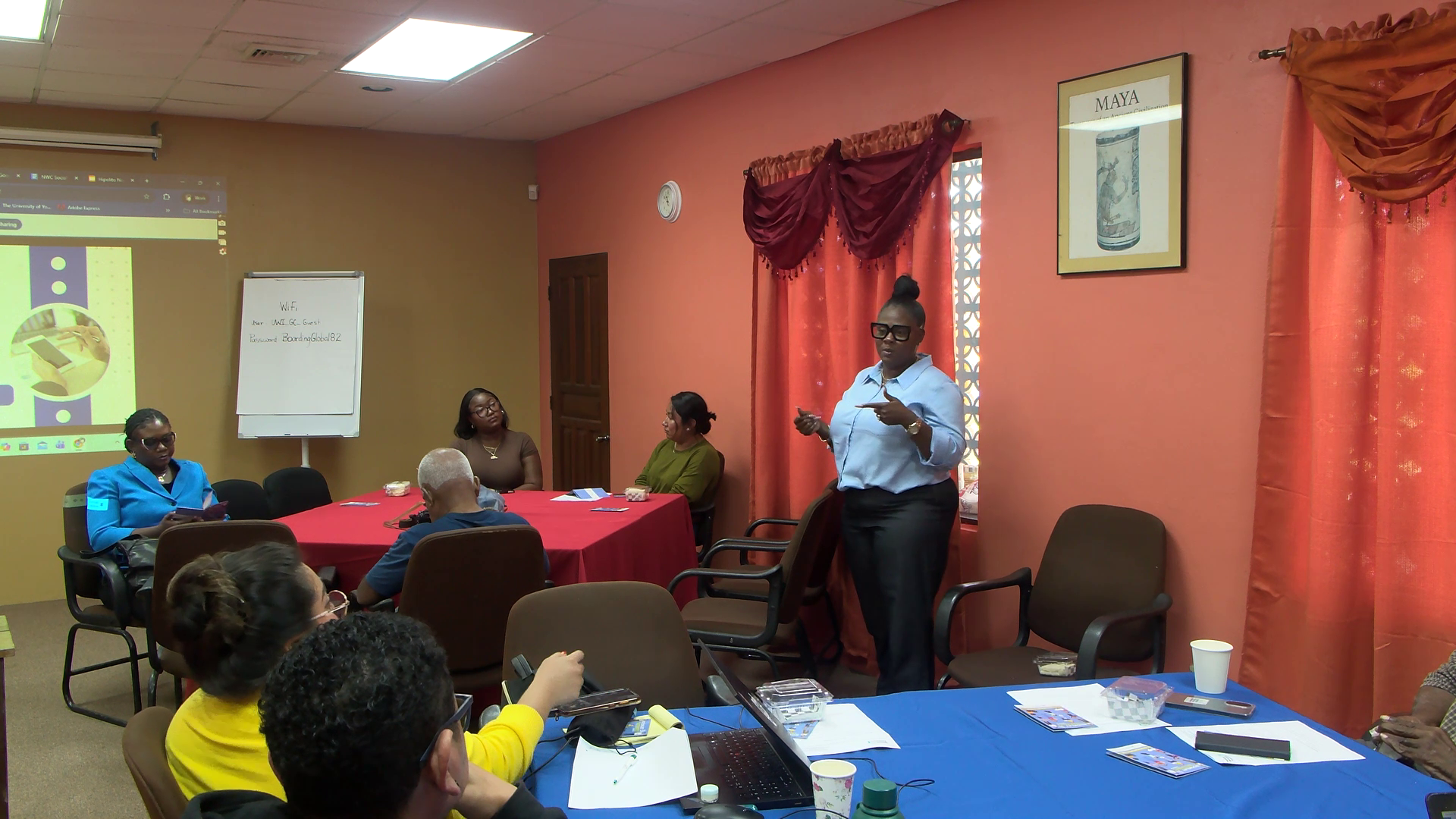
    In an era defined by rapid social media expansion, where engagement-driven algorithms prioritize shocking, viral content over responsible publishing, child welfare advocates in Belize are sounding the alarm over the irreversible harm careless online sharing of children’s information inflicts on young people. Scheduled for May 6, 2026, a collaborative workshop led by the National Commission for Families and Children (NCFC) brought together media outlets, independent online news page operators, and social media content creators to address the growing crisis of unregulated sharing of minors’ personal data, images, and sensitive case details.

    Shakira Sutherland, executive director of the NCFC, opened the workshop by outlining the core risk at hand: too often, outlets and unregulated independent content creators post unrestricted details of children’s lives—including their full names, ages, residential locations, and identifiable imagery—that have no place on public digital platforms. While traditional media outlets have historically collaborated with the NCFC to implement child protection safeguards, Sutherland emphasized that unregulated independent social media news pages, most commonly hosted on Facebook, have become the primary source of harmful content dissemination. These platforms frequently spread inaccurate information, publish identifiable footage of vulnerable children, and allow harmful viral comment threads to fester, creating damage that extends far beyond the initial post.

    “This information can erode a child’s self-image, and cause long-term harm to their emotional, mental, and even physical well-being,” Sutherland explained. “That is why we are calling on every person that shares public content online to pause and think through the impact before hitting post.”

    Ganesha Smith, acting director of Belize’s Community Rehabilitation Department, who works directly with youth that have encountered the justice system, expanded on these risks, highlighting the particularly damaging impact of sensationalized media coverage of children in conflict with the law or child abuse victims. Smith explained that sensationalized framing of youth incidents does more than embarrass minors—it locks them into a permanent public negative identity that is extremely difficult to escape. This persistent labeling often pushes vulnerable youth to fall deeper into harmful patterns of behavior, rather than supporting their rehabilitation.

    Smith noted that derogatory commentary and repeated sharing of a minor’s case across platforms like Instagram, Facebook, and TikTok normalizes harmful narratives. Over time, these narratives become internalized by the youth themselves, leading to higher rates of repeat legal encounters and a regression away from positive behavioral change. She added that harmful, unfair narratives are pervasive regardless of whether a child is a victim of abuse or an offender in a criminal case: too often, coverage frames child abuse victims as responsible for their own harm, and youth offenders as inherently defiant, rather than acknowledging the complex systemic and personal factors that lead to these incidents. The workshop’s core goal, Smith said, is to shift this cultural narrative and change the content-sharing mindset that prioritizes viral engagement over child safety.

    Crucially, the workshop’s message did not call for complete media silence on stories involving children. Instead, organizers emphasized that permanent digital footprints created by careless online publishing stay with children for decades, long after the general public has moved on from the original story. By encouraging intentional, child-first content decisions, advocates hope to reduce the long-term harm that unregulated online sharing inflicts on Belize’s most vulnerable young population.

  • Elder abandonment crisis looms, senator warns

    Elder abandonment crisis looms, senator warns

    On Wednesday, Barbados’ Health Minister sounded the alarm over a rapidly escalating “crisis of elder abandonment”, as sweeping new draft legislation was brought to the Senate to impose binding legal duties on relatives and reinforce state protections for the country’s aging senior population. Senator Lisa Cummins, who also serves as leader of government business in the upper legislative chamber, used the second reading debate of the Older Persons Care and Protection Bill to urge a nationwide cultural reckoning, arguing that the crisis extends far beyond gaps in regulation to a gradual erosion of intergenerational empathy.

    Cummins painted a grim, unflinching portrait of a growing trend: the same generation that laid the foundation for modern Barbados is increasingly being forgotten, left to reside indefinitely in hospital wards and community care facilities cut off from contact with the children and families they raised. The crisis comes at a demographic turning point for the small island nation: the national median age has climbed to 42.5 years, and the country’s death rate now outpaces its birth rate, transforming what was once a private family care burden into a pressing national emergency.

    Opening her remarks to the Senate, Cummins appealed directly to Barbadian families, pointing out that for thousands of abandoned elders, hospital nurses and doctors have stepped into the role of surrogate family. She emphasized that abandonment is not merely a physical act of leaving a senior in a care facility; it inflicts deep emotional and psychological harm, as elders are left with the painful awareness that their loved ones have no interest in checking in, bringing favorite foods, or even carving out 30 minutes of free time to visit.

    Cummins drew on firsthand observations from her recent tours of the island’s Queen Elizabeth Hospital and Psychiatric Hospital to illustrate the scale of the crisis. She detailed a troubling trend she labeled the “cruel to be kind” phenomenon, where family members intentionally drop off elderly relatives at hospital accident and emergency departments, knowing they will receive safe care but intentionally abdicating their own long-term care responsibilities. What is most distressing, she added, is the total absence of contact after admission: when she asked medical staff how many families visit their elders admitted for long-term care, the overwhelming answer was that most never show up at all.

    “From the Queen Elizabeth Hospital to the Psychiatric Hospital, there is no family engagement,” Cummins lamented. “In our district hospitals, whether it is St Lucy or St Philip, family members not only are leaving them there, but they’re not coming back even to visit them. There’s something fundamentally wrong in Barbados with that. These are our elders. These are our older persons.”

    The Older Persons Care and Protection Bill has been framed as a robust legal framework that will shift the Barbadian government’s role from passive tolerance of neglect to active safeguarding of seniors. For the first time in Barbadian legal history, the bill explicitly recognizes elderly people as rights-holders, redefining respect and care from discretionary acts of kindness to enforceable legal entitlements. The legislation seeks to break the long-standing culture of silence around domestic elder neglect by introducing mandatory reporting requirements, granting broad investigative powers to state authorities, and imposing enforceable penalties for anyone found to have abused or exploited vulnerable seniors.

    Beyond addressing physical abuse and neglect, the bill targets non-physical harms including financial exploitation—most notably the widespread practice of cashing elderly seniors’ pension checks while leaving them to be cared for in state facilities—psychological manipulation, and the deliberate withholding of necessary medical care. Cummins also noted that the legislation will introduce consistent regulation for the fast-growing private residential care industry, requiring both state-owned and private facilities to meet a strict “gold standard” for comfortable, home-like environments with proper amenities including air conditioning.

    Despite these sweeping legal changes, Cummins was open about the clear limitations of legislation alone. No amount of legal reform, she argued, can replace the fundamental care and connection that comes from families and local communities. She pointed to everyday examples of normalized ageism across Barbadian society, from able-bodied young people refusing to give up seats on public transit to drivers taking disabled parking spots for quick, unneeded trips.

    “Legislation can punish abuse, it can regulate facilities, it can create duties and responsibilities… but legislation on its own will not create care,” Cummins told the Senate. “Legislation on its own will not provide for our elderly. We must still take responsibility for teaching our families respect and care for our elderly. It must be taught, it must be reinforced, and it must be socially expected.”

    The proposed bill forms just one part of a broader whole-of-society government strategy to address population aging, which is also tied to ongoing mental health system reforms and new workplace flexibility policies designed to help working-age people balance caregiving responsibilities with employment. The overarching goal is to build a sustainable support system for an aging population that does not leave the shrinking working-age population facing financial and personal ruin.

    Closing her address, Cummins challenged all Barbadians to confront the crisis within their own communities, noting that the “builders of our nation” deserve far more than just a hospital bed—they deserve the fundamental dignity of being remembered by the families they built. “This bill applies to all of us who want change, because change begins with us,” she said. “Let the answer be clear for all of us. Let us focus on the rights of our elderly. Let us ensure that we enforce this bill in our homes and in our society.”


  • Basketball Federation Hands Over $20K In Equipment to Districts

    Basketball Federation Hands Over $20K In Equipment to Districts

    On May 6, 2026, a landmark step to expand community basketball across Belize came to fruition, as the Belize Basketball Federation completed the distribution of $20,000 worth of new sports equipment to local district associations. The initiative marks the end of a four-year strategic planning process aimed at democratizing access to the sport and nurturing athletic talent beyond Belize’s urban center.

    Federation President Jacob Leslie explained that the project grew from a clear observation the leadership made when it took office four years ago: the existing elite development pathway was concentrated almost exclusively in Belize City. The Belize Bank Bulldogs program, the country’s previous flagship development initiative, held just one training session per week in the capital, yet still produced 70 to 80 percent of Belize’s current semi-professional and elite basketball players. Recognizing the untapped potential of young athletes in rural and regional districts, Leslie’s team set out to replicate that program’s success across every corner of the country.

    The biggest barrier to scaling the model was a lack of basic equipment, Leslie noted. To solve this, the federation applied for and secured a $20,000 grant from the Belize Olympic Committee. Rather than sourcing supplies from the United States or neighboring Central American countries, the organization opted to order gear from Chinese suppliers, allowing them to stretch the grant further and purchase a far larger volume of equipment than would have been possible otherwise. This cost-saving choice maximized the initiative’s impact at the grassroots level.

    To ensure the new equipment directly benefits young players rather than being misused, every district association signed a formal memorandum of understanding (MOU) with the national federation. The agreement holds local associations accountable for delivering structured development programming, including age-group-specific summer camps with set participation targets. The equipment is explicitly designated for youth use and sport development, with clear standards that associations must meet to remain in good standing with the federation.

    The long-term vision for the initiative is transformative: to create an even playing field where every young Belizean, regardless of which district they call home, has access to the tools and training needed to pursue basketball. Leslie’s goal is to fully equip every district association, support every aspiring young player, and build a clear, accessible pathway that connects neighborhood community courts to elite national and international competition. For thousands of young Belizeans with athletic dreams, the initiative delivers more than just new basketballs—it opens the door to life-changing opportunity.

  • Independent candidates begin Positioning ahead of possible election call

    Independent candidates begin Positioning ahead of possible election call

    BASSETERRE, St. Kitts – As speculation mounts that St. Kitts and Nevis will call a general election before the end of 2026, two would-be independent candidates have stepped out of political obscurity to launch their campaigns, challenging well-established incumbent representatives from major parties.

    Media reports circulating this week confirm that Henry Marsham and Kurtisse Caines have publicly announced their plans to contest parliamentary seats in the upcoming vote. While SKNVibes.com has not independently verified an unconfirmed flyer shared widely across social media platforms, the document indicates Caines will aim to unseat former Prime Minister Dr. Timothy Harris in Constituency Seven.

    For his part, Marsham, an overseas-based health professional, is set to face off against incumbent Agriculture Minister Samal Duggins, the sitting St. Kitts-Nevis Labour Party representative for Constituency Four. In a recent interview on WINN FM’s current affairs program *Inside the News*, Marsham laid out his motivation for entering the race: a widespread sense of neglect among constituents, who he says are abandoned by elected officials immediately after polling day.

    “Once they get elected, we don’t see them, and this cycle has to stop,” Marsham stated. “There is a great deal of unaddressed need in Constituency Number Four, and that is one of the core reasons I made the decision to run.” He added that his years of leadership experience and professional background in health care uniquely equip him to deliver tangible results for his constituency, noting that empty political promises from major party candidates have left voters disillusioned. “Too much empty promises,” he emphasized. “I’m putting my hat in the ring to win this seat, work for the people of Constituency Four, and serve all the people of St. Kitts and Nevis broadly.”

    A key draw of running as an independent candidate, Marsham explained, is the ideological flexibility it affords. “I chose to run independently because I want the flexibility to work across political lines and focus on context-specific solutions rather than rigid party priorities,” he said. He has also confirmed that he will relocate back to the Federation full time to serve his constituency if he wins the vote.

    Not all political observers are optimistic about the independents’ chances, however. Veteran regional political analyst Peter Wickham argues that independent candidates face a steep uphill climb in the Federation’s established two-party political system. When asked if he believed the candidates could pull off an electoral win, Wickham responded bluntly: “I don’t think they will.”

    Wickham noted that while a small number of independent candidates have won legislative seats across the Caribbean region, these victories are extremely uncommon, and almost always tied to one-of-a-kind local political circumstances. In St. Kitts and Nevis specifically, dozens of independent hopefuls have launched campaigns over the decades, but very few have managed to meaningfully disrupt the dominance of the country’s major established political parties. Despite this expert analysis, Marsham remains undeterred in his bid to upend the status quo for Constituency Four voters.

  • Opposition senator criticises ‘vague drafting’ in new Older Persons Bill

    Opposition senator criticises ‘vague drafting’ in new Older Persons Bill

    A heated legislative debate has unfolded in the Barbadian Senate over the proposed Protection of Older Persons Bill, with opposition Senator Karina Goodridge launching a detailed critique of what she describes as dangerously vague drafting and overconcentration of power in the hands of government ministers.

    While Goodridge openly praised the administration for responding to public calls to protect vulnerable adults aged 65 and over, she emphasized that the current iteration of the legislation is too open to subjective interpretation, a flaw that could lead to legal chaos and wrongful targeting of ordinary citizens. Her criticism focused heavily on Section 2, the bill’s clause defining elder abuse. According to Goodridge, the existing wording casts an overly broad “net” that fails to include a clear, objective legal standard, specifically the widely accepted reasonable person’s test that would guide consistent application of the law.

    Beyond the definition of abuse, Goodridge raised pointed questions about the bill’s framework for approving caregivers for older adults. The legislation grants the responsible minister sole authority to designate “fit persons” to provide care, but it does not outline explicit qualification criteria for either the caregivers or the standards the minister must use to make these decisions. She argued that leaving this determination open to subjective judgment rather than clear, written rules creates unnecessary risk of future disputes and unfair outcomes. “Why is this power given to the minister, and what qualifies the minister now to make that decision?” Goodridge asked, noting that clear guidelines would avoid preventable problems down the line.

    Goodridge also turned scrutiny to Section 10, which sets harsh penalties for violations: a fine of up to $100,000 and a five-year prison sentence. She warned that without explicit definitions of specific offenses, the bill could inadvertently criminalize accidental or unintentional actions that cause no harm to older people. “If the punishments are to become onerous, then the crime must be explicitly defined with no room for misinterpretation,” Goodridge said. “We really don’t want to set that kind of precedent as a country.”

    One of the most controversial points of her critique targeted Section 34, which imposes legal liability on publication distributors for content they distribute that relates to elder care and protection. Goodridge questioned why third-party distributors, who do not edit or curate the content they deliver, should be held legally responsible for material they carry, arguing the provision effectively forces distributors to take on the role of editorial oversight that does not align with their job function. “If I’m distributing a paper, then I could be liable. That didn’t make no sense to me in Bajan terms. It is asking the distributor to also have editor responsibilities,” she said.

    Goodridge’s line-by-line analysis drew immediate pushback from government lawmakers. Leader of Government Business Senator Lisa Cummins rejected Goodridge’s concerns about excessive ministerial power, noting that references to the “minister” in Barbadian legislation conventionally refer to the office and its team of professional technical staff, not unilateral decision-making by a single individual. Senate Deputy President Liz Thompson joined Cummins in pushing back, reminding Goodridge that clause-by-clause review is reserved for the committee stage of legislative debate, not the first reading of the bill.

    Critics also questioned Goodridge’s experience with legislative drafting, but the opposition senator stood firmly by her analysis. She argued that all senators have a duty to flag drafting flaws regardless of procedural conventions, noting that legal opinions often vary among attorneys and that the body has a responsibility to pass clear, well-crafted law. “I will give my opinion on the sections fairly in accordance with the knowledge that I have,” Goodridge responded. “Many times attorneys will say one thing and the next attorney will say the other… we have to ensure any bill we are passing is properly drafted for us senators to accept.”

    Closing her remarks, Goodridge urged the full Senate to revise the bill to clarify ambiguous language before advancing it, warning that failing to fix the issues now would force the country’s judicial system to resolve costly and time-consuming legal disputes over ambiguities later. “We care about the elderly,” she emphasized. “But we have to ensure the legislation is properly defined and every section is clear so that we can avoid misinterpretation.”

  • Man removed from abandoned library after months of complaints

    Man removed from abandoned library after months of complaints

    A months-long public nuisance and safety crisis in the Gall Hill community of St John, Barbados, came to a long-awaited end on Tuesday, when law enforcement removed an unidentified squatter who had been occupying the derelict former Gall Hill Library, following persistent complaints from local residents over growing health hazards, threats and a severe rat infestation.

  • Nickeriaanse rijstboeren voorbereid op nieuw seizoen

    Nickeriaanse rijstboeren voorbereid op nieuw seizoen

    The new growing season’s official rice sowing window kicked off on May 1 and will run through June 30, and rice producers across western Suriname have already kicked off preparation work for the critical planting period. For a cohort of local farmers, a water shortage during the last short growing season left them completely unable to plant their crops, making this main season — which aligns with the annual rainy season — a particularly high-stakes opportunity to recover lost yields. Already, this group has planted several hectares of rice in Middenstandspolder, the low-lying growing zone located between the towns of Wageningen and Henarbrug, near the Nickerie River.

    But just days after planting, unexpected heavy rainfall has left portions of these newly sown fields completely submerged, putting the young rice seedlings at severe risk of rotting before they can establish. Faced with this urgent threat, the affected farmers submitted a formal request to agricultural authorities to clear and dredge the region’s existing water retention dam, a structure originally built to hold water for crops during prolonged dry spells.

    William Waidoe, deputy director of the Western Region branch of Suriname’s Ministry of Agriculture, Livestock and Fisheries (LVV), confirmed that the ministry has already responded to the request. “We have opened up the dam for this group of farmers, so that excess water can drain freely with the tide out into the Nickerie River,” Waidoe explained in an official statement.

    The drainage improvement work is being funded and executed through a public-private partnership between the ministry and the local farming community. Under the collaborative model, LVV contributes heavy excavation equipment and a certified operator to carry out the dredging work, while farmers cover the cost of fuel, lubricants, and water for the construction crew. The project also includes clearing debris from the primary drainage channel that runs from Henarbrug toward Wageningen, expanding the system’s capacity to move large volumes of rainwater quickly.

    Waidoe emphasized that fast, efficient drainage of excess rainfall is non-negotiable to protecting planting outcomes during the rainy season. “When heavy rains hit, water needs to be able to flow unobstructed to the Nickerie River,” he said. “This approach lets us manage the irrigation and drainage system with the limited resources we have available.”

    For months, this collaborative model of shared responsibility for maintaining regional irrigation and drainage infrastructure has been consistently implemented across western Suriname’s rice belt, all with the core goal of creating safe, reliable conditions for rice planting. Waidoe noted that coordinated action between government authorities and producers delivers widespread benefits to the entire local rice sector, strengthening food security and supporting the livelihoods of thousands of agricultural workers across the region.

  • Police remove 49 firearms in intensified crime fight

    Police remove 49 firearms in intensified crime fight

    Barbados is grappling with an unprecedented wave of gun violence that has already claimed 23 lives this year, but law enforcement officials report early progress from targeted interventions designed to reverse the growing trend. In an appearance on the Government Information Service’s current affairs program *In Focus* Tuesday, Police Commissioner Richard Boyce outlined the aggressive steps his department has taken to disarm criminal networks and stabilize high-risk communities.

    Compared to just 22 illegal firearms seized from offenders across all of last year, Boyce confirmed that authorities have already removed 49 weapons from circulation in 2024, marking a dramatic jump in interdiction efforts. This progress comes even as the police service faces a crippling manpower shortage of 200 unfilled positions. To close the gap, the department has forged a formal partnership with the Barbados Defence Force (BDF), whose deployment to community hotspots has drastically expanded operational capacity.

    “That has worked tremendously well for us,” Boyce told interviewers. “BDF coming on board and partnering with us has made our job much easier. We’ve been able to position personnel in key locations to address these issues.” Currently, law enforcement is focused on five major organized criminal gangs responsible for much of the territory’s gun violence, and Boyce said sustained patrols and targeted operations have delivered significant tangible successes over recent months.

    Putting the local crisis in context, the commissioner noted that rising gun-related crime is a shared challenge across the Caribbean and beyond, positioning Barbados’ response on the right track. While this year has seen six more murder cases than the same period in 2023, overall crime rates across the island have fallen, he added, emphasizing that removing illegal weapons from the streets is critical to preventing collateral harm from indiscriminate gunfire. Boyce also confirmed that ongoing work to expand cross-agency partnerships, both local and international, is continuing to improve outcomes in hotspot areas.

    Joining Boyce on the program, Minister of Legal Affairs and Criminal Justice Michael Lashley reaffirmed the government’s commitment to maintaining public safety through a whole-of-nation approach, highlighting the combined police and military presence in violence-impacted communities. As part of long-term reform, the government is planning to overhaul community policing frameworks to make them more responsive to the needs of high-risk neighborhoods. A key new policy initiative, a dedicated gun court, will be established to fast-track processing of firearms-related offenses under the Firearms Act, addressing longstanding delays in the judicial system that have slowed justice for gun crimes. Lashley did not share a formal timeline for the court’s launch but emphasized that swift, consistent justice is a core pillar of the government’s crime reduction strategy.

    “We want to have a one-nation approach, and that is what you hear me sometimes speak about harbouring,” Lashley said. “Because if the whole of the nation is on board, we cannot tolerate a small section of society who believe that it’s right to harbour persons who are really impacting on the safety and welfare of Barbados and Barbadians.” The minister added that the strategy combines immediate, visible interventions to curb current violence with long-term programs to address root causes, including support for at-risk individuals and reintegration services for former offenders returning to communities after incarceration, to prevent recidivism.

    Criminologist and government crime researcher Cheryl Willoughby, who also joined the discussion, outlined deep-rooted social patterns driving the island’s gun violence crisis. Between 2020 and April 2024, Willoughby noted, 240 men – most of whom were actively contributing to the island’s economy and supporting families – have been murdered, leaving lasting social and economic harm across communities.

    Her research has uncovered a striking intergenerational pattern of gun-related crime: 57% of inmates incarcerated or remanded on murder or gun charges have other family members with convictions for similar serious offenses. Breaking that data down, 29% had family members previously convicted of murder, 20% had relatives convicted of firearms offenses, and 14% had family convicted of robbery. 80% of the incarcerated relatives were male, confirming that criminal behavior is often normalized in high-risk households.

    “It means that these young people are coming from environments where serious crime is normalised,” Willoughby explained, stressing that any sustainable long-term solution to gun violence must address shifting underlying social values across Barbados to break the cycle of intergenerational offending.