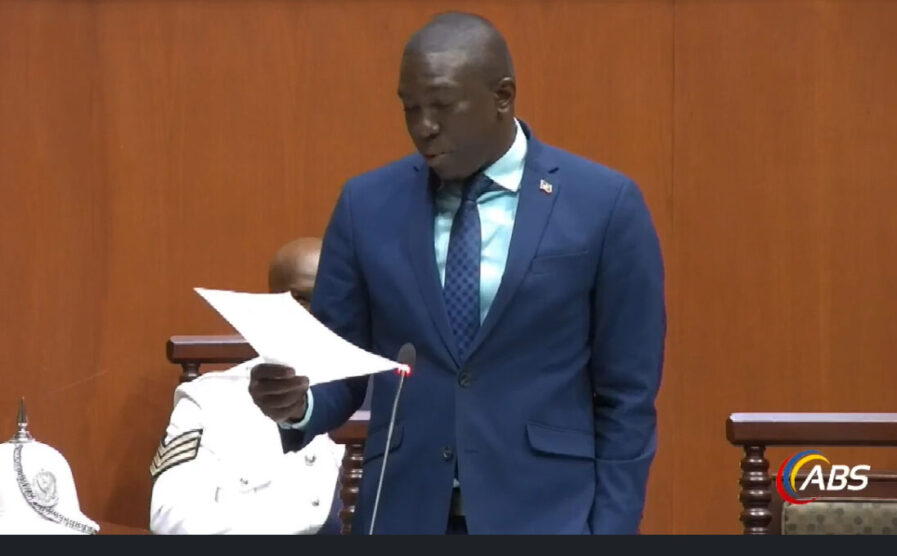
Following the April 30 general election in Antigua and Barbuda, the first regular sitting of the country’s House of Representatives brought a landmark opening address from newly sworn-in Opposition Leader Jamale Pringle, who laid out a vision for a more constructive, respectful legislative landscape for the incoming term.
Pringle took the parliamentary floor shortly after being formally sworn in as the representative for All Saints East and St. Luke — a constituency he has been re-elected to for a third consecutive term. Opening his remarks on a note of goodwill, he first extended formal congratulations to the governing Antigua and Barbuda Labour Party on its recent electoral success, followed by congratulations to newly appointed Speaker of the House Sir Gerald Watt and Deputy Speaker Fillmore Benjamin on their new roles. He also expressed heartfelt gratitude to the voters who placed their trust in him for another term. “I want to thank the wonderful people of All Saints East and St. Luke who would have trusted me for the third time with the affairs of managing that constituency and representing them,” Pringle said.
Shifting focus to the priorities for his opposition bloc in the new Parliament, Pringle called for a deliberate break from the confrontational rhetoric and heated exchanges that defined many past legislative sittings. As the leader of the minority parliamentary bloc, Pringle emphasized that even without a governing majority, the opposition has a critical role to play in advancing the national good. “While we are the minority, we believe we can make a significant impact in this country,” he said.
Pringle pledged to uphold a standard of respectful conduct across all parliamentary proceedings, and committed to recognizing the Speaker’s authority at all times. In turn, he stressed that impartial leadership from the Speaker’s chair is foundational to ensuring equitable debate between governing and opposition members. “I am committed to ensuring that the level of respect that I bring to this honourable House is one that supersedes any differences,” he said. Acknowledging past concerns about his conduct, Pringle offered a broad apology for any actions that had previously been perceived as disrespectful, framing the new term as a fresh start for collaborative working relationships.
Looking ahead, Pringle said he expects a balanced working dynamic where both the government and opposition can articulate their positions openly. A truly balanced legislative body, he argued, builds public trust that elected officials are advancing the nation’s interests effectively, rather than prioritizing partisan conflict.
One key procedural reform Pringle pushed for was earlier distribution of draft legislation to opposition lawmakers. He called on the Attorney General’s Chambers and all parliamentary staff responsible for circulating bills to provide opposition members with sufficient advance notice before debates are scheduled. “I am calling on the AG and the members of the House who deal with the circulation of bills to do so in a timely manner and to please give us the opportunity that we can research, come back to this honourable House and debate as we are to,” he said. This call for earlier access comes as the new Parliament prepares to take up a sweeping slate of major legislative reforms, including bills addressing sexual offences, theft, plea negotiations, cannabis regulation, workplace harassment, mental health policy and medical laboratory standards.
Pringle’s opening address marks a clear strategic shift for the opposition at the outset of the new term: establishing a collaborative, constructive tone while reaffirming the bloc’s core responsibility to hold the government to account through rigorous scrutiny of legislation and policy.