博客

  • St. Nicholas Primary Wins National Spellbound Championship

    St. Nicholas Primary Wins National Spellbound Championship

    The 2026 National Spellbound Championship, one of Antigua and Barbuda’s most anticipated annual academic competitions for primary school learners, has wrapped up its latest edition, crowning St. Nicholas Primary School this year’s overall national champion. The closing awards ceremony was jointly organized by the country’s Ministry of Education, Science and Technology and Caribbean Union Bank, bringing together students, educators, and education officials from across the two-island nation to celebrate young academic talent.

    In the team rankings, Greenbay Primary School followed closely behind the winner to take the second position, while Old Road Primary School secured the third-place spot on the leaderboard. Beyond the team competition, the event also highlighted outstanding individual spellers, with Tayzhoni Murrain outperforming all other contestants after a grueling series of elimination rounds to claim the individual national championship title. Shalaya Powell finished as the individual runner-up, and Denny Joseph, representing Freemansville Primary School, rounded out the top three individual competitors.

    Now in its recurring annual cycle, the National Spellbound Championship was created to gather top spelling and vocabulary skills from primary school students across every corner of Antigua and Barbuda, pushing young learners to refine their command of language and build confidence in academic settings. Senior education officials offered high praise for all participants, noting that every competitor displayed exceptional spelling proficiency and a consistent commitment to academic excellence throughout every stage of the multi-round tournament. In a statement following the award ceremony, the Ministry of Education, Science and Technology extended formal congratulations to every participating school and student, emphasizing the event’s ongoing role in nurturing next-generation academic achievement in the country.

  • Young artists leave mark on Saint Lucia’s Halls of Justice project

    Young artists leave mark on Saint Lucia’s Halls of Justice project

    A groundbreaking youth arts initiative that bridges creative expression, civic values and national development has wrapped up in Saint Lucia, leaving an enduring mark on one of the country’s most significant public infrastructure projects. Twenty-one emerging local artists earned a lasting spot in the Saint Lucia Halls of Justice (HOJ) Youth Art Challenge, capping off the competition with a celebratory prize ceremony and public exhibition opening at Constitution Park last Thursday.

    Organized as a collaborative effort between NH International (Caribbean) Ltd., the Ministry of Education, and Republic Bank (EC) Limited, the competition opened submissions to secondary and tertiary students across the entire island. The core prompt invited young creators to explore a deeply personal and civic question: What does justice look like through your eyes?

    Over the course of the challenge, participating students responded with a stunning range of creative mediums, from traditional paintings and handcrafted fibre art to cutting-edge digital pieces, documentary photography, and three-dimensional sculpture. Their works collectively unpack themes central to justice: equal rights, equal access to opportunity, radical truth, community peace, institutional accountability, and collective well-being.

    Organizers designed the challenge with a clear intentionality beyond celebrating artistic talent: they sought to boost youth civic engagement, and push back against the narrow framing of justice as only a legal or bureaucratic concept. Instead, the initiative encouraged young people to recognize justice as a lived force that shapes every part of daily community life.

    In total, nine secondary and tertiary institutions across Saint Lucia submitted entries for consideration. After a rigorous judging process and a public voting campaign that drew nearly 2,000 responses from local residents, winners were selected across multiple categories.

    Top honors went to Makena Edward from Soufrière Comprehensive Secondary School for her work *Justice in Balance*. Second place was awarded to Aquili Arthur of Patricia D. James Secondary School for *Shelter and Justice for All*, while Kami St Rose of St Joseph’s Convent claimed third place for her piece *Justice and Equality for All*. A Special Recognition Award was granted to Rebecca Felix, Neila Martyr, and Trina Pelage from the Stanley Jon Odlum School of Arts, Media and Design for their unique three-dimensional installation *Community Harmony* — the only sculpture entered in the entire competition.

    Speaking at the closing ceremony, Michelle Clarke, Corporate Secretary and Head of Human Resources at NH International (Caribbean) Ltd., emphasized that the project was far more than a typical art competition. She explained that as the lead developer behind the new Halls of Justice, the company views its role as going beyond constructing physical infrastructure. Instead, it aims to uplift communities by passing on core values, creating meaningful opportunities for young people, and building a shared commitment to a progressive Caribbean where excellence has tangible, personal meaning for all residents.

    Wayne Girard, Saint Lucia’s Minister for Economic Development and the Youth Economy, also addressed the gathered participants and guests, encouraging students to see themselves as active contributors to the nation’s ongoing growth. “Development is about much more than roads, bridges and buildings,” he told attendees. “Development is also about citizens. It is about the kind of people we become.”

    Girard went on to highlight the critical role that creative art plays in forging a shared national identity, noting that the winning and selected works have already become a permanent part of the Halls of Justice story — long before the institution opens its official doors. Even before the first judge takes a seat or the first court case is heard, he argued, these young artists have already helped define what justice means to the Saint Lucian people that the new institution will serve.

    Jeremiah Norbert, Minister responsible for Home Affairs, Crime Prevention, Conflict Resolution, and Persons with Disabilities, also attended the ceremony to celebrate the participating youth.

    All 21 selected artworks were officially unveiled at the event, and will remain on permanent public display at the Halls of Justice construction site until building work is completed. For organizers, the ongoing exhibition makes a powerful statement: it ensures that young people are not just passive bystanders to major national development projects, but active co-creators of the values and goals that those projects stand for.

  • St. Kitts and Nevis Opens Investment Gateway Summit 2026 Under Theme ‘Shared Values, Shared Futures’ – WIC News

    St. Kitts and Nevis Opens Investment Gateway Summit 2026 Under Theme ‘Shared Values, Shared Futures’ – WIC News

    The Caribbean federation of St. Kitts and Nevis has launched its third annual Investment Gateway Summit 2026, a four-day global gathering designed to connect the island nation with international investors, business leaders, and economic partners from around the world. Officially opened on June 17, 2026 by Deputy Prime Minister Dr. Geoffrey Hanley—standing in for Prime Minister Dr. Terrance Drew—the summit will run through June 20, bringing together hundreds of attendees across a packed schedule of high-level policy meetings, industry panel discussions, and networking events focused on advancing shared sustainable growth.

    The opening ceremony drew a roster of high-profile domestic and international stakeholders, including Governor-General Dame Marcella Liburd, Mark Brantley, Premier of Nevis, Konris Maynard, the nation’s Minister of Public Infrastructure, Energy and Utilities, and Calvin St. Juste, Chairman of the Citizenship by Investment Unit Board of Governors. Delegates traveled from across global markets, including Africa, the Middle East, Europe, the United Kingdom, and beyond to explore new investment opportunities in the federation.

    Centered on the 2026 theme “Shared Values, Shared Futures”, this year’s summit has evolved into a leading global platform for advancing investment, innovation, and long-term sustainable development for small island developing states. In his opening address, Hanley emphasized that the gathering is rooted in core principles of political stability, institutional integrity, open markets, and collective prosperity—values that he says have steadily deepened trust and collaboration between St. Kitts and Nevis and its global network of investors, entrepreneurs, and strategic partners.

    Hanley outlined four high-priority sectors that anchor the federation’s current and future growth agenda, all of which are primed for new international investment: renewable energy, responsible real estate development, technology and digital innovation, and climate resilience infrastructure.

    On the energy front, St. Kitts and Nevis is actively pursuing a transition to a cleaner, more energy-independent future, opening up substantial opportunities for international investors to partner on utility-scale renewable energy projects and sustainable infrastructure development. For real estate, Hanley framed responsible, community-centric development as a long-standing cornerstone of the federation’s economy, highlighting ongoing demand for projects that prioritize environmental protection alongside tangible economic benefits for local communities.

    the federation is also accelerating its digital transformation, Hanley added, building a regulatory and business environment that supports tech entrepreneurship and helps modern, knowledge-based industries take root. Most notably, he framed climate resilience infrastructure as one of the most critical and high-impact investment opportunities of the 21st century for small island developing states like St. Kitts and Nevis, which face disproportionate climate risk despite contributing very little to global emissions.

    Beyond highlighting sector opportunities, Hanley used the opening of the summit to announce a new suite of government-led transparency initiatives aimed at bolstering international confidence in the nation’s investment and citizenship-by-investment programs. The reforms are designed to streamline procedural clarity, elevate public-facing industry standards, and reinforce the federation’s long-standing commitment to institutional integrity.

    As he declared the summit officially open, Hanley urged all attendees to leverage the four-day event to build long-term collaborative partnerships, explore untapped market opportunities, and contribute innovative ideas that will shape the future of sustainable, inclusive development for small island nations.

  • SLBMC Awards Scholarships to Five Employees for Professional Development

    SLBMC Awards Scholarships to Five Employees for Professional Development

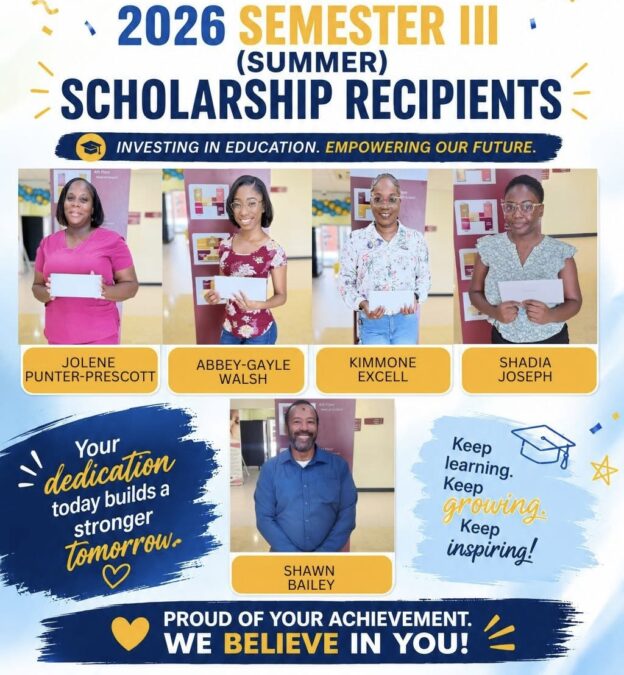
    In a move to reinforce its longstanding investment in workforce excellence, the Sir Lester Bird Medical Centre (SLBMC) has awarded five of its frontline and administrative employees short-term academic scholarships for the 2026 Semester III (Summer) term, as part of the hospital’s ongoing institutional staff development initiative.

    The opportunity was rolled out through the medical centre’s in-house Learning and Development Unit, created specifically to remove barriers for team members seeking to expand their professional skill sets and earn industry-recognized additional qualifications. Unlike generalized training programs, this scholarship scheme targets motivated staff who have already shown consistent commitment to patient care and organizational improvement.

    Each of the five recipients will pursue specialized coursework aligned with their career trajectories and the hospital’s strategic service goals. Two registered nurses, Jolene Punter-Prescott and Abbey-Gayle Walsh, will enroll in a Supervisory Management program, equipping them to take on leadership roles within the facility’s nursing department. Kimmone Excell, a practicing nursing assistant, will work toward a formal Certificate in End of Life Care, a specialty that addresses growing community demand for compassionate palliative care services. Shadia Joseph, an administrative team member, will deepen her expertise through the Financial Management Essentials course, while Shawn Bailey will complete introductory coursework in Human Resources Management to support the hospital’s people operations.

    Hospital leadership emphasized that this scholarship initiative is far more than a one-off benefit: it is a tangible reflection of the institution’s core commitment to nurturing the professional growth of every team member. The program is specifically designed to elevate employees who have already demonstrated outstanding dedication to continuous learning and a track record of service excellence in their roles.

    Beyond supporting individual career advancement, SLBMC officials note that the program reinforces the organizational culture the facility works to build company-wide: one that prioritizes lifelong learning, adaptive innovation, and uncompromising excellence in patient care. The five scholarship recipients, they add, embody these values perfectly, serving as examples for peers across all departments.

    Looking ahead, institutional leadership expressed strong confidence that the new skills and qualifications employees gain through these courses will deliver mutual benefits: advancing the recipients’ long-term careers, and improving the quality of care and services that SLBMC delivers to the local communities it serves.

  • Interrogating Black Fatherhood

    Interrogating Black Fatherhood

    Every Father’s Day, a narrow and harmful stereotype continues to overshadow the truth of Black fatherhood across the Americas: the persistent myth that Black men are inherently absent, disengaged, or toxic as parents. This is not an accidental misconception—it is a harmful legacy rooted in centuries of chattel slavery, a system designed to erase Black masculinity, destroy Black family structures, and dehumanize Black people. Educator and social commentator Wayne Campbell argues that it is long past time to upend this false narrative, honor active Black fathers, and rebuild a cultural framework that celebrates their irreplaceable role.

  • Pharma industry ‘step towards self-reliance’

    Pharma industry ‘step towards self-reliance’

    Barbados is charting a bold new course in healthcare and economic sovereignty with landmark legislation aimed at building a homegrown pharmaceutical industry from the ground up. As the country’s House of Assembly held the second reading of the Barbados Medical Products Bill, Minister of Technological and Vocational Training Sandra Husbands laid out the transformative potential of the initiative: reducing crippling dependence on imported medications, advancing medical research tailored explicitly to Caribbean populations, and generating high-skill jobs that retain local talent.

    Beyond its practical economic and healthcare benefits, Husbands framed the bill as a defining step toward decolonizing collective psychology in the Caribbean and dismantling deep-seated complexes of economic and intellectual inferiority that have lingered for generations. She argued that centuries of colonial rule left an enduring psychological imprint, leading many Barbadians to undervalue their own capabilities, intellectual potential, and the abundant natural resources native to the island. “The development of this Barbados pharmaceutical bill is an expression that Barbadians are breaking out from those inferiority complexes, are beginning to understand that they have value and worth, and that yes they can step up to the plate and do something bold, do something different that previous generations have never done,” Husbands said. “To chart your own destiny, you have to believe in yourself, you have to value yourself, and you have to value what is around you.”

    This historic lack of self-reliance has translated into heavy economic dependence on foreign suppliers, with local communities long prioritizing imported pharmaceutical goods over exploring the untapped medicinal properties of native Barbadian flora including bay leaf, wonder world, and clammy cherry. A core goal of the new domestic regulatory framework is to allow Barbados to lead its own medical research agenda, rather than waiting for foreign nations to prioritize regional healthcare needs that are often overlooked, the St James South MP explained.

    Husbands emphasized that a central driver of the legislation is the urgent need for medical research designed specifically for people of African and Latin American descent. The vast majority of pharmaceutical products currently on the global market are developed by Western countries, with little consideration for the genetic differences that shape how different population groups respond to medications. “The absolute need for research for better health for our people is an important part of what we have to do, but we cannot sit and wait as we have done over many, many centuries, waiting for somebody else to do it for us, waiting for the colonial powers to recognise that we have a need,” she noted. “What we are doing is getting up and taking charge of our own destiny and taking responsibility for our own future and doing this groundwork here to be able to ensure that we start this pharmaceutical industry and support it with the research that is going to be necessary.”

    The economic advantages of the initiative are equally compelling, according to Husbands, who recalled her time as foreign trade minister where she witnessed millions of dollars flow out of the country annually to import medications that Barbados has the natural and human capacity to produce domestically. The government positions the bill as a catalyst to diversify Barbados’ economy, strengthen national resilience to global supply chain shocks, and ease persistent pressure on the country’s foreign exchange reserves.

    The plan also targets the Caribbean’s ongoing brain drain crisis, by creating well-compensated, specialized roles for local science and agriculture graduates who would otherwise migrate to Canada and other high-income countries in search of opportunity. The initiative will bring multiple government stakeholders into partnership, linking the proposed University College of Barbados, the Hope Agricultural Training Institute, and the U.S.-based Duke University to assess workforce skill gaps, intellectual property protection frameworks, and digital training requirements.

    “My team was absolutely excited,” Husbands said, adding that the initiative would provide highly educated young Barbadians with “opportunities for interesting, good paying jobs that they can get excited about and become a part of this pharmaceutical industry”. She also called for the establishment of a dedicated specialized training academy to ensure young people have the technical skills needed to build and grow the new industry. With adequate investment to protect intellectual property and manage patents, Husbands said, “Barbados has a very, very bright future.”

  • DOMLEC investigates major power outage linked to Fond Colé substation fault

    DOMLEC investigates major power outage linked to Fond Colé substation fault

    Residents and businesses across the Caribbean island nation of Dominica woke to an unexpected disruption on the morning of Wednesday, June 17, 2026, when a major unplanned power outage cut electricity service to a large share of the country’s customer base. According to official updates from Dominica Electricity Services Ltd. (DOMLEC), the island’s primary electricity provider, the outage first took effect at approximately 4:40 a.m. local time, before the company released its first public statement on the incident just under two hours later at 6:15 a.m.

    In that initial announcement, DOMLEC confirmed the widespread interruption but noted that the root cause was still undergoing active investigation, pledging to share new details promptly as they emerged from on-site assessments. Within hours, preliminary technical inspections had pinpointed the source of the failure: an unanticipated fault along the transmission link connecting two critical pieces of the island’s energy infrastructure — the newly completed Fond Colé Substation and the adjacent Fond Colé Power Plant.

    The Fond Colé Substation is a linchpin of Dominica’s national electricity grid. It functions as the central connecting hub that links output from two major generation facilities — the Fond Colé Diesel Plant and the island’s geothermal power plant — to distribution networks that deliver power to end users across the entire country. This central role meant that a fault in the link between the substation and power plant triggered cascading outages that reached far beyond the Fond Colé area.

    Before full service can be restored, DOMLEC technical teams are required to follow strict safety protocols to fully isolate the fault, a step designed to prevent additional damage to the already stressed grid and protect field crews carrying out repairs. Because of this necessary pre-restoration work, the utility warned that many affected communities could remain without power for extended stretches through Wednesday morning as repair and restoration efforts move forward.

    DOMLEC has committed to pushing out continuous public updates as the investigation continues and restoration work progresses. In a public statement, the company offered a formal apology to all customers impacted by the unplanned outage, acknowledging the significant inconvenience the disruption has caused to daily routines across the island. The utility also expressed gratitude to the public for their patience and understanding as technical crews work to resolve the fault and restore full, safe power service as quickly as possible.

  • Environment Department Says SIRF Air Conditioning Units Fully Allocated

    Environment Department Says SIRF Air Conditioning Units Fully Allocated

    The public has snapped up every air conditioning unit available through the government’s Sustainable Island Resource Framework (SIRF) Fund, leaving no additional units in stock for interested applicants, the Department of Environment confirmed in an official statement this week.

    In the announcement, department officials noted that at present, there is no clear timeline for when a new shipment of subsidized air conditioners will be made available to the public. As soon as additional units are secured for the program, updates will be shared across all official government communication channels to keep interested communities informed.

    Beyond the air conditioner allocation update, the department also reminded residents looking to make energy-efficient home upgrades that polycarbonate sheets, another product offered under the SIRF Fund’s sustainability initiative, are still available for purchase.

    The department closed its statement by expressing gratitude for the widespread public engagement and support for the SIRF program, and encouraged residents to subscribe to and follow the Department of Environment’s official social media and communication platforms to receive real-time updates on program stock and future offerings.

  • Bajan pharma ‘could reduce imports, bring in forex’

    Bajan pharma ‘could reduce imports, bring in forex’

    Against a backdrop of long-standing economic vulnerability stemming from heavy reliance on imported goods and limited domestic manufacturing, Barbados is taking a landmark step toward building a homegrown pharmaceutical sector through new legislative framework. Minister of Energy, Business Development and Commerce Kerrie Symmonds outlined the ambitious plan while presenting the Barbados Medical Products Bill to the country’s House of Assembly, framing the legislation as a critical pillar of the island nation’s broader strategy to diversify its economy and strengthen supply chain resilience.

    For small island developing states like Barbados, over-dependence on imported medicines and medical supplies has created persistent systemic fragility, a risk laid bare by global supply chain disruptions during recent public health and geopolitical crises, Symmonds explained. The new bill seeks to address this gap by laying the regulatory groundwork to nurture pharmaceutical development and attract investment in the life sciences sector, building on a century of small-scale compounding experience at local industry pioneer Carlisle Laboratories.

    Successive Barbadian administrations have long recognized the responsibility to reduce the country’s economic vulnerabilities by expanding domestic production and advancing greater self-sufficiency, Symmonds noted. The legacy of limited manufacturing capacity has long put the small island at a competitive disadvantage relative to larger economies, making the development of a national pharmaceutical industry a core priority for long-term economic transformation. Beyond building regulatory infrastructure, the minister emphasized that growing the sector will require a deliberate cultural shift toward upholding the strict international quality standards that govern global pharmaceuticals.

    The immediate benefits of a domestic pharmaceutical industry extend beyond stabilizing supply chains, Symmonds argued. By producing needed medicines locally, Barbados will cut the significant outflow of foreign exchange spent on imported medical products, freeing up critical capital for other national development priorities. Looking further ahead, the government’s long-term vision positions the emerging sector as an export-led engine of economic growth. If developed successfully, the industry will not only meet domestic demand but also serve regional markets across the Caribbean and larger consumer markets in Latin America, generating a valuable new stream of foreign exchange earnings for the island.

    “This initiative represents a transformative shift for our economy,” Symmonds told lawmakers. “It lays the foundation for an economic engine that will earn foreign exchange for Barbados while serving the health needs of populations across the Caribbean and Latin America.” In line with the government’s commitment to economic independence, the bill marks the most significant step Barbados has taken to turn this long-held strategic goal into tangible action.

  • Search Warrants Can Now Be Executed on Sundays Under New Legislation

    Search Warrants Can Now Be Executed on Sundays Under New Legislation

    In a landmark legislative move on Tuesday, the House of Representatives of Antigua and Barbuda has passed the Magistrate’s Court (Amendment) Bill 2026, a set of revisions to the country’s decades-old Magistrate’s Court Act that dramatically broaden the scope of search warrant access and execution for national law enforcement agencies.

    The push for reform grew out of widespread cross-party consensus that existing statutory language had grown outdated, creating unnecessary barriers that hindered police efforts to probe and curtail criminal activity across the islands. Attorney General Steadroy Benjamin, the lead sponsor of the bill, emphasized that the core goal of the adjustments is to bring investigative protocols in line with 21st-century criminal trends, granting law enforcement much-needed flexibility to gather critical evidence during active probes.

    Three major changes mark the most significant departures from the original legislation. First, the revised act lifts longstanding restrictions that limited search warrant issuance to only specific categories of criminal offences, now allowing warrants to be approved for any illegal act under national law. Second, the reforms for the first time permit law enforcement to execute search warrants on Sundays, a change that government legislators framed as critical to stopping suspects from exploiting weekend gaps to destroy evidence or evade detection by authorities. Third, the new rules allow investigators to legally seize any evidence of criminal activity uncovered during a warranted search, even if that specific material was not explicitly listed in the original warrant application, so long as the evidence connects to a committed offence.

    Government supporters of the bill argued that modern criminal networks have systematically exploited outdated procedural loopholes to avoid accountability, and that updating investigative powers is a necessary step to strengthen public safety and speed up the pace of criminal probes. While opposition lawmakers ultimately backed the legislation, they raised targeted concerns about maintaining robust checks on the expanded powers, stressing that judicial oversight and constitutional protections for citizens must remain fully intact to prevent potential abuse.

    In response to these concerns, Benjamin confirmed that the amendments retain the non-negotiable requirement of judicial pre-authorization for all search warrants, with magistrates retaining full authority to approve or deny applications based on established legal standards. The search warrant reform was one piece of a broader slate of legislative updates put before Parliament during the sitting, which also included votes on the Fatal Accidents Bill, Electronic Crimes Amendment Bill, and Immigration and Passport Amendment Bill.

    Once the bill receives formal executive assent and is published in the official government gazette, the amendments will go into effect, granting all authorized law enforcement agencies across Antigua and Barbuda their expanded search authorities immediately.