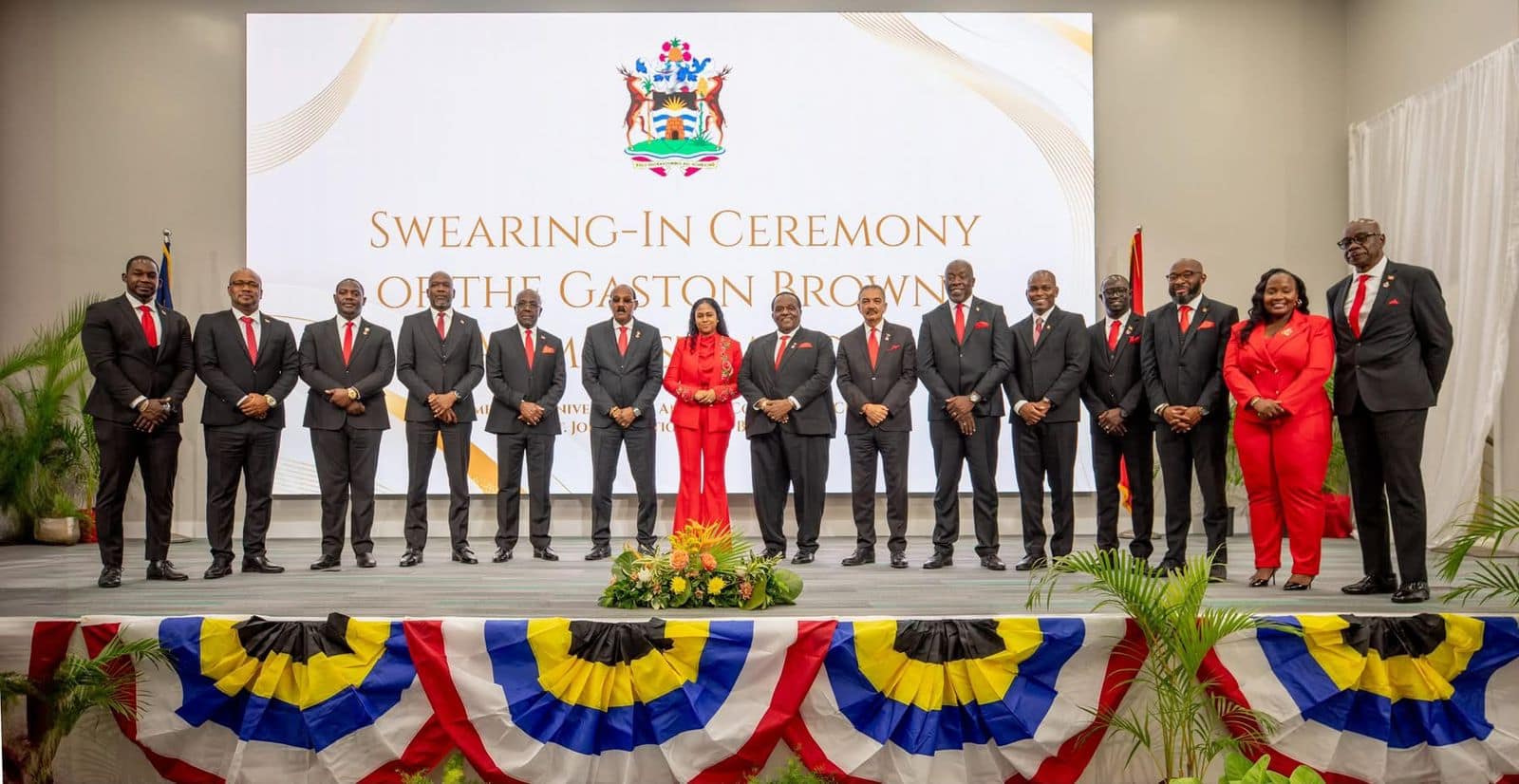
On a celebratory Tuesday ceremony steeped in national identity and a collective vow to serve the public, 12 freshly elected members of the Antigua and Barbuda Labour Party (ABLP) formally took office to begin their legislative terms. Among the group of incoming parliamentarians, three earned promotion to cabinet-level roles, completing their oaths of office as official Ministers of State. The public event drew hundreds of local residents from across both islands, marking a defining turning point for the nation’s governance just weeks after ABLP secured a resounding win in the 2023 General Elections. The decisive outcome of the vote handed Prime Minister the Hon. Gaston Browne’s administration a strong popular mandate to advance its policy agenda for the coming term. The ceremony blended formal constitutional tradition with widespread public celebration, as attendees gathered to witness the peaceful transition of legislative power and reaffirm shared confidence in the new government’s ability to deliver on campaign promises.
博客
-

Antigua and Barbuda Eligible for Up to €80,000 in New Caribbean Plastic Waste Grants
Small island developing states across the Caribbean are among the regions most vulnerable to the growing global plastic pollution crisis, with fragile coastal and marine ecosystems bearing the brunt of unmanaged plastic waste leakage. To address this urgent environmental challenge while advancing inclusive green economic growth, a new community-centered funding initiative, the Sustainable Small Grants Programme, has been launched to support locally led solutions that cut plastic pollution and build robust circular economy systems across five participating Eastern Caribbean nations.
### Core Mission and Strategic Objectives
The initiative is designed to deliver both environmental and social impact, with six clear core goals guiding its work. First, it seeks to drastically cut the volume of plastic waste that leaks into Caribbean land, coastal and marine environments. Second, it aims to scale up circular economy systems centered on reuse, recycling and material recovery. Third, the programme prioritizes economic empowerment for marginalized groups including women, young people and micro, small and medium-sized enterprises (MSMEs) through green economic opportunities. Additional objectives include strengthening local waste management infrastructure, supporting scalable community-designed environmental solutions, and improving sustainable production and material recovery practices across the region.### Thematic and Geographic Scope
All projects funded through the programme must align with at least one of seven key thematic focus areas: plastic waste reduction and prevention at source, building formal recycling and reuse systems, developing sustainable circular economy business models, community-led waste collection and management, sustainable material recovery and processing, local green entrepreneurship, and the expansion of inclusive green value chains.Geographically, the initiative is open to projects based in five eligible Caribbean island states: Antigua and Barbuda, Grenada, Saint Lucia, St. Kitts and Nevis, and St. Vincent and the Grenadines. Funding allocations are distributed equally across each of the five participating nations to ensure equitable access to resources across the region.
### Funding Structure and Timeline
The programme operates with a total combined budget of €400,000. Individual projects can apply for grants ranging from €30,000 to €80,000, depending on project scope and needs. All funded projects will have a maximum implementation period of 12 months, and all project activities must be fully completed no later than 1 August 2027.### Eligibility Requirements for Applicants
To qualify for funding, applicants must be legally registered entities based in one of the five eligible countries. Eligible entities include community-based organizations, civil society organizations (CSOs), MSMEs and small enterprises, and local implementation partners with a proven track record of relevant environmental or development work.Additional requirements for all applicants include a commitment to including women and youth in project leadership roles, the implementation of robust monitoring and evaluation frameworks to track impact, a limit of one application per organization, and a valid institutional bank account with multiple signatories for fund disbursement.
### Project Requirements and Priority Areas
All funded projects are required to center their work on widely recyclable plastic types including polyethylene terephthalate (PET), high-density polyethylene (HDPE) and polypropylene (PP). Projects targeting complex composite plastics are only approved if viable local processing solutions already exist. All proposals must demonstrate compatibility with existing local waste management systems, outline clear and viable recycling or reuse pathways for collected materials, establish or strengthen local and regional markets for recycled plastic products, and prove long-term economic and operational sustainability.The programme prioritizes three broad categories of interventions. Upstream and midstream solutions including source reduction, reuse systems, product redesign and material circularity initiatives top the priority list. Downstream solutions including recycling infrastructure development, formal waste collection and sorting systems, and resource recovery processing are also heavily prioritized. Finally, community empowerment-focused projects, including women-led green enterprises, youth-led environmental action, and MSME participation in circular economy value chains, receive additional priority consideration during the review process.
### Expected Impact
By the end of the implementation period, funded projects are expected to deliver measurable progress across six key outcome areas: reduced plastic pollution in targeted local communities, strengthened local recycling and reuse infrastructure, the creation of sustainable green livelihoods for local residents, increased adoption of circular economy practices across the region, improved public environmental awareness and community participation in waste management, and the development of replicable, scalable community-led waste management models that can be adopted across other small island states.### Why This Initiative Fills a Critical Gap
This programme responds to a unique set of challenges facing small island developing states in the Caribbean, where plastic pollution threatens critical tourism and fishing industries while damaging irreplaceable marine ecosystems that support local livelihoods. By centering community leadership rather than top-down external solutions, the programme builds local capacity while addressing pressing environmental needs. It also advances inclusive green growth by intentionally centering groups that are often excluded from economic opportunities in the environmental sector, strengthening local circular economy infrastructure, promoting sustainable resource use, and encouraging community-led innovation that can be scaled across the region and beyond.### Common Application Pitfalls and Tips for Success
Programme administrators have outlined common mistakes that applicants should avoid when drafting proposals, including submitting projects with no clear recycling pathways for collected plastic, focusing on non-recyclable or complex composite materials without existing local processing solutions, failing to demonstrate economic viability or clear market linkages for recycled products, excluding women and youth from leadership roles, lacking measurable environmental outcome targets, and proposing projects incompatible with existing local waste management systems.To build a competitive application, administrators advise applicants to focus on practical, locally appropriate plastic reduction or recycling systems, demonstrate clear existing local market demand for recycled materials, center community participation and local ownership of the project, explicitly highlight women and youth-led components, prove clear financial and operational feasibility, and align all project activities closely with core circular economy principles.
### Key Frequently Asked Questions
– What is the Sustainable Small Grants Programme? It is a targeted funding initiative supporting community-led plastic waste reduction and circular economy projects across five participating Caribbean island states.
– What is the range of funding available per project? Grants range from €30,000 to €80,000.
– Which countries are eligible to participate? The five eligible nations are Antigua and Barbuda, Grenada, Saint Lucia, St. Kitts and Nevis, and St. Vincent and the Grenadines.
– What is the maximum project duration? Projects can run up to 12 months, with all work required to be completed by 1 August 2027.
– What types of plastic does the programme prioritize? Projects targeting PET, HDPE and PP plastics are prioritized.
– Who is eligible to apply? Legally registered community groups, CSOs and MSMEs based in eligible countries can submit proposals.
– Can an organization submit more than one application? No, only one application per organization is permitted. -

Antigua and Barbuda Joins Regional Push Against Mercury in Skin-Lightening Products
Widespread global use of harmful skin-lightening products laced with mercury has spurred the World Health Organization (WHO) to roll out a groundbreaking new behavioural insights toolkit, designed to help nations tackle the root causes of this dangerous public health trend and advance global efforts to eliminate toxic mercury-containing cosmetics.
Developed as a core component of WHO’s multi-country initiative to eradicate mercury-infused skin-lightening goods, the toolkit equips public health authorities with structured resources to unpack the social, cultural and personal drivers that lead communities to use these products. The data and insights gathered through the framework are critical to crafting targeted, context-appropriate policies and interventions that reduce consumer demand for goods linked to severe health and environmental harm.
Skin-lightening practices remain common across dozens of countries worldwide. While these products work by suppressing the body’s production of melanin, the pigment that gives skin its color, a large share of over-the-counter options contain hazardous mercury, a chemical WHO has ranked among the top 10 substances posing the greatest threat to global public health. Even low-dose exposure to mercury can trigger permanent neurological damage, and it carries particularly severe risks for fetal development and young children’s growth. Beyond human health, mercury also inflicts lasting environmental damage: when product residue is washed off during daily use, it enters wastewater systems, accumulates in soil, waterways and ecosystems, and persists in the environment without breaking down.
Global momentum to eliminate mercury-containing cosmetics has grown in recent years, aligned with obligations under the Minamata Convention on Mercury, the international treaty designed to protect human and environmental health from mercury pollution. Convention parties have increasingly recognized that regulatory action alone cannot solve the problem; understanding the behavioural drivers of consumer demand is essential to effective prevention. This growing consensus is formalized in the 2025 Libreville Commitment, signed in Gabon, which requires nations to integrate behavioural science approaches into national strategies to eliminate mercury-containing skin-lightening products.
Between 2022 and 2026, pilot projects implemented in Gabon, Jamaica and Sri Lanka with funding from the GEF-UNEP partnership generated key lessons for national-scale implementation. The trials underscored the urgent need for targeted workforce capacity-building, iterative tool testing and adaptation, audience segmentation to address different user groups, efficient resource allocation, and strengthened national data analysis systems.
A standout feature of the new toolkit is a customizable user journey mapping template, which helps public health stakeholders visualize the full cycle of how consumers first encounter skin-lightening products, begin regular use, and eventually adopt the practice as a long-term habit. By building on existing research to map context-specific user journeys, officials can identify high-impact intervention points where public health messaging and policy will resonate most effectively. This framework shifts action away from one-size-fits-all generic solutions toward targeted, strategic interventions that align with real-world behavioural patterns, allowing nations to prioritize limited resources for maximum impact. The first published user journey, focused on women’s experiences with skin-lightening products, draws on evidence from a 2026 global systematic review of skin whitening practices led by researcher Williams et al.
“Understanding the complex set of social, cultural and economic influences that lead people to voluntarily use skin-lightening products has to be the first critical step in designing effective interventions and policies to end these harmful practices,” explained Elena Altieri, Global Lead for Behavioural Insights at WHO headquarters. “Behavioural insights and user journey mapping show us exactly where, when and how to intervene most effectively. This toolkit gives researchers a standardized, evidence-based approach while still enabling them to generate context-specific insights that work for their national populations.”
The toolkit was officially launched on February 25, 2026, in Panama City during a regional workshop focused on mercury elimination for the Americas and Caribbean. The launch event brought together senior representatives from ministries of health and environment across the region, including delegations from Antigua and Barbuda, The Bahamas, Barbados, the Dominican Republic, Guyana, Mexico, Saint Vincent and the Grenadines, and Trinidad and Tobago, alongside other public and private sector stakeholders.
In addition to the user journey mapping framework, the full toolkit includes qualitative and quantitative data collection instruments, clear ethical guidance for conducting behavioural research with vulnerable communities, and practical actionable recommendations for translating insights into policy. It is built on empirical evidence from behavioural studies conducted across 43 countries, as well as on-the-ground implementation lessons from the recent pilot projects, making it a tested, adaptable resource for nations of any income level grappling with harmful skin-lightening practices.
-
LIVE NOW: DOMLEC Press Conference – Geothermal transition and recent outages
The submitted news submission only includes social media sharing buttons and an image link, with no complete, legible news text content available for analysis, restructuring, or rewriting. Without the core textual information that conveys the news event, background details, key arguments, or relevant data, it is impossible to complete the comprehensive news processing workflow requested. Users who wish to have a news piece analyzed and rewritten need to provide the full, complete text of the original news alongside any supplementary materials to allow for accurate processing.
-
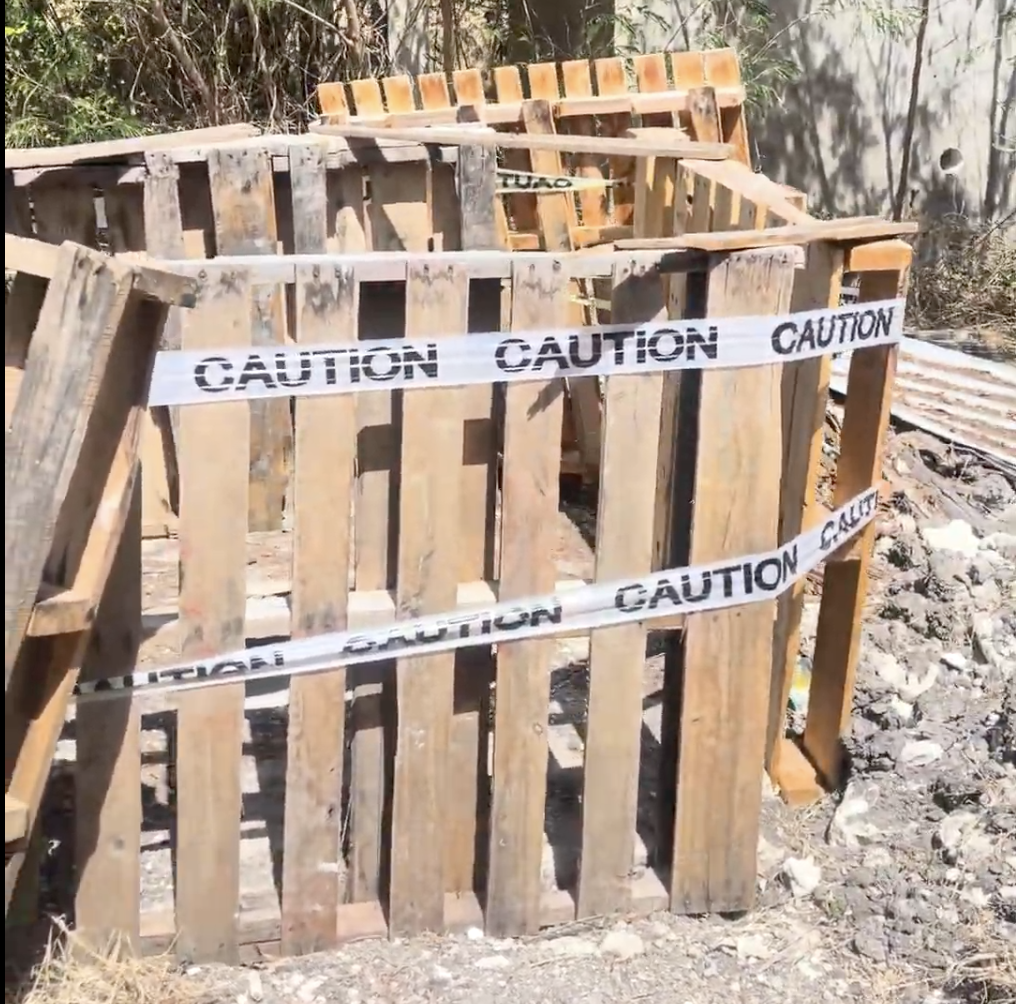
Residents demand action after near-fatal fall into uncovered well
The normally peaceful residential neighborhood of Goodland Gardens in Christ Church has been thrown into turmoil after a 72-year-old local resident, Lolene Rawlins, survived a near-death plunge into an unmarked, uncovered well hidden beneath thick brush in January. Swift emergency response teams ultimately pulled Rawlins from the 87-foot shaft, but the terrifying incident has reignited long-simmering anger among locals over years of unaddressed safety hazards across the area. For decades, residents say, abandoned open wells have been allowed to sit neglected across Goodland Gardens, with repeated warnings about the risk of injury or death falling on deaf ears. Now, after Rawlins’ close call, the community is coming together to demand systemic action before a tragedy occurs. One long-time female resident, still shaken by the event, emphasized that local residents have long been aware of the presence of unmarked wells across the area, and that dangerous close calls have happened repeatedly before. “I walk through that stretch all the time – I could just as easily have been the one who fell,” she said. “This should never have gotten to the point where someone almost died. Fixing the problem doesn’t have to be a complicated, expensive project. We all know these wells exist; the simplest solution is just to secure and cover them. We shouldn’t have to wait for another person to get hurt before someone acts.” Another local resident, Anthony Yearwood, pointed out that at least two additional open wells on the same plot of land where Rawlins fell remain unsecured and exposed to the public. He echoed calls for immediate remediation of these remaining hazards to prevent another incident. For many locals, the danger extends far beyond the single well that caused Rawlins’ fall, pointing to a broader failure of oversight and mapping that has left the community unaware of how many abandoned shafts lie hidden across the area. “I know the area well and I can point out most of the wells here, but this one was completely unknown to me,” explained Christopher Alleyne, another Goodland Gardens resident. “It was hidden completely by overgrown brush. If one can slip past even long-term residents’ knowledge, how many more are out there that we don’t know about?” Alleyne criticized the longstanding pattern of reactive, after-the-fact action on these hazards, warning that this approach will eventually lead to an avoidable death. “It’s always the same story: we wait until something terrible happens, issue a temporary alert, then go back to business as usual until the next incident,” he said. “Next time, we might not get lucky – the victim might not survive to be rescued.” This uncertainty has left everyday life in the neighborhood altered, with residents reporting constant anxiety about moving through green and bushy areas, especially for families with young children. “I definitely feel less safe now, of course you do,” Alleyne said. “Kids run around, fly kites, play in the brush all the time. We have no idea where all these hidden wells are, so no one can warn the children away.” While some local residents have taken matters into their own hands, launching independent efforts to locate, map and mark abandoned wells across the neighborhood, the community is unified in calling for national-level coordination, clear regulatory accountability, and a formal plan to address the hazard across the country. “There should be a central registry of these abandoned wells somewhere, so authorities and residents know where they are,” Alleyne argued. “Right now, no one seems to know who is actually in charge of securing these sites. Where do we even go to report this? Are we just supposed to sit and wait for the next casualty?” Despite widespread frustration with the lack of prior action, Alleyne also emphasized that community members have a role to play in solving the problem, urging locals to move past complaining and get involved. “Instead of just sitting back and talking about the issue, everyone can do their small part,” he said, encouraging residents to report potential hazards they find and work together to map unrecorded shafts. In the immediate aftermath of Rawlins’ fall in January, workers from Barbados’ Ministry of Transport and Works attended the site to secure the well with temporary plywood barriers, and a permanent perimeter gate has now been installed around the opening. However, Transport Minister Kirk Humphrey has not yet responded to requests for comment on broader plans to address unmarked wells across Goodland Gardens or the wider area. For residents of the shaken community, the clock is already ticking. With multiple unsecured hazards still unaddressed and unknown wells potentially scattered across the neighborhood, locals say another incident could end in death – and there is no more time to wait.
-

Nationals of 12 countries left hantavirus cruise in St Helena: WHO
What is presented here is an incomplete structural snippet pulled from a Lebanese news aggregation platform that organizes content across multiple topical and geographic beats. The platform’s navigation menu outlines its full range of coverage, including breaking developments on the ongoing Israel-Gaza war, global world news, updates from across Lebanon, Middle East regional reporting, analysis of Lebanon’s struggling domestic economy, technology and culture features, sports coverage, curated press highlights, and general news bulletin reports. Below the navigation framework, a partial dataset lists major administrative regions of Lebanon alongside corresponding numerical values: Beirut at 22, Bekaa at 20, Keserwan at 23, Metn at 23, Mount Lebanon at 20, North Lebanon at 22, and South Lebanon at 22. No additional context is provided to explain what these numerical values represent, though they align closely with common daily temperature readings in degrees Celsius recorded across Lebanese regions throughout much of the year. The incomplete snippet does not contain a full, coherent news story, only the structural outline and partial regional data entry.
-
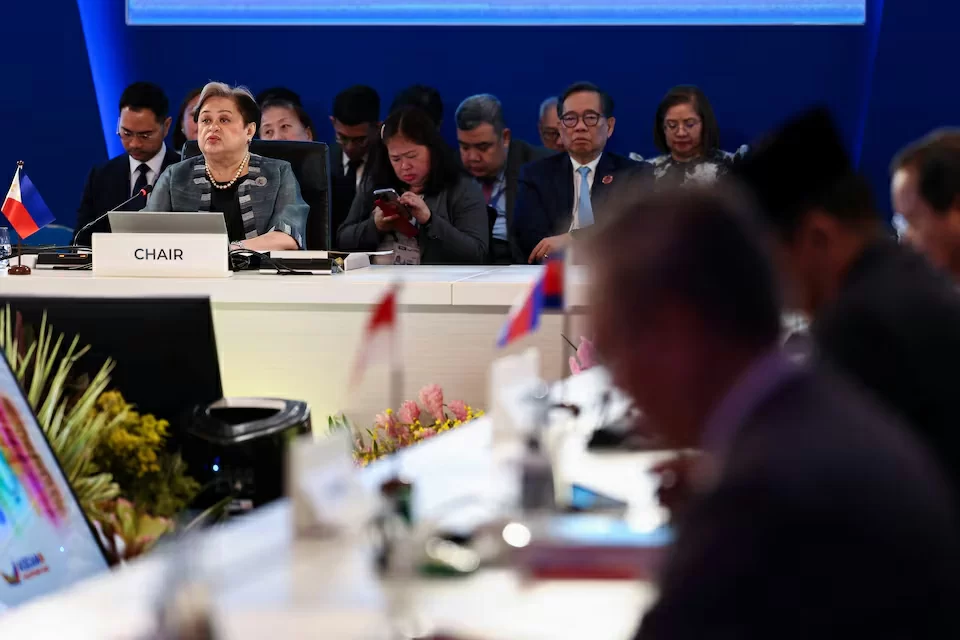
Zuidoost-Azië zoekt oplossing voor energie- en voedseltekorten
Southeast Asian bloc ASEAN centered its urgent discussions on two pressing crises on Thursday: the unfolding Middle East conflict that has disrupted global energy flows via the blockaded Strait of Hormuz, and long-simmering regional disputes that threaten bloc cohesion, during pre-summit ministerial meetings held in Cebu City, the Philippines.
Hosted by the Philippines, this year’s ASEAN chair, the gathering brought together foreign and economic ministers from the bloc’s 11 member states, home to nearly 700 million people, almost all of which rely heavily on imported energy to power their fast-growing economies. The session opened with remarks from Philippine Foreign Secretary and current ASEAN Chair Ma. Theresa Lazaro, who opened by highlighting how events outside the Southeast Asian region can send immediate, profound shocks to ASEAN economies and communities.
“The ongoing crisis in the Middle East makes clear that developments far beyond our borders carry direct and deep-seated impacts for every ASEAN member,” Lazaro told attendees, stressing that strengthened crisis coordination and institutional preparedness are non-negotiable for the bloc right now.
The Straits of Hormuz, a chokepoint that carries roughly one-fifth of the world’s daily oil and gas supplies, has become a flashpoint amid escalating Middle East tensions, with blockades disrupting global energy trade. For energy-import dependent ASEAN economies, this disruption has already driven up fuel costs and created significant downside risks to regional economic growth, prompting ministers to push for a coordinated regional response.
The Philippine chair has prioritized rapid adoption of a regional oil exchange agreement, a framework designed to spread supply risk across the bloc by creating a reserve sharing mechanism on a voluntary, commercial basis. Economic ministers also put forward two additional key proposals: developing alternative energy supply routes to reduce reliance on the strait, and upgrading cross-border communication protocols to respond faster to future supply disruptions.
Beyond energy security, the meeting also tackled multiple simmering regional conflicts. On the sidelines of the official gathering, the Philippines facilitated a rare three-way meeting between Philippine President Ferdinand Marcos Jr., Thai Prime Minister Anutin Charnvirakul, and Cambodian Prime Minister Hun Manet, aimed at de-escalating a long-running border dispute between the two neighboring Southeast Asian states. The conflict, which erupted into heavy armed clashes and airstrikes last year, has left a fragile ceasefire in place that remains vulnerable to collapse.
Anutin noted ahead of the meeting that the primary goal of the discussion was to rebuild bilateral trust, and that no final binding agreement was expected to emerge from Thursday’s talks. The delicate situation adds an extra challenge to the Philippines’ ASEAN chairmanship, which must balance competing priorities across the bloc’s 2025 agenda.
Myanmar’s political crisis, one of the most divisive ongoing issues for ASEAN, also featured heavily in closed-door discussions. Since the 2021 military coup, the country has remained deeply split, and the new military-backed civilian government installed earlier this year has been pushing for re-engagement with ASEAN. To date, the bloc has withheld recognition of the new administration, citing a lack of meaningful progress on peace negotiations with opposition groups.
The Philippines, as chair, has called for the Myanmar military government to grant ASEAN’s special envoy access to detained Nobel Peace Prize laureate Aung San Suu Kyi, as a concrete confidence-building measure to prove the junta’s commitment to the bloc’s five-point peace plan agreed after the 2021 coup.
Going into Friday’s official 48th ASEAN Summit and related leaders’ meetings, a draft consensus statement obtained by Reuters shows bloc leaders are set to formally call for immediate de-escalation of tensions between the United States and Iran, an immediate end to hostilities in the Middle East, full compliance with international maritime law, and the immediate reopening of the Strait of Hormuz to global commercial traffic. The statement will also repeat the bloc’s call for rapid ratification of the regional oil exchange agreement to strengthen regional energy security.
For decades, ASEAN has faced longstanding criticism for its consensus-based approach that often produces statements of intent rather than binding, enforceable action. But current leaders and analysts note that the severity of the current energy crisis has created new urgency that is pushing member states to move past procedural delays toward tangible, coordinated policy action.
-
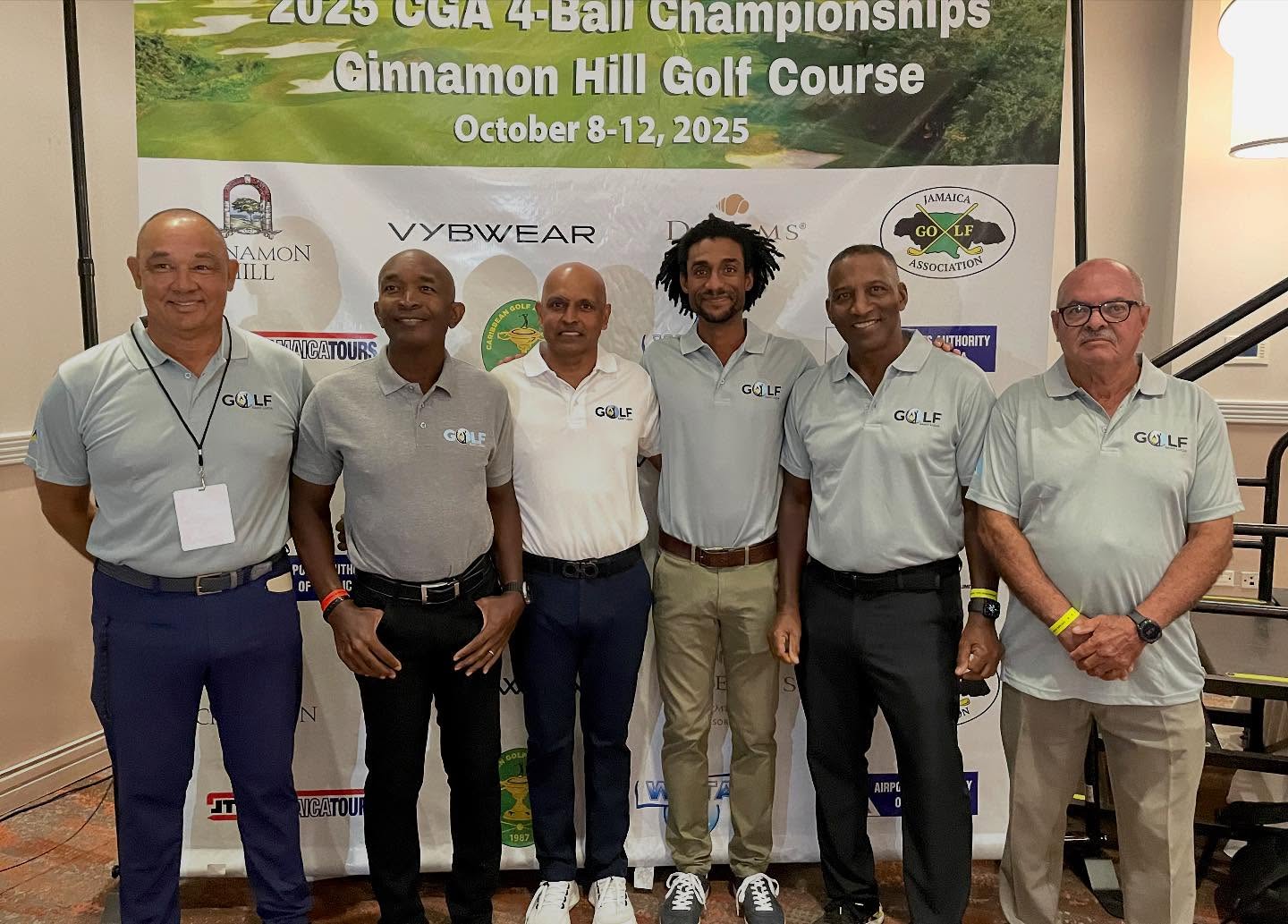
Saint Lucia joins Caribbean Golf Association
At the Caribbean Golf Association (CGA)’s annual general meeting held last week in the Dominican Republic — convened in parallel with the 30th edition of the Caribbean Golf Classic — regional golf officials made a landmark decision to welcome two new national governing bodies into full membership. Alongside Bermuda, the Saint Lucia Golf Association (SLGA) secured the vote of approval from CGA delegates, marking a historic milestone for golf development in the Eastern Caribbean.
Following the admission of the two new members, the CGA’s total full membership count now stands at 12. While Guadeloupe and the United States Virgin Islands hold affiliate status within the regional organization, Saint Lucia’s entry makes it the first full member from the Organisation of Eastern Caribbean States (OECS) to join the CGA’s ranks.
The SLGA’s path to full membership began with a formal application submitted to the CGA leadership months prior to the AGM. During the meeting, SLGA representatives laid out their strategic vision for growing the sport locally, outlined their motivation for joining the regional body, and detailed the unique value their membership would bring to the wider Caribbean golf community. After the presentation, member delegates cast a unanimous vote to approve the SLGA’s application.
In an interview following the historic vote, SLGA President Mario Reyes shared his organization’s excitement for the new chapter. “Our top priority continues to be expanding access to golf and raising the profile of the sport across Saint Lucia,” Reyes explained. “Joining the CGA as full members opens up entirely new competitive landscapes for our golfers at every skill level. This partnership will foster deeper camaraderie across regional players, strengthen cross-border friendships, lift the overall quality of play in our country, and most importantly, create clear pathways for our young emerging golfers to access opportunities that were simply out of reach before.”
For the local Saint Lucia golf community, the benefits of CGA membership extend far beyond competitive access. The agreement will see the popular annual Saint Lucia Golf Open added to the official CGA regional tournament calendar, bringing increased exposure and high-profile regional competition to the island’s courses. Local golfers will also now earn the right to compete officially across all CGA-run tournaments.
Founded in 1987, the CGA has long served as the leading governing body for golf across the Caribbean region. The organization hosts five annual championship events spread across different Caribbean nations, creating structured competitive opportunities for junior, amateur, and senior golfers alike while working systematically to drive sustainable growth of the sport across the region.
CGA President Sidney Wolf emphasized that the addition of Saint Lucia and Bermuda reinforces the steady progress of golf across the entire Caribbean. “Both new members have demonstrated clear strategic vision, unwavering passion for the game, and a deep commitment to grassroots development that aligns perfectly with the CGA’s core mission,” Wolf noted. “We are incredibly eager to see their active participation and their unique contributions as we work together to lift Caribbean golf to new heights on the global stage.”
-

CARPHA says Hantavirus threat to Caribbean remains low amid cruise ship cases
A recent hantavirus outbreak linked to a Central Atlantic cruise ship has put global public health authorities on alert, though regional leaders in the Caribbean are moving quickly to reassure communities and travelers that the risk of local transmission remains low.
The incident first came to international attention on May 2, 2026, when the United Kingdom’s International Health Regulations (2005) Focal Point formally notified the World Health Organization (WHO) of an unexplained cluster of respiratory illness striking both passengers and crew aboard the vessel. Laboratory analysis later confirmed hantavirus infection in one patient who was in critical condition. By May 6, the WHO had updated its tally to 8 connected cases: three confirmed infections, five suspected cases, and three reported fatalities.
The Caribbean Public Health Agency (CARPHA) first detected the emerging incident through its automated Information Environment and Monitoring platform on May 3, activating its regional response protocols just days after the initial notification. For context, hantaviruses are zoonotic pathogens carried primarily by rodents, with human infection occurring through direct or indirect contact with infected animals’ contaminated urine, saliva, or fecal droppings. While rare cases of person-to-person transmission have been documented, CARPHA leadership emphasizes that such spread is highly uncommon.
In an official statement aimed at calming public concern, CARPHA Executive Director Lisa Indar stressed that the overall threat to Caribbean nations remains minimal. “In the Americas, hantaviruses are most commonly transmitted by wild field rodents rather than urban rat populations, where transmission is far less likely to occur,” Indar explained. She also reaffirmed that the region’s existing public health infrastructure is well-equipped to detect and contain any potential importation of the virus.
The warning comes at a critical time for the Caribbean’s $35 billion cruise tourism industry: the region accounts for roughly 44% of global cruise traffic and welcomed more than 16.3 million cruise passengers in 2025 alone, making maritime public health surveillance a top priority for economic and community health. In light of the outbreak, CARPHA is urging all member states to review and strengthen existing disease monitoring protocols at ports and other border entry points, to catch potential imported cases before they can spread.
Indar noted that the agency has long invested in specialized monitoring infrastructure tailored to the region’s tourism-dependent economy, and these systems are already delivering results. CARPHA’s existing tools, including the Tourism and Health Information System (THiS) and the upgraded Caribbean Vessel Surveillance System (CVSS), are designed to deliver early warnings for public health threats linked to travel, maritime vessels, and tourism accommodations. “These systems enable timely information sharing, strengthen decision-making, and support rapid, targeted responses by national health authorities,” Indar said.
Early performance data for the upgraded CVSS shows that the system already identifies syndromic (symptom-based) suspected cases before vessels dock at Caribbean ports, with more than 96% of cruise ship public health alerts delivered to member state health authorities within 24 hours of detection. CARPHA says it will continue to track the Central Atlantic outbreak closely in coordination with the WHO and other international partners, and will issue public updates immediately if the risk profile changes. The agency also reaffirmed its long-term commitment to protecting both local communities and the region’s vital tourism sector through proactive, data-driven public health action.
-

Searles man acquitted of 2019 robbery of fast-food employee
After a months-long legal proceeding that wrapped up with a jury deliberation, a Christ Church resident has been cleared of all wrongdoing in a high-profile 2019 armed robbery case targeting a KFC outlet.
Alvin George Chung, a 59-year-old resident of the Searles Plantation community, had staunchly maintained his innocence from the moment he was charged. The prosecution alleged that on New Year’s Eve 2019, Chung held up KFC employee Llewelun Walthurst, stealing a total of BDS $69,881 and US$1,259 in cash that belonged to the fast-food chain.
Over the course of the 12-week trial, both the defense and prosecution laid out their competing cases before a nine-member jury. Veteran defense attorney Kaviar Callender led the legal team for Chung, mounting a rigorous challenge to the prosecution’s evidence. Senior State Counsel Kevin Forde argued the case on behalf of the state, presenting the government’s narrative of the alleged robbery.
After reviewing all testimony and evidence presented during the trial, the nine-member jury returned a not guilty verdict, acquitting Chung of the single robbery charge. Presiding Justice Pamela Beckles formally confirmed the verdict in court, directly notifying Chung that he was no longer in legal custody and was free to leave the courthouse.
The case marks the conclusion of a years-long legal process that hung over Chung’s head since the alleged incident nearly four and a half years ago, ending with the jury’s finding that the prosecution failed to prove guilt beyond a reasonable doubt.