Thousands of secondary and post-secondary students across Barbados and the wider Caribbean region are preparing to access their long-awaited 2026 CXC May-June examination results starting at noon local time today. The release process is being formalized by the Caribbean Examinations Council (CXC) during an official launch ceremony hosted in Anguilla on the same morning. At the public event, Dr. Nicole Manning, CXC’s Director of Operations, is scheduled to deliver a comprehensive overview of overall candidate performance across all participating territories, breaking down trends in subject proficiency and overall pass rates for the 2026 exam cycle. Following the official ceremony, individual results will be unlocked for candidates through the CXC’s dedicated online results portal, allowing students to view their personal scores and qualification outcomes immediately from noon onwards. This annual results release is a key milestone for Caribbean students, as CXC qualifications determine eligibility for tertiary education placements and future employment opportunities across the region.
博客
-

DABA 2026 playoff finals tip off tonight in Massacre
After months of intense regular season competition across the island, Dominica’s top amateur basketball squads are set to clash for national glory starting tonight, as the Dominica Amateur Basketball Association (DABA) officially opens the 2026 Playoff Finals at the Massacre Indoor Sports Complex.
This final championship series will feature back-to-back matchups on opening night, spanning both of DABA’s competitive divisions, with all four finalists entering a best-of-five tournament format that will decide the year’s national title holders. To claim the championship crown in their respective divisions, each team will need to secure three wins over their opponent, making every on-court performance critical from the opening tip-off.
The first tip-off of the night is scheduled for 7:00 PM local time, when the West Coast Ballers will face off against the Possie Pacers in the Division One Finals. Immediately following the conclusion of the first matchup, the court will be cleared for the Premier Division Finals, which tips off at 9:00 PM, pitting Dr. Darroux PSC Falcons 1 against the Happi 767 SC Dominators.
Basketball fans across Dominica have multiple ways to catch all the on-court action, whether they prefer to experience the energy of the games in person or cheer on their favorite teams from home. Spectators can purchase entry to watch the matchups live from the stands of the Massacre Indoor Sports Complex, while remote viewers can stream the games for free via DABA’s official Facebook page or tune into the live television broadcast on Digicel Channel 14. Between games and during breaks, local entertainer DJ Blend will keep the crowd engaged with music and interactive activities at the venue.
In a public statement ahead of the opening night, DABA officials noted that all four qualifying teams have left the regular season behind, with the sole focus of bringing home the national championship title. The association has extended an open invitation to all basketball fans across the country to attend the games in person to cheer on their favorite squads, as the battle for national basketball honors gets underway tonight on August 18, 2026.
-

VS breidt militaire campagne tegen drugscriminaliteit uit naar land in Latijns-Amerika
On August 18, U.S. Defense Secretary Pete Hegseth announced a major escalation of Washington’s counter-drug military campaign in Latin America during an official visit to Panama City, where he spoke at a forum hosted by the Americas Counter Cartel Coalition. The expansion shifts the existing campaign beyond air strikes targeting smuggling vessels to direct joint on-the-ground operations alongside regional security forces, with Colombia, Ecuador, and Honduras already confirmed as participating partners. Guatemala has issued a formal denial that it has signed any agreement to join the initiative, while Mexico — led by President Claudia Sheinbaum — has thus far rejected any U.S. military presence on its national territory.
Since the current counter-narcotics campaign was launched, more than 200 people have been killed in over 60 air strikes targeting drug-carrying vessels operating along Latin America’s Caribbean and Pacific coastlines. The shift to land-based operations will see U.S. military personnel deepen coordination with local armed forces to target transnational criminal networks, including insurgent groups such as Colombia’s National Liberation Army (ELN).
This policy shift aligns with the broader Trump administration’s geopolitical goal of strengthening U.S. influence across the Western Hemisphere and aligning regional security partners closer to Washington, a push that has gained traction as right-wing leaders have grown in political popularity across the region. It also comes amid rising great-power geopolitical competition, with the framing of the campaign as critical to protecting core U.S. security interests in its traditional sphere of influence.
The announcement has already drawn sharp criticism and warning from analysts and sovereignist advocates. Critics point to severe risks including the erosion of national sovereignty for participating states, a heightened likelihood of civilian casualties, and a potential surge in anti-American public sentiment across the region. Many regional governments have approached the expansion with extreme caution, due to deep-seated domestic political sensitivities around foreign military presence on national soil with roots in centuries of U.S. intervention.
Washington has provided decades of military support and intelligence sharing to Latin American governments to counter drug trafficking and organized crime, a long-running policy that has produced mixed results and persistent controversy. Previous large-scale initiatives such as Plan Colombia and the Mérida Initiative focused on training and equipping local security forces, without deploying large contingents of U.S. ground troops. The Trump administration has drastically tightened this approach, launching more aggressive actions including the air bombing of suspected smuggling vessels that has already left hundreds dead and sparked widespread questions over the legality and effectiveness of the new strategy.
The new phase of joint land operations marks the most significant increase in direct U.S. military footprint in the region in decades, a shift that threatens to inflame existing tensions over national sovereignty. Analysts warn that this escalation could undermine overall regional stability, particularly in areas where armed criminal and insurgent groups hold deep social and territorial roots. Moving forward, the long-term success and sustainability of the new strategy will depend heavily on domestic public reaction and the political alignment of regional government leaders.
-

Skerrit highlights $2.3 billion in infrastructure investment
Dominica’s Prime Minister Roosevelt Skerrit, who also serves as leader of the ruling Dominica Labour Party (DLP), has outlined the scale of infrastructure progress delivered by his administration over the last half-decade, touting nearly $2.3 billion in total investments across the island nation.
The announcement came during a campaign-focused public meeting with DLP supporters held in the Roseau North Constituency at Tarish Pit, where the prime minister framed the infrastructure spending as a tangible demonstration of his government’s unwavering commitment to upgrading and expanding Dominica’s critical public and commercial infrastructure. Breaking down the cumulative total, Skerrit noted that the five-year investment translates to an average of $400 million in annual infrastructure spending across the term.
The rally was held to build support for the DLP’s candidate Ashma McDougall ahead of the upcoming Roseau North by-election, a special contest triggered by the June 2024 resignation of the constituency’s former representative, Honorable Miriam Blanchard, who stepped down to address ongoing health concerns. Election officials have set nomination day for August 21, with official polling scheduled to take place across the constituency on September 7, 2026.
Political observers note that the governing party has leaned heavily on its delivery of infrastructure projects to energize its base ahead of the by-election, a race that will be closely watched as a bellwether for voter sentiment ahead of the next general election in Dominica.
-

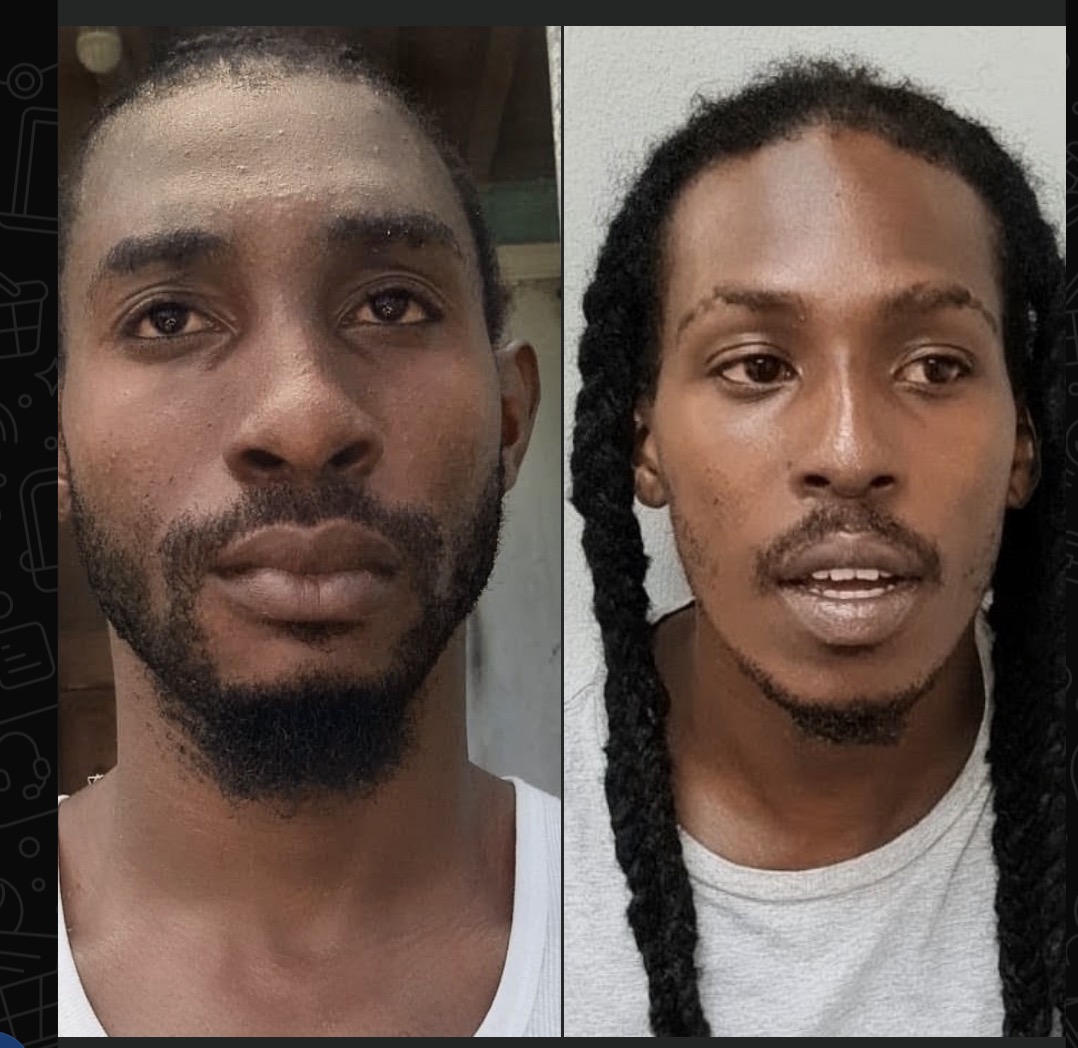
Two Dominica police officers charged with murder of teenage girl
A high-profile case involving the disappearance and death of a teenage girl in Dominica has taken a shocking turn, with two members of the island nation’s police force now facing murder charges following the recovery of the teen’s heavily decomposed remains.
Jerbiah Paul, a teenager whose whereabouts had been unknown for weeks, was first reported missing to local authorities on July 24. Almost three weeks later, on August 12, search teams located human remains on a rugged cliffside in Capuchin, a small village in the northern region of Dominica. Forensic investigators later connected the remains to Paul’s case, though official identification via DNA testing is still pending to confirm the match beyond doubt.
On Monday, serving police officer Joshua Hamlet made his first court appearance, where he was formally arraigned on a charge of murder. Hamlet marks the second law enforcement officer to be charged in connection with Paul’s killing. Under Dominica’s legal framework, no plea was required from Hamlet at this stage, as murder is classified as an indictable offense that requires further preliminary proceedings.
Following his court hearing, Hamlet was remanded to the State Prison. His next scheduled court appearance is set for October 2, 2026, when a preliminary inquiry into the charges against him will get underway.
Hamlet’s charge comes weeks after the arrest of 23-year-old Jean-Luc Langlais, a former police officer who was already charged with homicide for his alleged role in Paul’s death. Langlais was already dismissed from the Dominica Police Force ahead of his arrest, and he has also been held in the State Prison since being taken into custody. Court records show Langlais has not yet retained legal representation, and he will remain in custody ahead of his joint preliminary hearing scheduled for the same October date.
In an official statement addressing the unfolding case, Dominica’s Police Chief Lincoln Corbette confirmed that the investigation into Paul’s disappearance and suspicious death remains active and ongoing. Corbette gave a public assurance that investigators are leaving no stone unturned in their search for the full truth behind the teen’s killing.
A particularly disturbing detail that has emerged from the investigation is an alleged cover-up plot to conceal Paul’s death. Investigators say suspects created fake social media accounts impersonating Paul, posting content designed to convince family, friends and authorities that the teenager was still alive after her killing.
Authorities have also warned the public that the case is far from closed. As investigators continue to unpack the circumstances of Paul’s death, the cover-up attempt and any potential involvement of additional actors, more criminal charges could be brought in the coming months.
-

Dominica Business Forum calls discussion, urges greater public participation in voter confirmation process
With less than two months remaining until the October 15, 2026 deadline for voter confirmation, the Dominica Business Forum Inc. is stepping up efforts to draw public attention to the underwhelming participation rates that have emerged in the ongoing process. In an official statement released this week, the business advocacy organization outlined preliminary figures collected from the Electoral Office, showing that by August 18, just over 22,000 confirmation applications had been submitted. Of these submissions, more than 20,000 have already been processed and approved for new voter identification cards. Yet these numbers, the Forum emphasizes, only account for roughly 27 percent of the names currently listed on the island nation’s existing electoral register. Drawing on decades of historical voting data, the Forum notes that current participation projections are far lower than expected, even accounting for both confirmation of existing registered voters and new voter registration for first-time eligible participants. A key concern raised by the organization centers on the long-term integrity of Dominica’s electoral process: without a comprehensive, up-to-date voter roll that accurately captures every eligible citizen, upcoming elections cannot fully reflect the will of the Dominican public. Further, the Forum warns that voters who neglect to complete their confirmation by the deadline face an uncertain path to registering later, with no guarantee that late new registration applications will be accepted in time for upcoming electoral contests. To address this growing participation gap, the Dominica Business Forum has organized a high-profile public discussion set for September 15 at 7 p.m., to be held in the auditorium of the Dominica China Friendship Hospital. The event will bring together top electoral officials including the Chairman of the Electoral Commission and the Chief Elections Officer, alongside leaders of all major political parties across the island. According to event organizers, the public session will serve two core purposes: first, to deliver a transparent, up-to-date progress report on the current voter confirmation process for all citizens, and second, to kick off a coordinated national mobilization campaign designed to boost turnout among eligible voters who have not yet completed their confirmation. In its closing appeal, the Forum has called for cross-sector collaboration to expand outreach, urging the national government, all political parties, religious institutions including churches, national trade unions, the private sector, civil society organizations, and individual eligible voters to work in tandem to ensure that as many Dominican citizens as possible complete their confirmation or new registration before the closing deadline.
-

Identity and Values
Grenada’s modern healthcare system carries the unresolvable imprints of three distinct historical periods, each bringing its own ideological framework that continues to shape access, equity, and patient outcomes today, according to a commentary from Dr. Ishma Harford, a Grenadian medical doctor and Commonwealth Scholar focused on health policy.
The first foundational layer dates back to Grenada’s independence, when the country inherited a colonial-era healthcare model. Unlike modern frameworks that frame health as a fundamental human right tied to individual dignity, this colonial system treated population health solely as an input for economic production: its only goal was to maintain a sufficiently functional labor force to drive resource extraction and output, with no regard for holistic patient well-being.
The second transformative shift came during the leadership of Maurice Bishop, when a socialist-influenced revolution upended the old colonial order. For the first time in Grenada’s history, the new administration formally enshrined healthcare as an inalienable right for all citizens, centering its reforms on expanding system capacity, guaranteeing equal access, and universal coverage. The revolution’s government rolled out an aggressive buildout of community clinics across the country, nearly doubled the size of the healthcare workforce and deployed these new providers directly into underserved local communities, and established free universal care as a core governing principle. Unfortunately, the 1983 collapse of the revolutionary government cut this transformative reform effort short before it could reach its full potential.
The third and most recent ideological influence arrived from Western-aligned market-oriented policy frameworks. Just two months before the revolution fell, in August 1983, Grenada entered into a funding arrangement with the International Monetary Fund (IMF) to access much-needed foreign capital. After the revolution ended, the interim government scrapped the original agreement in January 1984, but a new market-focused direction soon took its place.
U.S. economic aid arrived alongside deployed U.S. troops, pushing Grenada to become the world’s highest per capita recipient of American economic assistance at the time. Under this new direction, state-owned enterprises and healthcare cooperatives were sold off to private investors, and tax and investment regulations were rewritten to prioritize the interests of foreign capital. By 1992, this shift formalized into a full structural adjustment program led by the principles of the Washington Consensus, with large-scale privatization as its central policy pillar.
The long-term outcome of this layered, uncoordinated evolution is a healthcare system that systematically disadvantages patients. While not identical to the U.S. model, it shares core structural traits: a largely unregulated, profit-driven private healthcare sector that operates alongside an underfunded, overstretched public system. The U.S. system itself has consistently ranked last among comparable high-income nations in global healthcare assessments from the Commonwealth Fund, where high out-of-pocket patient costs threaten the financial stability and quality of life for millions. In Grenada, this dynamic mirrors that reality: 2021 data shows that more than half of all national health spending is paid directly out of patients’ own pockets.
Today, Grenada’s healthcare system has stabilized in its mixed public-private form, but it has never reconciled the competing ideological values of its three historical origins. These unresolved tensions are clearly visible in the unequal access and poor patient outcomes that the country currently faces. The nation now stands on the brink of a new wave of systemic change, with ongoing initiatives including Project Polaris, new cross-sector collaborations, digital technology integration, and promised restructuring under the new Hospitals Act all holding significant transformative potential. However, Harford warns that pushing forward with reform without addressing the system’s unsettled core identity risks scaling up pre-existing failures, or even embedding harmful inequalities deeper into the system’s structure.
To build a more equitable and effective healthcare system for future generations, Harford argues reform must be anchored by explicit, deliberate core values: equity, quality, patient safety, and operational efficiency top the list. While it is unrealistic to embed every desirable value into a reform effort all at once, progress requires starting with a small set of intentional principles that grow alongside the evolving system. This shared commitment cannot be imposed top-down; it must be developed collaboratively and consciously by all system stakeholders, from patients and frontline healthcare providers to policymakers and system administrators.
This foundational work is not flashy, Harford notes, and it does not deliver quick, politically marketable legacies. It is slow, demanding work that requires shifting deep-seated cultural norms, long-held ways of thinking, and established institutional practices. That is precisely why this work has been deferred for decades, leaving each era’s values to be set solely by the ruling power of the time with no effort to reconcile competing priorities.
Reform is already underway in Grenada, and decisions that will define the future of the country’s healthcare system are being made every day. Without intentional action, the system’s unaddressed historical values will continue on their current path, reproducing the inequitable outcomes that define Grenada’s healthcare today. But if stakeholders choose to act deliberately, the nation can rebuild its healthcare foundation on the values that Grenadian patients not only demand, but deserve.
This article is part of *The Health Imperative*, a politically neutral educational column focused on health, healthcare systems, and their broader societal impacts. Dr. Harford is currently pursuing a master’s degree in Health Analysis, Policy and Management as a Commonwealth Scholar. NOW Grenada notes that it is not responsible for the opinions and statements presented by contributing authors.