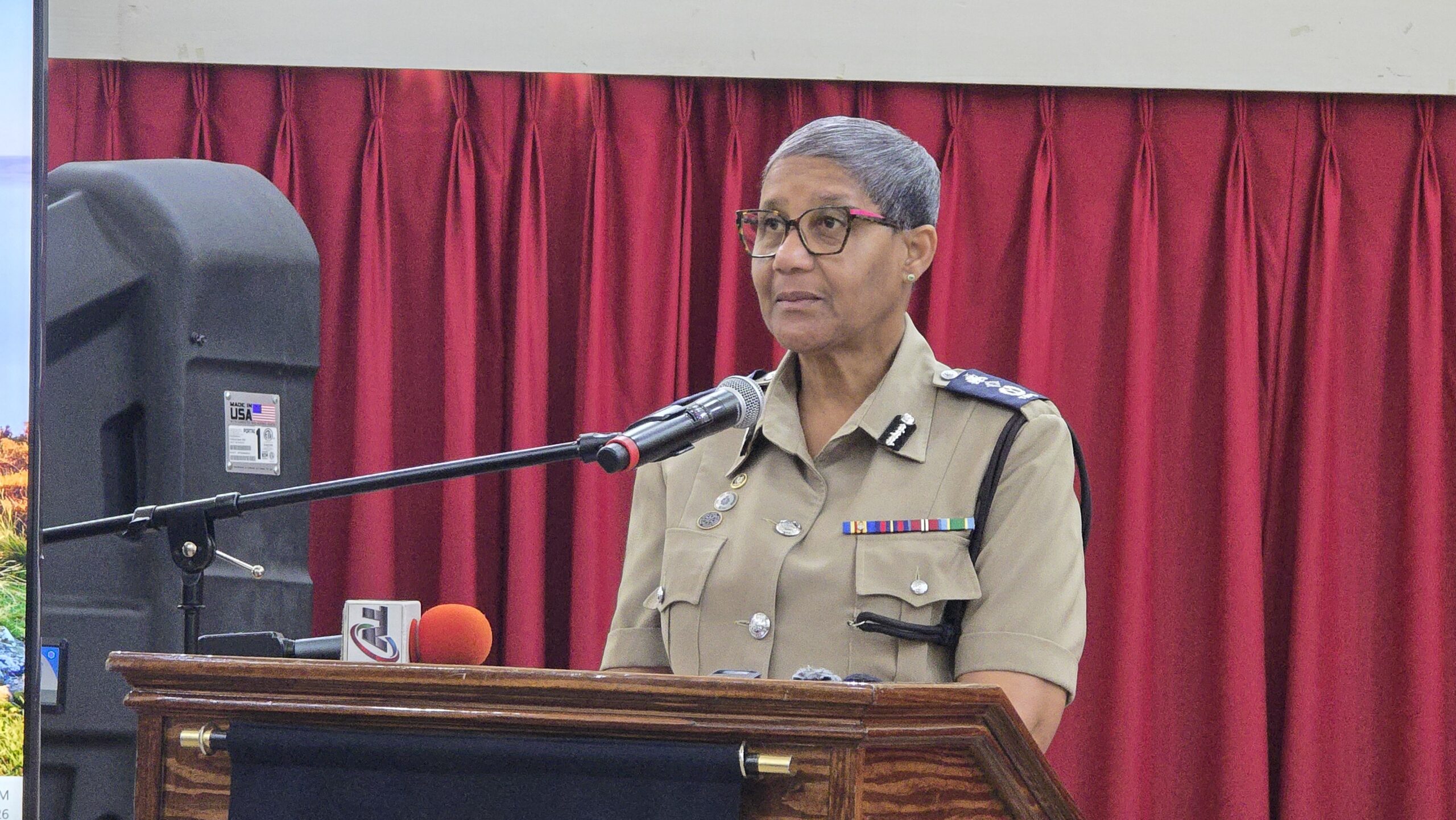
A landmark two-day training workshop focused on elevating communication strategies and service standards for senior officers of The Barbados Police Service kicked off on Tuesday at the District ‘A’ Complex in Station Hill, St Michael. This initiative marks the first collaborative effort between the Regional Police Training Centre and the National Transformation Initiative (NTI), a government agency established in 2020 to upskill Barbados’ workforce as part of the national Economic Recovery and Transformation Programme.
Speaking at the opening of the workshop, Police Commissioner Sonia Boyce emphasized that transparent, timely communication with the public is no longer a peripheral add-on to policing—it is a fundamental pillar of modern leadership and effective law enforcement. “In modern policing, communication is not an optional extra; it is a core part of leadership,” Boyce told attendees. She explained that every public interaction, whether through an official press briefing, a social media post, or a face-to-face conversation at an incident scene, directly shapes public trust in the police service. A single misstep or poorly timed statement can erode public confidence, while clear, compassionate communication can reinforce the service’s credibility.
Boyce highlighted the unique challenges of policing in the digital age, where smartphone footage and unconfirmed reports spread across social media within minutes of an incident unfolding. “If we do not tell our story clearly and responsibly, someone else will tell it for us, and often not correctly,” she noted. Beyond external communication, the commissioner stressed that strong internal communication is equally critical, directly impacting officer morale, operational performance, and cross-team trust. “Good leaders do not just issue instructions; they explain the purpose, they listen to concerns, and they make sure the message is understood,” she said. Encouraging participants to engage fully with the workshop’s activities, Boyce added that meaningful professional growth often occurs when individuals step outside their familiar comfort zones.
NTI Director Dr Allyson Leacock outlined the framework of her agency’s contribution to the training, dubbed the *Art and Heart of Service* programme. Leacock explained that the programme’s name stems from the core belief that truly exceptional public service goes beyond routine, transactional interactions—it must be rooted in empathy and intention. “Our programme is called the Art and Heart of Service because we believe that customer service can be transactional, but really great service, which we have all experienced at some point, is usually from the heart,” she said.
Given the Barbados Police Service’s role as a public-facing institution that reflects the country’s full demographic diversity, Leacock noted that upskilling the force is a central priority for NTI’s workforce development mandate. The training is structured around four interactive modules: culture and organizational transformation, disability etiquette, professional deportment and personal branding, communication skills, and ethics and integrity. Describing ethics and integrity as the unseen foundation of public service, Leacock said the module focuses on “the anchor that predicts how each of us behaves every single day when nobody is looking.” The programme prioritizes mindset shifts before technical skill-building, she explained, noting that real-world performance under pressure depends far more on core values than classroom knowledge alone.
Leacock also used the occasion to push for greater adoption of digital tools within the police service, urging leadership to prioritize digital literacy and eventually full digital fluency across the constabulary. “I know we are all very wedded to hard black and blue books in the public service. I know that we love our paper, but the world is going digital, and we cannot be left behind,” she said.
Regional Police Training Centre Commandant Roderic Walcott added that the workshop was developed specifically to meet rising public expectations for transparent, accessible policing. “We are all part of the transformational policing approach, which is more practicable and suitable for today’s society,” Walcott said. “We are now policing a public who expect more interaction and communication from us.” Whether updating the public on an active crime scene, sharing information about a traffic collision, or addressing broader community security concerns, the ability to communicate clearly has become a non-negotiable skill for modern officers, he added.
The workshop is tailored for senior command team members, lead investigating officers, and selected inspectors and station sergeants, bringing together senior leaders from across the force to align on new communication and service standards. Per the planned schedule, NTI will lead the Art of Service module first, after which communication experts will facilitate joint hands-on training sessions focused on practical application.