博客

  • Germany’s Embassy in the Dominican Republic launches 21st Master of the Ocean

    Germany’s Embassy in the Dominican Republic launches 21st Master of the Ocean

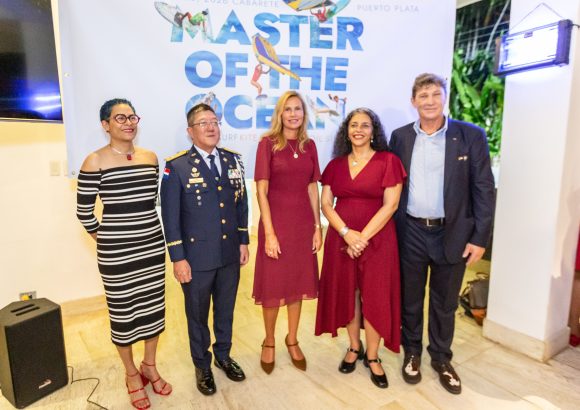
    The German Embassy in Santo Domingo has officially kicked off preparations for the 21st iteration of Master of the Ocean, a world-renowned international watersports competition set to run from September 16 to 20, 2026, in the coastal Dominican town of Cabarete. The launch ceremony, hosted at the official German Residence in the Dominican capital, drew a cross-section of attendees including senior Dominican government officials, private sector stakeholders, elite watersports athletes, corporate sponsors, and collaborative partners, all gathering to mark the next chapter of an event that has shaped Cabarete’s cultural and recreational identity for over 20 years, while standing as a lasting symbol of the warm, cooperative friendship between Germany and the Dominican Republic.

    German Ambassador to the Dominican Republic Maike Friedrichsen opened the ceremony by outlining the multi-faceted value of the long-running competition beyond athletic competition. She emphasized that Master of the Ocean delivers widespread benefits, from growing global interest in watersports to advancing sustainable event practices, fostering cross-cultural exchange between Germany, the Dominican Republic, and visiting nations, and driving inclusive community development in coastal regions across the country. Ambassador Friedrichsen also extended special recognition to Marcus Böhm, the event’s German founder and a long-term Cabarete resident, crediting his vision and dedication for elevating a local contest into a globally recognized initiative that unites people from diverse backgrounds through a shared passion for aquatic sports.

    Beyond announcing the 2026 competition dates and details, the launch event also spotlighted the complementary Safe Coasts Dominican Republic 2026 initiative, a public safety project headed by local marine conservation non-profit Happy Dolphins DR. The program aims to provide professional safety certification for 60 new lifeguards posted at high-traffic tourist coastal destinations across the country. Its inaugural training cohort will include officers from the Dominican Tourism Police (POLITUR) and staff from Viva Miches, and is implemented in formal partnership with the Dominican Ministry of Tourism (MITUR), POLITUR, Viva Resorts by Wyndham, and CASFL. Core goals of the project include raising national water safety standards at popular recreational beaches and creating new formal employment opportunities for local community members.

    To further highlight the event’s cross-cultural mission and international character, the 2026 edition of Master of the Ocean will also feature a guest performance by popular German DJ Luka Pawelski. Backed by a growing network of both national and international collaborative partners, Master of the Ocean continues to function as a unique platform that elevates Dominican coastal tourism, grows the global profile of the nation’s watersports community, and delivers measurable positive social impact across regions that host the event each year.

  • Gibson and co-accused’s constitutional motion to halt ongoing trial rejected

    Gibson and co-accused’s constitutional motion to halt ongoing trial rejected

    A high-stakes procedural battle in the Bahamian judicial system has concluded with the Court of Appeal upholding a lower court’s decision, rejecting an eleventh-hour attempt by five defendants — Adrian Gibson, Joan Knowles, Jerome Missick, Peaches Farquharson, and Elwood Donaldson — to bring their ongoing criminal trial to an early end. The appeal stemmed from the trial judge’s earlier refusal to grant the group’s requests for a mistrial, the dismissal of the seated jury, and the judge’s own recusal from the case, a ruling the five defendants argued had violated their constitutionally protected right to a fair trial.

    The defendants put forward a series of grievances to back their challenge: they claimed procedural irregularities during the jury selection and empanelment process, that the official 2023 approved jury list had never been disclosed to the defense, that one juror held an undisclosed connection to the prosecutor’s office that created implicit bias, and that the trial judge herself had demonstrated apparent bias against their side.

    In a unanimous ruling, a three-justice panel comprising Justices Evans, Charles, and Kokaram found that none of these claims rose to the level required to justify constitutional court intervention while the criminal trial was still in progress. The panel characterized the defendants’ constitutional motion as an impermissible collateral attack on active ongoing criminal proceedings, noting that all the issues raised could be addressed through standard trial procedures or, if the defendants are ultimately convicted, through a formal appeal after a verdict is reached.

    Writing for the panel, Justice Kokaram clarified that the defendants’ complaints were not disputes over the existence of constitutional rights, but rather disagreements over the conduct of the trial — and that no extraordinary circumstances existed that warranted immediate constitutional review. The court specifically addressed the defendants’ key claim that seven of the nine seated jurors were not drawn from the official 2023 approved jury list, confirming that the assertion of fact was accurate but that the irregularity did not justify halting the trial. Justices emphasized the trial judge acted well within her authority to reject the request to dismiss the entire jury, and any challenge to the jury’s composition can be raised in a standard post-conviction appeal. The court also noted that no argument had been made that any individual juror selected was unqualified to serve.

    The panel similarly dismissed the bias claim tied to the juror’s alleged connection to the Director of Public Prosecutions (DPP) office, pointing out that the defense never filed a formal application on this issue with the trial judge before launching their appeal. Claims that the trial judge had already formed a closed mind on the case and should have stepped down were also rejected, with the court finding the allegation had not been sufficiently proven, and could also be raised in a post-trial appeal if needed.

    The defense’s complaint that the DPP had failed to disclose the approved jury list was dismissed outright as a non-starter. The court noted the full jury list is a matter of public record, and the defense never submitted a formal request to the DPP for a copy. Justices added that in constitutional claims challenging alleged state conduct, the Attorney General, not the DPP, is the proper responding party.

    In its closing remarks, the court issued sharp criticism of the repeated procedural delays that have slowed the case, noting the trial has been pending since 2023 and this appeal has only added more unnecessary hold-up. The ruling reaffirmed a core principle of judicial procedure: constitutional motions cannot be used to interrupt ongoing criminal trials unless truly exceptional circumstances are present. “There has been no alleged constitutional breach that is so significant that will justify a departure from the well-worn investigation by an appellate court of any alleged miscarriage of justice,” the panel concluded.

  • Rotary and Coakley donate new EKG machine to Rand hospital

    Rotary and Coakley donate new EKG machine to Rand hospital

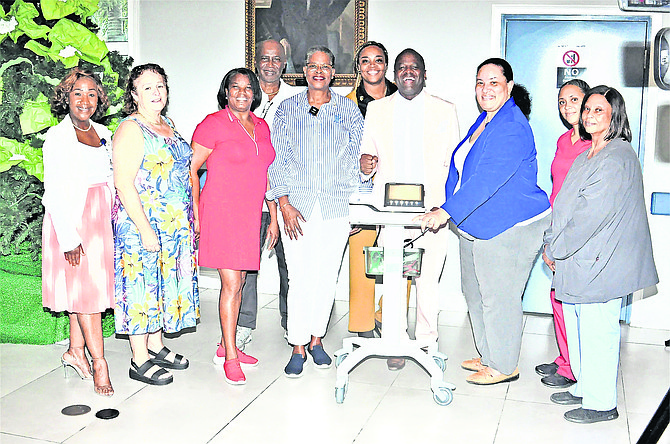
    On the island of Grand Bahama, a critical gap in cardiac care at Rand Memorial Hospital has been closed, thanks to a joint community donation from the Rotary Club of Grand Bahama and local enterprise Coakley International. The two organizations formally presented a brand-new $7,000 electrocardiogram (EKG) machine to the public hospital during a ceremony on Thursday, ending a weeks-long disruption to one of the facility’s most essential diagnostic services.

    The gap in service opened weeks earlier, when the hospital’s aging existing EKG machine suffered an irreversible breakdown. Without functioning equipment to detect cardiac irregularities, clinical teams were left without a core tool to evaluate patients presenting with chest pain and other heart-related symptoms. Adelecia Campbell, senior assistant administrator at Rand Memorial Hospital, reached out directly to the Rotary Club for support, drawing on the organization’s long history of standing with the hospital through crises and community needs.

    Campbell emphasized in remarks at the presentation that the new machine is far more than an incremental upgrade for the facility. “Our old equipment was worn down after years of constant use, just like any medical device that sees daily use,” she explained. “This new model is far more advanced, and it restores a service that is absolutely central to our daily operations. When a patient arrives with chest discomfort, our physicians depend on EKG results to map out next steps—whether that means immediate treatment or a referral to a cardiac specialist. This machine directly shapes the care we can deliver to our community.”

    Campbell also highlighted the Rotary Club of Grand Bahama’s unwavering commitment to the hospital in the years following Hurricane Dorian, which devastated the island in 2019. “They have stood with us every step of the way through every crisis, and we could not be more grateful for their partnership,” she added.

    Shane Coakley, chief executive officer of Coakley International—a Bahamian private real estate investment firm currently working to acquire the historic Ginn properties in West End—said his company jumped at the chance to step in when the Rotary Club reached out. After an initial approach to another potential donor fell through, Rotarians turned to their long-time community partner, and Coakley International immediately agreed to split the cost of the equipment.

    “As a Bahamian company rooted in this community, we see giving back as a core part of our mission, not an afterthought,” Coakley said. “Every year, we set aside dedicated funding to support local nonprofits, children’s programs, healthcare providers, and community initiatives. This donation is just the first of many investments we plan to make in Grand Bahama as we grow our presence here.”

    Rotary founding member and past president Christine Van der Linde noted that two additional local businesses stepped up to make the donation possible: Bahamas Medical and Surgical Supplies secured a discounted rate for the machine, and the Mail Boat Company covered the cost of transporting the equipment to the island. The partnership reflects a broader pattern of local collaboration to address gaps in public healthcare on the island, turning a critical service disruption into an opportunity to improve care for generations of patients.

    The donation was celebrated by hospital staff and community leaders gathered in the hospital’s main foyer, marking the end of weeks of uncertainty and the start of enhanced cardiac care for Grand Bahama residents.

  • Bahamasair resumes flights to Cat Island after 20 years

    Bahamasair resumes flights to Cat Island after 20 years

    After more than 20 years of suspended operations, Bahamasair has officially relaunched regular scheduled service between New Providence and Cat Island, launching a twice-weekly route that operates every Thursday and Sunday. The resumption of this critical air link marks a major milestone for the island’s community and economy, with top Bahamian government leaders hailing the move as a key step forward for inclusive national development.

    Prime Minister Philip “Brave” Davis emphasized that the newly launched route, which began operations on the day of the official launch event, delivers transformative benefits for both Cat Island residents and local businesses. “Today, we gather to celebrate the reopening of this route that bridges distances and brings communities closer together,” Davis stated during the ceremony. “It removes longstanding barriers for residents traveling for medical care, business opportunities, and family visits, boosting daily convenience and strengthening the social and economic ties that connect all of our Bahamian islands. This new air link unlocks unprecedented pathways to long-term economic growth.”

    Davis highlighted that Cat Island’s rich cultural history and unspoiled natural landscapes offer travelers a one-of-a-kind authentic Bahamian getaway, and expanded air access will open the island up to a far larger pool of domestic and international visitors. Beyond tourism, improved connectivity stands to lift small business owners across the island, from hoteliers and restaurant operators to taxi drivers and local entrepreneurs, who will all see gains from rising visitor foot traffic, he added.

    The prime minister stressed that the restored Cat Island route embodies his administration’s core promise to ensure every island across the archipelago shares in the country’s overall development progress. The government continues to make targeted investments to expand air lift capacity, modernize aging airport facilities, and upgrade core transportation infrastructure across every island chain, he noted. Under the ambitious national Renaissance Airport Project, the government is currently overseeing new construction and full renovations for 19 airports across the country, with additional upgrade projects already in the planning pipeline. Davis also shared that Cat Island has seen a notable uptick in local development in recent months, with the island’s administration and planning team processing and approving an average of 20 new residential construction applications monthly.

    Aviation Minister Jobeth Coleby-Davis expanded on the strategic importance of the route, noting that for an island nation spread across an archipelago, reliable air connectivity is not just a convenience—it is a foundational requirement for national growth. Restoring scheduled service to Cat Island will not only improve inter-island connectivity, it will also unlock the untapped economic potential of Arthur’s Town and the northern region of Cat Island, she explained. “You cannot build a strong, resilient national economy when people cannot move easily between islands,” Coleby-Davis said. “You cannot grow a thriving tourism sector when the world cannot easily reach your most beautiful destinations.”

    Tourism Minister Glenys Hanna-Martin added key context to the economic opportunity, pointing out that stopover overnight visitors generate far greater economic activity than cruise passengers. On average, a cruise passenger spends approximately $100 during their visit, while an overnight stopover visitor spends an average of $2,700—driving far more revenue for local businesses and communities.

    New tourism data points to already strong growing momentum for Cat Island’s tourism sector. Projections for 2026 show The Bahamas is on track to welcome 908,397 stopover visitors by the end of the year, marking a 3.2% increase compared to 2025 and a 2.8% increase compared to pre-pandemic 2019 levels. For Cat Island specifically, air arriving stopover visitors in the first four months of 2026 jumped 68% compared to the same period in 2019, and recorded a 9% increase compared to 2025. That growth rate gives Cat Island the fastest percentage growth in international air stopover arrivals of any destination in The Bahamas. Hanna-Martin reaffirmed the government’s ongoing commitment to investing in infrastructure upgrades and marketing Cat Island as a premier, off-the-beaten-path tourism destination for global travelers.

  • Defense uses Golding’s warning to Bahamas on campaign finance reform

    Defense uses Golding’s warning to Bahamas on campaign finance reform

    During recent legal proceedings connected to Jonathan Gardiner, attorney Susie Ribero-Ayala has brought forward new evidence that spotlights a long-running democratic gap in the Bahamas’ political system. To support her argument that the Caribbean nation lacks a rigorous, comprehensive campaign finance regulatory framework matching the standards of the United States, Ribero-Ayala submitted a 2024 report from The Tribune as court evidence, labeled Exhibit D. The report centers on critical commentary from Bruce Golding, former Jamaican Prime Minister and current chair of the Commonwealth Observer Group.

    Golding’s remarks pull back the curtain on years of unfulfilled political promises and inaction on campaign finance regulation in the Bahamas. He explained that successive Bahamian governments have consistently failed to enact meaningful reform, despite repeated calls and formal recommendations from multiple international observer missions. In a sharp, candid rebuke of ongoing political intransigence, Golding joked that international organizations could send monitoring delegations to the Bahamas for another hundred years, and their repeated calls for change would still be ignored by national policymakers.

    The former prime minister emphasized that democratic accountability on this issue ultimately rests with the Bahamian public. “It is their democracy. It is their future,” Golding stated, noting that while politicians can easily brush aside recommendations from the Commonwealth Secretariat and other international bodies, they cannot ignore the demands of their own electorate. Meaningful progress, he argued, depends largely on the level of public activism Bahamian citizens mobilize around the issue of campaign finance reform.

    Compounding the urgency of Golding’s critique is the revelation that current Bahamian Prime Minister Philip ‘Brave’ Davis has explicitly deprioritized campaign finance reform proposals in 2024, breaking earlier campaign pledges to advance the legislation. Golding warned that the Bahamas’ lack of regulation creates uniquely high risks for democratic integrity, specifically because the country’s small size means individual electoral districts have relatively small voter pools. This dynamic makes the political system especially vulnerable to unregulated private money influence and outright vote buying. Wealthy candidates or well-funded political parties can easily calculate the exact number of votes needed to win an election, then deploy their financial resources to purchase the required support, effectively undermining free and fair democratic processes, Golding explained. “This is something that worries us,” he concluded.

  • Sky High Dominicana opens new Aeronautical Training Center

    Sky High Dominicana opens new Aeronautical Training Center

    In a major milestone for aviation development across the Dominican Republic and the broader Caribbean region, Sky High Dominicana has formally opened a cutting-edge Aeronautical Training Center tailored to upskill pilots, cabin crew members, aircraft technicians, and a wide range of other aviation industry professionals. This new facility underscores the airline’s longstanding commitment to elevating operational safety standards, driving service excellence, and fostering sustainable growth of the regional aviation sector.

    Built to support up to 100 trainees and instructors simultaneously, the purpose-built center boasts six fully equipped training classrooms, a modern conference venue, dedicated administrative offices, and flexible specialized spaces designed for both academic instruction and hands-on technical practice. Aligning with global sustainability priorities, the entire facility runs on clean energy, and it is currently in the final stages of securing official certification from the Dominican Institute of Civil Aviation (IDAC), a key regulatory milestone for aviation training institutions in the country.

    Once fully operational, the center will deliver a comprehensive suite of educational programming, covering entry-level foundational training for new industry entrants, mandatory recurrent certification courses for active professionals, specialized industry workshops, targeted skill-refresher courses, and in-depth technical instruction tailored to the unique needs of different aviation roles.

    Cesarina Beauchamps, Vice President of Sky High Dominicana, emphasized that ongoing professional education is a non-negotiable foundation for maintaining consistently safe and efficient airline operations, while also nurturing the next generation of industry leaders. She added that this new training initiative aligns perfectly with the carrier’s long-term strategic roadmap, which centers on scalable growth, industry-focused innovation, intentional professional development, and strengthening the overall competitiveness of Dominican aviation by investing in highly skilled local talent.

  • Abinader inaugurates renovated Banreservas Arena, eyes future NBA games

    Abinader inaugurates renovated Banreservas Arena, eyes future NBA games

    On Thursday, Dominican Republic President Luis Abinader officially opened the newly updated Banreservas Virgilio Travieso Soto Arena, a transformed multipurpose venue that brings the country one step closer to hosting elite international sporting and entertainment events. The ceremony marked the completion of an extensive overhaul that reimagines the historic former Sports Palace as a modern facility built to global standards.

    In his remarks at the inauguration, President Abinader framed the renovated arena as one of the most impressive venues across Central America and the Caribbean. He pointed out that the facility meets every technical requirement needed to host NBA regular season or exhibition games, adding that discussions and planning to bring a major NBA event to the Dominican Republic remain an active possibility moving forward.

    The renovation project completely redeveloped more than 11,200 square meters of the original building, turning it into a flexible venue that can accommodate everything from championship basketball tournaments to large-scale concerts. The arena now holds 8,270 spectators, with a suite of upgraded amenities that meet top global regulatory requirements. Key improvements include a FIBA-certified competition basketball court, a full 360-degree high-definition LED scoreboard, professional-grade sound and lighting systems, expanded and updated locker rooms and athlete recovery spaces, exclusive VIP hospitality suites, a fully equipped media press room, modernized climate control infrastructure, and enhanced accessibility features for visitors with disabilities.

    Leonardo Aguilera, Executive President of Banreservas, the sponsor and backer of the project, noted that the renovation balances respect for Dominican Republic’s rich athletic heritage with a forward-looking vision for hosting international events. The new arena is designed to serve the country’s athletes and audiences for decades to come, functioning as a hub for both elite sports and cultural entertainment.

    Dominican Republic Sports Minister Kelvin Cruz confirmed that the venue checks every box required to host top-tier international competitions. The arena will make its competitive debut in early July, hosting FIBA 2027 Basketball World Cup qualifiers. Dominican Republic will face Nicaragua on July 3 and the United States on July 6 at the new venue, as teams compete for a spot in the 2027 tournament set to be held in Qatar.

  • Dominican Republic concludes SICA Presidency, highlights regional progress

    Dominican Republic concludes SICA Presidency, highlights regional progress

    SAN SALVADOR, El Salvador – A key milestone in Central American regional cooperation has concluded, as the Dominican Republic wrapped up its fourth term as Pro Tempore President of the Central American Integration System (SICA), leaving behind a trail of measurable institutional and operational advances that aim to lift outcomes for all member nations across the bloc.

    The formal handover of the rotating leadership position took place on El Salvadoran soil, where Dominican Foreign Minister Roberto Álvarez outlined the core progress achieved during his country’s tenure. Among the most significant changes was the approval of updated regulatory frameworks that restructure how SICA’s governing bodies handle new member integration and establish clearer quorum requirements for official proceedings. These rule updates are explicitly designed to cut through bureaucratic bottlenecks, streamline decision-making workflows, and boost the overall institutional efficiency of the 70-year-old regional organization.

    Álvarez also highlighted the confirmation of Costa Rican Ambassador Lina Eugenia Ajoy Rojas as SICA’s incoming Secretary General, set to serve the 2026–2030 term. He framed this leadership appointment as a critical step to secure long-term continuity and political stability for the regional integration process, a core mandate that has guided SICA’s work since its founding.

    Following the presentation of achievements, Álvarez formally transferred the ceremonial and administrative authority of the rotating Pro Tempore Presidency to Belizean Prime Minister John Briceño. Briceño opened his term by commending the Dominican Republic’s steady, forward-focused leadership during its presidency, and pledged that his administration would build on existing momentum to deepen collaborative work across the region on shared economic, social, and security priorities.

    Before the official transfer ceremony got underway, Álvarez called on all attendees to observe a moment of silence to honor the lives lost to the recent devastating earthquakes that struck Venezuela, a gesture that united the regional delegation in solidarity with the South American nation during a period of crisis.

  • Dominican Republic to deploy mobile hospital and 40 medical specialists to Venezuela

    Dominican Republic to deploy mobile hospital and 40 medical specialists to Venezuela

    In the wake of the recent devastating earthquake that struck Venezuela, the Dominican Republic is putting the final touches on plans to deploy its elite, internationally certified Type 1 Emergency Medical Team (EMT) as part of a targeted humanitarian mission to assist the crisis-hit nation.

    This relief operation is being jointly coordinated by the Dominican Republic’s Ministry of Public Health and the national Emergency Operations Center, known locally as COE. Under the mission framework, the Dominican government will dispatch a fully functional mobile hospital unit alongside a cohort of nearly 40 highly trained specialized healthcare and technical workers to deliver life-saving emergency medical care to those affected by the disaster.

    The assembled multidisciplinary team brings together a diverse range of expertise, including attending physicians, registered nurses, clinical pharmacists, mental health psychologists, and specialized water and sanitation engineers. This breadth of skills allows the team to deliver a comprehensive suite of medical and support services, spanning general outpatient care, pediatric treatment, gynecological care, emergency patient stabilization for critical cases, minor surgical procedures, medical intervention for toxic exposure, and much-needed mental health support for survivors grappling with disaster-related trauma.

    The deployment comes directly after an official decision by Dominican President Luis Abinader to extend immediate support to Venezuelan emergency management authorities as they work to address the spiraling humanitarian crisis triggered by the earthquake.

    Notably, the Dominican Republic’s Type 1 EMT holds a rare distinction for the Latin American and Caribbean region: it is one of only a handful of teams in the area to earn official certification from both the World Health Organization (WHO) and the Pan American Health Organization (PAHO). The team secured this international credential in 2024, after successfully demonstrating it meets all of the bodies’ rigorous global standards for emergency disaster response.

    Dominican government officials emphasized that this humanitarian mission reflects the country’s longstanding commitment to regional solidarity, cross-border cooperation in times of crisis, and shared responsibility to deliver life-saving specialized support to fellow nations grappling with the impact of natural disasters.

  • Authorities intervene 488 motorcycle taxi stands in nationwide regulation

    Authorities intervene 488 motorcycle taxi stands in nationwide regulation

    Between June 3 and June 24, Dominican Republic’s transportation and law enforcement agencies carried out a sweeping nationwide operation to bring order to the country’s informal motorcycle taxi (locally known as motoconcho) sector, marking one of the largest coordinated regulatory actions targeting the industry in recent years.

    The multi-agency initiative was led by the National Institute of Transit and Land Transportation (INTRANT), with support from a coalition of security bodies including the National Police, the Dominican Drug Control Directorate (DNCD), the Specialized Directorate for Land Transit Safety (DIGESETT), the Criminal Investigation Directorate (Dicrim), the General Directorate of Migration, and municipal police forces across the country. The operation centered on three core priorities: physical inspections of informal pickup stands, document verification for drivers and vehicles, and background checks to screen for outstanding violations or irregularities, all as part of a long-term government push to formalize the unregulated motoconcho industry that serves millions of commuters across the country.

    INTRANT Executive Director Milton Morrison outlined that the ultimate goal of the operation is to bring thousands of currently informal motorcycle taxi drivers into the country’s formal transportation system, while cutting down on rampant road safety violations that have made motoconchos a major contributor to traffic fatalities in the Dominican Republic. By the end of the three-week enforcement period, authorities released a detailed breakdown of results: teams inspected 488 separate motorcycle taxi stands across 11 major regions of the country, including Greater Santo Domingo, Santiago, La Vega, and Barahona. Officials processed 2,808 new driver registrations, completed 1,570 full vehicle and driver inspections, impounded 599 unregistered or non-compliant motorcycles, and took 63 individuals into custody on outstanding charges or regulatory violations. Additionally, 414 drivers were administered breathalyzer tests to check for drunk driving, six unlicensed informal stands were permanently closed, two more were relocated to compliant designated zones, four public spaces previously appropriated by illegal stands were reclaimed for community use, and 42 drivers found to hold irregular immigration status were turned over to migration authorities for processing.

    Alongside enforcement actions, government officials also highlighted encouraging progress in voluntary compliance, noting a dramatic surge in motorcycle license applications over the past quarter. Between March and June 2026, INTRANT processed a total of 14,888 motorcycle license applications, 12,331 of which were from first-time applicants seeking new licenses. Data shows that applications for the new Category 1 motorcycle license, the required credential for operating commercial motorcycle taxis, jumped by 107.5% over the three-month period, rising from just 1,843 applications in March to 3,824 in June. This sharp increase officials say, signals growing recognition among motoconcho drivers of the benefits of formalizing their status and complying with national transit regulations.

    Moving forward, INTRANT confirmed that joint multi-agency operations will continue across all regions of the country, with the agency reiterating its commitment to strengthening national road safety, fully formalizing the commercial motorcycle transportation sector, and ensuring full compliance with Law 63-17, the country’s overarching legislation governing transit and land transportation.