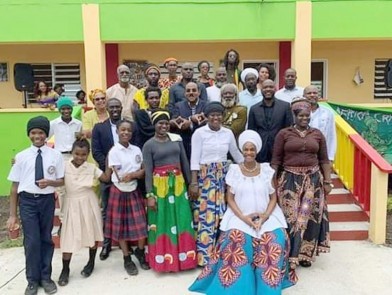
Antigua and Barbuda’s national Cabinet has given formal approval to a full-time government employment scheme for 10 young people from the Nyabinghi Theocracy Community based at Creekside, following in-depth negotiations with the community’s High Priest Ambassador Bongo Sela, Director General of Communications Maurice Merchant confirmed during a post-Cabinet press briefing this Thursday.
Discussions around the initiative grew out of the community’s existing work in the agricultural sector, where members already grow sweet potatoes and a range of other staple food crops. Community leaders told Cabinet that the group is eager to scale up its food production output, while creating opportunities for its younger generation to build hands-on skills in sustainable farming, irrigation management and other agricultural trades. In response, Cabinet agreed to formalize the employment positions, with clear oversight and accountability frameworks in place to guide the programme’s implementation.
Addressing questions from reporters at the briefing, Merchant pushed back against early speculation that the roles would be short-term temporary positions, emphasizing that the 10 young community members will enter permanent full-time public employment. “They’re from the community and employed by government to work within the community,” Merchant explained, confirming that the programme’s focus remains exclusively on legal food crop production, with no provision for marijuana cultivation under the government-funded initiative.
While Merchant acknowledged that some Rastafarian communities across the country hold official licenses for marijuana cultivation as part of their cultural practices, he stressed that this new employment project is strictly focused on boosting national food output. “This program does not include the cultivation of marijuana,” he reiterated. The government’s core goals for the initiative are twofold: to strengthen Antigua and Barbuda’s overall national food security, and to generate sustainable community income that can support further development projects for the Nyabinghi Theocracy Community. Unlike many public sector investment projects, the government does not anticipate receiving direct financial returns from this agricultural pilot.
As talks progressed, Cabinet also addressed a separate proposal to include young people from outside the Nyabinghi community who regularly associate with the group. Cabinet leaders advised the community to pause plans to integrate these external individuals into the initial phase of the programme, citing concerns about unvetted participation. An unstructured recruitment process for outsiders, Cabinet noted, could expose both the community and the agricultural initiative to unnecessary risk, including potential reputational damage if outside actors used the community as a base for illegal or unethical activity.
Instead, Cabinet recommended that the first phase of the programme focus exclusively on youth already embedded within the Nyabinghi community, where the group’s established leadership can provide consistent, effective supervision and accountability. Merchant added that external candidates could be considered for future expansion of the scheme, provided they demonstrate a genuine, long-term commitment to engaging in productive, structured agricultural work.
Looking ahead, Cabinet signaled that similar agricultural employment proposals from other Rastafarian communities across Antigua and Barbuda will be eligible for government support, as part of the nation’s broader national strategy to scale up domestic food production and reduce reliance on imported food staples.