博客

  • BABA names team for the FIBA AMERICUP Pre qualifiers

    BABA names team for the FIBA AMERICUP Pre qualifiers

    As the Caribbean nation prepares to compete for a spot in the 2029 FIBA AmeriCup, the top leader of Barbados’ governing body for amateur basketball has openly voiced strong optimism about the national team selected for the tournament’s pre-qualification stage, noting that the final roster emerged from one of the most rigorous open selection processes in the country’s recent basketball history.

    Barbados has been drawn into Group B for the Guyana-hosted pre-qualifiers, which are scheduled to run from July 8 to 12. The team will face off against Haiti, Grenada, the Cayman Islands, and St. Vincent and the Grenadines, with only the top team from the five-nation group earning the right to progress to the next round of qualification for the 2029 AmeriCup.

    In an official statement released following the final roster announcement, Francis Williams, President of the Barbados Amateur Basketball Association (BABA), emphasized that the selected 12-player squad strikes the ideal balance between emerging young talent, veteran tournament experience, and proven dedication to representing the country on the international stage. He also extended his appreciation to every athlete who tried out during the selection trials, thanking them for their hard work and commitment throughout the process.

    A key leadership shift has reshaped the team’s coaching staff ahead of the tournament. Devan Blair, who has served as the national team’s head coach for the past five years, will be unable to lead the squad in Guyana due to pre-existing professional obligations with the New York Knicks, where he will participate in the upcoming NBA Summer League. To fill the vacancy, BABA has named current assistant coach Charles Vanderpool as the interim head coach for the pre-qualifiers. Vanderpool will be joined on the coaching staff by Harley Borish, an assistant coach with the NBA’s Houston Rockets.

    Williams reaffirmed the association’s gratitude for Blair’s years of work building the national program, extending well wishes for his continued success with the Knicks organization. He added that BABA has full confidence in Vanderpool and Borish’s ability to lead the team through the challenging competition and advance toward the ultimate goal of qualification.

    For his part, Vanderpool expressed that he considers stepping into the head coaching role a profound honor. “Coach Blair has laid an incredibly strong foundation for this program, and we will carry forward the work he has done as we prepare for this highly competitive tournament,” Vanderpool said. “Every player put in extraordinary effort throughout the selection trials, and we have built a group that is fully committed to representing Barbados with pride, discipline, and collective unity.”

    The full 12-player roster named to represent Barbados in Guyana includes: Deroni Hurley (C.A.M Smart Assurance City United Celtics), Kyrone Alexander (Boston University), Rasheed Maynard (Burger King Clapham Bulls), Carl Thorpe Jr (KFC Pinelands), Akeem Marsh (Burger King Clapham Bulls), Simeon Maynard (Burger King Clapham Bulls), Kiserian Adams (C.A.M Smart Assurance City United Celtics), Kemar Benn (Bluefield State University), Deveron Knight (Fusionz Boutique Station Hill Cavaliers), Keefe Birkett (Island Care Ambulance & BodyxB Lakers), Joel Hunte (C.A.M Smart Assurance City United Celtics), and Antoine Winter (PremiumFit Bears).

  • Government Says First LNG Shipment Still Expected Within 30 Days

    Government Says First LNG Shipment Still Expected Within 30 Days

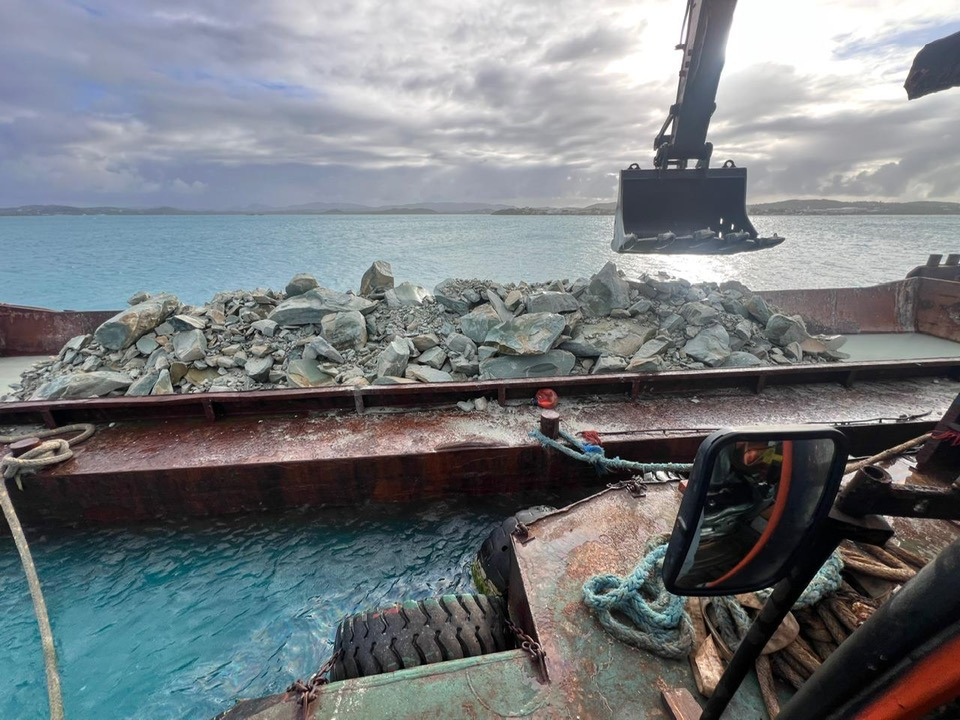
    A major milestone for Antigua and Barbuda’s long-awaited liquefied natural gas (LNG) project has been reached, with government officials confirming the nation is still scheduled to receive its inaugural LNG cargo within the next 30 days. The green light for the next phase of development comes after key negotiations between stakeholders wrapped up successfully, and critical dredging work at the Crabs Harbour port continues to advance ahead of the delivery timeline.

    Maurice Merchant, the nation’s Director General of Communications, shared the official update during the weekly post-Cabinet press briefing this Thursday, responding to questions from reporters about Cabinet’s review of the project’s status. He told journalists that the governing body received a formal progress note confirming the Antigua Public Utilities Authority (APUA) has finalized a binding agreement with both the North American and local private sector partners leading the LNG initiative. This deal resolves outstanding sticking points that had previously delayed the project’s final preparations.

    “Cabinet was briefly advised that APUA, the project’s North American developers, and our local Antigua and Barbuda partners have come to a finalized agreement,” Merchant stated during the briefing.

    The most critical infrastructure work underway right now is the dredging of Crabs Harbour, the site that will host the new LNG terminal. Merchant emphasized that dredging operations are moving at an accelerated pace to deepen and widen the port’s channel enough to accommodate large LNG tankers. Once complete, the upgraded harbor will be fully capable of handling the first cargo shipment and supporting ongoing operations at the new facility.

    “Dredging work at Crabs Harbour continues at rapid speed, and the finished work will make it possible for the first LNG-carrying vessel to dock and launch operations at the Crabs terminal,” Merchant explained.

    In a reassuring update for industry observers and local residents, Merchant confirmed the entire project remains aligned with the original timeline laid out by Prime Minister Gaston Browne, with no adjustments to the delivery schedule announced to date. “That means the 30-day timeline the Prime Minister laid out will be met,” he added.

    Browne first announced the 30-day delivery target earlier this year, as part of the nation’s broader energy transition strategy to add LNG to its existing electricity generation fuel mix. The shift to natural gas is projected to deliver long-term benefits for Antigua and Barbuda’s energy sector: it will cut the country’s heavy reliance on imported petroleum, boost the overall efficiency of power generation operations, and create more stable, predictable long-term energy costs for both residential and commercial consumers.

    While Merchant confirmed the core agreement and timeline, he declined to share specific details on the exact arrival date of the first shipment within the 30-day window, nor did he release additional terms of the deal struck between APUA and the LNG project partners. Even with the lack of granular details, he stressed that the latest progress update confirms all pre-operational preparations are proceeding as planned to launch commercial operations at the Crabs Harbour LNG facility in the coming weeks.

  • Health Minister to Travel to China as Antigua and Barbuda Targets Vision Screening for 80% of Population

    Health Minister to Travel to China as Antigua and Barbuda Targets Vision Screening for 80% of Population

    The twin-island Caribbean nation of Antigua and Barbuda is advancing its ambitious public health agenda, with plans to roll out comprehensive vision screening services to 80 percent of its population. To move this initiative forward, the country’s Minister of Health has scheduled an official working visit to China, where cooperation and technical support in the public health sector are expected to be the core focus of discussions.

    This national vision screening program marks a key milestone in Antigua and Barbuda’s efforts to strengthen primary healthcare and address unmet needs in eye health across the country. Undiagnosed vision impairment affects millions globally, and it disproportionately impacts low- and middle-income nations where access to routine optical care remains limited. By setting the clear target of reaching four-fifths of its population, the Caribbean government is prioritizing preventive care that can reduce rates of preventable blindness, improve early detection of ocular conditions, and boost overall quality of life for residents.

    China has a long history of supporting public health capacity building across Caribbean and small island developing states, with past cooperation ranging from the construction of medical facilities to the deployment of medical teams and the donation of essential healthcare equipment. During the upcoming visit, Antigua and Barbuda’s health leadership will explore opportunities for technical assistance, equipment support, and knowledge sharing that can enable the country to scale up its vision screening infrastructure efficiently. Officials expect the partnership will help overcome existing barriers to service delivery, particularly in rural and underserved communities across Barbuda and the outer islands of Antigua.

    Local public health stakeholders have welcomed the initiative, noting that expanded vision screening will not only improve eye health outcomes but also reduce long-term healthcare costs by catching conditions such as glaucoma, diabetic retinopathy and cataracts at earlier, more treatable stages. The government has emphasized that the program is aligned with its broader commitment to achieving universal health coverage, ensuring that all residents can access essential preventive and curative health services without financial hardship.

  • Antigua and Barbuda Cabinet Orders Quarterly Performance Reviews for All Government Ministries

    Antigua and Barbuda Cabinet Orders Quarterly Performance Reviews for All Government Ministries

    The government of Antigua and Barbuda is implementing a sweeping new accountability framework that will require senior public sector leaders to submit formal quarterly performance reports to the national Cabinet, marking a significant shift in how government operations are overseen. Under the new system, permanent secretaries, department heads and other top officials will be required to regularly detail the progress of public programs, answer for their administrative stewardship, and update ministers on ongoing initiatives across all areas of the public service. The policy gained formal approval during a recent weekly Cabinet sitting, and was announced to the press Thursday by Maurice Merchant, the country’s Director General of Communications, at the conclusion of the administration’s regular post-Cabinet media briefing. Merchant explained that the idea for the routine review process grew out of an extensive multi-hour presentation delivered to Cabinet on Wednesday by more than a dozen senior officials from the Ministry of Finance. During that session, finance team members walked ministers through a granular breakdown of the government’s second-quarter fiscal performance, covering key metrics including customs revenue collection, overall public expenditure, national debt reduction progress, and other core elements of the country’s current financial standing. Merchant noted that the in-depth reporting exercise occupied a large portion of the Cabinet’s agenda, with the detailed presentation capturing the full attention of participating ministers. Following the session, Cabinet members collectively agreed that the level of transparency and insight provided by the finance presentation offered substantial value to government oversight, prompting the decision to formalize this reporting structure as a permanent requirement across the entire public administration. The rollout of the new quarterly review system will begin with the Ministry of Tourism, which has been selected as the first ministry to deliver its performance update to the full Cabinet. Merchant confirmed that the tourism ministry’s initial presentation is scheduled to take place within the next two weeks. After the tourism ministry’s session, the reporting requirement will be gradually expanded to cover every remaining government ministry and department, ensuring that all areas of public administration are subject to routine Cabinet-level oversight. At this stage, Merchant did not clarify whether the quarterly performance presentations will be released to the general public, but confirmed the phased rollout plan will bring all government entities under the new accountability framework in due course. This policy represents a formal commitment by the Antigua and Barbuda government to strengthening administrative oversight and ensuring consistent, regular accountability for senior public officials across all branches of the public service.

  • St Philip Primary students shine in Common Entrance results

    St Philip Primary students shine in Common Entrance results

    On the eastern side of Barbados, a small rural primary school has defied widespread preconceptions about underperforming rural education after three of its students delivered extraordinary scores on the 2024 Barbados Secondary School Entrance Examination, capping months of disciplined, intentional preparation by students and staff alike.

    Eleven-year-old Mashayla Layne, St Philip Primary School’s top performer and top female scorer, earned a 95 in Mathematics and an 85 in English, securing her a spot at the prestigious Queen’s College for the upcoming September term. The aspiring future lawyer shared that her success came from intentional sacrifice, supported by both her educators and family. Speaking to Barbados TODAY, Layne highlighted the extra preparation led by her Class Four teacher Sonia Marshall-Bushell, noting “Our teacher made us skip breaks to prepare us.” She also credited her parents for consistent encouragement through the months of studying.

    For Marshall-Bushell, the exceptional results are the product of shared commitment between educators and students, with every member of the class giving up personal time to hit their academic goals. The experienced educator adapted her teaching strategy to meet each student’s individual needs, relying on differentiated instruction that acknowledged the unique learning pace and style of every child. She introduced a wide range of problem-solving frameworks and incorporated hands-on practical activities to reinforce core concepts, rejecting the idea that exam preparation requires cutting all creative and recreational time. “I believe in the whole child so I did not deprive them of games, lunch time and so on, but I must admit they did give up some of their vacations,” she explained.

    The teacher emphasized that the strong performance carries extra meaning because St Philip Primary, located in Church Village, is often overlooked by families choosing schools in the St Philip district. “It is seen as a no-brand-name school, we find that lot of people bypass this school and head to other schools in St Philip, but this was an opportunity to show that great things can come from St Philip,” she said. Beyond the three standout students, every one of the 16 students in Marshall-Bushell’s class exceeded performance expectations, even those who had struggled with core content earlier in the year. All students earned scores above 50 percent, a result that left Marshall-Bushell overjoyed.

    Two 10-year-old early entry candidates also delivered strong results that earned them places at the island’s top secondary schools. Kaiden Young, who hopes to pursue a career in medicine, scored a 91 in Mathematics and will join Layne at Queen’s College. Despite his impressive score, Young said he believed he could have performed even better, noting he had given up holiday time to attend extra preparation sessions. Fellow early sitter Sunjay Mottley, who will attend Harrison College, earned an 89 in mathematics and an 81 in grammar. Mottley, who has career goals in law, veterinary medicine and cosmetology, said she felt pleased with her outcome but also saw room for improvement. She shared that she felt nervous going into the exam even after thorough preparation, and encouraged next year’s candidates to prioritize consistent, early studying.

    St Philip Primary Principal Pamaletta Bhamjee praised Marshall-Bushell’s extraordinary dedication to her students, noting the teacher gave up personal breaks, holiday time and weekends to ensure the class was fully prepared. Bhamjee highlighted that the school’s average scores outpaced national averages across both core subjects: the national mean for English this year is 64.2, while St Philip Primary achieved a 67 percent average; the national mean for Mathematics is 58, compared to the school’s 66.6 average. “So you can see Mrs Marshall-Bushell did an excellent job,” the principal said.

    Bhamjee also credited several external and government initiatives for supporting the school’s rising academic performance, particularly the Payce Digital reading programme based at Haggatt Hall. The programme offers after-school reading sessions for both infant and junior students, and has helped build a stronger culture of recreational reading among the student body. “The ladies at Payce Digital are very creative, so on the final meet, one of them actually wrote a story that she read to the children, which they thoroughly enjoyed,” Bhamjee noted. The Level Up Reading Club also provided critical support, funding new books for the school and backing its athletic programme.

    The principal additionally acknowledged the Barbados Ministry of Education’s ongoing education transformation initiatives, which have provided valuable teacher training and literacy resources including Snappy Sounds and Jolly Phonics, materials that educators have called invaluable for building foundational skills. This year, the school also received its first dedicated reading teacher for the Junior Department to support students struggling with literacy. “I find that has done a lot to raise the self-esteem of the children, and once they have that help and they realise they actually can read, it will make a difference to how they approach their work overall because [you need reading skills] to make a success of your life,” Bhamjee explained.

    For Bhamjee, who will retire later this year after more than four decades in the education sector, these exceptional exam results mark a fitting capstone to her career. The outcome proves that when paired with dedicated teaching staff, supportive community partners and motivated students, small rural schools like St Philip Primary can compete and outperform many of the island’s most well-known institutions.

  • Government Says Antigua and Barbuda’s Debt-to-GDP Ratio Nears 60% Following Debt Reduction

    Government Says Antigua and Barbuda’s Debt-to-GDP Ratio Nears 60% Following Debt Reduction

    In a landmark fiscal achievement announced this week, Antigua and Barbuda has slashed its outstanding external debt owed to China by more than 60 percent, dropping the total obligation from over $300 million to roughly $120 million, according to government officials. The dramatic debt reduction has pulled the nation’s overall debt-to-GDP ratio down to the closely-watched 60 percent benchmark, a shift that has positioned the country to pursue more favorable international financing for upcoming development projects. Director General of Communications Maurice Merchant shared the updated fiscal details with reporters during the weekly post-Cabinet press briefing on Thursday, expanding on an earlier announcement from the country’s ruling cabinet.

    Merchant explained that the vast majority of the Chinese-held debt was inherited from major infrastructure projects launched before the current Gaston Browne administration took office. These legacy projects include the construction of the former Mount St. John’s Medical Centre, the large-scale redevelopment of VC Bird International Airport, and the buildout of the Wadadli Power Plant. Only one of the projects included in the debt portfolio – the expansion of the nation’s seaport – was initiated under the current Browne-led government. In addition to the overall reduction, the government has also fully repaid the loan earmarked for the construction of the Sir Lester Bird Medical Centre, Merchant confirmed.

    Top finance officials and cabinet members have expressed enthusiastic optimism about the progress made in shrinking the country’s debt burden, Merchant said. He framed the reduction of the obligation to roughly one-third of its original value as a transformative milestone for the Caribbean nation’s fiscal health. “The government is very excited about this news coming from the finance officials in relation to the reduction of the debt to the People’s Republic of China,” Merchant told reporters, adding “Repayment of these debts, bringing it down to a third of what it was before, is a significant milestone.”

    The debt reduction is far more than a numerical win: it serves as clear proof of the current administration’s commitment to responsible public financial management and fulfillment of international financial obligations, Merchant emphasized. “It sends a signal that government is very serious about its obligations to financial institutions [and] the management of its debt stock,” he said. “We are at the threshold of about 60 percent of debt to GDP, and I can tell you that the finance officials and the Cabinet are dancing. They are excited about this.”

    This improved fiscal standing brings two key long-term benefits for Antigua and Barbuda, according to Merchant. First, it strengthens the nation’s credibility with global lenders, opening the door to more accessible and affordable financing for a range of future capital development projects across the country. “It places the government in a particular position that it can go to international institutions and secure financing for various capital projects within Antigua and Barbuda,” he explained. Second, it enhances the country’s global reputation for prudent fiscal governance, demonstrating to international organizations and the broader global community that the government is prioritizing sustainable, people-centered policy. “It tells the international organizations and the international community that Antigua and Barbuda’s government is working in the interest of the people in a prudent and responsible manner,” Merchant said.

    Cabinet’s official briefing notes also highlighted that the debt reduction creates expanded fiscal space for the government to direct more resources toward core national development priorities, while further strengthening Antigua and Barbuda’s overall macroeconomic stability for long-term growth.

  • SEOB: Economie groeit verder; inflatie en staatsschuld blijven zorgenkinderen

    SEOB: Economie groeit verder; inflatie en staatsschuld blijven zorgenkinderen

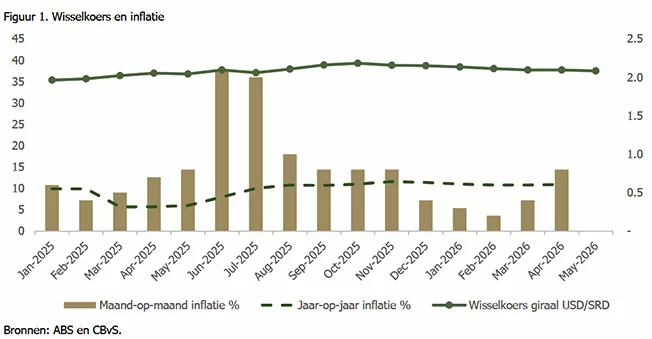
    Suriname’s economy expanded in the first quarter of 2026, but the country still faces persistent structural headwinds including sticky double-digit inflation and unsustainably high public debt that threaten long-term stability, the Suriname Economic Oversight Board (SEOB) warned in its latest quarterly economic bulletin published July 3.

    The board’s data shows economic activity continued to pick up steam through the first three months of the year, with the Monthly Economic Activity Index (MEAI) climbing from 5.6% annual growth in January to 6.3% in March. This growth was driven primarily by expanding activity in the trade, hospitality, public administration, and a range of other service sectors. However, key industries including mining and transportation lagged behind broader growth trends, highlighting uneven performance across the Surinamese economy.

    Most notably, SEOB flagged that inflation has reaccelerated after recent improvements, pushing the annual rate back above the 10% threshold. Annual inflation hit 10.9% in April, while monthly inflation doubled from 0.4% in the previous month to 0.8%. This sustained double-digit inflation continues to erode household purchasing power and push up operating costs for domestic businesses, creating widespread financial pressure across all segments of the economy, the board noted.

    There were some bright spots in the report, however. The local exchange rate remained relatively stable through April and May, with the U.S. dollar trading consistently around 37.5 Surinamese dollars (SRD) and the euro hovering near SRD 43.8 at the end of May. The country’s international reserves also held at a robust $1.88 billion, enough to cover 7.7 months of imports – far above the widely accepted international benchmark of 3 months of import coverage.

    Public finances also posted a positive surprise in January, with the central government recording a fiscal surplus: total revenues hit SRD 6.6 billion, while expenditures came in at SRD 4 billion. Even so, SEOB stressed that one month of positive results does not signal a structural recovery in public finances, and the overall fiscal position remains fragile.

    The most significant long-term risk highlighted in the bulletin is the country’s massive public debt. As of March, total public debt reached 86.9% of gross domestic product (GDP) under Suriname’s legal calculation framework, and 123.3% of GDP when measured by international standards. Both figures are far above the threshold widely considered to signal a sustainable debt load for emerging market economies.

    The domestic banking sector remained a bright spot in the report, with SEOB confirming the system remains stable overall. Banks maintain adequate capital buffers to absorb potential shocks, and the share of non-performing loans remains low at just 3.1% of total outstanding loans. Even so, average lending rates remain high at 14%, which continues to dampen private sector investment and slow broader economic expansion, the board added.

    To address these ongoing challenges, SEOB put forward a series of policy recommendations for the Surinamese government. Key priorities include maintaining strict fiscal discipline to rebuild fiscal sustainability, expanding and strengthening the country’s social safety net to protect households from inflation, increasing government transparency and implementing stronger anti-corruption measures, and fully activating the national Savings and Stabilization Fund to manage future expected oil revenues. The board also recommended divesting from non-strategic loss-making state-owned enterprises, bringing the country’s new public procurement law into force, and doubling down on policies to drive economic diversification, expand non-mining exports, and attract investment outside of the traditional mining sector.

  • CARPHA Inaugurates Regional Emergency Operations Centre to Strengthen Caribbean Health Security

    CARPHA Inaugurates Regional Emergency Operations Centre to Strengthen Caribbean Health Security

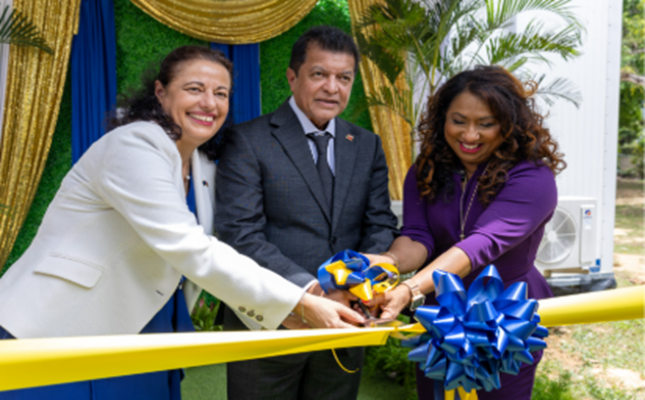
    On July 3, 2026, leaders from the Caribbean region and the European Union gathered at the Caribbean Public Health Agency (CARPHA) headquarters in Port of Spain, Trinidad and Tobago, to mark a historic step forward for regional public health resilience: the official inauguration of the CARPHA Regional Emergency Operations Centre (CREOC). Built to address longstanding gaps in cross-border emergency response for the Caribbean’s network of small island developing states, the new hub is set to transform how the region prepares for, coordinates, and recovers from public health crises of all kinds.

    Funded entirely by the European Union through the 11th European Development Fund Programme for Health Security Strengthening, the CREOC will serve as the central coordination nerve center for public health emergency action across CARPHA’s 26 member states. The inauguration ceremony was led by three key stakeholders: Trinidad and Tobago’s Minister of Health, the Honourable Dr. Lackram Bodoe; EU Ambassador to Trinidad and Tobago, Her Excellency Cécile Tassin; and CARPHA Executive Director Dr. Lisa Indar.

    Speaking at the event, Dr. Bodoe emphasized that 21st century public health threats cannot be tackled by any single nation acting alone, regardless of economic capacity. “Health security is a shared responsibility,” he noted. “Our strength lies in partnership.” This framing echoes the core philosophy that guided the creation of the regional hub, which was designed to leverage collective capacity across the Caribbean’s interconnected nations.

    Dr. Indar expanded on the unique vulnerability that makes the CREOC a critical investment for the region. As a collection of small, closely linked island developing states, the Caribbean faces an elevated risk of rapid cross-border spread of public health threats, from infectious disease outbreaks to climate-driven disasters. “This Emergency Operations Centre will strengthen our ability to detect threats early, coordinate regional action and protect the health security of our people,” Dr. Indar explained.

    Ambassador Tassin reaffirmed the EU’s long-term commitment to Caribbean health resilience, framing the new centre as more than just a physical infrastructure project. “This Centre represents something much larger: the Caribbean’s determination to work together, to strengthen regional health security, and to protect its people through solidarity, preparedness and shared expertise,” she said.

    Designed to meet the strict standards of the World Health Organization’s Public Health Emergency Operations Centre Framework, the CREOC has been classified as a Type C facility — the highest tier of operational capability in the WHO classification system. This top-tier designation means the hub is equipped to coordinate large-scale, multi-country public health emergencies, while also providing targeted support to national emergency operations centres across every Caribbean nation.

    A range of cutting-edge tools built specifically for the Caribbean context power the CREOC’s operations. At its core is CARPHA’s Regional Integrated Early Warning Surveillance and Response System (RIEWSS), a customized surveillance platform that enables earlier detection of emerging threats, clearer shared situational awareness, and faster, evidence-based response coordination across the region. When paired with standardized timeliness metrics and cross-sector response mechanisms, the infrastructure allows for accelerated action at exactly the moment when rapid response saves lives.

    Beyond surveillance and coordination, the CREOC will fill a long-standing gap in regional emergency management by serving as a unified hub for collaboration across multiple stakeholders: national ministries of health, national disaster management agencies, regional intergovernmental bodies, and global international partners. The hub will also coordinate deployment of specialized technical response teams, manage cross-border emergency logistics, streamline consistent risk communication to the public, and maintain a shared real-time operational picture of evolving crises for all involved parties.

    The design and development of the CREOC draws directly on hard-won lessons from recent crises that have tested the Caribbean’s response capacity over the past decade. These include the global COVID-19 pandemic, recurring widespread dengue outbreaks, and extreme climate events including Hurricanes Melissa and Beryl — all of which highlighted just how critical coordinated regional action is to reducing harm and saving lives.

    To adapt to crises of any scale, the CREOC operates on a scalable activation model. It can run routine surveillance and monitoring during low-risk periods, and rapidly scale up to full regional emergency activation as a situation evolves. The hub is built to respond to a wide range of public health events, including infectious disease outbreaks, extreme weather events that create secondary public health risks, environmental and chemical incidents, mass gatherings, and any other event that carries cross-regional or global public health implications.

    The establishment of the CREOC also advances Caribbean nations’ compliance and implementation of the International Health Regulations (2005), by boosting regional surveillance capacity, improving information management systems, strengthening cross-border coordination, and raising overall operational readiness for emerging threats.

    For CARPHA, the inauguration of the CREOC reinforces the agency’s ongoing commitment to advancing collective regional health security, ensuring that all Caribbean member states are better prepared to face the current and future public health challenges that lie ahead.

  • Duggins Hails Cooperatives as Key to Food Security, Economic Growth and Peace

    Duggins Hails Cooperatives as Key to Food Security, Economic Growth and Peace

    BASSETERRE, St. Kitts – On July 3, 2026, Samal Duggins, Minister of Cooperatives and Agriculture of St. Kitts and Nevis, aligned with the nation to mark the 104th International Day of Cooperatives, centering the global observance’s 2026 theme “Cooperatives for a Peaceful World” to spotlight the outsize role cooperative movements play in the federation’s development. In his official address marking the occasion, Duggins pushed back against the narrow framing of peace as merely the absence of conflict, arguing that durable, meaningful peace is rooted in equitable opportunity for all people to advance their well-being. He explained that peace takes root when community members can secure steady incomes, care for their households, have a voice in local decision-making, and collaborate to lift up shared spaces – all core values that form the founding mission of cooperative organizations. “Here in St. Kitts and Nevis, cooperatives continue to demonstrate the transformative power of collective action,” Duggins noted in his remarks. The minister detailed the far-reaching impact of cooperatives across multiple critical sectors of the federation’s economy, from agriculture and agro-processing to fisheries, community savings initiatives, and youth development. Duggins emphasized that these member-led organizations do more than drive individual economic gains: they strengthen household livelihoods, boost national food security, and build more resilient communities that can withstand local and global economic shocks. Duggins pointed specifically to three standout cooperative segments that have delivered exceptional value to the federation: agricultural cooperatives, fisheries cooperatives, and the country’s school-based junior saving cooperative program. The youth-focused initiative, he explained, is cultivating a new generation of leaders who embody responsible financial habits, entrepreneurial spirit, and a commitment to collective community good. As St. Kitts and Nevis works toward its national vision of becoming a leading Sustainable Island State, Duggins reaffirmed that cooperatives will remain an indispensable strategic partner. The movement advances core national goals including shared widespread prosperity, broader economic resilience, inclusive democratic participation, and grassroots community empowerment, he said. To support the continued growth of the cooperative sector, Duggins confirmed the St. Kitts and Nevis government remains fully committed to strengthening the movement through targeted investments in modernization, cooperative education, and workforce capacity building. He revealed that the Ministry of Cooperatives and Agriculture is currently advancing work on a landmark new Cooperative Act, a legislative update designed to create a flexible, supportive regulatory framework that positions the sector for long-term, sustainable growth. Closing his address, Duggins extended sincere gratitude to the thousands of cooperative members, volunteer leaders, and community supporters who dedicate time and energy to advancing the movement and advancing national development. “Together, let us continue to embrace the values of cooperation, solidarity, and shared responsibility as we build a stronger, more inclusive, and more peaceful St. Kitts and Nevis,” he said.

  • Antigua & Barbuda Names National Teams For 2026 Ecva U20 Beach Volleyball Championship

    Antigua & Barbuda Names National Teams For 2026 Ecva U20 Beach Volleyball Championship

    The Antigua & Barbuda Volleyball Association (ABAVA) has made an official announcement confirming the rosters of male and female under-20 national beach volleyball teams that will carry the nation’s flag at the 2026 Eastern Caribbean Volleyball Association (ECVA) Under-20 Beach Volleyball Championship. The regional tournament is scheduled to take place from July 10 to 12, 2026, hosted by Saint Kitts & Nevis.

    All selected athletes are widely regarded as the most promising rising talent in Antigua & Barbuda’s beach volleyball pipeline, having secured their spots on the national team through unwavering commitment to the sport, rigorous consistent training, strong on-court performance and proven technical proficiency.

    On the men’s side, the partnership features George Freeland and Miguel Peña-Lugo, led by head coach Jamarie James. Freeland brings valuable high-level senior international experience to the squad, having already competed for Antigua & Barbuda at the 2026 ECVA Senior Beach Volleyball Championship earlier this year. Across all his international outings, he has consistently displayed the technical skill, mental maturity and on-court composure required to deliver strong results against top regional competition. Teammate Peña-Lugo boasts an impressive track record of regional competition, having represented Antigua & Barbuda at three straight editions of the ECVA Under-21 Beach Volleyball Championship. His repeated selection to national teams underscores both his relentless dedication to the sport and the competitive edge he has built through years of cross-regional match play. Combined, Freeland and Peña-Lugo form the most experienced, competition-ready men’s duo available for selection to the tournament, bringing pre-existing on-court chemistry, sharp tactical awareness and extensive regional exposure to the Championship.

    For the women’s team, rising players Philisha Burnette and Faith Gibson will represent the nation, under the guidance of head coach Rosemarie Simon. Burnette previously earned valuable international experience competing for Antigua & Barbuda at the 2025 U18 NORCECA Beach Volleyball Tour, where she tested her skills against some of the strongest junior talent across the Caribbean region. Though Gibson is relatively new to the elite beach volleyball circuit, she has quickly stood out through her exceptional natural athleticism, solid foundational technique, willingness to learn from coaching, and relentless drive to improve as a player. Throughout the national pre-tournament preparation camp, she has showcased all the core attributes needed to compete at the regional level, while continuing to build critical international competitive experience. ABAVA officials note both young women have demonstrated clear potential to represent Antigua & Barbuda with confidence and professionalism as they advance through the national development program.

    In the lead-up to the July championship, all selected athletes have completed a structured national training program crafted to refine technical execution, boost tactical decision-making, strengthen on-court communication between partners, improve overall physical conditioning, and build cohesive team dynamics ahead of the regional contest.

    ABAVA has publicly extended its sincere gratitude to the Association of National Olympic Committees of the Eastern Caribbean (ANOCES) for its critical financial and logistical support, which has made Antigua & Barbuda’s participation in the 2026 championship possible. As the national squads make their final preparations to travel to Saint Kitts & Nevis, the association has reaffirmed its full pride and support for the young athletes and their coaching staff, who are set to face off against the top junior beach volleyball talent across the Eastern Caribbean. The selection of each athlete, ABAVA notes, is a testament to their hard work, raw competitive potential, and willingness to carry Antigua & Barbuda’s flag with pride on the regional sporting stage.

    The association closed its announcement with its unifying mantra: One Team. One Nation. One Passion.