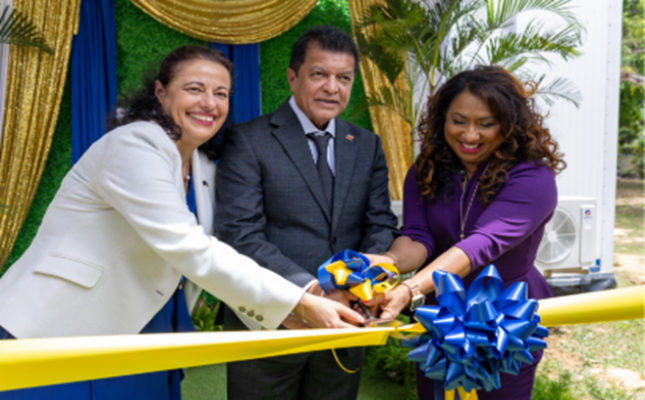
On July 3, 2026, leaders from the Caribbean region and the European Union gathered at the Caribbean Public Health Agency (CARPHA) headquarters in Port of Spain, Trinidad and Tobago, to mark a historic step forward for regional public health resilience: the official inauguration of the CARPHA Regional Emergency Operations Centre (CREOC). Built to address longstanding gaps in cross-border emergency response for the Caribbean’s network of small island developing states, the new hub is set to transform how the region prepares for, coordinates, and recovers from public health crises of all kinds.
Funded entirely by the European Union through the 11th European Development Fund Programme for Health Security Strengthening, the CREOC will serve as the central coordination nerve center for public health emergency action across CARPHA’s 26 member states. The inauguration ceremony was led by three key stakeholders: Trinidad and Tobago’s Minister of Health, the Honourable Dr. Lackram Bodoe; EU Ambassador to Trinidad and Tobago, Her Excellency Cécile Tassin; and CARPHA Executive Director Dr. Lisa Indar.
Speaking at the event, Dr. Bodoe emphasized that 21st century public health threats cannot be tackled by any single nation acting alone, regardless of economic capacity. “Health security is a shared responsibility,” he noted. “Our strength lies in partnership.” This framing echoes the core philosophy that guided the creation of the regional hub, which was designed to leverage collective capacity across the Caribbean’s interconnected nations.
Dr. Indar expanded on the unique vulnerability that makes the CREOC a critical investment for the region. As a collection of small, closely linked island developing states, the Caribbean faces an elevated risk of rapid cross-border spread of public health threats, from infectious disease outbreaks to climate-driven disasters. “This Emergency Operations Centre will strengthen our ability to detect threats early, coordinate regional action and protect the health security of our people,” Dr. Indar explained.
Ambassador Tassin reaffirmed the EU’s long-term commitment to Caribbean health resilience, framing the new centre as more than just a physical infrastructure project. “This Centre represents something much larger: the Caribbean’s determination to work together, to strengthen regional health security, and to protect its people through solidarity, preparedness and shared expertise,” she said.
Designed to meet the strict standards of the World Health Organization’s Public Health Emergency Operations Centre Framework, the CREOC has been classified as a Type C facility — the highest tier of operational capability in the WHO classification system. This top-tier designation means the hub is equipped to coordinate large-scale, multi-country public health emergencies, while also providing targeted support to national emergency operations centres across every Caribbean nation.
A range of cutting-edge tools built specifically for the Caribbean context power the CREOC’s operations. At its core is CARPHA’s Regional Integrated Early Warning Surveillance and Response System (RIEWSS), a customized surveillance platform that enables earlier detection of emerging threats, clearer shared situational awareness, and faster, evidence-based response coordination across the region. When paired with standardized timeliness metrics and cross-sector response mechanisms, the infrastructure allows for accelerated action at exactly the moment when rapid response saves lives.
Beyond surveillance and coordination, the CREOC will fill a long-standing gap in regional emergency management by serving as a unified hub for collaboration across multiple stakeholders: national ministries of health, national disaster management agencies, regional intergovernmental bodies, and global international partners. The hub will also coordinate deployment of specialized technical response teams, manage cross-border emergency logistics, streamline consistent risk communication to the public, and maintain a shared real-time operational picture of evolving crises for all involved parties.
The design and development of the CREOC draws directly on hard-won lessons from recent crises that have tested the Caribbean’s response capacity over the past decade. These include the global COVID-19 pandemic, recurring widespread dengue outbreaks, and extreme climate events including Hurricanes Melissa and Beryl — all of which highlighted just how critical coordinated regional action is to reducing harm and saving lives.
To adapt to crises of any scale, the CREOC operates on a scalable activation model. It can run routine surveillance and monitoring during low-risk periods, and rapidly scale up to full regional emergency activation as a situation evolves. The hub is built to respond to a wide range of public health events, including infectious disease outbreaks, extreme weather events that create secondary public health risks, environmental and chemical incidents, mass gatherings, and any other event that carries cross-regional or global public health implications.
The establishment of the CREOC also advances Caribbean nations’ compliance and implementation of the International Health Regulations (2005), by boosting regional surveillance capacity, improving information management systems, strengthening cross-border coordination, and raising overall operational readiness for emerging threats.
For CARPHA, the inauguration of the CREOC reinforces the agency’s ongoing commitment to advancing collective regional health security, ensuring that all Caribbean member states are better prepared to face the current and future public health challenges that lie ahead.