博客

  • Column: Sterkere SML?

    Column: Sterkere SML?

    As the Suriname Major League (SML) prepares to kick off its fourth season, participating clubs across the country have entered a critical pre-season transfer window, scrambling to reinforce their squads ahead of the new campaign. This annual rush for new talent is a long-established ritual in Suriname’s top football flight, as league rules do not allow mid-season player acquisitions, leaving the pre-season window as the only opportunity for clubs to reshape their rosters. For decades, Surinamese top-flight clubs have relied on this transfer period to strengthen their sides, with historical recruitment focusing mostly on promoting standout young prospects from domestic youth academies to the first team, or poaching established talents from direct league rivals to gain a competitive edge over competing sides.

    Over the past several seasons, however, a noticeable new trend has emerged in SML recruitment: an increasing number of clubs are turning to foreign player signings to complement domestic talent, with the goal of building a strong enough squad to not only claim the SML title, but also perform well in regional continental competitions when they qualify. For the upcoming 2026-2027 season, multiple clubs have upped the ante, committing significant resources to boost their competitiveness. Some have locked in deals for promising young domestic prospects, while also bringing in several experienced players from neighboring countries in the Caribbean and South American region. What is more, this transfer window has already seen multiple players and a full first-team head coach recruited from continental Africa to raise the overall technical and competitive level of the league.

    This growing openness to bringing in foreign talent is a development that deserves broad praise. For years, Surinamese football stakeholders have acknowledged the country’s abundant natural football talent, yet national and club sides have consistently fallen short of expectations at regional competitions. It is widely hoped that the new foreign arrivals and the imported head coach will be given the necessary support, time and autonomy to prove their value and help lift SML standards.

    The large financial investments several clubs have made in new signings have pushed fan and public expectations to historic highs for the upcoming season. Local players are encouraged not to be discouraged by the influx of new foreign talent, but instead to seize the opportunity to collaborate with their new teammates, gel as a cohesive unit and compete as one unified team. There is widespread optimism that the transfer strategy pursued by these ambitious clubs will deliver the intended results, and that the upfront investments will eventually pay off both on and off the pitch.

    Even as the recruitment of foreign talent is widely celebrated, industry observers stress that club leadership must recognize that further structural professionalization is a non-negotiable requirement to build sustained, long-term success. To compete consistently at a high level, clubs need to establish formal legal foundations and operate along modern, business-aligned governance models that make them attractive to professional football stakeholders. The end goal for Surinamese football should be a full transformation of club structures, moving from informal single-owner operations to formally registered organizations with multiple shareholders, where key governance decisions are made by a general meeting of shareholders.

    This formal structured governance model provides legal certainty for all stakeholders, and makes clubs far more attractive for professionals from across football-related disciplines to join. It also guarantees long-term organizational continuity, even if the founding owner steps back or is unable to continue leading the club for any reason. A formal structured organization also allows for better oversight of all club operations, enabling leadership to make timely adjustments when challenges arise. The recent push to recruit foreign players and coaches is a promising first step toward strengthening the SML, but far more systemic change is required to build a structurally stronger and more sustainable league for the future.

  • Wijnerman: Belastingregels voor productiesector worden opnieuw bekeken

    Wijnerman: Belastingregels voor productiesector worden opnieuw bekeken

    A lively policy debate in Suriname’s National Assembly has put fiscal regulations for domestic production under the spotlight, with Finance and Planning Minister Adelien Wijnerman confirming that the government is conducting a comprehensive review of existing tax rules impacting local manufacturing and industry. The review covers import duty frameworks for raw materials and intermediate goods, as well as key segments of the country’s value-added tax (VAT) system, responding to cross-party calls to create more breathing room for local entrepreneurs and prevent fiscal policies from stifling production and economic diversification.

    The discussion was triggered by parliamentary questions about the import treatment of semi-finished goods. Minister Wijnerman explained that Suriname’s 1997 Raw Materials Decree originally granted full import duty exemptions for raw and auxiliary materials used in domestic production processes. A 2021 amendment narrowed the official definition of eligible raw and auxiliary materials, resulting in semi-finished goods losing their automatic exemption status. This change has created widespread practical ambiguity, Wijnerman acknowledged, because a single product can be classified as a semi-finished input in one production process and a finished end product in another.

    At present, applications for duty exemptions related to semi-finished goods are being processed under existing regulatory frameworks. In parallel, the Suriname Tax Authority is working alongside business associations and other key stakeholders to re-evaluate the entire Raw Materials Decree, with the goal of developing concrete proposals for potential regulatory adjustments.

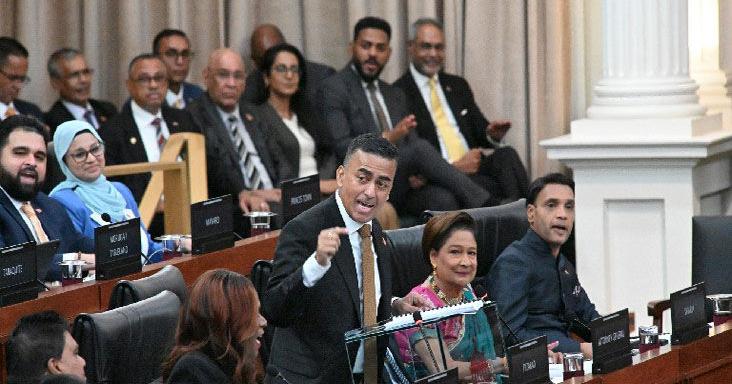
    Parliamentarians across parties have pushed for regulatory changes that create more space for domestic production, particularly as Suriname seeks to grow its non-oil economic base alongside its expanding oil and gas sector. Mahinder Jogi, a National Assembly member from the ruling VHP party, argued that current rules disproportionately benefit large foreign firms, which receive significant tax incentives, while local enterprises face steep import duties and other operational costs. He also called for a review of VAT rates on inputs used in agricultural production.

    VHP faction leader Asis Gajadien echoed Jogi’s concerns, noting that while cracking down on misuse of tax exemptions is a necessary priority, overbroad measures often end up harming legitimate, law-abiding production companies. Gajadien emphasized that policymakers should take a sector-by-sector approach to identify which imported intermediate inputs are truly critical to supporting domestic manufacturing.

    Other parliamentarians joined the call for broader pro-production reforms, including proposals to eliminate or cut import duties and VAT on agricultural machinery and other core production inputs, as well as improve local businesses’ access to affordable capital. Lawmakers broadly agreed that Suriname cannot make meaningful progress toward economic diversification if fiscal policy increases the cost of essential production inputs for domestic manufacturers, making local production uncompetitive.

    The debate later shifted to Suriname’s controversial export retention regulation, which requires exporters to repatriate 35% of their export earnings. Gajadien questioned the legal basis of the policy, warning that unilaterally imposed government measures can inflict lasting damage on private businesses and the broader national economy.

    In contrast, NDP faction leader Rabin Parmessar highlighted the inherent tension between government financial support for local sectors and the outflow of export earnings abroad. “Money earned with support from the Surinamese economy should ultimately flow back to that economy in some form,” he argued, though he added that any such measure requires a clear statutory foundation and must be developed in consultation with affected industries.

    Minister Wijnerman pushed back against claims that the retention policy lacks legal grounding, explaining that the Foreign Exchange Commission issued a general order for the measure under the framework of the 1947 Foreign Exchange Regulation Act. She added that adjustments to the policy have already been discussed with the Central Bank of Suriname and relevant industry stakeholders.

    Wijnerman also confirmed that the current reform trajectory extends beyond the Raw Materials Decree: the country’s entire VAT system is also part of the ongoing government review. The minister committed to bringing all proposals put forward by National Assembly members to her team of policy experts to assess what regulatory changes are feasible.

    Responding to criticism that multinational corporations receive more generous tax benefits than smaller domestic Surinamese firms, Wijnerman noted that the incentives for large companies stem from legally approved bilateral agreements. Any changes to these arrangements would require a careful review of the existing legal framework, she said, adding that the government’s core policy objective remains stimulating domestic production, which includes reviewing tax benefits to level the playing field.

    Parmessar cautioned against reopening already finalized agreements with foreign investors, warning that altering existing commitments could erode confidence among potential future investors and damage Suriname’s reputation as a stable investment destination.

    In response, Jogi clarified that his call for reform does not seek to revoke existing benefits for multinationals. Instead, he argued, domestic Surinamese firms should be given access to comparable competitive incentives to produce and invest. “Local enterprises are the backbone of our economy,” Jogi said, “and policy must explicitly prioritize their needs moving forward.”

  • Check Presentation : The Ministry of Commerce and Industry (MCI) wants to make the country a land of entrepreneurship

    Check Presentation : The Ministry of Commerce and Industry (MCI) wants to make the country a land of entrepreneurship

    On August 19, 2026, Haiti’s Ministry of Commerce and Industry (MCI) hosted a landmark symbolic check presentation ceremony at Port-au-Prince’s Oasis Hotel, marking the disbursement of government grants to selected beneficiaries of three national entrepreneurship support programs for the 2025-2026 fiscal cycle. Designed to strengthen the operational capacity of emerging small businesses across the country, the three programs — the Youth Entrepreneurship Support Program (PAPEJ), the Women’s Entrepreneurship Support Program (PAEF), and the Integrated Business Development Program (PIDE) — were all developed and launched by the MCI to stimulate grassroots economic activity amid nationwide crisis.

    Haiti’s Prime Minister Alix Didier Fils-Aimé used the event to reinforce the government’s long-term commitment to economic revitalization, framing the grant disbursement as more than a policy action: it is a public declaration of faith in Haitian resilience. “In the life of a nation, certain moments speak louder than words, reminding us that even in times of crisis, hope continues to find its way,” Fils-Aimé told attendees. “Behind every act of support lies a simple yet powerful message: we still believe in Haiti’s capacity to rise again through hard work. We will rebuild our economy.”

    The Prime Minister reiterated the administration’s goal of building a national business climate that welcomes domestic investment, expands local production, and cuts systemic unemployment, noting that every supported entrepreneur carries a story of persistence against extraordinary odds. Out of more than 2,500 project proposals submitted across the country, a total of 242 initiatives were selected for funding through the three programs. The selected projects are projected to generate 1,440 new direct jobs, numbers that Fils-Aimé stressed represent far more than statistics — they embody renewed economic security for hundreds of Haitian families and proof of grassroots commitment to national recovery.

    MCI Minister James Monazard highlighted the remarkable sector diversity of the approved projects, spanning high-potential local industries from agro-processing of Haiti’s iconic native exports — including cocoa, coffee, and mangoes — to traditional crafts, digital technology, consumer services, the emerging green economy, and waste recycling. Addressing the beneficiary entrepreneurs in attendance, Monazard offered ongoing government backing beyond the initial grant disbursement: “I reiterate, you are not alone on this journey. The Haitian government, through the Ministry of Commerce and Industry, will continue to walk alongside you and support you. We believe in your ability to grow your businesses, for yourselves, for your families, and for the entire Nation.”

    Multiple senior government officials joined in praising the initiative, framing it as a critical cornerstone of the country’s economic recovery strategy. Sandra Palémon, Minister of Planning and External Cooperation, called the program a beacon of hope for Haiti’s struggling national economy. Serge Gabriel Colin, Minister of Economy and Finance, welcomed the large-scale public-private collaboration, noting that the initiative removes critical barriers that have long prevented young and emerging Haitian entrepreneurs from turning their ideas into sustainable businesses.

    Mona-Lissa Dunbar, coordinator of the PAEF program, outlined the initiative’s core mission: to accelerate the expansion of grassroots entrepreneurship across Haiti as a driver of systemic national economic recovery. Multiple beneficiaries in attendance shared public statements expressing deep gratitude for the funding opportunity, noting that the grants fill a critical gap in access to capital that has derailed many early-stage Haitian small businesses.

    Closing the ceremony, MCI Director General Paulémont thanked all participants and attendees for their engagement, emphasizing that the event represented far more than a routine check distribution. It embodies the Haitian government’s clear, concrete commitment to centering small business support, youth employment, and entrepreneurial initiative as core public policy priorities. “This initiative sends a clear message: Investing in entrepreneurs means investing in Haiti’s capacity to recover, to produce, and to build its future,” Paulémont said.

  • PM Denies Acting Alone on BTL-Speednet Deal Rejection

    PM Denies Acting Alone on BTL-Speednet Deal Rejection

    On August 19, 2026, Belize Prime Minister John Briceño found himself at the center of two overlapping political controversies tied to the country’s telecommunications sector, pushing back against accusations of unilateral decision-making and rejecting growing trade union demands for leadership changes at state-linked telecom provider Belize Telemedia Limited (BTL).

    The first dispute centers on the scrapped planned acquisition of rival telecom operator Speednet by BTL. Recent public speculation has claimed that Briceño personally blocked the deal without consulting his full Cabinet, moving before ministers could hold a formal vote on the proposal. During a press question-and-answer session with reporters, Briceño denied these claims outright, stating that the decision to abandon the acquisition at its current stage was a collective call made by Cabinet. While he emphasized that all internal Cabinet discussions are protected by confidentiality rules and declined to share detailed deliberations, he confirmed that he did not make the final choice independently. Briceño also framed the cancellation as the most prudent policy move for Belize at this time.

    Briceño also addressed the aggressive public statement released by Speednet following the deal’s rejection, which many political observers have interpreted as a veiled threat to the government and market stability. The Prime Minister pushed back against this reading, noting that Speednet’s statement acknowledged public calls for increased competition in Belize’s telecom sector and committed the company to competing openly in the market. He argued the response was not a threat, but simply a signal that Speednet would position itself to take advantage of the open competition Belizean consumers have demanded.

    When questioned about existing regulatory measures overseen by the Public Utilities Commission (PUC), Briceño clarified long-standing regulatory rules governing the sector. He explained that the existing Statutory Instrument (SI) only caps BTL’s ability to raise prices, a rule aligned with public demands to keep telecom costs affordable for consumers, and does not restrict any operator from lowering prices to compete. He also noted that the current regulatory framework aligned with a prior court ruling that mandated open competition in Belize’s telecom market, a decision that came after the opposition challenged an exclusive contract awarded to Speednet.

    The second controversy pits the Briceño administration against Belize’s major trade unions, which have issued a set of demands including the immediate resignation of BTL Chairman Markhelm Lizarraga, alongside a 90-day deadline for the government to meet their requests, which also include changes to PUC leadership and enacting long-pending legislation. Unions have claimed that Lizarraga and the BTL board acted against the public interest in pursuing the Speednet acquisition.

    Briceño defended Lizarraga and the full BTL board, arguing that they have committed no wrongdoing. He pointed out that the board had not actually approved the acquisition, only voted to conduct additional due diligence to assess the feasibility of a purchase, and that no final decision to move forward with the deal had ever been made. Rejecting the union’s consensus that the chairman violated public trust, Briceño said he simply does not agree with their assessment.

    When asked whether the government would comply with the full slate of union demands, Briceño said only that the administration would review the requests. Pressed on whether the government would consider adding union representation to BTL’s board to create a tripartite governance structure, the Prime Minister said he had not yet made a decision on the proposal and declined further comment. When asked if BTL would withdraw its pending regulatory application before the PUC, Briceño said he had no information on the matter before ending the press session.

    As the 90-day deadline set by unions ticks down, political uncertainty remains high in Belize. Questions linger over whether the Briceño administration will ultimately concede to union pressure or maintain its current position, and whether unions will move forward with mass mobilization and public protests if their demands are not met. Local political observers continue to monitor developments closely as the situation evolves.

  • Back to school : 2.1 billion in monetary aid for 140,000 parents

    Back to school : 2.1 billion in monetary aid for 140,000 parents

    Ahead of the 2026 academic year opening, Haiti’s government has launched a massive targeted cash assistance initiative to ease financial pressure on low-income households with school-aged children. On August 18, 2026, National Education Minister Vijonet Déméro and Economic and Social Assistance Fund (FAES) Director General Kesner Romilus formalized the program during an official signing ceremony, attended by senior education ministry officials including Director General Osny Jean Marie.

    Minister Déméro emphasized that the state designed this multi-pronged support package to reinforce assistance for families grappling with back-to-school costs, with a specific focus on the most socioeconomically vulnerable groups. Beyond direct cash transfers, the comprehensive initiative includes free distribution of school supply kits, instructional textbooks, and student uniforms, full tuition coverage for the first two cycles of primary education, and daily school meal programs for eligible students. The overarching goal, Déméro noted, is to cut the heavy financial burden that back-to-school preparations place on struggling household budgets.

    For his part, FAES Director General Romilus confirmed that the fund has completed all preparatory work to roll out the program, which also forms part of a broader strategy to reduce persistent school dropout rates in underserved urban and rural regions across the country. Romilus reaffirmed the Haitian government’s unwavering commitment to standing alongside vulnerable families, explaining that FAES’ programming aligns with a national push to strengthen social protection, guarantee educational continuity, and advance equal access to learning opportunities for all children, regardless of their family’s economic background.

    This year’s direct cash subsidy component totals 2.1 billion gourdes, reaching 140,000 eligible parents with children enrolled in national, community, municipal, and parochial schools located in disadvantaged zones nationwide. Each qualifying parent will receive a one-time allowance of 15,000 gourdes, disbursed via digital mobile payment platforms Natcash and MonCash. Minister Déméro stressed that the entire distribution process will follow strict orderly, coordinated, and structured protocols to ensure funds reach intended recipients efficiently.

    Officially named the Education Cash Transfer project, the initiative is being implemented under the umbrella of the national Multisectoral Emergency Program for the Reconciliation and Reintegration of Vulnerable Groups. To ensure transparency and accuracy, beneficiary lists will be pulled directly from the Ministry of National Education’s Education Management Information System (SIGE), before being officially shared with FAES to execute the payment transfers.

  • Deal Dead, But BTL Could Still Pay the Price

    Deal Dead, But BTL Could Still Pay the Price

    Nearly two years from now, the proposed merger between telecommunications providers BTL and Speednet has been called off entirely, but the fallout from the failed acquisition could still leave BTL facing significant market challenges, according to former Public Utilities Commission (PUC) chairman John Avery.

    Avery, who opposed the planned acquisition from its inception, calling it legally invalid, argues that a lingering regulatory measure imposed amid the merger review has put the incumbent telecommunications provider in a precarious competitive position. The regulatory order, known as a statutory instrument (SI), freezes all of BTL’s existing rates for a three-year period, leaving the company unable to adjust its pricing even as competitors move to capture market share.

    PUC has long classified BTL as a dominant market provider, a designation that remains in place even after the collapse of the Speednet deal. Under that status, the company already faces heightened regulatory scrutiny of all pricing decisions, but the three-year rate freeze adds an extra layer of constraint that runs counter to existing telecommunications law, Avery says.

    “The law is clear that dominant providers retain the ability to adjust their rates to match changing market conditions, but this SI overrides that provision by locking prices in place for three years,” Avery explained in an interview transcript from an evening television news broadcast. “If rival licensed providers choose to cut their prices to attract new customers, BTL cannot respond in kind. That leaves the company completely unable to defend its existing customer base if competitors decide to exploit this vulnerability.”

    Beyond the inability to match competitor pricing, the rate freeze also slows BTL’s ability to respond to broader market shifts. Any new service package, pricing plan or updated offering the company wants to roll out must first go through a full PUC approval process, delaying the company’s ability to adapt to changing consumer demand and industry trends.

    Avery says the regulatory measure was never justified, even when the acquisition was still under consideration. The designation of BTL as a dominant provider and subsequent rate freeze was only implemented to ease public fears that the merged company would act as a monopoly and engage in predatory price gouging, he argues. Now that the merger has been canceled, the unnecessary rate restriction violates existing telecommunications legislation and should be withdrawn immediately.

    Avery is calling on BTL to lobby PUC leadership to repeal the SI, replacing the rigid three-year freeze with a standard, formula-based rate review framework that aligns with existing law and supports healthy market competition. “Regulators should not be setting static prices in this market,” he noted. “The law makes clear that market forces should drive pricing, with appropriate oversight for dominant providers – not arbitrary freezes that distort competition.”

  • Parmessar vraagt harde cijfers over illegaal verblijf en toelatingsbeleid

    Parmessar vraagt harde cijfers over illegaal verblijf en toelatingsbeleid

    Rabin Parmessar, parliamentary faction leader of Suriname’s National Democratic Party (NDP), has put forward a series of demands to the Surinamese government targeting gaps in the country’s immigration and labor enforcement regime. Speaking during a Tuesday plenary session of the National Assembly, Parmessar called for full three-year statistical data on unauthorized foreign residency and pushed for a new mandatory health insurance requirement for all foreign visitors staying in the nation.

    Parmessar opened his address by arguing that current enforcement of Suriname’s entry and residency policies falls far short of what is needed to protect public interests. He claimed that thousands of foreign nationals are currently residing in Suriname without valid residence or work permits, and called on the administration to provide clear public clarification on the country’s formal entry policy, including how authorities track incoming travelers, their stated purpose of visit, and the duration of their stay.

    The NDP leader emphasized that the policy framework must strike a reasonable balance: while legitimate tourists should be able to enter Suriname without unnecessary bureaucratic barriers, the country cannot afford to maintain a fully hands-off, laissez-faire approach to immigration regulation. To build a clear picture of the scale of unauthorized residency, Parmessar is requesting granular data from the Surinamese Immigration Service covering foreign entry flows and residency patterns over the past three years, including specific counts of visitors who have overstayed their permitted residency periods.

    Parmessar tied his call for stricter oversight to growing public concerns around public safety and neighborhood disruption linked to unregistered residents. He specifically cited increases in petty theft, unregulated prostitution, and traffic safety risks caused by unregistered foreign nationals operating electric bicycles, particularly in the northern district of the capital Paramaribo. Notably, however, the faction leader did not present empirical data to quantify the connection between unauthorized residency and these social issues during his address to the assembly.

    One of Parmessar’s concrete policy proposals is a mandate requiring all foreign nationals entering Suriname to hold valid health insurance for the full duration of their stay. He argued that this requirement is necessary to prevent the Surinamese public from being forced to cover uncompensated medical costs incurred by foreign visitors during their time in the country. “If we do not put this requirement in place, we as a country will end up footing the bill for their medical care,” he explained.

    Beyond residency regulation, Parmessar is also demanding answers on how authorities enforce work permit rules, noting that many unregistered foreign residents are also employed in Suriname without holding both valid residence and work authorization. He has asked not only for aggregated data on unauthorized work, but also for a concrete government plan to strengthen enforcement actions against violations of immigration and labor rules.

    “What exactly is the Immigration Service doing to address this issue?” Parmessar asked, arguing that authorities need to improve end-to-end tracking of arrivals, departures, and individuals who remain in the country long-term without formal status. He concluded by stressing that the government can no longer allow the situation of widespread unauthorized residency to continue unaddressed, repeating his calls for enhanced border controls, full transparency around the true scale of unauthorized residency, and targeted policy interventions to reduce violations of the country’s residency and labor regulations.

  • PM Briceño Pressed to Block Mira and Marin’s Return to Cabinet

    PM Briceño Pressed to Block Mira and Marin’s Return to Cabinet

    As of August 19, 2026, political pressure is mounting in Belize against Prime Minister John Briceño, with the country’s Public Service Union (PSU) demanding a firm public pledge that two former ministers, Oscar Mira and Florencio Marin Jr., will never be reappointed to the Cabinet.

    Dean Flowers, president of the PSU, launched a scathing rebuke of elected officials who he claims break their oaths of office with impunity, arguing that Briceño now faces a critical test to demonstrate that accountability begins at the highest levels of his own administration. Under Belizean law, all 26 elected members of the House of Representatives are legally bound to swear an oath to faithfully uphold and defend the nation’s constitution and laws, and to commit to transparent governance that holds actors who betray the public trust accountable.

    Flowers questioned the sincerity of these widespread pledges, arguing that many elected officials disregard their oaths without remorse, treating the voting public as gullible. He pressed Briceño to issue an immediate public confirmation that Mira and Marin Jr., who he said have already betrayed the public interest, will be permanently barred from returning to any Cabinet position.

    Beyond the Cabinet reappointment fight, the PSU has also launched a direct challenge to Belize’s Auditor General Maria Rodriguez over the ongoing issue of destroyed public documents. Rodriguez has publicly alleged that sitting public officers have systematically shredded important official records and even blocked her team from accessing office spaces to conduct audits. Under Section 13(4) of Belize’s Finance and Audit Reform Act (FARA), the Auditor General is granted explicit legal authority to file formal complaints against offending officers with relevant oversight bodies.

    Flowers is now demanding clear answers from Rodriguez about what concrete action she has taken to hold bad actors accountable. Specifically, he has asked how many formal complaints she has submitted to the Public Service Commission to pursue disciplinary action — up to and including termination — for officers involved in destroying records, as well as how many criminal referrals she has sent to the Director of Public Prosecutions to pursue charges under the Criminal Code and other relevant legislation. Flowers criticized Rodriguez for focusing on media statements rather than exercising the legal powers granted to her office, noting that she has recently highlighted her communications with a human rights activist who now serves as attorney general.

    When reached for comment, Rodriguez told reporters that she has filed formal complaints multiple times in the past, but those submissions have resulted in no meaningful disciplinary or legal action against the involved officers.

    This report is a transcribed version of an evening television news broadcast, with Kriol-language remarks standardized to written spelling for clarity.

  • Senator Dennison Demands Cabinet Secretary’s Resignation

    Senator Dennison Demands Cabinet Secretary’s Resignation

    In a dramatic escalation of political pressure in Belize on August 19, 2026, Union Senator Glenfield Dennison has publicly demanded the immediate resignation of Cabinet Secretary Stuart Leslie, over allegations that Leslie holds a hidden financial stake in RSL Group Limited. The demand comes as trade unions warn that the high-profile public controversy surrounding the BTL-Speednet infrastructure deal has drawn attention away from an unresolved procurement scandal at the nation’s Ministry of Defense, urging Belizean citizens not to let the growing questions about government contracting go unaddressed.

    Speaking in a public address that drew sharp attention across the country, Dennison laid out his criticism directly to Leslie, highlighting the high public trust placed in the role of Cabinet Secretary. As the nation’s top-ranked civil service position, the role of Cabinet Secretary — formerly known as permanent secretary of permanent secretaries — has long been framed as the apex of public service, reserved for the most qualified and trusted public servants in the government, according to Dennison.

    Using colloquial Belizean Kriol phrasing to emphasize his point, Dennison noted that the position has always held an expectation that its occupant would never be caught improperly benefiting from public office. “The Cabinet Secretary my brother, what is wrong with you. For those who don’t know, the Cabinet Secretary use to be the permanent secretary of permanent secretary. He was the top of the top, the dan dadda, because he was the brightest of the brightest, the best of the best. He would have never had his hands caught in the cookie jar or the spice jar. Suh RSL, if you have any semblance of integrity brother, resign, just resign, because you don’t belong there brother. You don’t belong there,” Dennison stated, with his comments transcribed directly from a live evening television broadcast consistent with local Kriol spelling conventions.

    The unfolding scandal adds to existing political tension in Belize, as officials and activists continue to unpack potential conflicts of interest tied to senior government officials across multiple public departments. Trade union leaders have argued that the ongoing focus on the BTL-Speednet deal has created an unintended distraction, allowing less-reported procurement questions at the Ministry of Defense to remain under-examined, and are pushing for full transparency into all alleged conflicts involving senior government figures.

  • Old Irregularities, New Questions for Defense CEO

    Old Irregularities, New Questions for Defense CEO

    Nearly a decade after a national audit uncovered financial irregularities within the Belize Defense Force, the current chief executive officer of the Ministry of National Defense is set to answer questions from parliamentary overseers about how the issues have been addressed – even though the misconduct occurred long before he took office.

    Francis Usher, who currently leads the ministry, confirmed he is scheduled to appear before the country’s Joint Public Accounts Committee in September 2026 to respond to concerns first raised in the Auditor General’s 2017 special report. The report centered on mismanagement and oversight gaps in non-public funds administered by the Belize Defense Force, which include the service’s general welfare fund, a benevolent fund for personnel, and recreational accounts for junior and senior officers known as mess funds.

    In comments to reporters, Usher explained that his team has been working closely with legal advisors to review the full 2017 report, which he received only a few weeks prior to the public announcement of his upcoming committee appearance. While no final hearing date has been locked in as of August 19, 2026, Usher emphasized that most of the corrective recommendations outlined in the auditor’s findings have already been fully implemented.

    Key reforms put in place since the report’s release include the appointment of a dedicated Inspector General, a professionally trained auditor who conducts regular reviews of all non-public BDF accounts. All spending from these funds now requires multiple authorized signatories and layered approval processes, and most accounts have completed mandatory annual audits to bring them into compliance with national financial governance standards. Usher added that the ministry will continue to refine its oversight processes to address any remaining gaps.

    The long-delayed public review of the 2017 audit comes as Auditor General Maria Rodriguez highlighted a broader ongoing backlog in official government financial reporting. Rodriguez noted that annual public sector audit reports are years behind schedule, because the Accountant General has failed to submit required completed annual financial statements for review.

    This report is adapted from a transcript of an evening television newscast, with Kriol-language testimony standardized to conventional written English spelling for clarity.