
The Ministry of Works of Antigua and Barbuda has issued a formal public advisory regarding upcoming major infrastructure improvements along a section of All Saints Road, located close to the popular Midway Service Station. As part of the government-led broader All Saints Road Project, the road will be reduced to a single alternating lane for motorists traveling in both directions. This traffic reconfiguration is set to take effect starting at 7:00 pm on Monday, July 13, 2026, and is expected to wrap up by 7:00 am the following morning, allowing regular traffic patterns to resume for the daytime commute. To keep vehicles moving smoothly and prevent major gridlock during the works, trained flag persons will be stationed at key points along the work zone to direct traffic. Clear directional signage will also be installed along the entire affected stretch to guide commuters coming from either direction through the area. Local residents who live in neighborhoods adjacent to the work site will retain full access to their properties, so they will not be cut off from their homes during the overnight construction. Officials are urging all drivers to exercise extra caution when traveling through the zone, as heavy-duty construction machinery will be operating in close proximity to the active traffic lane. Importantly, all commercial establishments operating along the affected portion of All Saints Road will remain open for business throughout the construction period, so patrons can still visit local shops and services as planned. In light of the inevitable traffic slowdowns associated with the infrastructure works, project stakeholders and regular road users are strongly encouraged to revise their travel itineraries ahead of time, plan alternate routes if possible, and account for potential delays when scheduling trips on that date. For members of the public who have additional questions or concerns about the upcoming road works, the Project Implementation Management Unit has set up a dedicated telephone inquiry line. Interested parties can reach the unit directly at 562-9173 for further information.
博客
-

Trinidad & Tobago wil regionaal centrum worden voor kunstmatige intelligentie
The twin-island Caribbean nation of Trinidad and Tobago has unveiled an ambitious plan to carve out a new role as a regional artificial intelligence and data processing hub, signing three landmark partnership agreements with United States-based firms to build large-scale AI data centers and restart the country’s idled steel industry. The deals, struck by the administration of Prime Minister Kamla Persad-Bissessar, are projected to generate more than 5,000 new jobs across the projects, marking the first large-scale partnerships of this kind between any Caribbean country and U.S. companies focused on AI infrastructure development.
The memoranda of understanding were signed with three entities: Florida-headquartered Hummingbird AI Holdings, global professional services firm Ernst & Young LLP based in New York, and Pinnacle Steel and Vanadium Corporation. Under the terms of the agreements, Ernst & Young will lead development of a 300-megawatt data center purpose-built for AI workloads, while Hummingbird AI Holdings will handle pre-development and planning for a second 150-megawatt AI and data processing facility. The third agreement formalizes plans to restart operations at a steel plant that was recently acquired by Pinnacle Steel and Vanadium, bringing a key industrial sector back online after a period of inactivity.
Prime Minister Persad-Bissessar framed the suite of projects as a transformative step in Trinidad and Tobago’s long-running push for economic diversification. For decades, the country’s economy has been heavily reliant on oil and gas exports, leaving it vulnerable to global commodity price swings. The government now aims to establish the nation as the Caribbean’s leading technology and innovation hub over the coming years, with the AI data center projects serving as a cornerstone of that strategy. Persad-Bissessar also noted that the United States played a facilitating role in bringing the agreements to fruition.
But the government’s optimistic outlook has been met with sharp criticism from environmental organizations and industry analysts, who warn that the massive infrastructure projects pose significant risks to the nation’s already strained natural resources. Large-scale AI data centers are among the most energy-intensive industrial facilities in the world, requiring massive volumes of water for cooling systems to manage the heat generated by high-density AI computing hardware. Those demands have sparked particular alarm because Trinidad and Tobago has battled chronic water shortages for years, with many households relying on stored water due to inconsistent public drinking water distribution.
Social activist Wayne Kublalsingh argues that economic progress cannot be measured solely by new investment and job creation. He emphasized that large, energy- and water-intensive projects place disproportionate stress on local natural resources, and called on the government to release a clear, public plan explaining how it will meet the additional demand for water and electricity generated by the new data centers without harming residential access to critical resources.
The concerns raised in Trinidad and Tobago align with a growing global debate over the environmental tradeoffs of AI expansion. A recent report from the United Nations University projects that data centers could account for nearly 3 percent of total global electricity consumption by 2030, as demand for AI computing continues to surge worldwide. This growth has forced governments and industry stakeholders around the world to grapple with balancing the significant economic opportunities of AI development against the substantial environmental footprint of the infrastructure required to support it.
For the broader Caribbean region, the Trinidad and Tobago agreements mark a notable departure from the region’s traditional economic development models. While most Caribbean nations have built their economies around tourism, fossil energy production, or financial services, Trinidad and Tobago is now seeking to position itself as a competitive destination for large-scale AI and data processing operations. Whether this initiative can serve as a replicable new economic model for the region will depend on two key factors: the successful execution of the planned projects, and the government’s ability to effectively address the environmental and infrastructure challenges that have already drawn public scrutiny.
-
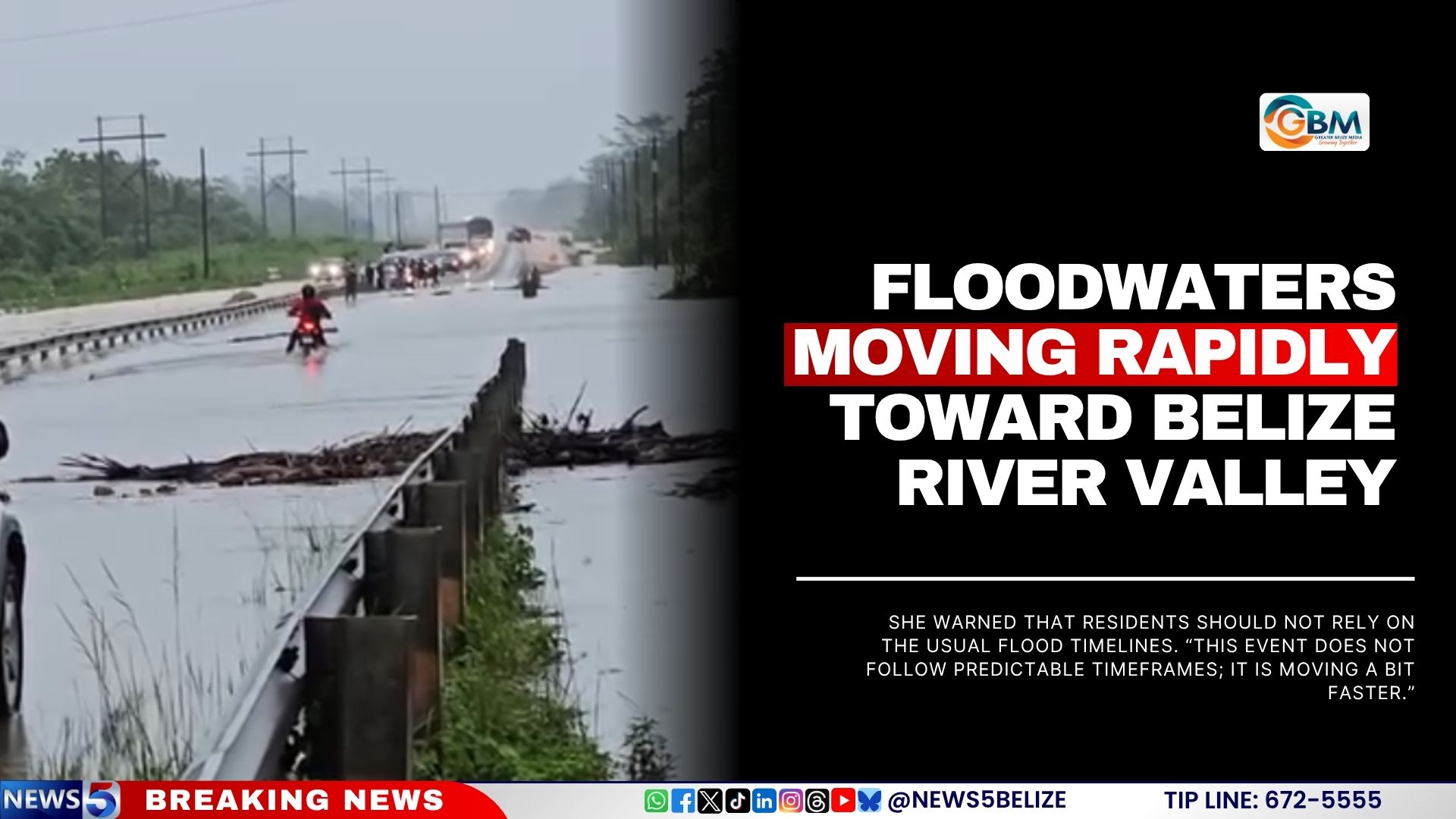
Floodwaters Moving Rapidly Toward Belize River Valley
In an unexpected development that has upended typical flood patterns in the region, floodwaters originating in western Belize are advancing toward the Belize River Valley at a pace far faster than initial projections, according to top water management officials.
Chief Hydrologist Tennielle Hendy confirmed that local communities are already grappling with the early impacts of the advancing flood surge as of July 13, 2026. Current monitoring data shows that the river at Double Run, a community located downstream closer to Belize City, has already hit bank-full capacity, while the water line at nearby Bermudian Landing is rapidly approaching the full bank stage. “The entire Belize River Valley is already recording elevated river levels,” Hendy explained in an official briefing. “Our most recent update puts Bermudian Landing just shy of bank-full capacity, while Double Run further downstream has already hit that threshold. The flood surge is clearly moving downstream, and communities are already seeing the effects.”
Hendy emphasized that the flood event is far from reaching its peak, noting that water levels at the upstream More Tomorrow monitoring site remain dangerously elevated, hovering around 10 meters. This sustained high volume means additional floodwater will continue to drain into the Belize River system in the coming days, prolonging the risk for downstream communities.
One of the most striking deviations from typical flood events in the region is the unprecedented speed of the current surge, Hendy added. Under normal flood conditions, water originating from the More Tomorrow area takes roughly three full days to travel to the Belize River Valley. During this event, however, measurable rises in river levels were detected downstream in just 24 hours – a three-fold increase in speed that has caught forecasters off guard.
This deviation from established patterns means residents cannot rely on historical flood timelines to prepare, Hendy warned. “This event does not follow predictable timeframes; it is moving a bit faster,” she said, urging households across the valley to adjust their emergency preparedness plans accordingly.
Hendy also addressed growing public concern over Crooked Tree Village, another community at risk from the rising waters. She urged residents of the village to maintain a high state of alert as water levels continue to climb across the region. That said, current hydrological forecasts indicate the village’s main causeway – a critical connection for residents – will likely remain passable through the peak of the flood event.
-

Athletes return from NACAC Championships with impressive medal haul
Barbados’s standout showing at the North American, Central American and Caribbean Athletic Association (NACAC) Championships has emerged as a defining marker of the small island nation’s rising athletic prowess across the regional competitive landscape. The Caribbean country’s delegation secured a total of 16 medals – three gold, six silver and seven bronze – during the tournament held in Mexico, a result head coach Jamal Grosvenor attributes to months of strategic preparation, unyielding athlete resilience and clutch performance when competition pressure peaked.
Returning to their home soil on Monday, the Under-18 and Under-23 NACAC squads were all smiles as they cleared customs at Grantley Adams International Airport, with photographers capturing the celebratory mood of the group. In comments to reporters following the team’s arrival, Grosvenor outlined the cohesive strategy that drove the squad’s success, noting that the team set a high competitive standard from the opening day of competition, carried that winning momentum through subsequent rounds, and closed out the championship with strong final-day performances.
“We also came away with a lot of personal bests and the focus was really on just keeping prepared, staying sharp and executing to the best of your ability. That really came through from the first day,” Grosvenor said. Four of the team’s medals came in relay events, a outcome Grosvenor says directly reflects the Athletics Association of Barbados’ renewed commitment to investing in relay training and development across all age-group programs. He emphasized that prioritizing relays not only accelerates the overall growth of the sport in Barbados but also gives emerging athletes critical experience competing at high-stakes regional meets.
The coach also extended praise to athletes who narrowly missed out on podium positions but still hit new personal best marks, noting that these breakthrough performances hold equal weight to medal wins for the long-term development of the country’s athletic program. While Grosvenor expressed widespread satisfaction with the overall result, he acknowledged that the team entered the championship with even higher medal ambitions. “We really wanted more medals, to be honest. In the Under-18 4x100m relay we were expecting to even get a national junior record. Unfortunately, there were some mishaps collectively as a team, but sometimes this is the nature of the sport,” he said, adding that the squad maintained excellent team spirit and strong camaraderie throughout the entire tournament despite minor setbacks.
One of the team’s standout gold medalists, US-based college middle-distance runner Layla Haynes, claimed top honors in the Under-23 Women’s 800 meters with a winning time of 2:07.86. “I’m just so happy to be able to represent Barbados at this level and to be able to come home with some hardware; that’s always the goal, so I’m just really happy I was able to execute that,” Haynes said. The runner shared that she plans to wrap up her 2024 competitive season after the NACAC win, marking her first full collegiate racing season that kicked off back in January. “I have pretty big goals over the next couple of years. This might be a really good time to take a little break before getting right back at it, to keep working on those bigger goals,” she explained.
Sprinter Jayden Green, who clocked a wind-assisted 20.17 seconds to take gold in the Under-23 Men’s 200 meters, called the win another key milestone in what has already been an extraordinary season for the young athlete. Green noted that his university training in windy conditions prepared him well for the NACAC meet, saying “It was quite comfortable with the conditions because of where I trained at university, and yeah, my body was good from the time I got there. Even though it was a little windy, I was still grateful that my body could get to that point.” Unlike Haynes, Green’s competitive season is far from over: he is already preparing to compete at the upcoming World Under-20 Championships, where he aims to clock an even faster personal best time.
The team’s breakout star was CARIFTA champion Jayden Walcott, who delivered a record-breaking performance in the Under-18 Boys’ Shot Put, shattering the previous championship record to set a new mark of 21.82 meters. The throw pushed Walcott’s personal best up by nearly a full meter and capped another dominant season for the young athlete, who now ranks as one of the top shot put throwers in his age group globally. “We had a really good competition and to throw almost an entire meter over my PR was really impressive. It’s a huge honor to be a world leader, especially from this side of the region where throws are not that big,” Walcott said.
-
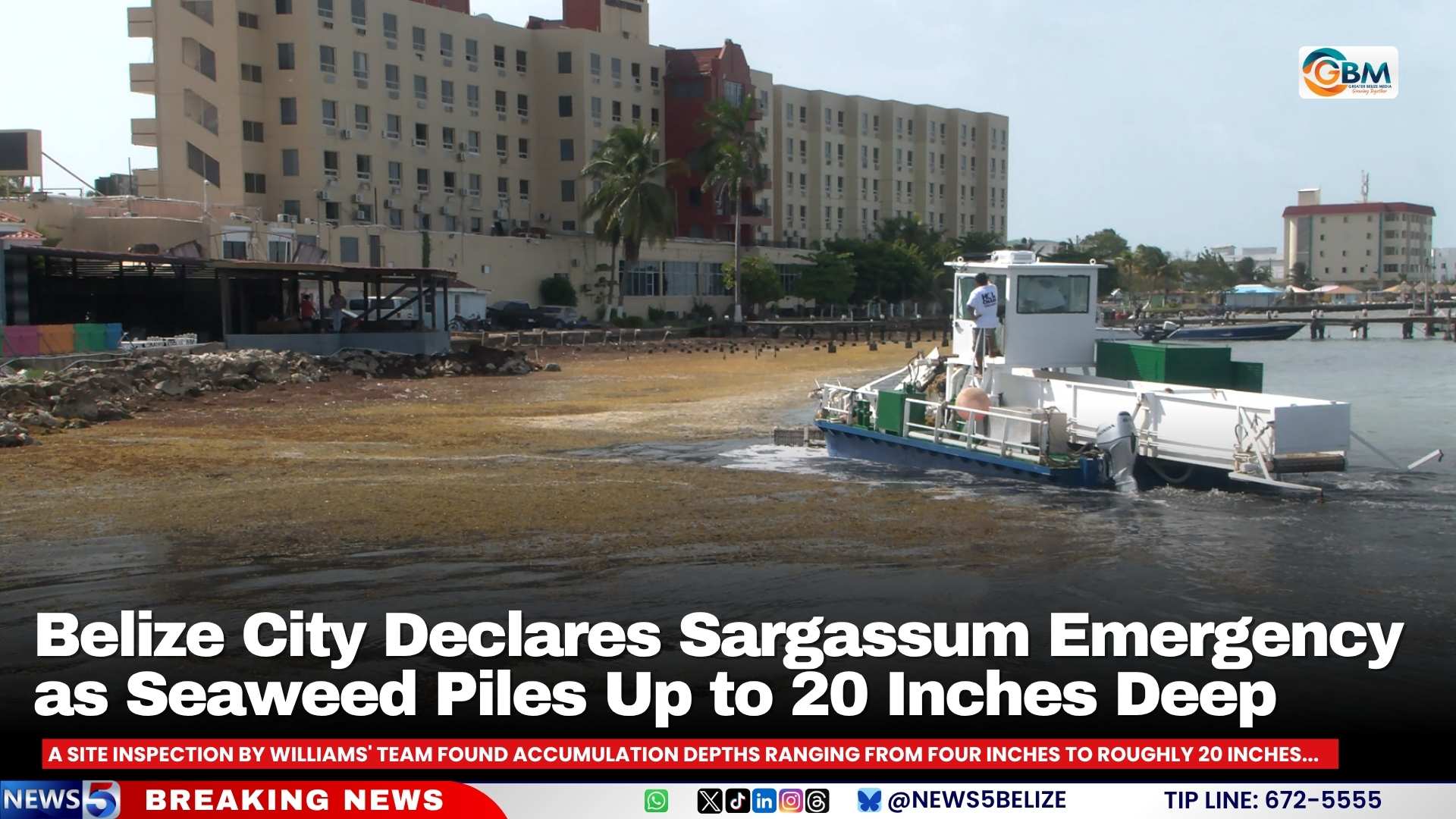
Belize City Declares Sargassum Emergency as Seaweed Piles Up to 20 Inches Deep
In July 2026, Belize City is confronting an unprecedented environmental crisis as massive piles of invasive sargassum seaweed have choked the city’s popular waterfront, prompting municipal officials to move forward with a declaration of a high-priority environmental emergency. An official engineering assessment released by the city government confirms that the volume of accumulated seaweed far outpaces the capacity of natural tidal action to clear the shoreline on its own, triggering urgent calls for a coordinated, funded response to mitigate cascading public health, ecological and economic harms.
City Engineer Floyd Williams laid out the full scope of the crisis in a formal situation report (SITREP) submitted to Mayor Bernard Wagner, which focuses on the heavily impacted Sandlighter’s Promenade and surrounding coastal areas. Williams’ inspection team documented sargassum accumulation depths ranging from 4 inches to a shocking 20 inches across the affected waterfront stretch. As the thick seaweed masses begin to decompose, they have already begun releasing toxic hydrogen sulfide that creates overwhelming offensive odors along the popular public shoreline. Inspectors also found significant volumes of human-made debris, including plastic waste and glass bottles, trapped within the sargassum mats, and confirmed that the dense buildup has severely restricted nearshore water circulation.
A key finding from the assessment notes that between 70 and 80 percent of the total sargassum biomass is located beyond the city’s existing seawall, with the thickest deposits forming directly adjacent to the structure and thinning gradually as the mats extend out into open water. Without immediate, large-scale intervention, Williams warns the city will face compounding risks that stretch across multiple sectors. For public health, the rotting seaweed will drive sharp increases in fly and mosquito populations alongside persistent foul odors that make the waterfront uninhabitable for visitors. Ecologically, the decomposition process will deplete oxygen levels in nearshore waters and degrade water quality, threatening native marine species that inhabit the coastal ecosystem. Economically, the crisis poses a major threat to Belize’s core tourism sector: the sargassum creates an unappealing visual blight on one of the city’s most valuable public waterfront assets, and will eliminate recreational opportunities that draw both local residents and international visitors.
Looking ahead, regional oceanographic forecasts predict additional waves of sargassum will make landfall along Belize’s coast over the coming months, leading Williams to frame the current event not as a one-time disaster, but as the start of an ongoing seasonal challenge that requires long-term planning. His report formalizes the recommendation that the Belize City Council officially classify the sargassum buildup as a High Priority Municipal Environmental Incident, and approve a two-phase Emergency Sargassum Management Programme to address the crisis.
The proposed cleanup strategy is designed to minimize disruption to the Sandlighter’s Promenade and speed up removal operations. In the first phase, local commercial fishermen will deploy vessels and floating containment nets to corral the sargassum mats offshore and maneuver them toward the seawall. In the second phase, a long-reach excavator will load the concentrated seaweed directly into dump trucks for offsite disposal, cutting down on cleanup time and avoiding damage to the promenade’s infrastructure.
The emergency removal operation carries an estimated price tag of BZ$170,000, and a year-round seasonal maintenance program to address recurring sargassum events brings the total projected budget for the program to between BZ$250,000 and BZ$250,000. Beyond the cleanup plan, the engineering report also recommends establishing a dedicated dedicated funding stream for future sargassum seasons, formalizing partnerships with local fishing communities, and coordinating response efforts with national government agencies to streamline the response.
In a show of regional support, the Hol Chan Marine Reserve has already offered the use of its purpose-built sargassum harvester to assist Belize City’s cleanup efforts for a cost of BZ$10,000. Mayor Wagner has welcomed the offer, as the city grapples with a volume of sargassum that local leaders describe as unprecedented in modern records.
-
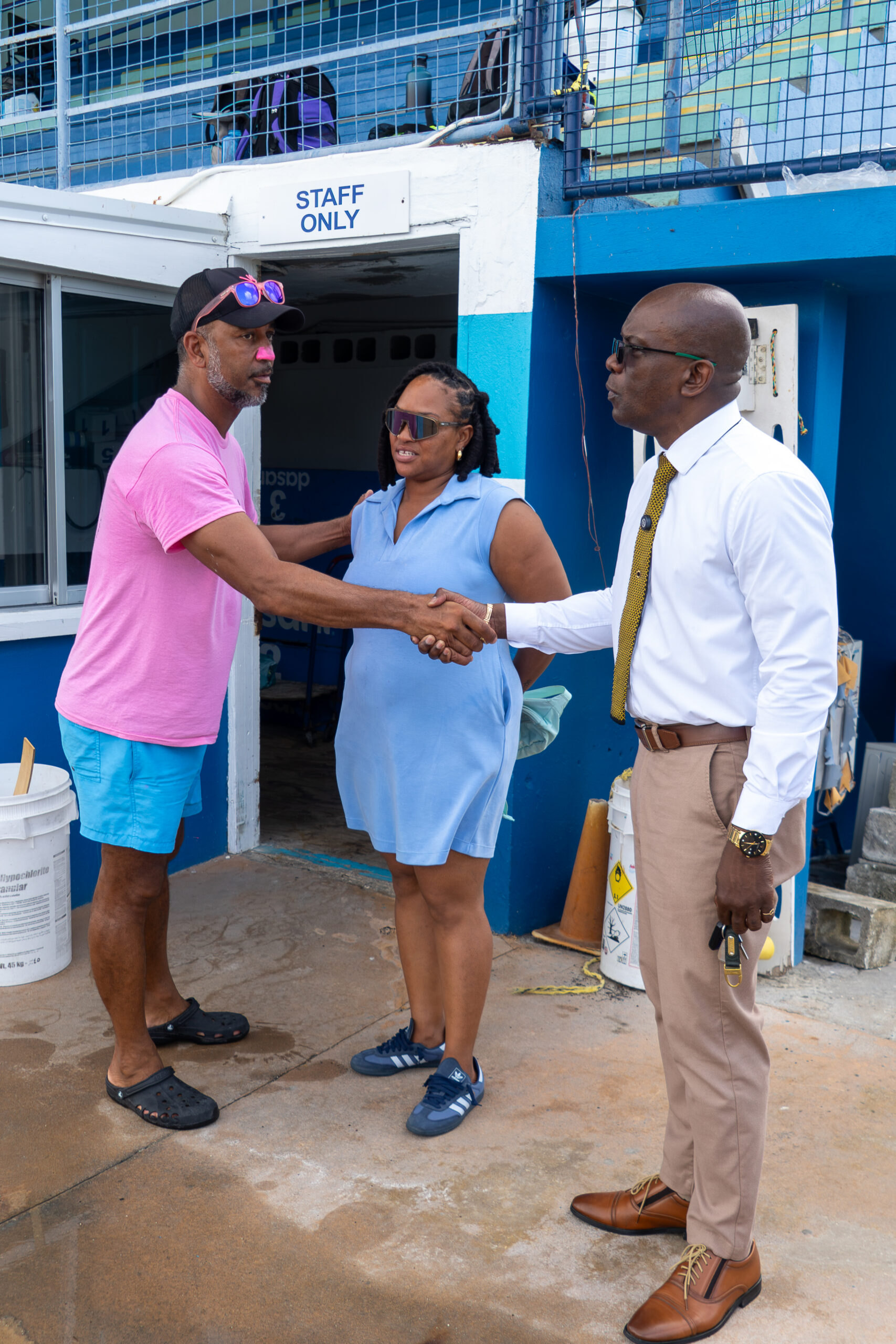
Minister gives nod to sports tourism push
A small Barbadian swimming organization pushing to address rising athlete burnout, elevate technical skill-building and establish the Caribbean island as a premier regional hub for sports tourism has secured formal endorsement from the country’s top sports official. New Wave Swim Club, headed by founder and lead coach Akilah Lashley, showcased its ambitious two-week summer development clinic during a recent visit from Minister of Sports and Community Empowerment Charles Griffith at the Barbados Aquatic Centre in Wildey, St. Michael. During the event, the clinic’s 9 to 18-year-old participants – which include current national team swimmers and emerging youth talent – were formally introduced to visiting guest coach Kyle Dougan, who traveled to the island from neighboring St. Vincent and the Grenadines.
Unlike traditional development models that require promising Barbadian swimmers to travel abroad to access elite coaching and competitive exposure, Lashley’s initiative flips this script by bringing top regional coaching talent directly to Barbados. She explained that the program is rooted in a broader sports tourism strategy designed to keep young athletes close to home during summer training while still connecting them to diverse coaching perspectives from across the Caribbean.
“This gives New Wave and every other local swim club the chance to refine athlete technique without ever leaving the island,” Lashley said. “We get to learn from regional coaches with a wide range of experience and training philosophies, our swimmers get to stay home for the summer and enjoy their time off while still growing, and everyone gets exposure to different technical approaches that can lift their performance.”
Lashley emphasized that the initiative is intentionally structured as a collaborative effort for the entire Barbadian swimming community, not just members of her own club. She noted that cross-cluster cooperation is key to raising the overall standard of competitive swimming across the country, and the clinic creates intentional space for coaches and athletes from different local organizations to connect and share knowledge.
Barbados’ world-class aquatic facilities put the island in a unique position to become the go-to regional destination for swimming development, Lashley added, positioning the country to attract young swimmers from across the Caribbean for training camps and clinics in future iterations of the program.
Minister Griffith lauded the grassroots project during his visit, framing it as a model that larger domestic sporting organizations should replicate to boost youth development and grow the island’s sports tourism sector. He pointed out that the initiative, led by one of Barbados’ smaller swim clubs, demonstrates what local organizations can achieve through regional collaboration, and that exposure to diverse coaching methodologies can only accelerate young athletes’ progress.
“Any time we can bring in coaches from different neighboring jurisdictions to share new skills and innovative technical approaches with our up-and-coming swimmers, it’s a win for our entire sporting community,” Griffith said. “These young athletes are still building the foundation of their competitive careers, and opportunities to train with visiting experts give them tools that will serve them for years to come.”
The minister also signaled that the Barbadian government is open to providing financial and logistical support for future editions of the clinic, with the goal of expanding the program to draw participants from across the Caribbean. Growing sports tourism is a core priority for the current administration, Griffith noted, and expanding this initiative would directly advance that goal while strengthening regional swimming ties.
-
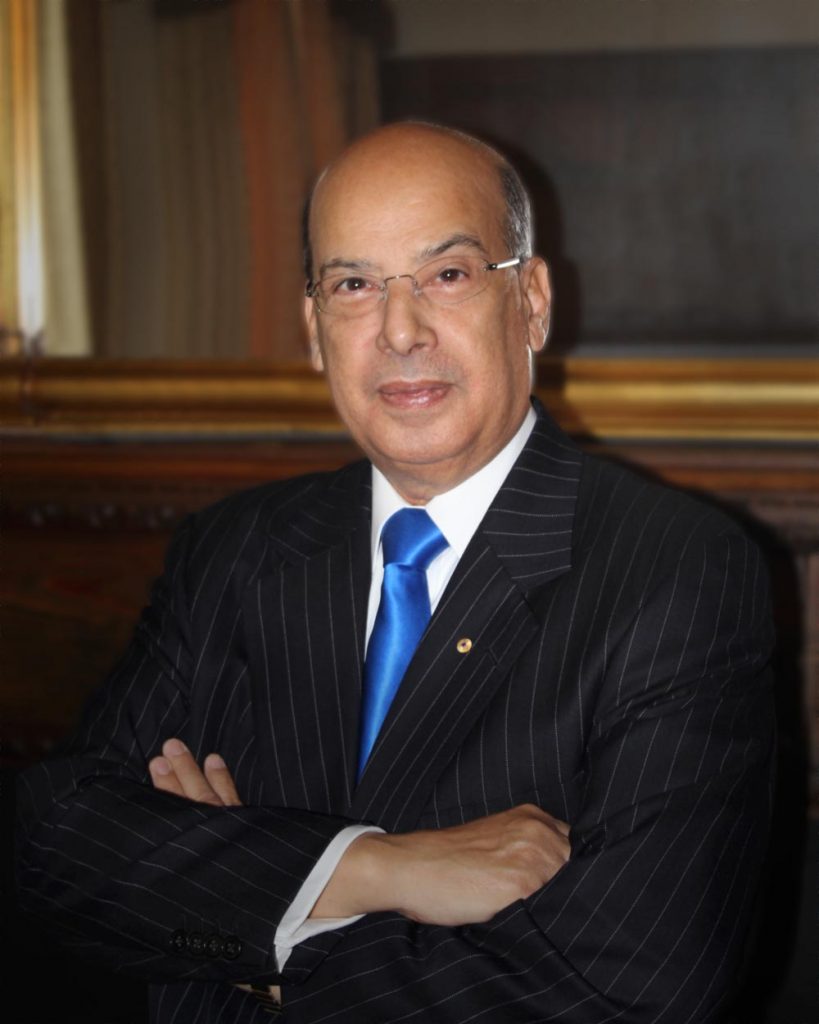
Sir Ronald Sanders Installed as Chairman of the Inter-American Council for Integral Development
In a formal installation ceremony held Wednesday at the Organization of American States headquarters in Washington D.C., Sir Ronald Sanders, Antigua and Barbuda’s top envoy to the U.S. and the OAS, officially assumed the chairmanship of the Inter-American Council for Integral Development (CIDI), the OAS’s lead hemispheric body for development-focused policy dialogue and cross-nation cooperation that reports directly to the organization’s General Assembly.
In his inaugural address as CIDI chair, Sir Ronald anchored his two-year tenure around a foundational question that he argues will define progress across the Americas: how can regional stakeholders build enabling conditions for business growth that translates to tangible, inclusive development for all people? He pushed back against common framings that pit private enterprise against public development goals, emphasizing that business is not an adversary of development, but an irreplaceable core partner. In particular, he highlighted micro, small, and medium-sized enterprises (MSMEs) as the primary drivers of the job creation, economic opportunity, and social inclusion that development agendas promise to deliver.
To advance this vision, Sir Ronald has structured his CIDI work plan around three mutually reinforcing pillars: Certainty, Capacity, and Capital. Underpinning the entire agenda is the core belief that no single OAS member state can deliver sustainable, widespread development in isolation. The new chair went further, arguing that development is not just one of many priorities for the inter-American system—it is the bedrock that supports all other OAS mandates. Without meaningful development progress, he noted, human rights remain out of reach for food-insecure households, democracy fails to take root where working people cannot access dignified employment, and public security crumbles when young people are locked out of the formal economy. Neglecting development, he warned, ultimately weakens every other pillar of the Inter-American system.
Sir Ronald also addressed longstanding equity concerns in multilateral hemispheric cooperation, noting that multilateralism’s core strength is bringing nations of all sizes and development levels to the same table as equal stakeholders. This formal equality, he argued, is the foundation of the OAS’s credibility across the region.
A veteran diplomat with decades of experience advocating for small island developing states and inclusive multilateralism, Sir Ronald is Antigua and Barbuda’s most senior diplomatic representative and one of the Caribbean’s most prominent voices on development policy. He has previously served as President of the OAS Permanent Council three separate times, a unique distinction that has given him extensive, unmatched experience steering the organization’s collaborative decision-making processes.
Closing his acceptance remarks, Sir Ronald issued a collective call to action to all OAS member states, framing his tenure as a new starting point for collective action. “Every point of arrival is a point of departure,” he said. “When the time comes for us to depart from this phase of our work on development, I ask you all to help produce meaningful results that our people can see, can feel and can measure.”
-

Panorama crown back in Babonneau
One year after seeing their six consecutive championship run come to an end, Courts Babonneau Steel Orchestra has bounced back to reclaim the top spot at the 2026 Republic Bank Panorama competition, securing the coveted title in a tense final round of competition held Sunday night.
In a remarkable twist that added drama to the annual steelpan competition, both the newly crowned champion and last year’s winner chose the same arrangement for their final performances: Rootsy’s beloved piece *Hilary*. When the final scores were tallied, Courts Babonneau’s dynamic interpretation of the selection earned them a total of 247.5 points, enough to edge out defending champions Pantime Steel Orchestra, who finished just 3.5 points behind with 244 points to claim second place.
Pantastic Muzik Steel Orchestra rounded out the top three with a score of 226 for their performance of *Boom Bye Bye* by Messanger, while LCCU Laborie Steel Pan took fourth position with 224 points for their rendition of *Cyah Believe It* by Sly.
Alongside the coveted orchestra title, the competition also featured a closely contested solo division. Chazzi Desrivieres emerged as the solo champion, earning an overall score of 433.5 for his performance of Arthur’s *Lottery*. Jessy Nurse claimed second place in the solo category with 423 points performing Kisha Kay’s *Different Energy*, and Omar Gabriel followed closely behind in third with 416 points for the same selection. Kannis Desrivieres took fourth place in the solo competition with 398 points for his take on Imran Nerdy’s *Feelings*.
The 2026 Republic Bank Panorama continues the event’s long legacy as a premier celebration of steelpan music, showcasing elite talent from across the region and drawing widespread attention from fans of the genre globally. For Courts Babonneau, the victory caps off a year of intense preparation after their unexpected defeat in 2025, reaffirming their status as one of the most dominant steel orchestras in the competition’s recent history.
-

Dominica-born Milove Fontaine crowned Miss Elegantly Plus Caribbean queen while representing Antigua & Barbuda
The Caribbean twin-island nation of Antigua and Barbuda is marking a new milestone in regional pageant history, after Milove Fontaine — a Dominica-born competitor representing her adopted home — took home the coveted title of Miss Elegantly Plus Caribbean Queen 2026. The annual competition wrapped up over the weekend in Tortola, British Virgin Islands, capping off several days of fierce, celebratory competition among plus-size contestants from across the region.
Fontaine, who grew up in Fond Cole, Dominica, and now permanently resides in Antigua and Barbuda, secured her victory Sunday night inside the Eileene L. Parsons Auditorium at H. Lavity Stoutt Community College. Her performance stood out head and shoulders above the rest of the field, with the competitor sweeping nearly every major judged category at the event. Beyond the overall national title, Fontaine went home with four additional specialty honors: Top Model 2026, Best Evening Wear, Best On-Stage Interview, and Best Ambassadorial Presentation. She also claimed the People’s Choice Award, a fan-voted distinction that reflects her broad popularity among audiences following the competition.
In an exclusive interview with Antigua.News immediately after her win, Fontaine opened up about the overwhelming flood of emotion she experienced when the final results were announced. “I was so elated when I heard the segments that I was winning. Something about that just had me very speechless. I was just standing there, and when it was time to crown the queen, in my head I’m like, ‘Yeah, Milove, you won.’ But when it was said, I had an overwhelming feeling. I wanted to scream, I wanted to cry, I wanted to smile, I wanted to laugh. I just stood there, smiling, just embracing the moment. It was a wonderful feeling,” she shared.
Fontaine extended sincere gratitude to the residents of Antigua and Barbuda, whose widespread public voting was the key to her securing the People’s Choice Award. This year’s regional competition drew a small but talented field of contestants representing three jurisdictions: Antigua and Barbuda, the British Virgin Islands, and the United States Virgin Islands. Fontaine competed against two other finalists: host nation representative Krystle Maduro, and Jah’Millia Maloney of the U.S. Virgin Islands, who took home honors for Resort Wear and Tourism Reel.
This latest crown adds to an already impressive pageant resume for Fontaine, who previously claimed the title of Miss Charisma 2020 early in her competition career. Her 2026 win marks one of the highest-profile achievements in the Caribbean’s growing circuit of plus-size pageantry, which is dedicated to expanding standards of beauty and celebrating body diversity. Judges highlighted Fontaine’s consistent poise, sharp eloquence, and natural ability as a cultural ambassador throughout the event, noting that her performance perfectly aligned with the pageant’s core mission of uplifting confidence, celebrating inclusive beauty, and empowering women of all sizes.
While Fontaine remains proud of her Dominican heritage, her win brings valuable regional recognition to Antigua and Barbuda, the country she chose to represent in the competition. Beyond the trophy, her journey is already inspiring audiences across the Caribbean, showcasing what targeted dedication and authentic self-confidence can achieve.
-

LETTER: Too many politicians. Where Are the Caribbean’s Slave Revolt Leaders on Our Currency?
For months, anticipation has built across the Eastern Caribbean around the Eastern Caribbean Central Bank’s (ECCB) landmark decision to remove Queen Elizabeth II’s image from regional banknotes — a move widely celebrated as a key step toward asserting post-colonial identity and regional self-determination. But as details of the new currency designs have emerged, one concerned regional citizen is pushing back against what they call a critical failure to capture the full scope of Eastern Caribbean history.
In an open letter to the editor, the writer argues that while removing the British monarchy’s image was a long-overdue and praiseworthy change, the ECCB’s new lineup of portraits leaves out the foundational figures who shaped the region long before modern independent governments took shape. Instead of highlighting a diverse range of contributors to Eastern Caribbean society, the new banknotes are almost entirely dominated by sitting and former prime ministers, political leaders, and other government officeholders.
While the writer acknowledges that many of these political figures made meaningful contributions to their nations, they question whether holding public office should be the sole or primary benchmark for national recognition. The backbone of modern Eastern Caribbean society, they stress, was built generations before independence by enslaved Africans who resisted brutal oppression, organized uprisings against their enslavers, and fought and died for the liberty that current generations enjoy today.
Across every island in the Eastern Caribbean bloc, from St. John’s 1733 slave revolt to Fedon’s Rebellion in Grenada, and countless lesser-documented uprisings in St. Kitts and Nevis, Antigua and Barbuda, Dominica, Saint Lucia, and St. Vincent and the Grenadines, these unsung freedom fighters altered the trajectory of regional history. Many have been lost to historical record, but the writer argues their sacrifices still deserve national commemoration — a space they have been entirely denied on the new banknotes.
Currency, the writer points out, is far more than a practical tool for financial exchange. It is a pervasive, accessible educational medium that passes through the hands of millions of people, including children, every single year. The figures featured on banknotes send a powerful message about which contributions matter, shaping how entire regions remember and interpret their past. By prioritizing sitting political leaders exclusively, the ECCB risks cementing a harmful narrative that true leadership originates in government office, rather than in the grassroots struggle for justice, freedom, and human dignity that laid the groundwork for independent Eastern Caribbean nations.
Beyond the overlooked freedom fighters of the anti-slavery movement, the writer notes that the Eastern Caribbean is home to generations of accomplished trailblazers across every sector: renowned scientists, award-winning artists, champion athletes, transformative educators, influential labor leaders, celebrated writers, iconic musicians, and cultural pioneers whose contributions extend far beyond the realm of party politics. A truly representative set of banknotes, they argue, would celebrate the full diversity of Eastern Caribbean achievement, rather than concentrating recognition on a single professional group.
The writer does praise the ECCB for its commitment to public consultation during the redesign process, a step that represents meaningful engagement with regional citizens. But they argue that consultation should not end with the launch of the new banknotes, and should instead spark ongoing reflection on how the region tells its collective story. Future redesign efforts, they urge, should strive for far greater historical and sectoral balance, prioritizing recognition for the women and men whose courage, sacrifice, and creativity built Eastern Caribbean society centuries before the creation of modern parliaments, cabinets, and elected governments.
“If our money is to truly tell our story as a region, then it must tell all of it,” the writer concludes.