博客

  • Health ministry: No school closure needed after illness investigation at St Thomas school

    Health ministry: No school closure needed after illness investigation at St Thomas school

    Public health authorities in Barbados have released the findings of an investigation into unexplained illness reports at Hillaby/Turners Hall School in the parish of St Thomas, confirming one active case of scarlet fever and three prior dengue infections among students, while ruling out the need for campus closure. Concerns were raised earlier after multiple children at the school developed two common contagious illness symptoms: widespread rash and persistent fever. To pinpoint the cause of the symptoms, the Ministry of Health and Wellness ordered full laboratory testing for all reporting students, with results now finalized and published in an official public statement.

    According to the ministry’s final analysis, laboratory results confirmed that one student meets the full diagnostic criteria for scarlet fever, a contagious condition caused by Group A Streptococcus bacteria that is characterized by a distinct red rash alongside fever. Three additional students returned positive markers showing they had recovered from a past dengue infection, a mosquito-borne viral disease common in tropical regions. All other students who reported symptoms tested negative for both conditions.

    Health officials explained that Group A Streptococcus, the bacteria behind scarlet fever, spreads easily between people through close personal contact and respiratory droplets expelled when an infected person coughs or sneezes. A key point of reassurance provided by the ministry is that after just 24 hours of appropriate antibiotic treatment, infected children are no longer contagious and can safely return to in-person learning once medically cleared.

    After reviewing all case data and transmission patterns, investigators concluded there is no evidence of an unusual or uncontrolled outbreak spreading through the school campus. The ministry emphasized that educational settings are integrated into the broader community, so occasional introduction of common childhood illnesses is to be expected, and the current situation does not deviate from standard public health expectations.

    To limit further spread of illness, the ministry has reaffirmed that standard evidence-based public health precautionary measures are sufficient to keep the campus safe. These measures include consistent hand hygiene, covering coughs and sneezes to follow respiratory etiquette, regular disinfection of high-touch classroom surfaces, and continued community-wide efforts to control mosquito populations to prevent new dengue infections. The Ministry of Education Transformation has already fully implemented all recommended precautionary measures at the school.

    Health authorities have also issued guidance for parents, reminding caregivers that any child showing signs of illness should stay home from school, and should only return to campus after receiving a medical assessment and clearance from a healthcare provider.

    At this time, public health officials have stressed there is no justification for closing the school, and the facility will remain open for regular operations. The Ministry of Health and Wellness extended gratitude to the Ministry of Education Transformation, along with school administrators, teachers, and parent groups, for their cooperation and trust throughout the investigation process. Public health teams will remain in close contact with school leadership to continue monitoring the situation, and will provide additional guidance or support if any new cases develop.

  • ZHTF hands over seeds donated by charity

    ZHTF hands over seeds donated by charity

    A Canadian non-profit organization has delivered a targeted donation of specialty seeds to support community-led food security work across St. Vincent and the Grenadines, marking the latest chapter of a long-running partnership between international donors and local agricultural initiatives.

    Dwight “Bongo” Anderson, founder and executive director of Canada-based Still Kickin’ Charity, contributed three full barrels of mixed vegetable, herb, and flower seeds to the Zero Hunger Trust Fund (ZHTF), a local body working to reduce food vulnerability across the island nation. Fitz Huggins, the former consul general of St. Vincent and the Grenadines (SVG) to Toronto, formally presented the donation to ZHTF on Anderson’s behalf.

    Following the handover, the donation was distributed across three key stakeholders aligned with national food security goals. One barrel was allocated to SVG’s Ministry of Social Welfare and Community Empowerment, Ecclesiastical Affairs and National Heritage, while a second went to Seed Sisters, a local women in agriculture initiative founded with support from Still Kickin’ Charity. The third barrel remains under ZHTF stewardship to support its ongoing community and household gardening programs.

    Safiya Horne-Bique, chief executive officer of ZHTF, welcomed the contribution as perfectly timed and closely aligned with the fund’s core mission: delivering community-centered solutions to hunger, poor nutrition, and food insecurity across SVG. “This is a very timely donation, and I know our backyard gardeners and family farmers will appreciate receiving these seeds,” Horne-Bique said, adding that ZHTF looks forward to deepening its ongoing collaboration with Anderson and his team.

    SVG’s Minister of Social Welfare Shevern John emphasized that expanding domestic agricultural production is a central pillar of the government’s national development strategy, noting that agriculture holds a place as one of the four core pillars of the country’s economy. “These seeds will go towards farmers who will improve their production and help increase domestic food production. This is an important contribution to food security in St. Vincent and the Grenadines,” John said, thanking Anderson and Still Kickin’ for their sustained support and praising ZHTF for ensuring the donation reaches the communities that need it most.

    Huggins echoed this sentiment, noting that the seed contribution fits seamlessly into the ongoing food security programming ZHTF runs for local communities every year.

    For Anderson, the donation is rooted in deep personal connection to SVG. Anderson, who has Jamaican-Canadian heritage, lived in the country with his family from 2021 to 2024, where he built close ties with local farming communities and gained firsthand understanding of how critical local food production is to Vincentian livelihoods. This experience motivated him to expand his charity’s support for the country’s food security efforts. Still Kickin’ first began sending seed donations to SVG immediately after the 2021 eruption of the La Soufriere Volcano, which disrupted local agriculture and left many communities facing acute food shortages, and has continued supporting related initiatives ever since.

    “We are well aware of the food security issues in St. Vincent and the Grenadines, and the natural disasters that farmers and the wider population have faced,” Anderson said. He explained that Seed Sisters, the SVG-based group that received one barrel of the donation, was established through his charity to support female smallholder farmers, boost local food output, and lay the groundwork for a national sustainable seed bank.

    “The aim is not only to grow seeds for selling or personal use, but also to develop a strategic seed bank in St. Vincent that can help to reinvigorate the agricultural sector if it is affected by storms, volcanic activity or other challenges,” he said. Anderson also encouraged Vincentian households to embrace small-scale seed saving and home seed banking as a strategy to build greater national resilience, particularly at a time when global economic volatility and supply chain disruptions disproportionately threaten small island developing states.

    Anderson extended special thanks to Westcoast Seeds and its donations coordinator Erika Simms for their ongoing support that made this latest contribution possible. In a closing statement, a press release from ZHTF reaffirmed the organization’s commitment to partnering with local, regional, and international stakeholders to advance sustainable, nutrition-focused food security initiatives across SVG, ranging from supporting backyard gardening and youth engagement in agriculture to expanding community food production and improving access to nutrient-dense foods for all residents.

  • PM Browne Says Second Batch of Building Materials Now Being Distributed

    PM Browne Says Second Batch of Building Materials Now Being Distributed

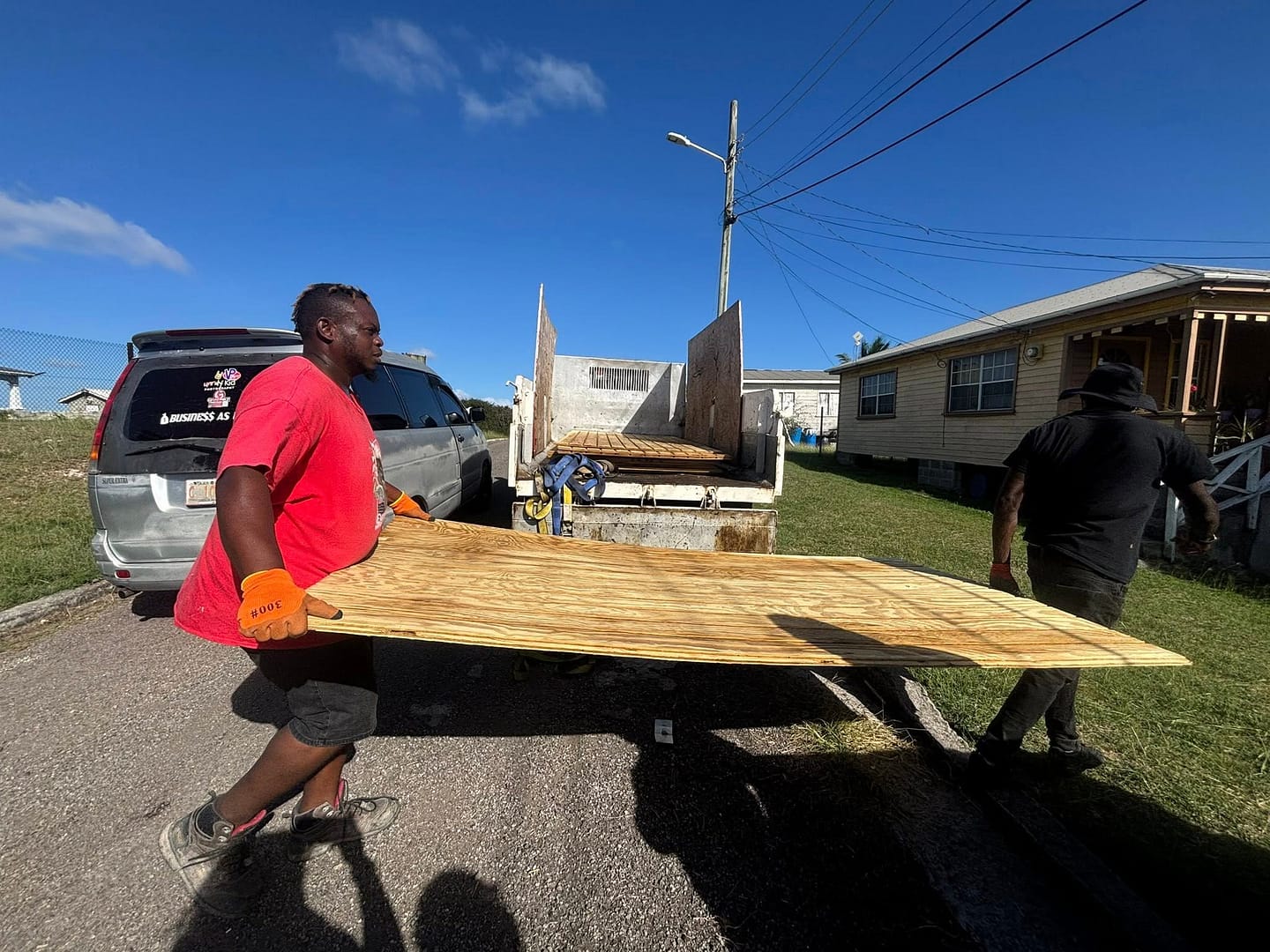
    Antigua and Barbuda’s Prime Minister Gaston Browne has confirmed that his administration has kicked off the second wave of free building material distribution as part of a national social assistance initiative designed to support low-income and vulnerable households across the country. The announcement was made during an appearance on the local *Browne and Browne* radio talk show, where the leader detailed the logistics of the ongoing rollout of the support program. “I’m also pleased to announce that we have the second set of our building material here, and we are now distributing those,” Browne told listeners during the on-air address. While distribution operations are already active across most communities, rollout has not yet begun in the two districts of Point and Villa. Browne confirmed that delivery of materials to these two areas will officially commence next week, giving local officials time to complete pre-distribution registration and logistics preparations. To streamline access for eligible residents, Browne urged community members who meet the vulnerability criteria and have not yet applied for support to reach out directly to government representatives to register for assistance. He noted that Housing Minister Rawdon Turner will lead on-the-ground coordination, processing applications and overseeing the final delivery of materials to individual residential properties. “Several of you will approach me and I will send your names to Mr. Turner, Minister Turner, [who will] assist me in delivering the material to your respective homes,” Browne explained. This targeted building material program is just one component of a broader suite of social safety net initiatives that the current administration has rolled out to address persistent socioeconomic hardship across the nation. Browne emphasized that the construction material initiative works in tandem with other existing social programs, including a widely used food voucher scheme for low-income families and a recently launched program that provides free prescription eyeglasses to eligible residents. According to the prime minister, the overarching goal of all connected programs is to directly address unmet needs of residents grappling with financial hardship, and to guarantee that no vulnerable individual or family falls through the gaps of the country’s social support system. “We’re a caring administration and we have these little pockets of poverty and need. We’re trying to fill them,” Browne said. He reaffirmed the administration’s commitment to inclusive support, adding, “He added: “We don’t want anyone to be left behind.” As of the latest announcement, government officials have not released public data on the total number of households expected to receive support through this second round of building material distribution.

  • Antigua and Barbuda Delegation Concludes Regional Climate Finance Workshop in Barbados

    Antigua and Barbuda Delegation Concludes Regional Climate Finance Workshop in Barbados

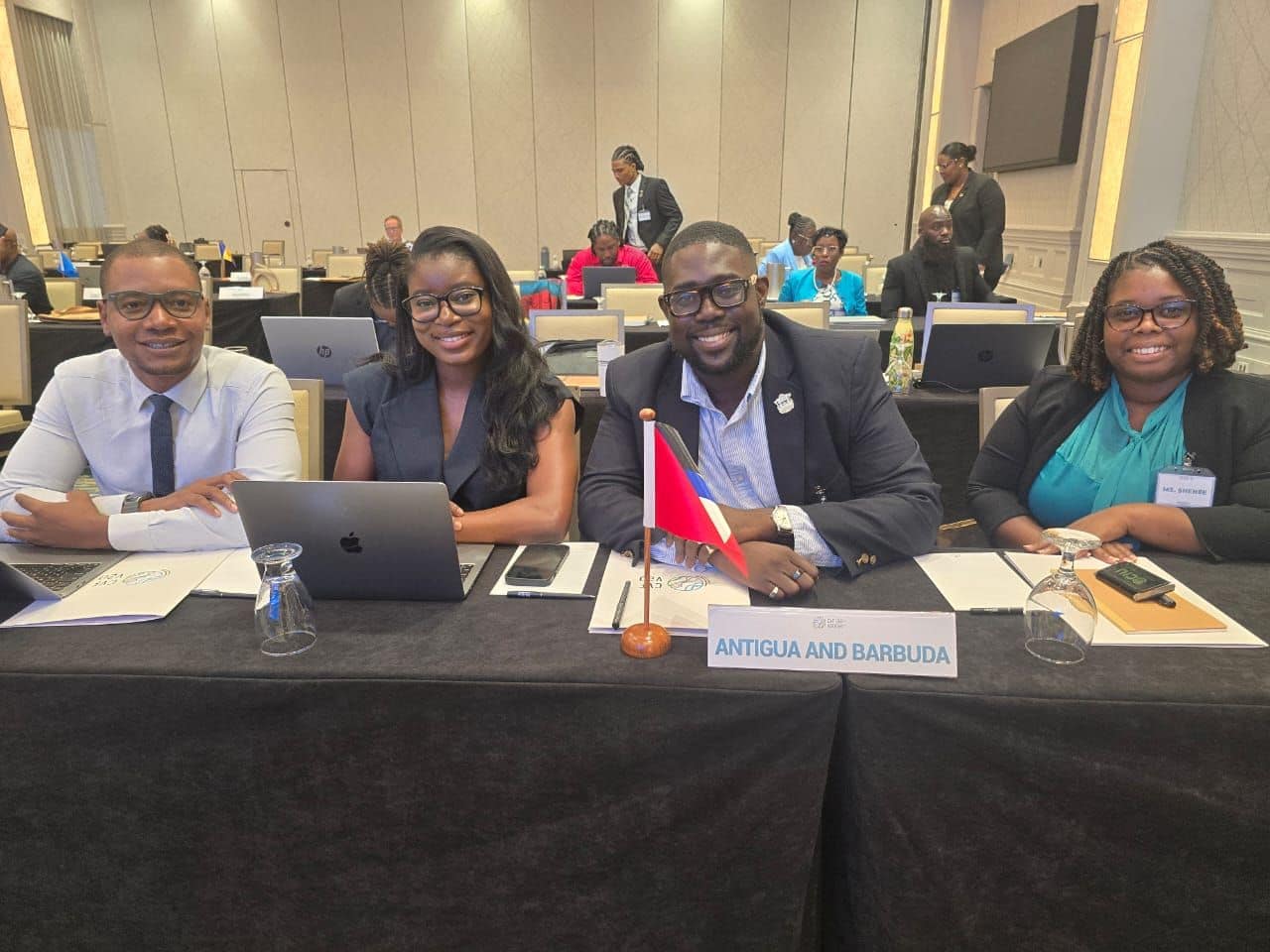
    A four-person official delegation from the Government of Antigua and Barbuda has wrapped up its participation in a high-profile two-day regional climate policy workshop, held from May 28 to 29, 2026 at the Hilton Barbados Resort in Bridgetown. Titled “Prosperity on Our Terms: A Caribbean Agenda for Climate Finance Access and Addressing Loss and Damage,” the event was organized by the Climate Vulnerable Forum and the Vulnerable Twenty Group (CVF-V20), operating under the current presidency of Barbadian Prime Minister Mia Amor Mottley. The gathering drew policy representatives from nine Caribbean V20 member states, alongside stakeholders from across the wider CARICOM bloc, with a shared core goal of advancing the region’s ability to secure accessible, adequate climate and disaster risk financing. The Antigua and Barbuda delegation brought together cross-government expertise: Gita Nicholas and Arry Simon from the nation’s Department of Environment, and Carlon Knight and Sheneé Cornelius from the Ministry of Finance, Corporate Governance and Public-Private Partnerships. Over the two days of intensive discussion, delegation members took part in deep-dive technical sessions focused on the major climate finance frameworks currently being advanced by CVF-V20. The opening session delivered a complete breakdown of the evolving post-2025 global climate finance landscape and the CVF-V20 Climate Prosperity Agenda, framing the deep-seated structural financing barriers that disproportionately impact Small Island Developing States (SIDS) like Antigua and Barbuda. Following the opening overview, attendees walked through the details of two flagship CVF-V20 initiatives. The first is the Vulnerability to Viability (V2V) Compact, a four-pillar structural financing program built to tackle the long-term economic vulnerabilities of nations on the frontlines of climate impacts. The second is the CVF-V20 Lifeline Fund, presented by Jwala Rambarran, former Central Bank Governor of Trinidad and Tobago. This fund is designed to deliver fast, trigger-activated liquidity support to member states in the immediate aftermath of a major climate disaster. The workshop also featured a dedicated session on Climate and Disaster Risk Finance and Insurance (CDRFI), led by Isaac Anthony, Chief Executive Officer of the Caribbean Catastrophe Risk Insurance Facility (CCRIF SPC). Attendees explored current coverage trends, the challenge of basis risk, and tailored insurance solutions designed to serve micro and small enterprises across the region. Additional technical sessions covered critical topics including dedicated finance for addressing climate-related Loss and Damage, with introductions to the Global Shield against Climate Risks and the formal UN-backed Fund for Responding to Loss and Damage. Delegates also examined strategies to mobilize private sector investment through blended finance structures and expanded access to global carbon markets. Beyond technical discussions, the workshop advanced plans for a new Regional Adaptation Training Hub for the Caribbean, a core component of the $5.3 million USD GEF-UNIDO-V20 Adaptation Support Program. The hub will work to expand Caribbean nations’ access to low-cost climate adaptation technologies and specialized support services. On the afternoon of May 29, the Antigua and Barbuda delegation joined a site visit across Barbados’ coastal and fisheries projects under the ambitious Roofs to Reefs Programme. Stops on the tour included the Barbados Fisheries Division in Bridgetown, the Paynes Bay and Folkstone marine reserves in St. James, and the historic fishing village of Six Men’s in Saint Peter. The on-the-ground visit gave delegates direct insight into community-led fisheries management practices, coastal biodiversity conservation strategies, and marine ecosystem protection efforts—all priorities that align directly with Antigua and Barbuda’s own goals for advancing its coastal and blue economy. On completion of the workshop, the delegation returned with a sharper, more comprehensive understanding of the financing tools and multilateral frameworks available to support Antigua and Barbuda as it continues building out its national climate resilience infrastructure. As one of the nine Caribbean nations represented at the event, Antigua and Barbuda’s participation underscores the region’s unified commitment to advancing a collective voice in the global climate finance negotiation process.

  • West Indies Academy Squad Embarks on Development Tour of Sri Lanka

    West Indies Academy Squad Embarks on Development Tour of Sri Lanka

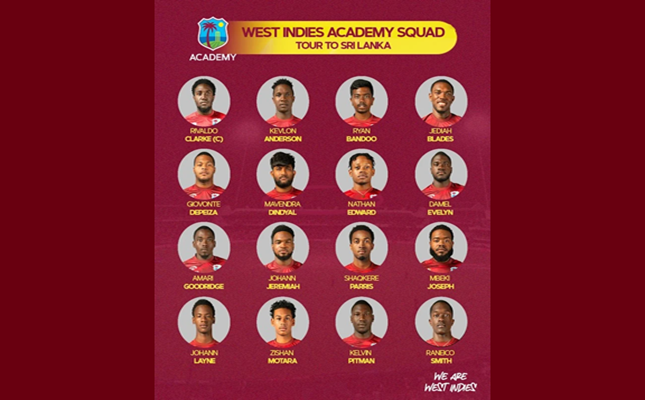
    ST JOHN’S, Antigua – A new chapter in Caribbean cricket development kicked off this week as a 16-player West Indies Academy squad departed for a three-week reciprocal developmental tour of Sri Lanka, set to run from June 3 to 27, 2026. The trip will see the next generation of West Indian cricket talent face off against Sri Lanka Emerging Players in a five-match, multi-format series crafted to strengthen the region’s pipeline of elite senior players.

    This tour is a return fixture following the Sri Lanka Emerging Team’s 2025 visit to Antigua, where the two sides played a tightly contested split series: the two four-day matches ended with one win apiece, while the West Indies Academy claimed a 2-1 victory in the three-match 50-over leg. The 2026 tour will mirror that 2025 structure, with two four-day red-ball matches followed by three 50-over white-ball contests, offering young prospects an unmatched opportunity to gain high-quality overseas match experience and adapt to Sri Lanka’s challenging subcontinental pitch and weather conditions against a similarly motivated peer opposition.

    The squad has been assembled to balance proven potential and fresh opportunity, blending 13 long-time Academy participants with three newly called-up emerging talents. Three current squad members – fast bowlers Johann Layne, Jediah Blades and spinner Zishan Motara – already boast senior international caps for the West Indies, bringing valuable top-level experience to the young group. Two regular Academy players were unable to join the tour: Ackeem Auguste earned a call-up to the full West Indies senior squad, while Carlon Bowen-Tuckett withdrew for personal reasons. Their spots have been awarded to up-and-coming talents Kevlon Anderson, Shaqkere Parris and Johann Jeremiah, who will now get their first taste of international developmental competition.

    To bolster the tour’s coaching staff, Guyana Harpy Eagles head coach Ryan Hercules has joined the Academy management team as an assistant coach, adding additional first-class experience to support the development of the young players throughout the trip.

    Speaking ahead of the squad’s departure, West Indies Academy head coach Ramesh Subasinghe outlined the core mission of the tour, noting that high-stakes exposure to unfamiliar conditions is one of the most valuable tools for grooming future senior stars. “Our Academy objective is simple: to develop players into the next level of their careers, and tours like this play a key part in that journey,” Subasinghe said. “Sri Lanka has historically been one of the toughest places for West Indian teams to compete. This tour represents the perfect platform to immerse our brightest emerging talent in conditions that will truly test and shape them.”

    Subasinghe highlighted the proven impact of these exchange series, pointing to the 2025 home tie against Sri Lanka Emerging that already produced four players who have since graduated to the full West Indies senior men’s squad, with many other participants earning contracts in regional franchise competitions and the Caribbean Premier League (CPL).

    Dwain Gill, High-Performance Manager at Cricket West Indies (CWI), emphasized that the tour forms a core part of CWI’s long-term strategy to rebuild and strengthen West Indies cricket by investing in youth. “This tour is an extremely important component of our long-term development pathway programme as we continue to invest in the future of West Indies cricket,” Gill said. “Opportunities like these allow our emerging players to experience competitive international environments, adapt to unfamiliar conditions and further develop the technical, tactical and mental skills required at the highest level of the game.”

    The squad will begin their tour in Hambantota, where both four-day matches will be hosted at the Mahindra Rajapaksa International Cricket Stadium, with the first fixture running from June 8 to 11 and the second from June 15 to 18. The team will then travel to Colombo for the white-ball leg of the tour, with the first two 50-over matches set to take place at the Sinhalese Cricket Club on June 22 and 24, and the final series match scheduled for June 26 at the Nondescripts Cricket Club. All fixtures will be played under official International Cricket Council (ICC) playing regulations.

    Full West Indies Academy Squad: Rivaldo Clarke (Captain), Kevlon Anderson, Ryan Bandoo, Jediah Blades, Giovonte Depeiza, Mavendra Dindyal, Nathan Edward, Damel Evelyn, Amari Goodridge, Johann Jeremiah, Shaqkere Parris, Mbeki Joseph, Johann Layne, Zishan Motara, Kelvin Pitman, Raneico Smith.

    Full Tour Management Unit: Don Ramesh Subasinghe (Head Coach), Rohan Nurse (Assistant Coach), Ryan Hercules (Assistant Coach), Shanique Peters (Physiotherapist), Hance Richards (Strength & Conditioning Coach), Clint St. Hill (Manager)

  • LISTEN: Unsworn MPs May Not Be Entitled to Salary

    LISTEN: Unsworn MPs May Not Be Entitled to Salary

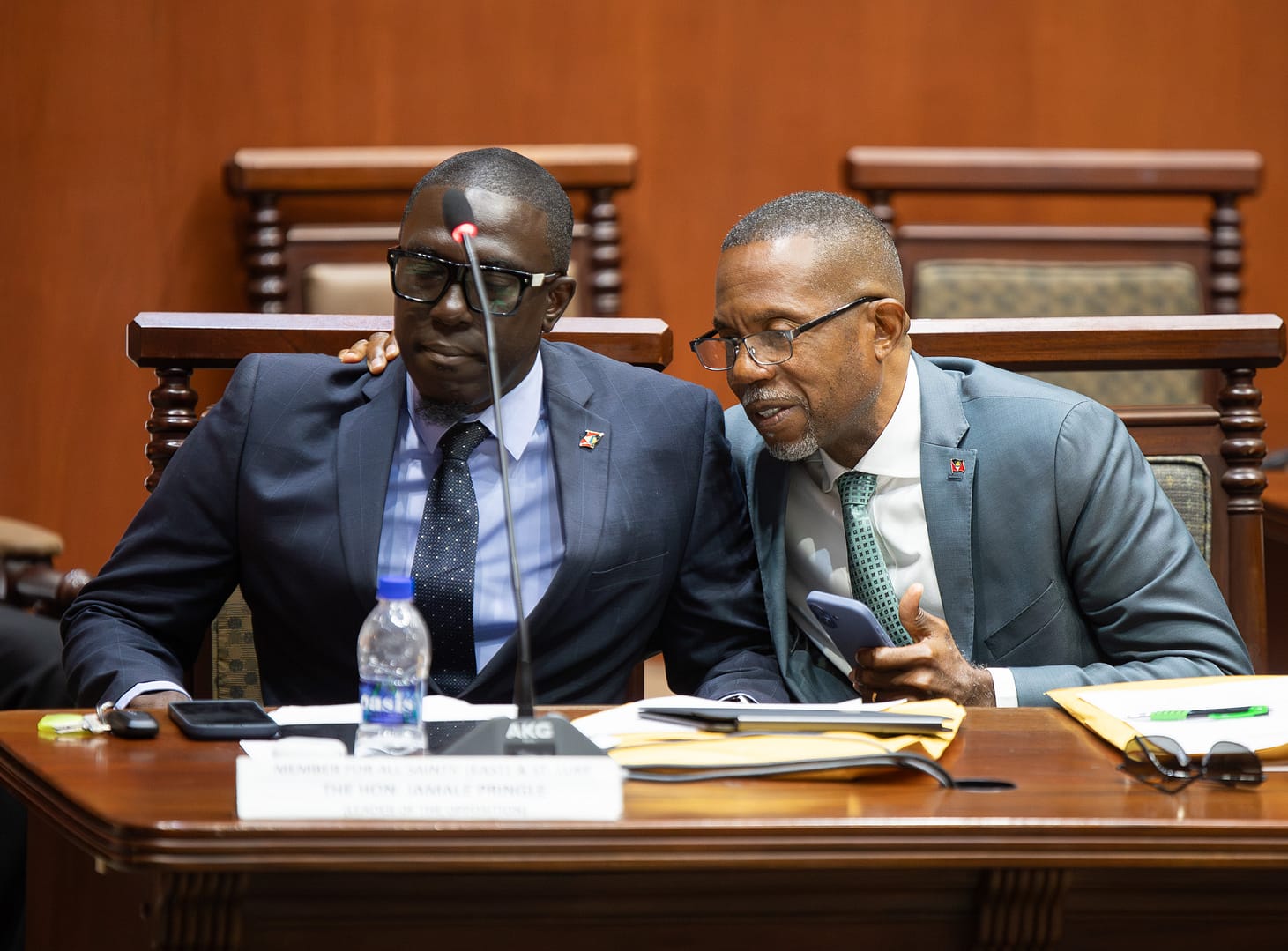
    A fresh political controversy is unfolding in Antigua and Barbuda, centered on the status of Opposition Leader Jamale Pringle, who remains unsworn in following the April general election. Prime Minister Gaston Browne has broken his silence on the debate over whether Pringle is eligible to receive his parliamentary salary, drawing a clear line between longstanding legal rules and his government’s pragmatic approach to the standoff.

    Speaking during his weekly *Browne and Browne* radio broadcast on Saturday, Browne addressed the growing discussion sparked by Pringle’s absence from the first post-election parliamentary sitting and subsequent barring from last week’s special joint parliamentary session. Under Section 48(1) of Antigua and Barbuda’s Constitution, no elected member of parliament may participate in any parliamentary proceedings before they take and formally subscribe to the required oath of allegiance. Pringle, who won his seat in the April general election, has not completed this mandatory step, and the government has stated he must wait until the next scheduled ordinary sitting of parliament to be sworn in.

    During the radio segment, the host referenced a landmark Privy Council ruling from a past case in Trinidad and Tobago, a fellow Caribbean jurisdiction, that establishes a clear legal precedent on this issue. According to that ruling, barring extraordinary extenuating circumstances, elected representatives who have not completed the oath of allegiance are not legally entitled to collect parliamentary remuneration for the period before they are sworn in.

    Browne confirmed that this precedent aligns with established parliamentary rules, and confirmed that technically, no salary can accrue to Pringle until he fulfills the constitutional requirement of taking the oath. “It has been held that if a member fails to take the oath, that period during which the oath is not taken, that that member of parliament should not be paid,” Browne explained during the broadcast.

    But despite affirming this clear legal position, the prime minister stressed that his administration has no intention of taking a hardline petty stance on the issue. “In fact, as far as I’m concerned, you should be paid. But technically speaking, he should not be paid [under the rules],” Browne said. Reaffirming his government’s position, he added, “But again, we’re not being petty. And if they pay him a month’s salary, we will not object to it.”

    Browne’s remarks come after he previously defended the decision to block Pringle from participating in last week’s joint parliamentary sitting, a move that stemmed directly from Pringle’s failure to complete the oath requirement. The prime minister’s comments this weekend clarify the government’s stance on both participation and salary, separating the strict constitutional and legal requirements for parliamentary access from the government’s willingness to avoid a petty dispute over salary payment.

  • Ezekiel Francois Elected President of National Youth Parliament Association

    Ezekiel Francois Elected President of National Youth Parliament Association

    The National Youth Parliament Association of Antigua and Barbuda (NYPAAB) has wrapped up a robust, participatory electoral process to select its new Executive Committee, marking a fresh transition of leadership for the island nation’s leading youth governance advocacy body.

    After a transparent voting process, Ezekiel Francois secured the position of President, bringing a forward-looking agenda focused on amplifying youth voices and strengthening parliamentary-style practice for young people across the country. He will lead alongside three newly seated executive members: Jordyn Roberts, who takes on the role of Recruitment and Mobilization Officer, tasked with expanding youth outreach and growing the organization’s membership; Lorianna Richards, who will serve as Projects and Events Officer, overseeing programming that connects young people to civic processes; and Janiyah Winston, who steps into the role of Financial Secretary to manage the association’s resources and fiscal operations.

    In the announcement of the new leadership lineup, the association issued a public statement of gratitude to the outgoing executive team, whose years of commitment laid the groundwork for the organization’s current momentum. Special commendation was reserved for outgoing Immediate Past President Jessica Zouetr, whose strategic leadership and long-term vision significantly expanded NYPAAB’s reach and influence, setting the stage for sustained growth in the years ahead. The association also highlighted the key contributions of two other departing leaders: former Financial Secretary Amelia Williams and former External Affairs Officer Celine Edwards, both of whom advanced NYPAAB’s core mission of youth civic engagement over their terms.

    With this leadership transition complete for initial positions, the organization noted that three additional executive roles—Vice President, General Secretary, and External Affairs Officer—will be filled via separate elections scheduled for a later date. Once those results are finalized, the full leadership team will take office to steer the association through its upcoming term, continuing its work to empower young people and foster meaningful civic participation in Antigua and Barbuda.

    Across the transition, association representatives emphasized that every past and current member has played a critical role in building a dynamic, impactful youth parliament, and the organization remains committed to expanding its work as it enters this new chapter.

  • Colombia kiest tussen rechts en links in tweede ronde

    Colombia kiest tussen rechts en links in tweede ronde

    Colombia’s path to a new president has entered a tense new phase, with preliminary results from Sunday’s first-round vote confirming that a June 21 runoff will pit right-wing political newcomer Abelardo De La Espriella against long-serving left-wing senator Iván Cepeda, according to official data from the country’s national registration office.

    With over 97% of ballots counted, the gap between the two top finishers narrowed to just a few percentage points, setting the stage for a hard-fought campaign over the coming weeks. The first-round contest centered on deeply divisive core issues: public security, economic policy, and competing populist agendas that have sharply split the Colombian electorate.

    De La Espriella, a 47-year-old lawyer who has never held public office, secured 43.7% of the first-round vote. A figure from the political movement Defenders of the Fatherland, he has drawn frequent comparisons to El Salvador’s President Nayib Bukele for his combative rhetoric and hardline policy agenda. Positioning himself as an anti-establishment outsider untainted by traditional political careerism, De La Espriella has pledged aggressive crackdowns on illegal armed groups, a plan to construct 10 new maximum-security mega-prisons, and poverty reduction investments in education, healthcare, and housing for Colombia’s most disadvantaged communities. He has also emphasized that his campaign is fully self-funded, rejecting donations from established political parties and large corporate interests. On the campaign trail, he has warned that a Cepeda victory would lock in the controversial economic policies of current left-wing president Gustavo Petro, including a ban on new oil exploration projects that has drawn fierce pushback from establishment politicians and foreign investors alike.

    His challenger in the runoff, Cepeda, is a 63-year-old veteran activist and senator from the Historic Pact coalition who captured just under 41% of the first-round vote. The son of a murdered communist leader, Cepeda carries on a long legacy of leftist advocacy in Colombia. Echoing elements of Petro’s current governing agenda, Cepeda supports pursuing peace with illegal armed groups through negotiated dialogue — an approach that has made limited progress under Petro’s current term. His policy platform centers on deep structural reforms to reduce systemic inequality and poverty, including higher tax rates for top earners, the transfer of 1 million hectares of land to victims of Colombia’s 60-year internal armed conflict, and expanded public access to healthcare.

    The first round saw low voter turnout, with only a little more than half of Colombia’s 41 million eligible voters casting ballots. This low participation leaves both candidates with a critical opportunity to reorient their campaigns, consolidate support from losing factions, and mobilize disengaged voters ahead of the June 21 runoff. One major casualty of the first round was prominent right-wing candidate Paloma Valencia, who had been backed by former president Álvaro Uribe and was long seen as the leading right-wing contender. She ultimately won less than 7% of the vote, ending her campaign and clearing the way for De La Espriella’s unexpected breakthrough to the runoff.

  • Nevis Urged to Remain Prepared Despite Forecast for Less Active 2026 Hurricane Season

    Nevis Urged to Remain Prepared Despite Forecast for Less Active 2026 Hurricane Season

    As the 2026 Atlantic Hurricane Season officially kicks off on June 1, the government of Nevis is reminding local residents that even a forecasted below-average season does not eliminate the threat of devastating storm damage. In an official address marking the start of the six-month season, which runs through November 30, Honourable Spencer Brand, Minister responsible for Disaster Management in the Nevis Island Administration (NIA), emphasized that just one major hurricane is enough to cause irreversible harm to the small Caribbean island, calling for continued vigilance across all sectors of society.

    The U.S. National Oceanic and Atmospheric Administration (NOAA)’s 2026 outlook has painted a relatively mild picture for this year’s storm activity: forecasters estimate a 55% probability of a below-normal season, a 35% chance of a near-normal season, and only a 10% risk of an above-normal season. The projection calls for 8 to 14 total named storms (systems with sustained winds of 39 mph or higher). Of these, 3 to 6 are expected to strengthen into hurricanes with winds of at least 74 mph, and 1 to 3 are predicted to intensify into major Category 3, 4, or 5 hurricanes, which carry winds of 111 mph or higher.

    Despite the favorable forecast, Brand stressed that complacency poses one of the greatest risks to Nevis communities. “Notwithstanding the 2026 prediction of a less active hurricane season, we must be prepared for the worst and hope for the best, as it only takes one storm to cause irreparable damage to our island home,” he said. The minister urged all residents to review evacuation routes, update their contact information with local emergency authorities, and treat the annual storm season with the seriousness it demands.

    Brand emphasized that effective storm preparation and disaster response depend on a collective, whole-of-society effort to protect lives, secure private and public property, and preserve community stability. He outlined tailored guidance for different groups across the island: for business owners and small entrepreneurs, he advised diversifying supply chains, maintaining emergency stockpiles, and developing contingency plans for disrupted cash flow; for local farmers, he recommended securing irrigation infrastructure, making arrangements to protect livestock, and implementing measures to prevent soil erosion; for individual families, he encouraged crafting a household emergency plan, assembling a well-stocked go-bag, identifying a safe in-home space, and confirming the location of the nearest community emergency shelter.

    A full list of officially designated emergency shelters across Nevis’s parishes has been released to the public. In St. Thomas’ Parish, shelters include the Jessup’s Community Centre, Cotton Ground Community Centre, and Barnes Ghaut Community Centre. St. James’ Parish is served by the Franklyn Browne Community Centre, while St. George’ Parish hosts shelters at the Ebenezer Church of God and Charles L. Walters Community Centre. The Pond Hill Community Centre acts as the shelter for St. John’s Parish, and the Girls Guides Headquarters serves St. Paul’s Parish.

    Looking ahead to the 2026 season, Brand laid out two core commitments from the NIA’s disaster management team. First, the department will prioritize turning forecast data into actionable public information: it will leverage cutting-edge meteorological data to issue timely alerts, and translate formal warnings into clear, easy-to-follow steps for residents. Second, the administration will center a community-first response framework, which includes strengthening local disaster committees, expanding training for emergency volunteers, and streamlining emergency operations to reach vulnerable populations without delay when a storm threatens.

    “Let us face this season with vigilance, compassion, and resolve. By working together, Nevis will emerge stronger, safer, and more resilient,” Brand said. He closed his address by extending formal gratitude to Brian Dyer, Director of the Nevis Disaster Management Department, alongside his full staff, volunteer responders, local and regional partners, and international organizations that have sustained ongoing commitments to keeping Nevis and its residents safe through storm season.

  • Senior UWP members publish open letter denouncing calls for their expulsion from the party

    Senior UWP members publish open letter denouncing calls for their expulsion from the party

    Deep internal rifts have erupted within Dominica’s main opposition political bloc, the United Workers Party (UWP), as seven of its most veteran and high-profile members have publicly condemned a coordinated campaign of slander and intimidation targeting their faction. Dated May 31, 2026, the damning open letter carries the signatures of prominent long-time party members and former leaders: Edison James, Lennox Linton, Hector John, Danny Lugay, Francisca Joseph, Ezekiel Bazil, and Rosana Emmanuel.

    In the scathing document, the signatories detail ongoing harassment from anonymous social media profiles and political proxies loyal to the UWP’s current party leadership. They have been repeatedly branded with defamatory labels including “troublemakers”, “underminers”, and “washed-up politicians”, according to the letter. Most alarmingly, the group says a recent public demand has been made to forcibly expel them from the party they helped build. They characterize this inflammatory rhetoric as “dangerous and reckless”, warning it directly erodes the foundational democratic principles that the UWP was established upon.

    The senior party figures have forcefully pushed back against all accusations of internal sabotage. They reject claims that they are working against the UWP’s interests, backing competing political parties, or blocking the party’s candidate selection process. They further note that many of the signatories voluntarily stepped down from top executive party positions, a move made to eliminate any perception of factional disunity and to allow the current leadership full autonomy to build a leadership team aligned with its own vision.

    The letter reaffirms the group’s unwavering commitment to the UWP’s core mission. “We remain fully committed to the success of the United Workers Party because we firmly believe it is the only credible and organized political force capable of providing the people of Dominica with an alternative government,” the statement reads.

    The signatories issued a stark warning to party members: the greatest threat facing the UWP is not internal disagreement, but a leadership culture that frames all dissent as disloyalty. Successful political movements, they argue, grow through intentional coalition-building and embrace of diverse viewpoints, rather than aggressive exclusion of opposing voices. To prompt reflection among the party’s broader membership and supporter base, the group posed three critical questions: Is the UWP working to expand its public appeal, or is it shrinking inward through self-inflicted internal conflict? Is it growing its base of support, or driving loyal voters away? Is it strengthening its position ahead of upcoming political contests, or weakening its foundation from within?

    Closing the open letter, the group issued a formal appeal for internal reconciliation and a collective return to the UWP’s founding values: open debate, inclusive consultation, and mutual respect across differing viewpoints. “The challenges facing Dominica are too serious, the stakes are too high and the hopes of too many citizens depend on the existence of a strong, united and credible alternative government,” the signatories wrote. They called on all UWP members to reject a political culture of “hatred, intimidation, division and politics built on exclusion and fear”, insisting that the only sustainable path forward for the party is to “add and multiply, not divide and subtract.” A full copy of the open letter is available for public download.