博客

  • Iran waarschuwt VS voor ‘onvergetelijke lessen’ bij voortzetting aanvallen

    Iran waarschuwt VS voor ‘onvergetelijke lessen’ bij voortzetting aanvallen

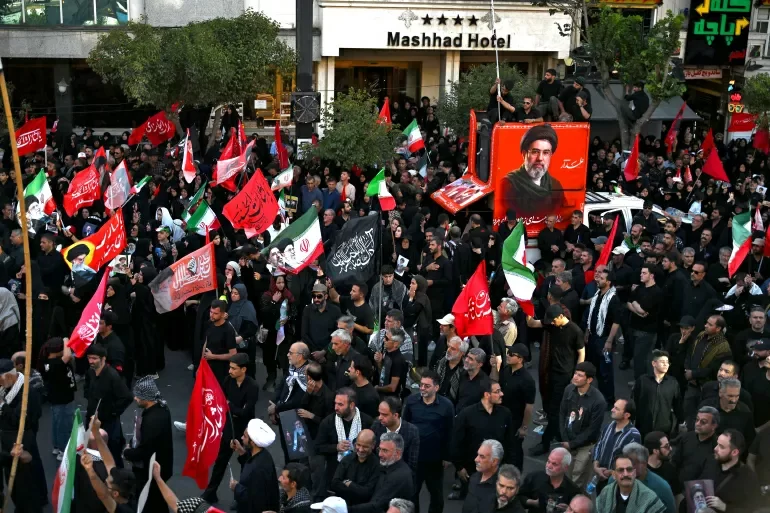
    Tensions between the United States and Iran have spiked to new heights after Iran’s Supreme Leader issued a stark warning to Washington on Saturday, threatening that continued U.S. attacks will prompt severe, lasting retaliation from Tehran and its regional network of allies. The statement, delivered on Iranian state television, comes on the heels of a sharp escalation in American military strikes that targeted critical Iranian civilian infrastructure this week. These strikes hit key public assets including bridges, railway lines, and water desalination facilities, bringing the months-long conflict that also involves Israeli military support for the U.S. campaign directly to ordinary Iranian citizens.

    In his public address, Supreme Leader Mojtaba Khamenei accused the United States of repeatedly violating a Qatar- and Pakistan-brokered memorandum of understanding (MoU) signed just one month prior that was designed to lay the groundwork for a permanent end to hostilities. He dismissed the signature of U.S. President Donald Trump on the peace framework as completely worthless, arguing that repeated American breaches of international agreements have laid bare the inherent nature of U.S. foreign policy. “Repeated violations of agreements by the Great Satan have once again proven that the American president’s signature has no value, and that intimidation, hegemony, and cruelty are inseparable from U.S. policy,” Khamenei’s statement read.

    In response to this week’s U.S. strikes, Tehran has already carried out successful retaliatory attacks against civilian targets in Kuwait, prompting Kuwaiti authorities to issue urgent public appeals for citizens to reduce electricity consumption amid widespread disruptions. The ongoing conflict, which first erupted in February, is viewed by Iran’s top leadership as an existential threat to the country, and despite mounting pressure from the Trump administration and behind-the-scenes diplomatic efforts by regional powers to broker a de-escalation, Tehran has shown no willingness to compromise or back down.

    Khamenei used the address to call on the Iranian people to maintain faith in the country’s leadership, and to remain vigilant and engaged as the conflict continues. He doubled down on his criticism of the U.S., accusing Washington of deception, irrationality, untrustworthiness, and bad faith, saying the conflict has revealed the United States’ true character to the global community.

    The broader regional ripple effects of the escalating standoff are already starting to emerge. Recent reports indicate that Yemen’s Houthi rebels, a long-time key ally of Iran, are considering closing the strategic Bab al-Mandeb strait, a critical shipping chokepoint connecting the Red Sea to the Gulf of Aden, to show solidarity with Tehran. A closure of this key waterway would send shockwaves through global energy markets, further driving up international inflation and increasing political pressure on the Trump administration to halt its military campaign against Iran.

    Just one month after it was signed, both the U.S. and Iran have already declared the Qatari-Pakistani brokered MoU defunct, with each side accusing the other of systematic violations of the agreement’s terms. Domestically, the conflict has become deeply unpopular among the American public, and has already inflicted significant economic harm on U.S. households, amplifying political pressure on the Trump administration to wind down the military campaign. As of this report, the regional security situation remains highly volatile, with Tehran reiterating its unwavering commitment to resisting what it frames as American aggression and hegemony.


  • Ouders pleiten voor blijvende voortzetting van GRO-programma

    Ouders pleiten voor blijvende voortzetting van GRO-programma

    On July 19, a parent gathering hosted by the Ministry of Youth Development and Sport at the multifunctional community center in Sophia’s Lust brought to light growing public support for the department’s flagship GRO (Growth, Direction & Development) youth initiative, alongside new calls for long-term program stability and expanded support for caregiver skill development.

    Parents of children enrolled in the GRO program opened the discussion by sharing tangible, positive changes they have observed in their kids since joining the initiative. Many reported clear improvements in children’s behavioral regulation, academic motivation, and classroom performance, with attendees uniformly expressing strong gratitude for the program’s work and urging government officials to lock in its permanent status. The gathering was intentionally structured to create a structured space for caregivers to share on-the-ground experiences and outline unmet needs related to the initiative.

    Beyond celebrating youth outcomes, parents also used the meeting to highlight a gap in current programming: opportunities for their own personal and professional growth. Attendees proposed adding a range of adult skills training modules, including information and communications technology (ICT) literacy, bread and snack preparation, textile processing, parenting coaching, and family planning education. Parents argued that these offerings would not only advance individual growth for caregivers but also strengthen family stability at home, creating a more supportive environment for young people to thrive.

    Milton Tuart, Acting Deputy Director of Youth Centers at the ministry, led the government side of the conversation, engaging directly with parents on all proposals and addressing questions about the program’s future trajectory. In closing, parents reaffirmed that the GRO program delivers irreplaceable value for child and youth development across the country, stressing that its long-term survival should not be tied to shifting political priorities. This step, they argued, would ensure that future generations of young people can access the same life-changing opportunities that current participants enjoy.

    First launched by the Ministry of Youth Development and Sport, the GRO program was designed to foster holistic personal, social, and community development for children and adolescents. Its core offerings include after-school enrichment activities, talent discovery programs, social skills training, structured parent engagement initiatives, and holiday programming, all built to help young people uncover their unique strengths, build lasting self-confidence, and grow into well-rounded community members. Ministry officials have repeatedly emphasized that sustained parent engagement is one of the program’s core pillars of success. By fostering collaborative partnerships between parents, schools, civil society organizations, and other community stakeholders, the ministry aims to build a supportive ecosystem where all young people can reach their full potential.

  • Zapping Haiti of July 19, 2026

    Zapping Haiti of July 19, 2026

    In a series of developments across Haiti in mid-July 2026, the country has progressed on multiple fronts, from anti-gang law enforcement actions to humanitarian relief for displaced populations, international cooperation on anti-corruption efforts, and preparations for long-awaited cultural and educational milestones.

    Northern Haiti law enforcement has scored major victories against organized gang activity. The Northern Department Police (DDN) released a public operational briefing on Saturday, July 18, detailing results from a six-and-a-half-week crackdown running from June 1 through July 17, 2026. The operation, conducted to curb rising violent crime in the region, resulted in the deaths of two high-ranking gang leaders during armed exchanges with officers, along with multiple other fatalities among lower-ranking gang members. Authorities also seized eight illegal firearms as part of the raids. The first high-profile fatality came on June 28, when gang leader Alland Gérôme, widely known by his alias “Jhon”, was killed during an operation in the commune of Limonade. Just over two weeks later, on July 15, a second operation in the Latanbri area of Cap-Haïtien’s Morin neighborhood eliminated gang leader Peterson Belony and his senior associate, only identified by the street name “Dejwe”. In total, 391 suspects were taken into custody across the operation, facing charges ranging from murder, attempted murder, armed robbery and sexual assault to kidnapping, unlawful detention, illegal weapons possession, criminal conspiracy and breach of public trust.

    In Kenscoff, where widespread armed violence has displaced tens of thousands of residents, humanitarian organizations are ramping up relief efforts to address the growing emergency. On July 15, a delegation from Haiti’s Social Assistance Fund (CAS), led by executive director Jhony Raphaël, held coordination talks with Kenscoff Mayor Jean Massillon to organize support for the municipality’s 35,000 displaced people, grouped across roughly 7,000 displaced families. CAS has already begun distributing 2,000 pre-packaged food kits to affected households, and is expanding its relief plan to provide 7,000 personal hygiene kits specifically targeted at women and girls. A specialized mobile social work team will also be deployed across the municipality to locate and support an additional 500 at-risk vulnerable people, including elderly residents and people living with disabilities who have been displaced by violence.

    On the governance front, Haiti’s national government is moving to strengthen international cooperation to tackle systemic corruption. Prime Minister Fils-Aimé, joined by Special Advisor Guerly Leriche, met with Monica Juma, Executive Director of the United Nations Office on Drugs and Crime (UNODC) and Director-General of the United Nations Office at Vienna (UNOV), who traveled to Port-au-Prince alongside a large UN delegation. The two sides held in-depth discussions on expanding bilateral collaboration across multiple priority areas, including anti-corruption enforcement, development of specialized judicial hubs, improved border security, and exploration of new joint initiatives. Prime Minister Fils-Aimé reaffirmed the Haitian government’s unwavering commitment to upholding the rule of law and eradicating public corruption, highlighting ongoing reforms already implemented by the Ministry of Justice. These reforms include the transfer of roughly 40 pending high-level corruption cases to judges at specialized anti-corruption judicial hubs for accelerated processing.

    In cultural news, one of Haiti’s most prominent feminist events is preparing to mark its 10th anniversary this month. Organizers announced that the 10th edition of the Nègès Mawon Feminist Festival will run from Wednesday, July 22 to Saturday, July 25 2026 in Port-au-Prince, held this year under the theme *Batay Nou Makonnen*. To celebrate a decade of feminist organizing and programming, a full schedule of events has been planned across the festival run. Conferences, artistic performances, film screenings followed by open community discussions, skills-building workshops and social gatherings at the Nègès Salon will take place on July 23 and 24 at the dedicated Nègès Mawon venue. The festival will conclude with a closing ceremony on July 25 at a hotel in Pétionville, headlined by the *Alarive lanmou* concert featuring performances from Lunise Morse of the group Ram, Riva Nyri, and Charline Jean-Gilles of Nanm Vodou a, with overall direction from Haitian actress Gaëlle Bien-Aimé.

    The United Nations has also enacted new sanctions against Haitian organized crime, adding three major Haitian criminal groups to its global sanctions blacklist: Gran Grif based in the Artibonite department, and Kraze Baryè and 400 Mawozo both operating in the country’s western department.

    In educational updates, Haiti’s Minister of National Education Vijonet Déméro issued a public statement on Friday, July 17, 2026 congratulating students and education staff on the successful completion of national baccalaureate exams. Déméro noted that the exam period proceeded without any major security or administrative incidents, and officially confirmed that centralized grading of all exam papers will begin on Monday, July 20.

  • Adhin wil themavergadering over veiligheid; Jones hekelt afwezigheid DNA-leden in commissievergadering

    Adhin wil themavergadering over veiligheid; Jones hekelt afwezigheid DNA-leden in commissievergadering

    Suriname’s National Assembly is moving toward a dedicated thematic plenary session focused on the country’s worsening public safety crisis, but the path forward hinges on a key procedural vote scheduled for Tuesday. Ahead of that vote, Assembly Speaker Ashwin Adhin has called a Monday meeting with parliamentary faction leaders to align on the proposal to establish a formal standing security committee, a prerequisite for holding the requested thematic debate.

    The push for a focused debate on rising insecurity emerged after heated recent parliamentary discussions that saw multiple lawmakers level sharp criticism at the security policies and public response of Harish Monorath, Minister of Justice and Police. But NDP parliamentary faction member Ebu Jones has upended the conversation by calling out his fellow legislators for performative criticism, pointing to a gap between public grandstanding and behind-the-scenes oversight work.
    Jones argued that far too many lawmakers skip closed-door committee meetings where security policy is discussed directly with the minister, only to deliver vocal criticism during televised public plenary sessions when cameras are rolling. Committees, he emphasized, are the core venue for legislators to conduct early oversight and adjust policy before issues escalate. In practice, he noted, the permanent standing committee for Justice and Police rarely meets with a quorum, with only a handful of members in attendance most sessions.
    “If security is truly as critical an issue as we claim it is, we need to show up even when there are no cameras rolling,” Jones said in an interview with Starnieuws. He added that even legislators who do not hold formal seats on the justice and police committee can attend as observers and contribute to the work, and pushed back against suggestions he was defending Minister Monorath. “This is not about protecting Monorath. This is about our own responsibility as elected representatives. The security challenge is far too important to turn it into a political show,” Jones stated.
    Jones also noted that an ad-hoc security committee already exists in parliament, chaired by Rabin Parmessar. The panel, which includes all faction leaders, was created after former government coordination minister André Misiekaba brought the alarming security situation in the country’s interior to legislative attention, and has held a small number of meetings to date. According to Jones, the committee’s faction leaders failed to deliver on their core mandate: they should have led in-depth investigations, produced a formal public report to the full assembly, and laid the groundwork for targeted talks with the administration on necessary policy reforms and additional budget allocations for security services.
    Beyond criticizing procedural failures, Jones also highlighted a key security concern around open debate: not all elements of the national security landscape can or should be discussed in public sessions. Details on the operational readiness, capabilities, and vulnerabilities of the military, police, and other security services should be debated in a closed committee of the whole assembly, he argued. Open public discussion of these details risks exposing sensitive information that could undermine national security, he added.
    Following Adhin’s Monday consultations with faction leaders, a procedural vote will be held during Tuesday’s internal housekeeping session to approve the creation of the new security committee. Once that step is complete, the date for the long-awaited thematic plenary debate on national security will be finalized.

  • Diaspora : 20th edition of the Haiti en Folie Festival (program, video)

    Diaspora : 20th edition of the Haiti en Folie Festival (program, video)

    Montreal’s beloved celebration of Haitian culture is gearing up for a landmark milestone this summer, as the Fabienne Colas Foundation prepares to launch the 20th edition of the Haiti en Folie Festival, presented by TD Bank Group. Running from July 23 to 27, 2026, this year’s hybrid programming blends in-person outdoor experiences across four iconic Montreal public spaces with accessible online content, inviting both local attendees and global audiences to engage with the rich artistic and cultural heritage of Haiti. More than 200 artists from across North America and the Caribbean are set to take part in the five-day event, which will unfold at Parc Lafontaine, Quartier des Spectacles, Jardins Gamelin, and Parc des Compagnons.

    The 2026 festival lineup is packed with diverse offerings for visitors of all interests, centered around a core schedule of TD-sponsored music performances, industry conferences, literary showcases, the popular SAQ Food and Craft Fair, panel discussions, hands-on workshops, the annual Rara parade, and dozens of family-friendly interactive activities. To mark the 20th anniversary of the event, headlining musical performances will come from a stacked roster of acclaimed talent, including Grammy-nominated Haitian roots group Boukman Eksperyans, award-winning international artist BélO, multidisciplinary creator Rebecca Jean, rising R&B performer Papi Jay, and vocalists Ericka Julie, Jessie Simmons, and Modeline Raymond, alongside emerging acts Cinthia Michel, Sara Rénélik (performing as Luna Taina), Barnev, and the Montreal Community Choir.

    A fan-favorite staple of the festival, the annual Rara Parade will mark its own 10th consecutive year as part of the 2026 event. The decade-old parade was created to honor Haiti’s national soccer team, the Grenadiers, who made history by qualifying for the FIFA World Cup in 2010, ending a 52-year drought for the nation. This year’s parade will feature energetic live sets from Rara Jazz, Rara Pa Nou, and Ayiti Makaya, carrying forward the tradition of celebration that has defined the event for a decade.

    Additional standout programming includes the late-afternoon “Haiti Madness 5 to 7” showcase, which will feature DJ sets from DJ Cliff and DJ Nalee, alongside live performances from Ensemble Afrovibes and Kayos KF. Visitors can also explore curated literary events, join thoughtful panel discussions on Haitian arts, culture, and diaspora life featuring creator Sara Renélik, Grammy-winning musician Wesli, multidisciplinary artist Rebecca Jean, poet Sylphir, and many other leading voices from the Haitian community. The SAQ Haiti en Folie Food Fair, a perennially popular attraction, will return to offer attendees a chance to sample authentic Haitian cuisine and handcrafted goods from local vendors. All online programming, including pre-recorded panel discussions and film screenings, will be accessible to remote attendees around the world, expanding the festival’s reach beyond Montreal’s city limits.

    Full information on the festival schedule, venue locations, ticket access, and online viewing options is available now on the official Haiti en Folie website at www.HaitiEnFolie.com.

  • Derde helft WK 2026: Deschamps speelt laatste WK-wedstrijd, Zidane wacht in de coulissen

    Derde helft WK 2026: Deschamps speelt laatste WK-wedstrijd, Zidane wacht in de coulissen

    July 18, 2026 — As Didier Deschamps walked down the stadium tunnel for the final time as manager of the French men’s national football team, a banner held aloft by a French fan spelled out a simple, heartfelt tribute: “Merci Didier”. After 14 years at the helm of one of the world’s most successful football nations, the 57-year-old wrapped up his historic tenure following the 2026 FIFA World Cup third-place playoff against England, closing out a chapter that cemented his place as one of the most decorated figures in football history.

    Deschamps leaves the role as one of only three men in history to win the World Cup both as a player and a head coach, and holds the record for the most World Cup match wins by any manager, with 19 victories across his tournament appearances. He made his 27th World Cup appearance on the French bench in the third-place match — another record for a French national team manager.

    A title that Deschamps desperately wanted to add to his legacy was a third World Cup crown as a manager, which would have capped off a remarkable career spanning every level of the sport. Les Bleus entered the 2026 World Cup in the United States as clear favorites, dazzling fans with an attacking, dynamic style of play that signaled a shift from Deschamps’ traditionally more conservative tactical approach. But France’s run for a third consecutive World Cup final came to a crashing halt in the semi-finals, with a painful 2-0 defeat to eventual champions Spain, knocking them out of title contention and leaving them to contest the bronze medal match instead.

    In the lead-up to his final fixture, Deschamps downplayed expectations of an emotional farewell. “I have had the privilege to live through magical moments, but I have also been through difficult ones,” he told reporters. “Life goes on. I am positive, I know everything will work out. This job is the greatest thing that ever happened to me.”

    Deschamps will forever be remembered as the architect who rebuilt French football from its lowest point in recent decades. He first lifted the World Cup as captain of France’s iconic 1998 squad, which delivered the nation’s first ever World Cup title. Two decades later, after a disastrous 2010 World Cup campaign that saw France crash out in the group stage amid a player mutiny against then-manager Raymond Domenech, the French Football Federation turned to Deschamps to restore morale and pride to the national side. While successor Laurent Blanc guided France to the Euro 2012 quarter-finals, it was Deschamps who breathed new life into the program, leading Les Bleus to World Cup glory in Russia 2018, and launching global superstars such as Kylian Mbappé onto the world stage in the process.

    His tenure was not without heartbreak: he suffered a narrow defeat to Portugal in the Euro 2016 final, then lost the 2022 World Cup final to Argentina on penalties, falling just short of defending his 2018 title. The 2026 World Cup campaign also brought personal hardship, as Deschamps missed one group stage match following the death of his mother.

    Even with the semi-final disappointment, Deschamps’ track record remains unmatched by almost any international manager: he guided France to at least the semi-final stage in five out of the seven major tournaments he entered. When asked earlier in the 2026 tournament about the secret to his long-running success, he remained characteristically humble: “I don’t know, maybe just very good players. But it seems I don’t do my job that badly.”

    In the year leading up to the 2026 World Cup, Deschamps adjusted his long-held pragmatic approach to the game, giving greater attacking freedom to star forwards including Mbappé, Ousmane Dembélé and Michael Olise in response to years of criticism of his defensive-minded tactics. Still, that shift left France exposed against a clinical Spanish side in the semi-final, cutting short his bid for a fairytale ending to his tenure.

    Now, as Deschamps exits the international stage, all eyes have turned to his expected successor: Zinedine Zidane, Deschamps’ former 1998 World Cup teammate and one of the greatest French footballers of all time. It has been an open secret for months that Zidane has been groomed to take over the role, and the 54-year-old former Real Madrid manager has been preparing for the position since he left the Spanish club in 2021. Zidane has repeatedly stated that managing France is his lifelong dream, a goal that appears set to be realized in the coming weeks.

    French Football Federation president Philippe Diallo highlighted the high bar for the role earlier this year in an interview with *Le Figaro*: “There are not many people who can lead one of the world’s greatest national teams. It has to be someone who meets every requirement, and someone all of France can stand behind.” While Zidane is the overwhelming favorite to take the job, he will inherit a massive legacy and sky-high expectations that will make his tenure one of the most closely watched roles in international football. After the final whistle of Deschamps’ last match, French football stands ready to begin its next chapter.

  • Cap

    Cap

    In a formal ceremony held July 17 at Cap-Haïtien’s Versailles Complex, Haiti’s national police force (Police Nationale d’Haïti, PNH) officially kicked off the second phase of its groundbreaking outreach campaign, “PNH New Generation: Women at the heart of change.” The targeted initiative is designed to break down historical barriers to female entry in law enforcement, encouraging more professional women across the country to pursue careers with the PNH while reshaping the institution’s public image through greater gender diversity.

    The launch event drew senior police leadership, United Nations officials, and community stakeholders, including Divisional Commissioner Ernst Dorfeuille, the North Department’s PNH director; Louis Guerro Plancher, representative of the United Nations Development Programme (UNDP); Divisional Commissioner Erna Royal, UNDP Focal Point for the program’s Basket Fund; and Divisional Commissioner Étienne Salvador, PNH’s community policing coordinator.

    Speakers across all participating organizations aligned on a core message: expanding women’s representation within the PNH is a critical step toward repairing and deepening trust between law enforcement and local communities, as well as advancing ongoing institutional modernization efforts across Haiti’s national police force.

    Divisional Inspector Nativita Kerline Jean Philippe, head of gender-based violence response for the North Department, highlighted the on-the-ground practical benefits of increasing female police presence. She noted that greater gender balance within the force would allow officers to more effectively respond to Haiti’s complex social realities, particularly by delivering more culturally appropriate, trauma-informed support to survivors of gender-based violence.

    Representing the PNH’s Police Recruitment Service (SRP), Municipal Inspector Paul Smith Bonne Année walked attendees through the campaign’s next steps, outlining official admission requirements for new recruits, breaking down the multi-stage recruitment process, and detailing long-term career growth pathways available within the force. He closed his remarks by inviting all eligible attendees to bring their skills and experience to public service, serving the Haitian nation through a career in law enforcement.

    Following formal presentations, the event concluded with an interactive question-and-answer session between speakers and attending community members. Participants demonstrated significant enthusiasm and interest in the campaign, raising detailed questions about recruitment eligibility, career advancement opportunities, and institutional onboarding processes—all of which received clear, direct responses from the event’s panel.

    International partners are backing the second phase of the campaign to advance police reform in Haiti. The initiative receives core funding from the European Union, is implemented on the ground by the UNDP, and is being executed by local Haitian firm KONEKTE, as part of a broader international effort to strengthen the institutional capacity of the Haitian National Police amid ongoing governance and security challenges in the country.

  • Japan bilateral meeting

    Japan bilateral meeting

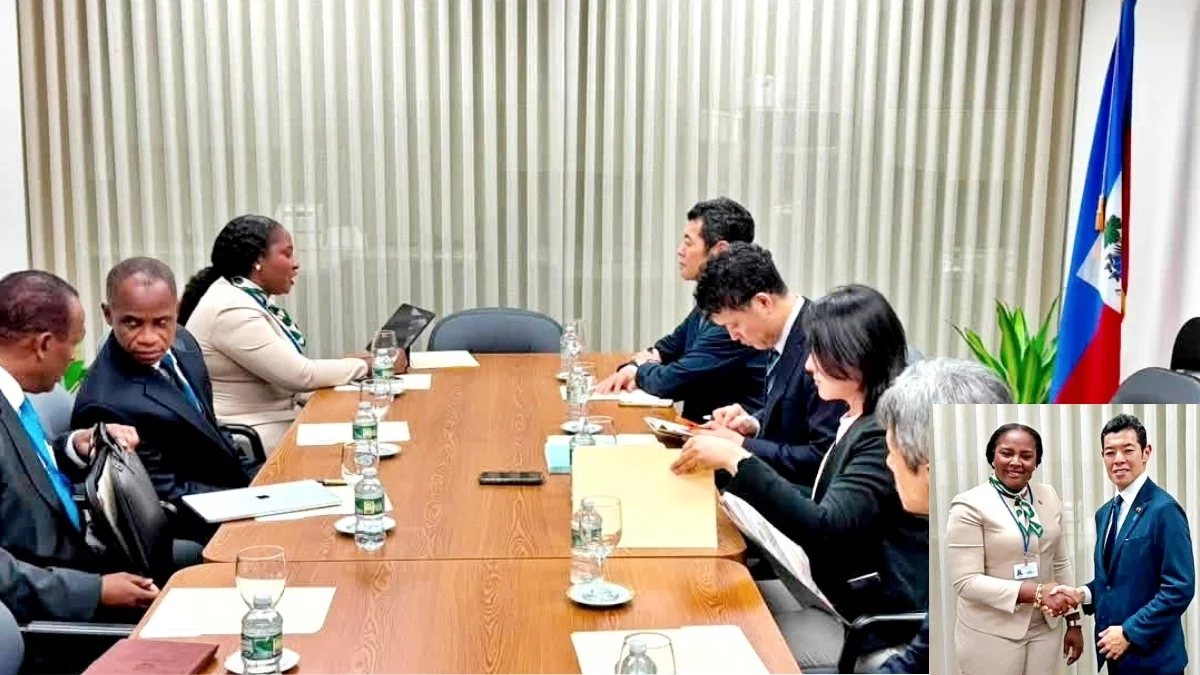
    Amid the high-level convenings of the UN Economic and Social Council (ECOSOC), top diplomatic officials from Haiti and Japan gathered this week at Haiti’s Permanent Mission to the United Nations for targeted talks focused on revitalizing long-standing bilateral development cooperation. The meeting brought together Sandra Paulemon, Haiti’s Minister of Planning and External Cooperation, and Kiyoto Tsuji, Japan’s Minister of the Environment, to align on shared priorities and outline next steps for expanded support to Haiti’s ongoing recovery efforts.

    Opening the discussion, Minister Paulemon extended Haiti’s formal and deep gratitude to the Japanese government for its unwavering support spanning more than 15 years, particularly in the aftermath of Haiti’s catastrophic 2010 earthquake. In that crisis, Japan stepped forward to mobilize more than $100 million in combined humanitarian aid, cash donations, technical expertise, and targeted reconstruction assistance, a commitment that has delivered tangible benefits to Haitian communities across multiple key sectors.

    Paulemon emphasized that Japanese-backed initiatives have directly advanced Haiti’s progress toward the UN Sustainable Development Goals, with successful projects spanning public health, education, agricultural development, critical infrastructure, and disaster risk reduction. She highlighted a roster of completed, impactful works: the full reconstruction and equipping of the Jacmel general hospital, the major rehabilitation of Léogâne’s community water supply system, the construction and upgrade of dozens of primary and secondary schools across vulnerable regions, farmer-focused agricultural extension programs, and nationwide disaster preparedness training initiatives that have strengthened local response capacity.

    During the meeting, Paulemon outlined the core priorities of Haiti’s newly drafted national framework, the Economic, Social, and Territorial Stabilization and Recovery Program (PNSREST), which the Haitian government is finalizing to guide its multi-year recovery and stabilization agenda. She formally invited Japan to contribute to the program’s centralized common financing Basket Fund, which is designed to pool international resources to advance Haiti’s top national recovery priorities. She also added a request for targeted budgetary support from Japan to back Haiti’s upcoming 2026-2027 national budget, which is currently in the final stages of preparation.

    A key request put forward by the Haitian delegation centered on resuming a long-standing humanitarian aid mechanism that has been paused since 2020. Paulemon asked Japanese officials to reactivate the country’s humanitarian aid program, which was previously implemented through Haiti’s Bureau for the Monetization of Development Assistance Programs (BMPAD). She stressed that restoring this channel would be critical to expanding support for Haiti’s most vulnerable populations and accelerating the government’s ongoing economic and social recovery work. She also requested expanded partnership in technology and innovation, noting that Japan’s global leadership in technological transformation, climate and disaster resilience, and risk management offers a valuable blueprint that Haiti can leverage to strengthen its own institutional capacity and improve the delivery of public services.

    In response, Minister Tsuji acknowledged the deep, positive diplomatic roots that tie the two nations together, recalling a striking moment of mutual solidarity following the 2011 Great East Japan Earthquake and tsunami: even in the wake of its own devastating national disaster just one year prior, the Haitian people and government extended meaningful support to Japan during its time of crisis. That reciprocal solidarity, he noted, forms the foundation of the strong bilateral relationship today.

    Tsuji confirmed that the Japanese government will give full, careful consideration to all of the requests put forward by the Haitian delegation, covering everything from technological partnership to participation in the PNSREST framework. He signaled clear positive momentum on the request to resume BMPAD-mediated humanitarian aid, noting that Japan would move forward with reviewing the proposal in close coordination with the Japanese Embassy in Port-au-Prince to identify the most effective forms of support for Haitian communities. Following the meeting, Haiti’s Ministry of Planning announced that it will continue sustained bilateral discussions with Japanese authorities to turn the outlined cooperation prospects into tangible, large-scale projects that support long-term stabilization, inclusive economic growth, social development, and recovery across Haiti.

  • Derde helft WK 2026: Spectaculaire troostfinale eindigt in 6-4-zege voor Engeland

    Derde helft WK 2026: Spectaculaire troostfinale eindigt in 6-4-zege voor Engeland

    The 2026 FIFA World Cup third-place playoff delivered a historic, high-scoring spectacle at Miami Stadium in Florida that far exceeded every fan’s expectation, capping off a thrilling tournament with a match that will be remembered for decades. What was billed as a consolation match turned into a rollercoaster of goals, comebacks, and record-breaking performances that kept spectators on the edge of their seats from the opening whistle to the final minute.

  • Mace Defends Bill Seeking Permanent Entry Ban for Nationals

    Mace Defends Bill Seeking Permanent Entry Ban for Nationals

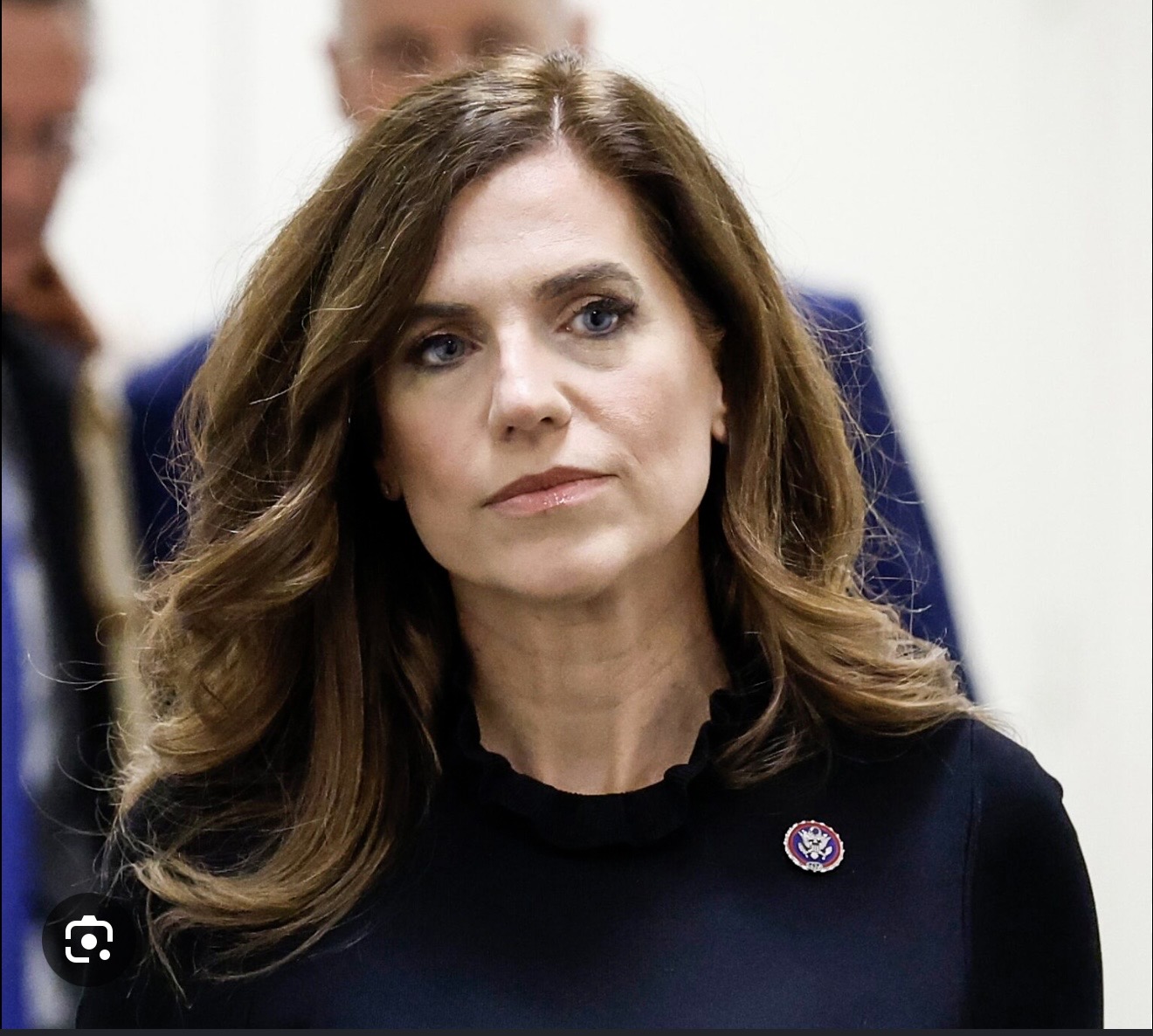
    A new controversial immigration proposal has been put forward by Republican U.S. Representative Nancy Mace of South Carolina, seeking to impose a broad entry ban on non-citizens from more than 40 developing countries, labeled as ‘third world nations’ in the legislation. The bill, officially named the Third World Immigration Moratorium Act, targets countries that Mace’s office claims have consistently refused to cooperate with American deportation protocols, declined to share required vetting data for their citizens seeking entry, and forced local U.S. communities to absorb the associated security and social costs.

    In Mace’s framing, none of the countries included in the ban meet the threshold to grant their citizens the privilege of entering the United States. She argues that a significant number of the listed nations are either state sponsors of terrorist activity, openly hostile authoritarian regimes, or collapsed failed states that have a documented history of exporting violence and instability to U.S. territory.

    Speaking on the legislation, Mace emphasized that the era of unaddressed gaps in U.S. immigration policy has come to an end. “The American people are done playing games and so are we. For too long, Washington has looked the other way while bad actors exploited every gap in our system and American families paid the price. Those days are over,” Mace stated. She doubled down on the hardline stance in her remarks, saying, “If you import the third world, you will become the third world. This bill makes crystal clear: entry into the United States is a privilege, not a right. We make absolutely no apologies for defending it.”

    The list of countries covered by the entry ban directly aligns with the geographic scope of a controversial travel restriction proclamation first introduced by former President Donald Trump. Among the nations included are Afghanistan, Iran, Syria, Venezuela, Yemen, Cuba, Somalia, Libya, and 32 other countries, alongside non-citizens holding travel documents issued by the Palestinian Authority.

    The legislation includes narrow, targeted exceptions to the ban for specific groups. Lawful permanent residents of the U.S. are exempt, as are dual citizens who hold nationality from a non-designated country. Diplomatic staff and personnel affiliated with NATO treaty obligations are also excluded from the prohibition, alongside elite athletes competing in major international events such as the Olympic Games and FIFA World Cup. Special immigrant visa holders — including individuals who previously served alongside U.S. military forces in conflict zones — are granted exceptions, as are individuals fleeing verified ethnic and religious persecution in Iran. The U.S. Secretary of Homeland Security also retains the authority to grant discretionary waivers on a case-by-case basis when entering the country is determined to serve a critical verified national interest.

    Mace defended the proposal’s broad scope, framing it as a common-sense measure to address long-running failures in U.S. immigration policy. “We are not a dumping ground for the third world’s problems. This bill is a straightforward solution to keep dangerous aliens out and send a message to every country on this list: the free ride is over,” she added.

    Beyond the entry restrictions, the bill requires the U.S. Secretary of State, working in consultation with the Attorney General, Secretary of Homeland Security, and Director of National Intelligence, to submit a bipartisan report to Congress every 180 days. The report must assess whether the current entry prohibitions should be maintained, adjusted, or expanded to include additional countries based on changing national security conditions and foreign government cooperation.