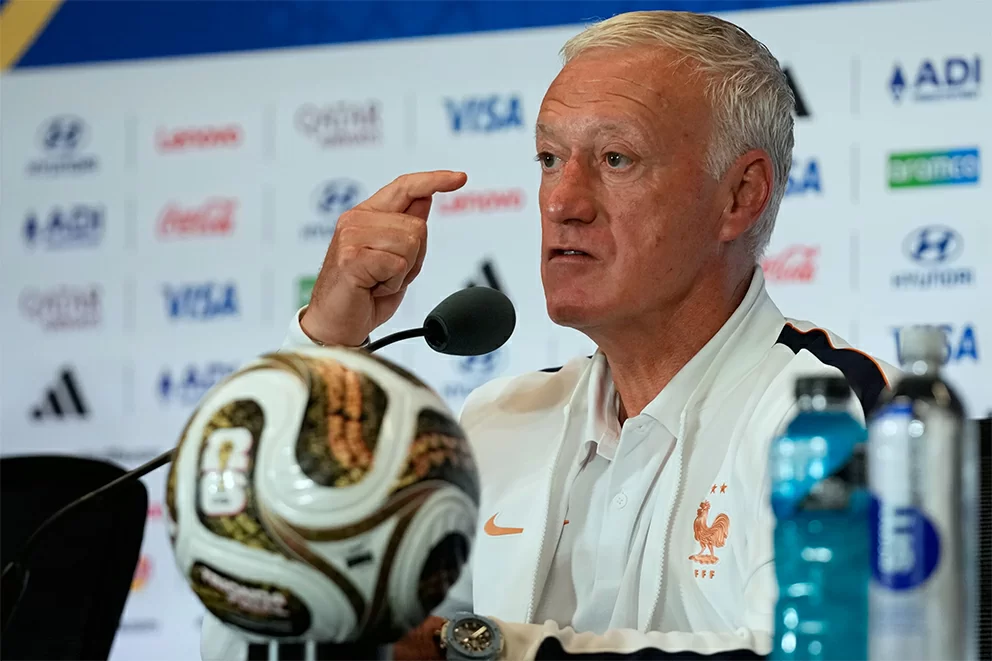
July 18, 2026 — As Didier Deschamps walked down the stadium tunnel for the final time as manager of the French men’s national football team, a banner held aloft by a French fan spelled out a simple, heartfelt tribute: “Merci Didier”. After 14 years at the helm of one of the world’s most successful football nations, the 57-year-old wrapped up his historic tenure following the 2026 FIFA World Cup third-place playoff against England, closing out a chapter that cemented his place as one of the most decorated figures in football history.
Deschamps leaves the role as one of only three men in history to win the World Cup both as a player and a head coach, and holds the record for the most World Cup match wins by any manager, with 19 victories across his tournament appearances. He made his 27th World Cup appearance on the French bench in the third-place match — another record for a French national team manager.
A title that Deschamps desperately wanted to add to his legacy was a third World Cup crown as a manager, which would have capped off a remarkable career spanning every level of the sport. Les Bleus entered the 2026 World Cup in the United States as clear favorites, dazzling fans with an attacking, dynamic style of play that signaled a shift from Deschamps’ traditionally more conservative tactical approach. But France’s run for a third consecutive World Cup final came to a crashing halt in the semi-finals, with a painful 2-0 defeat to eventual champions Spain, knocking them out of title contention and leaving them to contest the bronze medal match instead.
In the lead-up to his final fixture, Deschamps downplayed expectations of an emotional farewell. “I have had the privilege to live through magical moments, but I have also been through difficult ones,” he told reporters. “Life goes on. I am positive, I know everything will work out. This job is the greatest thing that ever happened to me.”
Deschamps will forever be remembered as the architect who rebuilt French football from its lowest point in recent decades. He first lifted the World Cup as captain of France’s iconic 1998 squad, which delivered the nation’s first ever World Cup title. Two decades later, after a disastrous 2010 World Cup campaign that saw France crash out in the group stage amid a player mutiny against then-manager Raymond Domenech, the French Football Federation turned to Deschamps to restore morale and pride to the national side. While successor Laurent Blanc guided France to the Euro 2012 quarter-finals, it was Deschamps who breathed new life into the program, leading Les Bleus to World Cup glory in Russia 2018, and launching global superstars such as Kylian Mbappé onto the world stage in the process.
His tenure was not without heartbreak: he suffered a narrow defeat to Portugal in the Euro 2016 final, then lost the 2022 World Cup final to Argentina on penalties, falling just short of defending his 2018 title. The 2026 World Cup campaign also brought personal hardship, as Deschamps missed one group stage match following the death of his mother.
Even with the semi-final disappointment, Deschamps’ track record remains unmatched by almost any international manager: he guided France to at least the semi-final stage in five out of the seven major tournaments he entered. When asked earlier in the 2026 tournament about the secret to his long-running success, he remained characteristically humble: “I don’t know, maybe just very good players. But it seems I don’t do my job that badly.”
In the year leading up to the 2026 World Cup, Deschamps adjusted his long-held pragmatic approach to the game, giving greater attacking freedom to star forwards including Mbappé, Ousmane Dembélé and Michael Olise in response to years of criticism of his defensive-minded tactics. Still, that shift left France exposed against a clinical Spanish side in the semi-final, cutting short his bid for a fairytale ending to his tenure.
Now, as Deschamps exits the international stage, all eyes have turned to his expected successor: Zinedine Zidane, Deschamps’ former 1998 World Cup teammate and one of the greatest French footballers of all time. It has been an open secret for months that Zidane has been groomed to take over the role, and the 54-year-old former Real Madrid manager has been preparing for the position since he left the Spanish club in 2021. Zidane has repeatedly stated that managing France is his lifelong dream, a goal that appears set to be realized in the coming weeks.
French Football Federation president Philippe Diallo highlighted the high bar for the role earlier this year in an interview with *Le Figaro*: “There are not many people who can lead one of the world’s greatest national teams. It has to be someone who meets every requirement, and someone all of France can stand behind.” While Zidane is the overwhelming favorite to take the job, he will inherit a massive legacy and sky-high expectations that will make his tenure one of the most closely watched roles in international football. After the final whistle of Deschamps’ last match, French football stands ready to begin its next chapter.