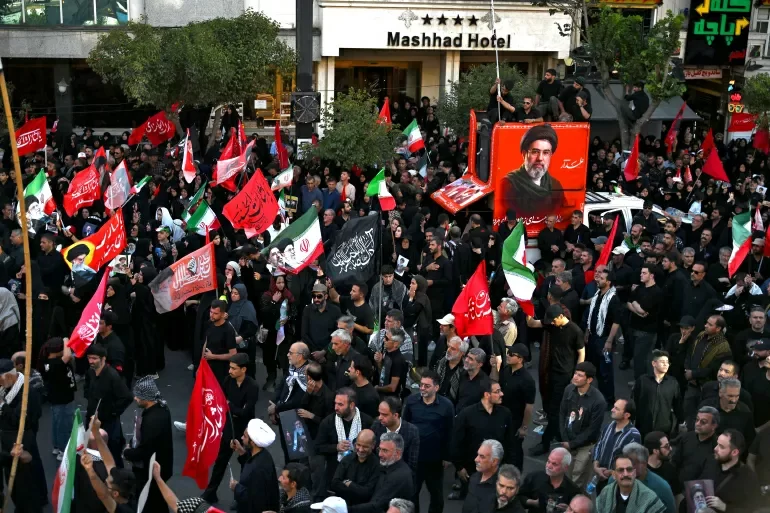
Tensions between the United States and Iran have spiked to new heights after Iran’s Supreme Leader issued a stark warning to Washington on Saturday, threatening that continued U.S. attacks will prompt severe, lasting retaliation from Tehran and its regional network of allies. The statement, delivered on Iranian state television, comes on the heels of a sharp escalation in American military strikes that targeted critical Iranian civilian infrastructure this week. These strikes hit key public assets including bridges, railway lines, and water desalination facilities, bringing the months-long conflict that also involves Israeli military support for the U.S. campaign directly to ordinary Iranian citizens.
In his public address, Supreme Leader Mojtaba Khamenei accused the United States of repeatedly violating a Qatar- and Pakistan-brokered memorandum of understanding (MoU) signed just one month prior that was designed to lay the groundwork for a permanent end to hostilities. He dismissed the signature of U.S. President Donald Trump on the peace framework as completely worthless, arguing that repeated American breaches of international agreements have laid bare the inherent nature of U.S. foreign policy. “Repeated violations of agreements by the Great Satan have once again proven that the American president’s signature has no value, and that intimidation, hegemony, and cruelty are inseparable from U.S. policy,” Khamenei’s statement read.
In response to this week’s U.S. strikes, Tehran has already carried out successful retaliatory attacks against civilian targets in Kuwait, prompting Kuwaiti authorities to issue urgent public appeals for citizens to reduce electricity consumption amid widespread disruptions. The ongoing conflict, which first erupted in February, is viewed by Iran’s top leadership as an existential threat to the country, and despite mounting pressure from the Trump administration and behind-the-scenes diplomatic efforts by regional powers to broker a de-escalation, Tehran has shown no willingness to compromise or back down.
Khamenei used the address to call on the Iranian people to maintain faith in the country’s leadership, and to remain vigilant and engaged as the conflict continues. He doubled down on his criticism of the U.S., accusing Washington of deception, irrationality, untrustworthiness, and bad faith, saying the conflict has revealed the United States’ true character to the global community.
The broader regional ripple effects of the escalating standoff are already starting to emerge. Recent reports indicate that Yemen’s Houthi rebels, a long-time key ally of Iran, are considering closing the strategic Bab al-Mandeb strait, a critical shipping chokepoint connecting the Red Sea to the Gulf of Aden, to show solidarity with Tehran. A closure of this key waterway would send shockwaves through global energy markets, further driving up international inflation and increasing political pressure on the Trump administration to halt its military campaign against Iran.
Just one month after it was signed, both the U.S. and Iran have already declared the Qatari-Pakistani brokered MoU defunct, with each side accusing the other of systematic violations of the agreement’s terms. Domestically, the conflict has become deeply unpopular among the American public, and has already inflicted significant economic harm on U.S. households, amplifying political pressure on the Trump administration to wind down the military campaign. As of this report, the regional security situation remains highly volatile, with Tehran reiterating its unwavering commitment to resisting what it frames as American aggression and hegemony.