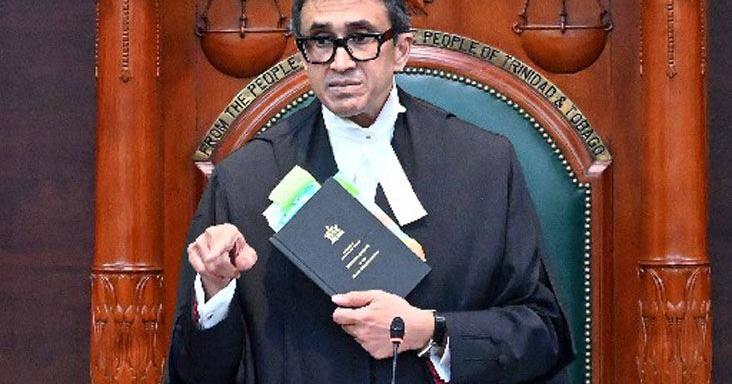
A high-stakes opposition bid to force the Trinidad and Tobago government to answer for persistent national water supply disruptions has collapsed in dramatic fashion on the floor of parliament, felled by a simple but fatal procedural error that has sidelined the opposition’s accountability push for months. The misstep came from Marvin Gonzales, the Member of Parliament for Arouca/Lopinot and former public utilities minister, who was tapped to table the private motion demanding the administration lay out concrete steps to resolve widespread water access issues. Under House rules, motion sponsors are granted 45 minutes to speak to their proposal, but by the time his allotted time expired, Gonzales had not uttered the mandatory phrase “I beg to move” – the formal step required to officially introduce the motion and open it for debate. After wrapping his 45-minute address, Gonzales took his seat, leaving the procedural checkmark unchecked, even as fellow opposition MP Colm Imbert of Diego Martin North/East moved to second the proposal. House Speaker Jagdeo Singh immediately flagged the serious procedural breach, questioning how the chamber could second a motion that had never been formally moved. Singh, who had already warned Gonzales when he had just four and a half minutes and 20 seconds of speaking time remaining, called a 15-minute recess to review the House’s Standing Orders and deliberate on the next steps. When lawmakers returned, Singh ruled the motion could not proceed, rejecting follow-up questions from Gonzales about the proper placement of the required phrase. Government business leader and current Public Utilities Minister Barry Padarath confirmed the administration would not condone a violation of Standing Orders, moving immediately to adjourn the House, which concluded its sitting at 2:59 p.m. with a new sitting scheduled for 10:30 a.m. on October 7. This marks the second time in less than a year that the main opposition People’s National Movement (PNM) has lost a high-profile private motion due to an identical procedural misstep. In November last year, a motion tabled by opposition leader Pennelope Beckles – which called on the House to condemn what Beckles framed as inflammatory statements from Prime Minister Kamla Persad-Bissessar on Trinidad and Tobago’s relations with Venezuela – suffered the same fate. On that occasion, Beckles incorrectly said “I beg to move” immediately after reading the motion text, before delivering her opening address, effectively ending her allotted speaking time before she could make her case. Like this week’s incident, Singh called a recess to review Standing Orders, ultimately ruling the motion could not proceed, despite noting that government officials should avoid being “overly technical” on procedural rules. After that 2023 incident, opposition leaders cried foul, pointing to an earlier procedural error by Homeland Security Minister Roger Alexander that had been allowed to proceed, accusing the government and speaker of selective enforcement and hypocrisy. The motion that fell this week carried significant public weight, focusing on a long-running livelihood issue affecting communities across Trinidad and Tobago. In his opening address before time expired, Gonzales slammed the current administration for failing to deliver on election campaign promises of equitable access to critical public services, highlighting that multiple infrastructure projects aimed at expanding access to piped water have been left incomplete or abandoned entirely. He called out underperformance across the sector: uncompleted tank farm projects, stalled development of new well sites, and persistently sub-par water levels at national reservoirs, while questioning whether the government was carrying out the routine maintenance required to keep the water network operational. “You can’t object to that. I mean, people need water,” Gonzales argued during his address, pushing for improved water access for rural communities across the country that have long faced inconsistent supplies.
博客
-

Jade Monkey withdraws from Tobago Jouvert
One of Tobago Carnival’s well-known participating bands, Jade Monkey Carnival, has announced a major change to its 2026 event plans, confirming it will step back from organizing the beloved Jouvert segment of the island’s iconic festival. The band’s leader, Seon Anthony, shared the official announcement in a public post to the band’s Facebook followers on Tuesday, opening the statement by addressing the group’s core community of masqueraders, event partners, long-time supporters, and the general Tobagonian public.
After months of careful deliberation and internal assessment, band leadership finalized the difficult call to cancel its planned 2026 Jouvert presentation, which was billed under the theme “Rise of the Empire”. In the post, the leadership emphasized that the decision was far from a casual one. A full organizational review was conducted to evaluate the current broader economic climate, as well as a range of day-to-day operational factors that would affect the band’s ability to put on the event. Ultimately, the team concluded that moving forward with the Jouvert presentation in 2026 would not let them meet the high bar of quality that their masqueraders have come to expect from the band year after year.
For the Jade Monkey team, Carnival is far more than just marching a collective of performers along the parade route. It is a cultural practice rooted in creating experiences that capture the vibrant energy, innovative creativity, and one-of-a-kind community spirit that defines the Jade Monkey brand. Any project that carries the band’s name is expected to deliver the exceptional, immersive experiences that the group has built its reputation on, the statement noted.
While the “Rise of the Empire” Jouvert presentation will not move forward as planned for the 2026 Tobago Carnival, the band remains committed to its role in the annual festival season. The group will still host its beloved signature Carnival event F.A.W.W, continuing its contribution to Tobago’s iconic cultural celebration.
Jade Monkey Carnival closed its statement by extending heartfelt gratitude to all masqueraders, corporate partners, official sponsors, and community supporters for their understanding, patience, and ongoing trust in the band’s leadership. The organization was quick to clarify that this exit is not a permanent end to the band’s Jouvert participation. “This is not goodbye, it is simply a moment to pause, regroup and look ahead,” the announcement read.
All masqueraders who have already completed their registration for the 2026 presentation will be contacted directly by the Jade Monkey team in the coming days to discuss their registration status and next steps. The band asked all affected participants to monitor their messages for the official communication, which will be sent to the contact information each registrant provided during the sign-up process.
-
BETTING ON GAMBLING
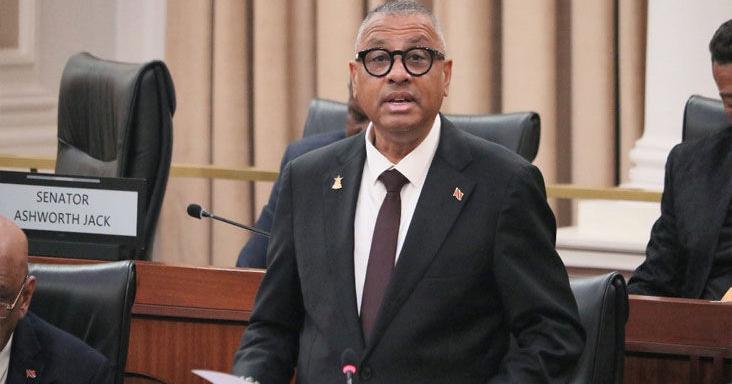
In a landmark legislative vote held yesterday morning, Trinidad and Tobago’s Senate has unanimously passed the Gambling (Gaming and Betting) (Remote Gambling) Order 2026, voting to amend the 2021 Gambling (Gaming and Betting) Act and establish a formal legal regime for regulated remote gambling operations nationwide.
First introduced by Minister of Finance Davendranath Tancoo, the regulatory order cleared the House of Representatives earlier this week, and secured cross-party backing from both opposition and independent legislators ahead of the Senate vote. The core change introduced by the order amends Section 76(1) of the existing act, which currently criminalizes the use of remote gambling infrastructure within Trinidad and Tobago for the purpose of soliciting or facilitating remote gambling participation from users in prohibited territories.
Speaking in robust support of the legislative change, Minister of Planning, Economic Affairs and Development Kennedy Swaratsingh framed the order as a critical step to unlock new economic opportunities and drive national growth, noting that decades of prohibition failed to eliminate unregulated, underground remote gambling activity in the country. According to Swaratsingh, the updated regulatory framework will generate new state revenue, create local job opportunities, nurture a domestic remote gambling sector, and boost the country’s foreign exchange reserves. He added that legalization will also allow Trinidad and Tobago to tap into a fast-expanding global industry projected to hit $700 billion in total annual revenue by 2028.
To back his argument, Swaratsingh referenced recent growth data from North America’s regulated gambling markets, where gross sports betting revenue ranged between $963 million and $1.3 billion from July 2025 to July 2026, with same-store sports betting revenue growing 31% over the same 12-month period. “These numbers confirm the massive scale and consistent growth of remote gambling revenue; while they do not offer a direct forecast for Trinidad and Tobago, they make one point impossible to ignore: it is no longer reasonable for our legislation to pretend this market does not exist,” he emphasized. “Overall, global data shows consistent expansion across the sector. Against the government’s goal of formalizing remote gambling to unlock economic opportunity, these figures create a positive outlook for Trinidad and Tobago’s gambling sector,” he added.
Swaratsingh explained that the update is a long-overdue modernization of Trinidad and Tobago’s gambling regulation, which was originally built on frameworks enacted as early as 1963 – a time before the internet, smartphones, and digital connectivity revolutionized global commerce. “Our outdated legal system was not designed for the current landscape of the global gambling industry, and that is why we are updating it to meet modern realities,” he said.
A key policy objective of the new order is to bring the economic value of online gambling into Trinidad and Tobago’s formal economy, tying the new regulatory regime to the already existing Gambling Control Commission to avoid institutional overlap. Swaratsingh stressed that legalization does not mean unregulated access: only operators that obtain a valid remote gambling license from the Commission and adhere to strict regulatory rules will be permitted to operate, and the government remains committed to tight oversight rather than open, unrestricted access.
Formalizing remote gambling, he noted, is a core component of the government’s broader national economic transformation agenda, which aims to encourage the development of non-traditional income sources and nurture a locally rooted digital gambling sector. Regulation also ensures that all licensed operators are subject to corporate income tax and business levies, guaranteeing the public shares in the sector’s profits. Swaratsingh added that the government’s shift away from prohibition is supported by existing preparatory work: the Central Bank of Trinidad and Tobago has already finalized work on licensing electronic money issuers, and completed public consultations on updated payment systems legislation.
“We are not pursuing open, unregulated gambling; we are building a properly supervised framework. Through this order, the government is seizing the chance to build a regulated industry that creates new economic activity, while strengthening the state’s ability to monitor and oversee all participating operators,” Swaratsingh said.
Despite the unanimous final vote, Opposition Senator Faris Al-Rawi raised critical questions about the timing and implementation of the order, saying he remained skeptical and that the move “does not make sense.” “Put plainly, this move is premature. It is not ready for approval, and it does not add up,” Al-Rawi said. He challenged the government’s plan for regulating license issuance, noting that while Section 20 of the 2021 Act grants the Gaming Commission licensing authority, the commission was appointed by the Cabinet in 2022 – and four years on, key implementation structures remain unbuilt. Al-Rawi also raised concerns about potential unregulated foreign exchange outflows that could accompany the launch of cross-border remote gambling operations.
Responding to the opposition’s concerns briefly, Attorney General John Jeremie confirmed that all the outstanding issues raised by Al-Rawi had already been discussed with technical advisors in his ministry and other relevant stakeholders. Jeremie committed that all open questions will be addressed on or before January of next year, ahead of the new regulatory framework entering into force.
-
Buckets of human body parts found at landfill
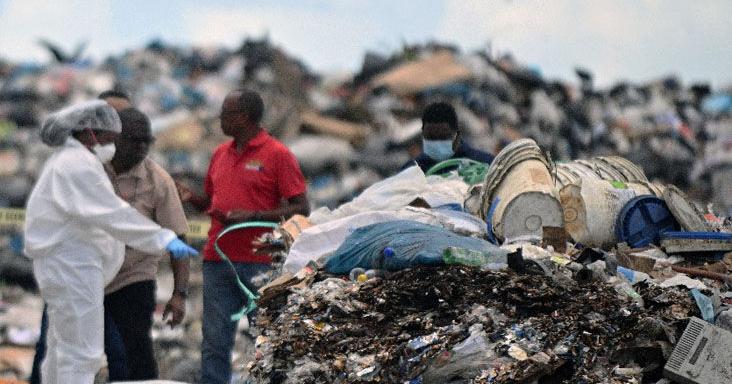
On a routine day of scavenging for discarded valuables at Forres Park Landfill in Claxton Bay, a local man made a grisly discovery that launched a full law enforcement investigation Wednesday, when he uncovered multiple buckets holding what初步看起来像是 human remains.
The incident unfolded just after 11 a.m., when the scavenger stumbled across the suspicious containers buried within a mound of garbage. After alerting other workers at the sprawling dumpsite, the pair contacted local law enforcement to report the find. First responders from the Couva Criminal Investigations Department and Couva Charge Room were the first law enforcement units to arrive at the scene to secure the area.
A district medical officer was called to examine the recovered remains on site. Once the initial examination was complete, undertakers from a local funeral home, escorted by uniformed police, transported the remains to the mortuary at San Fernando General Hospital for formal identification and further analysis.
Hours after the initial report, specialized investigative teams including homicide detectives, forensic evidence experts and officers from the police Central Division remained on site, methodically sifting through tons of accumulated waste and discarded material. Their goal was to locate additional partial remains and gather any forensic evidence that could help trace the origin of the remains and clarify how they ended up at the public landfill. When local newspaper Trinidad Express reporters visited the investigation scene, multiple officers were observed documenting the buckets holding the suspected remains, with many wearing protective face coverings to block the strong odors coming from the decomposing material. Just a short distance from the active crime scene, other local scavengers continued their daily work moving refuse, unfazed by the ongoing investigation.
A senior investigating detective from the Region Three Homicide Bureau of Investigations, speaking on condition of anonymity, told reporters that authorities do not currently believe the discovery is linked to an active homicide case. Instead, investigators are working under the working theory that an individual or unlicensed disposal company improperly dumped human remains at the unregulated dumpsite, rather than arranging for legal, authorized disposal.
This discovery echoes a similar high-profile improper disposal case from earlier this year, when authorities launched a major investigation after 56 unclaimed bodies were found dumped at an unsecured cemetery in Cumuto. Preliminary findings from the Trinidad and Tobago Police Service (TTPS) in that case confirmed the remains were the result of unlawful disposal of unclaimed corpses, rather than criminal homicides.
Shortly after Wednesday’s discovery, the South-West Regional Health Authority (SWRHA) issued an official public statement addressing the find, acknowledging that they had been notified of the alleged discovery of human remains at the Claxton Bay site.
“The Authority has commenced an internal investigation to verify the accuracy of the reports and establish the veracity of the information,” the release read. “Preliminary checks, however, indicate that the reported discovery is not associated with the San Fernando General Hospital or any of its facilities.”
The SWRHA further added that their contracted third-party medical waste disposal provider has reaffirmed that all collection, handling, transportation and disposal of medical waste from SWRHA facilities follows all established national protocols and aligns with international industry best practices. The authority also emphasized its ongoing commitment to ensuring all medical waste and human remains from its facilities are managed, transported and disposed of safely, responsibly and in full compliance with all required national and international standards.
-
Sobers: T&T to set up embassy in UAE
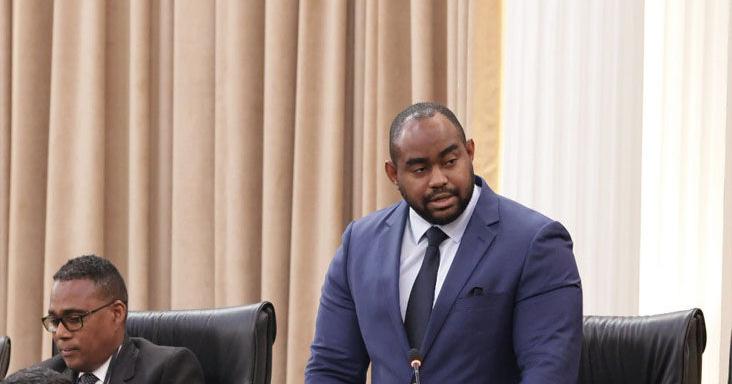
Following Trinidad and Tobago’s participation in the 81st Regular Session of the United Nations General Assembly (UNGA) held in New York last month, Foreign and Caricom Affairs Minister Sean Sobers has announced a series of landmark diplomatic achievements during a parliamentary address, headlined by plans to open the Caribbean nation’s first ever embassy in the Middle East based in the United Arab Emirates (UAE).
Sobers confirmed that the initiative has already secured formal approval from the national Cabinet and Prime Minister Kamla Persad-Bissessar, marking the culmination of months of targeted engagement by the Persad-Bissessar administration to strengthen strategic ties with the Gulf state. Government Members of Parliament responded with immediate desk-thumping approval of the historic diplomatic expansion.
The push for a permanent UAE mission dates back to November 2025, when the Trinidad and Tobago government first signaled its intent to open a diplomatic outpost in the country as a core strategy to attract foreign direct investment, secure critical financing, and expand bilateral trade volumes. The two countries further cemented this growing partnership in February 2025, when they signed a bilateral agreement focused on the promotion and reciprocal protection of cross-border investment.
Beyond economic gains, the deepening relationship with the UAE has already delivered tangible social benefits for Trinidad and Tobago: Sobers confirmed the UAE government has committed to a substantial grant to fund life-saving critical medical equipment for the Couva Children’s Hospital, a win the minister directly attributed to Prime Minister Persad-Bissessar’s proactive regional and global diplomatic outreach. On the sidelines of UNGA 81, Sobers also held high-level talks with UAE Deputy Prime Minister and Foreign Affairs Minister Sheikh Abdullah bin Zayed Al Nahyan, where discussions covered collaboration across a broad range of priority sectors including economic development, trade, investment, cultural exchange, tourism, energy transition, and artificial intelligence innovation.
Alongside the historic Middle East embassy announcement, Sobers highlighted the reset of bilateral relations with neighboring Venezuela as another defining outcome of the UNGA delegation’s work. A bilateral meeting between Prime Minister Persad-Bissessar and acting Venezuelan President Delcy Rodriguez produced a landmark agreement to launch a new bilateral strategic partnership between the two nations.
This new framework will accelerate an ambitious shared work program covering eight key sectors: trade, energy, cross-border security, disaster risk management, environmental protection, agriculture, and cultural exchange. Sobers emphasized that this expanded, holistic approach to engaging the Bolivarian Republic of Venezuela will unlock untapped potential for growth in both energy and non-energy trade for the first time, delivering mutual prosperity for both populations. For Trinidad and Tobago, he noted, the partnership will strengthen local manufacturing sectors and reduce the nation’s overall food import bill.
Sobers also drew attention to Trinidad and Tobago’s June 3 election as a non-permanent member of the United Nations Security Council, for the 2027–2028 term. In her September 22 address to the full UNGA assembly, Prime Minister Persad-Bissessar centered the unique vulnerabilities that small island developing states (SIDS) face in the current global order, calling for enhanced coordinated international action to tackle transnational organized crime, illicit firearms trafficking, narcotics smuggling, and other threats to regional and global security. The prime minister made clear that Trinidad and Tobago will use its Security Council seat to push for practical, collaborative global responses to these challenges, while ensuring the specific concerns of small states are centered at the highest levels of global decision-making.
On the security front, the UNGA gathering delivered additional progress for Trinidad and Tobago: during the Shield of the Americas summit chaired by U.S. President Donald Trump, the country was recognized by the Trump administration as the first participating nation to join the U.S. in formally designating 25 transnational criminal organizations as foreign terrorist organizations. Sobers confirmed this alignment will open access to ongoing technical and financial assistance from the U.S. to support domestic law enforcement efforts to combat organized criminal activity.
Throughout the UNGA session, Prime Minister Persad-Bissessar led an intensive schedule of bilateral and multilateral engagements with heads of state, government leaders, senior diplomatic officials, and representatives of leading international organizations, a schedule that Sobers said reflected the government’s commitment to prioritizing tangible national gains over ceremonial presence at the global gathering. Beyond the Venezuela and UAE talks, the prime minister met with Ghana President John Dramani Mahama, Kyrgyzstan President Sadyr Japarov, Austria President Alexander Van der Bellen, India External Affairs Minister Dr. Subrahmanyam Jaishankar, UK Prime Minister Andy Burnham, and Japanese Prime Minister Sanae Takaichi. Sobers and Minister in the Office of the Prime Minister Nicholas Morris also led a separate track of diplomatic talks, with the full Trinidad and Tobago delegation holding an additional 20 bilateral meetings with senior officials from Afghanistan, Aruba, Bangladesh, Benin, the Democratic Republic of Congo, the Dominican Republic, Gabon, Kenya, Mexico, the Netherlands, North Macedonia, Panama, Paraguay, the Philippines, Romania, Russia, San Marino, Sudan, the United Kingdom, and the UAE.
These wide-ranging discussions produced multiple concrete diplomatic breakthroughs beyond the flagship announcements, including the formal establishment of full diplomatic relations with three nations: Gabon, North Macedonia, and San Marino. Trinidad and Tobago also signed new bilateral agreements with eight countries: three air transport agreements with Chile, Ghana, and Panama, alongside formal frameworks establishing regular political consultation mechanisms with Kenya, Romania, Paraguay, Bangladesh, and the Dominican Republic.
Sobers emphasized that these new agreements create structured platforms to deepen cooperation across trade and investment, energy, security, development collaboration, climate finance, and other areas of shared mutual interest. The outcomes of the UNGA mission, he concluded, demonstrate the current administration’s commitment to pursuing a purpose-driven foreign policy firmly anchored in advancing the core national interests of Trinidad and Tobago.
-
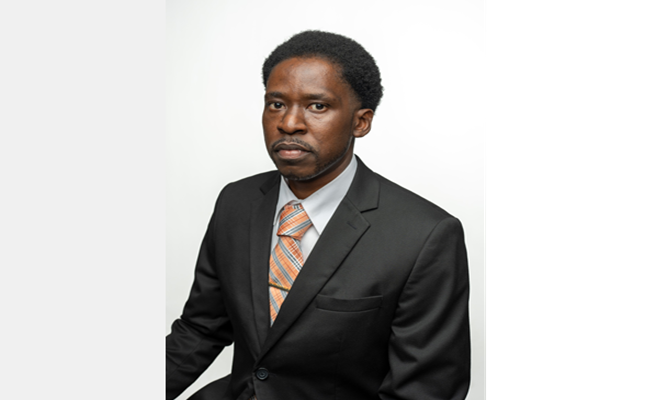
Phil Jones to strengthen regulation of Nevis’ Online Gaming Industry
As the Caribbean island of Nevis prepares for an upcoming international assessment of its financial services sector, the local branch of the Financial Services Regulatory Commission (FSRC) has announced a key leadership change to bolster regulation of its fast-growing online gaming industry.
In a press release issued Friday, October 2, 2026, the Nevis Island Administration (NIA) confirmed that Phil Jones has been appointed to the dedicated new role of Regulator for Online Gaming at the FSRC Nevis Branch. The appointment comes in direct response to the online gaming sector’s rapid expansion and rising economic importance to the jurisdiction.
Previously, Jones oversaw both international banking regulation and online gaming supervision for the FSRC. On October 1, 2026, he formally transferred all responsibilities for the international banking portfolio to Marie-Grace Michel, clearing the way for him to focus exclusively on the growing online gaming sector. During his tenure leading international banking regulation, Jones played a key role in building a strong regulatory foundation that has supported the sector’s stable growth, a track record that the FSRC says makes him well-suited for his new full-time role.
In his new position, Jones will lead ongoing efforts to reinforce and maintain Nevis’ robust supervisory and regulatory framework for online gaming. His core responsibilities will include ongoing oversight of the regulatory system established under the Nevis Online Gaming Ordinance, and ensuring all licensed operators adhere to local legal and compliance requirements.
The move to boost dedicated regulatory capacity for online gaming comes at a critical juncture for Nevis. The jurisdiction is currently preparing for the fifth-round Mutual Evaluation, a global assessment process that places increased international scrutiny on the regulatory standards of all international financial services sectors, including online gaming. Strengthening supervisory resources for the expanding online gaming industry is viewed as a critical step to ensure Nevis can keep pace with evolving global regulatory standards and meet international expectations.
Jones will continue to collaborate closely with the Nevis Online Gaming Authority, leveraging his years of cross-sector financial regulatory experience to enhance oversight practices and guarantee the entire industry operates in full compliance with established local and international rules. The FSRC Nevis Branch reaffirmed its commitment to maintaining effective, transparent supervision of all financial services operating within the jurisdiction, and upholding the high standards required by local and international regulatory frameworks.
-
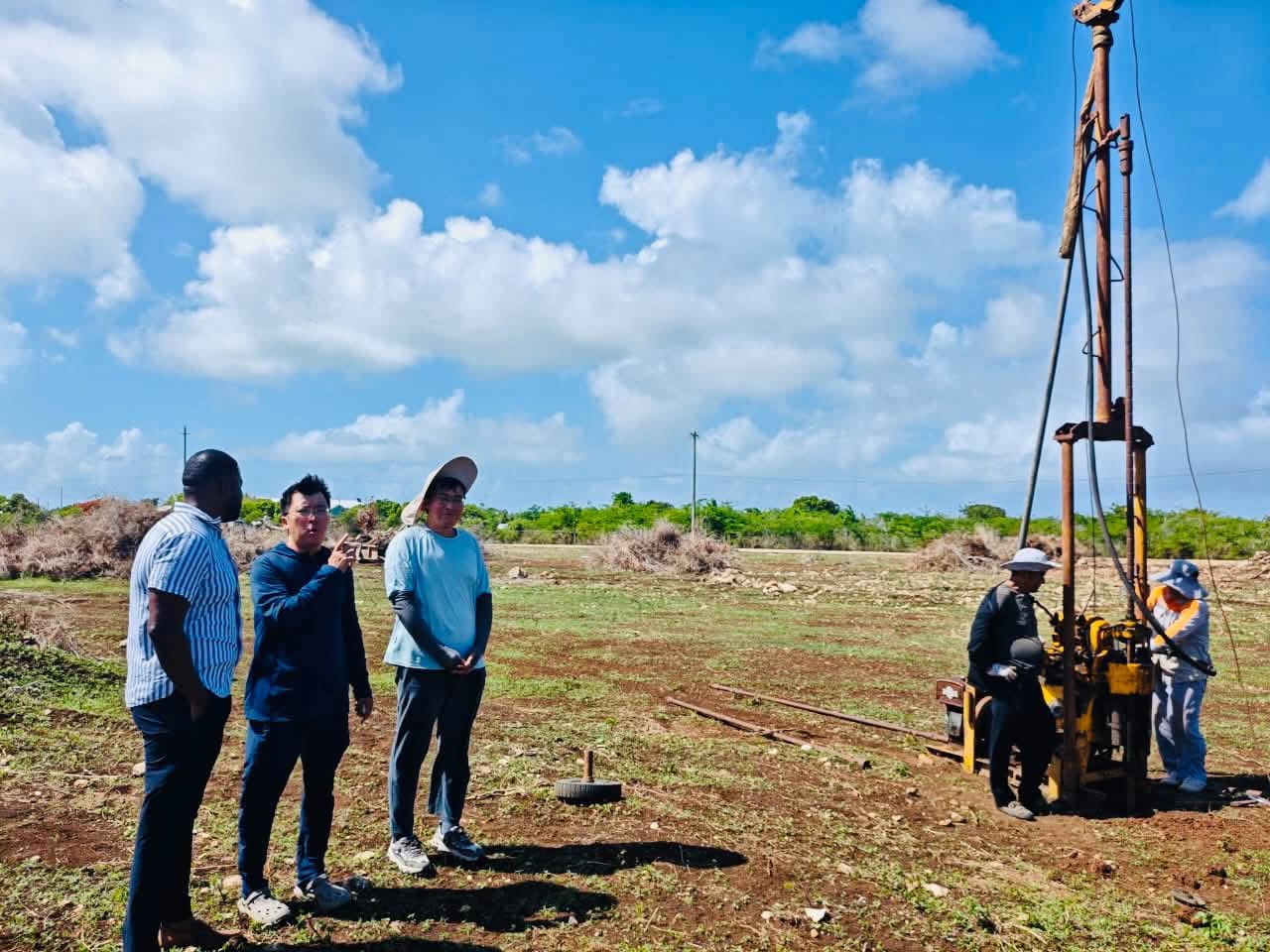
Geological Surveys Underway for China-Aided Louis Hill Housing Project in Barbuda
Preparations for the China-aided Louis Hill affordable housing initiative in Barbuda have entered a critical technical phase, with specialized geological surveys and soil testing now underway across the project site ahead of full-scale construction. Senator Kendra Beazer, the official leading project updates, confirmed that a joint technical team with Chinese experts is conducting comprehensive site mapping and geotechnical assessments to lay the groundwork for the next stage of development.
“Consistent progress is being delivered on the Louis Hill Housing Project under the Chinese assistance framework,” Beazer stated in a recent briefing. He explained that the on-site technical work is designed to eliminate geotechnical risks, confirming that the entire development will be built on stable terrain that meets all international structural safety requirements. “The Chinese technical team has been carrying out detailed geological surveys and full-site mapping to uphold the highest possible standards of safety and structural stability,” he added.
Images released by Beazer document the field work in progress, showing technical teams operating drilling equipment to extract core samples from across the proposed development footprint. Beyond surface mapping, teams are conducting laboratory analysis of collected soil samples to give structural engineers a granular understanding of subsurface conditions that will inform foundation design.
“Through on-site testing and detailed soil sample analysis, we are collecting precise data on the soil strata that will support every new home,” Beazer said. “This foundational work is non-negotiable to guarantee that every structure is built on solid ground, engineered to be secure and climate-resilient, and able to serve Barbudan families for decades to come.”
The current geotechnical work follows years of planning and public announcements that have gradually expanded the scope of the Louis Hill project. Barbuda’s official land use planning documents have long designated Louis Hill as a priority zone for residential expansion, part of a broader government strategy to address housing shortages and expand access to residential land across Antigua and Barbuda’s sister island.
During the 2025 national budget presentation, Prime Minister Gaston Browne announced that the first phase of the Louis Hill Housing Development carried an estimated price tag of $8 million, framing the project as a core component of the government’s national development agenda for Barbuda. Since that initial announcement, project scope has grown: in March 2026, Browne unveiled updated plans to build 50 condominium-style units, with all properties offered to local residents through an accessible rent-to-own scheme designed to expand homeownership among working Barbudan families.
To accommodate the expanded development, the government has also advanced land preparation efforts. In a May 2026 cabinet statement, officials confirmed that pre-construction clearing work was scheduled for 216 acres of land at Louis Hill, part of a wider government program to unlock additional residential land for local Barbuda residents.
The ongoing geological investigations will deliver the data engineers need to design foundations tailored to the site’s specific soil and subsurface conditions, mitigating the risk of structural issues post-construction. Beazer emphasized that the current work marks another tangible milestone toward delivering the long-awaited development to local residents. “Step by step, Barbuda’s future is taking shape,” he noted.
Over the past decade, China has provided financing and technical support for multiple infrastructure and housing projects across Antigua and Barbuda, and the Louis Hill initiative marks the first major Chinese-assisted housing development to advance on Barbuda. As of the latest official update, the government has not yet announced a formal timeline for the start of construction or the expected completion date of the full development.
-
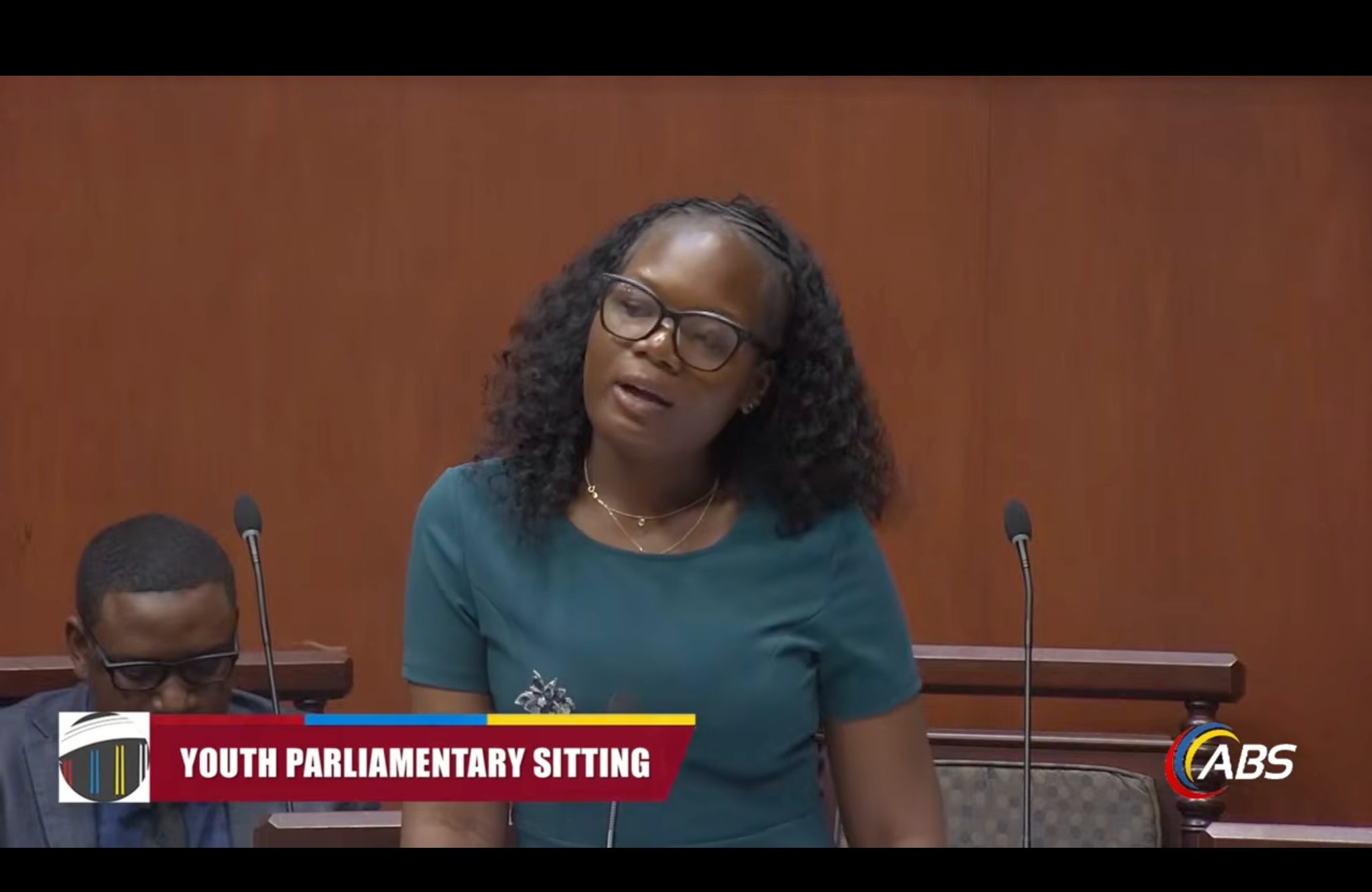
Youth Parliamentarian Calls for School Bus Cameras and Compulsory Education Until 18
During a plenary sitting of the National Youth Parliament held Friday, Cyniya Ireland, the body’s Deputy Prime Minister and lead for national security, justice and legal affairs portfolios, has put forward two targeted policy proposals aimed at strengthening youth safety, boosting long-term development and curbing youth crime: mandatory camera installation on all public and private school buses, and an increase in the compulsory education age from 16 to 18. The proposals form part of Ireland’s formal backing for the 2026 Education Equity, Youth Development and Protection Resolution, a framework that positions youth-focused policy as a core pillar of broader national security strategy.
Ireland opened her address by reframing education as more than a pathway to academic credentials, arguing it is a critical foundation for national stability. She noted that the current 16-year age cap for compulsory education, set out in Section 27 of the national Education Act, can be adjusted via parliamentary affirmative resolution, clearing a path for the proposed change. Questioning whether 16 remains a developmentally appropriate age for young people to exit the formal education system entirely, Ireland shared a personal anecdote to illustrate the long-term impacts of early school leaving: a former third-form classmate who had long planned to leave school as soon as she hit 16 recently told Ireland she now struggles to secure stable, well-paying work and deeply regrets her decision to leave early.
“When I say I’m raising the age of compulsory education, I’m not simply telling young people to stay in school, but I’m telling them to stay connected,” Ireland explained, pushing back against assumptions that extended compulsory education would force all young people onto a rigid academic track. She clarified that approved pathways for the extended requirement could include technical vocational training, agricultural apprenticeships and other skills-focused programs, recognizing that young people have diverse career and learning goals.
Ireland also tied the proposal to growing concerns about youth involvement in serious crime, referencing frequent public reports of teenagers facing charges for violent offenses including murder and armed robbery. Citing 2023 data from the International Labour Organization, which shows 17.9% of young people globally are classified as NEET — not in employment, education or training — Ireland emphasized that this figure, equal to nearly one in five young people, represents a critical public policy challenge that cannot be ignored. She acknowledged that raising the compulsory education age alone will not resolve the systemic issue of youth disengagement from education and work, but stressed it is a necessary first step to draw sustained policy attention to the crisis.
Shifting her focus to student safety beyond school campus boundaries, Ireland argued that the state’s responsibility to protect students does not end when they step through the school gate or after the final bell rings for dismissal. She highlighted student travel to and from school as an often-overlooked vulnerable zone, calling for mandatory surveillance cameras to be installed on every school bus operating across the country. To address valid privacy concerns, Ireland added that policymakers must also establish clear, binding privacy regulations and procedural protocols that govern who can access camera footage and under what circumstances.
Ireland emphasized that on-board cameras are not just a tool for post-incident investigation to support police responses when harm occurs; instead, they serve as a proactive preventive measure that aligns with core public safety priorities. “Our responsibility does not end when the school bell rings,” she said, noting that students deserve consistent protection throughout their entire school day, including their commute to campus and trip home each afternoon.
Closing her address, Ireland framed the broader education resolution as far more than a set of changes to classroom policy. “National security cannot only begin when there’s a crisis,” she argued. “Sometimes national security begins in the classroom, on the school bus or simply on the playing fields.” Reaffirming her commitment to equitable youth opportunity, Ireland added: “Not every child may need the same pathway, but every child needs a pathway.” She closed by urging fellow members of the National Youth Parliament to back the resolution, centering the goal not just of keeping young people enrolled in school, but of ensuring all young people remain connected to opportunity, prepared for adulthood and protected from harm.
-
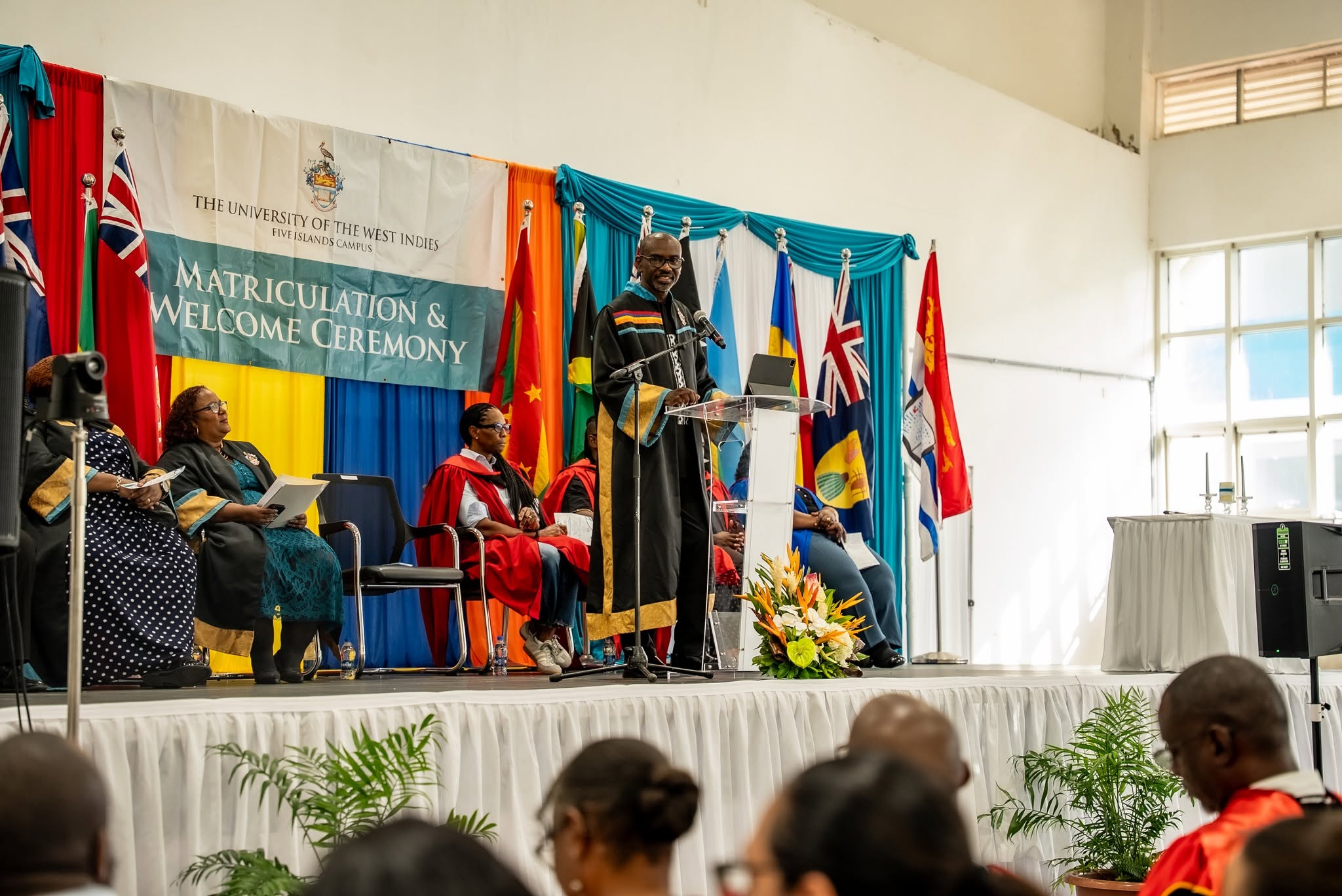
UWI Five Islands Principal Praises Antigua and Barbuda Government for Paying University Tuition
The 2026 matriculation ceremony at the University of the West Indies Five Islands Campus brought more than the traditional welcome for new students — it became a platform for high praise for a groundbreaking education policy from Antigua and Barbuda’s government. Campus principal Professor C. Justin Robinson, a noted economist, opened the event by highlighting the historic moment these incoming students are stepping into, as the Caribbean nation rolls out an unprecedented initiative to cover all education costs from primary school through tertiary level.
Robinson explained that the policy, implemented this year, expands beyond compulsory primary and secondary education, with the state absorbing all associated costs, and extends to post-secondary levels as well. The government is covering fees for the Caribbean Secondary Education Certificate (CSEC) and Caribbean Advanced Proficiency Examination (CAPE) assessments, as well as tuition costs at the Antigua and Barbuda Institute of Continuing Education (ABICE) and the UWI Five Islands Campus itself.
In his remarks, Robinson emphasized that this policy was not just another government expenditure, but a transformative decision. Calling the move bold, visionary, and rare among global policy initiatives, he offered unreserved personal commendation to the Antigua and Barbuda government for the commitment. He noted that public funds face countless competing demands across all sectors, but investing in citizen education stands as one of the most valuable uses of state resources. “A government can choose to do many, many worse things with the public purse than commit it to the education of its own people,” Robinson stated.
Despite his strong support for the policy, Robinson, drawing on his background as an economist, offered a grounded note of caution for incoming students. He stressed that free access to higher education is not a magic bullet that will automatically resolve individual economic struggles or national challenges. “A degree by itself will not fix your family finances or fix all of our problems, but it’s an important start,” he explained. Echoing a traditional saying he heard growing up in St. Vincent, he reminded students that the cost of ignoring education far outstretches the price of investing in it: “If you think that education is expensive, then just try ignorance.”
Robinson also urged students to approach their time at university with a mindset broader than simply earning a credential. Whether they are young, middle-aged, or older students, he noted, devoting three years to higher education is one of the most meaningful choices a person can make. He challenged the incoming cohort to focus on personal growth as much as academic achievement, saying, “The question is not what you will study here. It is what you will become while you are here.”
With financial barriers lowered by the government’s new policy, Robinson reminded students that they now hold a clear responsibility to seize the opportunity. He acknowledged the critical support provided by parents and guardians who helped students reach this milestone, noting that both the government and family members have already done their part. “What remains here is really largely up to you,” he told the new students.
The ceremony also delivered a landmark announcement for the growing campus: Registrar Dr. Camille Samuel confirmed that 587 new students have enrolled for the 2026 academic year, marking the largest incoming cohort since the UWI Five Islands Campus first opened. This record intake comes as the first cohort of students to benefit from the government’s full tuition coverage policy arrives at the institution, signaling the early impact of the new policy on expanding access to higher education in Antigua and Barbuda.
-
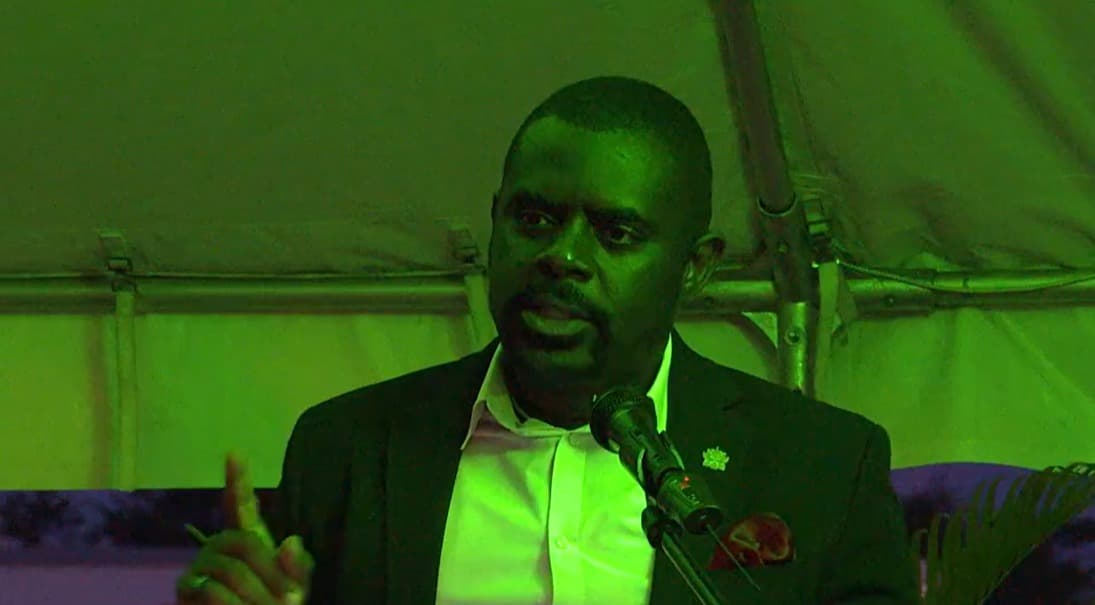
“A home is more than concrete and steel,” says Duggins as 10 families receive new homes – WIC News
On October 2, 2026, a momentous handover ceremony at St. Kitts’ Half Way Tree brought life-changing news for 10 local families, who officially received keys to their new permanent homes at the Harry Phipps Housing Development. The event, co-hosted by St. Kitts’ National Housing Corporation (NHC) and the Ministry of Housing and Human Settlement, drew senior government officials, community leaders, and stakeholders to celebrate the milestone in the island nation’s affordable housing expansion.
Addressing attendees, Samal Duggins, St. Kitts’ Minister of Agriculture and Parliamentary Representative for Constituency 4 — the district hosting the development — emphasized that housing extends far beyond physical construction. “A home is more than concrete and steel,” Duggins told the crowd. “Housing is ultimately about our people. It is about dignity. It is about security. It’s about family. And above all, it’s about possibility.”
The 10 new homeowners represent a diverse cross-section of the constituency, each with a unique personal journey. Duggins noted the group includes young adults stepping into independent living for the first time, senior residents entering a peaceful new chapter of retirement, and single mothers who have long carried the burden of providing stable lives for their children. “Behind every one of those 10 families lies a different story, a different journey, a different struggle, and a different dream that has brought each family to this moment,” he added.
This handover marks just the latest progress in housing delivery for Constituency 4 under the current administration. Duggins reported that nine other families in the district have already received new home keys over the past four years, and NHC has confirmed that eight additional families are currently in the processing pipeline to begin construction on plots they already own. When complete, this will bring the total number of delivered or underway housing projects to roughly 27 in less than five years — a pace that outpaces the previous administration, which completed just 16 homes across the constituency over a seven-and-a-half-year period.
Notably, the majority of labor for the new developments was sourced locally from within the constituency, including independent contractors, carpenters, painters, electricians, and plumbers. Duggins framed the community-led construction as a “built by us, for us” project that invests in both homeownership and local economic opportunity.
As an added symbolic touch, every new homeowner will receive a free fruit tree through the Ministry of Agriculture’s SAFE programme, intended to represent the families putting down permanent roots in their new communities. Antoinette Ford, one of the new homeowners, praised the initiative as a reflection of government leadership that centers people alongside physical development. For Ford and many other recipients, this marks the first home they have ever owned, after years of hard work and sacrifice. She added that the fruit trees also encourage new homeowners to contribute to broader national goals of food security for St. Kitts and Nevis.
Another recipient, Nikeisha Fraser, shared that she never expected to qualify for the program when she submitted her application, while she was actively searching for a rental property to provide stability for her young son, Kamali. “After I had my son, one of the things that became very important to me was making sure that his future was secure,” Fraser explained. “I wanted to give him stability. I wanted him to grow up feeling safe, happy, and welcomed in a home that we could truly call our own.”
Acting Prime Minister and Minister of Human Settlement Dr. Geoffrey Hanley echoed Duggins’ framing of homeownership as a transformative asset, noting that a home is not just a place to live, but an appreciable investment that can be passed down through generations to build intergenerational wealth. “It becomes an asset, something you can improve, something that you can have and it grow in value, something that can one day be passed from one generation to the next,” he said.
Dr. Hanley emphasized that the government’s housing initiative aligns with its core mission: to expand opportunity rather than create long-term dependency. “This is an important part of the role of government, not to make people permanently dependent upon government, but to create opportunities that allow people to become more secure, more independent, and better positioned to build something for themselves and their families,” he stated. He urged new homeowners to maintain their properties and meet their financial obligations, so that future cohorts of families can also benefit from the program. He also offered reassurance to applicants still waiting for housing, confirming that the government is aware of unmet demand and construction work will continue across the island.
The ceremony concluded with a symbolic opening of a replica home by Hanley and Duggins, a formal vote of thanks delivered by Dorothy Keynes, a ribbon-cutting, and a guided tour of one of the completed new homes for attending guests. Senior Minister Dr. Denzil Douglas, Tourism Minister Marsha Henderson, and NHC General Manager Jonel Rollins were among the senior officials in attendance at the event.