博客

  • CXC® and the Government of the Virgin Islands Partner for Public Service Transformation

    CXC® and the Government of the Virgin Islands Partner for Public Service Transformation

    BRIDGETOWN, Barbados – On June 3, 2026, senior leadership from the Caribbean Examinations Council (CXC®) joined Deputy Governor of the Virgin Islands Mr David D. Archer, Jr. and government officials at an official launch ceremony for the groundbreaking CXC® Excellence in Customer Service programme, an initiative developed to upskill public sector workforces across the territory.

    The two-year collaboration brings together CXC®, a globally respected credentialing body, the Virgin Islands Public Service Learning Institute (VIPSLI), and Trinidad and Tobago-based regional training specialist Customer 1st Caribbean Ltd. First conceptualized in 2023, the programme was built from the ground up through a phased development process: CXC®’s Research and Educational Development Division drafted the core framework, which was then refined through joint work between the CXC® Professional Learning Institute, CXC® Business Development Office, and VIPSLI leadership.

    Designed to deliver multi-level upskilling that drives systemic public service transformation, the programme targets public officers at all levels, from frontline customer-facing staff to senior executive leadership teams. Unlike generic off-the-shelf training curricula, the initiative is tailored specifically to the unique operational context of the Virgin Islands Public Service, incorporating local case studies and addressing on-the-ground challenges that local officers face daily. Core training modules cover foundational professional competencies including public service values, ethical governance, professional conduct, stakeholder communication, service recovery protocols, operational efficiency, and public accountability.

    Remarkably, even before the first cohort of participants completed their training, early outcomes already demonstrated the programme’s impact. VIPSLI officials confirmed that participating officers had already begun updating outdated departmental procedures and piloting new, more effective work processes across multiple public service agencies.

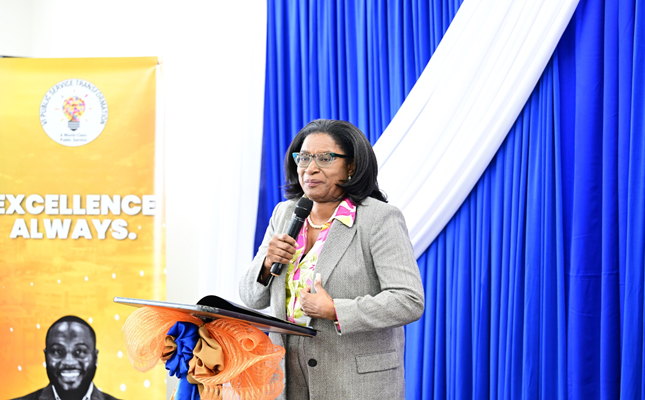
    Speaking at the launch and certificate awards ceremony held at the VIPSLI campus, Dr Eduardo Ali, Pro-Registrar and Deputy CEO of CXC®, outlined the dual purpose of the landmark initiative. “This programme does more than just introduce new systems and metrics to boost public sector efficiency and service excellence,” Ali explained. “It invests directly in each individual officer, supporting their professional growth to help them become active agents of transformation and better engaged citizens across the public service. This project showcases the technical expertise CXC® stands ready to provide to regional governments and institutions working to advance educational and systemic public sector reform across the Caribbean.”

    Dr Connie E. George, Director of VIPSLI, shared that the institute turned to CXC® after identifying a critical gap in formalized professional training needed to meet the government’s mandate of building a world-class public service for the Virgin Islands. “We selected CXC® as our partner because they are the Caribbean’s leading educational and credentialing authority,” George noted. “When CXC® lends its name to a programme, it carries the full weight of regional recognized accreditation, academic rigor, and institutional integrity that we could not develop independently locally.”

    The completion of the first training cohort marks only an early milestone in the initiative’s rollout. Moving forward, graduates of the first cohort will be trained as in-house facilitators to deliver the curriculum to subsequent groups, with the long-term goal of expanding the programme to reach every public officer across the entire Virgin Islands Public Service. “Our goal is to embed excellence in customer service not just as a one-off initiative, but as a core, expected component of every public officer’s ongoing professional development journey in the territory,” George added.

    The ceremony concluded with 14 participating public officers receiving their official certificates for successful completion of the inaugural programme. Widely hailed as a forward-looking investment in the territory’s public workforce, the initiative is already being highlighted as a replicable model for public sector upskilling and transformation that can be adapted by other regional governments across the Caribbean.


  • Barbuda Women Encouraged to Take Advantage of Free HPV Screening Services

    Barbuda Women Encouraged to Take Advantage of Free HPV Screening Services

    Public health authorities in Antigua and Barbuda are launching a targeted call to action for eligible women across Barbuda, urging them to access no-cost Human Papillomavirus (HPV) screening services designed to catch pre-cancerous changes early and cut cervical cancer mortality rates. In an official public statement released this week, the Ministry of Health, Wellness, Environment and Civil Service Affairs outlined the core goals of the new outreach, emphasizing that persistent undiagnosed HPV infection is one of the leading preventable causes of cervical cancer globally and across the Caribbean nation.

    Health experts working with the ministry explain that HPV is an extremely common virus, with most sexually active people contracting some strain of it at some point in their lives. In the vast majority of cases, the infection clears on its own without intervention. However, when high-risk strains persist undetected over time, they can trigger abnormal cellular changes in the cervix that eventually develop into life-threatening cancer. Regular screening eliminates this uncertainty by identifying these early changes long before symptoms appear, when intervention is most effective and far less invasive.

    Ministry representatives stressed that early detection remains the single most impactful strategy for reducing cervical cancer incidence and saving lives from the disease. Unlike many late-stage treatment options, which are often costly and carry significant side effects, routine screening is a low-cost, low-risk preventive measure that drastically improves long-term health outcomes for those who participate.

    All eligible women in Barbuda can access the free screenings at the Barbuda Health and Wellness Clinic during standard weekday operating hours. For residents with questions about eligibility, appointment scheduling, or the screening process itself, officials advise contacting either the clinic directly, the nearest local health facility, or the main Ministry of Health office for more detailed information.

    This free screening initiative is just one component of a broader, long-term public health strategy being rolled out across Antigua and Barbuda to expand access to high-quality women’s health services and embed a culture of preventive care across the country’s healthcare system. Public health planners note that expanding access to free preventive screening for at-risk populations aligns with global public health goals to eliminate cervical cancer as a public health threat over the coming decades.

  • Carnival 2026 Must Be Properly Coordinated, Minister Tells Festival Committees

    Carnival 2026 Must Be Properly Coordinated, Minister Tells Festival Committees

    As one of the Caribbean nation’s most anticipated cultural highlights moves closer on the calendar, planning efforts for Antigua and Barbuda’s 2026 Carnival have entered a new, intensified phase. Last week, Dwayne George, the country’s Minister of Sports and Creative Industries, gathered with senior members of the national Festivals Committee and leadership from its specialized subcommittees to conduct a full review of ongoing preparations for the iconic annual celebration.

    The closed-door working meeting centered on three core priorities: cross-stakeholder coordination, structural framework development, and safety and experience planning for both local attendees and international tourists. Minister George emphasized in an official post-meeting statement that the planning team is leaving no detail unaddressed, working to align every operational area—from event scheduling to crowd management— to deliver a seamless, secure, and joy-filled experience for all participants.

    Key discussions focused on breaking down silos between working groups to strengthen collaborative workflows, and rolling out the formal administrative, logistical, and operational systems required to pull off a large-scale national event. Early planning is seen as a critical step to avoid last-minute disruptions and elevate the 2026 festival above previous editions. “We are putting the necessary systems and structures in place to make Carnival 2026 an unforgettable experience,” George shared in his remarks.

    The minister also took time to recognize the thousands of volunteers and committee members who dedicate hundreds of unpaid hours to building the celebration each year. Their commitment and grassroots work, he noted, form the foundational backbone of the festival’s long-standing success, and would not be taken for granted by the government.

    A core overarching goal of the 2026 planning process, George added, is to center the nation’s cultural identity: the event is designed to showcase the very best of Antigua and Barbuda’s artistic creativity, vibrant community spirit, and rich cultural heritage, all while upholding rigorous safety standards that protect every attendee.

    The meeting was just one part of a months-long ongoing planning process. Organizing work is currently distributed across specialized subcommittees overseeing distinct functional areas, including event programming, transportation and logistics, public safety, on-the-ground operations, and visitor outreach. Each group is working toward incremental milestones leading up to the festival in 2026.

    For Antigua and Barbuda, Carnival is far more than a seasonal celebration: it is the country’s largest annual public event, drawing tens of thousands of tourists from across the globe each year alongside thousands of local participants, and acting as one of the most prominent showcases of the nation’s centuries-old cultural heritage.

  • Antigua and Barbuda to Host Third National Climate Outlook Forum

    Antigua and Barbuda to Host Third National Climate Outlook Forum

    Against a backdrop of growing global climate instability, the twin-island nation of Antigua and Barbuda is taking intentional, collaborative action to strengthen its defenses against climate shocks. The Antigua and Barbuda Meteorological Service (ABMS), fully funded by the national government, has announced it will convene the Third National Climate Outlook Forum (NCOF-3) on June 4, 2026. The day-long event will run from 8:30 a.m. to 3:30 p.m. at the Royalton Antigua Hotel, located in Five Islands Village, St. John’s.

    Centered on the theme “From Observation to Action: Climate Services for a Resilient Tomorrow,” NCOF-3 will gather a diverse cross-section of experts and sector stakeholders. Attendees will include leading meteorologists, climate scientists, academic researchers, agricultural specialists, utility network managers, disaster risk reduction strategists, urban and regional planners, and key decision-makers from climate-vulnerable sectors spanning agriculture, energy, tourism, public health, water resource management, and disaster mitigation. This interdisciplinary gathering is designed to break down silos between research, policy, and on-the-ground action.

    The core objective of the forum is to reinforce cross-sector collaboration and expand the country’s ability to deliver timely, trustworthy, and actionable climate data and early hazard warnings to communities and institutions across the nation. Dale Destin, Director of the Antigua and Barbuda Meteorological Service, emphasized that the recurring National Climate Outlook Forum remains a foundational pillar of the country’s work to build national climate resilience and deliver on the promise of early warning access for all populations.

    “This year’s forum builds on the incremental, meaningful progress we have achieved in previous years, and it reaffirms our long-standing commitment to producing climate information that is timely, contextually relevant, and usable for decision-makers at every level,” Destin explained. “By convening all key stakeholders in one space, we aim to deepen collaborative ties, boost the country’s capacity to address the intensifying challenges posed by climate variability and long-term climate change, and launch a new era of improved weather, climate, and tsunami services for Antigua and Barbuda. This transformation will elevate national preparedness and strengthen our collective ability to withstand climate shocks.”

    Since its launch, the NCOF has functioned as a critical national platform for sharing and debating projections for upcoming seasonal climate patterns, evaluating how shifting conditions will impact key economic and social sectors, and co-developing tailored climate services that support evidence-based decision-making, proactive disaster risk reduction, and long-term adaptive resilience building. This national initiative aligns directly with global priorities, including the United Nations Early Warning for All Initiative and the World Meteorological Organization (WMO) Global Framework for Climate Services, underscoring Antigua and Barbuda’s commitment to advancing accessible, relevant, and effective climate services for all segments of society.

    As a core national public institution, the Antigua and Barbuda Meteorological Service is mandated to deliver critical weather, climate, marine, and tsunami monitoring and advisory services across the country. As the national authoritative body for meteorology and the central coordinating hub for national meteorological early warning systems, ABMS forms the backbone of the country’s disaster resilience infrastructure. It delivers accurate, timely, and actionable information to government agencies, private sector businesses, local communities, and the general public, generating substantial, measurable economic benefits for the nation. By enabling proactive disaster loss avoidance and improving operational efficiency across key sectors, ABMS estimates its services deliver annual economic value equivalent to up to 6% of the country’s gross domestic product, translating to roughly XCD 200–400 million (USD 74–150 million) in avoided costs each year.

    Through its forecasting, early warning, climate service, and hazard monitoring programs, the service plays an irreplaceable role in protecting lives, livelihoods, private property, and critical national infrastructure, while advancing core national goals of disaster risk reduction and climate resilience. Its services underpin the operation of key economic sectors including civil aviation, maritime transport, the blue economy, tourism, agriculture, water resource management, public health, energy, and emergency management, making a major contribution to national safety, economic stability, and long-term sustainable development.

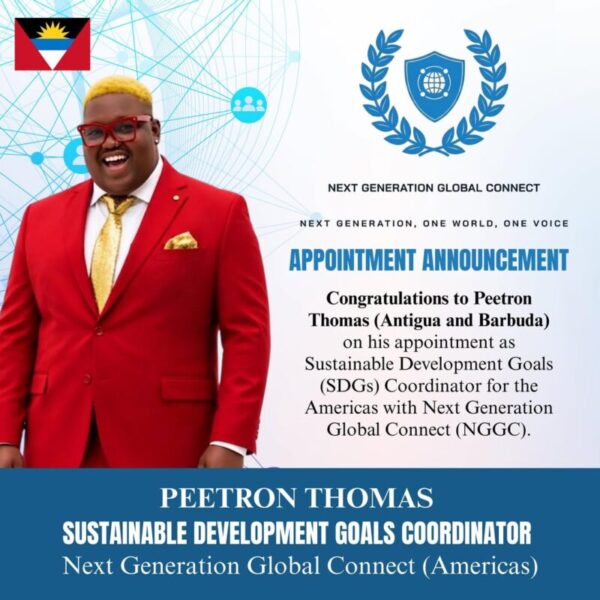
  • Youth Leader Peetron Thomas Appointed Sustainable Development Goals Coordinator for the Americas

    Youth Leader Peetron Thomas Appointed Sustainable Development Goals Coordinator for the Americas

    A rising young voice from Antigua and Barbuda is stepping into a key regional leadership role to advance global sustainable development goals. Next Generation Global Connect (NGGC), a worldwide non-profit organization driven entirely by young leaders focused on empowering youth changemakers and accelerating progress on sustainable development, has named Peetron Thomas, a well-known Antiguan youth leader and development advocate, as its new Sustainable Development Goals (SDGs) Coordinator for the Americas region.

    In this newly assumed regional position, Thomas will oversee and support cross-regional initiatives spanning North America, Central America, South America, and the Caribbean, all aligned with the United Nations’ 17 Sustainable Development Goals. His core duties will center on nurturing strategic cross-sector partnerships, mobilizing and engaging grassroots youth leaders across the hemisphere, amplifying the reach of high-impact sustainable development projects, and deepening collaborative efforts across the region to tackle pressing social, economic, and environmental challenges that disproportionately impact marginalized communities.

    Founded to connect young change agents across every inhabited continent, NGGC currently builds networks of young leaders across Africa, the Americas, Europe, Asia, and the Middle East. Its programming focuses on five core impact areas: climate action, equitable quality education, technological and social innovation, leadership development, and inclusive sustainable community growth. Unlike many traditional global development organizations, NGGC centers youth leadership by providing a dedicated platform for young people to drive meaningful contributions to global development agendas, while designing and scaling homegrown solutions to challenges facing their own local communities.

    Thomas’ selection for this regional role comes as a recognition of his long track record of demonstrated commitment to youth empowerment, community-led development, and measurable social impact across the Caribbean. In his new position, he will lead efforts to expand NGGC’s regional footprint across the Americas, while working to remove barriers to greater youth participation in initiatives that advance equitable, sustainable, and inclusive development across the hemisphere.

    Leadership at NGGC has welcomed Thomas’ appointment, issuing a statement expressing full confidence that Thomas’ combination of on-the-ground leadership experience, deep regional connections, and lifelong passion for public service will deliver significant advances to the organization’s core mission. The organization notes that his work will strengthen ongoing efforts to meet UN SDG targets across every corner of the Americas region. As the regional SDGs Coordinator, Thomas is widely expected to play a transformative, pivotal role in mobilizing thousands of young people, forging durable cross-border and cross-sector partnerships, and driving on-the-ground projects that deliver lasting, measurable positive impact across the entire western hemisphere.

  • Overwhel­ming vote of support

    Overwhel­ming vote of support

    In a landmark diplomatic victory for Trinidad and Tobago, Prime Minister Kamla Persad-Bissessar has publicly thanked the global community for the overwhelming support that earned the small island nation a non-permanent seat on the United Nations Security Council (UNSC) for the 2027-2028 term.

    Announced via the Prime Minister’s official X platform, the election results confirmed Trinidad and Tobago secured backing from 181 out of 190 voting UN member states — an approval rating of 95 percent that included support from all five of the UNSC’s permanent members: China, France, Russia, the United Kingdom, and the United States. Under the UN’s long-standing regional rotation framework for the 10 non-permanent UNSC seats, one 2027-2028 seat was allocated to the Latin American and Caribbean Group (GRULAC), which counts Trinidad and Tobago among its Caricom member states. As the only candidate nominated by the regional bloc, the nation ran uncontested for the seat currently occupied by Panama, but still faced the requirement of earning a two-thirds majority of votes from UN General Assembly members present and voting to secure the seat. The threshold stood at approximately 129 votes, a mark the nation far surpassed in a single round of voting.

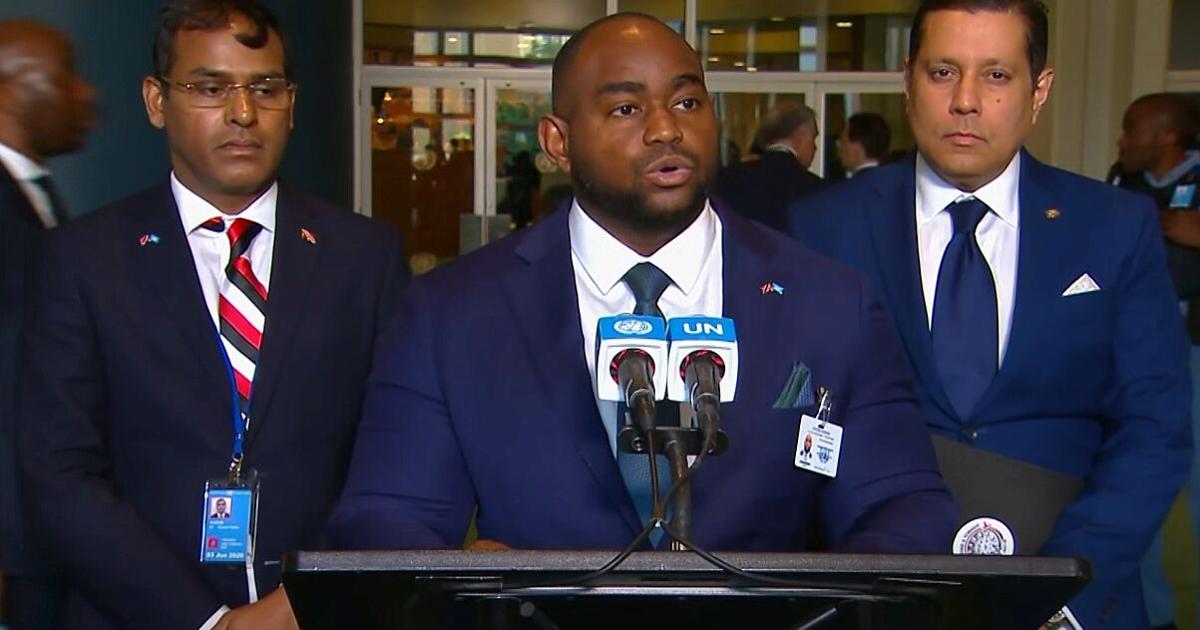
    Speaking immediately after the vote count concluded in New York, Minister of Foreign and Caricom Affairs Sean Sobers accepted the international community’s vote of confidence with humility and deep honor. “We accept this mantle of responsibility with humility and pride; we wish to express our profound gratitude for the friendship, partnership and solidarity shown to Trinidad and Tobago during our campaign,” Sobers said. He extended congratulations to all successful candidates in the 2027 UNSC elections, noting that Trinidad and Tobago is eager to collaborate with all incoming and sitting council members.

    This term will mark Trinidad and Tobago’s second stint on the UNSC, following an earlier term in 1985-1986, and it will become the first English-speaking Caribbean nation to hold a seat on the council since Jamaica’s 2000-2001 tenure. Since gaining independence 64 years ago, Sobers emphasized, Trinidad and Tobago has consistently upheld the rule of law, advocated for human rights, and strengthened international norms, never remaining silent in the face of injustice. He reaffirmed the nation’s unwavering commitment to the UN Charter and international legal frameworks.

    Sobers outlined that the nation’s campaign theme — “Building Consensus for the Realisation of Sustainable Peace and Security” — will guide all of Trinidad and Tobago’s work during its two-year term, which will begin on January 1, 2027. Facing a global landscape marked by increasingly complex interconnected challenges, the nation will prioritize fostering constructive dialogue and bridging divides between competing international actors. Three core strategic pillars will anchor Trinidad and Tobago’s agenda: curbing the illicit trafficking of small arms and light weapons, advancing the women, peace, and security agenda to protect vulnerable children, and examining the growing implications of artificial intelligence for global peace and security. In line with instructions from Prime Minister Persad-Bissessar, the nation will use its platform to amplify underrepresented voices from across the globe, centering justice and equality as the foundation of lasting international security.

    A formal statement from the Ministry of Foreign and Caricom Affairs credited Persad-Bissessar’s steady, visionary leadership for delivering what it calls a transformative diplomatic milestone for the nation. The ministry recalled that the Prime Minister first launched Trinidad and Tobago’s UNSC bid during her address to the United Nations General Assembly in September 2025, and subsequently held sustained, direct diplomatic engagement with dozens of world leaders to build support for the candidacy. “Therefore, this country’s success is a testament to the vision, dedication, and steadfast leadership of Prime Minister Kamla Persad-Bissessar, whose commitment to advancing Trinidad and Tobago’s interests internationally has helped secure this historic victory,” the release read.

    When the new council convenes in 2027, the UNSC will consist of the five permanent members alongside nine other non-permanent members: Bahrain, Colombia, Democratic Republic of the Congo, Latvia, Liberia, Austria, Kyrgyzstan, Portugal, and Zimbabwe. Trinidad and Tobago will fill the seat left vacant when Panama’s current term expires on December 31, 2026, alongside four other new non-permanent members replacing outgoing Denmark, Greece, Pakistan, and Somalia.

  • Police disrupt PoS peace walk

    Police disrupt PoS peace walk

    On a recent afternoon in Port of Spain, a grassroots initiative to confront rising gang violence ended in police confrontation and multiple arrests, highlighting a tense clash between community activism and public order regulations under a state of emergency.

    Organized by the local group Peace Foundation TT, the peace walk was conceived as a response to a surge in brutal gang-related killings, including the recent deaths of two children in separate incidents in Belmont and Morvant. Fed up with ongoing bloodshed across Trinidad and Tobago’s communities, organizers called on residents to gather on Piccadilly Street dressed in white, to march through nearby neighborhoods and call for cross-community unity and an end to violent crime. The event was scheduled to kick off at 3 p.m., but law enforcement had advance notice and moved quickly to deploy a large contingent of uniformed police officers, supported by Defence Force soldiers, to the area ahead of the start time.

    The Trinidad and Tobago Police Service (TTPS) confirmed after the incident that no formal application for the public gathering had been submitted, a requirement under the country’s current state of emergency regulations. Senior Superintendent Raymond Thom explained to reporters that without an approved application, authorities had no way to assess the size of the crowd, the scope of the march route, or the intentions of participants, making it necessary to divert resources to manage the unauthorised assembly. Thom stressed that law enforcement fully supports the goal of ending gang violence and building community peace, but noted that the unpermitted status of the event forced officers to redirect time and personnel away from existing anti-crime operations to respond. “We have to prepare to protect the public. We have no idea about the magnitude, or how large the crowd would be, the number of persons that will be gathering and exactly what is the intent,” Thom said, rejecting claims that the large police deployment was an excessive overreaction.

    As participants began to assemble, officers moved through the crowd ordering attendees to disperse and return to their homes. The heavy police presence kept many prospective participants away, according to organising team member Lynelle Gaskin. She told reporters shortly after 3 p.m. that many people who had planned to attend had opted to stay away after seeing the large law enforcement deployment. “I feel it is just how the officers are around that they are not coming around as yet,” Gaskin said, adding that she remained hopeful more people would join the event. She emphasized that community residents are exhausted by constant violence and are eager to build unity and connection between neighbourhoods long divided by gang rivalry.

    Despite the police order to disperse, a large group of around 200 participants did proceed with a truncated march, walking through the Mango Rose, Duncan Street, and St Paul Street communities before returning to the original gathering point on Piccadilly Street, where they were again ordered to leave by officers. One of the event’s lead organisers, Kendal Lewis, called the walk a partial success, saying “We got about 60% of what we wanted to get done.”

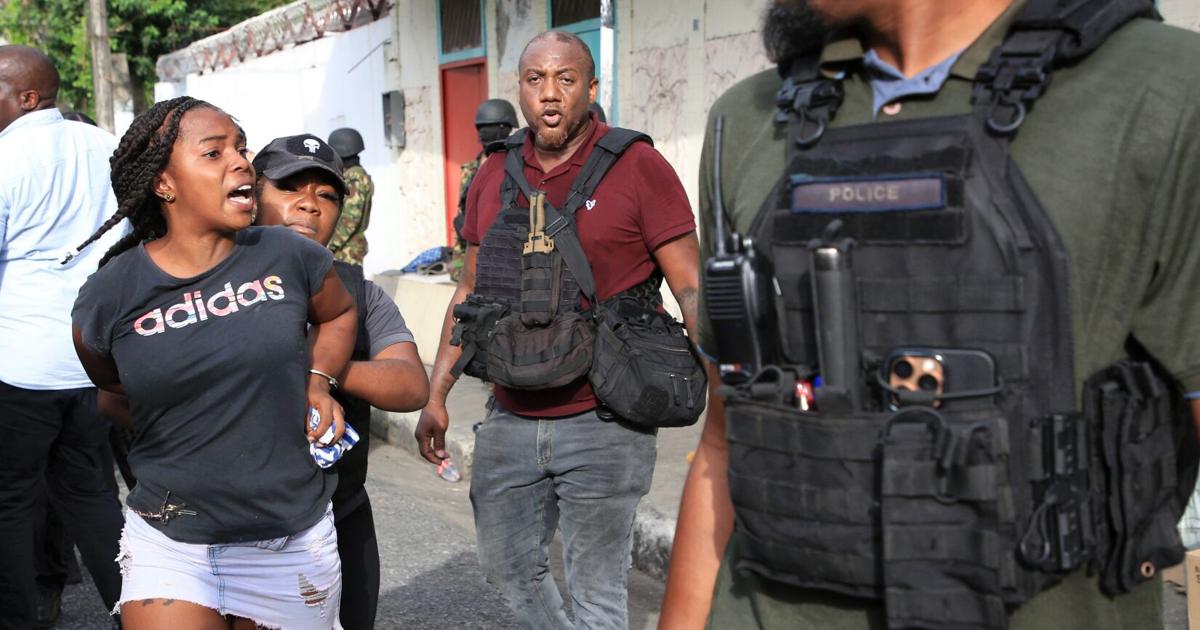
    The confrontation turned heated when an argument broke out between police and one woman who had attempted to join the gathering. The woman was heard telling officers she was only searching for her sister, repeating, “I am not rioting,” as bystanders called on officers to leave her alone. Two female officers pinned the woman against a nearby parked car before handcuffing and arresting her. As of yesterday evening, police had not announced whether the woman would face formal charges. In addition to her arrest, two men who were standing near the assembly area were taken into custody on suspicion of robbery, police confirmed to reporters.

    Among the participants was prominent local activist and businessman Fuad Abu Bakr, who said he saw a promotional flyer for the event and chose to attend because he fully supported the mission. “I believe in it 110%. I thought it was essential for me as a citizen, as someone who is very familiar with this community as well, to come and try to be a part of an initiative as such. That is what this is supposed to be about,” he said, noting that despite the standoff, officers had behaved respectfully toward participants.

    Homeland Security Minister Roger Alexander, who attended the event to speak with community members, defended the police response, rejecting claims that the deployment of officers and soldiers was excessive. He emphasized that the government shares the community’s frustration with unregulated gang violence and the loss of innocent lives, including children. “We, as a Government, we’re not interested in gangs and having no conversation about gangs. I am willing to have a conversation with law-abiding citizens who have seen enough bloodshed and the lives lost of people, both old and young, including of children, on the nation’s streets to crime and violence that has no meaningful meaning at all,” Alexander said. He added that if organizers follow the formal process to register future events, the government is open to sitting down with law-abiding activists to discuss actionable changes to reduce violence across the country.

    The confrontation comes as Trinidad and Tobago continues to grapple with persistently high rates of gang-related homicide, prompting widespread public calls for both government action and grassroots community intervention to curb bloodshed.

  • Warner: No-protest zones attempt to ‘muzzle’ population

    Warner: No-protest zones attempt to ‘muzzle’ population

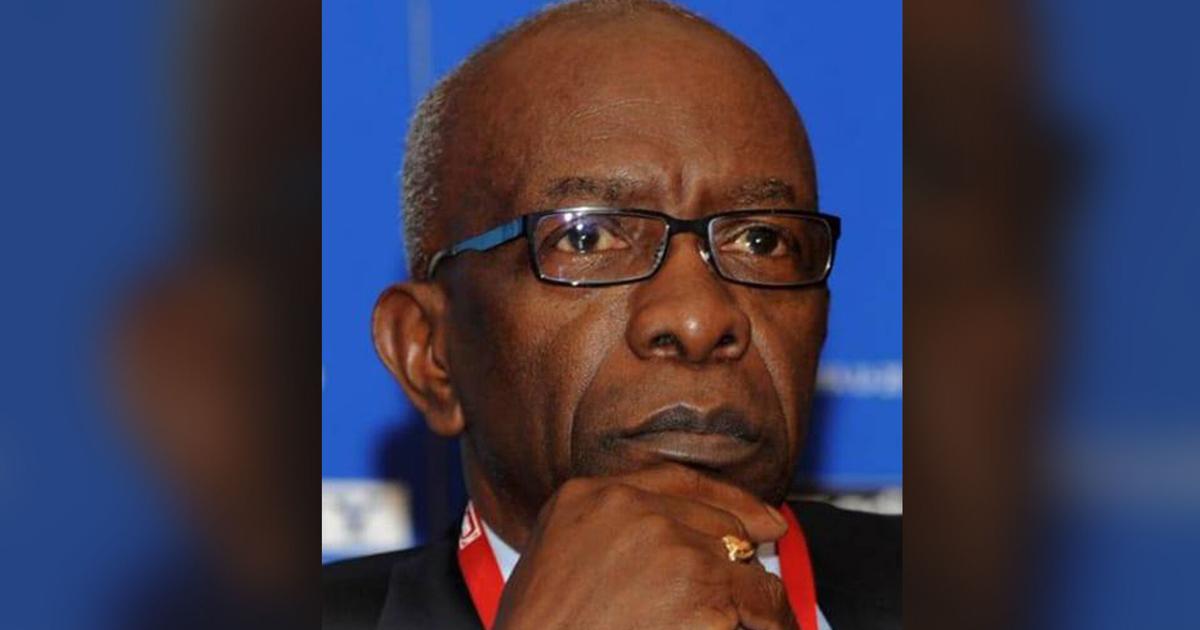
    Jack Warner, a one-time national security minister in Trinidad and Tobago who reemerged from political retirement less than two years ago to campaign alongside the United National Congress (UNC) during the country’s general election, has publicly denounced the recently enacted no-protest zone policies as a deliberate attempt to silence the nation’s citizens.

    In an exclusive interview with TV6’s *Morning Edition* this week, Warner pulled no punches in his assessment of the new government regulations, but was quick to frame his criticism as constructive feedback rather than a partisan attack. Anyone interpreting his words as an assault on the ruling administration, he argued, is simply overly sensitive. “I have no regrets about supporting the UNC during the election campaign,” Warner emphasized, “and my comments here are not meant to tear anyone down.”

    When pressed to respond to recent remarks from UNC leader Kamla Persad-Bissessar, who confirmed the ruling government has no plans to roll back the State of Emergency regulations that ban all demonstrations within 500 meters of 15 designated state institutions, Warner made his position clear: if he still held a seat in government today, he would never back such a ban. Without a legitimate, peaceful outlet to voice their discontent, Warner warned, ordinary people will inevitably turn to more extreme, destructive channels to make their voices heard.

    Warner stressed that peaceful protest is a foundational pillar of any functional democracy, noting that the current administration itself rose to power in large part through public demonstrations against the previous government. He drew a historical parallel to the 1974 mobilization of the Blue River Action Committee, reminding audiences that past efforts to stifle public dissent in the country have always failed to achieve their intended goals.

    “This is nothing less than an attempt to muzzle the Trinidadian people, and it is a dangerous one at that,” Warner said. “It is dangerous because when you cut off the peaceful outlet, people will find other means, and those other means will be destructive in ways our country cannot afford to handle right now.”

    Addressing the growing economic and social strain on working people, Warner added: “You have to understand that people are hurting right now, and they need a way to express that pain. If their protest is constructive, that is all the better, but even when it is critical, as long as it remains nonviolent, we have no right to ban it. Our leaders need to listen to what people are saying, correct the mistakes that have been made, and stop closing off the space for public debate. For as long as I can remember, protesting near Parliament has been a normal, accepted part of our democracy. Banning that practice? Something is fundamentally wrong here.”

    The former minister also commented on a recent wave of protests sparked by the police shooting death of Joshua Samaroo and the controversial decision to file criminal charges against Samaroo’s common-law wife, Kaia Sealy. Last week, a demonstration held outside the Office of the Director of Public Prosecutions (DPP) resulted in the arrest of three organizers: lead protester Alyssa Phillip, her mother Camille Caresquero, and local blogger Jason Da Silva. Warner said he was stunned by the overwhelming show of police force deployed to control the demonstration, which was led primarily by women.

    “I’ve kept asking myself: do our leaders understand what this does to our country’s international image? Do they get how this looks to tourists who are considering visiting our shores? Do they see how this feeds the narrative of rising violence and authoritarianism that is already spreading online?” Warner said. “When you see hundreds of heavily armed police officers deployed to break up a protest of just 100 women, that is a drastic failure of judgment. I was amazed when I saw it, and I am still amazed now.”

    The no-protest zone regulations have already drawn widespread criticism from the political opposition, and earlier this week a coalition of national trade unions formally called on the government to rescind the policy immediately.

  • Penny to ‘rotate’ senators tomorrow

    Penny to ‘rotate’ senators tomorrow

    As Trinidad and Tobago prepares to open a new parliamentary term this Friday, Opposition Leader Pennelope Beckles has publicly confirmed she will implement a planned rotation of the Opposition’s six appointed Senate seats, a shakeup that is widely expected to include the departure of embattled senator Janelle John-Bates.

    Beckles made the announcement during a press briefing held Wednesday at her Port of Spain office on Charles Street, confirming that both the House of Representatives and the Senate will convene simultaneously tomorrow to mark the start of the new session. Under the country’s Constitution, the Opposition Leader holds the exclusive authority to appoint six members to the Senate, and Beckles framed the upcoming rotation as a regular, ongoing policy rather than a one-time move.

    “From time to time, my policy will be to rotate senators,” Beckles told reporters. She declined to release the full list of incoming and outgoing appointees ahead of the official opening, noting that a formal public announcement would be delivered when parliament convenes. While Beckles did not explicitly name John-Bates, she openly acknowledged that one of the senators up for rotation is facing a pending matter before the Senate Privileges Committee and has already submitted a resignation offer.

    She explained: “In making that decision, I have considered many factors, including the fact that there has been a matter before the Privileges Committee. On Friday, considering all the factors, including the fact that I do have before me an offer of resignation together with all that has transpired over the last couple of weeks or months, and my right to rotate from time to time—which is what I will be doing not just on Friday but over the coming months and years—I will be making an adjustment.”

    The controversy surrounding John-Bates stems from her decision to assist former Health Minister Terrence Deyalsingh in editing and reviewing his witness statement ahead of his appearance before the Public Accounts and Appropriations Committee (PAAC), which was probing the state’s process for pharmaceutical acquisition, importation, and approval. After the involvement was discovered in mid-April, PAAC chairman Jagdeo Singh adjourned the inquiry following a closed-door meeting on April 13.

    The Opposition quickly removed John-Bates from her PAAC posting on April 21, replacing her with fellow Opposition Senator Vishnu Dhanpaul. The governing party ramped up pressure on the senator days later, tabling a motion on April 29 to remove her from the Joint Select Committee on National Security. On May 1, Government Senator David Nakhid filed a formal privilege motion in the Senate against John-Bates and fellow Opposition member Faris Al-Rawi over their roles in the witness memorandum submitted to PAAC.

    The following day, John-Bates submitted her resignation from the Senate. No formal investigation by the Privileges Committee ever moved forward, as the entire matter lapsed when the first session of the 13th Republican Parliament dissolved on May 23.

    Beckles pushed back Wednesday against critics who have accused her of dragging her feet on a final decision regarding John-Bates’ seat, framing the delay as a commitment to due process. “Whilst there are those who argued about me taking time, I understand the importance of the judicial process and of justice, natural justice in particular,” she said. “As a lawyer myself of more than 30 years, I recognise the importance of the right to be heard.”

    Local news outlet The Express reached out to John-Bates by phone Wednesday to ask whether she had been formally notified of her upcoming removal from the Senate. Her only response was, “No comment at this time.”

  • Man to be tried for murder over chopping death in Glen

    Man to be tried for murder over chopping death in Glen

    A fatal dispute rooted in a conflict over a plumrose has led to a Glen resident being ordered to face a murder trial at the country’s highest criminal court, court documents confirmed this week.

    Deondre McDonald, who was 27 at the time of the alleged incident, stands accused of murdering 21-year-old Ronaldo Andrews Adams, also a resident of Glen, in the East St. George community on May 14, 2025.

    Chief Magistrate Colin John made the ruling to commit the case to the High Court during a paper committal proceeding held at the Serious Offences Court on Monday. A paper committal is a procedural step in criminal justice that allows a magistrate to review whether sufficient evidence exists to advance a case to a higher court for trial, rather than holding a full preliminary hearing with live witness testimony. During this process, the magistrate reviews written witness statements alongside representatives from both the prosecution and the defense to assess the strength of the case against the accused.

    With the committal now complete, McDonald’s murder trial will proceed to be scheduled and heard by the High Court in due course.