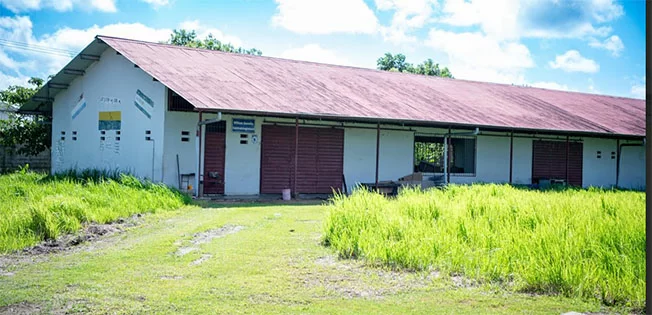
After years of sitting idle and falling into disrepair, a long-shuttered training facility for children with disabilities in Geyersvlijt is set to get a new lease on life, following an official restoration initiative launched by Suriname’s Ministry of Social Affairs and Housing (Sozavo). The government body has confirmed that preliminary preparations are already underway, with a target reopening date set for the middle of 2027. Once fully restored, the center will once again serve as a dedicated hub for disabled children and young people, providing specialized education, vocational skills training, and tailored social support that many in this community currently lack access to.
博客
-

Two Dominican youth represent country at CARYFED 2026 forum in Grenada
As regional conversations around youth-led sustainable development gain momentum across the Caribbean, two young Dominicans are stepping onto the international stage to represent their island nation at the 2026 Caribbean Youth Forum for Environment and Development (CARYFED), hosted in Grenada from July 14 to 24. The delegation is backed by Project Discovery Dominica, a non-profit organization dedicated to nurturing a new cohort of environmentally conscious and community-focused leaders, marking the latest milestone in the group’s rapid growth since its official launch just two years ago.
The partnership between Project Discovery Dominica and CARYFED stretches back years, laying the groundwork for the organization’s current work. In 2023, three young Dominican participants attended the CARYFED gathering in Trinidad and Tobago, where they gained hands-on leadership training and deepened their understanding of cross-regional sustainable development challenges and youth engagement strategies. That transformative experience inspired a group of local young leaders to formally establish Project Discovery Dominica in 2024 as a national platform for youth empowerment centered on environmental stewardship. Later that same year, Dominica itself hosted the annual CARYFED forum, welcoming hundreds of youth delegates from across the Caribbean and cementing the country’s reputation as a committed supporter of youth leadership in the climate and environmental space.
This year, 19-year-old students Geyoudena Desir and Reece Lantan, both attendees of Dominica Grammar School, have been selected to carry the island’s flag at the Grenada forum. For Desir, who currently serves as Project Discovery Dominica’s Communications Officer, the opportunity is a full-circle moment: she attended the 2024 CARYFED forum on her home island, the same event that launched the organization she now helps lead. “My first CARYFED Forum was held in Dominica, and it was an incredible experience. It was also the year Project Discovery Dominica was launched,” Desir shared ahead of the trip. “Although I was unable to attend last year’s forum, I am thrilled to participate in this year’s CARYFED Forum in Grenada. This is my first visit to the island, and I look forward to fully immersing myself in the experience. CARYFED has consistently created meaningful opportunities for young people across the region. As a representative of Project Discovery Dominica, I hope to use the knowledge, experience, and networks I gain to strengthen our chapter and share those opportunities with youth throughout Dominica.”
For first-time delegate Lantan, the forum represents a chance to grow as a leader and encourage more of his peers to engage with environmental action. “I expect CARYFED to be both an interesting and enjoyable experience, and I am looking forward to learning and growing throughout the forum,” he said. “I would encourage other young people to get involved in opportunities like this. I hope to return with a new perspective that will help create a better future and inspire other young people to enjoy the same life-changing experience.”
Upon their return to Dominica, the pair are tasked with a key mission: to revitalize Project Discovery Dominica by recruiting new young members, designing accessible local environmental programs, and motivating more youth to step into leadership roles in their schools and hometown communities. Organization chairperson Beverly Leblanc emphasized that investing in these young delegates is equivalent to investing in Dominica’s long-term future. “Our investment in young people is an investment in the future of Dominica. We are incredibly proud of our delegates as they represent our country and Project Discovery Dominica on the regional stage,” Leblanc said in a formal press statement. “Their participation is not only an opportunity for personal growth but also a chance to bring back fresh ideas, strengthen youth leadership, and help shape the next chapter of Project Discovery Dominica. We are excited about the energy, innovation, and vision they will bring as we work together to expand opportunities for young people across the island.”
To date, Project Discovery Dominica remains focused on its core mission: creating accessible opportunities that build leadership capacity, foster a culture of volunteerism, embed environmental responsibility, and encourage active youth citizenship. The organization works to equip young Dominicans with the technical knowledge, practical skills, and cross-regional professional networks they need to become effective advocates for sustainable development across the island. As Desir and Lantan prepare to engage with hundreds of regional youth leaders in Grenada, the organization extended its well wishes for a productive and transformative forum, highlighting the critical role this participation plays in advancing both local and regional environmental goals.
-

DASPA pays tribute to Otis Francis following fatal Woodbridge Bay Port accident
A devastating workplace accident at Dominica’s Woodbridge Bay Port has claimed the life of a long-serving port employee, leaving the local maritime community in mourning. Forty-seven-year-old Otis Francis, a resident of Tarish Pit, suffered fatal injuries in the incident shortly after midnight on Friday, July 17, while he was part of a crew unloading cargo from a berthed vessel at the facility.
Preliminary law enforcement accounts confirm a shipping container fell onto Francis during the unloading operation. First responders pronounced him dead at the accident scene immediately after the incident, and the Dominica Police Force has launched a full formal investigation to document the exact circumstances that led to the fatal event and identify any contributing safety gaps.
Francis had built an eight-year career as a stevedore with the Dominica Air and Sea Ports Authority (DASPA), the government body that manages the island’s key sea and air port infrastructure. In an official public statement released after the accident, DASPA’s Board of Directors, senior management, and all staff joined to pay tribute to Francis’s legacy at the port.
The statement highlighted that Francis consistently demonstrated exceptional dedication, unwavering commitment, and a rigorous work ethic throughout his tenure. These traits, the authority noted, earned him widespread respect and sincere appreciation from colleagues, industry partners, and every stakeholder he interacted with during his years of service. His contributions to smooth port operations and the growth of Dominica’s maritime community will not be forgotten, the statement added.
“While no words can truly ease the pain of such a sudden and great loss, we hope the Francis family will find strength in the love and support of those around them and comfort in the cherished memories of his life and legacy,” the statement read. DASPA extended its deepest heartfelt condolences to Francis’s immediate family, extended relatives, close friends, and fellow port employees, joining the entire community in mourning and praying for peace and comfort for all those affected by the tragedy. May Otis Francis rest in eternal peace.
-

TMF Beach 2026 draws massive crowd for opening day
The much-anticipated 2026 edition of the Tipsy Music Festival (TMF) Beach launched with a burst of energy on Saturday, drawing hundreds of excited music fans to the Copacabana Beach Club along Bay Street in St. Michael for the first day of the two-day coastal celebration. The sun-soaked beachfront venue filled rapidly as attendees clad in vibrant beachwear and swimwear turned the space into a nonstop party, with infectious rhythms, group dancing, and interactive entertainment keeping the atmosphere electric from the early afternoon through the entire evening.
Originally scheduled to run from noon to 8 p.m., the festival kicked off with a series of high-octane DJ sets that grabbed the crowd’s attention from the very first beat. Renowned selectors Sheldon Papp, Jus Jay, and Noah Powa rotated behind the mixing decks, blending an infectious mix of soca, dancehall, and beloved party anthems that kept attendees moving and grooving in the sand long before the first live performer took the stage around 7 p.m.
Emerging artist Doejay opened the live segment of the evening, earning a roaring response from the crowd with performances of his breakout hits “Good Better Best” and “2 Bad”. Fans sang every word back to him throughout his set, prompting DJ Jus Jay to invite the rising star back for an encore performance of his brand-new soca release, “Bartender”.
The momentum only built from there, as fast-growing local favorite Lastacia took the stage and turned the entire crowd into a massive unified choir, with hundreds of voices singing every lyric to her chart-topping hit “Active”. Backed by two dynamic backup dancers, Lastacia’s high-energy choreography amplified the crowd’s excitement and pushed the energy level even higher.
One of the most memorable moments of the opening night came when Jagwa De Champ – introduced by Jus Jay as “the DJ known for bashment” – stepped into the spotlight. The crowd erupted into cheers before he even sang a single note, chanting the lyrics to his hit track in unison. His performance of fan favorite “Ching Ching” quickly became one of the evening’s biggest highlights, with the accompanying viral dance challenge drawing widespread, enthusiastic participation from fans across the venue. Jagwa further ramped up the fun by inviting multiple attendees on stage to dance alongside him, where they showed off both freestyle moves and choreographed routines to the delight of the entire crowd.
Beloved staples Leadpipe & Saddis kept the energy sky-high with a set packed full of their most popular hits, keeping the entire crowd singing from their first song to their last. Saddis also treated the audience to a preview of his entry for the prestigious Sweet Soca competition, “Skyfall”, which earned a warm, enthusiastic reception from the assembled fans.
Closing out the opening night’s live performances was Jordan English, who delivered a crowd-pleasing set featuring many of his best-known tracks, including his viral breakout hit “Weatherman”. His high-energy performance brought the first day’s stage programming to a rousing, memorable conclusion.
Throughout the entire evening, festivalgoers could be spotted waving their branded yellow Tipsy cups, dancing in groups, capturing clips of their favorite performances, and singing along with every act that took the stage. The area surrounding the stage stayed packed from start to finish, as attendees embraced the youthful, high-octane vibe that has become the signature of the TMF Beach event.
With a carefully curated lineup that balances established, beloved artists and exciting emerging talent, TMF Beach 2026 delivered a standout opening night that has built massive anticipation for the festival’s second and final event: the highly anticipated TMF All-White Party, scheduled to take place Sunday, July 19, at the National Botanical Gardens, running from 3 p.m. through midnight. The Tipsy Music Festival is organized annually by Twisted Entertainment.
-

DOMLEC: Geothermal energy helps cut July fuel surcharge to 33 cents
Dominica’s primary electricity provider, Dominica Electricity Services Ltd (DOMLEC), has announced that its July 2026 fuel surcharge will be set at 33 cents per kilowatt-hour, a reduction made possible by the rapid scaling of geothermal energy integration into the island’s national power grid, according to the company’s Public Relations Officer Ayeola George.
In an official statement released to the public, George outlined the sharp, steady growth of geothermal energy’s share in Dominica’s renewable generation mix over the first half of 2026. Back in March, geothermal contributed just 6 percent of the country’s total renewable power output. By April, that share had jumped nearly four and a half times to 26 percent. When combined with the existing hydroelectric power capacity, total renewable energy penetration across the national grid reached 51 percent that month.
This upward trajectory continued through the spring, George confirmed, with total renewable penetration climbing to 58 percent in May. By the end of June, the milestone figure of 68 percent was reached, marking renewables as the dominant source of electricity generation for the island nation.
This shift away from fossil fuel-dependent generation has delivered immediate tangible benefits for both DOMLEC and its customers, George explained. As renewable energy output grows month over month, the country’s reliance on diesel for power generation has fallen dramatically. From January’s consumption level of 373,000 gallons of diesel, the monthly usage dropped by almost half to just 194,000 gallons by June 2026.
While DOMLEC has no ability to influence global or regional diesel pricing, the reduced reliance on the fossil fuel has drastically cut its impact on overall electricity generation costs. “The cost-benefit of expanding geothermal energy is significant — not just for DOMLEC as a company, but for every single one of our customers,” George emphasized.
Without the integration of geothermal capacity into the grid, George noted, the July 2026 fuel surcharge would be nearly double the current rate, coming in at 63 cents per kilowatt-hour instead of the 33 cents that customers will see on their upcoming bills. “This is the true, tangible impact of investing in geothermal,” she said.
George also acknowledged that customers experienced a number of power outages across June, but highlighted that even with those operational challenges, DOMLEC still achieved the landmark 68 percent renewable penetration rate. She thanked the Dominican public for their patience and understanding as the company and its partner organizations continue the ongoing work of integrating more renewable energy resources into the national grid.
The achievement of 68 percent renewable penetration through geothermal and hydro power is being hailed as a major milestone for Dominica’s energy transition, positioning the island as a growing leader in Caribbean renewable energy adoption.
-

Multiple dead, others injured after West Coast boat collision
A devastating head-on collision between two vessels in the early hours off the western coast of the Caribbean island nation of Saint Lucia has left at least three people dead, multiple others injured, and one unaccounted for, local emergency sources have confirmed. The tragic incident unfolded around midnight in the coastal waters between the Soufrière and Canaries districts, when a southbound boat and a northbound vessel crashed directly into one another. Multiple passengers on the two craft sustained life-altering injuries, ranging from compound fractures of the arms and legs to other severe traumatic conditions requiring urgent medical intervention. Local outlet St. Lucia Times conducted an interview with a first responder who took part in the immediate rescue operation, recalling the chaotic, high-stakes effort to pull survivors from the collision site. The rescuer detailed that many passengers who survived the impact were found clinging to fragmented pieces of wreckage amid open water before rescue teams could reach them. All recovered survivors were eventually brought to a nearby beach to receive on-site first aid before being transferred to local medical facilities for further care. As of press time, the Royal Saint Lucia Police Force has not yet published any official statement confirming details of the collision, including the identities of those involved or the root cause of the crash. Investigations into the incident are still in their early stages, with authorities yet to begin public disclosure of preliminary findings.
-

UPDATE: Guyanese National Fatally Shot in Potters Village
On a quiet Sunday afternoon in Potters Village, Antigua, a brazen fatal shooting has left a small community reeling from violence, after a Guyanese national identified only as Leyandrew was killed in what law enforcement officials suspect was a pre-planned targeted attack.
Local residents told reporters they first heard the crack of multiple gunshots ring out through the neighborhood before they stumbled on the victim at the scene. According to witness accounts, the entire attack unfolded in mere seconds, catching nearby residents off guard and leaving widespread fear and unease across the tight-knit community. Initial early reporting had labeled the killing an apparent drive-by shooting, with witnesses counting at least four separate shots fired before the gunmen fled.
In the immediate aftermath of the incident, responding police officers moved quickly to secure and cordon off the crime scene, launching a formal criminal investigation into the homicide. Investigating teams have outlined their next steps, which include door-to-door interviews with local residents who may have seen or heard details related to the attack, as well as a full review of all available evidence – most notably nearby surveillance footage that could capture critical clues about the attackers and their escape.
As of the latest update, law enforcement has not identified a clear motive for the killing, and no suspects have been taken into custody in connection with the shooting. This fatal incident marks the latest homicide to impact Antigua and Barbuda, a nation that continues to grapple with rising gun violence as investigators and policymakers work to curb the spread of illegal weapons and violent crime across the twin islands.
Outlets covering the developing story have extended their sincere condolences to the victim’s family and loved ones, who are now grappling with the sudden loss of Leyandrew. This remains an active, developing investigation, and new details will be released to the public as they become available to authorities.
-
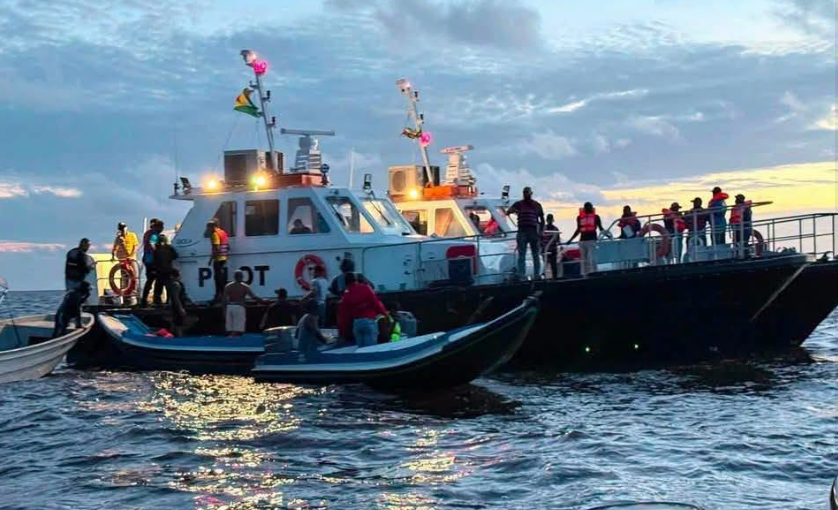
Ferry carrying 116 people capsizes off Guyana; at least 53 rescued
In an emergency unfolding off the North Atlantic coast of Guyana, a passenger ferry carrying 116 passengers and crew members has capsized, with 53 people pulled from the water as of Sunday, local authorities confirmed in official statements.
The vessel, identified as the MV Barima, was traveling north from Guyana’s capital city of Georgetown to its destination of Port Kaituma when the incident occurred, according to Prime Minister Mark Phillips, who is personally overseeing the government’s emergency response to the disaster.
Public Works Minister Juan Edghill shared details of the response via his official Facebook page, noting that local emergency operations centers received an initial distress signal from the vessel at 11:01 p.m. local time. The call immediately triggered a large-scale multi-party search and rescue operation, with both government-operated and private watercraft deployed to the incident zone to assist with recovery efforts.
The capsizing took place in waters close to the mouth of the Pomeroon River, according to official mapping of the incident location. As of Sunday afternoon, full details of the ongoing search operation remained undisclosed, and officials have not yet confirmed whether there have been any fatalities among the people who remain missing. Despite the uncertainty, Guyanese officials have publicly stated that they hold hope for rescuing more of the missing passengers in the coming hours.
Edghill also confirmed that the MV Barima was outfitted with required safety equipment ahead of its voyage: the vessel carried 250 life jackets, two rigid life rafts, and an additional six inflatable life rafts for emergency use.
-

The Million-Dollar Meeting that never happens
The Dominican Republic is currently facing a critical, underdiscussed gap in its growing innovation ecosystem: it is not a lack of creative entrepreneurs or promising startup ideas that holds the country back, but a broken, outdated procurement system that fails to turn promising ventures into sustainable, scalable businesses.
Across the country, public and private institutions regularly host glowing startup events: young entrepreneurs present prototypes to crowds of attendees, bank executives hand out awards to competition winners, corporate leaders launch new accelerators, hackathons and innovation challenges, and universities showcase student work to industry partners. These events draw full rooms, are covered widely in local media and shared across professional social platforms, and are rooted in sincere intentions to grow the domestic innovation economy. But once the event ends, the banners come down and attendees return to their daily work, one critical question is almost never asked months later: how many of these participating startups actually received a formal, paid purchase contract from the institutions hosting the events?
Too often, startups leave these events with only a certificate, an invitation to pitch again, a non-binding memorandum of understanding, or an unpaid pilot that promises exposure but no revenue. This silence around the number of actual contracts awarded exposes a deep structural flaw in the Dominican innovation ecosystem. While the country has poured significant time and resources into building a pipeline of new innovators and entrepreneurs, it has largely neglected the work of reforming the public and private institutions that should be the first major buyers of domestic innovation. This disconnect explains why the Dominican Republic can produce a growing number of entrepreneurship programs, competition cohorts and accelerator graduates while still failing to help promising new ventures turn their ideas into durable, job-creating companies. The core challenge is not that startups need more general support; it is that too few domestic institutions have clear, reliable mechanisms to turn an unmet operational need into a funded, paid contract for an innovative new supplier.
Today’s innovation ecosystems have become very skilled at tracking surface-level activity: they count the number of entrepreneurs trained, applications received, workshops hosted, mentors recruited, competitions held and ventures accelerated. These metrics easily prove that programs ran and reached participants, but they do not prove that a functional market for domestic innovation has been created. The far more important, unreported metrics are far more demanding: how many participating startups became approved institutional suppliers? How many paid pilot projects have been commissioned? What share of those pilots turn into recurring, long-term contracts? How much institutional spending actually flows to emerging Dominican companies? And how much revenue, employment and intellectual property has been generated by those transactions?
An innovation program that trains 500 entrepreneurs but generates no commercial demand for their solutions may have some educational merit, but it should not automatically be celebrated as a successful economic development initiative. No industry would accept this flawed measurement: tourism is not judged by the number of hotel management training seminars held, ignoring actual hotel occupancy rates. Export performance is not measured by counting how many companies attend trade workshops, ignoring the actual value of purchase orders received. Yet innovation programs are regularly celebrated without any disclosure of whether anyone actually bought the innovations being developed. This gap has major economic consequences: public procurement accounts for roughly 12% of GDP across OECD economies, 14% to 15% of GDP in the European Union, and an estimated 15% of global GDP overall. At this scale, procurement is far more than routine administrative paperwork; it is core economic strategy, implemented through public and private spending.
The failure to integrate innovation into procurement is often framed as a problem that only hurts startups, but this is an incomplete view. The institutions that refuse to adapt their procurement processes also pay a steep price for this inaction: a bank may continue running a costly, inefficient manual process that a local startup could have automated; a tourism operator may keep paying for imported technology that is not built for the unique needs of the Dominican market; a government ministry may lose hundreds of staff hours to fragmented, outdated legacy systems; a university may see valuable local research sit unused with no path to commercialization; a telecommunications company may hold massive amounts of valuable customer data but have no internal process to partner with a startup to turn that data into a profitable new service. While the startup loses out on a contract, the institution continues paying for the unresolved problem year after year. These costs may appear as higher operating budgets, slower customer service, duplicated labor, increased cybersecurity risk, unused data, overreliance on foreign suppliers, and delayed decision-making. Because these losses are spread across multiple departments, they rarely come with a single invoice explicitly labeled “failure to innovate,” but they are no less real.
The Inter-American Development Bank estimates that inefficiencies in public spending across Latin America and the Caribbean, including weaknesses in procurement systems, add up to roughly 4.4% of the region’s total annual GDP. Not all of this waste can be eliminated by working with new technology startups, but the figure makes clear how much institutional value is lost when spending systems fail to connect public and private budgets to better solutions. The core question for Dominican institutions is not whether they should “support startups” as a form of corporate social responsibility; it is whether they can identify their most costly operational problems, open those problems to capable new suppliers, and purchase better solutions under clear, controlled terms.
It would be a mistake to simply blame procurement departments for this gap. Traditional procurement systems are intentionally designed to acquire well-known goods and services from established suppliers, who can prove their reliability through years of prior contracts, stable financial history, industry certifications and long delivery track records. The core purpose of traditional procurement is to protect institutions from unnecessary risk, maintain fair competition and deliver the best value for money. But innovation represents a fundamentally different kind of transaction: the solution may not have years of proven operating history; the buyer may understand their problem clearly but not know the exact technical specification that will solve it; the supplier may be highly capable but too young to have a long track record; the institution may need to test the solution’s performance before committing to a large-scale rollout.
When institutions use a traditional procurement process for innovative solutions, it creates a paradox: organizations call for new innovation, but their qualification rules only reward solutions that have already been proven elsewhere. The outcome is predictable: large, established incumbents remain eligible for contracts, emerging innovative firms remain “interesting” but unqualified, and official innovation programs operate at a polite distance from the institution’s actual spending machinery. Leading global procurement systems have already recognized this gap and adapted. The OECD and European Commission have created extensive guidance for using public procurement as a demand-side tool to drive innovation, including frameworks for pre-commercial procurement, public procurement of innovative solutions, and innovation partnerships. These frameworks help institutions clearly define their challenges, test competing solutions, and move toward implementation while still protecting competition and managing risk. The World Bank’s modern procurement framework similarly emphasizes that purchasing strategies should be tailored to the specific purpose and evaluated based on overall value delivered, not automatically awarded to the lowest bid that meets minimum compliance rules. These models do not eliminate critical financial controls; they redesign the procurement pathway so that uncertainty can be managed, rather than used as an excuse to avoid working with new suppliers entirely. The Dominican Republic does not need weaker, less rigorous procurement; it needs more sophisticated, adaptive procurement that can accommodate innovative solutions.
Most institutional innovation projects get through the first meeting without issue: a startup founder demonstrates their product, the institution’s innovation team sees clear potential, executives ask thoughtful questions, and everyone agrees the solution deserves further discussion. But the second critical meeting, the one that actually leads to a contract, almost never happens. That meeting needs to bring together the executive who owns the operational problem, the leader who controls the relevant budget, the procurement, finance, legal, risk and compliance teams, and a senior institutional sponsor with enough authority to align all these stakeholders. Without this meeting, the initial conversation generates interest but no clear path to a commercial transaction. The innovation team can advocate for the solution, but they cannot allocate budget from the relevant business unit. Procurement can run a formal process, but they have no approved mandate to move forward. Legal can review the contract terms, but they cannot decide whether solving the problem is a strategic priority for the institution. Every team is involved, but no one is explicitly responsible for converting interest into a contract. This missing ownership is the hidden institutional gap holding back Dominican innovation. The critical question is not just whether an organization has an innovation department; it is whether the organization has created a clear internal pathway for innovation to turn into allocated spending, implemented solutions and measurable returns on investment.
The term “pilot” is often used when institutions want to appear open to innovation without making a real commitment. There is nothing wrong with a well-designed pilot: a disciplined pilot project can reduce technical, operational and financial uncertainty before a full-scale rollout. But a pilot that does not have a clear, pre-defined decision-making process is not innovation procurement; it is just postponed judgment. Before any pilot launches, institutions should be able to answer six core questions: What expensive operational problem is this pilot solving? Which executive owns that problem and is accountable for its resolution? Which budget will pay for the successful solution? What specific evidence will count as successful validation of the solution? What procurement mechanism will be used to award a full contract if the pilot succeeds? Who has the authority to approve scaling the solution if it meets the success criteria? If these questions are left unanswered, the pilot will almost always become an isolated, forgotten experiment. The startup invests time and resources into customizing the product, training the institution’s team, and providing executive attention, while the institution gains knowledge and optional future access to the product. But when the budget cycle changes, the internal sponsor changes roles, or the project gets kicked into an indefinite review, it never moves forward. A paid validation should be designed as a bridge to a final decision, not a substitute for one.
For public and private institutions across the Dominican Republic, the first step to fixing this gap is not announcing another innovation competition. It is identifying the costly operational problems that are already draining money, time and institutional capacity, and deciding which of these problems can be opened to qualified external innovative suppliers. From there, six core elements need to be connected in a clear sequence: Problem → Sponsor → Budget → Validation → Procurement → Scale. The problem must be large enough to be economically meaningful. The sponsor must have enough institutional authority to move the project forward. The budget must be identified before the solution is publicly celebrated. Validation must be paid, time-bound, and governed by pre-agreed success criteria. Procurement must have a legally and operationally clear pathway to a full contract. Scaling must follow a pre-defined decision, not another round of unproductive exploratory meetings.
This structured framework protects both institutions and startups. It prevents innovation teams from promoting solutions that operational business units do not actually need. It prevents startups from investing time and resources into pilots that have no committed buyer. It allows procurement and legal teams to shape the transaction early on, before enthusiasm outpaces institutional guardrails. It gives finance teams a clear basis for measuring operational returns on investment. It allows senior executives to distinguish between surface-level innovation activity and actual commercial implementation. Most importantly, it turns innovation from a public relations exercise into a core management discipline that drives real value.
The world’s strongest innovation economies did not grow from venture capital investment alone. Investment is important, but capital cannot permanently replace the demand from actual customers. Many of the technologies that reshaped global markets benefited from sophisticated institutional demand during their early, formative years. Governments and large corporations did not just cheer on new founders; they became the first major customers, set clear performance requirements, and gave new companies the reference implementations they needed to expand to broader markets. The U.S. Small Business Innovation Research program is a prominent example of public demand being used to develop and test solutions for federal government needs. European governments have built formal innovation procurement tools, while South Korea has integrated public innovation purchasing into a sophisticated digital procurement infrastructure. Today, the European Union is debating how innovation procurement can strengthen its strategic domestic industries and reduce overreliance on foreign suppliers.
The lesson for the Dominican Republic is not that the government should indiscriminately favor young domestic companies or lower quality standards in the name of entrepreneurship. The state should not pick winners, and public and private institutions should never purchase low-quality solutions as a form of charity. The real lesson is that sophisticated, dynamic economies create controlled, fair opportunities for qualified emerging suppliers to prove they can solve important problems. They do not confuse risk management with automatically excluding any new, unproven solution. A demanding, high-standard first customer does more to help a startup grow than a dozen entrepreneurship workshops. It generates immediate revenue, creates a track record of operational performance, builds credibility, and produces a reference case that can help the company expand beyond the Dominican Republic to export markets. For a small economy like the Dominican Republic that wants to export more high-value intellectual property, this shift is decisive.
Today, the Dominican Republic has no shortage of innovation-focused rhetoric, and it already has all the core building blocks of a thriving innovation economy: talented founders, strong universities, healthy corporate balance sheets, well-established public institutions, functional financial infrastructure, and an increasingly ambitious entrepreneurial class. What remains underdeveloped is the commercial procurement machinery that connects these assets together. A mature, honest national innovation report should not just report how many entrepreneurs were reached by programs; it should disclose the total value of innovation contracts awarded, the number of first-time domestic suppliers that were approved, the share of paid pilot validations that converted to full contracts, the institutional cost savings or new revenue generated by these solutions, and the number of Dominican innovations that have subsequently been exported. These metrics will reveal whether the country is building real innovation capability, or just surface-level activity.
The next phase of growth for Dominican innovation will not be determined by how many founders enter startup programs, how many judges attend demo days, or how many institutions add their logo to an event backdrop. It will be determined by whether the country’s leading public and private institutions can allocate budgets to solve their defined problems, and allow qualified domestic companies to compete for the right to deliver those solutions. The Dominican Republic has spent years building the supply side of innovation; now it must focus on building intentional demand for domestic innovation. Innovation does not become lasting economic power when it gets applause; it becomes economic power when someone with the authority signs the purchase order.
-
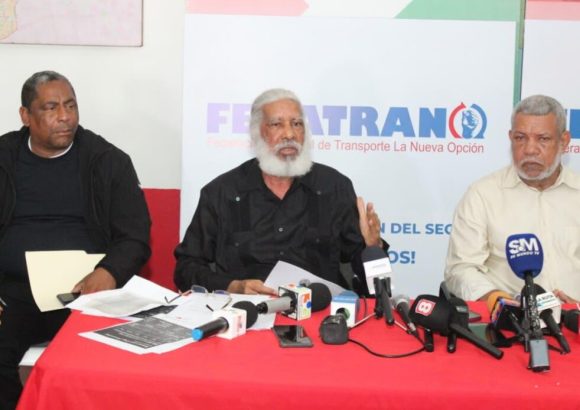
Fenatrano’s Juan Hubieres accuses Senator Antonio Marte of targeting union routes
escalating tensions between rival transport groups in the Dominican Republic have thrown the country’s public transportation system into a fresh round of conflict, with the head of one major union leveling serious accusations against a sitting senator who leads a competing organization.
Juan Hubieres, president of the National Federation of Public Transportation Workers (Fenatrano), has publicly charged Senator Antonio Marte, who also leads the National Confederation of Transportation (Conatra), with orchestrating a power grab to seize control of key public transit corridors that are currently operated by Fenatrano-affiliated route holders. At the core of the dispute is a fight over government-authorized route permissions, which are critical for operators to run legal and profitable bus services across the country.
According to Hubieres, Marte has been applying heavy pressure on national transportation authorities to revoke the legally granted operating rights of Fenatrano’s affiliated transport providers. The end goal of this pressure campaign, Hubieres claims, is to clear the way for Conatra to take over additional government-approved transit corridors, expanding Marte’s influence and control over the sector. Beyond the route grab, the Fenatrano leader has also alleged that the senator has received improper benefits through favorable government transportation contracts and access to heavily subsidized fuel. To address these claims, Hubieres is calling for a full, independent investigation into Marte’s business arrangements within the public transportation system.
Hubieres also turned his criticism to the National Institute of Transit and Land Transportation (Intrant), the country’s top regulatory body for land transport. He specifically called out the recent detention of Fenatrano vehicles operating along the heavily trafficked Mella corridor, arguing that the move directly violates the legally recognized operating rights held by his organization’s members. In an effort to push the regulator back to neutrality, Hubieres has urged Intrant Director Milton Morrison to refrain from aligning with either side in the ongoing conflict and to uphold the rule of law for all transport operators.
In sharp warnings against what he frames as a monopolistic power play, Hubieres stated that Marte is actively working to consolidate full control of the country’s major transit corridors. He made clear that Fenatrano will mount robust opposition to any attempt to displace its affiliated operators and revoke their legally held route rights. Hubieres also pointed to a history of violent conflict within the Dominican transport sector, emphasizing that the aggressive, intimidation-based tactics that marred past disputes must not be allowed to resurface in the current standoff.
The latest public accusations are just the most recent development in a long-running, high-stakes conflict over how public transportation corridors are allocated and managed across the Dominican Republic, with control of these routes translating directly to significant economic and political influence for the groups that hold them.