博客

  • Rural communities not forgotten, says Holness

    Rural communities not forgotten, says Holness

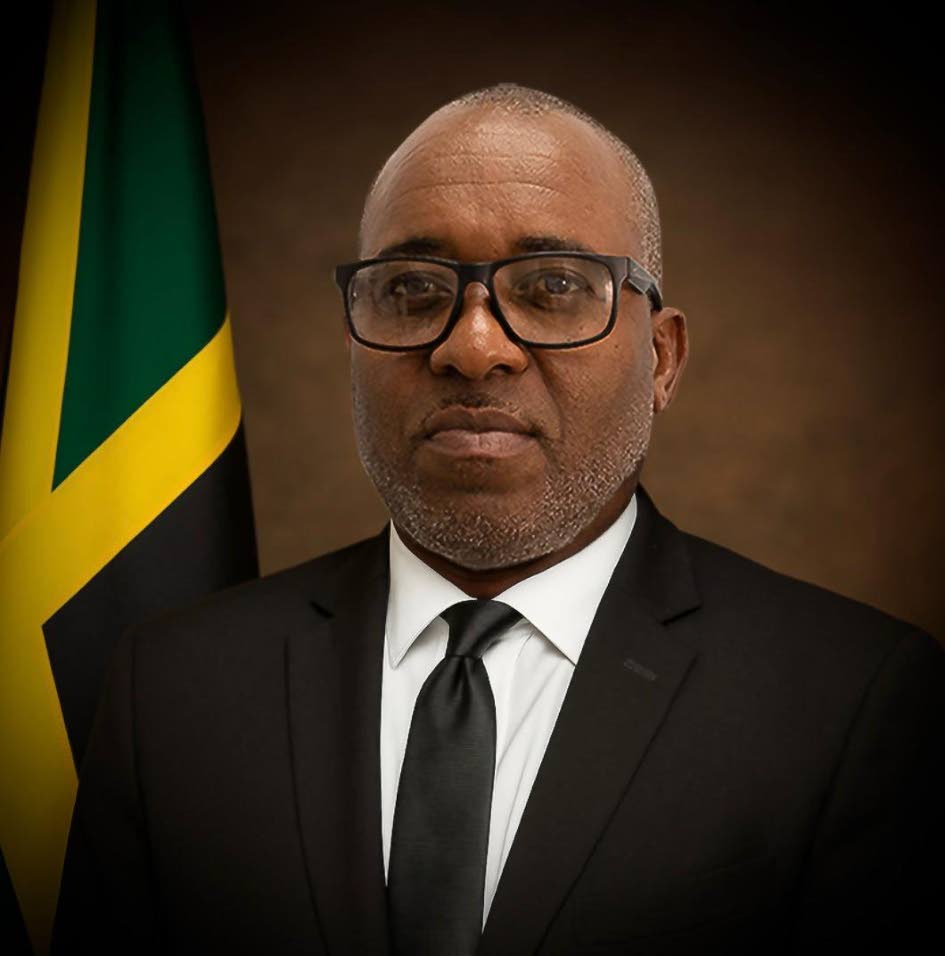
    TROY, Trelawny — At the official inauguration of the new $230-million Troy Bridge last Friday, Prime Minister Dr Andrew Holness delivered a public reassurance to rural Jamaican residents, pushing back against widespread perceptions that deep-rural communities have been sidelined from national infrastructure investment and economic growth.

    The span connects the Manchester North Western constituency, represented by Opposition Member of Parliament Mikael Phillips, to Trelawny Southern, making it a critical transportation link for thousands of cross-community residents, farmers, and commuters. During the opening ceremony, Phillips used the occasion to raise a longstanding concern from rural constituents: that major infrastructure spending has disproportionately focused on urban hubs and large towns, leaving marginalized deep-rural areas underfunded and disconnected.

    “Kingston is not Jamaica alone, Mandeville is not Manchester alone, Falmouth is not Trelawny alone,” Phillips told the gathered crowd. He made a direct appeal to Minister of Works Robert Morgan to ensure deep-rural communities receive fair representation in national road development planning, urging policymakers to set aside the urban-centric approach to infrastructure investment: “Remember us in deep-rural Jamaica whenever you’re crafting that road programme, because we want some of it too.”

    In response to Phillips’ appeal, Holness acknowledged that rural communities have long carried a sense of being overlooked by national governments, a feeling that erodes personal dignity, community respect, and public confidence in state institutions. He made clear the current administration’s policy priorities directly counter this trend. “It’s a loss of dignity, a loss of respect, a loss of confidence — and let me assure you, your Government does not forget the rural communities,” the prime minister stated.

    Holness outlined the government’s core objective for rural infrastructure: to expand connectivity so rural residents can easily access jobs, open markets, and critical public services, while fully integrating these communities into the country’s core economic networks. “What Government is trying hard to do is to rapidly integrate the rural communities into the nerve centres of economic activities,” he explained. Improved rural road and bridge networks, he added, create flexible opportunity: they allow residents to make their homes in rural areas while accessing employment in urban hubs, and cut transit costs and time for agricultural producers moving goods to domestic markets. The $230-million investment in the Troy Bridge itself, he emphasized, serves as tangible proof of the government’s commitment, not just empty rhetoric: “We’re not forgetting rural communities — and the $230 [million]-odd spent here is a symbol that you are top of mind and not forgotten.”

    Works Minister Robert Morgan, who himself represents a rural constituency, echoed Holness’ reassurance, noting that rural development remains a central priority for the administration. He shared details of two major upcoming infrastructure initiatives that will benefit rural Jamaica. First, last Monday, the Jamaican Cabinet approved the Accelerated Bridge Project, a multi-year plan that will replace more than 50 deteriorating or destroyed bridges across the island over the next two and a half years. The western region of Jamaica, which suffered the worst damage from Hurricane Melissa, will receive the majority of funding and support under the program. Second, the $280-million Troy to Warsaw Road full rehabilitation project will move forward under the government’s Shared Prosperity through Accelerated Improvement to our Road Network (SPARK) initiative. Unlike patchwork repairs, this project will deliver a full, long-lasting upgrade to the key rural thoroughfare that serves residents of Troy, Manchester, and Trelawny. Morgan added that more rural infrastructure projects will be announced for the region in the coming weeks.

    Alongside broader policy announcements, the opening ceremony saw cross-party praise for the completed bridge. Opposition MP Phillips was joined by ruling Jamaica Labour Party representatives Trelawny Southern MP Marisa Dalrymple Philibert and Falmouth mayor Councillor Junior Gager, who represents the local Warsop Division, in welcoming the new span.

    Gager, a Troy native who resides within walking distance of the bridge, recalled the widespread disruption that followed the original structure’s 2021 collapse, triggered by flooding from Tropical Storm Grace. For years after the collapse, the broken span created daily hardships for everyone who relied on it: local residents, commuting workers, farm producers, students traveling to school, teachers, and small business owners. He joked that the constant requests for repairs from frustrated constituents became a daily part of his life: “I live in this little district, I was born here. And when this bridge collapsed, many times you hear the people passing my place, Prime Minister, I hear dem bawl out, ‘Gager, yuh nah fix the bridge?’ So I am more than happy,” he said to laughter from the gathered audience.

    Dalrymple Philibert highlighted the steady commitment the government demonstrated to see the project across the finish line, even in the face of significant headwinds: global supply chain-driven rising construction costs, unforeseen construction delays, and widespread damage from Category 5 Hurricane Melissa. This commitment, she argued, reflects the administration’s understanding of just how critical the bridge is to the daily lives and economic vitality of Troy and surrounding communities. “This morning as we cut the ribbon, we do so with gratitude to the engineers, contractors, workers, public servants, and community members whose work made this achievement possible to everyone gathered here today,” she said.

    The new Troy Bridge opening comes as the Jamaican government moves forward with plans to consolidate road governance under a new One Road Authority, an institutional reform designed to modernize, streamline, and strengthen the management, regulation, and expansion of the country’s entire national road network.


  • Absolutely not true!

    Absolutely not true!

    For years, circulating claims that Jamaican locals were barred from entering the iconic Blue Lagoon in Portland have divided public opinion and spurred legal action. Now, a newly surfaced social media video has directly contradicted these allegations, offering on-the-ground footage of local residents freely enjoying one of the island’s most beloved natural landmarks.

    The identity of the videographer remains unconfirmed, but the narration in the clip, filmed in late 2024, aligns with the core goals of beach access advocacy groups. The creator explained he visited the site specifically to test claims of restricted entry, and met with a local Maroon leader with deep experience working on Portland coastal access issues during his trip. Walking through the property while filming groups of Jamaican visitors in swimwear, the narrator stated plainly: “I came here today because I was told that there is no access to Blue Lagoon, and as you can see there is full access.”

    While the video confirms open entry to the lagoon itself, the creator did acknowledge longstanding infrastructure challenges: parking along the narrow access road remains unregulated and limited, leading to inconsistent informal control of the area that has left the space without formalized public management. Independent verification from Jamaica Observer found no evidence of official access fees being charged, noting any unauthorized fees that have been reported are likely collected by unlicensed touts operating outside legal frameworks.

    Renowned globally as one of Jamaica’s most breathtaking natural treasures, Blue Lagoon holds a unique geographic and cultural appeal. Fed by a mix of fresh mountain runoff and Caribbean seawater, the 180 to 215-foot-deep lagoon shifts in hue from deep sapphire to bright turquoise over the course of the day, creating an otherworldly aquatic landscape that has drawn filmmakers, writers, and travelers from across the world for decades. As travel platform Pathculture notes, the unique blend of fresh and saltwater also creates a one-of-a-kind inviting temperature, making it a popular spot for swimming, boat tours, and quiet relaxation for both visitors and locals.

    Debates over public access to the site stretch back years, and have even landed in court. In 2023, two local advocacy groups — the Jamaica Beach Birthright Environmental Movement (JaBBEM) and Portland Environmental Action (PEA) — launched a lawsuit over access, focused on reopening the Blue Hole road, the historic public entrance to the national monument. PEA spokesperson Wilbourn Carr explained at the time that the groups raised concerns after the Jamaica National Heritage Trust (JNHT), the managing body for the site, signed a three-year agreement that routed public access across private land. The lawsuit seeks to secure permanent public entry by reopening the original public road, regardless of future changes to the private land agreement. The case remains ongoing as of 2025.

    Most recently, misleading social media claims in early 2025 alleged that the entire site would be sold to a private owner and entry restricted only to paying guests. In response, JNHT issued an official statement debunking these rumors, confirming that Blue Lagoon remains free and open to all members of the public. The trust noted that it has recently completed upgrades to the site, including renovated restrooms, improved landscaping, and new informational signage, and allows authorized craft vending along the shore.

    JNHT did acknowledge the longstanding parking challenge: limited public space means many visitors choose to pay a small fee to park at adjacent private properties like the nearby Tropical Lagoon Resort Limited, and the trust does not provide on-site security. The organization also confirmed that all land surrounding the lagoon has been privately owned for more than 50 years, a detail that has shaped the site’s management challenges for decades.

    In a March 2025 address to Parliament’s Standing Finance Committee, Culture, Gender, Entertainment and Sport Minister Olivia Grange outlined the government’s plans to upgrade the iconic site, confirming a proposed $20 million allocation to repair the Blue Lagoon dock as part of a broader rehabilitation project. Grange noted that designs and proposals for the work are complete, and repairs will move forward as soon as funding is finalized. She added that lifeguards are already stationed at the lagoon, but management remains complicated by the privately owned surrounding acreage.

    Addressing public concerns over the access route barrier installed in recent years, Grange clarified that the barrier is intended to manage vehicle traffic — not block public entry. “The barrier that’s there still provides access to the Blue Lagoon,” she said, explaining the measure was necessary to stop vehicles from entering the area where no adequate public parking exists. To resolve long-term infrastructure issues, the government is developing a comprehensive development plan that would create a designated public parking lot, with shuttle service to transport visitors to the lagoon entrance. Grange also confirmed that motorized water sports will remain banned at the site to protect the sensitive ecosystem and respect the boundaries of adjacent private landowners.

    The minister emphasized the government’s goal of striking a fair balance between preserving public access and supporting local communities that rely on the lagoon for income: “We will have to find a balance between the people having access and the people enjoying and earning from the Blue Lagoon.”

    In the viral social media video, the creator echoed calls for accurate discourse around the site, pointing to the recently renovated restrooms as an example of progress that misinformation overlooks. He urged access advocates and government officials alike to avoid spreading unsubstantiated claims, warning that repeated misinformation erodes public trust when genuine concerns arise. “Sometimes we do a disservice when we say things that are not true… Sometimes people will say the wrong things and it’s almost like crying wolf. When things are very serious we don’t take it seriously because a lot of misinformation goes out to the public. I just came here a while ago and there is access, but it’s more organised. We need to stop this misinformation campaign. While I agree there is not access to a lot of different places, let us keep it real, let’s be honest.”

  • Third time unlucky?

    Third time unlucky?

    Amid months of nationwide U.S. political upheaval driven by congressional redistricting, a heated intra-Democratic primary battle has erupted in Florida’s newly redrawn 20th Congressional District, where Jamaican-American candidate Dale Holness is mounting his third bid for the seat and criticizing a veteran white Democrat’s decision to enter the race.

    Holness, a former Broward County mayor and commissioner born in Jamaica, shared his deep disappointment with Debbie Wasserman Schultz’s decision to abandon her long-held 22nd District seat to run in the 20th, a heavily Democratic constituency with a voting population that is nearly 50% Black and home to a large community of Jamaican and Caribbean immigrants. In an exclusive interview with the *Jamaica Observer*, Holness argued that the 21-year congressional incumbent should stay in her original district, where she boasts $2.5 million in cash on hand and deep, decades-long roots with local voters. That move, he contended, would actually strengthen the Democratic Party’s overall chances of picking up more seats across Florida, as Wasserman Schultz would remain a far more competitive candidate in her home territory than she would be as a newcomer to the 20th.

    Wasserman Schultz’s internal campaign polls have claimed that the incumbent enjoys strong favorable ratings from the district’s Black electorate, but Holness has pushed back on that data, noting that poll outcomes are heavily shaped by sampling choices and question framing. More critically, he emphasized that the veteran lawmaker’s entrance into the race has already split the Democratic field and sparked significant anger and anxiety among the district’s Black community, who have raised widespread questions about whether the race will erode long-standing Black representation for the district.

    In response to the split, negotiations have been ongoing to consolidate support behind a single Black candidate to avoid splitting the vote, and Holness confirmed that a final agreement could come as soon as the Monday following the interview. Already, two Black candidates have exited the primary, with one set to launch a bid for a different congressional seat. Holness, who has collaborated with Wasserman Schultz on local projects in the past, acknowledged that every eligible candidate has a constitutional right to run for office, and despite his concerns, he remains optimistic about his own path forward.

    As of the first fundraising quarter before Wasserman Schultz joined the race, Holness led all candidates in campaign contributions, raising $312,000 with zero financial support from political action committees (PACs). By contrast, Federal Election Commission filings show Wasserman Schultz has already received more than $500,000 in PAC contributions for her 20th District bid. When asked whether he would consider stepping aside to support a stronger unified Black candidate, Holness said he would only withdraw if he becomes convinced another candidate is better positioned to win and serve the district. He emphasized his deep, long-standing ties to the 20th District, noting he has remained rooted in the community through its toughest challenges and has a comprehensive policy agenda to improve local quality of life.

    This marks Holness’ third attempt to win the seat: he first ran in a 2021 special election, losing by a narrow margin of just five votes to Sheila Cherfilus-McCormick. He lost again to McCormick in 2022, when he was vastly outspent by the incumbent. McCormick resigned from Congress in April 2024 after facing ethics investigations, and was later indicted by a federal grand jury on multiple fraud charges connected to the misuse of $5 million in Federal Emergency Management Agency disaster funds, some of which prosecutors allege was diverted to her 2022 campaign. McCormick has repeatedly denied all wrongdoing, and has announced she will still run for re-election.

    The winner of the August 18 Democratic primary is all but guaranteed to win the November 2026 general election in the deep-blue district. If Holness prevails, he will make history as the first Jamaican-born person ever elected to the U.S. Congress. Currently, the only congressperson of Jamaican descent serving in Washington is New York’s Yvette Clarke, who was born in the United States to Jamaican immigrant parents.

  • Integrated Diaspora Service moves to bridge gap between Jamaicans globally

    Integrated Diaspora Service moves to bridge gap between Jamaicans globally

    New York-based technology-enabled service provider Integrated Diaspora Services (IDS) has named Jamaican-American community leader Peter Gracey as its new Global Development Representative, in a strategic move designed to amplify empowerment for Jamaicans living across the globe and scale the company’s core operations.

    The appointment aligns with IDS’ broader growth goals: expanding its global agent network, strengthening its end-to-end real estate service capabilities, and leveraging digital tools to deliver faster, more transparent client experiences under its unified one-stop service model, the firm confirmed in an official press announcement.

    IDS Chief Executive Officer and Diaspora specialist Nordia Teape explained that the hire comes amid a sharp uptick in demand for the company’s services from Jamaicans in the global diaspora. Gracey, who most recently served as the Southern U.S. representative for the Global Jamaica Diaspora Council and has long worked as a Jamaican community activist, brings deep, on-the-ground credibility to the role, Teape noted.

    Teape shared that demand for IDS’ offerings has jumped 50% in a recent short period, a surge she attributes largely to the launch of the company’s dedicated hotline 777 JAMAICA, which allows diaspora members to send service inquiries via text and guarantees a response within 24 hours. This year alone, IDS has rolled out a custom digital transaction portal that gives clients real-time access to track their service progress from any location worldwide.

    Since its founding in 2020, IDS has connected with more than 7,000 diaspora Jamaicans through a mix of service transactions, one-on-one consultations, educational webinars, and digital outreach campaigns. While most service requests currently come from the U.S., U.K., and Canada — home to the world’s largest concentrations of Jamaican diaspora communities — the firm serves Jamaicans across Europe, Africa, the broader Caribbean, and other regions globally.

    Teape, who co-founded IDS in March 2021 alongside business partner Percival Hurditt, emphasized that the company was built to solve a longstanding unmet need. “Jamaicans abroad wanted to invest in their homeland but could not always be in the country physically, so we built IDS to be their trusted hands on the ground,” she said. “We are Jamaicans; we know what it feels like to want to invest back home but don’t know who to trust.” With a combined 30 years of experience in the banking sector, Teape and Hurditt witnessed firsthand the bureaucratic barriers and frustrations diaspora Jamaicans encountered when trying to conduct business in Jamaica, motivating them to launch the firm.

    Today, IDS offers a broad range of localized services for diaspora members, including land title processing, banking support, business facilitation, investment navigation, government service assistance, and full-service real estate support spanning purchases, sales, property maintenance, and land surveying. The firm’s core mission centers on accessibility, efficiency, and trust, with a vision focused on empowering the diaspora rather than overhauling existing systems — a approach rooted in centering the actual needs of the community it serves, Teape explained.

    Teape noted that Gracey’s proven skills in communication, community connection, and leadership align perfectly with IDS’ core mission. As global development representative, Gracey will lead new global awareness initiatives to ensure all Jamaicans around the world know they now have access to a centralized, verified, and trusted hub for critical in-country services. The appointment also underscores IDS’ commitment to innovative diaspora engagement, with the company preparing to launch a new mobile app called Jamaica Stay Connected in the near future. The app will act as a single gateway for users to access all IDS services, creating a seamless, user-friendly experience for Jamaicans seeking assistance, guidance, and investment opportunities back home.

    Speaking to the Jamaica Observer, Gracey framed his new role as an opportunity to educate, unify, and empower the global Jamaican diaspora by closing gaps between community needs and access to resources, public awareness, actionable steps, and economic opportunities. IDS currently collaborates closely with multiple Jamaican national institutions, including the country’s Ministry of Foreign Affairs and Foreign Trade, Jamaica National, and the Passport, Immigration and Citizenship Agency (PICA).

  • Crime an emotional burden on Jamaicans, says cop once held hostage by prisoners

    Crime an emotional burden on Jamaicans, says cop once held hostage by prisoners

    QUEENS, N.Y. — At the 17th annual Fundraising and Awards Banquet hosted by the Ex-Correctional Officers Association of Jamaica, a 35-year veteran of the Jamaica Constabulary Force delivered an impassioned call to action, urging the hundreds of thousands of Jamaicans living in the diaspora to join the fight against violent crime and weapons trafficking back home.

    Superintendent Errol Adams, a former correctional officer who survived being held hostage by death row inmates during a 1998 prison uprising at the St Catherine District Prison in Spanish Town, framed crime not as a localized Jamaican issue, but as a collective emotional weight carried by Jamaican communities spanning every corner of the globe. Even for families who have built new lives in New York, Toronto, London, Miami, or Fort Lauderdale, the fear of harm hitting elderly relatives, children, or loved ones who remain on the island weighs heavily, he said.

    “Crime therefore has become more than a local issue, it has become an emotional burden carried by Jamaicans everywhere,” Adams told the gathered crowd of attendees, who included community leaders, diaspora organizers, and former Jamaican law enforcement officers.

    Central to Adams’ address was the revelation that criminal networks have systematically exploited one of the diaspora’s most beloved traditions: the decades-long practice of sending barrels packed with household goods, food, and school supplies to support family members back home. What began as an act of love and mutual aid, he explained, has been manipulated by transnational criminal groups to smuggle illegal firearms into the country.

    Adams outlined how traffickers hide weapons in seemingly ordinary shipments, stashing guns inside refrigerators, generators, industrial equipment, and shipped furniture. Contraband moves through a variety of channels, including commercial shipping containers, official cargo ports, private courier services, national postal systems, and unmonitored informal coastal landing spots scattered along Jamaica’s extensive shoreline. These operations are not opportunistic, Adams stressed; they are planned, strategic, and directly tied to global transnational criminal networks.

    Adams called for the diaspora to take intentional, concrete steps to disrupt these networks. “The Diaspora must never allow love for family to be manipulated into support for criminality,” he said. Key steps for community members include rejecting unregulated proxy or informal shipping arrangements, verifying both the contents and intended recipient of every shipment they arrange, only using official, legal trade and shipping channels, and refusing any requests to participate in even seemingly minor illegal activities. He added that diaspora members also hold a unique role in sharing critical intelligence with law enforcement to help track and break up trafficking rings.

    The veteran law enforcement officer acknowledged the ongoing challenges Jamaican security forces face in stemming the flow of weapons. Traffickers are highly adaptable, he noted: every time authorities upgrade security protocols at ports or entry points, criminals quickly pivot to exploit new vulnerabilities. Jamaica’s more than 1,000 kilometers of jagged coastline also creates nearly insurmountable logistical hurdles, as monitoring every remote beach, small fishing dock, and informal entry point is logistically impossible for even the most well-resourced security teams.

    “When criminal creativity combines with organised trafficking networks, the consequences usually become deadly,” Adams emphasized.

    He also laid out the far-reaching economic and social damage that persistent crime inflicts on Jamaica’s long-term development. Each year, the Jamaican government spends billions of dollars on policing, security operations, judicial processing, incarceration, and emergency medical response to violent crime — resources that could otherwise be invested in public education, critical infrastructure, universal healthcare, technological innovation, and youth development programs that lift communities across the country.

    Adams did highlight recent progress in Jamaica’s crime reduction efforts, sharing official data showing significant gains between 2024 and 2025. In 2024, Jamaican security forces seized 833 illegal firearms, while recording roughly 1,141 murders and more than 1,000 non-fatal shooting incidents. By comparison, 2025 saw 1,201 illegal firearms seized, and the national murder count dropped to 673 — the lowest recorded total in 30 years. To continue this downward trend, Adams argued, Jamaica’s crime-fighting strategy must remain holistic, coordinated, and centered on partnership between security forces and communities at home and abroad.

    Beyond the keynote address, the 2026 banquet served as a celebration of diaspora giving and community support. Three students from Copiague High School on Long Island were awarded the association’s annual 2026 scholarships, and the organization distributed monetary donations to three causes: the youth soccer team of the North Bronx Seventh-day Adventist Church, Team Jamaica Bickle, and the Tulloch Legacy Foundation’s Hurricane Melissa recovery efforts.

    The night’s top honor, the 2026 Community Service Award, was presented to Caribbean Food Delights, the food conglomerate founded by iconic Jamaican entrepreneur and philanthropist Vincent HoSang. The organization was recognized for decades of sustained investment in community development projects across both the Jamaican diaspora and Jamaica itself. Janice Julian accepted the award on behalf of Caribbean Food Delights from association president Ronnie Hammick.

  • From Jamaica to New York: Netania Mundell’s journey into global marketing

    From Jamaica to New York: Netania Mundell’s journey into global marketing

    Career paths are rarely the straight, pre-planned trajectories many young professionals are taught to pursue. For 29-year-old Jamaican marketing leader Netania Mundell, the journey from a university accounting major to a leading digital activation role at global beverage giant Diageo is a masterclass in following natural talent rather than rigid expectations, and turning personal roots into professional superpower.

    Today, Mundell serves as an associate of digital activation at Diageo, where she shapes marketing strategies for two of the company’s most iconic North American brands: Guinness and Smirnoff Ice. What makes her approach unique is a perspective rooted in her Jamaican upbringing: she rejects the idea that brands only exist in corporate boardrooms and polished campaign documents, instead arguing that brands live in the everyday moments, casual conversations, shared memories and cultural rituals of consumers. This people-first perspective blends perfectly with her own multi-faceted identity as a strategist, storyteller, cultural observer and creative.

    Mundell’s personality is as dynamic as the brands she elevates: quick-witted, unapologetically authentic, and infectiously upbeat, she brings humor and transparency to every project she touches. “I am very unserious in the best way,” she joked in an interview. But beneath that approachable, lighthearted energy lies a sharp, empathetic professional with an innate ability to read people, culture and untold brand stories — a skill that has become her greatest competitive advantage.

    That instinct was cultivated long before she entered the global marketing industry, in the close-knit, family-focused community of Portmore, St Catherine, where she grew up. Her father emerged as one of the most foundational influences in her life, offering unwavering support that helped her build the confidence to take calculated risks even when the future was unclear. That confidence would prove critical during her years at the University of the West Indies, where she enrolled to study accounting, only to slowly realize that the career she had mapped out on paper did not align with the creative, people-focused person she was growing into.

    Rather than sticking to the pre-planned path, Mundell began leaning into her growing curiosity for marketing: she got involved in campus activities, joined the UWI Marketing Association, and opened herself up to new opportunities. That proactive choice paid off in 2018, when she landed a coveted internship at telecommunications leader Digicel, her first formal step into the marketing industry.

    Around the same time, a second side of her professional identity began to grow organically on social media. On Twitter, audiences connected deeply with Mundell’s sharp humor, unique insights and unfiltered personality. As she navigated the uncertainty of post-graduation life, she turned that online following into the Netschat podcast, honing her skills as a creator and conversationalist. In an era where modern brands are expected to be culturally attuned, digitally native and emotionally intelligent, that hands-on creator experience gave her a rare edge that traditional marketing training could not provide.

    One of Mundell’s most celebrated early career wins came during her time at agency Mystique, where she managed the KFC Jamaica account. For 2022 Valentine’s Day, she pitched a simple but clever concept for an Instagram Reel: a romantic video shot in the style of a love letter addressed to a partner, with a playful twist that revealed the deep affection was actually for KFC’s popular Big Deal meal. The campaign went viral organically, becoming one of the highest-performing organic Instagram posts in the brand’s history — a testament to Mundell’s ability to blend humor, relatability and smart brand storytelling.

    For Mundell, what draws her to marketing above all else is the space the industry creates for unconventional, creative ideas. In 2022, she made another bold life and career choice: she left Jamaica to pursue a master’s degree in Integrated Marketing at New York University, rooting herself in one of the world’s most dynamic marketing hubs while still carrying her Jamaican identity with pride.

    Now at Diageo, she brings that unique perspective to a global business environment that demands equal parts creative innovation and disciplined execution. Focused on Diageo’s North American beer and flavored malt beverage segment, she manages brand strategy for Guinness and Smirnoff Ice across the region, but sees her role as far more than just a regional position: it is an opportunity to infuse global marketing with the cultural awareness and human-centered perspective she gained growing up in Jamaica.

    Looking ahead, Mundell expects her career to continue evolving at the intersection of creative storytelling, data-driven strategy and human behavior. Her advice for young professionals navigating uncertain career paths echoes her own journey: “Passion really has to drive you to be prepared. When opportunity comes knocking, you never want to be caught unprepared.” For Mundell, that willingness to follow her passion and prepare for new opportunities has turned an unconventional accounting detour into a thriving global marketing career.

  • Woman endures emotional abuse, threats and financial exploitation

    Woman endures emotional abuse, threats and financial exploitation

    A Jamaican adult child has reached out to prominent women’s rights legal advocate Margarette May Macaulay for urgent help, detailing years of escalating abuse and exploitation their mother has endured at the hands of her husband. In a distressing plea shared with Macaulay’s public advice column, the child explains that their mother has been trapped in a toxic marriage for over a decade, and the ongoing abuse has now reached a point where the mother’s life is at imminent risk.

  • Woning Robijnstraat in vlammen opgegaan: bedlegerige man naar SEH afgevoerd

    Woning Robijnstraat in vlammen opgegaan: bedlegerige man naar SEH afgevoerd

    A residential property located on Robijnstraat was completely engulfed in flames in the early hours of this morning, leaving the entire structure reduced to ruin after the intense blaze caused catastrophic damage to the building.

    Thankfully, emergency responders managed to safely evacuate a bedridden resident from the burning property before the fire spread further, according to initial information obtained from local authorities.

    The evacuated resident suffered breathing complications after inhaling thick toxic smoke produced during the fire. After receiving on-site first aid from emergency medical teams, the individual was transported via ambulance to the local emergency department for urgent and ongoing medical assessment and treatment.

    Local fire crews arrived at the scene within minutes of the emergency call being placed. Their rapid, coordinated response successfully contained the blaze, stopping it from jumping to adjacent nearby homes and preventing a far larger disaster that would have impacted more local residents. Despite the swift and determined efforts of emergency services, the original residential property was too severely damaged to be saved.

    As of the latest update, investigators have not yet confirmed the exact cause of the fire. Local police have launched a formal investigation to map out the sequence of events that led to the incident and determine what sparked the blaze.

  • COMMENTARY: Eddie Toulon and the Frontline Cooperative Bookstore – The architecture of Dominican nation building via education, cooperative economics and cultural rendition

    COMMENTARY: Eddie Toulon and the Frontline Cooperative Bookstore – The architecture of Dominican nation building via education, cooperative economics and cultural rendition

    In the decades following Dominica’s independence, few institutions have shaped the country’s national identity and collective consciousness as profoundly as the Frontline Cooperative Bookstore. More than just a retail space for books, it emerged as a movement for mental liberation, cultural pride, cooperative development, and Pan-African solidarity—led by a visionary Dominican activist named Edmund A. “Eddie” “Izzar” Toulon, whose legacy continues to resonate across the island long after his passing and the bookstore’s closure.

    Born in Roseau in 1960 to a family rooted in public service and discipline, Toulon cut his teeth politically during his years studying and working in London from the 1970s to early 1980s. Immersed in West London’s vibrant world of Black British activism, Caribbean migrant organizing, Pan-Africanist thought, and working-class resistance, he developed a core belief: education and cultural identity are the most powerful tools for marginalized communities to claim empowerment. Working as a social worker in North Paddington connected him directly to the struggles of working-class Caribbean and African families, while his time as lead vocalist for the band Samaritans reinforced his understanding that music and liberation are inseparable.

    When Toulon returned to his native Dominica in 1981, he gathered with fellow activists Sonny Felix, Alvin Bertnard, and Gabriel Christian to turn his vision into action. The group drew inspiration from Cadre Number One (also known as the Sisserou Youth Movement), the Roseau branch of the Popular Independence Committee led by Rosie Douglas, which was rooted in the broad currents of Dominican nationalism, anti-colonial thought, Black consciousness, and socialist development that swept the Caribbean in the decades before and after independence. For the founding generation, political independence alone was not enough: without mental liberation, Dominica would remain trapped in neocolonial dependency, racial insecurity, and foreign economic control. A people disconnected from their own history, they argued, could never shape their own future. So they built Frontline as a people’s university, a school without walls, and a hub for national awakening, opening its doors in Roseau in 1982 with the motto “Knowledge Conquers All.”

    From its humble beginnings—starting with just two tea chests of donated books in a small rented basement space—Frontline grew into one of Dominica’s most influential cultural institutions. Located on Queen Mary Street in Roseau, it intentionally stocked Afro-Caribbean, African, Indigenous, Third World, and local Dominican literature that was largely unavailable from mainstream booksellers. It centered stories of African and Kalinago heritage, maroon resistance to enslavement, and anti-colonial struggle, rejecting the colonial narratives that had long taught Dominicans to devalue their own culture and prioritize foreign approval. Operating on cooperative principles rather than pure profit motive, it expanded far beyond a bookstore, evolving into a cultural center, music outlet, photographic studio, printing shop, and publishing house that created local jobs, trained young workers, and promoted local Dominican writers.

    One of Frontline’s most enduring contributions was *Rampart* magazine, a radical cultural platform named for its mission to defend resistance and break colonial barriers. Through three editions, *Rampart* gave a voice to Dominican poets, essayists, artists, and thinkers, publishing work that challenged colonial myths (including critical essays debunking the celebration of Christopher Columbus), centering women’s roles in national development, and affirming solidarity with anti-apartheid movements in southern Africa. Every poem and essay was a deliberate act of consciousness-raising, designed to free Dominicans from the inferiority complexes imposed by colonial rule and prove that the island had its own unique history, heroes, and creative genius worth celebrating.

    Under Toulon’s leadership, Frontline also embraced popular culture as a core part of its nation-building project. It promoted major concerts featuring top regional and international Caribbean artists, from Gregory Isaacs and Burning Spear to Chalkdust, turning the events into cultural gatherings that connected Dominica to the wider African diaspora. It launched the “Caribbean Heroes” silk-screen project to celebrate regional icons, documented national history and community life through its photography service, and organized the 1988 “Vwa Dominik” tour to London, bringing Dominican performers to West Indian migrant communities for a powerful act of diaspora connection to mark the country’s tenth independence anniversary. Frontline also proved the power of cooperative economics: it grew from its small rented space to own its own facility, housing a bookstore, darkroom, printshop, and research library, contributed to national scholarship funds and school charities, and showed that collective, community-led effort could build lasting institutions that served the public good.

    After decades leading Frontline, Toulon carried his commitment to community and culture into wider public service. In 1992, he was elected the first Mayor of the Canefield Urban Council, serving two consecutive terms and also leading the national local government authority, all while chairing the National Education Trust Fund. In 1997, he became the first Executive Director of the newly created Dominica Festivals Commission, where he realized his long-held vision of culture as national infrastructure: he organized and built the World Creole Music Festival, which grew into Dominica’s flagship cultural event and major tourist attraction, putting the island’s Creole identity, music, and heritage on the global map.

    Tragically, Toulon died suddenly from a fatal asthma attack in 2001 at just 41 years old, shocking the entire nation. Thousands of Dominicans lined the streets of Roseau to pay their respects, and his friend Gabriel J. Christian famously eulogized him as a fallen giant Gommier tree: a large, shade-giving native tree that had sheltered generations of young writers, artists, activists, and citizens, nourishing a movement of cultural pride and national service.

    After Toulon’s death, Frontline struggled on for another nine years, held together by the valiant efforts of supporters including Harold Sealey and Zenith Jean-Jacques, before closing its doors in 2010 after 29 years of operation. But its legacy, and Toulon’s, did not die with the bookstore. Toulon left behind enduring institutions: Rampart magazine, the World Creole Music Festival, the model of cooperative community development, and a blueprint for cultural leadership that proves small nations can stand tall through embracing their own identity.

    Decades later, the core lesson of Frontline and Eddie Toulon remains clear: a nation is not built only by roads, buildings, budgets, and elections. It is built first in the minds of its people, in their imagination, their shared history, their books, their songs, their cooperative efforts, and their pride in the heritage of their ancestors. It is a lesson summed up in the bookstore’s enduring motto, which still resonates with undiminished power across Dominica today: Knowledge Conquers All.

  • OPINION: The rights of a displaced worker

    OPINION: The rights of a displaced worker

    Across the globe, a sweeping pattern of workforce reduction has emerged in recent years, as both public sector agencies and private companies restructure their operations under the banner of boosting operational efficiency, cutting overhead costs, and preserving long-term business viability and productivity. For countless workers, this trend has meant sudden unemployment through layoffs, retrenchment, or redundancy — leaving them out of work and struggling to make ends meet, even as companies frame these cuts as legitimate business decisions.

    While mass layoffs have become commonplace, terminated workers hold clear legal protections when employers fail to follow established fair procedures before cutting staff. Industry best practices and legal frameworks universally require that employees facing job loss are entitled to a transparent, fair review process, adequate advance notification of termination, and eligible severance compensation where the terms of employment or local regulation mandate it.

    If an employer skips required procedural steps or fails to provide the mandated notice period, workers retain the right to file a wrongful dismissal claim in civil court for breach of employment contract. Under labor and contract law, any termination without required advance notice is formally classified as a breach of contract, and the standard legal remedy for this violation is pay in lieu of notice — compensation equal to the wages an employee would have earned during the required notice period.

    There are, however, limited exceptions to this rule. Employees terminated for gross misconduct, such as theft, workplace violence, or other serious violations of company policy, are not eligible for pay in lieu of notice, and immediate termination is legally justified in these cases. Similarly, workers who resign without providing the required notice, or employees still in a probationary period, forfeit their right to this compensation. Eligibility for all forms of termination pay is also bound by the specific terms outlined in an individual’s employment contract, so workers are advised to review their agreements closely after receiving termination notice.

    For workers facing layoff or redundancy, additional benefits may be available depending on local labor regulations. Many jurisdictions require employers to provide severance pay for large-scale redundancies, and displaced workers are typically eligible for state unemployment benefits to bridge the gap between jobs. In cases of planned workforce reductions, some regional rules also mandate that employers offer retraining programs to help displaced workers build new skills for future roles. A small number of employers also extend existing health insurance coverage for a limited period after termination, a significant benefit for laid-off workers navigating the job market.

    Above all, displaced workers are reminded to verify that all outstanding financial obligations are settled before their employment ends. This includes any unpaid accrued wages, compensation for earned but unused vacation time, and all other contractual monetary benefits tied to the role. This guidance comes from Dennis DePeiza, a Labour Relations & Employment Relations Consultant with Regional Management Services Inc.