博客

  • Convicted FTX founder Sam Bankman-Fried seeking Trump pardon

    Convicted FTX founder Sam Bankman-Fried seeking Trump pardon

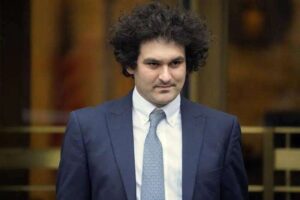
    Convicted cryptocurrency fraudster and disgraced FTX founder Sam Bankman-Fried has formally submitted a pardon petition to U.S. President Donald Trump, official government records confirm. The 34-year-old, who is currently serving a 25-year federal prison sentence after being found guilty on multiple corruption and fraud charges, has his request listed as pending in the public database of the Department of Justice’s Office of the Pardon Attorney.

    The development comes months after Trump made his position clear in a January interview with *The New York Times*, where he stated he had no intention of granting a pardon to Bankman-Fried. Despite this early refusal hint, the convicted founder moved forward with the formal clemency application, marking the latest chapter in a high-profile financial scandal that shook the global crypto industry.

    Since his inauguration for his second term last year, the Republican president has exercised his clemency power repeatedly in favor of white-collar offenders, drawing ongoing public and media attention. Most recently, he pardoned a former Republican U.S. representative from Indiana who had been convicted of insider trading, a decision that fueled speculation about what cases he may prioritize for clemency going forward.

    Once hailed as a wunderkind of the digital finance space, Bankman-Fried built his empire at a staggering pace. After co-founding FTX as a small startup crypto trading platform in 2019, he grew the exchange into the world’s second-largest player in the sector, amassing a multi-billion dollar personal fortune before he turned 30. That meteoric ascent collapsed spectacularly in November 2022, when a massive bank run of customer withdrawals exposed that roughly $8 billion in client funds had been secretly and illegally diverted from FTX to Bankman-Fried’s private hedge fund, Alameda Research.

    A federal jury in New York convicted him on seven counts of fraud, embezzlement, and criminal conspiracy in November 2023. In addition to his pardon petition, Bankman-Fried has also filed an appeal challenging the guilty verdict, marking the next step in his ongoing legal battle.

  • National Gallery, Scotia collaborate on new exhibition

    National Gallery, Scotia collaborate on new exhibition

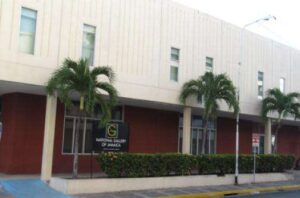
    KINGSTON, Jamaica — A one-of-a-kind collaborative art experience is set to launch in downtown Kingston next week, as the National Gallery of Jamaica (NGJ) and Scotiabank Jamaica join forces to unveil a brand-new exhibition titled *Of Wood and Water: The Scotiabank Collection*. The opening event is scheduled for Sunday, June 14, starting at 1:30 p.m. at the gallery’s downtown location at 12 Ocean Boulevard, with free entry open to all members of the public.

    The exhibition draws its evocative name from Jamaica’s ancestral Taino root, which is widely translated to the “land of wood and water” — a nod to the island’s deep indigenous history that serves as the thematic backbone of the entire showcase. Curators have pulled together more than 40 striking pieces from Scotiabank’s extensive corporate art collection, and paired these works with complementary pieces selected from the National Gallery of Jamaica’s own permanent holdings to create a layered, holistic narrative.

    Organized around core geological concepts that mirror the island’s physical and cultural evolution, the exhibition is divided into three distinct thematic sections: superposition, metamorphism, and rupture. Through this structured curation, the collection invites guests to explore how Jamaica’s landscape has been shaped over centuries by shifting, restless natural forces, and to examine the interconnected relationship between the island’s dynamic terrain and the communities that call it home. Attendees will have the opportunity to engage with works that reflect both the geographic and the social evolution of Jamaica, rooted in the indigenous identity that has defined the island for millennia.

  • Full water restoration by Tuesday, says Samuda

    Full water restoration by Tuesday, says Samuda

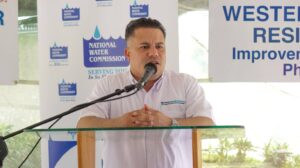
    Following a widespread island-wide power outage that disrupted water access for tens of thousands of Jamaican households, Water Minister Matthew Samuda has confirmed that full water service will be restored to all remaining affected customers by Tuesday.

    In an exclusive interview with Observer Online on Monday, Samuda provided the latest progress update on recovery efforts. As of 8 p.m. Sunday, just three water facilities — one distribution system in the parish of Manchester and two treatment plants in St Elizabeth — still remained offline, after the Jamaica Public Service (JPS) blackout knocked out water infrastructure across the country. Samuda explained that these remaining outages are tied to ongoing power restoration work by JPS, with joint teams from NWC and JPS continuing on-site repairs to bring the facilities back online Monday. He projected all work would be completed by Tuesday, leaving no households without water service as a lingering effect of the blackout.

    The power outage, which struck last Friday, left an estimated 65,000 households — around 12% of the National Water Commission’s (NWC) entire customer base — without running water by 2 p.m. the following Saturday. As of Monday, just 2,000 NWC customers still remained without service.

    Calling the cascading service disruption an unfortunate event, Samuda used the update to outline the Jamaican government’s ongoing work to build long-term resilience for the country’s water sector against power outages. He noted that power failures triggering water service disruptions are not unique to Jamaica, explaining that the water sector is inherently the most energy-reliant part of public infrastructure, making it the first to be affected when power grids go down.

    To address this vulnerability, the Jamaican government has invested more than $1 billion JMD in backup generator infrastructure across the water network since Hurricane Burel struck. Samuda explained that these generators automatically activate to keep water systems running during power outages, reducing widespread disruptions. The government also continues to prioritize a long-term transition to more sustainable, independent power sources for water infrastructure, a process that is already underway.

    Samuda added that the government remains fully committed to reaching its resilience goal: ensuring 70% of the country’s water distribution network can maintain service during power outages. He noted that the full rollout will take a few more years, constrained by available budget and cash flow, but that the policy commitment to improving infrastructure resilience remains firm.

    “We will continue to invest until we achieve that full resilience, certainly within 70 per cent of our distribution network. But that will take another couple of years, just based on cash flows. But the policy commitment has already been made. We cannot go ahead of what we are able to earn,” Samuda said.

  • New York to show World Cup final in Central Park

    New York to show World Cup final in Central Park

    Less than one week before the 2026 FIFA World Cup kicks off across North America, New York’s top state and city officials have unveiled an exciting public event that will bring the drama of soccer’s biggest night to one of the world’s most famous urban green spaces. On Monday, Mayor Zohran Mamdani and Governor Kathy Hochul announced that July 19’s World Cup final will be open for public viewing in Manhattan’s Central Park, with capacity to accommodate roughly 50,000 cheering soccer fans.

    Describing the occasion, Mamdani framed the massive public viewing as a perfect match of global soccer and New York landmark: “The most iconic match of the most iconic tournament in the world deserves to be watched in the most iconic park in the world.”

    For fans hoping to attend, entry will not require any paid admission, with all free tickets distributed through a random lottery system to ensure fair access. Governor Hochul added that the state government has set aside $6 million in funding to cover all costs associated with the large-scale watch party, calling the beloved public space an ideal location to host the historic event. “This is the summertime go-to spot for New Yorkers, and now it’ll be the city’s front row seat to that beautiful game,” Hochul said.

    Notably, the 2026 World Cup final itself will take place just a short distance from Manhattan at MetLife Stadium, the shared home venue of the NFL’s New York Giants and New York Jets. To adhere to FIFA’s strict commercial sponsorship regulations, the venue has been temporarily rebranded as “New York New Jersey Stadium” for the duration of the tournament.

    The 2026 World Cup, a historic first that sees three North American nations — Canada, Mexico, and the United States — co-hosting the 48-team tournament, is set to kick off this Thursday, drawing hundreds of millions of soccer fans from across the globe to follow the month-long competition.

  • St Vincent PM urges united front on climate threats

    St Vincent PM urges united front on climate threats

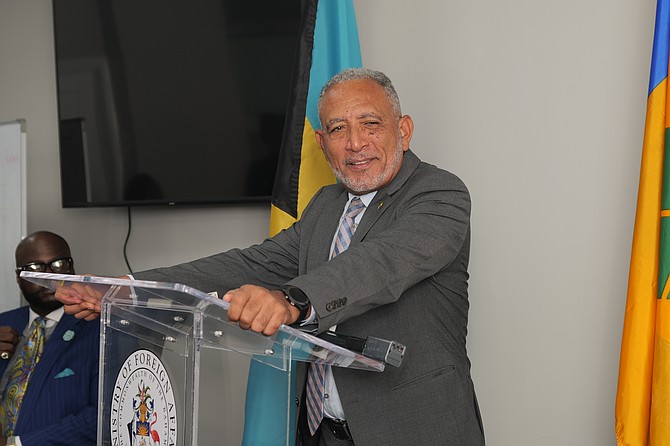
    During a diplomatic stop at The Bahamas’ Ministry of Foreign Affairs this Thursday, St Vincent and the Grenadines Prime Minister Dr. Godwin Friday delivered a pressing call for unified global action on transboundary challenges, emphasizing that geographically small island developing states cannot turn a blind eye to risks that originate far beyond their territorial boundaries. The visit came amid Dr. Friday’s attendance at regional discussions hosted by the Caribbean Development Bank in the country, putting critical regional priorities on the international agenda.

    Addressing assembled foreign affairs officials, Dr. Friday centered his remarks on two interconnected pillars: the growing urgency of deepened international collaboration and accelerated climate action. In an era of unprecedented global interconnectedness, he argued, every nation—no matter its population size or total land area—has a stake in developments unfolding across the world. For small open economies like his own, this reality is not an abstract political talking point, but a daily lived experience.

    “Our status as small, open, disproportionately vulnerable economies is exactly why we must raise our voices louder than most,” Dr. Friday stated. He pointed to the stark injustice of climate change’s impacts on Caribbean island states: while the region contributes a negligible share of global carbon emissions, it bears the brunt of climate-fueled extreme weather, with communities forced to allocate scarce resources to annual hurricane preparedness that could otherwise fund social and economic development.

    For years, Caribbean regional leaders have advocated for the creation of structured rapid-response frameworks within the global multilateral system. These mechanisms would allow climate-vulnerable states to access critical emergency aid and recovery resources immediately in the aftermath of climate-linked disasters, cutting through bureaucratic delays that often exacerbate damage and human suffering. Dr. Friday acknowledged that the push for these frameworks has faced significant headwinds over decades of international negotiations, but he struck a cautious note of progress, reporting that the campaign has steadily won growing backing from the broader international community.

    Beyond policy discussions, the visit also carried personal and professional significance for the prime minister. Reflecting on his long-standing ties to The Bahamas, Dr. Friday recalled his first trip to the country in the early 1980s, when he traveled as a senior undergraduate student to conduct on-the-ground field research for his final degree project. Ministry officials also highlighted that his graduate academic work centered on Bahamian external policy: his master’s thesis focused specifically on analyzing the foreign affairs priorities and strategies of the Bahamian government.

  • Pope promises abuse victims Church will do more to change

    Pope promises abuse victims Church will do more to change

    MADRID, Spain – On the third day of his seven-day state visit to Spain, Pope Leo XIV held a pivotal closed-door meeting with six survivors of clergy-committed sexual violence, where he pledged the Catholic Church would deepen its institutional reforms to address the long-running abuse crisis that has shaken global confidence in the Church hierarchy, Vatican officials confirmed Monday.

    The hour-long gathering, held at the Vatican’s apostolic nunciature in Madrid, gave each survivor space to share their harrowing personal accounts of abuse and submit concrete recommendations to strengthen the Church’s response to these devastating cases. In a formal statement released after the meeting, the Vatican noted that Pope Leo committed to centering these proposals as a foundation for expanded action, with the goal of transforming the Church into a truly safe and spiritually healthy environment for all.

    Earlier the same day, speaking to a assembly of Spanish bishops, the pontiff described clergy sexual abuse as a devastating “scourge” that demands unflinching response: “We must meet this crisis with intentional listening, radical transparency, full accountability for perpetrators, just reparations for survivors, and a relentless commitment to prevention and a culture of care that puts vulnerable people first.”

    The meeting came amid public criticism from victim advocacy groups, who slammed the pontiff for excluding broader representation of survivors from the gathering. Speaking to AFP outside the nunciature, Juan Cuatrecasas, spokesperson for leading Spanish survivor organization Infancia Robada (Stolen Childhood), expressed deep disappointment: “We are disappointed that the pope, instead of listening to a sufficiently large and solid representation of victims, prefers to leave us out.”

    The scale of the abuse crisis in Spain is staggering: a 2023 official report from Spain’s national ombudsman estimated that at least 200,000 minors have suffered sexual abuse at the hands of Catholic clergy in the country since 1940. After decades of institutional denial and opacity from the Spanish Catholic Church, the national government led by Prime Minister Pedro Sanchez reached a landmark compensation agreement with the Spanish Church in March of this year, marking a major turning point for survivor justice.

    Pope Leo, who has repeatedly acknowledged the ongoing harm of the abuse scandal, reiterated Saturday that the crisis remains “an open wound” for the global Catholic community, which counts 1.4 billion adherents worldwide.

    Monday’s schedule also included a historic first: the 70-year-old, U.S.-born pontiff became the first pope to address the Spanish parliament, where his remarks received an extended standing ovation from lawmakers. In his address, he turned to pressing global issues, starting with the growing migration crisis that has reshaped European politics. He called for coordinated global action to address the “tragic drama” of forced migration, urging world leaders to create “safe and legal pathways” for migration and ensure all displaced people receive “a respectful welcome and real opportunities for integration.”

    His remarks align with the relatively liberal immigration stance of Prime Minister Sanchez, whose government has faced intense political pressure over the policy from the conservative Popular Party and far-right Vox, which is now Spain’s third-largest political party. The pope is set to travel to the Canary Islands later in his visit, a major Atlantic entry point for irregular migrants traveling from North Africa to Europe, where he will honor the thousands of migrants who have died during the dangerous ocean crossing.

    The pontiff also used the parliamentary address to make a forceful case for global peace, just hours after a deadly exchange of fire between Israel and Iran threatened to collapse a fragile regional ceasefire. Echoing his longstanding anti-war position – which has drawn fierce criticism from former U.S. President Donald Trump, alongside criticism of Sanchez – Pope Leo called for “patient dialogue” over armed conflict and escalating rearmament across Europe and the globe. “Weapons may impose a temporary silence but they can never build a genuine and lasting peace,” he told lawmakers.

    Closing his address, the pontiff reaffirmed the Catholic Church’s anti-abortion and anti-euthanasia stance, urging Spanish legislators to defend life “from conception to its natural end.” This position puts him at odds with Sanchez’s left-wing government, which has legalized euthanasia under regulated conditions and is pushing to enshrine abortion rights in the Spanish constitution.

    To cap off his full day of engagements, Pope Leo was scheduled to meet with the Madrid diocesan community at Real Madrid’s iconic Santiago Bernabéu Stadium. AFP correspondents on the ground reported that more than 80,000 supporters filled the venue an hour and a half before his expected arrival, singing hymns, waving flags of Spain, the Vatican and Latin American nations, and chanting “We are lions! We are lions!” – a playful reference to the name Leo, which means lion in Spanish.

    Thus far, the papal visit has drawn massive public turnout: event organizers reported that more than 1.5 million worshippers attended an open-air mass Pope Leo celebrated in central Madrid on Sunday.

    Upcoming stops on the visit include Barcelona on Wednesday, where the pontiff will bless the newly completed tower of the Sagrada Familia Basilica, Antoni Gaudí’s unfinished architectural masterpiece that recently became the tallest church in the world. The visit will conclude Thursday and Friday in the Canary Islands, where Pope Leo will be joined by Prime Minister Sanchez for formal engagements.
  • Jamalco strengthens technical education at Porus High with $2m donation

    Jamalco strengthens technical education at Porus High with $2m donation

    In Manchester, Jamaica, a leading local mining firm has turned its commitment to community development into tangible action for the next generation. Jamalco, a prominent regional mining operator, has recently handed over more than $2 million worth of specialized tools and machinery to upgrade the woodwork and electrical laboratories at Porus High School, a campus that serves dozens of communities across the company’s operating footprint.

    In an official statement released this Monday, the company outlined that the new donation is designed to address a longstanding gap in the school’s technical training capacity. For years, Porus High offered dedicated coursework in woodwork and electrical trades, but insufficient equipment left instructors unable to deliver the hands-on practice required for students to master their craft and prepare for industry-recognized certification. With the new tools in place, the school will now be able to fully equip students working toward national and international credentials through the National Council on Technical and Vocational Education and Training (NCTVET) and City & Guilds examination frameworks.

    At the formal handover ceremony, Jamalco’s General Manager Shanice Neisbeth-Castle delivered a motivating address to the assembled students, urging them to leverage this new opportunity to build intentional futures. “Every single time you step into the woodwork and electrical labs, visualise what you will look like 10 years from now and what you will achieve because you worked hard at developing this skill,” she told the crowd.

    Moments after the ceremony concluded, Derrick Garnett, the school’s lead industrial techniques teacher, was already walking groups of curious students through the new woodwork equipment, pointing out specialized features that will allow them to take on more complex projects than ever before.

    Christopher Buckmaster, Jamalco’s Director of Human Resources, Security and Corporate Services, explained that the lab upgrade is far more than a one-off donation: it is a core part of the company’s long-standing mission to empower young people through accessible, high-quality education. “Our contribution reflects our commitment to equipping students with the tools they need to transform their own lives and shape a better future,” Buckmaster shared. “Without access to the right tools, students are limited in developing the practical skills and technical knowledge required for further education and the workforce. This investment is about building capacity, expanding opportunities, and boosting students’ confidence in using these resources.”

    Dr. Garth Anderson, chairman of Jamalco’s board of directors, emphasized the deep community ties behind the initiative, noting that a large share of Porus High’s student body hails from local communities directly surrounding the company’s operations, including Harmons, St Toolies, Rheeveswood, and a number of adjacent neighborhoods. “This donation represents Jamalco giving back to the communities it serves,” he said. “It is a meaningful contribution toward advancing technical skills and empowering our young people.”

    Rhoda-Moy Crawford, State Minister for Jamaica’s Ministry of Education, Skills, Youth and Information, served as the event’s keynote speaker, and praised the partnership between the private mining firm and the public secondary school. She highlighted that the investment comes at a critical moment for Jamaica’s push to expand skills-based training that drives national economic growth. “The strengthening of these laboratories comes at a time when there is increasing demand for skills-based training,” she said. “We value public-private partnerships like this, as they play a vital role in advancing both our students and our country.” Crawford also encouraged students to care for the new equipment and make the most of the expanded learning opportunities now available to them.

    Audrey Blake, Vice Principal of Porus High School, echoed that sentiment, laying out the school’s long-standing challenge of under-resourcing technical programs. “While the school has dedicated classrooms for woodwork and electrical studies, they were previously under-equipped for effective practical instruction and examination readiness,” Blake explained in her overview of the project. “Jamalco was approached to assist, and they have delivered in a meaningful way. This equipment will support lifelong learning and skills development for our students for years to come.”

  • US imposes visa restrictions on Nicaraguans after activist death

    US imposes visa restrictions on Nicaraguans after activist death

    In a sharp rebuke to the Nicaraguan government of Daniel Ortega and Rosario Murillo, the U.S. State Department announced new visa restrictions on Monday targeting more than 100 Nicaraguan officials and their immediate family members. The punitive measure comes in direct response to the death of 73-year-old Brooklyn Rivera, a detained Indigenous political leader who died in government custody late last month, a case that has drawn international condemnation.

    Rivera, a respected former congressman and head of Nicaragua’s Miskito Indigenous community, was taken into custody by Ortega’s administration in September 2023. From the day of his arrest, the left-wing authoritarian government never publicly outlined the formal charges against him. It was not until months later, in November 2024, that local press reports confirmed Nicaraguan authorities had informed the UN Office of the High Commissioner for Human Rights that Rivera’s congressional immunity had been revoked to open an investigation into allegations of serious crimes including treason.

    During his detention, Rivera was denied access to both legal representation and his family, a status that led Amnesty International to categorize him as a prisoner of conscience. His declining health became a global point of concern after the Nicaraguan government released photos showing the severely emaciated Rivera connected to a ventilator, prompting the U.S. to formally call for his immediate release. On May 30, Rivera died in custody; the Nicaraguan Ministry of Health announced his death the following day, attributing it to organ failure caused by a bacterial infection stemming from a prior COVID-19 infection. He was buried within 24 hours without any of his family members present, a detail that amplified international outrage.

    Speaking from exile in Costa Rica, Rivera’s daughter Tininiska Rivera told AFP the intentionally released photos of her dying father were a deliberate show of force. “They don’t care how they’re perceived abroad, they just want to demonstrate their control and power inside Nicaragua,” she said last week. The United Nations Secretary-General Antonio Guterres issued a formal call for an independent investigation into Rivera’s death on June 2.

    In his official statement announcing the new visa restrictions, U.S. Secretary of State Marco Rubio held the ruling Murillo-Ortega regime directly accountable for Rivera’s “horrific death” as a political prisoner. “The United States will not ignore the Murillo-Ortega dictatorship’s responsibility,” Rubio emphasized. This latest action brings the total number of Nicaraguan officials and their family members subject to U.S. visa bans to more than 2,350, all sanctioned for their complicity in enabling the authoritarian rule of Ortega and his wife, Vice President and co-ruler Rosario Murillo. The State Department did not release the names of the 100+ newly targeted individuals.

    The current crisis between Washington and Managua is rooted in more than 17 years of Ortega’s rule. An 80-year-old firebrand Marxist who rose to prominence leading a revolution against a U.S.-backed autocrat in the 20th century, Ortega has retained power since 2007 through a series of elections widely decried as unfair and non-democratic by the international community. He has faced consistent accusations of brutal repression to crush all political dissent, a crackdown that has pushed the small, poor Central American nation into deeper international isolation. Nicaragua’s government is already subject to sweeping economic and political sanctions from both the United States and the European Union. Since the crackdown on opposition intensified, thousands of Nicaraguans have fled into exile, hundreds of perceived and actual political opponents have been jailed, and dozens have been stripped of their Nicaraguan citizenship.

  • BUT president urges minister to fix teacher shortages

    BUT president urges minister to fix teacher shortages

    The head of the Bahamas’ largest educators’ organization is pushing the country’s newly appointed Education Minister to confront deep-rooted, long-unresolved flaws in the public education system, warning that many critical problems have dragged on for generations despite repeated calls for reform from teaching professionals.

    Belinda Wilson, president of the Bahamas Union of Teachers, outlined the union’s top priorities during an interview on Guardian Radio’s popular morning talk show Morning Blend, where she drew particular attention to crippling inefficiencies in the Ministry of Education’s teacher recruitment pipeline that have left countless newly graduated educators stuck in bureaucratic limbo for months.

    Wilson shared that some newly qualified educators, who were supposed to receive classroom assignments at the start of the academic year, only received their official postings mere weeks before the school year came to a close – a stark example of the systemic delays that have plagued the ministry’s hiring process for years. Her public remarks come as educators across the country continue to sound the alarm over three core issues: persistent understaffing, crumbling school infrastructure, and unaddressed workplace concerns.

    The union leader recently held a formal meeting with new Education Minister Chester Cooper and his senior leadership team, which she described as a productive opening dialogue that covered the full scope of challenges facing the nation’s public education sector. During the meeting, Wilson presented Cooper with a comprehensive 20-page policy document that details both the strengths and critical weaknesses of the current education system, paired with concrete, actionable recommendations for systemic improvement.

    The discussion touched on everything from teacher placement protocols and curriculum updates to the employment status of Cuban educators working in Bahamian schools, school repair backlogs, plans for new campus construction, and the lack of internal communication that has slowed progress on key initiatives.

    Wilson painted a grim picture of staffing shortages across the entire public school network, which serves thousands of students spread across 164 campuses located on 24 of the Bahamas’ islands and cays. She explained that while substitute teachers are intended to only fill temporary gaps created by educator absences or extended leave, the system now relies heavily on retired teachers to work full-time as long-term supply instructors, because hundreds of permanent vacancies remain unfilled.

    One of the most persistent bottlenecks, Wilson emphasized, is the drawn-out timeline required to process and appoint newly graduated teaching candidates. Many students enrolled in education programs at the University of The Bahamas receive government-funded grants or scholarships, meaning the Ministry of Education is already aware of these candidates long before they complete their degrees. Even with this advance knowledge, Wilson said, graduates often wait months to receive their official appointment letters while civil servants collect transcripts, background check results, and other required documentation.

    To illustrate the scope of the problem, Wilson used a common enrollment scenario: for a cohort of 100 new teaching graduates invited to orientation in August ahead of the new school year, only 20 to 30 leave the orientation ceremony with a signed appointment letter in hand. The rest of the cohort is left in uncertain limbo while paperwork moves slowly through multiple layers of bureaucracy.

    “Every delay is blamed on another department: ‘Oh, we’re waiting for the public service. Oh, we’re waiting for police to complete vetting. Oh, we’re waiting for them to submit their diploma. Oh, we’re waiting for their transcript,’” Wilson said. “That entire bureaucratic backlog is enough to drive young teachers away.”

    She added that these unnecessary delays are deeply demoralizing for early-career educators, who invest four years in their professional training and are eager to begin working with students, only to be sidelined by avoidable administrative gridlock.

  • Police investigate viral video of Abaco man being slapped

    Police investigate viral video of Abaco man being slapped

    A disturbing video capturing a prolonged physical assault on an older man in Abaco has gone viral across social media platforms, triggering widespread public anger and prompting local law enforcement to launch a formal investigation, according to a report from the Tribune. The clip, which has been shared hundreds of times across major social networks, shows the victim – a man who appears to be in his 50s – remaining completely unresisting throughout the entire attack, never fighting back against his aggressors.

    In the graphic footage, one attacker grabs the victim by the front of his shirt to hold him in place, while delivering no less than 19 consecutive slaps to the man’s head and face. A second assailant joins the attack, adding his own slaps before landing a single hard punch to the victim’s stomach. Around 10 onlookers are gathered at the scene to watch the assault unfold; while one bystander makes a weak attempt to intervene, the two attackers ignore the effort and continue beating the victim.

    Shockingly, the person holding the camera to record the entire incident can be heard laughing uncontrollably from start to finish, and other bystanders in the background also join in the laughter. The disturbing behavior of both the attackers and the laughing onlookers quickly sparked fierce backlash after the video spread online, with social media users lining up to condemn the incident in comment sections.

    Local police official Sheria King has confirmed that law enforcement received an official complaint over the incident and is moving forward with an investigation to identify the attackers and hold them accountable for their actions. Social media commenters across the platform have directed widespread criticism at all parties involved, calling out the attackers as bullies and cowards for ganging up on an unresisting older man, while also condemning the person who filmed the attack for laughing rather than stepping in to stop it. Many users emphasized that the public humiliation and violence the victim suffered is no laughing matter, stressing that the entire incident exposes a disturbing lack of empathy among those involved.