博客

  • AMCHAMDR joins regional leaders at BFA 2026 Conference

    AMCHAMDR joins regional leaders at BFA 2026 Conference

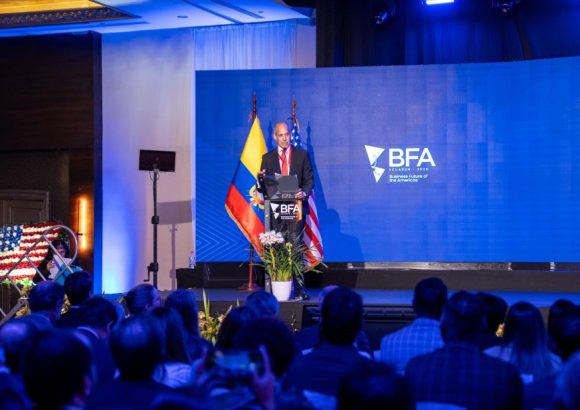
    The 2026 Business Future of the Americas (BFA) summit, one of the Western Hemisphere’s most high-profile collaborative business gatherings, has brought over 300 cross-sector leaders from more than 20 nations to Quito, Ecuador, with the American Chamber of Commerce of the Dominican Republic (AMCHAMDR) among the key participating delegations. This year’s convening, focused on tackling pressing topics ranging from cross-border trade to regional investment and hemispheric security, was hosted by AMCHAM Quito in strategic partnership with the U.S. Chamber of Commerce and the Association of American Chambers of Commerce in Latin America and the Caribbean (AACCLA).

    High-level stakeholders anchored the summit’s opening and core discussions, including Ecuadorian President Daniel Noboa, senior members of Ecuador’s national government, and official representatives from the U.S. Department of State and the U.S. Embassy in Ecuador. Central to the summit’s agenda was the goal of deepening robust economic ties between the United States and the broader Latin American region, while framing intentional public-private partnership as the most impactful engine for inclusive growth and long-term regional stability.

    In his keynote remarks, Edwin De los Santos, current AACCLA Chairman and former president of AMCHAMDR, underscored three non-negotiable pillars for lasting economic progress: consistent regional security, institutional trust that fosters stakeholder confidence, and unwavering adherence to the rule of law. All three, he emphasized, are foundational to attracting foreign direct investment and supporting equitable, sustainable development across the hemisphere. Beyond these core themes, targeted panel sessions delved into a range of timely, high-stakes topics: building more resilient global supply chains, strengthening cross-regional energy security, accelerating inclusive digital transformation, upgrading cross-sector cybersecurity infrastructure, and leveraging the growing influence of artificial intelligence to boost Latin America’s global competitive standing.

    William Malamud, Executive Vice President of AMCHAMDR, noted that every topic on the 2026 BFA agenda aligns directly with the Dominican chamber’s core long-term strategic priorities. He reiterated that sustained progress across the hemisphere depends on collective action to build secure, transparent, and consistently reliable investment climates in every market across the Americas. Malamud also pointed to a unique, time-sensitive opportunity for Latin America: as global corporations and governments reconfigure their global supply chain networks, the region is well-positioned to establish itself as a competitive, trustworthy global trade and manufacturing partner.

    The Dominican Republic’s delegation also included Rocío Velarde, general manager of Citibank N.A. in the Dominican Republic and a sitting member of AMCHAMDR’s board of directors, who contributed to the summit as an invited panelist. Through its active participation in the 2026 BFA summit, AMCHAMDR has reaffirmed its ongoing commitment to advocating for policies that elevate the Dominican Republic’s global competitiveness, while working toward a shared vision of a more integrated, secure, and broadly prosperous Western Hemisphere.

  • WATCH: Hundreds bid farewell to broadcaster Daniel Thompson

    WATCH: Hundreds bid farewell to broadcaster Daniel Thompson

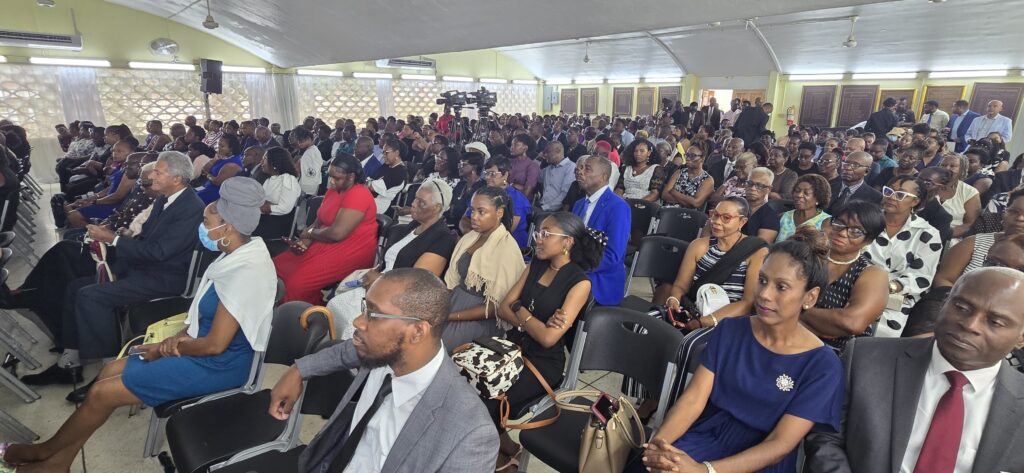
    KINGSTON, Jamaica — On a solemn Saturday, hundreds of grieving community members packed the Marjorie Meyer Hall at Shortwood Teachers College, coming together to celebrate the life and say goodbye to one of Jamaica’s most beloved broadcast voices, Daniel ‘DT’ Thompson, who served the RJR Gleaner Group for nearly three decades.

    A moving thanksgiving service was held to honor Thompson’s legacy, with heartfelt tributes pouring in from his colleagues at RJR Gleaner and peers across Jamaica’s media industry, who shared personal anecdotes and memories of his decades-long contributions to local radio.

    Thompson passed away on April 30 following a sudden heart attack, cutting short a career that shaped Jamaican public broadcasting for a generation. Over 28 years of service with Radio Jamaica, Thompson built his reputation as a versatile, reliable presence on the airwaves, working every possible time slot and leaving an indelible impression on countless station programs. He launched and hosted his own successful show, most recently contributed as a regular anchor and contributor to the station’s widely popular audience-participation call-in program *Hotline*, and earned widespread recognition for the fan-favorite “X and Y” feature he co-hosted alongside collaborator Emily Shields.

    Video footage of the memorial service was captured by photojournalist Llewellyn Wynter.

  • Suspect in custody in Trinidad after body of missing 12-year-old found

    Suspect in custody in Trinidad after body of missing 12-year-old found

    PORT OF SPAIN, Trinidad – A tragic incident has sent shockwaves through a small coastal Trinidadian community after the body of a missing 12-year-old girl was recovered on a remote oil well access road, with a local man now in custody aiding law enforcement’s ongoing probe.

    The victim, identified as Mercedez Layne, was first reported missing to authorities on Saturday. According to official police statements, the preteen had stayed overnight at her grandfather’s home before he placed her into a private vehicle arranged to take her back to her own residence. What was supposed to be a routine short trip quickly turned into a nightmare, when the child never arrived at her destination.

    Alarmed by Mercedez’s disappearance, the girl’s mother and her grandfather traveled together to the Erin Police Station to file an official missing person report. Law enforcement immediately launched a coordinated search and investigation into the case. Following leads pulled from witness tips and a review of closed-circuit security camera footage, investigators were able to pinpoint the vehicle Mercedez was last seen riding in. The vehicle was later found abandoned; investigators processed the scene, documented the car with photographic evidence, and transported it to the Erin Police Station to be retained as evidence for the continuing inquiry.

    On Sunday, a routine work check led to the grim discovery of the young girl’s body. An employee of a local oil company was heading out to inspect an oil well when he came across the body of a young female, lying face down along the unpaved access road leading to the well site. The worker contacted the Erin Police Station immediately, and first responders rushed to the remote location. After processing the crime scene, the body was formally confirmed to be that of the missing 12-year-old.

    Local law enforcement confirmed to Caribbean Media Corporation that a 26-year-old man has been taken into custody in connection with Mercedez’s death, and remains in police custody as investigators continue to piece together the full circumstances of the case.

  • Major quake off Philippines kills at least 35, dozen still missing

    Major quake off Philippines kills at least 35, dozen still missing

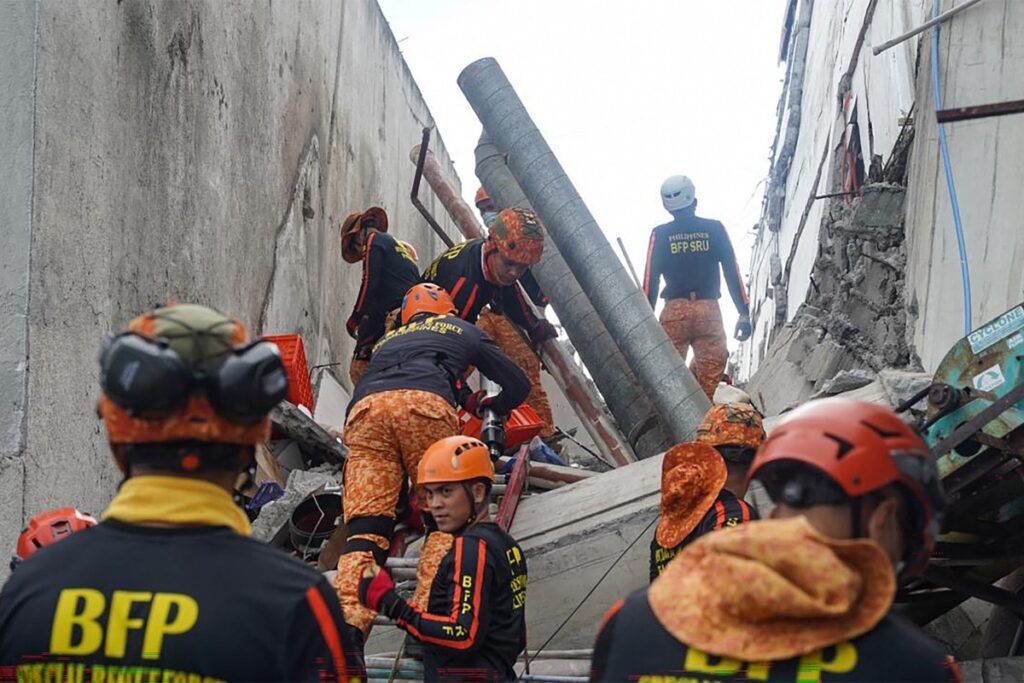
    A massive 7.8-magnitude offshore earthquake that struck the southern Philippines on Monday has killed at least 35 people, injured 134 more, and left a dozen others missing, local and national disaster officials confirmed. The quake, which hit south of General Santos – a coastal city home to roughly 720,000 residents – triggered immediate tsunami warnings across the wider Southeast Asia-Pacific region and reduced multiple buildings to rubble.

    Within just two hours of the initial shock, the United States Geological Survey recorded a string of powerful aftershocks across the affected area, with the strongest registering a magnitude of 6.5, prolonging danger for local communities. In General Santos, the local command center has recorded 12 fatalities so far, with rescue efforts stretched thin across the disaster zone.

    As darkness fell on the city, Agence France-Presse reporters on the ground witnessed rescue workers digging through the collapsed concrete of a well-known local grocery chain with their bare hands, locked in a desperate race to reach two employees trapped under the debris. For 35-year-old security guard Morphy Angcad, the waiting has been agonizing: his sister is one of the two missing workers. Refusing an offered hotel room to stay at the site, he told reporters, “I don’t want to leave this site until I see the body of my sister… (but) I’m hoping against hope that she is still alive.”

    Dioslinda Deluvio, mother of the second missing employee Joey, shared her grief with AFP. Weeks before the disaster, her son had visited her and asked, “Ma, what is your plan for your life? Are you OK?” Now, she said, “All I can do is cry now, imagining the good things he did in the world.”

    A few kilometers from the collapsed grocery store, hundreds of residents who fled their damaged structures prepared to spend the night out in the open, terrified of further aftershocks that could topple unstable buildings. “I’ll be sleeping here outside even if it’s uncomfortable, because I’m scared there will be an aftershock,” 34-year-old sales clerk Johnson Alerta told AFP. “I feel safer here.”

    In Sarangani province, one of the hardest-hit local government areas, disaster chief Rene Punzalan reported that 14 people alone died in the coastal municipality of Glan, where a landslide triggered by the quake buried homes at the base of a mountain. “The landslide happened immediately after the earthquake, so many lives were lost,” Punzalan explained, adding that many remote communities have not yet been able to report casualty numbers. Outages have disrupted communication across large parts of the affected region, slowing the flow of information and complicating rescue coordination. “The greatest challenge is communication. The power was cut, so it’s hard to get updates,” he said.

    Social media videos verified by AFP have captured the full scale of the destruction: a busy General Santos shopping center housing a popular Jollibee fast food outlet completely flattened, an empty school building crumpled into a heap of concrete, and young schoolchildren screaming as they clung to their teachers while the ground violently swayed during the quake.

    After the quake struck, the Pacific Tsunami Warning Center issued an advisory warning that hazardous tsunami waves could reach coastlines across the Philippines, Indonesia, Palau, Taiwan, and Papua New Guinea. Philippine President Ferdinand Marcos Jr. immediately ordered an evacuation of all at-risk coastal communities, suspended classes across Mindanao – which was supposed to mark the first day of the school year Monday – and urged residents to prioritize safety over property. “Move to higher ground now. Do not wait,” he said. “Your life is more important than anything left behind.”

    By mid-afternoon Monday, all tsunami warnings had been canceled across the region. More than 2,000 people who evacuated their coastal homes following the advisory remain in evacuation centers, awaiting official clearance to return to their properties as authorities continue to assess structural and geological safety risks.

    The Philippines experiences near-daily seismic activity due to its location on the Pacific “Ring of Fire”, a seismically active arc that stretches from Japan through Southeast Asia across the entire Pacific basin. This latest major quake follows a string of deadly seismic events in recent years: in October 2023, two back-to-back quakes of 7.4 and 6.7 magnitude hit eastern Mindanao, killing at least eight people, just days after a 6.9-magnitude quake in central Philippines’ Cebu province claimed 76 lives.

  • Unions split Labour Day parades amid political row

    Unions split Labour Day parades amid political row

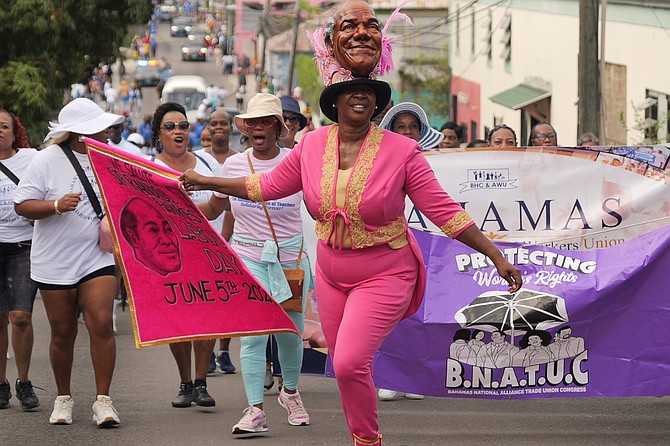
    Labour Day in the Bahamas brought deep divisions among organized labour on Friday, as two competing marches were held across New Providence. The split stems from ongoing friction over whether the annual workers’ celebration has been co-opted by partisan political interests, with conflicting visions for the holiday’s original purpose at the center of the disagreement.

    The long-standing traditional parade gathered participants at Windsor Park before proceeding along East Street into downtown Nassau. Thousands of union members, community supporters, and live musical acts joined the procession, alongside clear, large contingents of supporters from the nation’s two major political parties: the ruling Progressive Liberal Party (PLP), wearing their signature yellow, and the opposition Free National Movement (FNM) in their identifying red.

    Parallel to this main event, the Bahamas Trades Union Congress (TUC) and a coalition of its affiliated unions hosted a separate demonstration. Starting from the House of Labour on Wulff Road, the alternative march traveled west before turning north along Baillou Hill Road, concluding at the Southern Recreation Grounds. This marked the second consecutive year the TUC has opted out of the traditional parade route, a decision organizers framed as a deliberate act to preserve the legacy of labour pioneer Sir Randol Fawkes and protect Labour Day’s core historical meaning.

    TUC president Obie Ferguson, KC, has long argued that the growing visibility of political party presence has pulled focus away from the holiday’s original mission of honoring workers. Ahead of this year’s event, he instructed all TUC march participants to wear plain black trousers and official white Labour Day shirts, rather than any identifying partisan apparel.

    Criticism of partisan displays was echoed by outgoing Bahamas Public Services Union (BPSU) president Kimsley Ferguson, who noted this year’s event marked his final Labour Day parade as union leader before stepping down. “Labour Day is supposed to be for the workers of the country and not a show of political might or strength,” he said. “There’s no problem with political parties coming on to the parade, but come and support the workers, wear neutral colors, don’t bring party colors to a parade that’s supposed to be celebrating the workers of the country.”

    After nine years leading the BPSU, Ferguson will step down from his post when the union holds leadership elections in September. He announced he is leaving union leadership to pursue full-time Christian ministry, a calling he said he has already begun to answer part-time. “It’s a new chapter that I’m going to embrace, because God has now called me to go into ministry full time,” he explained. “I’m currently a pastor at a church, and so this is my last and final Labour Day parade as the President of Bahamas Public Service Union.”

    Speaking to the broader split within the national labour movement, Ferguson added: “I would say that the word union suggests one. If there’s a day and a time that we ought to unite, it would be today.”

    Not all stakeholders agree that the event has become overly politicized, however. Bahamas Labour Minister Pia Glover-Rolle pushed back against claims of partisan takeover, noting that intentional parade organizing keeps trade unions at the front of the procession while political parties are held to the rear. “The parade, in my opinion, has not been politicised, because if you look at the way the route is composed, you’ll see the unions out front, and then I see the political parties in the rear, they’re not mixing in, they’re only at the back supporting, and that’s what it’s about,” she said. “Political parties are supporting the workers, and the supporters of political parties are workers themselves, so I don’t think it’s politicised in any way.”

    Glover-Rolle added that the separation of unions and political groups in the parade order is intentional every year, and there is nothing inappropriate about partisan organizations showing public support for the nation’s workforce. “There’s a clear separation of the political parties and the trade unions. Every year it’s intentional that the political bodies stay closer to the rear and unions make their way through the parade, but it is a show of support. I don’t see anything wrong with political parties supporting the workers of our country.”

    Darron Woods, president of the Bahamas Hotel Catering and Allied Workers Union, echoed this more relaxed stance, saying his organization was not thrown off by the surrounding political debate. “That has become a tradition now, so it really doesn’t faze us anymore,” he noted.

    Opposition Leader Michael Pintard defended the FNM’s decision to wear official party colours this year, explaining that the party had previously complied with requests from the Fawkes family to avoid partisan apparel. He argued the ruling PLP broke a long-standing agreement to stay away from partisan displays, leaving the FNM with little choice but to assert their presence. “On multiple Labour Days, we have not worn party colors. We again complied with what was requested by Randol Fawkes family. This year, it’s clear to us that the PLP has violated that agreement,” he said Friday. “It has been of no effect, and so we want to stand to let the public know we are still here. We didn’t want to just melt in the crowd to let them know we’re still here and still standing.”

    Before the traditional parade continued into downtown, participants paused for a solemn memorial at Zion Baptist Church, located near the site of a 2018 Labour Day tragedy that claimed the lives of four women: Dianne Gray-Ferguson, Tami Williams-Gibson, Kathleen Rodgers-Fernander and Tabitha Bethel-Haye, who were killed when a parade truck struck the group. Wreaths were laid and prayers were offered before the procession resumed.

    Speaking at the memorial service, Prime Minister Philip “Brave” Davis reflected on the meaning of Labour Day, framing it as a permanent recognition of workers’ dignity, collective sacrifice, and shared solidarity. “We must remember that they were participating in what I call a seminal event, where workers come together to mark their solidarity for the dignity of work and to ensure that the rights of workers are continually upheld,” he said.

    Davis also recounted the long history of labour struggle that led to the creation of the national holiday, noting that Bahamian workers fought for decades for formal recognition, from the 1948 labour riots to the 1956 national strike that ultimately led to the establishment of the annual Labour Day celebration. “Without workers, you have no economy,” he emphasized. “And let’s continue to respect them, uphold their dignity, and ensure their rights are always protected.”
  • Three killed over deadly weekend

    Three killed over deadly weekend

    A wave of brutal, unprovoked gun violence shattered three families across The Bahamas over the 2024 Labour Day weekend, leaving grieving relatives searching for answers and justice after three men were killed in separate shooting incidents in New Providence and Grand Bahama.

    The first fatal attack unfolded shortly before 9 p.m. Friday in Grand Bahama’s Hunters neighborhood, near a local commercial establishment. Stafford Ferguson, a 44-year-old body repairman, father of four and resident of Freeport’s Caravel Beach community, was shot multiple times as he walked toward his parked 2009 burgundy Chevrolet Impala. He was rushed to a local hospital by emergency responders, but succumbed to his injuries at 11:35 p.m. that same night.

    According to police accounts of the shooting, a lone attacker dressed in all dark clothing approached Ferguson unexpectedly, opened fire, then fled on foot to a waiting getaway vehicle driven by an accomplice. Investigators have since taken two 34-year-old men into custody for questioning as they build their case, and the Ferguson family says they are satisfied with the progress law enforcement has made so far, despite being flooded with unconfirmed rumors about the killing.

    For the Ferguson family, the loss has been devastating. Khambrel Ferguson, Stafford’s brother, described his sibling as a gentle, hardworking peacemaker who dedicated his life to supporting his four children — two sons and two daughters between the ages of 4 and 21 — and often stepped in to de-escalate conflicts rather than encourage violence. “Stafford was a nice person. He was helpful to people. He was a humble person and never used to bother anyone. To see this situation happen is just shocking because somebody murdered him,” Khambrel told reporters. “We just looking for justice.” He added that the family’s matriarch has been completely overwhelmed by grief following the sudden death of her son, who was also the child of prominent local businessman Max Quant of Noula Investment Ltd.

    Ferguson’s killing was only the start of the deadly weekend of violence. Hours later, shortly before 11 p.m. Friday, a second fatal shooting was reported in New Providence’s Eneas Street neighborhood, off Meadow Street. ShotSpotter gunfire detection technology first alerted police to shots fired in the area, and moments later, an anonymous caller reported that an injured man lay unresponsive on the roadway.

    Responding officers from the Royal Bahamas Police Force’s Southern Division found the 23-year-old victim, dressed in a white t-shirt and blue jeans, lying in the street with multiple gunshot wounds. Emergency medical teams confirmed he was dead at the scene. One person has been taken into custody in connection with the attack, though the investigation remains ongoing.

    Preliminary investigative details show the victim had recently returned to New Providence after taking construction jobs on several of the country’s outlying Family Islands, including projects on Paradise Island, to support his two-year-old daughter. Just minutes before the attack, he had dropped his toddler off with her mother. Friends and family say the killing has come as a crippling blow, coming just one year after the family lost the victim’s grandmother.

    In a viral public social media post, the victim’s sister pushed back hard against online speculation that her brother was involved in gang activity or street violence, painting a portrait of a quiet, dedicated young father focused on providing for his little girl. “Our grandmother passed last July, and our sister and I did our best to make sure he did not fall victim to the streets and gangs. They took his life carelessly. He had his baby in his arms when he was shot. He begged for his life. They could have stopped at one when he fell and it jammed,” she wrote. “Instead, they continued to unjam and load on my baby brother. He was working on the cay and just came a couple of days prior to visit family, see his girl and his baby. God protected my niece. She is a toddler. How can you kill so senselessly. My God do people not have a heart anymore? Again, my brother was not a thug or a gangster and was NOT a part of any gang or the streets, that’s why it hurts so much. He was killed out of envy.”

    The victim’s godmother also took to Facebook Live to deliver an hour-long public appeal, begging anyone with information about the attack to come forward, even if that means turning in a family member. “You feel it harder because he was doing something,” she said. “He has a baby. You feel it harder because he is somebody’s child. His mother might be deceased, but he still has his older sister. He has his sisters, he has a brother, he has auntie, has uncle, and he have a crazy godmother.”

    The third and final fatal shooting of the weekend took place around 1:45 p.m. Sunday on Constitution Drive in New Providence. Police responding to reports of gunfire found a man in his early 30s dead from gunshot wounds at the scene, and two other adult men wounded in their lower legs. According to police, the three victims were gathered at an informal makeshift garage adjacent to their homes when two armed assailants approached the property gate carrying high-powered firearms, opened fire, and fled the area. No suspects have been publicly identified or taken into custody in this shooting as of the latest updates.

    Across both islands, the string of unprovoked, deadly attacks has left three families torn apart, all calling for accountability and answers for the senseless violence that cut short the lives of their loved ones.

  • Iberojet launches direct flights between Barcelona and Punta Cana for summer 2026

    Iberojet launches direct flights between Barcelona and Punta Cana for summer 2026

    Caribbean tourism’s leading sun-and-sea destination, Punta Cana, is set to gain a new direct air link to Europe this summer, as Spanish leisure carrier Iberojet prepares to launch its first nonstop service between Barcelona and the Dominican resort hub starting June 21. The new route, timed to expand connectivity between Spain and the Dominican Republic ahead of the 2026 peak summer travel season, will operate on a weekly Sunday schedule through the end of September, giving vacationers and other travelers a seamless, connection-free route to one of the Caribbean’s most sought-after getaways.

    This new Barcelona departure marks the third Iberian Peninsula gateway to the Dominican Republic in Iberojet’s growing route network, which already offers year-round nonstop flights from Madrid (Spain) and Lisbon (Portugal). By adding the Catalan capital to its route map, the airline is positioning itself to meet surging demand across three distinct traveler segments: international tourists seeking easy access to Punta Cana’s beaches, business travelers moving between the two markets, and Dominican diaspora members residing across Spain who want more convenient travel options to visit home.

    The new service carries particular significance for the large Dominican community based in Catalonia, who previously had to travel to Madrid or connect through other European hubs to reach the Dominican Republic. The nonstop route cuts out layover delays and extra travel time, creating a far more convenient journey between the two countries. Beyond serving resident communities, industry leaders expect the new flight to drive a measurable uptick in tourist arrivals to Punta Cana during the busiest summer travel months, supporting local hospitality and service businesses.

    As a subsidiary of Ávoris Corporación Empresarial, the travel division of global tourism group Barceló Group, Iberojet operates a contemporary fleet of Airbus commercial aircraft spanning wide-body models including the A350 and A330, plus the narrow-body A320 for shorter-haul services. Company representatives emphasized that the launch of the Barcelona-Punta Cana route aligns with the carrier’s long-term strategy to strengthen strategic air connections between the Dominican Republic and key source markets across Europe, cementing its position as a leading provider of transatlantic leisure travel to the Caribbean.

  • Senior clergyman urges funding and greater church role in disaster response

    Senior clergyman urges funding and greater church role in disaster response

    Against the backdrop of an incoming Atlantic hurricane season, a senior Jamaican faith leader has amplified a pressing demand for the national government to extend formal state funding to faith-based social outreach initiatives and formally integrate churches into the country’s national disaster response infrastructure.

    Pastor Dr Donville Bell, chairman of the Word Power Ministry Board, laid out this call to action during the 18th annual Word Power Conference, hosted Saturday in St Catherine, where he highlighted the underrecognized, frontline role faith institutions have long played during national crises across the island.

    The Atlantic hurricane season officially launched on June 1, and forecasters have already projected that 2024 could bring another above-average, highly active season of storm activity. Bell stressed that despite a long track record of churches stepping in as critical first responders when disaster strikes, these trusted community institutions are routinely sidelined when emergency resources and formal planning are distributed.

    “Long before displaced or crisis-stricken families can reach a government service agency, the local church is their first point of contact,” Bell told conference attendees. “In moments of chaos and uncertainty, people turn to the faces and institutions they know and trust. For the vast majority of Jamaican communities, that trusted anchor is the church.”

    Bell pointed to the widespread devastation left by Hurricane Melissa as a clear case study of the irreplaceable work churches carry out. When entire communities were reeling from the storm’s destructive impact, faith institutions across affected regions opened their facilities as emergency shelters, distributed food and essential care packages, served thousands of hot meals, and provided much-needed emotional and spiritual counseling for families grappling with trauma and the loss of homes and property.

    “When Hurricane Melissa displaced hundreds of residents, the church acted without hesitation,” Bell recalled. “We formed informal partnerships with state agencies and local community groups to meet overwhelming need, but all too often, churches are expected to deliver this life-saving compassionate work without the sustained financial support or core resources required to scale these efforts.”

    Beyond disaster response, Bell noted that faith-based organizations have been competent, long-standing partners to the state in addressing a wide range of persistent social challenges, from deep-rooted poverty and community violence to youth delinquency, family breakdown, and ongoing social support. Yet despite the consistent government reliance on churches to deliver frontline community services, these institutions are frequently locked out of formal state funding streams and national disaster preparedness frameworks.

    “The government regularly calls on churches to back national social initiatives and community programs, but many congregations are expected to do this work with extremely limited resources, and in some cases no public funding at all,” Bell explained. “While we are deeply honored to serve our neighbors, even the most devout among us know it takes resources to provide consistent care. This work has grown even more difficult in recent months, as churches face spiking utility costs at the same time they are supporting local families grappling with steep cost-of-living increases. We have to end the unfair practice that directs the vast majority of social assistance funding to other local development partners, and instead ensure faith institutions have the adequate resources they need to keep serving on the front lines of community care.”

    Bell is calling on Jamaican policymakers to move quickly to formally add faith-based organizations to the country’s official hurricane preparedness and disaster management frameworks, ahead of what could be a damaging storm season.

    “We currently collaborate ad hoc with Municipal Corporations and the Social Development Commission when disaster strikes, but we need a formal seat at the table every time the country plans for natural hazards like hurricanes,” Bell said. “Integrating faith institutions into preparedness planning from the earliest stages will strengthen overall community resilience, improve emergency response outcomes, and reinforce social support systems in vulnerable neighborhoods year-round. It’s time to turn this long-overdue change into action now.”

  • Bahamas urges citizens to avoid all non-essential travel to Cuba

    Bahamas urges citizens to avoid all non-essential travel to Cuba

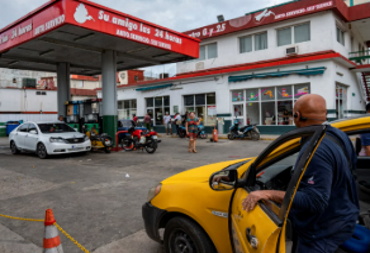
    Amid a deepening economic and infrastructure crisis driven by tightened U.S. sanctions, the government of the Bahamas has issued an urgent advisory urging its citizens to cancel all non-essential travel to neighboring Cuba. The official statement from Nassau outlines ongoing systemic disruptions across Cuba that have upended daily life for residents and created major risks for foreign visitors. These disruptions include persistent, widespread power outages, acute fuel shortages, broken-down public and private transportation networks, and limited access to basic necessities including food, medicine and essential services.

    The Bahamas Ministry of Foreign Affairs emphasized that conditions on the island can shift rapidly and without warning, advising Bahamian nationals already in Cuba or planning travel to maintain constant vigilance and stay updated on evolving local developments. Beyond safety warnings, the advisory also lays out strict entry requirements that all Bahamian travelers must follow to avoid immigration complications. All visitors must hold a valid passport with a minimum six-month validity remaining from their date of entry, at least one blank page for entry and exit stamps, pre-confirmed proof of accommodation, and a confirmed return or onward travel ticket. A Cuban entry visa, valid for stays of up to 90 days, is mandatory for all Bahamian citizens, and the government stressed that all visitors must adhere fully to Cuban immigration laws and regulations.

    A key part of the advisory focuses on Cuba’s unique financial landscape, which has been drastically altered by decades of U.S. trade embargo and recent sanctions expansions. Cuba operates almost entirely on a cash economy, with extremely limited access to international banking services. As of June 6, all international Visa and Mastercard transactions have been suspended across the country, meaning travelers cannot rely on foreign-issued credit or debit cards for in-person purchases or cash withdrawals at ATMs. The Bahamian government urges all visitors to bring enough cash, in either U.S. dollars or euros, to cover every expected expense for the full length of their stay. It also reminds travelers of strict currency declaration rules: any amount of cash exceeding 5,000 U.S. dollars must be declared to Cuban customs officials upon entry, and any amount above this threshold carried during departure must also be reported to local authorities. Failure to disclose excess cash can lead to an immediate seizure of all undeclared funds by authorities, the advisory warns.

    The advisory also urges Bahamian travelers to avoid all public demonstrations, protests and large public gatherings, and to comply with any instructions issued by local Cuban security and government officials at all times.

    The current crisis gripping Cuba stems directly from recent shifts in U.S. foreign policy toward the island and its long-time ally Venezuela. After the U.S. moved to oust Venezuelan President Nicolas Maduro from office in January, it imposed a new, stricter oil embargo on Cuba. For years, Venezuela had been Cuba’s primary, discounted supplier of crude oil, and the cutoff of this critical supply has created a crippling, nationwide crisis that has exacerbated all of the current infrastructure and supply chain problems.

    Cuba’s ambassador to the Bahamas, Marcof Sanchez, recently described the situation in his country as extremely severe during an appearance on a local Bahamian radio program. He called on Caribbean and regional nations to show solidarity with Havana in opposing what he framed as U.S.-led military and economic aggression against the island. Sanchez warned that any escalation of U.S. military aggression toward Cuba would have immediate, far-reaching negative consequences for the entire Caribbean region. He also reaffirmed the Cuban government’s long-standing position that it is open to holding respectful, constructive dialogue with the United States, which has maintained a sweeping trade and economic embargo against Cuba for more than six decades.

  • Carolina Mejía declares herself ready to take on the presidency

    Carolina Mejía declares herself ready to take on the presidency

    In a gathering of party leadership and grassroots supporters focused on accountability held in San Cristóbal, Carolina Mejía — general secretary of the Modern Revolutionary Party (PRM) and a leading contender for the party’s upcoming presidential nomination — has publicly reaffirmed her readiness to embrace new national political challenges and sustain her work to advance the Dominican Republic’s progress.

    Speaking directly to assembled PRM members at the event, Mejía pushed back against narratives that frame internal party ambition as a top priority, outlining that the organization’s core mission is rooted in two non-negotiable goals: protecting the PRM’s long-term institutional future and driving inclusive national development. She underscored that activists who have worked tirelessly to deliver the PRM’s electoral wins deserve equal access to the benefits of those victories, and restated her unwavering commitment to upholding the foundational values that have allowed the party to expand its influence and legitimacy across the country.

    Mejía reflected on her eight-year tenure as the PRM’s general secretary, a period during which she worked closely with party figure José Ignacio Paliza to build out the party’s national organizational infrastructure. She noted that this collaborative institutional strengthening directly paved the way for the PRM’s two consecutive presidential election victories, which have put incumbent President Luis Abinader in office. She also made a formal pledge to continue supporting the Abinader administration’s policy achievements, while working to build a more cohesive, connected political organization that bridges gaps between national leadership and local communities.

    The accountability event drew a cross-section of key political stakeholders from across the San Cristóbal region, including sitting local officials, national legislators, municipal government leaders, and grassroots party organizers. Mejía attributed the PRM’s steady national expansion not to top-down leadership alone, but to the consistent dedication of the party’s base: grassroots members, young activists, women organizers, and local community leaders. She closed by emphasizing that the loyalty and commitment of these on-the-ground actors will remain indispensable to both strengthening the PRM as an institution and moving forward transformative national development goals.